
Big Tech Relocation to Latin America: Washington Prepares the Continent as a Contingency Jurisdiction Ahead of a Global Confrontation

Solid Info








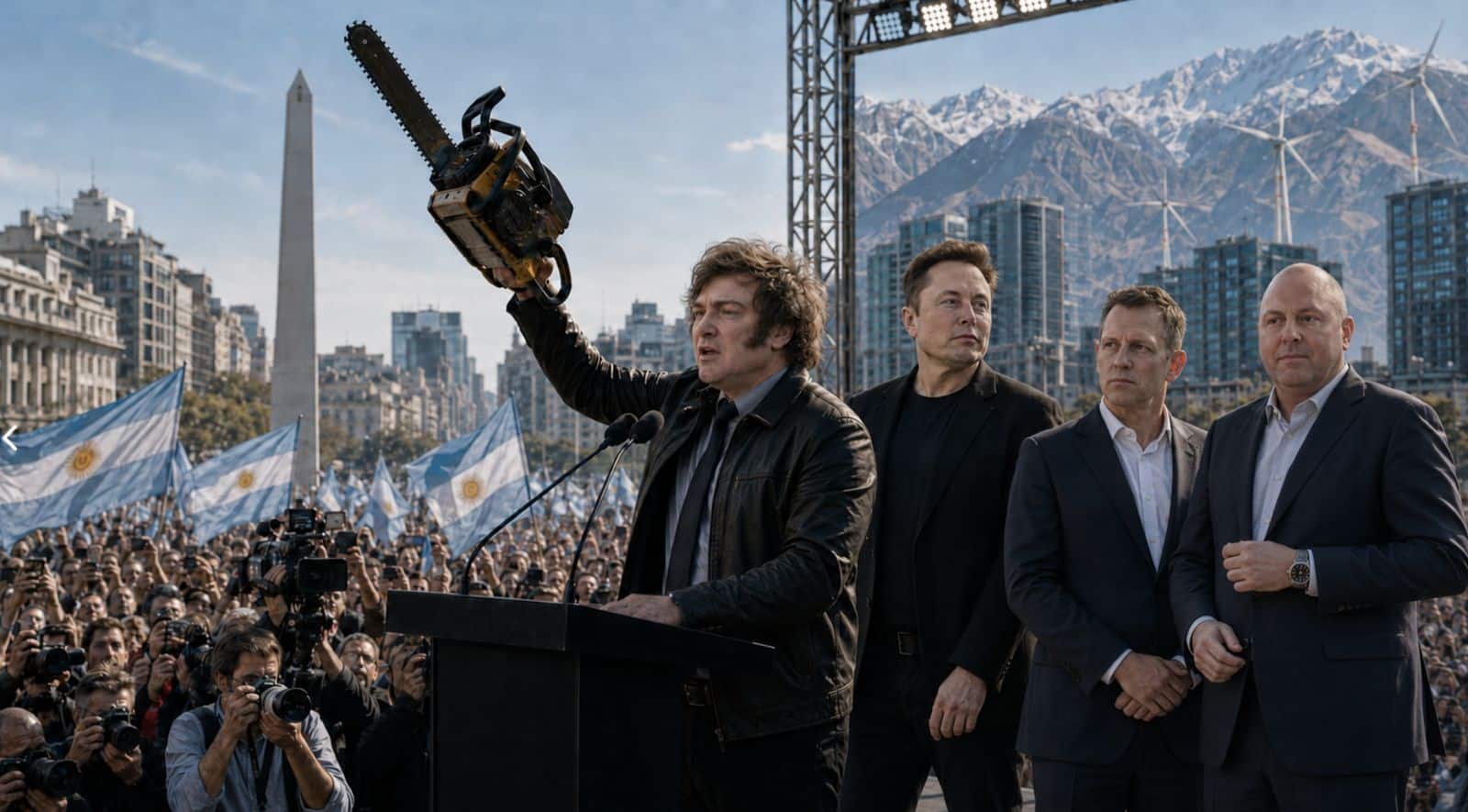
On May 28, 2026, The New York Times reported that Peter Thiel had purchased an estate in Buenos Aires and moved his family to Argentina. The decision amounts to far more than a personal relocation. Thiel and the American Big Tech figures aligned with him are shifting capital and operational presence to Latin America, building themselves a secure and self-sufficient base, because they regard a global confrontation as a calculated reality of the coming years.
As global rivalry intensifies, most markets across the Indo-Pacific, the Middle East, and Europe will become dangerous for capital and fall under wartime regulatory restrictions, whereas Latin America remains the only large macro-region outside the principal zones of confrontation and with a self-sufficient resource base.
The central aim of Thiel and the broader U.S. tech sector in the region is to build a system in which Big Tech corporations conclude their own framework agreements and shape the regulatory guarantees of host states.
To that end, Thiel meets personally with Argentine President Javier Milei and negotiates with Deregulation Minister Federico Sturzenegger and presidential adviser Santiago Caputo, who oversee Argentina’s AI deregulation initiative.
Through Founders Fund and Pronomos Capital, Thiel is simultaneously investing in the autonomous private zones of Próspera in Honduras, where corporations lobby for favorable legislation and influence private courts operating outside state jurisdiction.
Thiel’s efforts run in parallel with the initiatives of his partners in the U.S. tech sector. Marc Andreessen is financing decentralized financial infrastructure and fintech startups in Argentina, Brazil, and Mexico, testing whether venture capital can operate amid geopolitically driven macroeconomic instability, and together with Thiel, Patri Friedman, and Balaji Srinivasan he is a participant in Pronomos Capital.
Behind these investments lies an aim broader than profit in new markets. The tech elites are building a parallel financial system that operates outside banks and national regulators.
According to a report by Andreessen Horowitz, in 2025 alone stablecoins processed roughly $46 trillion in transactions, nearly three times the volume of the Visa payment network, while more than 1% of all U.S. dollars already exist as tokens on public blockchains.
Stablecoins accelerate the movement of money around banks, while decentralized assets such as Bitcoin make it possible to hold capital beyond the control of any single government. In the vision held by Srinivasan, such infrastructure is, over time, to become more reliable than U.S. Treasury securities, because its value is determined by the distributed mechanism itself, independent of the solvency of any single government.
Latin America, with its weak financial regulation and governments hungry for foreign capital, is becoming a testing ground for such a system, one in which technological capital turns into an autonomous financial force operating beyond the bounds of state institutions.
Elon Musk has publicly stated his readiness to invest in Argentina, and OpenAI has already planned the construction of an AI data center in Argentine Patagonia.
Big Tech Elites Capitalize on the Results of Rubio’s Diplomacy on the Continent
The relocation of Big Tech is landing on ground already prepared. The U.S. State Department under Secretary of State Rubio is pursuing its own strategy of integrating South American states into a Washington-coordinated system of economic and security cooperation, and it is the results of that strategy that technological capital exploits.
The tech elites enter the region only once the White House’s foreign-policy strategy has produced results, and they make use of the established infrastructure of political and security guarantees.
Since 2025, Secretary of State Rubio has lent support to right-wing leaders in Latin America, engaging systematically with the presidents of Bolivia, Rodrigo Paz, and Chile, José Antonio Kast, as well as with Brazilian senator and prospective candidate in the October 2026 election Flávio Bolsonaro, son of the right-wing former president Jair Bolsonaro.
This strategy is reinforced by Donald Trump’s public backing of conservative candidates in the region’s elections.
Washington’s encouragement of conservative shifts across Latin America and its pressure on local governments, the outward expression of a strategy of coercive diplomacy, have intensified internal coordination among U.S.-aligned governments of the continent in the security and economic spheres.
In late May 2026, Argentina, Bolivia, Ecuador, Peru, and Chile signed an agreement to combat transnational crime known as the Santiago Commitment, which provides for intelligence sharing, the tracking of illicit finance, and tighter border controls.
Behind the anti-crime framing of this agreement lies a different substance. The joint security mechanism grants the CIA legal access to operate on the territory of the signatory states under the guise of countering crime. Having secured that access, U.S. intelligence services begin clearing the continent of Chinese proxies and infiltrated subversive structures.
In this way Washington is preparing Latin America to function under the conditions of a global military confrontation, seeking to neutralize in advance both the influence of the authoritarian axis and the criminal networks that threaten the region’s stability and the preservation of American capital.
The tech elites are moving into a region where a U.S.-aligned security apparatus is in place, namely national armies, police, and intelligence services, now reinforced by a legal CIA presence under the Santiago Commitment framework, which forms a Washington-controlled security perimeter. For Big Tech such territory is a more convenient place to store assets than the continental United States itself, whose infrastructure would become a direct target in the event of a clash with the PRC.
By placing assets in South America, Big Tech groups hedge against two scenarios, namely a global confrontation between the United States and the PRC and regulatory pressure following elections in 2026 and 2028 that could favor the Democrats. That pressure is already evident: California is putting to a vote a bill for a 5% tax on billionaires’ wealth, and a Democratic victory in the House of Representatives in the fall of 2026, together with the party’s nomination for the presidential race, would intensify regulatory pressure on the artificial-intelligence sector.
According to Gallup, 71% of Americans do not support the construction of large data centers near populated areas, and at the local level such projects are already being blocked in California, New York State, and Wisconsin. The Democrats are turning the issue of digital infrastructure into an electoral argument.
Against the risks of a harsher regulatory climate in the United States, Latin American governments loyal to the White House offer American capital a more convenient and predictable environment. In May 2026 Milei’s government introduced into Congress a bill known as Super RIGI, which lowers the corporate tax rate for AI projects to 15% and guarantees 30 years of regulatory stability.
The greater resilience of Argentine legislation to change, the cool climate of Patagonia, which lowers the cost of cooling AI servers, lower energy and water costs, and reserves of critically important lithium and copper have made relocation to the south of the continent a strategically sound choice for the tech elites.
The relocation of major capital to safer jurisdictions is among the most reliable indicators of readiness for conflict, and so the shift of Big Tech elites’ assets to Latin America is being factored in by Moscow and Beijing as they form their own projections. Both capitals note that America’s political and economic elites are acting on calculated strategies well before the confrontation moves into an open phase.
U.S. President Donald Trump has gained the ability to negotiate with the Chinese and Russian leadership from a position reinforced by the concrete actions of his inner circle, which is preparing for escalation on its own and independently of diplomatic statements.
Whereas for most of the world’s capital the transition of the rivalry into an open armed phase is a risk, Thiel and the elites aligned with him see in escalation a catalyst for the transformation of the world order that will allow technological groups to expand their political influence. Thiel, Srinivasan, Friedman, and the other investors in Pronomos Capital advocate the construction of their own jurisdictions beyond existing state control and expect to emerge from the global conflict with protected economic positions, converted into new levers of influence over world politics in the era after a U.S.–China clash.
The strategy of Rubio and the position of the Big Tech elites differ fundamentally. The Secretary of State’s course rests on preserving American global leadership and containing autocracies through mutual commitments among the states of the democratic bloc, whereas the Big Tech milieu places the independence of capital and expansion into new markets above geopolitical alliances and the national interests of states. Despite this contradiction, the two sides use one another, since the state opens new markets to capital, while capital builds the economic foundation for entrenching pro-American governments.
The concept of coercive diplomacy is being implemented through the methodical displacement of the PRC and Russia from the region. Washington has secured an audit of Chinese ports in Panama and the country’s exit from the Belt and Road Initiative, and following the arrest of Maduro and the transfer of power in Venezuela to the government of Delcy Rodríguez it has lobbied for the entrenchment of Chevron in the oil production of the Orinoco region, where three-quarters of Venezuela’s reserves are concentrated. During the mass unrest by supporters of Evo Morales in Bolivia, the White House, together with the governments of Chile, Argentina, and Peru, delivered humanitarian aid to the affected districts, demonstrating an ability to consolidate loyal governments around a model of mutual support in which a threat to one conservative government becomes grounds for a collective response from the rest of Washington’s regional allies.
Big Tech elites are strengthening their presence on the continent without significant diplomatic or security expenditures, taking advantage of the fact that the governments in which Rubio’s strategy has produced results are already open to American business.
The Key U.S. Interest Groups in Latin America
Conservative change is being advanced by several interest groups with differing motives that, at the present stage, act in concert. Alongside the Silicon Valley elites, who invest in industrial capacity, data centers, and lithium extraction, the region’s right-wing transformation is also lobbied for by American oil-producing corporations.
Oil extraction requires multi-year concessions and protection of investment from nationalization, which the left-wing governments of South America did not provide. An initiative announced by Trump in early 2026 envisions more than $100 million in investment from U.S. and European oil corporations, profitable only on the condition that the Venezuelan government remains loyal to Washington throughout the payback period.
A distinct group is formed by the region’s conservative governments themselves, for which American capital and political backing are a resource for holding on to power. President of El Salvador Nayib Bukele advanced crypto legislation favorable to American fintech; the government of Bolivia under Rodrigo Paz reopened negotiations over lithium resources; and Chilean President Kast seeks to become the initiator of security coordination among U.S.-aligned governments.
Although each conservative government acts on its own calculation, without political change across the continent none of the American interest groups can realize its strategy. Both technological capital and the oil corporations depend on the presence of friendly governments on the ground.
The Interdependence of Milei’s Government and the Big Tech Elites
The conservative reshaping of the region began with the election of Javier Milei as president of Argentina, and its preservation depends on the political stability of that country, where the largest regional projects of the U.S. Big Tech elites are located. In October 2025, OpenAI and the local firm Sur Energy signed a letter of intent for $25 billion in investment in the Stargate Argentina project, with a data center in Patagonia.
Milei’s current term ends in 2027, and it is in Argentina that the highest risk of a change of power persists, before the conservative course of the region can consolidate. Despite an electoral lead in the polls, in the runoff Milei will face the progressive Axel Kicillof, whose victory was forecast by some studies in the spring of 2026.
Over the first half of 2026, support for Milei’s government fell from 43% to 32% amid inflation and cuts to healthcare and education spending. Only 19% of Argentines view the economic situation positively, against 42% in December 2025, and amid corruption allegations Milei has slipped from first to fifth place among the country’s politicians.
Holding on to power requires that Milei deliver quick economic results, and so he increasingly concludes large investment deals with American Big Tech groups. The corporations, in turn, need a government that guarantees preferential terms throughout the payback period of their investments, and Milei’s continuation in power becomes, for OpenAI and the associated consortium, a condition for protecting their investments, since the arrival of progressives would mean a revision of the RIGI and Super RIGI regimes.
The elites’ interest in Milei’s victory pushes them to accelerate the announcement of projects during the pre-election period, and the presence of American capital in Argentina has turned from situational cooperation into a lasting political commitment that neither side can abandon without significant losses.
The 2025–2026 Electoral Cycle Puts the Conservative Turn in Brazil at Risk
The dependence between capital and government that has formed in Argentina may be reproduced in other states of the region, but its spread depends on the results of a series of elections still under way. In Chile, Bolivia, and Honduras, where conservative governments have already begun their terms, Washington has established a stable space of influence. In Colombia and Peru, by contrast, where voting is not yet complete, the final outcome remains uncertain and not guaranteed for American capital or the White House.
In the runoff on June 7, 2026, the progressive Roberto Sánchez and the conservative Keiko Fujimori finished virtually even. A quick count by Ipsos based on a representative sample of polling stations initially gave Sánchez a minimal lead within the statistical margin of error, yet as subsequent ballots from overseas precincts were processed the gap narrowed in Fujimori’s favor. The votes split along a geographic divide: Fujimori won the capital, Lima, and the coast decisively, whereas Sánchez gathered support in the rural regions and the sierra.
The official count will continue for weeks, and given the precedent of 2021, when a similar margin was accompanied by mass challenges seeking to invalidate ballots, the final declaration of a winner may be delayed by legal disputes. Fujimori’s advantage among the diaspora vote is a consequence of Washington deploying the full set of instruments of influence over the course of the vote, working through channels of communication with the Peruvian diaspora in various countries in order to support the right-wing candidate, which is why her victory remains the high-probability outcome.
In Colombia, in the first round on May 31, 2026, the right-wing candidate Abelardo de la Espriella, who models himself on Trump and Bukele, outpaced the leftist Iván Cepeda by roughly 43.7% to 40.9%. The decisive runoff between them will take place on June 21.
Should Espriella win in Colombia and Fujimori prevail as expected in Peru, the only major country in the region whose government has systemic conflicts with the Trump administration would be Brazil.
Brazil’s capacity to obstruct a full-scale conservative reshaping of the region remains considerable, since it is the largest economy on the continent and one with deep ties to the PRC. In 2025, Brazil became the principal destination for Chinese investment, and bilateral trade reached a record $171 billion, twice the volume of trade with the United States, with China accounting for 27.2%. President Lula da Silva is deepening ties with Beijing, and in early June 2026 Brazil’s foreign minister visited China for another round of strategic dialogue.
Lula da Silva’s presidential term ends in the fall of 2026, which will give the White House and American Big Tech capital an opportunity to engineer a change in the country’s political course by backing the right-wing presidential candidate Flávio Bolsonaro.
The main contest will center on the moderate, centrist electorate, and da Silva counts on holding it by choosing as his running mate the centrist Geraldo Alckmin, with whom he won in 2022.
A Nexus poll for BTG Pactual in late March 2026 showed a technical tie in the runoff, with Lula da Silva and Flávio Bolsonaro each at 46%. Flávio, put forward by his father, who is imprisoned for an attempted coup, closed a twelve-point gap with Lula in less than four months, one of the fastest consolidations of an opposition in modern Brazilian history.
The Trump administration is seeking to shift the electoral balance toward Bolsonaro through economic and security pressure, having imposed 25% tariffs on part of Brazilian exports and designated Brazilian criminal groups as terrorist organizations, which bolsters his security-centered rhetoric. Washington’s calculation is that a worsening economy and a heightened focus on crime will turn moderate voters away from da Silva by the time of the election.
Should Bolsonaro win in the fall vote, conservative change could encompass most of the key states of Latin America and open up additional space for the Big Tech elites in terms of investment, markets, and channels for relocating capital.
The Region’s Conservative Turn Remains Fragile
The strengthening of American positions is real yet unconsolidated, since the arrival of loyal governments does not guarantee the durability of their course, and the conservatives’ successes since 2023 have provided only a temporary window before the next electoral cycle. Turning the region into a reliably loyal one would require at least a decade of uninterrupted ties, yet neither the Trump administration, whose own term ends after the 2028 vote, nor the Big Tech elites, oriented toward the rapid entrenchment of assets, have shown a readiness to invest resources for years in supporting friendly governments.
The factors that helped conservative parties win in 2023–2025 are now becoming the very sources of their vulnerability. These forces came to power with convincing results.
Javier Milei won in 2023 with 55.7% in the runoff, the highest figure since Argentina’s return to democracy; José Antonio Kast took 58.2% in the December 2025 election; and Rodrigo Paz brought to an end twenty years of left-wing rule in Bolivia.
Yet a mandate built on voters’ discontent with the economic troubles of their predecessors proved fragile the moment the conservatives’ own harsh reforms deepened social tension rather than relieving it.
Most of the region’s conservative administrations are incapable of meeting expectations of a quick economic improvement within a single term. Milei risks not being reelected, and the October midterm elections, in which his La Libertad Avanza party may lose its narrow foothold in Congress, will be the first test of this trend.
Brazil enters the October elections with the two candidates running nearly even, and Lula da Silva’s retention of the presidency would keep the continent’s largest economy within China’s orbit of influence for at least another four years.
Rodrigo Paz’s political standing in Bolivia remains extremely precarious. Less than half a year after his inauguration, his government faced mass protests that, since May 2026, have paralyzed the administrative capital, and in early June the ministers of defense and education resigned. Paz inherited an economy in its worst state in forty years, with shortages of fuel and dollars and inflation of nearly 20%, while his base is narrowed by the absence of a parliamentary majority.
China is actively countering the conservative shifts, drawing on the political instability of the new governments and its own economic weight in the region. In Bolivia, Beijing is counting on the destabilization of Paz’s government by forces around Evo Morales, whose return would open the way to restoring the annulled lithium contracts, while it uses American tariff pressure on Brazil as an argument for closer ties with da Silva.
A continued strong Chinese presence in the largest economy of the region is capable of limiting American gains in the smaller states and standing in the way of bringing the entire continent into a single space safe for the Big Tech elites.
It is for this reason that the resilience of individual Latin American governments becomes critical for Washington, since American technological capital and the Republican administration have created in Latin America a system in which every loyal government is at once a pillar and a point of vulnerability. The removal of a friendly Latin American administration from power places at risk all the American investments made under its guarantees. The standing of the Big Tech elites in the region depends directly on the resilience of those governments that came to power with their support.
These governments’ hold on power runs up against economic challenges that have accumulated in the region over decades, and overcoming them within a single term is possible only through massive injections into the economy. It is precisely here that the inflow of capital to Latin America takes on strategic significance, since a flow of assets seeking a safe jurisdiction amid mounting global escalation is capable of providing the very resources that pro-American governments need for a quick economic result.
This inflow is subject to a strict temporal order. It unfolds during the phase of mounting threat, while the relocation of assets still makes sense, and the moment the rivalry moves into an armed stage that movement becomes impossible, because central banks and financial regulators impose currency controls, freeze cross-border transfers, and restrict the withdrawal of capital. That is why the relocation is happening now, and every flare-up around Taiwan only accelerates it.
The key trigger of this escalation is China itself, yet its course is turning against China’s own interests. The mounting conflict around Taiwan and its spread across the Pacific is channeling global capital flows toward a continent over which U.S. influence is growing, and is thereby strengthening the American presence in the Western Hemisphere. Ultimately, the PRC’s expansion in the Pacific is turning into a strategic trap for Beijing, since actions meant to extend its influence are instead undermining its own strategy of global dominance.
This publication is the result of a partnership between MILITARNYI and SOLID INFO. An extended version is available on the website of the analytical center.


Xi Jinping’s Washington Visit Outlines the Timeframe for the Active Phase of the Confrontation: Beijing Openly Demands Taiwan’s Return
On September 23–25, 2026, Chinese President Xi Jinping held talks with President Trump at the White House during the first Chinese state visit to t...
A Sharp Shift in the Dynamics of Global Confrontation Forces Washington to Rethink How It Builds Its Key Partnerships
On September 12–13, 2026, the 18th BRICS Summit was held in New Delhi. Xi Jinping traveled to India to lead the Chinese delegation, marking his fir...

Netanyahu’s Visit to Abu Dhabi: Israel Builds Partnerships from a Position of Strength, but the Middle East Conflict Is Eroding the Edge of Its Weapons
On September 27, 2026, Israeli Prime Minister Benjamin Netanyahu traveled to Abu Dhabi with the head of Mossad and the head of the National Securit...
