
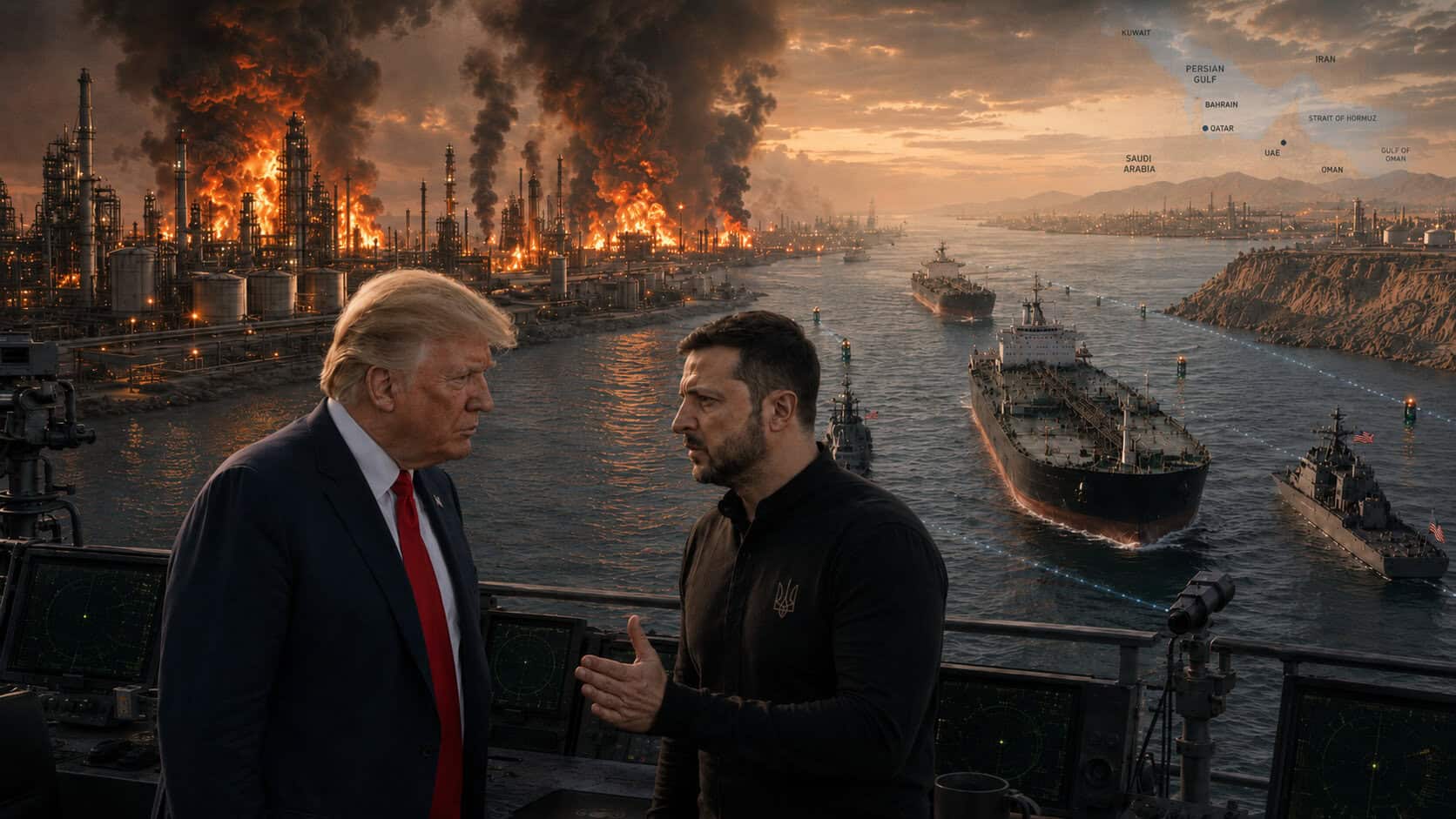
NATO’s Ankara Summit: Support for Ukraine Becomes an Instrument for Weakening the Autocratic Axis in the Middle East and the Pacific

Solid Info


On July 8, 2026, at the NATO summit in Ankara, US President Donald Trump publicly characterized Ukrainian strikes with Western weapons deep inside Russian territory as the escalation necessary to end the Russia-Ukraine war.
He announced that Ukraine would be granted a license to produce Patriot interceptor missiles domestically — something Washington had previously refused to allow.
At a joint press conference, Trump redirected a question about the further use of long-range weapons against Russia to Secretary of State Marco Rubio, who described military pressure on Moscow as a way to create the conditions for productive negotiations.
The chosen rhetoric contrasts with the Republican administration’s earlier attempts to halt the conflict through concessions to Moscow and marks the White House’s shift to a strategy in which support for Kyiv becomes an instrument for degrading the resource base of the autocratic axis.
In the summit’s final declaration, NATO member states committed to providing Kyiv with €70 billion in military assistance in 2026 and confirmed an identical level of support for Ukraine’s defense capabilities in 2027.
Washington is positioning support for Kyiv as an investment that primarily benefits the Alliance’s European members, since containing Russia by strengthening Ukrainian counterstrikes reduces what European governments spend on defending against Russian threats and provocations in the region.
At the same time, by adjusting its position on the Russia-Ukraine conflict, the Trump administration is signaling to European partners that the next avenue of transatlantic cooperation should be a consolidated position of the democratic bloc in the Middle East, where the US conflict with Iran has entered a new phase.
Although European states back the American plan to prevent the development of Iran’s nuclear and missile capabilities, their governments have responded cautiously to the proposal to tie coordinated support for Kyiv to their countries’ involvement in countering the ayatollahs’ regime.
America’s European allies recognize that Ukrainian long-range strikes on Russia’s critical infrastructure — which since the first months of 2026 have knocked out roughly 42% of Russia’s oil refining capacity — serve Washington’s interests in countering autocracies in the Middle East and the Pacific.
The interdependence of Ukrainian defense needs and American strategic goals strengthens the negotiating position of European governments, since American support for Kyiv aligns with Washington’s own ambitions and will continue regardless of whether European states agree to deeper involvement in the confrontation with Iran.
The shift in the White House’s rhetoric on how to settle the war between Russia and Ukraine was further shaped by circumstances that emerged during the first half of Trump’s term.
Informal responsibility for the Russia-Ukraine negotiating track, and for aligning Washington’s and Tehran’s positions in the Middle East conflict, rested with the president’s inner circle, which championed the concept of transactional diplomacy.
Vice President Vance, a group of informal intermediaries led by Steve Witkoff, and presidential advisers close to business elites — whose interests are represented by Trump’s son-in-law Jared Kushner — offered the axis of autocracies limited concessions in exchange for investments and contracts potentially lucrative for the United States.
In pursuit of this course, Washington resorted to financial, military-political, and diplomatic pressure on Kyiv. After the February 28, 2025 meeting between the US and Ukrainian presidents, from which Kyiv came away without the security guarantees it had expected, the American administration halted financial support and slowed the execution of defense contracts. Funding appropriated by Congress fell from more than $170 billion in 2022–2024 to $3.92 billion in 2025.
The $400 million package passed in December 2025 under the National Defense Authorization Act drew criticism from Under Secretary of Defense Elbridge Colby and a segment of MAGA commentators, and after being unblocked in April 2026 it never translated into signed contracts with defense manufacturers.
The Republican administration’s calculation was that withholding aid to Kyiv would demonstrate to Moscow a readiness for concessions and prompt the Kremlin to take real steps toward reducing its dependence on China.
The US-Russia summit in Alaska on August 15, 2025 became the key attempt to apply transactional diplomacy to relations with the Kremlin. The White House sought to reduce Russia’s asymmetric dependence on China and to shift part of Russia’s foreign policy and economic priorities into a controlled dialogue with the democratic bloc.
The group of American informal intermediaries viewed the meeting as an attempt to convert offers of financial and investment cooperation into a controlled de-escalation in Ukraine.
Moscow, however, used the pause in secondary sanctions — caused by the restriction of shipping through the Strait of Hormuz — to continue combat operations in Ukraine and to step up military, logistical, and economic coordination with China and Iran.
Russia’s deeper integration into the military and logistical framework of the autocratic axis became evident during Operation Epic Fury, when Moscow passed Iran real-time intelligence on the locations of American military assets.
Satellite imagery and the coordinates of US ships and aircraft were used by the ayatollahs’ regime for strikes on bases in Kuwait, Bahrain, and Qatar, allowing Iranian missiles to hit the radars of THAAD and Patriot systems.
In parallel with the Russia-Iran cooperation formalized in the strategic agreement between Tehran and Moscow, Russia stepped up its engagement with China in the Pacific. In August 2025, the Russian and Chinese navies conducted their first joint submarine patrol in the Sea of Japan and the East China Sea.
Since 2025, Beijing has organized training for at least 200 Russian strike drone operators at closed facilities inside China, and during the Joint Sea-2026 exercise in Qingdao in July 2026, the two countries’ submarines carried out combat tasks as a single tactical group for the first time.
Intelligence services of the democratic bloc have also documented joint work by Moscow and Beijing against the Starlink satellite network — from building an international lobby to restrict the system’s expansion to developing kinetic and electronic means of destroying satellites in low Earth orbit.
The “transactional diplomacy” applied to Russia failed to achieve its stated goals of changing Russian foreign policy.
Russia neither stopped combat operations and the armed destabilization of the European continent nor moved to revise or restrain its territorial claims. The year and a half during which Trump’s circle tried to transplant the transactional approach into the Russia-Ukraine conflict gave the autocratic axis time to deepen its strategic integration.
Beijing, meanwhile, used this period to expand its armed presence in the Pacific and to press ahead with the large-scale modernization of the PLA, scheduled for completion in 2049. In 2025, the Chinese military carried out 3,764 air incursions into Taiwan’s air defense identification zone, 22.4% more than in 2024.
During the large-scale Strait Thunder-2025A and Justice Mission 2025 exercises, the Chinese navy rehearsed a full naval and air blockade of the island. The carriers Liaoning and Shandong conducted their first training operations in the open ocean, performing more than 260 launches of J-15 fighters in close proximity to Japanese territorial waters.
As part of its space program, China has deployed the Guowang and Qianfan constellations, which already number several hundred satellites in orbit and compete with Starlink in Global South markets.
On July 10, 2026, Beijing carried out the first orbital launch of the Long March 10B rocket, whose technical specifications make it a competitor to the American Falcon 9.
The clash between the approaches promoted by advocates of transactional and coercive diplomacy generated instability in US relations with the countries of the democratic bloc and gave the autocracies grounds to count on a favorable deal struck by bypassing American institutions. A synchronized position by the president and the secretary of state on ratcheting up pressure on Russia deprives Moscow and Beijing of the ability to run parallel negotiations with competing decision-making centers.
Damage to Russian Infrastructure Undermines Moscow’s Standing as China’s Effective “Junior Partner”
The alignment of the White House with the State Department officials consolidated around Marco Rubio allowed the administration to update its strategy of pressure on the autocracies, now pursued by degrading Russia’s economic and logistical capabilities.
Having abandoned attempts to coax Moscow away from Beijing through concessions, the Republican administration moved to backing the degradation of Russia’s resource and infrastructure base, which indirectly reduces the military potential of all the key states of the authoritarian axis.
In the first half of 2026, Ukrainian long-range assets carried out at least 194 strikes on Russian oil refineries, and as of early July 2026 the General Staff of Ukraine’s Armed Forces assessed that 42.74% of Russia’s refining capacity had been knocked out.
Losses inflicted on Russia’s fuel sector by Ukrainian strikes since August 2025 amount to $13.5 billion, and the destruction of refineries has cut fuel production by 25% year-on-year.
Moscow has banned exports of gasoline and jet fuel, is offsetting losses with imports from other countries, and is deepening its dependence on China as the key buyer of its energy — yet the extraction and processing infrastructure whose availability persuaded Beijing to keep Moscow in the role of “junior partner” within the autocratic axis continues to sustain damage.
By the end of 2025, China accounted for roughly 47% of Russia’s crude oil exports, and in 2023 Russia restructured its National Wealth Fund, raising the yuan’s share to 60%.
This amplified Beijing’s leverage over the liquidity of Russia’s main fiscal reserve and cemented Moscow’s dependence on access to the Chinese market and on the willingness of Chinese financial institutions to service Russian transactions.
Counting on Russia as a supplier of cheap raw materials, China also sought more active use of the Northern Sea Route, which Beijing views as an alternative to the Strait of Malacca.
Between 2023 and 2025, China doubled the number of Arctic container voyages and doubled the volume of goods delivered along this route to Western ports, to 400,000 tons.
The expansion of the strike range of Ukrainian drones and cruise missiles into Russia’s northern and far eastern regions increases the vulnerability of facilities on which China’s technology industry depends.
The fallout from attacks on Russian processing infrastructure in Western Siberia and the Urals prompted Beijing to demand that Moscow strengthen counter-sabotage measures and air defenses around the Amur Gas Processing Plant.
The facility, which processes gas from East Siberian fields for onward delivery to China, is also one of the world’s largest producers of helium, which China needs for semiconductor manufacturing and the development of AI systems.
The dependence on Russian resources that once gave Beijing a price advantage and supply stability is turning into a vulnerability, as the range and frequency of Ukrainian strikes grow in proportion to Western deliveries of components and the intelligence Kyiv receives from Washington.
The resource shortages confronting Russian society raise the risk of a deepening socio-economic crisis whose containment costs also fall on Beijing. China faces the need to expand yuan clearing to sustain Russia’s foreign trade operations, to risk secondary sanctions to preserve energy contracts, and to keep lobbying for decisions favorable to Russia in international bodies.
Moscow’s foreign policy self-sufficiency, which until 2026 served as a Russian advantage and helped solidify the core of the autocratic axis, is running out — pushing China to associate its interests ever more closely with Russia’s, which constrains Beijing’s ability to build cooperation with European markets, private companies, and political institutions.
Russia, whose territory and resources Beijing regarded as a strategic rear ahead of a future escalation in the Pacific, is turning into a country whose stabilization consumes the very resources China needs to project power in the Indo-Pacific.
A New Phase of the Conflict with Iran and the Erosion of Autocratic Support for Tehran
The damage to Russian infrastructure, which is shrinking Russia’s resource and military role in the autocratic bloc, is becoming an advantage for the White House in the US-Iran conflict, whose new phase began after the ayatollahs’ regime attacked Qatari, Saudi, and Liberian tankers carrying oil and LNG.
The resumption of exchanges of fire in the Strait of Hormuz exposed the fragility of the US-Iran memorandum of understanding signed in June 2026.
The document, negotiated and presented largely through the group consolidated around Steve Witkoff, contained no adequate mechanism to compel Tehran to limit its nuclear program and restore safe shipping through the Strait of Hormuz.
The US concessions laid out in the memorandum were asymmetric: the White House immediately committed to begin drafting and coordinating a $300 billion plan for Iran’s postwar reconstruction and agreed to lift sanctions on Tehran.
America’s conciliatory steps — supplemented by offers to lift the naval blockade and restore access to frozen Iranian assets — resulted in Tehran receiving its first financial inflows from unblocked exports and resuming attacks on commercial vessels in the Strait of Hormuz.
The process of aligning Tehran’s positions during the drafting and signing of the memorandum was accompanied by competition between two visions pressed by different factions within the Iranian leadership. The pragmatic coalition, informally led by parliament speaker Ghalibaf and Foreign Minister Araghchi, saw the memorandum as validation of the prospects of dialogue with the United States and of reduced tensions with the democratic bloc.
Their opponents, consolidated around Ayatollah Mojtaba Khamenei and the most conservative IRGC leaders, judged the negotiating process an unacceptable turn of events for Tehran and a factor that would strip the regime of guarantees of its survival and stability.
Extensive damage to Iran’s defense industry and logistics, together with the erosion of the country’s strike capability, complicates the ayatollahs’ regime’s ability to sustain the armed confrontation with the United States. The new phase of the conflict confronts Iran with a need for support far exceeding the volumes China and Russia provided in the spring of 2026.
The escalation in the Strait of Hormuz and the new supreme leader’s statements about the need to avenge the killing of Ali Khamenei on the American leadership showed that at the current stage of infighting within the Iranian leadership, hardliners retain enough influence to block de-escalation.
The regime’s readiness to open a new phase of the conflict renders the arrangements fixed in the signed memorandum practically meaningless, which means the long-term terms of the US-Iran conflict will be determined by the outcome of the current phase of the armed standoff between Washington and Tehran.
In the conflict’s first phase, Russia provided Iran with intelligence support and cargo deliveries via overland corridors, but the mounting damage Ukrainian attacks inflict on Russian infrastructure is reducing Moscow’s capacity to sustain Tehran.
An additional factor limiting the ability to organize adequate support for Iran in the new phase of its conflict with the United States is American military strikes on the country’s key logistics nodes.
The US military’s destruction of the Ak-Takeh-Khan railway bridge in Golestan Province completely severed the overland corridor that served as the main transport route linking Iran to Russia and China through Central Asia.
After the naval blockade of Iranian ports was declared, transit along this route tripled, since throughout the spring and the first half of the summer of 2026 the overland route running across the Ak-Takeh-Khan bridge remained the only safe alternative for bulk deliveries.
The damage to the transport corridor deprived Beijing and Moscow of their logistical link to Tehran and of the main rail channel for supporting the country in the war.
By combining support for Ukrainian long-range strikes with the destruction of key logistics hubs inside the autocratic axis, the Trump administration aims to push the deepening crisis in Russia and the rising cost to Beijing of supporting Moscow to the point where Tehran loses its external guarantees.
The first sign of Washington’s bet on Tehran’s logistical and military vulnerability at the current stage of the Hormuz crisis came in Donald Trump’s statements that the United States will become the sole guarantor of security in the strait and will impose a 20% tariff on all cargo passing through this trade artery.
The inability and unwillingness of the key autocratic states to support Iran will trigger new debates within the leadership of the ayatollahs’ regime.
Under the new conditions, which rule out Tehran’s ability to wage prolonged combat operations in the region, Iranian leaders lose their grounds for rejecting American demands, since the hardliners’ main argument — the reliability of external guarantees — no longer holds true.
The Domestic Political Conditions Behind the White House’s Recalibration
The adjustment of the American administration’s rhetoric and political position on the conflict between Russia and Ukraine followed internal shifts within the MAGA movement.
Although a segment of MAGA commentators continues to hold isolationist positions and a narrow reading of America First, most of the movement’s adherents take their cues from the president’s personal stance, giving the White House’s vision priority over specific foreign policy principles.
MAGA supporters, whose share among Republicans grew from 38% in September 2022 to 62% in May 2026, back White House decisions out of personal loyalty to President Trump, whose standing in this electoral group was confirmed by its response to Operation Epic Fury.
Morning Consult, YouGov, and Reuters/Ipsos polls in early March 2026 recorded support for the military operation against Iran at just 41% among Americans overall, while 93% of MAGA supporters called the campaign justified and 83% said it would make the United States safer.
The political consolidation of the MAGA base around the president’s vision has sharply curtailed the influence of Tucker Carlson, Candace Owens, Marjorie Taylor Greene, and Alex Jones on the movement’s agenda.
Having moved into opposition to the White House, these figures lost their former authority with the electorate that had been their core audience.
Support for Ukraine gives the Republican administration room for situational cooperation with the Democratic Party, whose chances of winning a majority in the House of Representatives in the midterm elections the prediction market Polymarket puts at 84%.
Aid to Kyiv remains a priority for most Democratic members of Congress, as shown by the party’s vote for the relevant bill in May 2026.
At the same time, the Democratic Party treats stronger support for Kyiv as one of the few issues where situational agreement with Republicans is acceptable to its political base.
For Republicans, who are entering the campaign with a presidential disapproval rating of 57% and a 5.9-point Democratic lead in national polls, support for Ukraine becomes a point of potential compromise with moderate Democrats.
By recalibrating their rhetoric and backing aid initiatives for Kyiv, Republicans will gain the ability to advance part of their agenda in the new House of Representatives, where the conservative majority will shrink after the elections.
The decisions taken at the Ankara summit showed that Washington is revising its approach to countering China, moving from attempts to build an alternative model of engagement with the Kremlin to backing pressure on the very Russian capabilities that make Moscow a valuable ally for Beijing.
The Trump administration has factored in that Russia’s standing within the axis of autocracies still rests on its resource base — a base whose crisis the White House is now deepening.
The autocratic axis entered the global confrontation calculating that a protracted war in Ukraine would exhaust the democratic bloc, divert Washington’s resources from the Middle East and Pacific theaters, and buy Beijing time to widen its edge in the Indo-Pacific.
Instead, the course of the Russia-Ukraine conflict in 2026 has produced Russia’s resource exhaustion, compounded by the weakening of Iran and its “axis of resistance” as a result of Operation Epic Fury.
Having reaped a series of benefits from Russia’s full-scale invasion of Ukraine in the war’s early stages, in 2026 China simultaneously faces the burden of sustaining two of its key allies and the collapse of the established logistical and resource links within the axis of autocracies built over the past decade.
Ukraine, which Beijing and Moscow regarded as the democratic bloc’s point of vulnerability, has over the course of the war with Russia turned into a factor weakening the autocracies.
The course of the fighting in Ukraine and the Middle East, which has produced crises in the two states most deeply integrated into the authoritarian bloc, is for the first time in the global confrontation shifting the main geopolitical pressure onto the side that had itself counted on exploiting crises within the democratic bloc.
This publication is the result of a partnership between MILITARNYI and SOLID INFO. An extended version is available on the website of the analytical center.

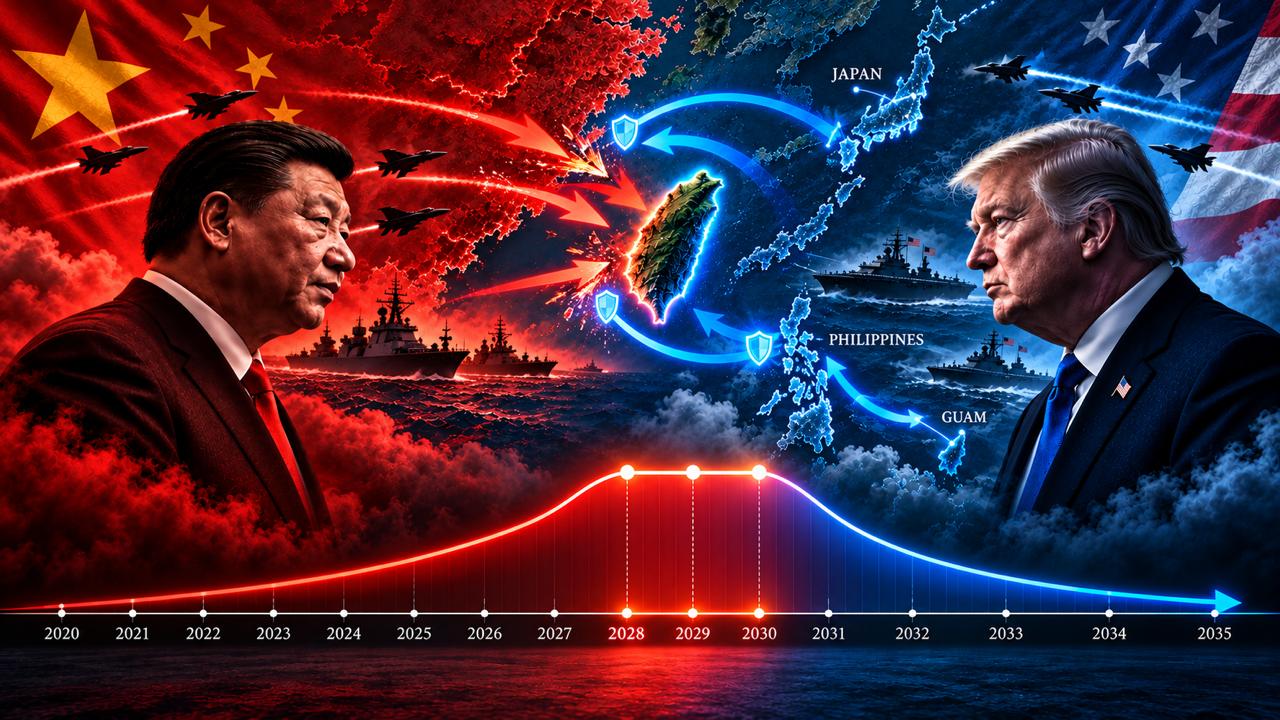
Xi Jinping’s Washington Visit Outlines the Timeframe for the Active Phase of the Confrontation: Beijing Openly Demands Taiwan’s Return
On September 23–25, 2026, Chinese President Xi Jinping held talks with President Trump at the White House during the first Chinese state visit to t...

Netanyahu’s Visit to Abu Dhabi: Israel Builds Partnerships from a Position of Strength, but the Middle East Conflict Is Eroding the Edge of Its Weapons
On September 27, 2026, Israeli Prime Minister Benjamin Netanyahu traveled to Abu Dhabi with the head of Mossad and the head of the National Securit...
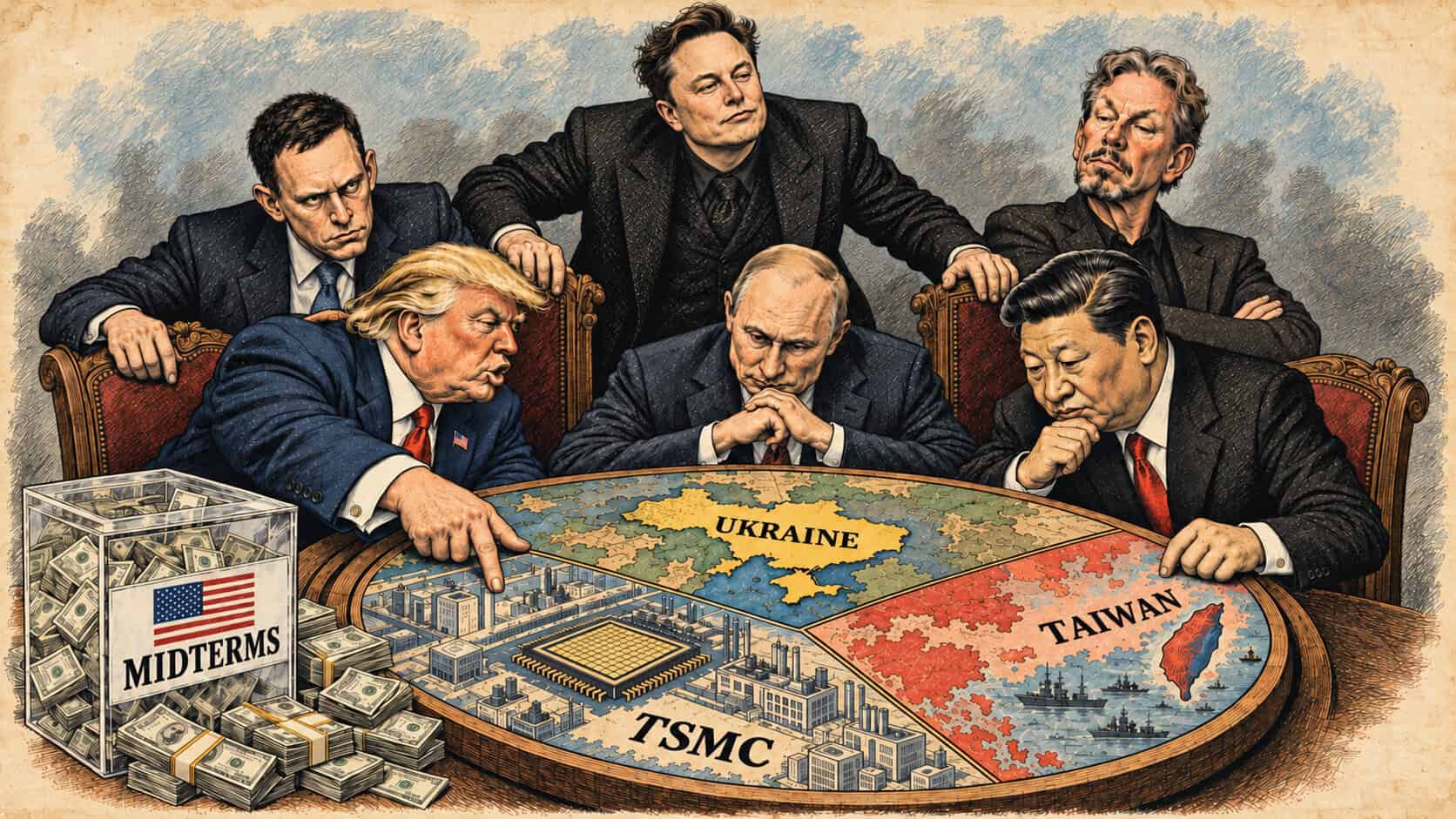
Big Tech Pushes the White House Toward Global De-escalation: The Stance of Tech Capital Shapes the Terms for a Deal Between Trump, Putin, and Xi Jinping
As of October 14, 2026, political advertising expenditures in the current U.S. election cycle, including reserved airtime, had exceeded $10 billion...

Japan Rapidly Builds Up Its Defense Capabilities: Personnel Shortages and Low-Cost Weapons Set the Pace of the Self-Defense Forces’ Modernization
On October 13, 2026, lawmakers from Japan’s ruling Liberal Democratic Party, led by former Defense Minister Itsunori Onodera, established a parliam...
