
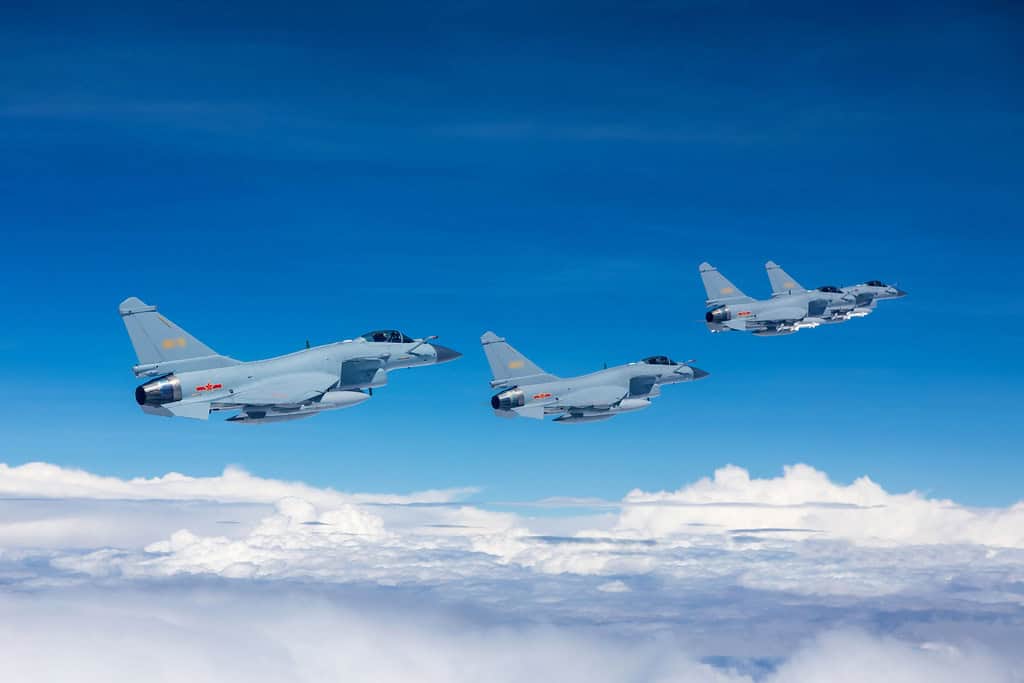
China’s Mighty Dragon: J-10 Fighter Jet as Triumph of the Nation’s Aviation Industry

Roman Pryhodko


On December 29, 2006, China’s official news agency, Xinhua, released a story that sent shockwaves through the global aviation community: the new all-weather fourth-generation J-10 fighter had successfully completed testing, entered service with the People’s Liberation Army, and achieved full combat readiness.
Two years later, this aircraft—officially named the ‘Mighty Dragon’—made its triumphant public debut at the Zhuhai International Airshow, demonstrating its unique maneuverability and superior aerobatic capabilities to the world.
In 2007, the project received the PRC’s highest State Prize for scientific and technological progress. The chief architect of this historic achievement was the outstanding designer Song Wencong, whose name had been kept under the strictest secrecy for over twenty years.
The creation of the J-10 was a landmark event that marked the final transition of the Chinese aircraft industry from the licensed replication of outdated Soviet models to independent high-tech innovations.
The origins and launch of Project 10
The history of the J-10 began in the early 1980s, at a time when the Chinese Air Force lagged far behind the world’s leading powers in terms of technology. While the United States and the Soviet Union were actively deploying fourth-generation aircraft (such as the F-16 and MiG-29), China’s air force still relied on the obsolete J-6 and J-7 models (modifications of the Soviet MiG-19 and MiG-21). Recognizing the acute threat to national security, the military and political leadership of the PRC made a strategic decision to develop its own modern fighter capable of confronting foreign threats on equal terms.
Between 1984 and 1986, various concepts for the future aircraft were examined in detail during a series of closed-door defense meetings. This strategic program was given the official code name “Project 10” (十号工程).
Under these critical circumstances, the Ministry of Aerospace Industry, in conjunction with the Commission on Science, Technology, and Industry for National Defense, made a fateful decision to announce a closed competition for the creation of a fundamentally new fighter that could bridge the enormous gap and ensure parity in the skies.
This competition quickly escalated into a large-scale and dramatic confrontation not merely between two separate design bureaus, but between two diametrically opposed engineering philosophies of aircraft design. From the very beginning, the Shenyang Aviation Institute was considered the clear favorite in the competition; within China’s aviation hierarchy, it traditionally held the position of the ‘elder brother,’ possessed vast resources, and enjoyed the unquestionable financial and political support of top officials in Beijing.
The Shenyang engineering school possessed vast practical experience in mass production, a robust experimental base, and offered the military an evolutionary, maximally safe path forward. Their project was based on a thorough modernization of existing designs and proposed the creation of either an updated version of a classic-style aircraft or a heavy twin-engine fighter based on a traditional aerodynamic configuration.
Shenyang’s main advantage was the minimization of technical risk, as their aircraft could be reliably built by the Chinese industry of the time without the need for a radical overhaul of production lines or the development of new materials.
They appealed to the pragmatism of the army generals, who sought to obtain an aircraft that was straightforward, reliable, easy to fly, and predictable in combat as quickly as possible, without resorting to dangerous experiments.
Standing in contrast to this powerful favorite was the Chengdu Aviation Institute, which at the time was viewed by many experts as a provincial underdog with far more modest experience, since that team had previously focused primarily on local upgrades to light, short-range fighters.

Later, the AVIC Chengdu Aircraft Research and Design Institute (historically the 611 Institute) was selected as the lead development organization, and Sun Wencong assumed the position of chief designer.
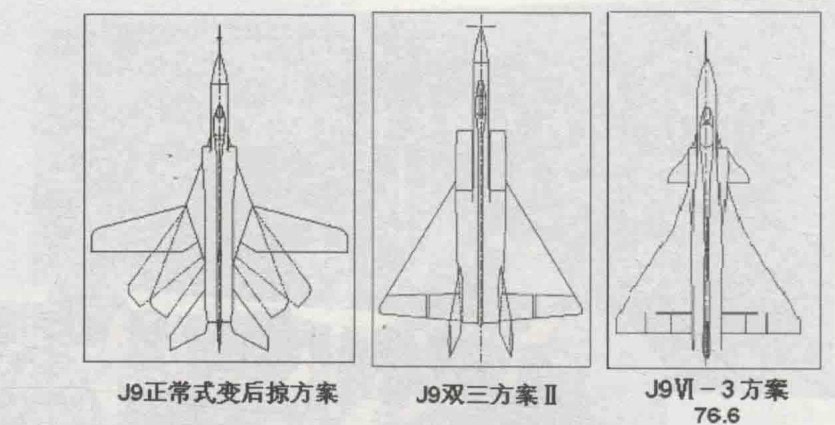
At that time, Sun was already 56 years old and had a wealth of experience working on the modernization of second-generation aircraft (notably the J-7III) and on the ambitious J-9 fighter project, which had been scrapped due to a lack of funding.
Sun Wencong proposed a bold and revolutionary ‘canard’ aerodynamic configuration for the J-10—a tailless design with forward-mounted horizontal stabilizers and a delta wing. This choice was based on in-depth theoretical research and wind tunnel experiments that Institute 611 had conducted as far back as the J-9 design phase. At that time, Sweden was the only country in the world to use such a configuration in production on the Saab 37 aircraft, while developments such as the European Eurofighter Typhoon or the French Rafale were still in their early stages.
This configuration provided the aircraft with tremendous advantages in super-maneuverability and takeoff and landing performance. However, the flip side of the coin was the aircraft’s high static aerodynamic instability. Manual control was physically impossible, which required the creation of a complex digital fly-by-wire system.
Many conservative experts and military officials expressed strong skepticism, believing that Chinese industry would be unable to implement such complex technologies, and suggested taking the easier route—modernizing existing conventional platforms. However, Song Wencong demonstrated scientific integrity. Relying on precise mathematical calculations, he proved that only the ‘canard’ configuration would provide China with an aircraft of the future, not of the past.
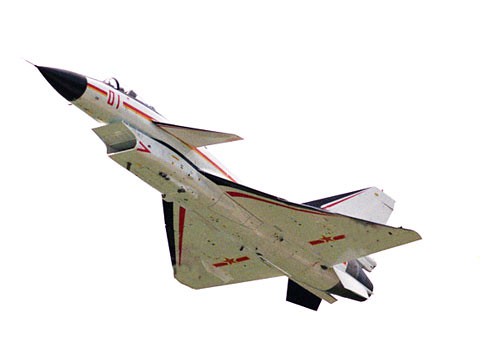
The late 1980s and early 1990s proved to be the toughest test for Project 10. As a result of large-scale economic reforms in the PRC, government funding for the defense sector was drastically cut. Military-industrial enterprises were ordered to become self-sustaining by producing civilian goods. The lack of funds significantly slowed down development, but engineers at Institute 611 continued to work, often staying in the design offices late into the night.
The technical complexity of the task was unprecedented: more than 60–65% of the fighter’s onboard systems, materials, and components were being developed in China for the first time. To carry out the project, it was necessary to introduce three-dimensional computer-aided design technologies—entirely new to the country—to develop new aerospace alloys and composites, to build unique test stands, and to independently develop the onboard radar and digital systems.
The guiding principle was that while China could borrow or purchase individual foreign technologies, the overall design and control over system integration must remain exclusively in the hands of Chinese specialists. One striking example of this self-reliance was the saga surrounding the complex landing gear mechanism, the design of which foreign companies refused to share; Chinese engineers at an aircraft plant in Guizhou Province developed and successfully tested it on their own.
By early 1998, the first fully functional J-10 flight prototype was ready. The initial date for the maiden flight was scheduled for mid-March. A high-level state commission arrived at the airfield. However, during the final pre-flight inspection, technicians discovered three small drops of oil leaking from the engine. Some members of the leadership insisted that this was a minor issue that could be ignored in order to stay on schedule ahead of the Beijing event. The flight was postponed for 12 days to allow for a thorough inspection and repair of the leak.
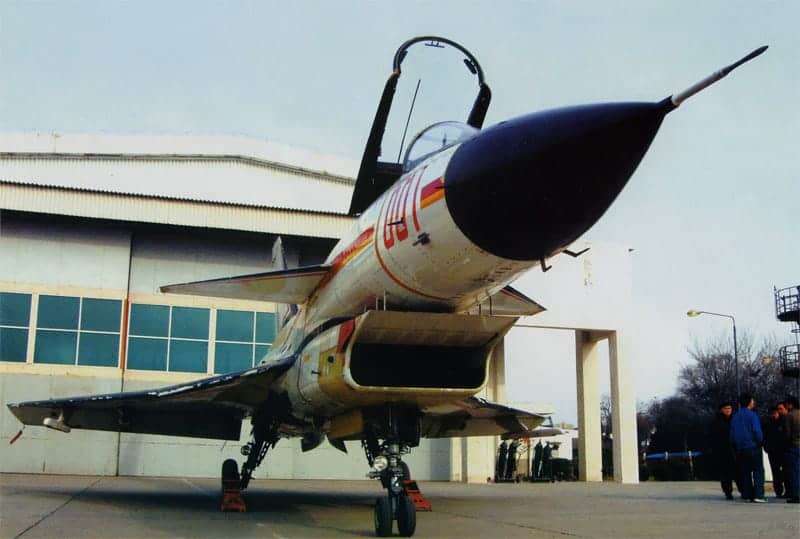
The historic day arrived on March 23, 1998. Experienced chief test pilot Lei Qiang took the controls of the fighter jet. The aircraft easily pulled away from the runway and soared into the sky. The flight lasted about twenty minutes and went flawlessly. When the J-10 touched down gently and deployed its brake parachute, the entire airfield erupted in applause. The designers’ life’s work had finally taken flight.
Following this initial success, a long and grueling phase of certification testing began. In 2000, the prototype aircraft were relocated to an airbase in the harsh conditions of the Gobi Desert in northwestern China. Over the next three years, the test and engineering staff worked under extreme conditions—from 8 a.m. to midnight, with almost no weekends or holidays. The result of this dedication proved phenomenal: the flight test program was completed ahead of schedule, and throughout the entire period of intensive flights pushed to the limits of the aircraft’s technical capabilities, not a single crash occurred—a unique achievement in the global history of aircraft development in this class.
In 2004, the aircraft officially completed the type certification phase, after which full-scale serial production began.
Aerodynamic configuration and airframe design features
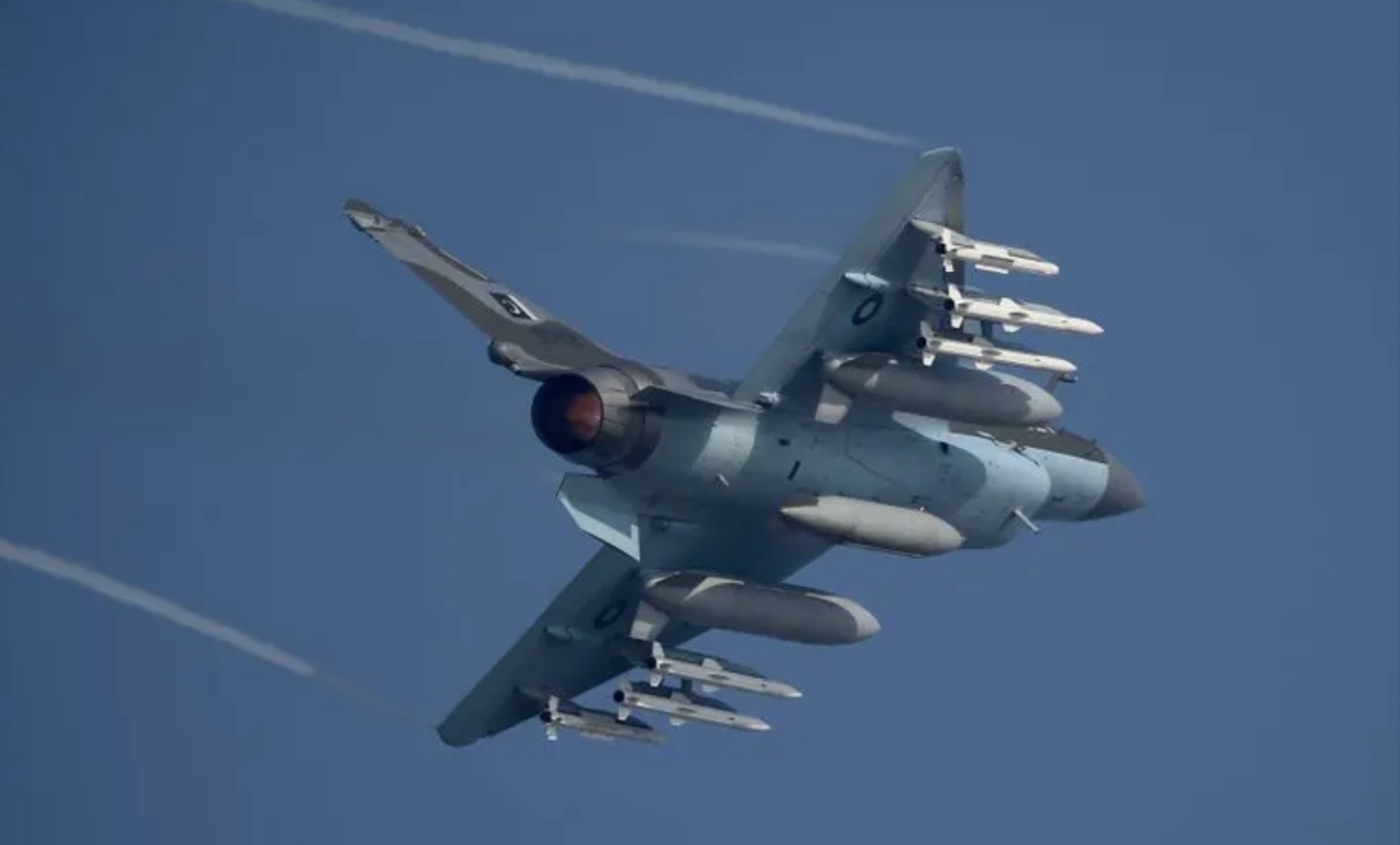
The J-10’s design is based on a bold and progressive ‘canard’ aerodynamic configuration. The aircraft is built as a tailless design with a low-mounted, large-area triangular wing and a movable leading-edge horizontal stabilizer (LEHS).
This configuration provides tremendous advantages in super-maneuverability at high angles of attack, significantly reduces drag at supersonic speeds, and greatly improves takeoff and landing performance, allowing the aircraft to operate from relatively short runways.
The downside of high maneuverability is the aircraft’s deliberate static aerodynamic instability about the longitudinal axis. It is physically impossible to control such an airframe manually, as it would instantly lose stability.
To solve this problem, the J-10 is equipped with a sophisticated digital four-channel fly-by-wire (FBW) system. The computer continuously reads the pilot’s commands and the aircraft’s position in space, automatically adjusting the deflection angles of the control surfaces to ensure a safe and maximally efficient flight.

During the design and production of the airframe, three-dimensional computer-aided design and manufacturing (CAD/CAM) technologies were implemented on a large scale for the first time in the Chinese aviation industry, allowing for the optimization of internal space and a reduction in overall weight. The design utilizes advanced lightweight aluminum-lithium alloys and titanium.
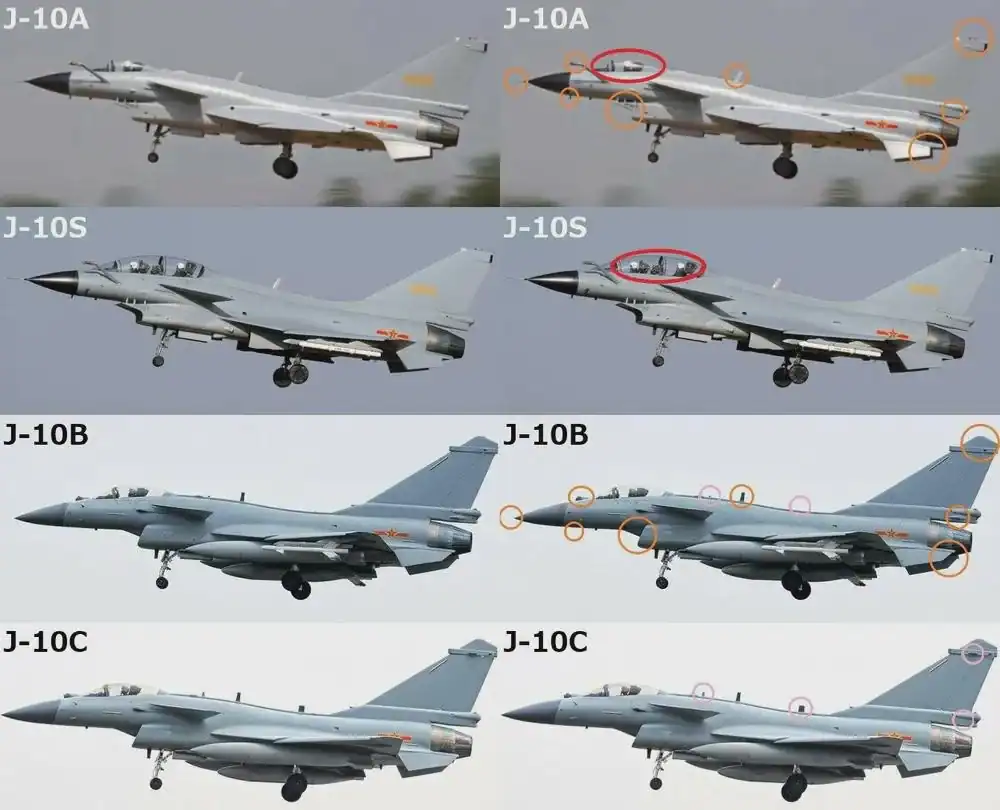
Starting with the J-10C variant, modern carbon-fiber composite materials and special radar-absorbing coatings have been widely used in the airframe to reduce the cross-sectional area (RCS) and minimize the aircraft’s detectability by enemy radar.
A separate technological challenge was the development and testing of a complex landing gear mechanism, which was successfully created by the aircraft plant’s own team of specialists in Guizhou Province.
The aircraft’s geometric dimensions ensure excellent maneuverability and a compact combat platform. The fighter’s fuselage length, excluding the air intake duct, is 16.43 meters, and its wingspan reaches 9.75 meters.
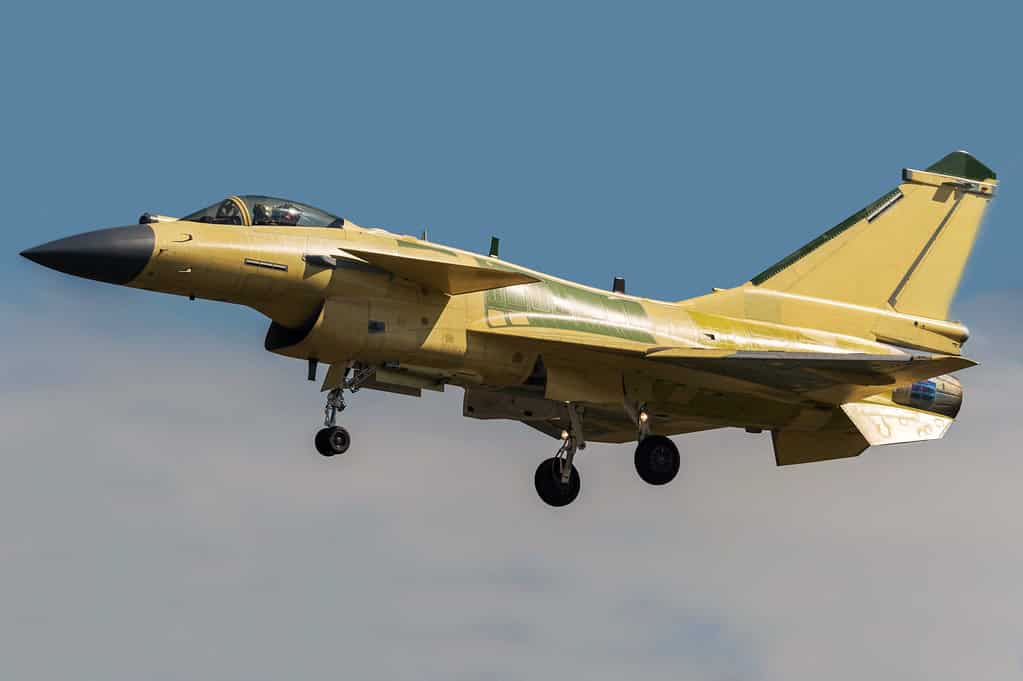
On the ground, the aircraft’s height is 5.43 meters. Thanks to the use of modern lightweight materials, the designers kept the empty weight of the aircraft within 8,840 kilograms. When performing typical missions, the aircraft’s normal takeoff weight is 12,400 kilograms.
When fully loaded with fuel and weapons, the platform’s maximum takeoff weight reaches 19,277 kilograms, although the engineers’ initial calculations had limited this parameter to 18,600 kilograms.
-

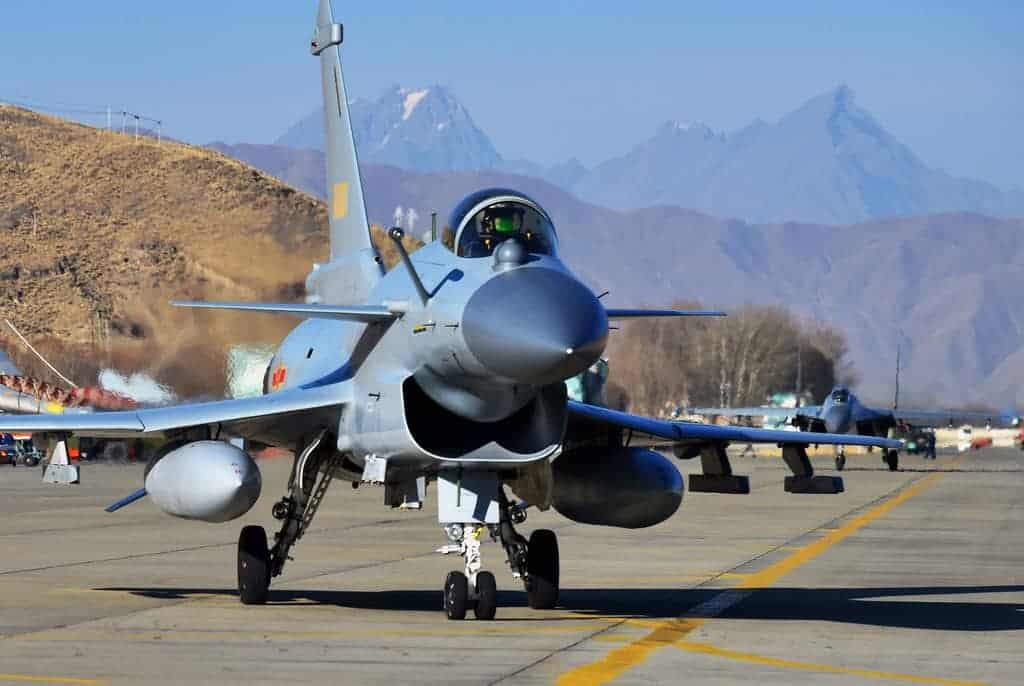
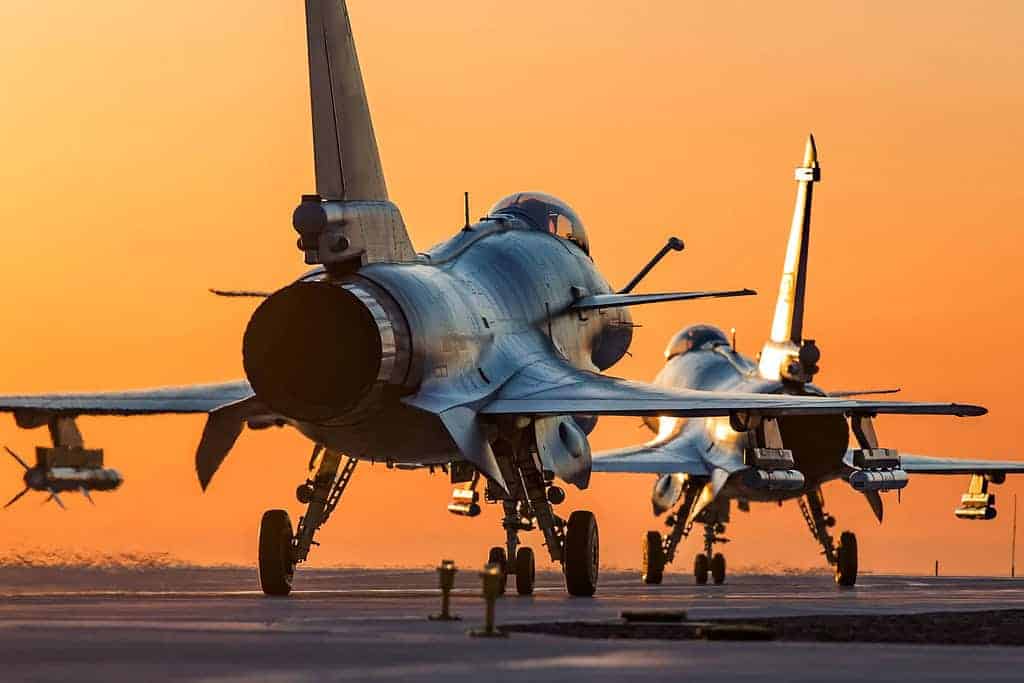
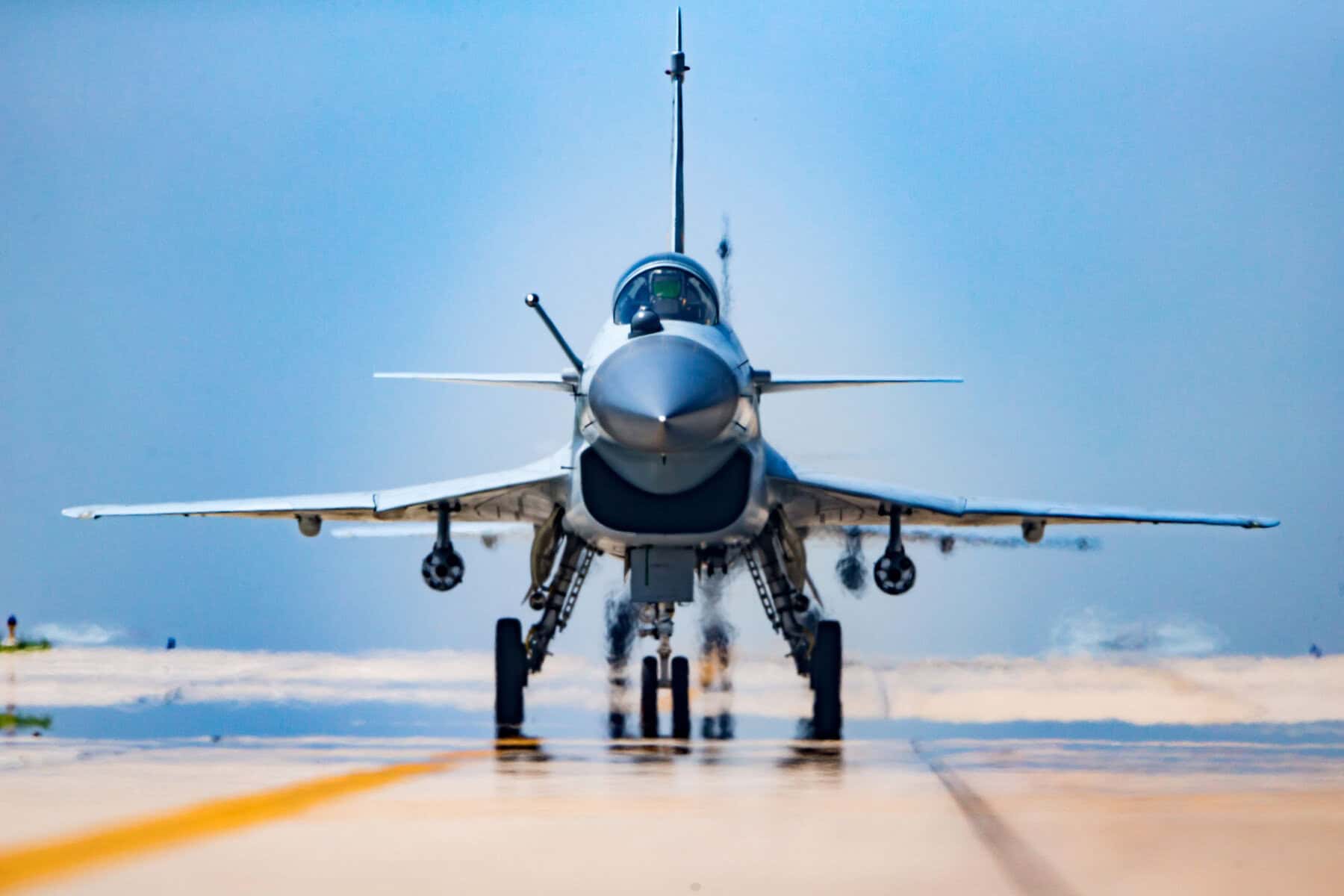
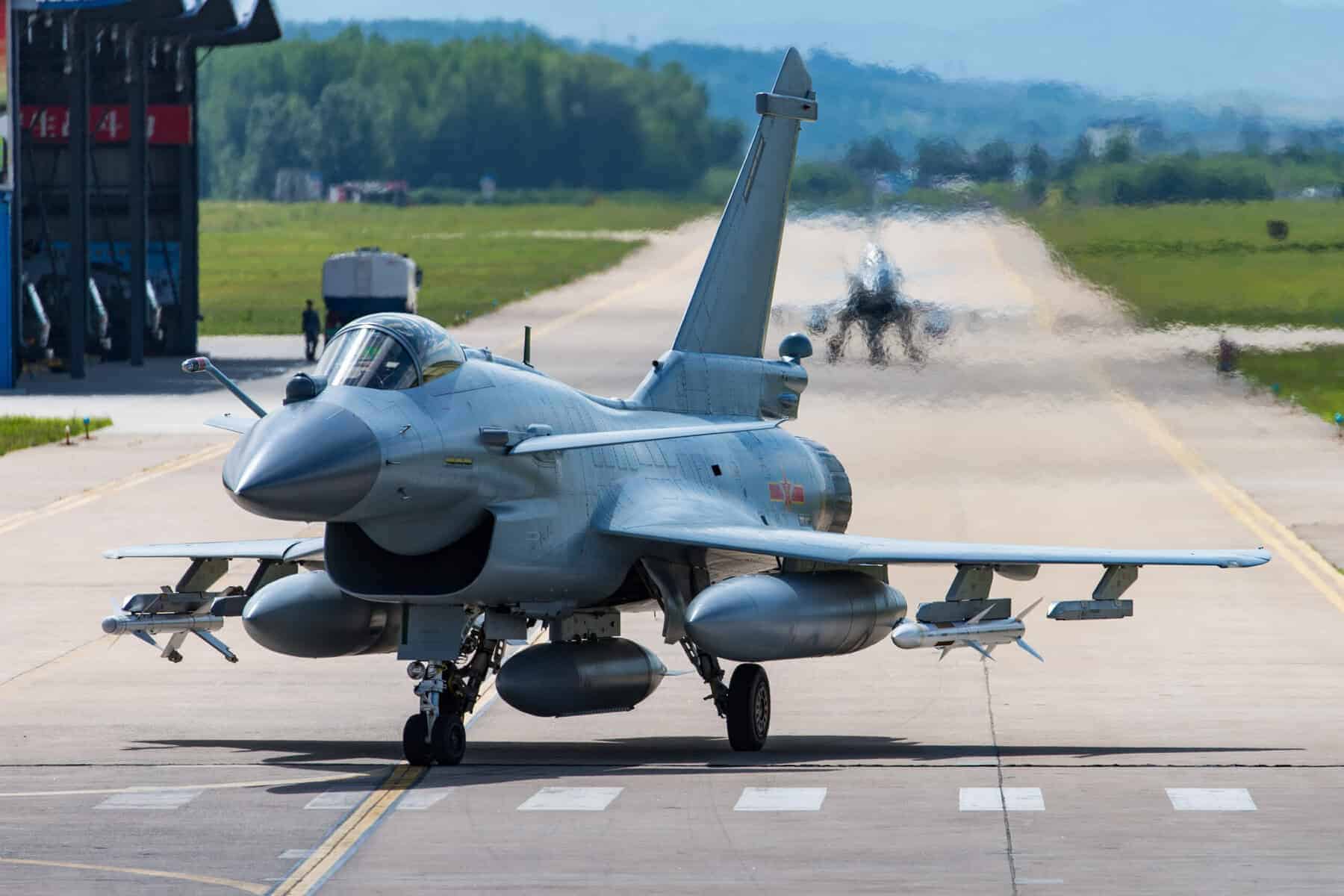
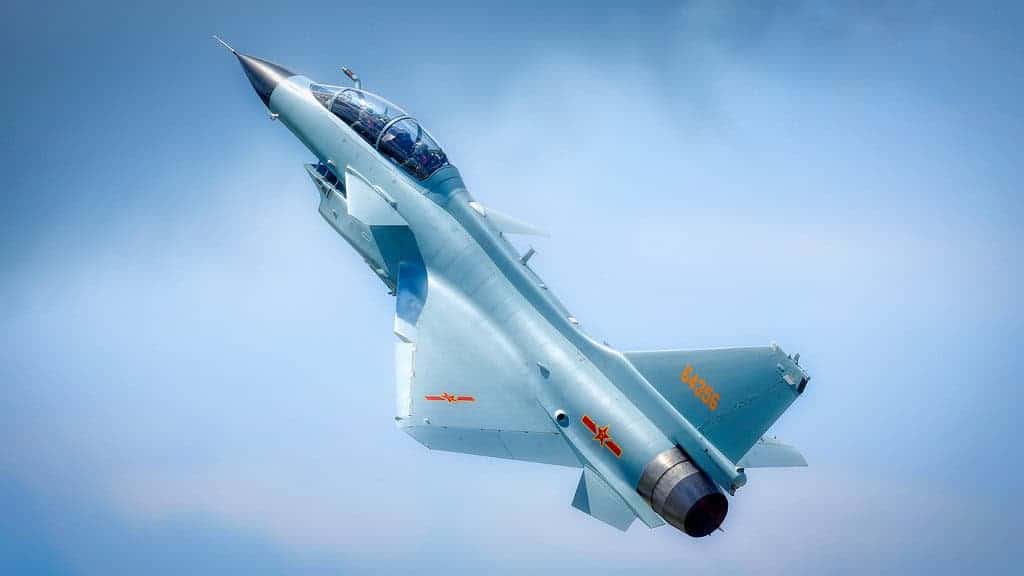
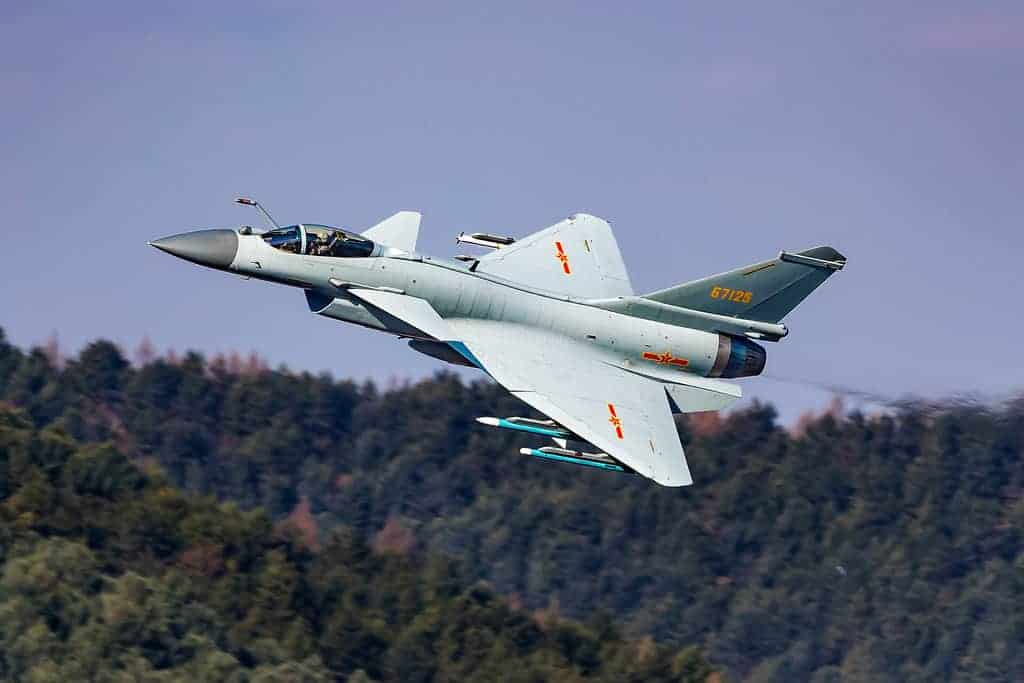
- A J-10B fighter jet during training flights. Photo credits: Sunson.X.Images.
-

- A J-10B fighter jet during training flights. Photo credits: Sunson.X.Images.
-

- A J-10B fighter jet during training flights. Photo credits: Sunson.X.Images.
-
- A J-10B fighter jet during training flights. Photo credits: Sunson.X.Images.
-

- A J-10B fighter jet during training flights. Photo credits: Sunson.X.Images.
-
- A J-10B fighter jet during training flights. Photo credits: Sunson.X.Images.
-
- A J-10B fighter jet during training flights. Photo credits: Sunson.X.Images.
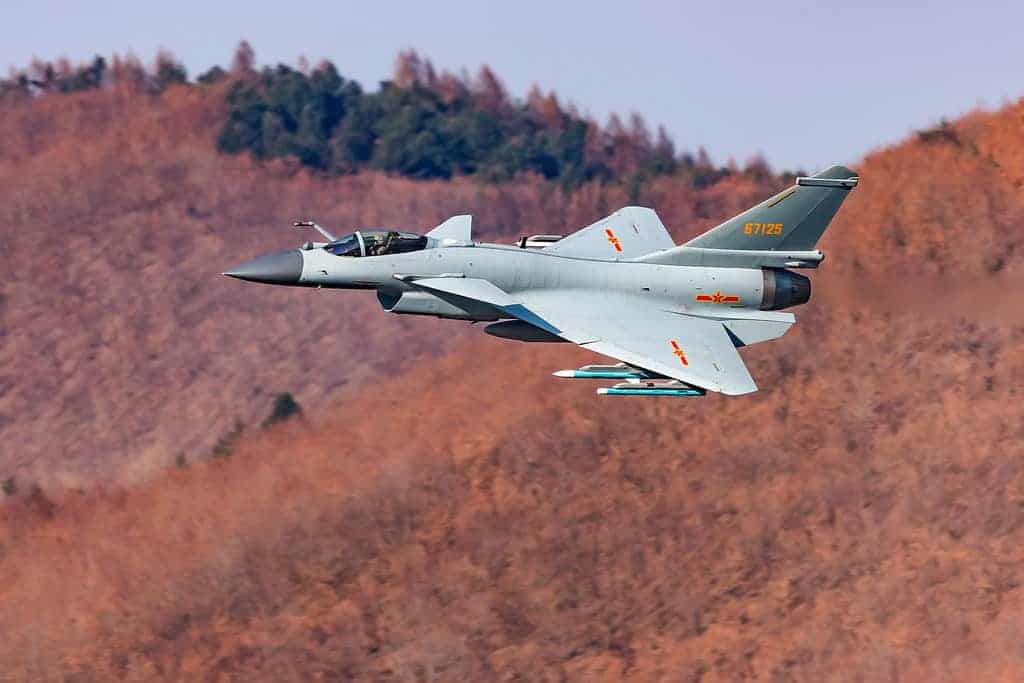
The aircraft has high firepower, as the maximum combat payload it can carry on its hardpoints is 7,000 kilograms. The airframe’s robust design allows the pilot to perform extremely complex maneuvers and withstand extreme operational G-forces ranging from +9G to -3G.
At high altitudes, the fighter reaches a maximum speed of 2.2 Mach. When flying close to the ground or at low altitudes, the aircraft reaches a speed of 1.0 Mach, which corresponds to an indicated airspeed of up to 1,250 kilometers per hour.
A powerful powerplant and sophisticated aerodynamics allow the aircraft to reach an impressive practical service ceiling of up to 25,000 meters.
An efficient fuel system provides the aircraft with a combat radius of 1,250 kilometers. If long-range redeployment is required, the aircraft’s maximum ferry range reaches 3,500 kilometers, and the installation of three additional external fuel tanks increases this figure to 3,900 kilometers. The aerodynamic design also guarantees excellent performance on short runways, as the fighter requires only a 350-meter takeoff roll and a landing roll of just 450 meters.
The evolution of the powerplant
The history of the J-10 fighter’s engine development reflects the Chinese aviation industry’s long and arduous struggle to create a reliable military turbofan engine. Engineers initially designed the J-10 around the promising domestic WS-10 Taihang engine, whose development was initiated by specialists at the Shenyang Aeroengine Research Institute (or 606 Institute) as early as 1987.
The engine’s core incorporated technology from the civilian CFM56-II, which, in turn, was derived from the American military General Electric F101 engine. Due to the high technological complexity and the inability to integrate off-the-shelf Russian fuel control units from the AL-31F series engines, the developers faced setbacks in the initial phase. It took Chinese scientists nearly 20 years to independently develop a full-authority digital engine control system (FADEC). The first versions of the WS-10A engine suffered from unpredictable reliability and service life issues.

In the early stages, J-10 fighters equipped with experimental WS-10A engines were significantly inferior in performance to those with original Russian powerplants. As a result, in 2010, China urgently ordered an additional batch of 123 AL-31FN engines from the Russian Federation, with delivery scheduled for 2012, to ensure the combat readiness of its existing J-10 fleet. It was only after the development of the WS-10B variant, with a thrust of 14.5 metric tons (approximately 142 kN), that the Chinese engine was able to completely replace Russian powerplants on the production lines.
A comparative analysis of the technical parameters clearly demonstrates the distinctive features of both powerplants. The Russian AL-31FN afterburning turbofan engine is manufactured by the Chernyshev Moscow Machine-Building Enterprise, while the Chinese WS-10 Taihang afterburning turbofan engine is produced by the Shenyang Liming Aero-Engine Group Corporation. The maximum thrust with afterburner for the Russian engine is 122.5–125 kN, while the base Chinese engine produces 132 kN, and its WS-10B variant develops up to 142–145 kN.

In maximum dry thrust mode, the Russian engine delivers approximately 74.9 kN, falling short of its Chinese competitor’s 89.17 kN. The specific fuel consumption in afterburner mode is about 1.96 kg/(kgf·h) for the AL-31FN and 2.02–2.08 kg/(kgf·h) for the WS-10. At the same time, in cruise mode, the Chinese engine demonstrates higher fuel efficiency with a consumption rate of 0.695 kg/(kgf·h) compared to approximately 0.75 kg/(kgf·h) for its Russian counterpart.
In terms of weight and dimensions, the Chinese design significantly exceeds the Russian one: the WS-10’s dry weight is 1,794.7 kilograms, its length is 4,950 millimeters, and its maximum diameter is 1,160 millimeters. The Russian AL-31FN engine has a dry weight of about 1,538 kilograms, a length of 4,897 millimeters, and a maximum diameter of 1,140 millimeters.
Weapons system
The evolution of the J-10 fighter’s mission concept clearly reflects a shift in the PLA Air Force’s military doctrine from purely defensive tactics aimed at protecting the country’s airspace to offensive operations and the pursuit of air superiority.
The designers initially developed the early J-10A as a pure air defense interceptor, since China had no other modern tactical platforms at the time, and the outdated J-8 interceptors could only perform missions at high altitudes and speeds.

The modern J-10C has evolved into a multi-role strike platform. The aircraft has 11 external hardpoint locations. On the forward underwing hardpoints, crews can simultaneously mount optoelectronic laser-guided targeting stations, electronic warfare pods, devices for deploying thermal decoys and passive countermeasures, as well as specialized data-link pods for anti-ship missiles.
The modernization of even the early J-10A fighters has significantly enhanced the air force’s combat capabilities. Following updates to their software and control systems, these aircraft are now capable of deploying the latest fourth-generation PL-10 and PL-15 missiles.

A comparison of missile specifications demonstrates China’s tremendous technological progress. The early-generation PL-8 short-range air-to-air missile is a licensed copy of the Israeli Python-3; it has a single-mode solid-fuel engine, withstands a maximum G-load of 35G, and reaches a speed of up to Mach 2.5.
It carries an 11-kilogram warhead, has a launch range of up to 20 kilometers, and its analog infrared homing seeker has a maximum deviation angle of 20 degrees. In contrast, the modern PL-10 close-range missile is an entirely original Chinese design with a single-stage solid-fuel engine, capable of accelerating to Mach 4.0 and withstanding a colossal G-load of 60G.

The PL-10 carries a 33-kilogram warhead, can engage targets at ranges of up to 60 kilometers according to official claims, and features a matrix-type thermal imaging seeker with a field of view exceeding 90 degrees. This modern system integrates with the pilot’s helmet-mounted display and allows for launches at wide angles of sight.
For air combat at medium and long ranges, the J-10C fighter’s primary weapon is the PL-15 missile or its export version, the PL-15E. This weapon features an active radar seeker with an active phased-array antenna and a two-way data link, providing a target engagement range of up to 150 kilometers. For effective engagement of ground targets, the standard armament package includes YJ-91 supersonic anti-radar missiles, which the air force uses to penetrate enemy air defense systems.
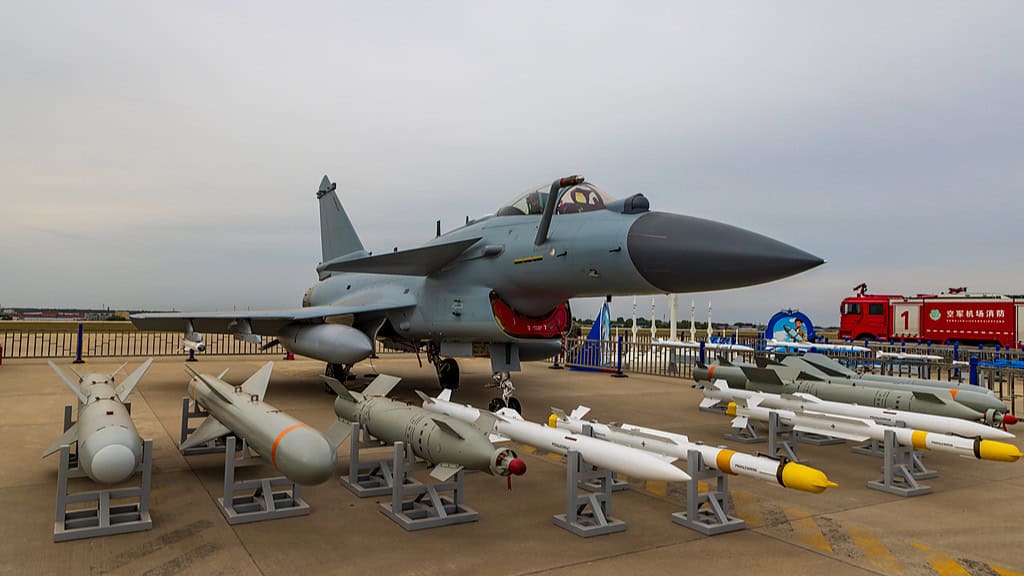
Pilots can also use YJ-8K anti-ship missiles and 500-kilogram GB500 guided aerial bombs, which feature a gyro-stabilized laser seeker. Although the aircraft’s theoretical payload capacity reaches 7 metric tons, in typical combat configurations, the weight of the armament usually does not exceed 5 metric tons. This limitation allows the aircraft to maintain the necessary maneuverability and long range.
Airborne radar
A key factor in the qualitative improvement of the J-10’s combat capabilities is the evolution of its radar system, developed by the Nanjing Research Institute of Electronic Technology (NRIET / CETC’s 14th Institute). This institution has been a historic pioneer in the development of Chinese aviation radars since the days of developing Soviet counterparts and the Type 7010 strategic systems.
Type 1473 (KLJ-10) pulse-Doppler station
The basic production J-10A fighters were equipped with the fully coherent Type 1473 pulse-Doppler (PD) radar (export designation NRIET KLJ-10). During the development phase, the possibility of using the Russian Zhemchug radar system was considered.
This radar provided an air target detection range of 120–150 km, with the capability to simultaneously track up to 20 air targets and engage 4 of them. However, the decision to opt for the domestically developed Type 1473 demonstrated the technological maturity of China’s electronics industry.

The Type 1473 radar uses a mechanically scanned slotted waveguide antenna array and has the following operational parameters: The system is integrated with a MIL-STD-1553B digital data bus, which made it possible to implement a glass cockpit concept featuring three multifunction displays (MFDs) and a head-up display (HUD), enabling the use of PL-12 medium-range guided missiles.
- Maximum air target detection range: up to 160 km.
- Effective operating range in the upper hemisphere (Look-up): up to 100 km.
- Effective operating range in the lower hemisphere (Look-down): up to 80 km.
A new type of radar for the J-10B variant
During the design of the J-10B, the aircraft’s nose section underwent a radical reconfiguration. The changes to the radome’s geometry and its characteristic angle of inclination were designed to accommodate the installation of a fixed phased array antenna. For a long time, Western analysts believed that the J-10B was equipped with a passive phased array radar (PESA) with a diameter of about 700 mm, capable of detecting targets at ranges of up to 150 km and guiding missiles to 4–6 targets.

However, official statements from the developer confirmed that the aircraft was equipped from the outset with a new type of radar, which is architecturally an active phased array radar (AESA). The radar features antenna folding mechanisms, highly miniaturized components, and enhanced resistance to interference. In addition, the J-10B was equipped with an infrared search and track (IRST) system, which allows it to detect air targets by their thermal signature at ranges of up to 60 km and identify them at ranges of 30–50 km without activating the radar, enabling a stealth attack mode.
Third-generation AESA radar systems of J-10C and J-10CE fighters
J-10C fighters and their export version, the J-10CE, are equipped with a multifunctional radar system featuring a new-generation active phased array antenna. This radar is based on high-performance transceiver modules (TMs) made of gallium arsenide (GaAs) and gallium nitride (GaN), which provide an enormous radiated power density and a wide bandwidth.
The high density of individual transceiver modules on the antenna array—numbering over 1,200—provides a significant advantage over the French RBE2-AA radar system on the Dassault Rafale fighter jet, which has only 836 modules.
As a result, the effective detection range for ‘fighter aircraft’-type air targets with a radar cross-section (RCS) of approximately 3 m² is over 220 km according to official statements, and some sources indicate a potential detection range of up to 250 km, whereas the French RBE2-AA system provides only 150 km.

The radar demonstrates high multi-purpose flexibility, as it is capable of simultaneously tracking up to 30 air targets and engaging 6 of them at once, while concurrently performing terrain mapping in synthetic aperture radar (SAR) mode and ground moving target indication (GMTI).
In addition, the deep integration of electronic warfare (EW) capabilities and the AFAR’s high power potential allow for the use of separate groups of modules to generate high-power, directional jamming, which makes it possible to blind the radar systems of enemy fighters and surface-to-air missile systems, creating conditions for an unimpeded strike.
Geography of export deliveries
For many years, the PLA Air Force absorbed the entire production volume of the J-10, and attempts to export the aircraft were blocked. For example, in 2013, official representatives of AVIC stated that the fighter did not have an export license and was not being sold to other countries. However, the situation changed dramatically after India purchased French Rafale aircraft, creating a critical imbalance of power in South Asia.
Indonesia
As part of a large-scale modernization of the Indonesian Air Force during Prabowo Subianto’s presidency, Jakarta made a high-profile decision in 2025 to begin purchasing new Chinese Chengdu J-10CE multi-role fighters.
This move marked the country’s first-ever acquisition of Chinese combat aircraft, intended to replace outdated equipment and alleviate an acute shortage of operational aircraft. The deal is financed through direct intergovernmental loans from the People’s Republic of China, and the total agreed-upon financial package, worth over USD 9 billion, includes the supply of aircraft, PL-15E long-range missiles, related equipment, as well as the prospective acquisition of Chinese frigates.
The program calls for the phased delivery of up to 42 aircraft (26 single-seat and 16 two-seat training and combat versions), and the Indonesian Air Force’s 6th Air Wing will be responsible for operating the new aircraft.
Pakistan
Pakistan became the first and, to date, the only confirmed foreign buyer of J-10CE fighters. In late 2020, the parties signed a contract for the delivery of the first batch of 36 aircraft (with a total option for up to 50 units). The first six J-10CP fighters arrived at the PAF Base Minhas (Kamra) in March 2022, joining the 15th Squadron of the Pakistan Air Force’s aviation wing. By early 2026, the number of aircraft delivered had reached at least 20.
The air battle of May 5, 2025
The J-10CE’s actual combat capabilities were demonstrated during a large-scale aerial engagement on May 7, 2025, known in Chinese military analysis as the ‘5·7 Air Battle.’ According to official information from the Pakistan Air Force, which journalist Alan Worns was able to review, the engagement began at 1:05 a.m., when the Indian Air Force, as part of Operation Sindoor, deployed a large air group of 72 fighter jets (including Su-30MKI, Rafale, and Mirage 2000) to strike targets on Pakistani territory.
The Pakistani side quickly scrambled 42 fighter jets, the core of which was a group of 20 J-10CE aircraft serving as the main strike force for beyond-visual-range (BVR) combat. The Pakistani forces’ tactics were based on maintaining complete radar silence for the J-10CE fighters. They advanced into the interception zone with their onboard radars turned off, receiving all necessary target information via secure data links from Saab Erieye and ZDK-03 unmanned aerial reconnaissance (UAR) aircraft, which in turn coordinated their actions with YLC-8B ground-based radars and Chinese-made FD-2000 air defense systems.
To ensure complete tactical superiority, Pakistani cyber operations units carried out a successful attack on the communication channels of three Indian military satellites, significantly reducing the ability of Indian command centers to maintain situational awareness. At the same time, electronic warfare aircraft jammed the Indian Air Force’s command and control frequencies, completely cutting off Indian pilots from ground-based guidance stations.
Having lost their bearings and coordination, the Indian aircraft entered the engagement zone of the PL-15E missiles, which were launched en masse by Pakistani J-10CE fighters after receiving the order to destroy them. The outcome of the battle proved catastrophic for the Indian side—a crushing 7:0 score (6:0 according to some sources) in Pakistan’s favor, with zero losses on the part of the defenders.

Among the confirmed losses of the Indian Air Force were four French-made Rafale fighters (three were shot down in mid-air by PL-15E missiles, and one sustained critical damage from debris and burned after making an emergency landing; the identification numbers of the destroyed aircraft are: BS001, BS021, BS022, BS027). In addition, one Su-30MKI fighter, one MiG-29, and an Israeli Heron reconnaissance UAV were destroyed.
This battle went down in history as the first large-scale aerial engagement whose outcome was entirely decided at long ranges using network-centric warfare methods. Chinese technical support specialists, who were stationed directly at Pakistani bases and ensured the real-time preparation of aircraft for sorties, played a crucial role in this victory.
Conclusion
The J-10 fighter marks a transition for China’s aircraft industry to a qualitatively new level, as the country has finally overcome its dependence on direct supplies of foreign equipment.
This aircraft has evolved from an ambitious and secret project into a reliable backbone of the Chinese Air Force and a successful export product. Its modern variants demonstrate Beijing’s ability to independently develop and manufacture high-tech components, including active phased array radars and its own turbojet engines.
As a result, the J-10 has not only met China’s domestic need for a mass-produced and effective fourth-generation fighter but has also transformed the country into a major player in the global arms market, capable of posing a real challenge to its American and Russian counterparts in its class.




Washington Backs Syria’s Emergence as an Independent Actor in the Islamic World and Its Reintegration into the Western Sphere
On August 24, 2026, the United States revoked Syria's designation as a state sponsor of terrorism, a status the country had carried since 1979. The...

Visits by Senior Washington Officials to Moscow: The Factors Driving the Kremlin’s Rejection of the White House’s Proposals
In late August and early September 2026, three senior U.S. officials visited Moscow, marking a level of concentrated contact in U.S.-Russian relati...
A Sharp Shift in the Dynamics of Global Confrontation Forces Washington to Rethink How It Builds Its Key Partnerships
On September 12–13, 2026, the 18th BRICS Summit was held in New Delhi. Xi Jinping traveled to India to lead the Chinese delegation, marking his fir...
