
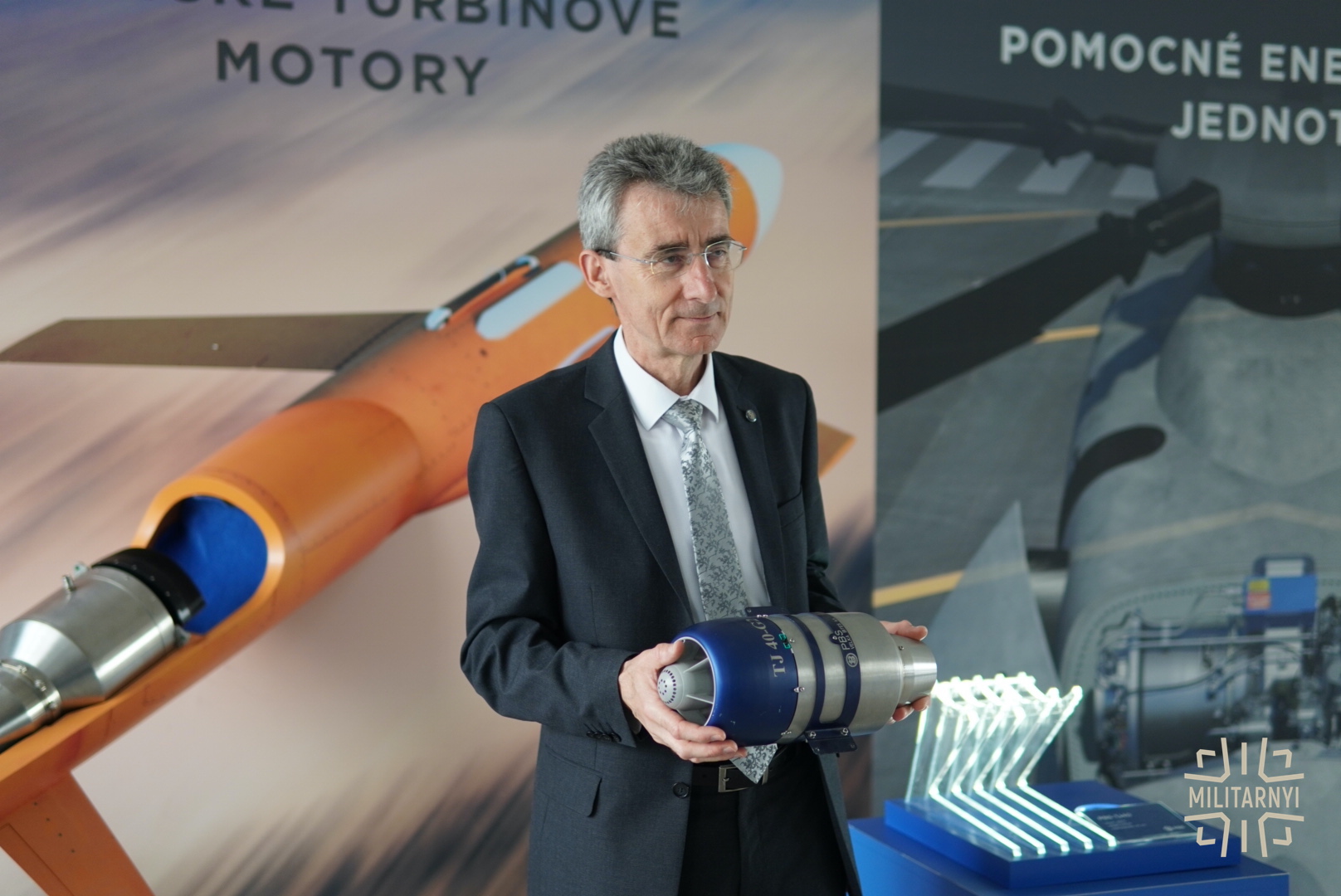
“Customers are already showing interest in our joint engine with Ukraine for new missile projects,” — CEO of PBS Velká Bíteš

Катерина Супрун


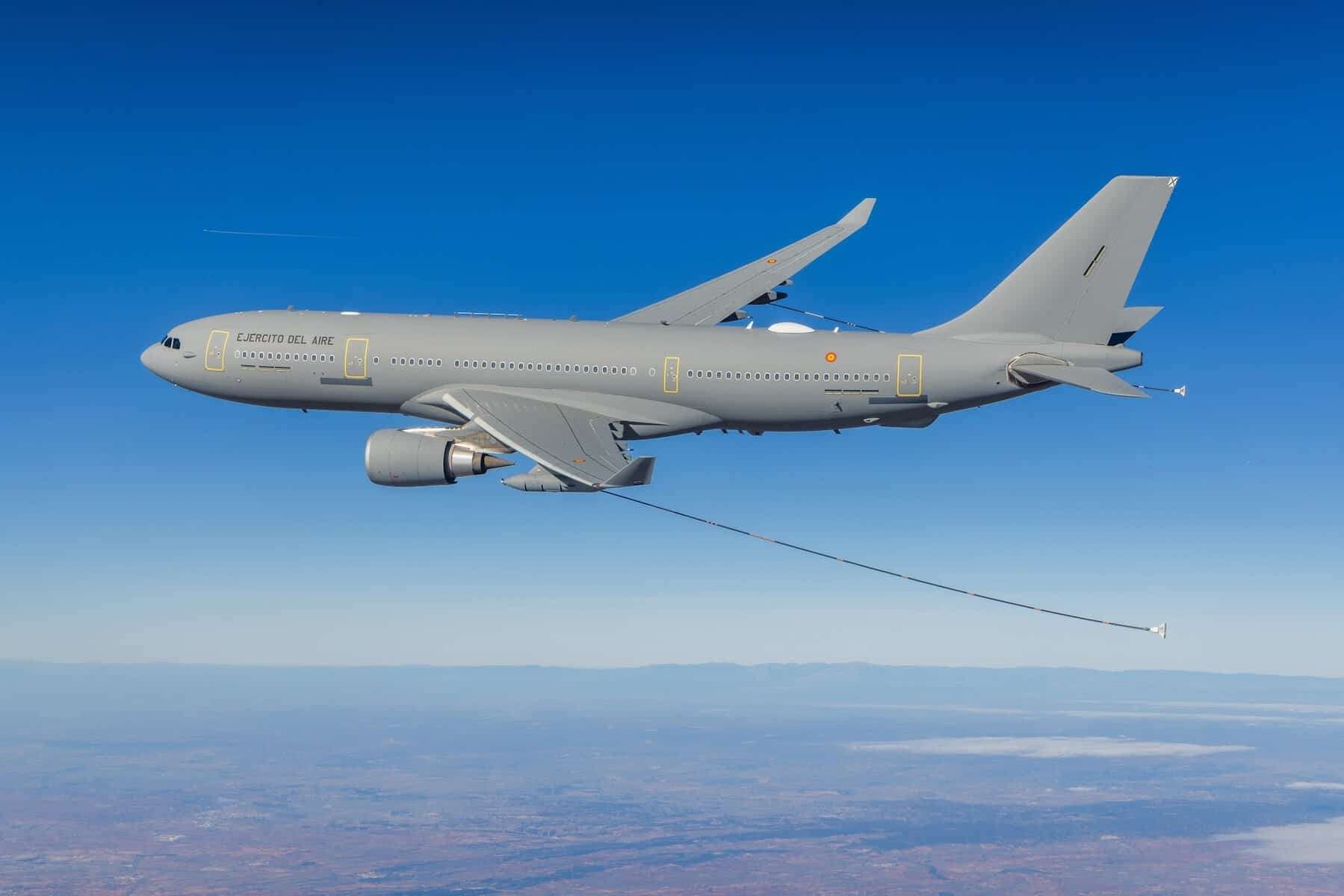

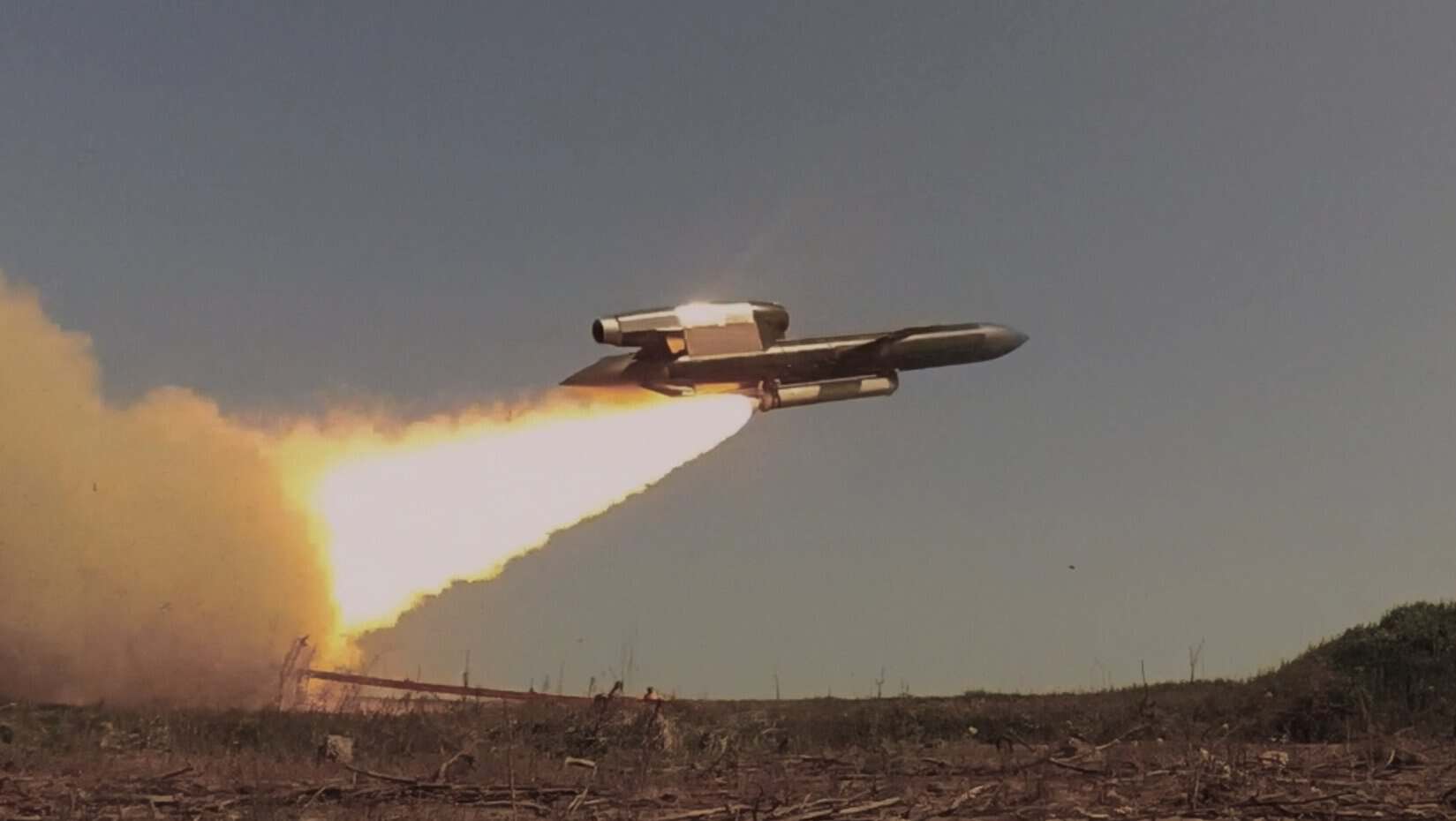

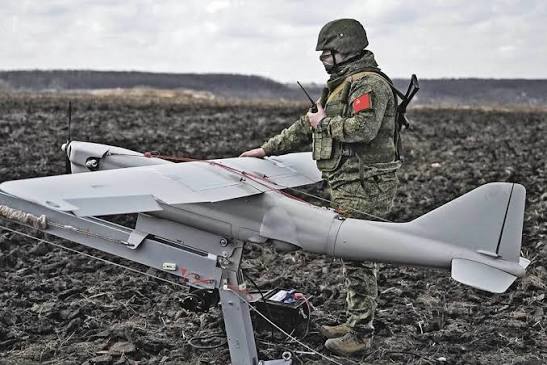

Militarnyi visited the production facilities of PBS Group, a leading European manufacturer of jet engines for drones and missiles. The company is currently undergoing a major expansion phase: jet engine production is expected to increase by 800% between 2023 and 2026. Its core manufacturing capacity is concentrated in Velká Bíteš (Czech Republic), with additional expansion through a new plant in Roswell (United States).
PBS Group is running a joint program with Ukrainian manufacturer Ivchenko-Progress — the AI-PBS-350. This is the most powerful engine in the company’s portfolio. It is equipped with a four-stage axial compressor and a single-stage axial turbine. The engine produces 3,400 N of thrust, reaches maximum power in under six seconds, and supports both ram-air starting and pyrotechnic in-flight start. This makes it suitable for single-use applications, such as air-launched missiles.
We spoke with Milan Macholán, CEO and Chairman of the Board of PBS Velká Bíteš, about the status of the Czech-Ukrainian project, cooperation with other Ukrainian companies, and the company’s development priorities.
Cooperation with Ukraine
The main question for Ukrainian journalists is the cooperation between PBS and Ivchenko-Progress and the status of the AI-PBS-350. What stage are you at now?
— We have signed an agreement with Ivchenko-Progress for the production of half of the engine here at PBS in the Czech Republic. We are currently preparing production for that 50%. We are working very closely on specific parts, technologies, and manufacturing procedures. We are likely to complete this preparation phase next year and begin serial production a year after that.
This engine is mainly used for missiles. We have a potential customer and a project interested in this type of engine. That is why it is very important for us to complete the technological processes.
Is this customer a Ukrainian company?
— Let’s say it is international. We have divided the work so that Ukrainian companies work with Ivchenko-Progress, while European or international clients work with us. Half of the engine will be produced in Ukraine, and the other half here in Velká Bíteš. The process will work as follows: if Ivchenko-Progress receives an order, we send them our half of the engine. If PBS receives the order, we ask Ivchenko-Progress to send its half to us. We then complete final assembly here, conduct testing, and deliver the finished product to the client.

How is maintenance currently organized for engines used by Ukrainian companies? Are there service centers or personnel operating in Ukraine, or are engines sent to Czechia?
— We maintain very close contact with our Ukrainian customers. In practice, both models are used. When a client requests it — “Please send PBS technical specialists to Ukraine; we need help integrating the engine into a missile or drone” — our specialist travels to Ukraine and provides on-site support. This ensures correct operation of the system.
If more substantial changes or innovations are required — for example, if the client requests improvements to certain parameters — we can bring the engine to Czechia, implement modifications here, and send it back. Alternatively, since we continuously supply engines to Ukraine, improvements are incorporated into subsequent batches.
What are these changes most often related to? Are they design modifications? How many have there been since 2022?
— They are, for example, software-related. This is crucial for managing communication between the engine and the missile or drone. There have been dozens of such changes.
This is a very productive cooperation. Ukrainian specialists have enormous real-world experience from this war. And when they need improvements on our side, it is a win-win situation. It is good for the client and for us because we improve the parameters and functionality not only of the engine itself but also of the entire missile or UAV system.
PBS’s role in the ERAM missile development
How does this work, and how does Ukraine’s experience influence your project with the US company Zone 5 on the ERAM missile?
— At the very beginning, there was a request from Ukraine to the US company. Since PBS has long been successfully operating in the US market, Zone 5 approached us, saying that our engine type is suitable for their missile.
This is our major advantage: thanks to 25 years of experience supplying engines for UAVs and missiles, we were able to immediately provide an engine for Zone 5. This allowed them to rapidly complete the missile (including its guidance system) and begin deliveries to Ukraine. The key factors were project speed and our readiness to provide an engine perfectly matching the required parameters.
As a result, PBS engines reach Ukraine not only through cooperation with Ukrainian companies but also through collaboration with the United States.

Prospective projects
Regarding future developments — Russia is currently using aerial bombs equipped with jet engines. Is PBS considering developing engines for similar systems or modifying its smallest models?
— Currently, we do not have such a specific project in development. However, we are engaged in discussions about the potential use of our engines for similar systems within the European Union or the United States. This is, however, a highly sensitive topic, and I cannot provide further detail.
This is the first installment in a series of publications on the PBS Group.




Xi Jinping’s Washington Visit Outlines the Timeframe for the Active Phase of the Confrontation: Beijing Openly Demands Taiwan’s Return
On September 23–25, 2026, Chinese President Xi Jinping held talks with President Trump at the White House during the first Chinese state visit to t...

A Sharp Shift in the Dynamics of Global Confrontation Forces Washington to Rethink How It Builds Its Key Partnerships
On September 12–13, 2026, the 18th BRICS Summit was held in New Delhi. Xi Jinping traveled to India to lead the Chinese delegation, marking his fir...

Netanyahu’s Visit to Abu Dhabi: Israel Builds Partnerships from a Position of Strength, but the Middle East Conflict Is Eroding the Edge of Its Weapons
On September 27, 2026, Israeli Prime Minister Benjamin Netanyahu traveled to Abu Dhabi with the head of Mossad and the head of the National Securit...
