
Brazil’s Elections: Washington’s Contradictory Bets Keep It From Delivering Its Latin American Strategy

Solid Info







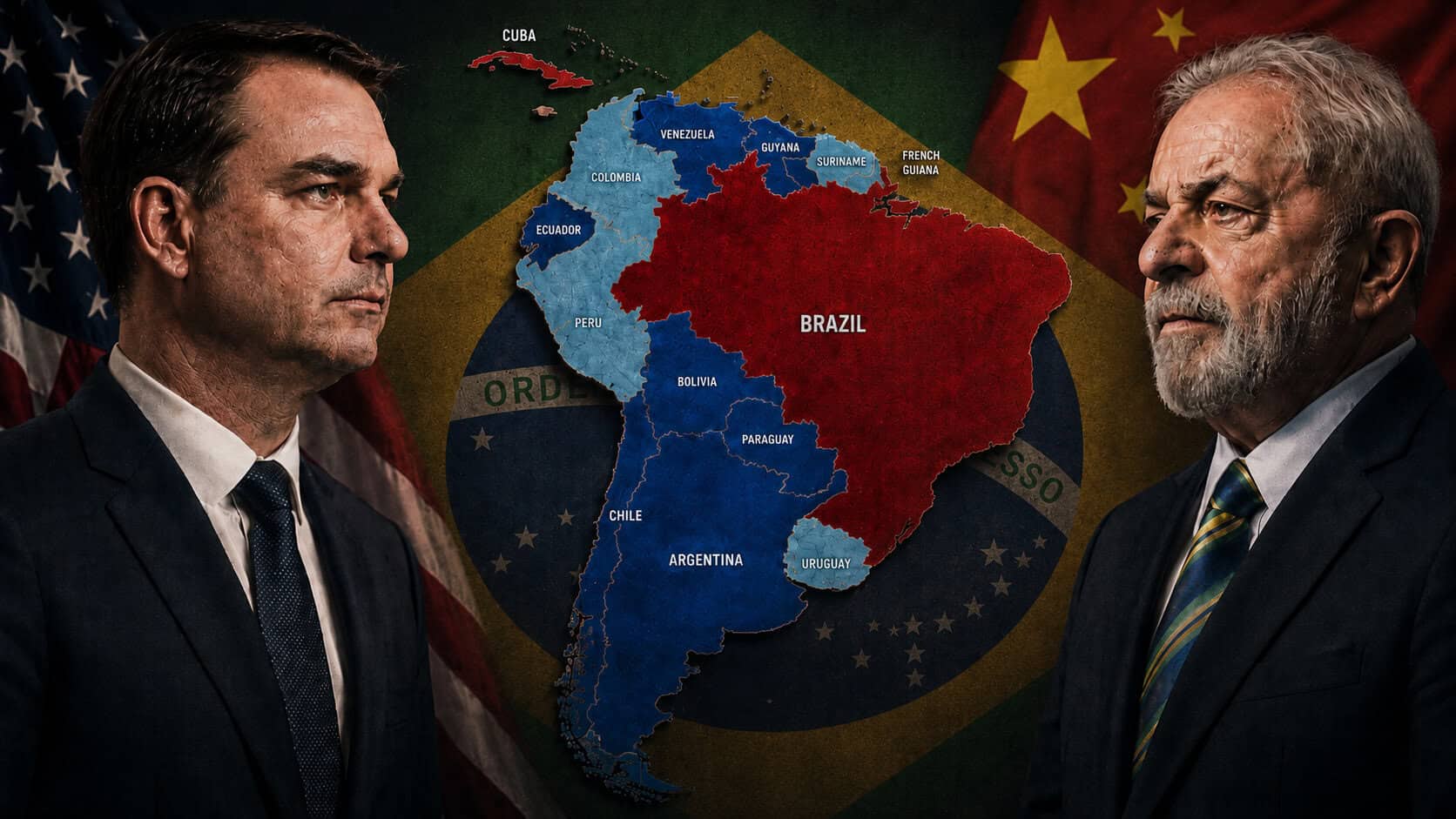
On October 4, 2026, Brazil holds general elections that will decide the presidency, and with less than three months to the vote, pollsters are recording a gap between the leading candidates: incumbent President Lula da Silva leads Flávio, the son of former president Jair Bolsonaro, by 12 points in the first round—40% to 28%—and by 8 in the runoff—45% to 37%.
Washington’s Latin America strategy cannot be fully realized without Brazil, the continent’s largest economy and its key market. The main factor behind the failure of Washington’s Brazil strategy is the White House’s inconsistency in dealing with Brazilian political elites. A long-term strategy of expanding U.S. influence over Brazil requires Brazilian elites to link access to Washington with a change of power at home. Instead, the White House bet on the weak Bolsonaro candidacy while simultaneously communicating with the Lula administration—and thereby devalued the elites’ main incentive to back a change of power.
One such channel to the Lula administration runs for Washington through J&F, the Batista brothers’ agribusiness conglomerate, which is at once one of Trump’s largest donors and an ally of the current government. Its American subsidiary Pilgrim’s Pride contributed $5 million to Trump’s 2025 inaugural committee—the largest disclosed contribution from a single donor. In May 2026, JBS co-owner Joesley Batista helped arrange Trump’s meeting with Lula in Washington. For Brazil’s financial and political elites, this removes the need to bet on Bolsonaro to restore relations with America.
In parallel, Washington is ratcheting up public pressure on the Lula government. On July 15, 2026, the Office of the U.S. Trade Representative imposed an additional 25% tariff on select Brazilian goods, effective July 22. The decision came less than three months before the first round, making the trade conflict a direct factor in the presidential campaign.
President Lula da Silva builds his foreign economic model on simultaneous cooperation with the United States and China as the country’s two key trading partners, but favors reviving economic and investment ties with Beijing in particular.
Flávio Bolsonaro, by contrast, represents the right flank of Brazilian politics and the economic interest groups aligned with it, whose potential success at the polls is the key factor for the White House strategy aimed at changing the foreign policy course of the region’s largest state.
Brazil is Latin America’s largest economy, a market of 177 million internet users, and a reliable source of U.S. trade surpluses.
In 2025, the U.S. goods trade surplus with Brazil reached $14.4 billion, and the total surplus in goods and services hit $41.8 billion. By the Brazilian government’s estimate, the cumulative surplus over the past fifteen years exceeded $424 billion. That same year, Brazil became the world’s top destination for Chinese investment, attracting $6.1 billion, or 10.9% of all Chinese capital invested abroad.
With the election’s stakes extending beyond Brazilian domestic politics, American technology corporations are lobbying for tougher tariff pressure on the Lula da Silva government through nonprofit organizations, the most influential of which is the Computer and Communications Industry Association (CCIA).
The lobby’s membership includes Amazon, Apple, Google, Meta, Microsoft, Intel, and other members of the Big Tech elite who, despite internal conflicts and technological rivalry, share the goal of achieving political change in Brazil.
The CCIA lobbyists’ filing challenged the compatibility of Brazil’s digital policy with free trade rules, contesting the regulation of platforms and of PIX, the state-run instant payment system that processes up to 8 billion transactions a month and operates beyond the control of American payment networks.
Tariff pressure became the outward expression of the tech corporations’ drive to gain access to Brazil’s digital market worth more than $54 billion.
Electorally, the pressure is backfiring. In a Quaest poll, 42% of respondents said the tariffs pushed them toward voting for Lula versus 27% for Bolsonaro, while 63% expect the tariffs to hurt them or their families. The instrument meant to force the government into concessions is simultaneously strengthening Lula’s electoral position.
During the presidential campaign, Brazil is becoming an arena of confrontation between American Big Tech capital and the technological alternatives that China’s leadership offered the country during da Silva’s term.
Conservative victories in the 2025–2026 cycle served the aims of Big Tech elites, who since the start of Trump’s term have been turning the continent into a fallback jurisdiction for their capital.
Brazil remains the only major country in the region whose government is in systemic conflict with the Trump administration and stands in the way of a full-scale conservative remaking of the region.
Despite the presence of the largest American platforms, the Lula government is steadily tightening regulation and liability for U.S. companies that violate local law, constraining their operations and user monetization.
In May 2026, the Brazilian president signed a package of bills and decrees that require tech company owners to remove illegal content and take preventive measures against violations, and that establish liability for paid advertising promoting violence.
Brazil’s Foreign Alignment Shapes the Contest Among Political Elites
The conservative elites consolidated around Senator Flávio Bolsonaro rest on the country’s agricultural sector, which remains the main engine of the Brazilian economy and traditionally backs politicians tied to the family of former president Jair Bolsonaro.
Large landowners and agricultural commodity exporters are critical of the current presidential administration’s environmental regulations, which restrict the expansion of cropland and pasture in the Amazon.
Agribusiness is counting on a right-wing populist government to substantially weaken environmental enforcement and halt the demarcation of Indigenous lands.
Elon Musk is amplifying the influence of right-wing populist business circles inside the country through Starlink, which has brought high-speed internet to more than 250,000 subscribers in Brazil’s remote regions.
At the same time, the populist right’s campaign finances have taken reputational damage that, on the eve of the election, will limit the resources Flávio Bolsonaro can raise for his own campaign.
Banco Master founder Daniel Vorcaro pledged up to $24 million for an English-language biopic about Jair Bolsonaro, and at least $10.6 million flowed through intermediaries to the Texas-based Havengate Development Fund LP.
The Central Bank of Brazil’s liquidation of Banco Master over opaque financial schemes stripped the right-wing populist candidate of part of his financial base and damaged his reputation among moderate voters.
Shrinking support from the traditional financial sector prompted conservative groups in the U.S. to join the search for new backers for the Bolsonaro campaign.
In early May 2026, Flávio Bolsonaro and Liberal Party chairman Valdemar Costa Neto held a closed-door meeting in Miami with entrepreneurs from fintech, crypto, mining, and residential construction who had relocated their capital to Florida.
The Bolsonaro team’s American lobbyists are counting on support for Bolsonaro from this group of elites, judging it more loyal to the conservatives.
The hunt for foreign money stems from the retreat of São Paulo’s financial sector, which reliably funded conservatives in previous campaigns. The region’s banking elites earn their income servicing government flows and programs, so big business avoids conflict with the current administration and will not back a candidate whose defeat would jeopardize relations with the da Silva government after reelection.
São Paulo state’s exports to the U.S. totaled $13.6 billion in 2024, a third of Brazil’s shipments across the ocean. With the tariffs hitting oil, coffee, sugar, and semi-finished goods, the state’s elites distanced themselves from a candidate whose partnership with Washington threatens their export revenue.
Although the participants of the Miami meeting publicly promised to channel private investment into Brazil after a right-wing populist victory, these interest groups cannot meaningfully strengthen Bolsonaro’s campaign with so little time left before the election.
The new elites who have come out for Flávio Bolsonaro lack financial resources and political leverage in Brazil comparable to what São Paulo’s financial groups have built up.
The loyalty that fintech and crypto business is showing the populist right can lay the financial groundwork for the conservatives’ next presidential campaign, since in the current political cycle these groups cannot compete with the leadership of major corporations skeptical of the Bolsonaro candidacy.
The shortage of support from domestic Brazilian elites pushes Flávio Bolsonaro to lean on outside patronage, coordinated chiefly by the candidate’s younger brother Eduardo. Eduardo raises money from American conservative foundations, while Elon Musk supplies the populist right with technology.
Starlink has brought satellite internet to the country’s remote regions, letting Bolsonaro supporters spread campaign messaging and coordinate the campaign around the national providers that Brazilian courts had ordered to block conservative accounts.
Washington’s double game is most vividly embodied in communication that runs outside official diplomatic channels. The Batista brothers’ agribusiness conglomerate J&F has become Lula da Silva’s most influential ally and one of the intermediaries in U.S.-Brazilian relations, and its American subsidiary Pilgrim’s Pride is the largest single donor to Trump’s inaugural fund. The $5 million contribution exceeded the donations of the chief executives of Apple, Amazon, Meta, and Google combined.
The connections the businessmen have built—including Wesley Batista Filho’s leadership of JBS USA—give the family direct access to the White House and let it lobby for the Brazilian government’s interests outside official diplomatic channels.
In September 2025, Joesley Batista met privately with Donald Trump, after which the American administration revised its tariff policy toward Brazil, halving the 50% tariffs on Brazilian imports. In May 2026, according to media reports, it was Joesley who helped arrange Trump’s meeting with Lula in Washington—the donor channel had turned into a diplomatic one.
Big Brazilian capital’s ability to adjust White House tariff policy on its own has a downside for Washington. When the same business that funds the inauguration and wins tariff relief arranges contact between the presidents, Brazilian elites understand that a working channel to America exists without Bolsonaro. The double game devalues the very candidate Washington bet on.
The local agricultural sector, which exports soybeans primarily to China, has a stake in preserving trade with Beijing. The outcome of the internal contest between the established business elites who favor Lula da Silva’s measured trade strategy and the new generation of fintech and crypto capital will lay the foundation of Brazil’s foreign policy course at least through 2030.
A large share of Brazilian elites want to preserve the policy characteristic of the Lula da Silva administration because Chinese capital has been expanding its influence across most sectors of the local economy.
In 2025, Brazil became the world’s largest recipient of Chinese direct investment, taking in $6.1 billion across 52 projects, with Chinese FDI up 45% over 2024.
BYD and GWM bought plants from German and American automakers in the states of Bahia and São Paulo and retooled them for electric vehicle production.
In its first months of operation, BYD turned out about 20,000 EVs and built local supply chains, while GWM nearly quadrupled its vehicle sales between 2023 and 2025.
China’s state-owned CRRC won a 30-year concession to build two railways in São Paulo state and took over the operation of a rail line.
Huawei built a plant in São Paulo, ran 5G tests with all of the country’s major carriers, and controls a significant share of Brazil’s communications infrastructure.
Chinese investment has created favorable economics for a set of governors, mayors, local businessmen, and unions. For these interest groups, Lula da Silva’s reelection is the condition for extending contracts and licenses and keeping supply chains intact.
Bilateral trade with China hit a record $171 billion in 2025, double the trade with the United States, and the PRC accounts for 27.2% of Brazil’s foreign trade turnover.
The Battle for Brazil’s Technology Infrastructure and the U.S. Risk of Losing the Market
Brazil is the world’s fifth-largest internet economy, and its technology sector accounted for more than 5% of GDP in 2026.
Brazil’s power grid is 85% renewable, mostly hydropower, which makes the country one of the cheapest places to power data centers.
The operators of the major cloud platforms—Amazon, Google, and Microsoft—need access to that energy, which is why Brazil’s AI infrastructure market potential is estimated at $698 billion over the long term.
Beyond compute infrastructure, American corporations seek access to Brazil’s financial sector, which outpaces most Latin American markets in digitalization.
Brazilian banks’ technology budgets reached $10 billion in 2026, while the government-controlled PIX system, processing up to 8 billion transactions a month, concentrates the overwhelming majority of domestic payments without foreign payment operators as intermediaries.
Liberalizing the financial sector would open these flows to Apple Pay, Meta Pay, and Google Wallet, while keeping the current regulation leaves room for China’s Ant Group and Tencent, which are seeking deeper integration with PIX.
Brazil’s cloud services market is the fastest-growing in Latin America, and as a result the Chinese and American Big Tech sectors are competing for control over the data of 177 million users and of Brazilian government agencies.
Constraining Amazon Web Services, Microsoft Azure, and Google Cloud through Brazil’s tax and regulatory policy would create conditions in which the Chinese providers Huawei Cloud and Alibaba Cloud offer Brazilian business and government cheaper cloud computing and artificial intelligence platforms.
The result would be critically important data of Brazilian government agencies and private citizens sitting on Chinese servers. TikTok and Kuaishou already compete with Instagram and YouTube and adapt better to government content regulations, strengthening Beijing’s capacity to shape the information environment.
Huawei controls a significant share of the 5G infrastructure and has run tests with all major Brazilian carriers, and keeping the da Silva government in place for another political cycle will entrench Huawei’s presence in critical infrastructure.
In early June 2026, Brazil’s foreign minister visited Beijing to discuss digital cooperation.
The growing clout of PRC companies in the Brazilian market widens the circle of political and financial elites with a stake in preserving the current foreign economic course, making it harder to change even in the event of a Bolsonaro victory.
While expanding trade, financial, and technological cooperation with the PRC, the Lula da Silva government is rolling out a set of regulatory initiatives that restrain the profit growth of American corporations. The “Felca” law provides for fines of up to 10% of a platform’s annual in-country revenue for violating child protection requirements. Bill 2804/2024 obliges digital platforms to contribute 5% of revenue to the Universal Telecommunications Fund, and antitrust Bill 4675/2025, analogous to the European Digital Markets Act, imposes strict limits on the use of personal data.
A right-wing populist victory would lead to the repeal of these initiatives and give American Big Tech more room to entrench its presence in Latin America’s largest digital market.
Bringing Brazil Into the Pro-American Fold Is the Key Condition of Washington’s Latin America Strategy
After Keiko Fujimori’s victory in Peru and Abelardo de la Espriella’s in Colombia, Brazil remains the only major state in the region whose government systematically resists Washington’s strategy.
Argentina, Bolivia, Chile, Ecuador, Peru, and Colombia form a network of governments loyal to the United States, and it is on these governments’ guarantees that Big Tech elites are moving capital to Latin America, turning the continent into their own fallback jurisdiction.
Without a larger presence in Brazil’s economic and technological structure, this model remains incomplete and vulnerable to Chinese influence.
The American administration carved the goods critical to itself out of the tariffs, minimizing its own costs, but the pressure is not achieving its political goal. On the contrary, escalating tariffs strengthen Lula and push export business away from backing Bolsonaro. The U.S. share of Brazilian imports fell 5.3% over the year against a 5.2% rise for China.
The strategy the White House chose is running into countermeasures no other government in the region has deployed. Lula turns the tariff pressure to his own advantage, positioning himself as a defender of sovereignty, and 47% of Brazilians already see the tariffs as the product of the Bolsonaro family’s lobbying in the United States.
Bolsonaro’s Weak Popularity Pushes Conservatives to Seek a New Leader for the Next Political Cycle
Since mobilizing the conservative electorate is not enough to win the runoff, Flávio Bolsonaro has stepped up the rollout of his own social proposals, announcements aimed at broadening his electoral base.
On July 15, 2026, Bolsonaro presented the social program Brasil por Elas, developed with Daniella Marques, former head of the state-owned bank Caixa Econômica Federal, and aimed at low-income Brazilians, religious communities, and women entrepreneurs.
The program provides free mobile internet for 70 million Brazilian women, smartphones for the most vulnerable social groups, and artificial intelligence systems for reporting domestic violence and searching for work.
The Bolsonaro team’s emphasis on social programs for women follows the candidate’s shrinking support in this voter group. A July 2026 Datafolha poll recorded Lula da Silva’s runoff lead among women at 15 points, with 53% of women voters unwilling to vote for Flávio Bolsonaro under any circumstances.
The drop in support among women voters traces to a string of public conflicts in the conservative movement, where the influence of women political leaders was consistently curtailed and their bids for decisive political posts met resistance from Bolsonaro’s circle.
Women make up 52.65% of Brazil’s electorate, and compulsory voting for citizens aged 18 to 70 keeps their turnout at around 80%, confronting the Bolsonaro campaign with an added support crisis.
The proposals Flávio Bolsonaro is promoting remain unconvincing to a range of voter groups because the conservative leader lacks the image of a politician in his own right. Throughout the campaign, Flávio Bolsonaro has consistently reproduced his father’s symbols, rhetoric, and priorities.
Because voters associate the younger Bolsonaro with the former Brazilian president, the candidate has inherited Jair Bolsonaro’s negatives, which remain high among urban voters, Black Brazilians, and the young. At the same time, the apolitical electorate that Jair Bolsonaro successfully mobilized in his own campaigns remains passive and is not showing the same level of support for the younger Bolsonaro.
A Genial/Quaest survey in which 54% of Brazilians called Flávio Bolsonaro’s presidential nomination a mistake showed that even part of the conservative-leaning electorate wants a more moderate and experienced candidate.
Lula, for his part, has consolidated most of the progressive and social-democratic electorate, and the success of the candidates he backed in local elections cements that authority.
The younger Bolsonaro’s unpopularity is compounded by economic elites’ distrust of the conservatives’ proposed course of making trade and investment cooperation with the U.S. the unambiguous priority.
The Banco Master affair, São Paulo businessmen’s reduced engagement with the conservatives, and the Lula da Silva government’s emphasis on defending the country’s economic sovereignty have limited Bolsonaro’s chances of building ties with most of the state’s traditional economic groups and pushed the conservatives to rely first and foremost on the backing of American capital.
Da Silva’s likely reelection has already set the movement’s leadership renewal in motion. In 2027–2030, the interest groups around Bolsonaro will be looking for a new leader able to combine conservative rhetoric and a pro-American program with personal charisma and a broader electoral base.
Promoting such a leader and working systematically with voters beyond the conservative base is a task for years—for Washington, the price of today’s decisions is measured in at least one lost political cycle in the hemisphere’s key country.
The conservative remaking of Latin America, which the White House pursues through consistent pressure on progressive governments and support for loyal candidates, has run into resistance from the continent’s largest economy. Support for the da Silva government from much of the industrial and financial sector, major corporations’ ability to defend their interests before the White House on their own, and the growing presence of Chinese capital all weigh in favor of Brazil keeping its current course.
Brazil’s October 4, 2026, election will register the political price of that inconsistency in Latin America’s largest market.
The continent that Big Tech elites are preparing as a fallback jurisdiction to preserve their assets ahead of a global confrontation has become one of the main arenas of competition with Beijing. The da Silva government’s intent to continue a pragmatic foreign policy built on balancing relations with the U.S. and the PRC, and the stance of local economic elites able to negotiate with Washington and Beijing on their own terms, make Brazil the most difficult U.S. partner on the continent.
America’s inability to lock in its influence over the region’s most important economy signals that, without a rethink of Washington’s approach to Brazil, future campaigns in Latin America will produce similar results.
The scale and diversification of the Brazilian economy raise the cost of American mistakes but are not the main reason for Washington’s failure. The decisive factor is the inconsistency of American policy itself, in which pressure on the Lula administration is paired with transactional channels that guarantee the elites tied to it access to the White House without a change of power.
This publication is the result of a partnership between MILITARNYI and SOLID INFO. An extended version is available on the website of the analytical center.


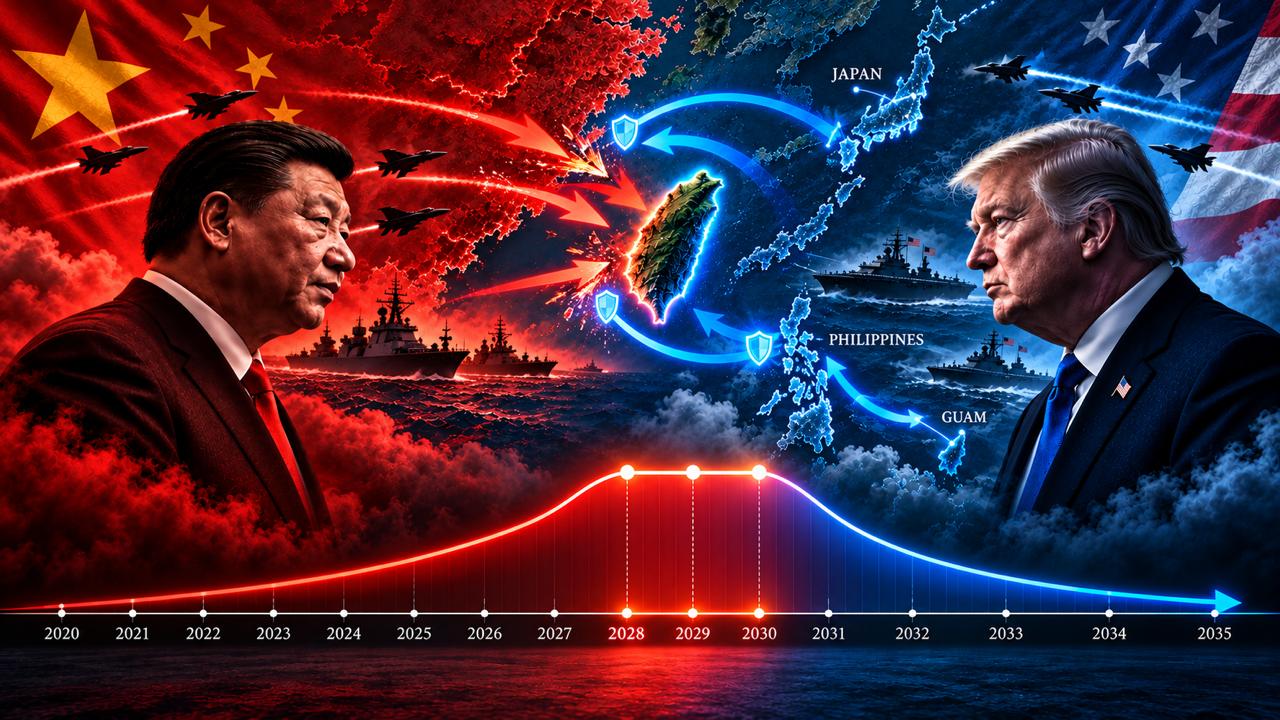
Xi Jinping’s Washington Visit Outlines the Timeframe for the Active Phase of the Confrontation: Beijing Openly Demands Taiwan’s Return
On September 23–25, 2026, Chinese President Xi Jinping held talks with President Trump at the White House during the first Chinese state visit to t...
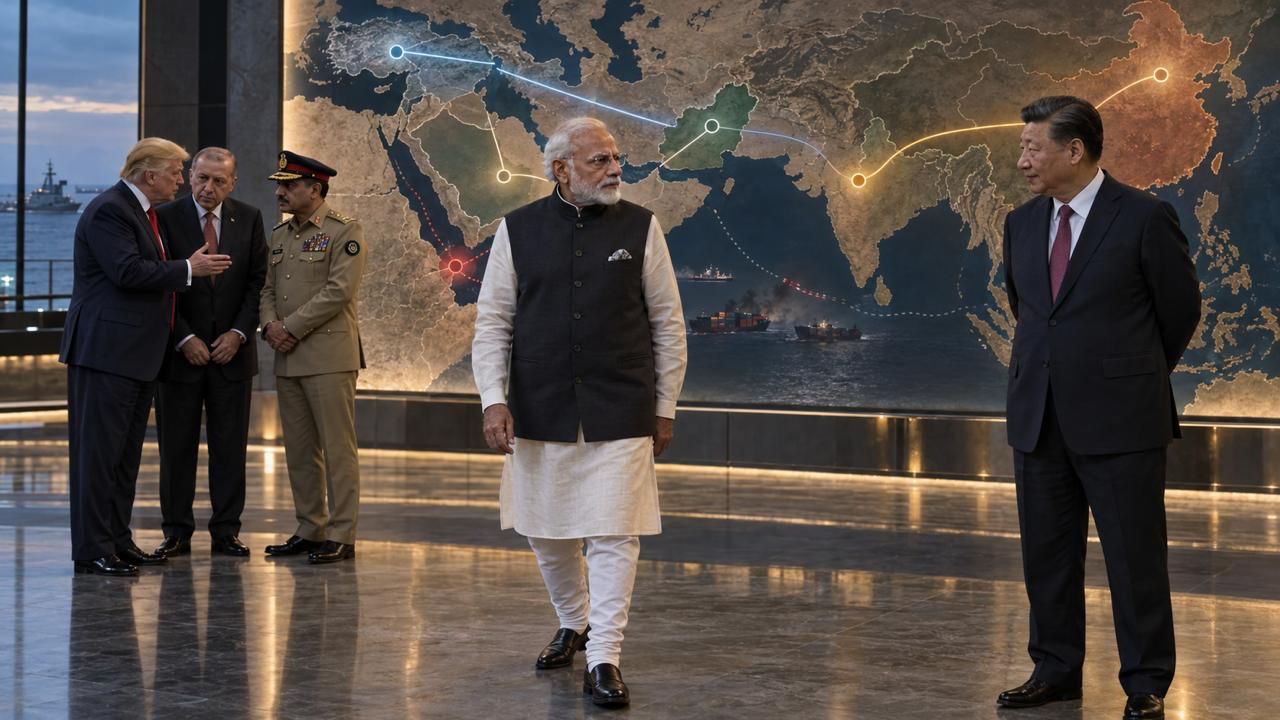
A Sharp Shift in the Dynamics of Global Confrontation Forces Washington to Rethink How It Builds Its Key Partnerships
On September 12–13, 2026, the 18th BRICS Summit was held in New Delhi. Xi Jinping traveled to India to lead the Chinese delegation, marking his fir...

Netanyahu’s Visit to Abu Dhabi: Israel Builds Partnerships from a Position of Strength, but the Middle East Conflict Is Eroding the Edge of Its Weapons
On September 27, 2026, Israeli Prime Minister Benjamin Netanyahu traveled to Abu Dhabi with the head of Mossad and the head of the National Securit...
