

AH-1Z Viper, UH-1Y Venom, and a subsidiary in Ukraine: How Bell Textron Plans to Rebuild Ukraine’s Military Aviation — Interview With Phil Fickes, Director of Bell Textron Ukraine

Vadim Kushnikov


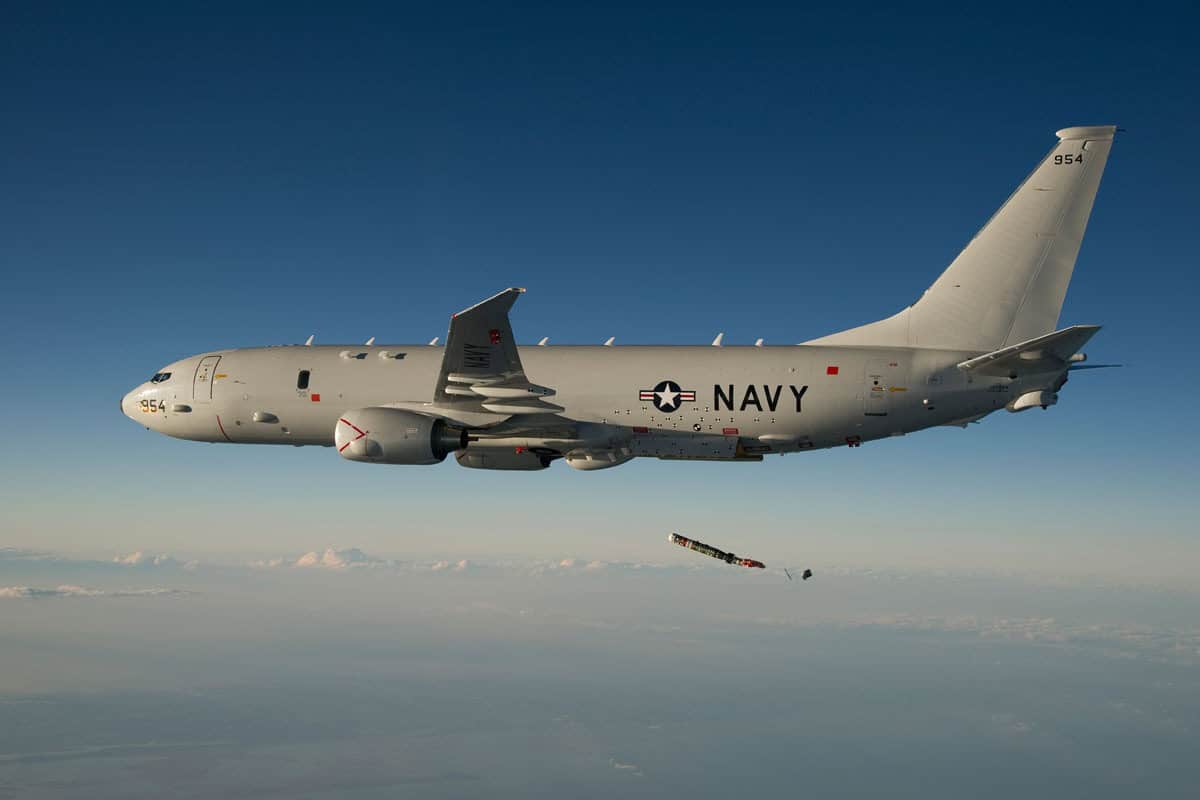



Phil Fickes, Director of Bell Textron Ukraine, on the AH-1Z Viper, the UH-1Y Venom, and why the American aerospace company sees Ukraine not as a wartime customer but as a future manufacturing hub.
Ukraine’s combat helicopter fleet has long been built around Soviet-era platforms. Bell Textron wants to change that. The American manufacturer — maker of the AH-1Z Viper and UH-1Y Venom, the Marine Corps’ attack and utility helicopter pair — has opened a subsidiary in Kyiv and is in active negotiations with Washington and Kyiv over a Foreign Military Sale.
Phil Fickes, Director of Bell Textron Ukraine, explains what the aircraft can do that Ukraine’s current fleet cannot, how European munitions could eventually arm them, and why Bell is already scouting sites for what it hopes will one day be a full-scale manufacturing hub on Ukrainian soil.
From Summit to Subsidiary: How Bell Came to Ukraine
The memorandum on the AH-1Z and UH-1Y reads as a diplomatic signal. What is the practical substance behind it?
I think to understand my answer, you need some context. In 2023, Bell was invited to what I believe was the inaugural Ukraine Defense Summit in Kyiv. We sent a very senior team of executives, and what we learned was how serious Ukraine was about replacing its helicopter fleet and committing to western rotary wing aircraft.
We then committed additional resources and have since been in-country several times, having initial discussions and laying the foundation for a program. A sale of the AH-1Z or the UH-1Y would be through a Foreign Military Sale, so discussions have been ongoing between the Ukrainian and US governments.
There have been a series of negotiations that have convinced us that Ukraine means business — and that the US is also interested.
Is Bell’s presence in Ukraine a wartime proposition, or something longer in scope?
The letters of intent we’ve signed with the ministries of Economy and Agriculture are a key indicator that we see this as a long-term partnership. We obviously have to start at step one — opening a subsidiary — and then working with Ukrainian industry.
We recognize that there is a very robust aerospace and defense industrial background in Ukraine, and we are excited about working with that industry going forward.
What comes after the representative office — a service hub, MRO center, joint production?
We have already looked at potential future sites, and not just for the subsidiary.
We want to work with Ukrainians first through training — building an understanding of Bell’s processes and specifications — and then move toward industrial cooperation: component assembly, factory assembly, and over time, more or less full-scale manufacturing, which would also include major repair and overhaul.
All of this, obviously, is subject to approvals by both governments and in compliance with US export law.
The Aircraft: Why the Viper and Venom
Can you walk us through what the Viper and Venom actually bring to a modern battlefield?
The 85% parts commonality between the H-1Z and the H-1Y is what makes this tandem pair unique. They share engines, rotor systems, drivetrain, avionics and major dynamic components.

As documented in Marine Corps and Navy sources, this architecture has proven dramatically effective in reducing logistics footprints, spare parts inventory, training requirements and overall life-cycle costs — while simultaneously boosting operational readiness.
In the case of the Yankee and the Zulu, you have two distinct capabilities but a single ecosystem supporting them. That simplifies sustainment, minimizes downtime and enables higher sortie generation under high-tempo conditions.
How decisive is that shared logistics architecture as an argument for Ukraine specifically, operating under wartime conditions?
It is the argument. Managing two completely separate ecosystems for two platforms is a significant operational burden. Ukraine, which is operating at extraordinary intensity, would benefit enormously from that reduced complexity. The commonality is not a marketing point — it is a proven operational enabler.
Weapons, Survivability, and Adaptation
What weapons configurations would be most relevant for Ukraine — Hellfire, APKWS, Sidewinders, or something else?
The standard configuration on the Viper includes a 20mm cannon, the Hellfire missile, and — as demonstrated last year — long-range precision fires with the Red Wolf, a capability the Marine Corps released publicly. There is also JAGM, the Joint Air-to-Ground Missile. The Venom carries crew-served weapons as well as APKWS, the laser-guided rocket system. And then there is the digital interoperability dimension — the ability to sense, communicate and potentially cue other weapons systems across the battlespace.
Would Bell consider adapting these platforms to Ukrainian requirements — alternative communications, IFF systems, European or locally developed munitions, jammers?
Yes, and that is handled through the Foreign Military Sales mechanism. Ukraine could request that the US manage that integration, and Bell has a long history of supporting those programs. We would absolutely support it if mutually agreed upon by both governments.
Ukrainian forces have been integrating drone interceptors onto fixed-wing platforms. Is there a rotary-wing future for that kind of capability?
We are aware of the experimentation that both the Marine Corps and other militaries are doing in this area, and we are watching how it impacts our platforms. I cannot discuss current design work, but the question is on our radar.
Ukraine operates in extremely dense and contested airspace — short-range air defenses, FPV drones, electronic warfare. What specific survivability systems are on these platforms?
That is a question you would have to direct to the United States government or to Ukraine. What is and is not publicly available is for them to decide to release. It is not something I can speak to here.
Learning from the War: What Ukraine’s Experience Means for Modern Rotary Aviation
What is the current role of attack helicopters in Ukraine’s battlespace — anti-armor operations, strike missions, something else?
I cannot speak for the Ukrainian or US government in terms of what real-world capabilities are currently in use or planned. That is genuinely their answer to give, not mine.
Does that restraint frustrate you as someone trying to make the case for these platforms?
I think there are areas where, as industry, we simply cannot go. What I can say is that as you look at the roadmaps for modern rotary wing operators, they are adapting to what they are seeing in Ukraine. And we will see where that goes.
Has Bell incorporated lessons from this war into its platforms or planning?
The lessons Ukraine has learned throughout this conflict could and potentially would be incorporated into future upgrades or mission planning frameworks. We do not talk enough about how important planning and doctrine are to survivability — not just hardware.
I would expect the Marine Corps and other international operators to welcome Ukraine’s operational insights. That kind of feedback loop is genuinely valuable.
Building an Industry, Not Just a Fleet
Do you see potential for integrating Ukrainian defense industry capabilities into Bell’s global supply chains?
That is something we would have to evaluate based on the business case. But it is not off the table. Ukraine has deep industrial competency, and we take that seriously.
How does Bell see Ukraine’s role in the broader European defense ecosystem, as the continent accelerates rearmament?
We see this as a way to rebuild what was once a much more powerful aerospace and defense sector — this time on a more modern foundation. Long term, Ukraine could be a hub of rotary wing capability for the region. We are not approaching this as a short-term project, and I think we have sent clear signals to that effect.
There is also the supply chain bottleneck question — the US has struggled to meet Ukrainian weapons requirements at scale. Could European munitions fill part of that gap on these platforms?
Absolutely. The Foreign Military Sales system allows for that. Ukraine would submit a request to the US government, a project would be developed to do the design and engineering integration work, and Bell would support that process. It is a straightforward mechanism, and it is entirely possible.
This interview has been edited for length and clarity. The full video interview is available at Militarnyi Global.
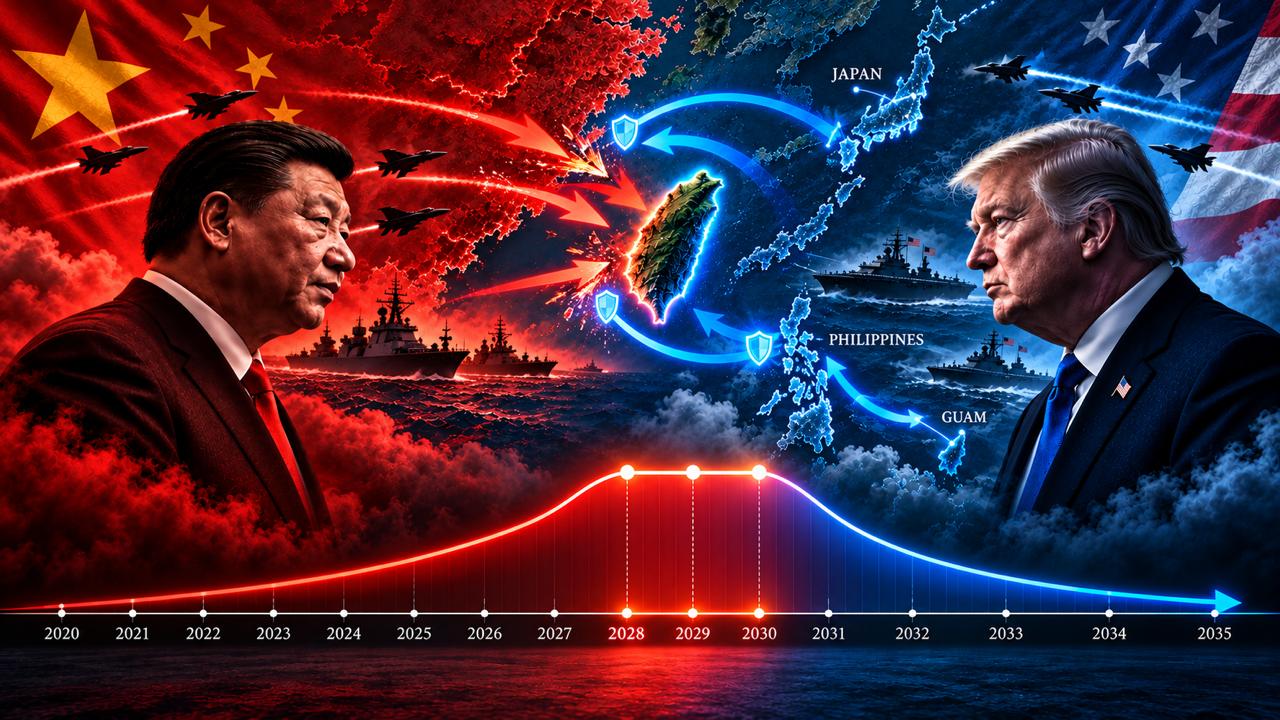
Xi Jinping’s Washington Visit Outlines the Timeframe for the Active Phase of the Confrontation: Beijing Openly Demands Taiwan’s Return
On September 23–25, 2026, Chinese President Xi Jinping held talks with President Trump at the White House during the first Chinese state visit to t...
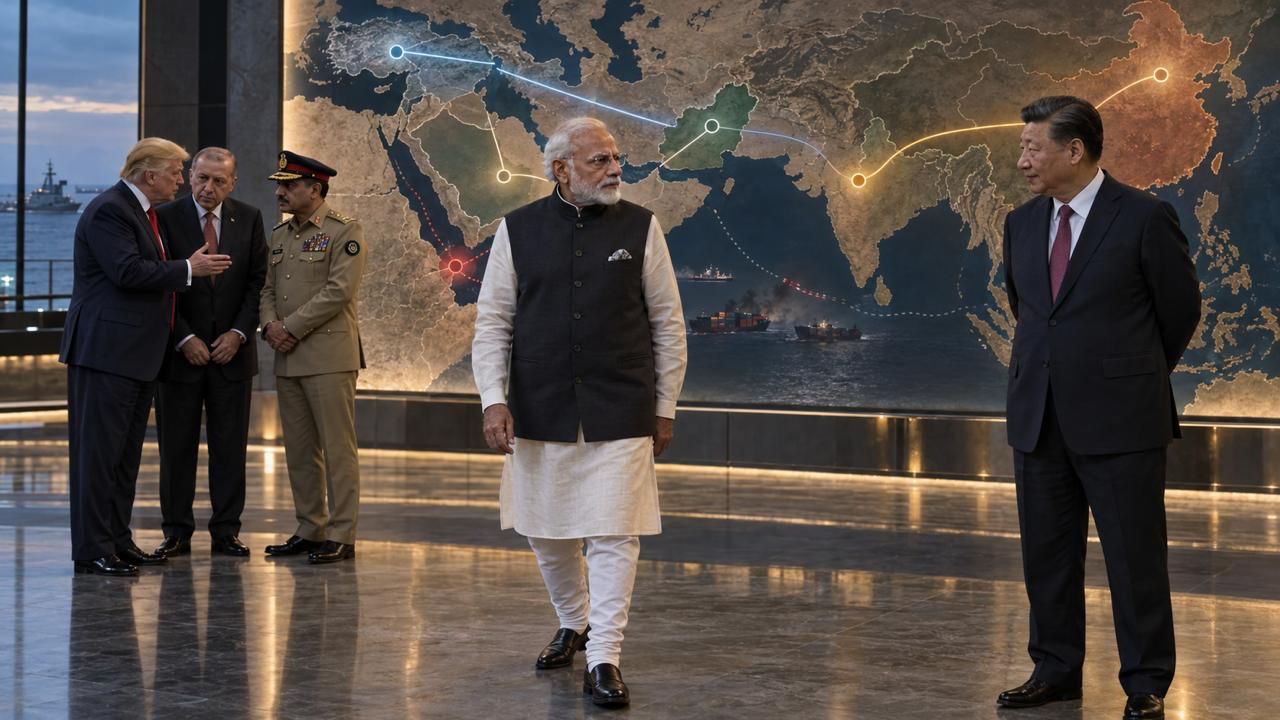
A Sharp Shift in the Dynamics of Global Confrontation Forces Washington to Rethink How It Builds Its Key Partnerships
On September 12–13, 2026, the 18th BRICS Summit was held in New Delhi. Xi Jinping traveled to India to lead the Chinese delegation, marking his fir...

Netanyahu’s Visit to Abu Dhabi: Israel Builds Partnerships from a Position of Strength, but the Middle East Conflict Is Eroding the Edge of Its Weapons
On September 27, 2026, Israeli Prime Minister Benjamin Netanyahu traveled to Abu Dhabi with the head of Mossad and the head of the National Securit...
