
The U.S.‑Bangladesh Framework Agreement Takes Effect, Shifting South Asia’s Balance of Power

Solid Info







On May 5–7, 2026, a delegation from the Office of the U.S. Trade Representative arrived in Dhaka, the capital of Bangladesh, for negotiations on implementing the Agreement on Reciprocal Trade (ART), signed February 9, 2026. The agreement grants the United States access to Bangladesh’s port infrastructure and opens its market to American Big Tech companies, digital platforms, and energy suppliers in exchange for a reduced 19 percent tariff on textiles and duty‑free status for selected categories.
In a personal letter to newly elected Prime Minister Tarique Rahman, President Trump tied the preservation of Bangladesh’s trade preferences to the signing of two defense agreements. Washington has been negotiating these with Dhaka since 2019, and the parties are in the final stage.
The first, the General Security of Military Information Agreement (GSOMIA), will allow the two militaries to exchange intelligence data and will sharpen monitoring of the situation around Kyaukpyu.
The second — the Acquisition and Cross‑Servicing Agreement (ACSA) — will open Bangladesh’s ports and airfields to American ships and aircraft for resupply and maintenance.
By stepping up trade and military cooperation with Bangladesh on the eve of President Trump’s meeting with Xi Jinping on May 13–15, 2026, Washington is signaling to Beijing that China’s overland bypass of the Strait of Malacca through Myanmar and Bangladesh now falls within the zone of American military presence.
Overland bypasses of the Strait of Malacca are a matter of strategic autonomy for Beijing. Roughly 80 percent of China’s oil imports pass through the strait, and the U.S. Navy and its allies can block the route within hours of an escalation around Taiwan. Land corridors through Myanmar and Pakistan shorten the supply route for oil from the Middle East and Africa by 3,000 to 5,000 kilometers and keep China’s economy functional under a prolonged maritime blockade in a potential Pacific clash. In this configuration, Bangladesh provides flank cover for the corridor through Myanmar and reserve port infrastructure for access to the Bay of Bengal.
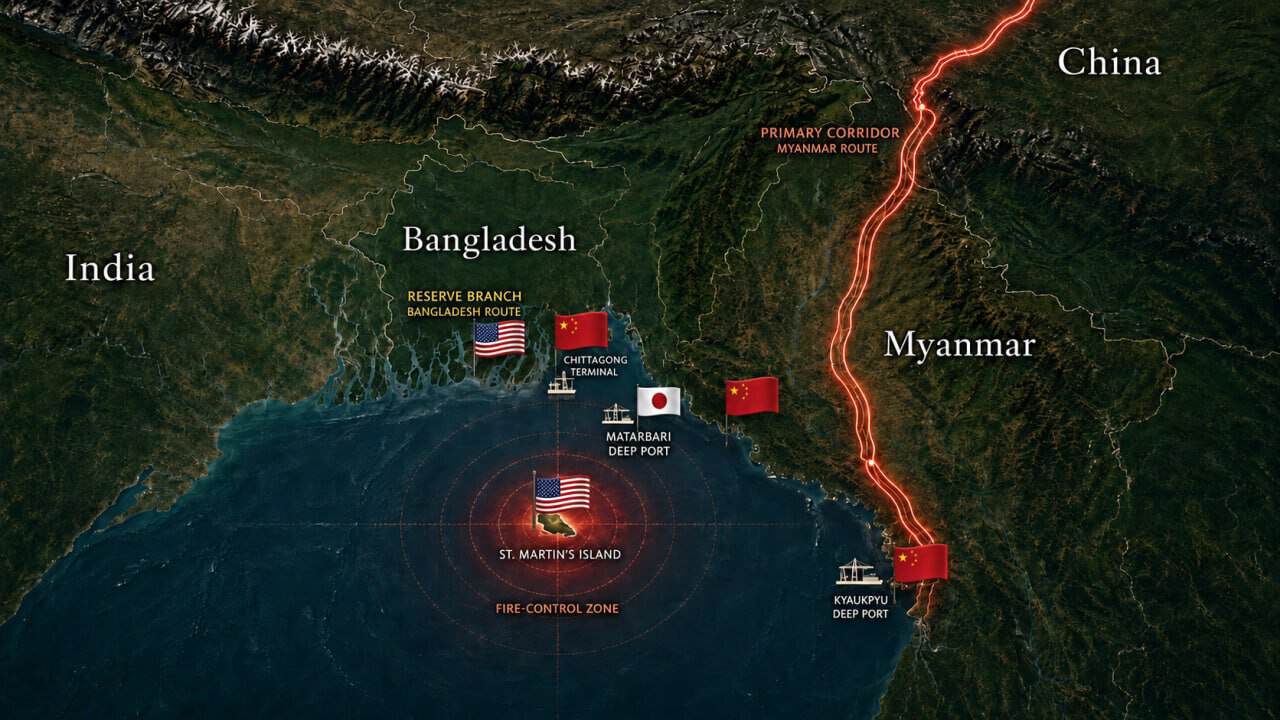
Since 2018, Beijing has been building the China‑Myanmar Economic Corridor (CMEC), comprising a 771‑kilometer oil pipeline and a 793‑kilometer gas pipeline from Kyaukpyu to Yunnan, while concurrently investing in Bangladesh’s ports of Chittagong and Matarbari as reserve access points to the Bay of Bengal. As Solid Info’s earlier analysis of the Myanmar conflict documented, the civil war has placed CMEC under constant threat of attack.
The victory of Tarique Rahman’s BNP in Bangladesh’s 2026 elections deprived Beijing of its loyal politicians in Dhaka. Washington gained access to St. Martin’s Island in the southeastern Bay of Bengal, 10 kilometers off the coast of Myanmar — a potential point of naval basing that commands the approaches to Kyaukpyu and CMEC’s outlets into the Indian Ocean. The American military presence is deploying through the annual CARAT exercises with the Bangladesh Navy and eight Southeast Asian states and through the September Pacific Angel 25‑3 operation of the U.S. Air Force near Chittagong. Together, these activities form a continuous belt of control along the Malacca route, in which Bangladesh serves as the northeastern anchor.
The strategic significance of the Bangladesh segment holds regardless of the outcome of the May U.S.‑China summit. Under one scenario, President Trump could agree to reduce military deliveries to Taiwan in exchange for Beijing’s commitment to forgo a military scenario for unification. Even in such a case, Beijing will not halt its overland‑corridor expansion — the 2026 Strait of Hormuz crisis exposed the vulnerability of maritime logistics independent of the Taiwan vector. Traffic density in narrow straits deprives the side keeping the passage open of the ability to neutralize the threat through superior firepower, even when the adversary’s strike capabilities are limited.
After the U.S. failure to lift the Hormuz blockade, Beijing accelerated construction of an alternative network to key Indian Ocean ports — the “String of Pearls” strategy. Both the China‑Pakistan Economic Corridor (CPEC) and the China‑Myanmar Economic Corridor (CMEC) pass through politically unstable territory, and their reliability depends on China’s ability to maintain the security of loyal regimes and to influence its neighbors’ foreign policy.
Myanmar and Bangladesh form a single Chinese‑logistics cluster that serves as the load‑bearing structure of the Malacca bypass route. Bangladesh borders civil war‑stricken Myanmar and provides Beijing simultaneously with flank cover for CMEC and a consumer market of 170 million. Chittagong and Matarbari offer the most convenient reserve link on the Malacca bypass route — unlike Hambantota in Sri Lanka or Gwadar in Pakistan, these ports sit near CMEC’s outlet and do not depend on the security situation in Myanmar.
The strategic value of the Bangladesh segment became evident to Washington after the change of government from Sheikh Hasina in the wake of the 2024 protests. The victory of Tarique Rahman’s BNP stripped Delhi of political influence in Dhaka at every level of the state apparatus and opened American access to critical sectors of the Bangladeshi economy.
Duty‑free access to the American market sustains Dhaka’s foreign‑currency inflows during the economic crisis — Beijing’s offer cannot replace this channel. American energy supplies have become indispensable to the Rahman government after deliveries from the Persian Gulf were cut by the Hormuz escalation. Washington, for its part, does not require Dhaka to break with Beijing. The White House is scaling onto Bangladesh the model tested in neighboring Nepal — consolidating positions at critical points along China’s perimeter without converting the relationship into open confrontation, while leaving Beijing room where its presence does not threaten American interests in the region.
While engaging the United States, Bangladesh’s new government simultaneously stepped up its diplomatic activity on the Beijing track. On May 6, during the USTR delegation’s visit to Dhaka, Foreign Minister Khalilur Rahman met with Wang Yi in Beijing during his first official visit to China.
A separate lever of Chinese influence over Bangladesh is its demographic potential. In 2024, the country became the largest source of illegal migrants to Europe via the central Mediterranean route — more than a million Bangladeshis leave the country annually in search of work, and remittances in fiscal year 2024–25 reached $30 billion.
For Beijing, Bangladesh serves both as a consumer market and as a reserve of migratory pressure on democratic countries, where the influx of low‑skilled labor from the Global South intensifies domestic political tensions. The preservation of Chinese investments under the Belt and Road Initiative in Bangladesh’s poor regions sustains the barrier that holds the low‑skilled population within Beijing’s sphere of influence. Stabilization of the Bangladeshi economy under a democratic model removes that barrier.
The Reciprocal Trade Agreement as a Vehicle for Building a Protected Economic Space for American Investment
The ART between the United States and Bangladesh belongs to the broader tariff strategy that the Trump administration has been deploying since April 2025 to restructure American trade relations with the Global South on U.S. terms. The agreement compensates for the “unfairness” of the previous trade model while opening to American Big Tech companies markets that had been dominated by Chinese capital.
Bangladesh is opening its domestic market to American Big Tech companies, IT platforms, telecommunications providers, and energy suppliers, with a parallel ban on granting preferences to their Chinese competitors. Amazon has opened a corporate office in Dhaka and launched a service for direct integration of Bangladeshi textile producers into American retail, shortening the chain of intermediaries and locking in the industry’s dependence on American platforms.
Bangladesh’s ITES market reached $2.1 billion in 2025, and two‑thirds of Bangladeshi IT companies serve U.S. clients — this link binds the educated segment of Bangladeshi youth to the American economy regardless of Dhaka’s political decisions. The supply standards that come with these investments shut down gray import channels through Chinese and Indian intermediaries, which previously accounted for a substantial share of supplies to the Bangladeshi market.
The agreement is marked by asymmetric obligations between the two sides. Washington defined the terms of Bangladesh’s access to the American market before the new government had time to formulate its own priorities. Dhaka agreed to grant preferential access for American chemicals, medical equipment, machinery, ICT, and agri‑food goods.
Planned American energy purchases over the next 15 years are estimated at $15 billion. The agreement to buy 14 Boeing aircraft for Biman Bangladesh Airlines, valued at $3.7 billion and signed April 30, 2026, ties Bangladesh’s civil aviation to its American supplier for the 20‑ to 25‑year service cycle through maintenance, spare parts, and training to manufacturer standards. Against this backdrop, the American concessions remain selective — the tariff has been lowered to 19 percent, and duty‑free status has been opened only for select categories of textiles produced from American raw materials.
The duty‑free regime is the only real economic preference for Bangladesh, but as of the end of April 2026 it has not yet been applied in practice — the May negotiations focused on the mechanism of its rollout.
Even once the preferences take effect, Washington will retain a decisive lever of influence — any breach by Dhaka of the origin‑of‑materials commitments opens grounds to restore the tariff to 37 percent. Garments and textiles account for 86 percent of Bangladesh’s exports to the United States ($8.2 billion of $9.5 billion in 2025) and sustain employment for more than 4 million workers, so any tariff reversal immediately translates into a risk of social instability.
The Rahman government inherited an economy that lost a third of its foreign‑currency reserves over two years and has not yet recovered to early 2024 levels — inflation reached 9.13 percent in February 2026, and the GDP growth forecast holds at 4 percent.
The ART obligates Dhaka not to impose duties on software, digital content, and online services and prohibits any requirement that American companies store data on Bangladeshi users exclusively on in‑country servers. Bangladesh loses the ability to grant preferences to Chinese digital platforms and cloud providers.
The agreement also strips Dhaka of the right to conclude new trade arrangements with China, Russia, and states the document classifies as “non‑market economies” — any violation voids all preferences, including those secured for textiles.
The agreement does not require the dismantling of China’s existing investment and military‑technical presence, but it places under American control a clearly defined set of critical sectors — digital infrastructure, data localization, trade arrangements, and energy orientation.
This constrains Beijing’s ability to claim the links that turn Bangladesh into a flanking pillar of China’s logistics strategy. Dhaka’s long‑term commitments fix the terms of cooperation for Rahman’s successors — any new administration will have to factor in the inevitability of engagement with the United States.
The United States Engages Its Security Partners to Invest in Bangladesh
American consolidation in Bangladesh’s logistics architecture is unfolding through a framework coordinated with regional allies. Washington draws India, Japan, and Australia into Bangladesh‑focused projects — countries that share the American interest in containing Chinese expansion in the Indo‑Pacific and that possess their own resources to invest in port and industrial infrastructure.
The Quad Ports of the Future initiative — a partnership of the United States, India, Japan, and Australia — is deploying parallel port infrastructure in Bangladesh that coexists with the Chinese presence in Chittagong without requiring its displacement.
The United States has launched feasibility studies that will lead to investment of American capital in Bangladeshi ports. South of Chittagong, Japan is building a deep‑water port at Matarbari that will become the regional transshipment and industrial hub for large‑tonnage vessels, duplicating Chittagong’s functions rather than supplanting them.
American investment is accompanied by transnational corporations from U.S. allied countries. In early 2026, Japan’s Mitsui extended a convertible loan to the Shwapno supermarket chain, which controls more than half of Bangladesh’s organized retail trade, and Indonesia’s Alfamart, in partnership with Mitsubishi, opened its first stores in Dhaka.
Beijing’s Countermeasures Keep China Present Through Investment Programs and Military Contracts
The expansion of U.S.‑Bangladesh engagement has compelled Beijing to activate the levers of influence accumulated during the Sheikh Hasina government. Since Dhaka joined the Belt and Road Initiative, Beijing built bilateral trade above $16 billion in 2018 and gained the status of Bangladesh’s fourth‑largest creditor with $7.5 billion in extended loans. More than 70 percent of Bangladesh’s arms imports from 2010 to 2022 came from China — that historical dependency slows Dhaka’s transition to
American defense standards and is precisely why the GSOMIA and ACSA agreements are required to launch a parallel channel.
In response to the political shift, Beijing has stepped up military‑technical cooperation with Dhaka in ways that complicate the new government’s closer engagement with the Pentagon. In autumn 2025, the two sides agreed to establish a UAV manufacturing plant in Bangladesh; in January 2026, the Ministry of Finance approved construction of production capacity using technologies from China Electronics Technology Group Corporation International. Negotiations are under way between the two governments on the supply of JF‑17 fighters jointly developed by China and Pakistan — such contracts would entrench the presence of Chinese armaments in the Bangladeshi army’s inventory.
Bangladesh’s new leadership preserves negotiating room with both sides at once. On May 6, during the USTR delegation’s visit to Dhaka, Foreign Minister Khalilur Rahman met with Wang Yi in Beijing during his first official visit to China and requested financial and technical support for the Teesta River restoration project. The Teesta runs alongside the Siliguri Corridor — the narrowest land link between India’s northeastern states and the rest of the subcontinent, 21 kilometers at its narrowest — and since 2020 Beijing has been intensifying its economic presence in the restoration project. In 2022, Power China inspected the construction site, and the Chinese embassy announced its readiness to allocate $1 billion. The Rahman government’s request signaled that Dhaka does not plan to wind down cooperation with Beijing despite ever‑closer economic engagement with the United States.
The persistence of Chinese levers of influence is not critical for Washington. The Sri Lanka and Maldives cases reproduced the same Belt and Road political cycle — Chinese investments initially keep in power the coalition that signed the contract, but after 5 to 10 years the middle class formed by the infrastructure modernization raises objections to the opaque contract terms and brings to power an opposition that publicly revises the agreements with Beijing.
American Soft Power as a Factor in Bangladesh’s Transformation Toward an Open Society
Alongside the corporate and logistical presence, Washington is deploying in Bangladesh the institutional and social dimension of its strategy, shaped over years by the State Department, USAID, and private foundations. The Development Objectives Agreement (DOAG) for 2021–2026 committed USAID to provide Bangladesh with $954 million; in September 2024, the parties signed the sixth amendment for an additional $202 million focused on governance and socioeconomic opportunities. Total American financial presence in Bangladesh reached a record $573 million in fiscal year 2024.
The architecture works through a network of institutional partners. The Bangladesh Rural Advancement Committee (BRAC), which since 1972 has reached 145 million people across 16 countries, received $14.7 million for the BAMA program. The CEPPS consortium (IRI, NDI, IFES), through its $21 million “Amar Vote Amar” program, shaped Bangladesh’s electoral environment from 2022 to 2025.
The Bill & Melinda Gates Foundation and Open Society Foundations serve as systemic partners of BRAC and co‑founders of the Asian University for Women in Chittagong. The USAID cuts announced by the Trump administration in January 2025 froze more than 100 programs worth $550 million, but they did not alter the architecture of American soft power — the network of partnerships established in 2021–2024 continues to operate independently of budget fluctuations in Washington.
Historically, American influence has consolidated most effectively in countries where soft power has worked for decades — through educational programs, civil society institutions, and media and cultural networks.
Bangladesh is the next point of long‑term consolidation. The network of partnerships with BRAC, CEPPS, Open Society Foundations (Alexander Soros), and the Gates Foundation, which has survived the change of administration in Washington and continues to operate in 2026, is shaping an environment in which, within 10 to 15 years, the educated middle class will be naturally oriented toward the standards and values of the democratic bloc.
Alongside soft power, American capital — entering under the standards of the democratic bloc — moves Bangladeshi production into a higher technological segment and places stricter demands on Dhaka’s institutional environment. Amazon’s direct entry displaces Chinese and Indian intermediaries from trade logistics; the integration of Bangladeshi IT companies into American retail and service networks draws young people into technology professions; and despite the broader automation of the world economy, Bangladesh’s large workforce becomes a strategic advantage for the country as an alternative to the Chinese model of production chains.
Washington’s military presence in the region of Chinese logistics deployment strips the overland bypass of the Strait of Malacca of its function as a reserve link at the moment of conflict in the Pacific — the very function for which Beijing has invested in the Middle Path project for decades. The expansion of American military presence, the investments of security partners, the entry of American capital into critical sectors of Bangladesh’s economy, and the deployment of soft power networks set Bangladesh on a durable trajectory of movement from Beijing’s perimeter of influence toward an open society.
This publication is the result of a partnership between MILITARNYI and SOLID INFO. An extended version is available on the website of the analytical center.

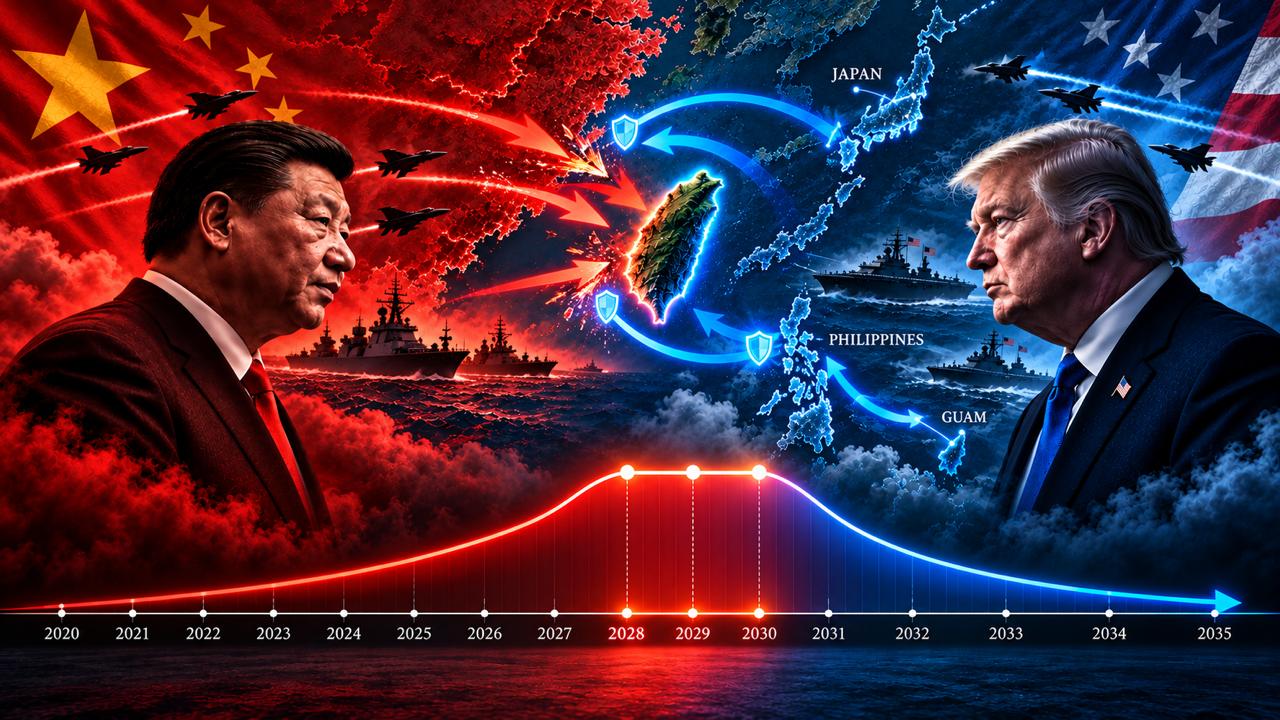
Xi Jinping’s Washington Visit Outlines the Timeframe for the Active Phase of the Confrontation: Beijing Openly Demands Taiwan’s Return
On September 23–25, 2026, Chinese President Xi Jinping held talks with President Trump at the White House during the first Chinese state visit to t...
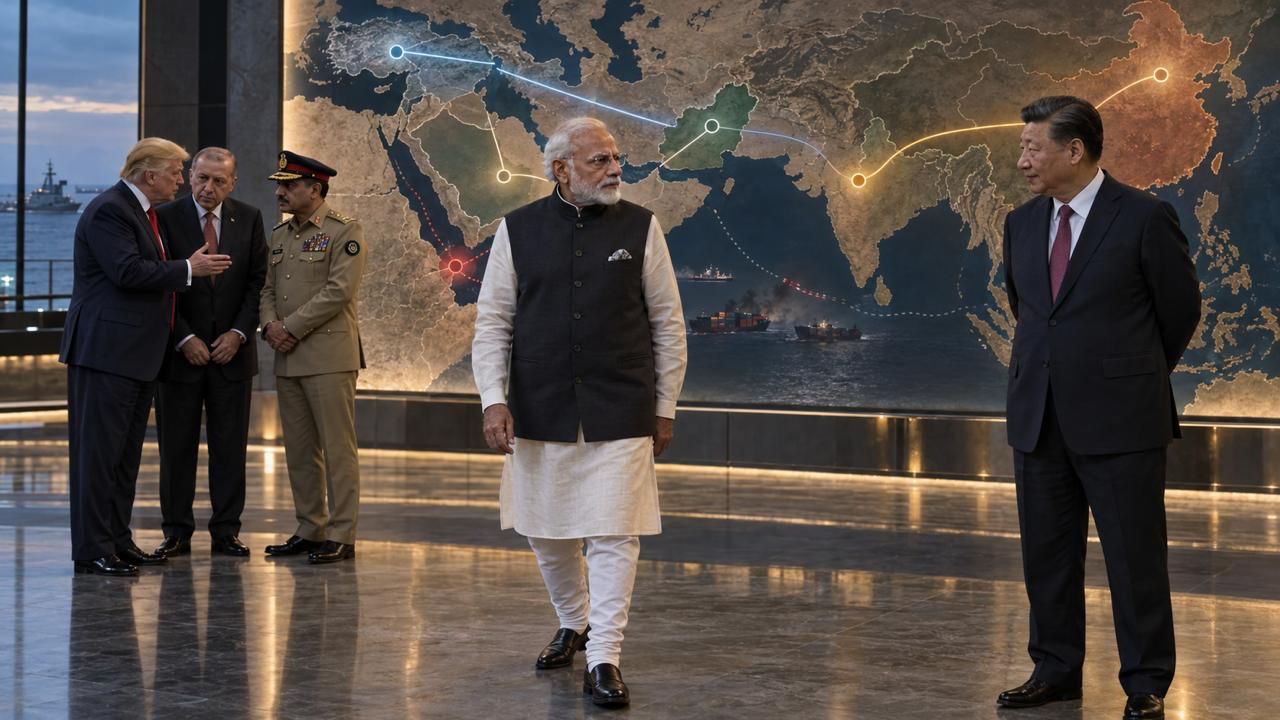
A Sharp Shift in the Dynamics of Global Confrontation Forces Washington to Rethink How It Builds Its Key Partnerships
On September 12–13, 2026, the 18th BRICS Summit was held in New Delhi. Xi Jinping traveled to India to lead the Chinese delegation, marking his fir...

Netanyahu’s Visit to Abu Dhabi: Israel Builds Partnerships from a Position of Strength, but the Middle East Conflict Is Eroding the Edge of Its Weapons
On September 27, 2026, Israeli Prime Minister Benjamin Netanyahu traveled to Abu Dhabi with the head of Mossad and the head of the National Securit...
