

Trump’s Visit to Beijing: The Weakening of the Autocratic Axis Offsets Divergences Between the Trump Team and the U.S. Institutional System

Solid Info




Since the onset of intensive confrontation between the authoritarian axis and the free world, U.S.–China leader meetings have become checkpoints for measuring each side’s achievements across the key resource domains. It was in this context that the May 12–15, 2026 meeting between President Donald Trump and Xi Jinping drew the attention of the global political establishment, the expert community, and the business world — as a bellwether for the state of global confrontation.
By the time the summit closed, however, a broad consensus had taken shape that evaluated the meeting exclusively through its surface — driven by President Trump’s rather unexpected conduct. The position he articulated came across as markedly weaker.
The proceedings of the summit and its commercial outcomes have been cast in the international press as a U.S. setback in the global confrontation with China. That reading captures only the surface of the negotiations.
President Trump’s unwarranted concessions to Beijing’s position stood in sharp contrast to the diametrically opposed line taken by Secretary of State Marco Rubio.
The contrast laid bare the divergence between presidential rhetoric and the position of the U.S. institutional system, for which Marco Rubio is the principal voice. President Trump publicly leaned into personal rapport with Xi Jinping and the preservation of Xi’s goodwill in the service of commercial outcomes that benefit particular influence groups. In his public remarks, the President cast doubt on the wisdom of continuing the policy of active support for Taipei.
Secretary Rubio’s position, by contrast, reflected the consistent execution of U.S. pressure policy toward China — which Washington treats as the root cause of most local conflicts around the world, conflicts that operate as instruments of China’s strategy of global dominance.
This rift and divergence in rhetoric have planted in the leaders of the autocratic axis the sense that President Trump’s confrontation with his own institutional system gives them an opening to strike a deal with the U.S. President on the core interests they pursue — without halting their roll-out of local conflicts. The prospect of a possible “Big Deal” with President Trump is what restrains Xi Jinping and Vladimir Putin from targeted escalation.
An unexpected by-product of President Trump’s statements about possibly suspending arms sales to Taiwan has been the consolidation of democratic forces within Taiwanese society.
The pro-Beijing faction of the Kuomintang, exploiting the parliamentary asymmetry in the Legislative Yuan, blocked the $39 billion defense budget put forward by President William Lai’s administration, approving $25 billion instead.
In that context, the threat of losing the American security umbrella generates political momentum for Taiwan’s pro-democratic groups, strengthening their hand. The result is the consolidation of Taiwanese society around the Lai administration — which neutralizes Beijing’s baseline plan for Taiwan, a plan that, as Secretary Rubio stated in Beijing, rests on non-coercive absorption through support for a loyal opposition and the staging of a referendum on accession to China.
The principled character of Secretary of State Rubio’s position is rooted in his long record of hard-line opposition to Chinese expansion during his years in the U.S. Senate — for which Marco Rubio remains under personal Chinese sanctions to this day.
Notably, his visit was made possible only through unprecedented pressure from the White House, which forced Beijing to circumvent its own sanctions under the formal pretext of a change in the Chinese transliteration of the Secretary’s name.
In parallel, Secretary Rubio, in a series of interviews, consistently articulated the constancy of the U.S. strategic position — the status quo in the Taiwan Strait, the continuation of arms sales to Taipei, and the unacceptability of any coercive scenario by Beijing.
The U.S. institutional system operates on a separate track from presidential protocol and is unaffected by the tone of conversations in the Great Hall of the People.
In his exchanges with President Trump, Xi Jinping framed the Taiwan question as “the most important in China–U.S. relations” and warned in plain terms of the possibility of “clashes and conflicts” should it be “improperly handled.”
Secretary Rubio answered that diplomatic pressure in an NBC News interview immediately after the talks concluded: U.S. policy on Taiwan remains unchanged as of the day of the summit; decisions on arms sales to Taipei rest with the President in consultation with Congress; and any coercive scenario by Beijing toward Taiwan would be “a terrible mistake with global consequences.”
Asked about a possible suspension of arms shipments to Taiwan, the Secretary said the issue “did not come to the forefront” in the talks, and added that the December arms package for Taipei worth $11 billion remains in force.
Summing up the visit, Secretary Rubio underscored that Xi Jinping is building the infrastructure of global power projection with the aim of achieving full geopolitical and military parity with Washington, and that China’s unprecedented militarization has already outgrown its narrowly local ambitions toward Taiwan.
Because China’s industrial base is the foundation of that expansion, the U.S. strategic response will turn on accelerated reindustrialization and a technological push. In contrast to the Biden strategy, which was oriented toward risk reduction and the preservation of stability, President Trump is betting on rigid frameworks of engagement and a methodical “strategic decoupling.”
The operative logic is a deterrence model under which China cannot weaponize its monopoly on critical resources without inflicting serious damage on its own economy — while the United States, over the same period, accelerates the diversification of supply chains, the reindustrialization of military production, and the strengthening of transactional defense ties with partners.
Strategic Gains of 2025–2026 as a Comprehensive Instrument of Pressure on China
To that end, Washington has focused on capitalizing on the strategic gains of recent years. The revitalization of the Arctic energy program tightens American control over global oil and gas flows.
The fall of the regimes in Syria and Venezuela has freed two critical logistical and energy hubs from pro-Russian and pro-Iranian influence.
The political shift in Hungary following the end of the Orbán government, together with the U.S. interception of China’s investment foothold in Greece, is reshaping the European security landscape in Washington’s favor.
The remilitarization of Japan under Prime Minister Takaichi strengthens the first line of containment against China in East Asia. Taken together, these shifts add up to a comprehensive instrument of pressure on China that combines control over global oil and gas flows, world logistics, and tariff policy.
Within this strategy, the U.S. military campaign against Iran was treated as the closing instrument for compelling China to accept a favorable status quo.
The expectation was that the elimination of key figures in the Iranian leadership, combined with the long-range destruction of the fleet and air force, would bring down the ayatollahs’ regime and produce a transfer of power to forces aligned with the United States. Direct and indirect intervention by Beijing on Tehran’s behalf, however, denied Washington that strategic edge by the time the current negotiations opened.
Fragmentation of Negotiations with Beijing into Four Summits by December 2026
Given the outsized domestic and foreign-policy risks of further hasty military steps against Iran, the Trump administration opted to reshape the architecture of the negotiating process.
Three further meetings between Xi Jinping and President Trump are on the calendar this year: the Chinese leader’s potential appearance at the UN General Assembly session in September; the U.S. President’s visit to the APEC summit in Shenzhen in November; and Xi Jinping’s arrival at the G20 summit in Miami in December. The outcomes of the May 2026 U.S.–China talks will be measured against the results of the summits to come, which form a single negotiating arc in which each round registers the state of play in the key arenas where the two powers’ interests intersect.
The May agreements establish only an opening negotiating position; the real results will be set by the dynamics in those arenas through to the December G20 summit in Miami.
In parallel, Washington is accelerating other lines of effort designed to weaken China: a separate arrangement with Russia aimed at reducing the Chinese presence in the Russian economy and bringing the war in Ukraine to a halt; the restoration of communication with Kim Jong Un; and the displacement of Chinese influence in Cuba, with CIA Director John Ratcliffe’s visit timed to coincide with the Beijing summit and carrying to Havana the proposal to “bloodlessly” change course. Taken together, these lines of effort intensify asymmetric pressure on China through jurisdictions critical to Beijing and the struggle for control over the decisive economic arteries.
As of 2026, the United States has succeeded in tightening its grip on the Panama Canal. The White House’s priority now is rapid progress on the Strait of Hormuz and the Strait of Malacca, through which roughly 80 percent of Chinese oil imports pass.
In parallel, the United States is dismantling China’s bypass routes against a possible Malacca blockade — through the framework agreement with Bangladesh and the undermining of the China–Myanmar energy corridor in Myanmar — and is also removing the Arctic from under Chinese influence. The Trump administration aims to consolidate tangible results on the logistics front by the autumn of 2026.
Structural Weakness of the Autocratic Axis and Beijing’s Reassessment of Its Plans for Taiwan
For all the unprecedented level of threats, the White House factors in the actual condition of the autocratic axis, which is structurally weak across several dimensions at once.
The sharpest indicator of Chinese economic reality is the “Li Keqiang Index” — an alternative set of metrics (electricity consumption, rail freight, bank lending to the real sector) that Chinese leaders themselves trust more than the official GDP figures.
In February 2026, the Li Keqiang Index fell to 4.4 percent against 8.2 percent in June 2024 — nearly cut in half — as a consequence of President Trump’s tariffs and a 30 percent drop in direct imports from China. The paradox is that Xi threatened “conflict” while leaning on official growth statistics, even as Beijing’s own indicator records a downturn incompatible with readiness for a military confrontation with the democratic bloc.
The Russian economy is in far deeper trouble. The structural nature of that trouble shows up through alternative methodologies to Rosstat that Russia’s own government think tanks systematically apply. The pro-government CMASF (Center for Macroeconomic Analysis and Short-Term Forecasting) registered, three times running in January and February 2026, the leading indicators of a systemic banking crisis: the share of non-performing assets exceeded 10 percent, and reached 19 percent in the SME segment.
The cumulative effect of the structural crisis is now showing up in the sociological dimension. The pro-government VTsIOM recorded at the end of April 2026 the strongest surge of discontent in eight years: dissatisfaction with domestic policy climbed from 22 to 36 percent, with economic policy from 31 to 46 percent. For the first time since the war began, dissatisfied Russians outnumbered satisfied ones on the question of domestic policy.
This breakthrough of discontent on a pro-government polling platform corroborates what alternative economic methodologies have been registering for the past two quarters. The internal model of the Russian regime is exhausting itself irrespective of oil price swings and current battlefield outcomes. The Kremlin’s resource capacity to serve as a strategic rear for Beijing’s expansionist project is shrinking in lockstep with the deepening of its internal crisis.
The contraction of Russia as a strategic rear coincides in time with the dismantling of the other pillars of the autocratic axis on which Beijing was counting in any escalation. Iran, after the U.S. campaign, has lost a share of its fleet, its air force, and key figures of its leadership.
Venezuela, with the fall of Maduro’s regime, has been knocked out of the autocratic axis — its resource base and logistical positions in Latin America have passed under American control. Syria was lost to the Kremlin earlier, with the fall of Assad. Cuba is now in the middle of a diplomatic transition brokered by the CIA.
Xi Jinping’s threats to launch a war in the near term are a geopolitical bluff — the autocratic axis lacks the resource reserve for an open conflict with the democratic bloc at the current scale. That risk will rise significantly from 2029 onward, however, when China expects to complete its adaptation to the conditions of “strategic decoupling.”
The U.S. Iran campaign forced Beijing to revisit its calculations on Taiwan. The long-range destruction of the Iranian fleet and air force, together with the elimination of figures in the Tehran leadership, displayed in concrete terms the actual reach of American military capability in a distant theater.
Hence, for all the hard rhetorical framing in the Great Hall of the People, Beijing’s actual posture is turning more cautious — a coercive scenario before 2028 is unacceptable to China, and Beijing is being forced to bet on a political track of non-coercive absorption of Taiwan, a track that is itself being eroded by the trigger reaction of Taiwanese society to President Trump’s statements.
Preserving the status quo in the Taiwan Strait remains for the United States a question that admits no compromise — which follows from its critical importance for the security of the First Island Chain and for U.S. technological development.
President Trump himself emphasized at the summit that the United States had taken on no commitments to scale back its engagement with Taiwan — which Xi had demanded. The telephone conversation between President Trump and Japanese Prime Minister Takaichi immediately after the China visit, however, even with the reaffirmation of the alliance, did not lift the central concern of U.S. partners — the need to plan for a possible refusal by Washington to act in their defense. Partners are independently building parallel security mechanisms among themselves, as confirmed by Prime Minister Takaichi’s tour of Pacific partners.
The Russian–Ukrainian War as a Mechanism for Fixing Russia’s Status as China’s Strategic Rear
A separate track of the negotiations was the question of the Russian–Ukrainian war. Xi Jinping repeated the Chinese position on a diplomatic resolution — the same rhetoric Beijing has broadcast since February 2023, following the publication by the PRC Foreign Ministry of “Provisions on the Political Settlement of the Ukrainian Crisis.” China’s declarative position does not reflect its actual interests — strategically, China has an interest in the maximum possible prolongation of the war.
In contrast to Joe Biden’s approach, which was oriented toward resolving the conflict through compromises with China, the Trump administration has focused on attempts to intercept geopolitical control over the Kremlin.
This paradigm envisions a comprehensive offer of geoeconomic rehabilitation for Russia on condition of its distancing from Chinese jurisdiction and the halting of the war in Ukraine.
This approach is based on the calculation that the narrowing of Russia–China interaction will become the decisive factor in constraining Beijing’s potential for power projection — which in turn minimizes the risk of globalization of the conflict around Taiwan. With this in mind, President Trump has refrained from initiatives capable of directly or indirectly legitimizing Beijing’s monopoly influence over Russia.
The visible gap between President Trump’s public position and Rubio’s line forms in the Kremlin the perception of President Trump as a partner with whom agreements can be reached counter to the position of the U.S. state apparatus — which opens up operational space for intercepting geopolitical control over the Kremlin. The window of this advantage is limited by the 2026 midterm elections, after which a Democratic majority in Congress will narrow the space for President Trump’s individual game with Putin.
For his part, Xi Jinping systematically demonstrated the resilience of the Chinese–Russian strategic symbiosis. This was confirmed both by the political rhetoric employed during President Trump’s stay in Beijing and by the escalation of combat operations in Ukraine.
Xi Jinping’s approach is based on the conviction that a geopolitical defeat of Russia in Ukraine is an inadmissible scenario for the Chinese expansionist plan.
The Kremlin’s war against Ukraine since 2022 has served Beijing as an instrument for the gradual transformation of Russia into its proxy actor.
Every additional month of war that drains the army, budget, and human resources deepens Moscow’s technological, financial, and logistical dependence on China.
The engagement of the North Korean contingent in the autumn of 2024 also took place with Chinese facilitation. The planned visit of Putin to Xi Jinping (May 19–20) immediately following the Beijing summit is a direct demonstration: Chinese–Russian interaction remains structural regardless of the negotiations with President Trump, and Beijing will coordinate the pace of continued aggression in Ukraine.
By feeding Putin the illusion of a great-power role and participation in “the great war with the United States,” Xi accelerates the exhaustion of the Russian jurisdiction through war — Moscow’s technological, financial, and resource dependence on China will remain structural after the active phase of combat operations ends. Russia is valuable to Beijing as a resource reservoir; for the sake of transforming Russia into a strategic rear, China is ceding zones of influence in Europe, Latin America, and the Middle East. A defeat of Russia would destroy the entire architecture of Chinese absorption — and the White House is using this asymmetry as a point of pressure, because without the Russian jurisdiction, China loses the prospect of a global war.
The course of the negotiations confirmed the replacement of the “managed competition” model with the strategy of accelerated “strategic decoupling” aimed at depriving Beijing of the foundation for global power projection by 2029. The Democratic victory in the 2026 midterm elections anticipated in Beijing paradoxically strengthens the American position: the demand to increase military aid to Ukraine becomes an instrument of the Democratic bloc in negotiations with President Trump — and what is perceived as a weakening of the President structurally works toward the weakening of China through the intensification of exhaustion of its principal strategic rear.
The key benefit for the United States is a system of asymmetric deterrence under which China spends resources on maintaining its external architecture under increasing pressure across all directions (Iran, Russia, Cuba, the Arctic, maritime arteries, the reorientation of production chains). In this construction, the Russian–Ukrainian war becomes an instrument of preventing globalization of the conflict around Taiwan — depriving China of its principal strategic rear constrains Chinese power projection potential well before 2029.
China’s approach to Taiwan rested on Xi Jinping’s right to choose between political absorption through support for the Kuomintang and a military operation at the moment of maximum PLA readiness. Until 2026, this choice was deferred in favor of the political track. The Trump administration’s program is aimed at closing off both options by the Taiwanese presidential elections in January 2028.
The Kuomintang’s blocking of Taiwan’s defense budget through its parliamentary majority in the Legislative Yuan is a direct indicator of the effectiveness of the Chinese political track. However, by the 2028 presidential elections, the pro-democratic coalition is receiving record external financing and consolidated public support in response to the risk of losing the American umbrella — the referendum on accession to China is losing its electoral base.
The military option is constrained by the structural parameters of the Chinese and Russian economies. The resource base of the autocratic axis on which Beijing could rely in a rapid operation against Taiwan is currently limited.
Following the U.S. military campaign, Iran has lost the resources and capacity to sustain its proxy network in the Middle East and in Africa — a factor of strategic influence that for the United States is more important than the throughput capacity of the Strait of Hormuz. The fall of the Maduro and Assad regimes has constrained the energy and logistical depth of the autocratic axis.
In the window between 2028 and 2029, Beijing finds itself before an operational choice in a configuration where the political track is closed off by the results of the Taiwanese elections, while China’s adaptation to the sanctions and tariff regime of the “strategic decoupling” is not yet complete.
China’s armed forces will not have completed by 2028 the modernization that Xi Jinping set as the deadline for readiness to conduct operations in the Taiwan Strait — owing to technological constraints, deflationary pressure in the economy, and the deepening crisis in Russia. U.S. and EU sanctions of 2025–2026 on semiconductors and aviation engines add a technological dimension to the economic and resource squeeze.
The period between the May 2026 summit and the Taiwanese presidential election of January 2028 is being used by Washington and its allies to complete the regional defense architecture.
Japan is transferring to Australia 11 Mogami-class frigates (the SEA 3000 program, $15 billion) with integration of the American SeaRAM system — establishing technical interoperability across three fleets. The Philippines and South Korea are receiving anti-ship systems and new basing arrangements. Production chains in critical industries are being relocated from China to Taiwan, Japan, India, and Mexico.
The outcome of the first of the four summits has shown U.S. security partners the necessity of building up their own defense potential and exerting consolidated pressure on the Trump team — so that, in the rounds of negotiations to come, the U.S. position factors in both their interests and the position of the American institutional system.
This publication is the result of a partnership between MILITARNYI and SOLID INFO. An extended version is available on the website of the analytical center.


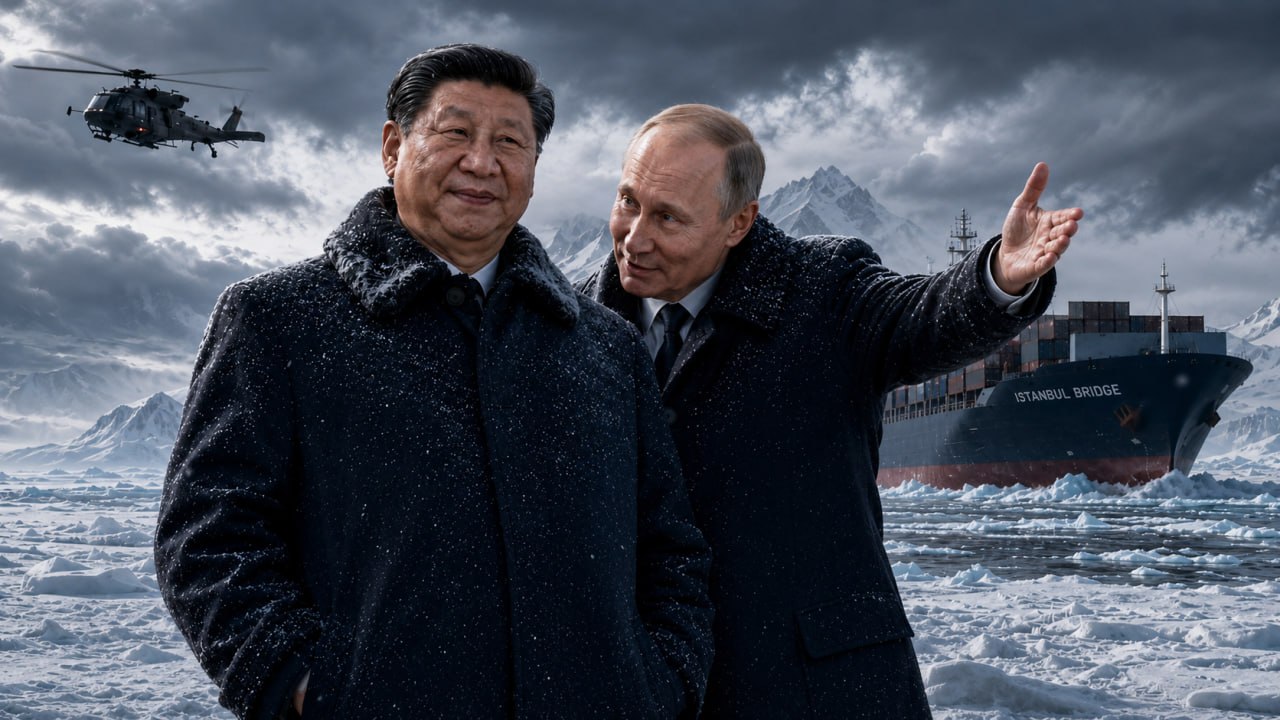
China Launches a Scheduled Container Service Through the Arctic: Moscow and Beijing Push a Distorted Picture of the Far North’s Potential
The northern route between Asia and Europe has scheduled container service for the first time. On August 12, 2026, the container ship Istanbul Brid...
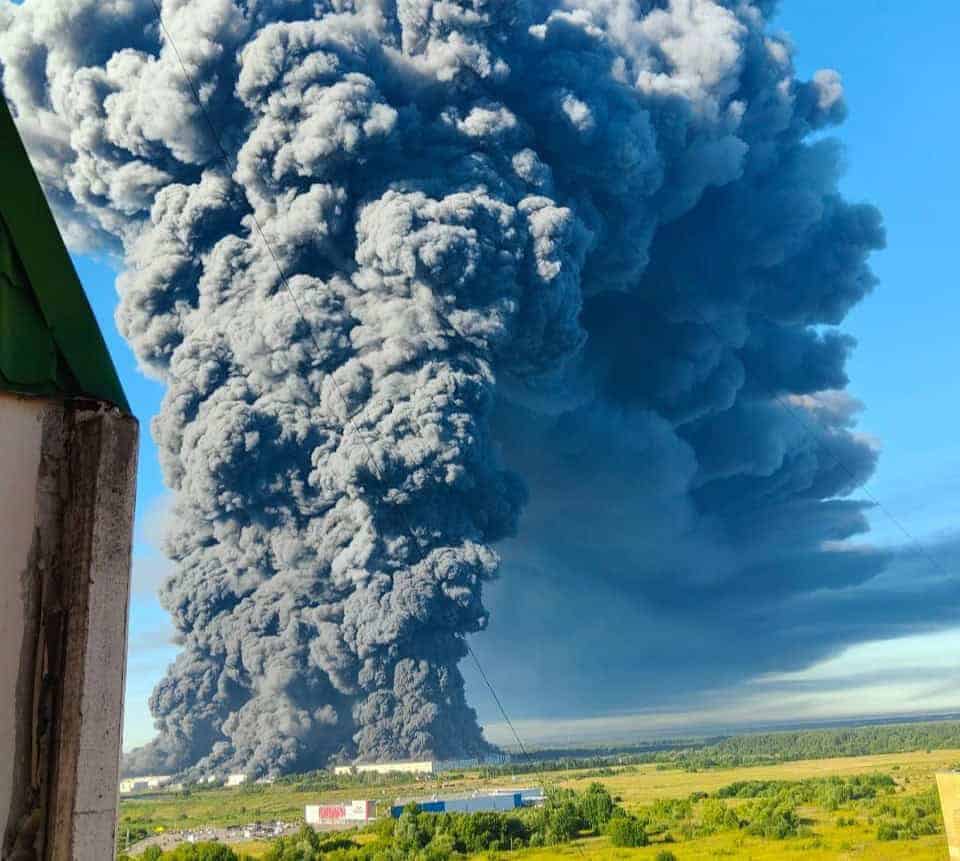
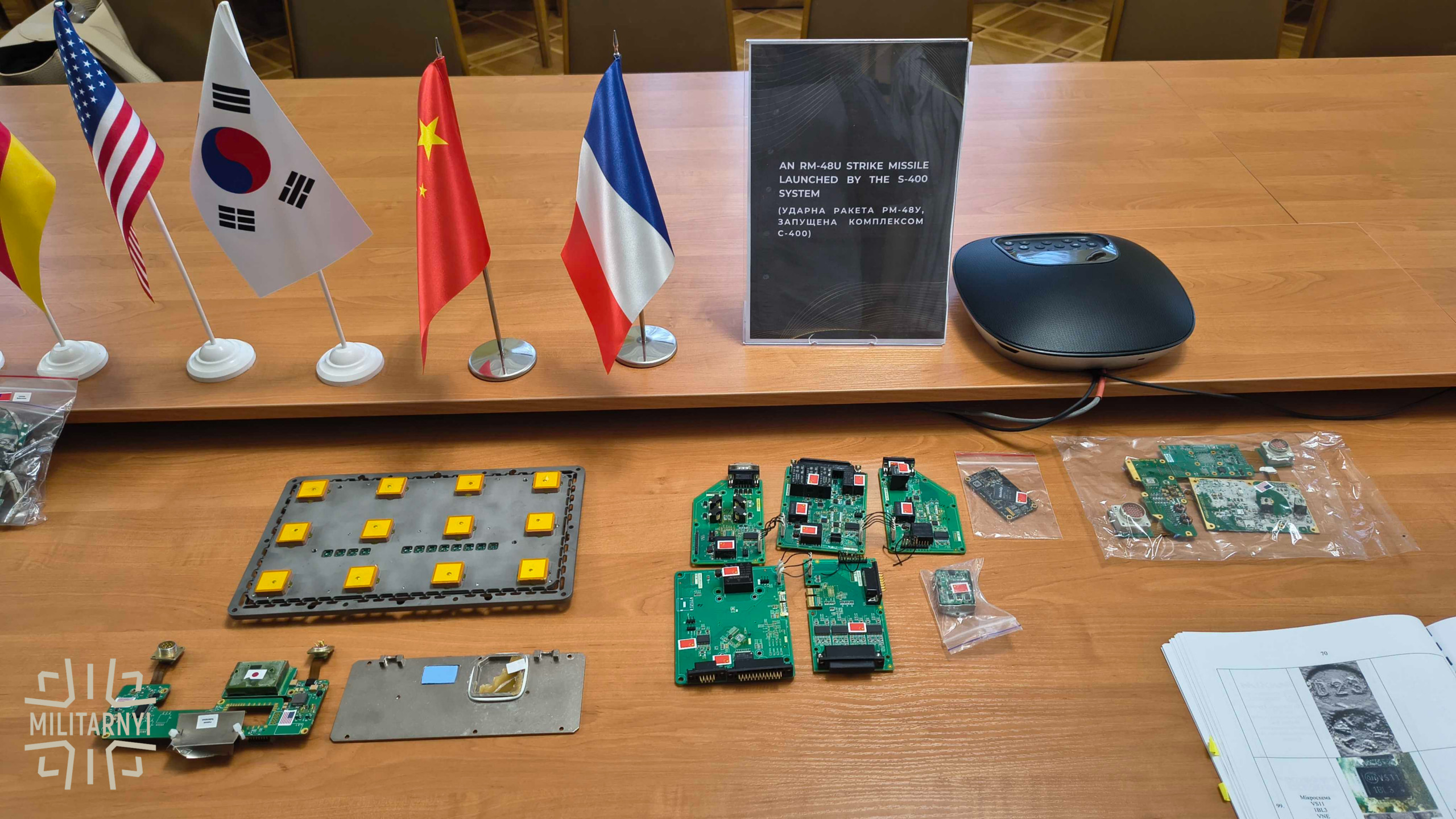
RM-48U Missiles for the S-400 Cannot Be Launched Without Foreign Components: How Russia Depends on the West for Its New Ballistic Missiles
Russia continues to use RM-48U ballistic missiles against Ukraine, which are based on the 48N6 anti-aircraft missiles of the S-400 system. Analysis...
