
The Decline of the British Army: From the End of the Cold War to 2026 (Part 1)

Roman Pryhodko






The end of the Cold War marked the beginning of a process often referred to in Britain as the “decline of the Army.” Over the following decades, the country proved increasingly unable to fund large-scale military projects, maintain troop numbers, or provide its defense industry with a stable flow of orders.
As a result, Britain is now increasingly described as one of NATO’s weaker members in terms of the readiness of its conventional armed forces, excluding its nuclear deterrent.
The situation has been exacerbated by chronic underfunding and repeated defense spending cuts in pursuit of the so-called “peace dividend.” Consequently, the British Army has experienced a dramatic reduction in the number of tanks, artillery systems, and combat aircraft. The defense industry has lost some of its unique capabilities, while supply chains have become vulnerable to disruption during times of crisis. Even major programs, such as the construction of aircraft carriers and new frigates, have been plagued by delays and cost overruns, highlighting the deep structural problems facing the sector.
The End of the Cold War (1990)
Following the apparent success of the First Gulf War and the end of the Cold War, the British Army underwent significant reductions under the Options for Change program, which substantially reduced its manpower.
The 1st Corps was disbanded on October 1, 1992, and became the core of the Allied Rapid Reaction Corps (ARRC), NATO’s multinational rapid-deployment headquarters in Europe.
Various divisions and brigades stationed in Germany were either disbanded or reorganized. The 1st Armoured Division was disbanded on December 31, 1992, although its headquarters was briefly retained as the Lower Saxony District Headquarters.
However, on July 1, 1993, the division was re-established in Germany as the 1st (UK) Armoured Division, following the redesignation of the 4th Armoured Division. Its headquarters was based in Herford, and the division consisted of the 4th Armoured Brigade (Osnabrück), 7th Armoured Brigade (Bergen-Hohne), and 20th Armoured Brigade(Paderborn).
Meanwhile, the 3rd Armoured Division was relocated to Bulford in the United Kingdom in September 1992. It was subsequently redesignated as the 3rd (UK) Division and became one of only two deployable tactical divisions remaining in the British Army. The 4th Armoured Division, as mentioned above, was dissolved as a separate formation when it was renamed and reconstituted as the 1st (UK) Armoured Division.
The British Army of the Rhine (BAOR), which had been Britain’s principal military force in Germany throughout the Cold War, was formally disbanded on March 31, 1994.
-

- Organizational structure of British forces stationed in Germany between 1990 and 1994. Source: British Army in Germany
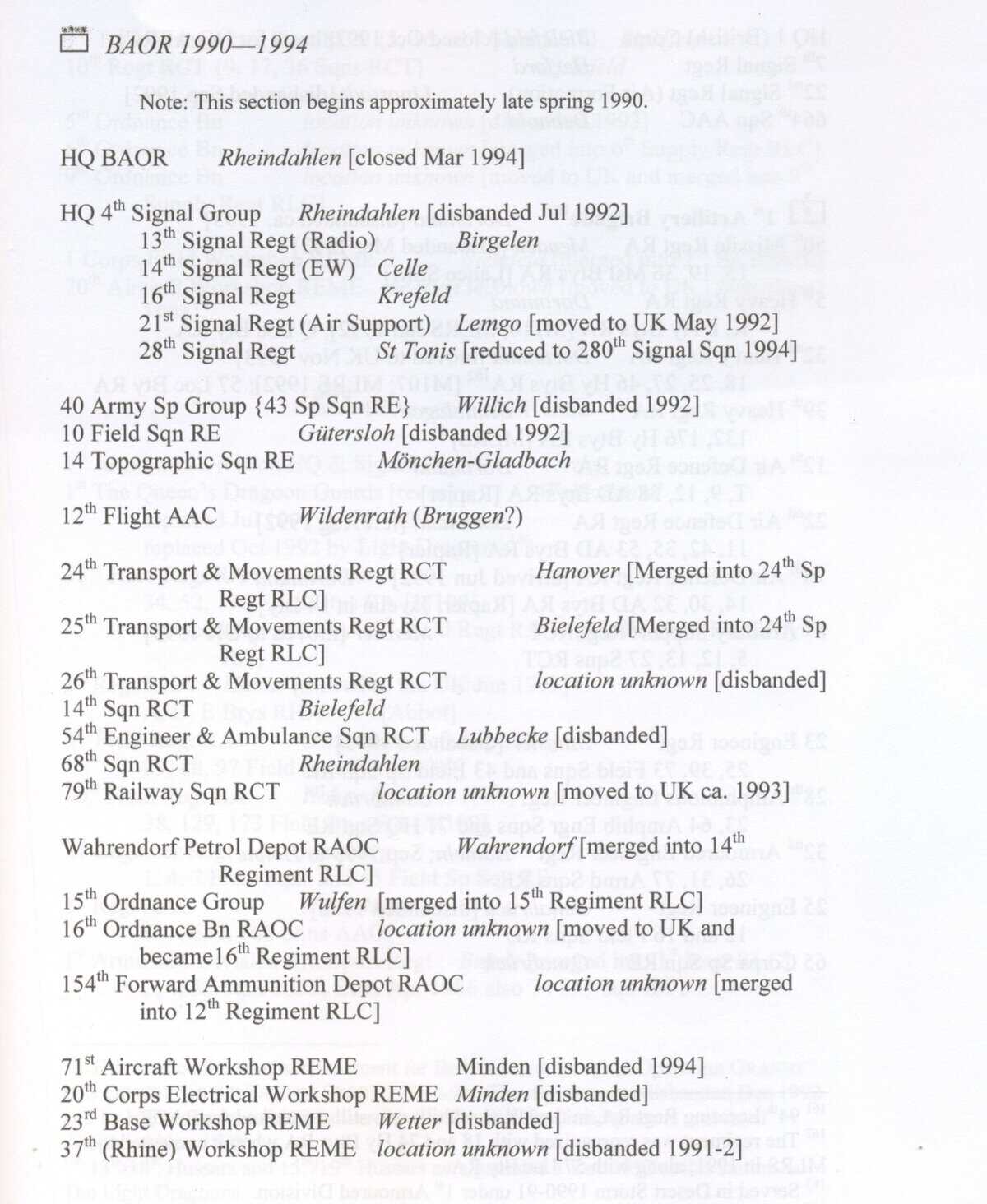
-

- Organizational structure of British forces stationed in Germany between 1990 and 1994. Source: British Army in Germany
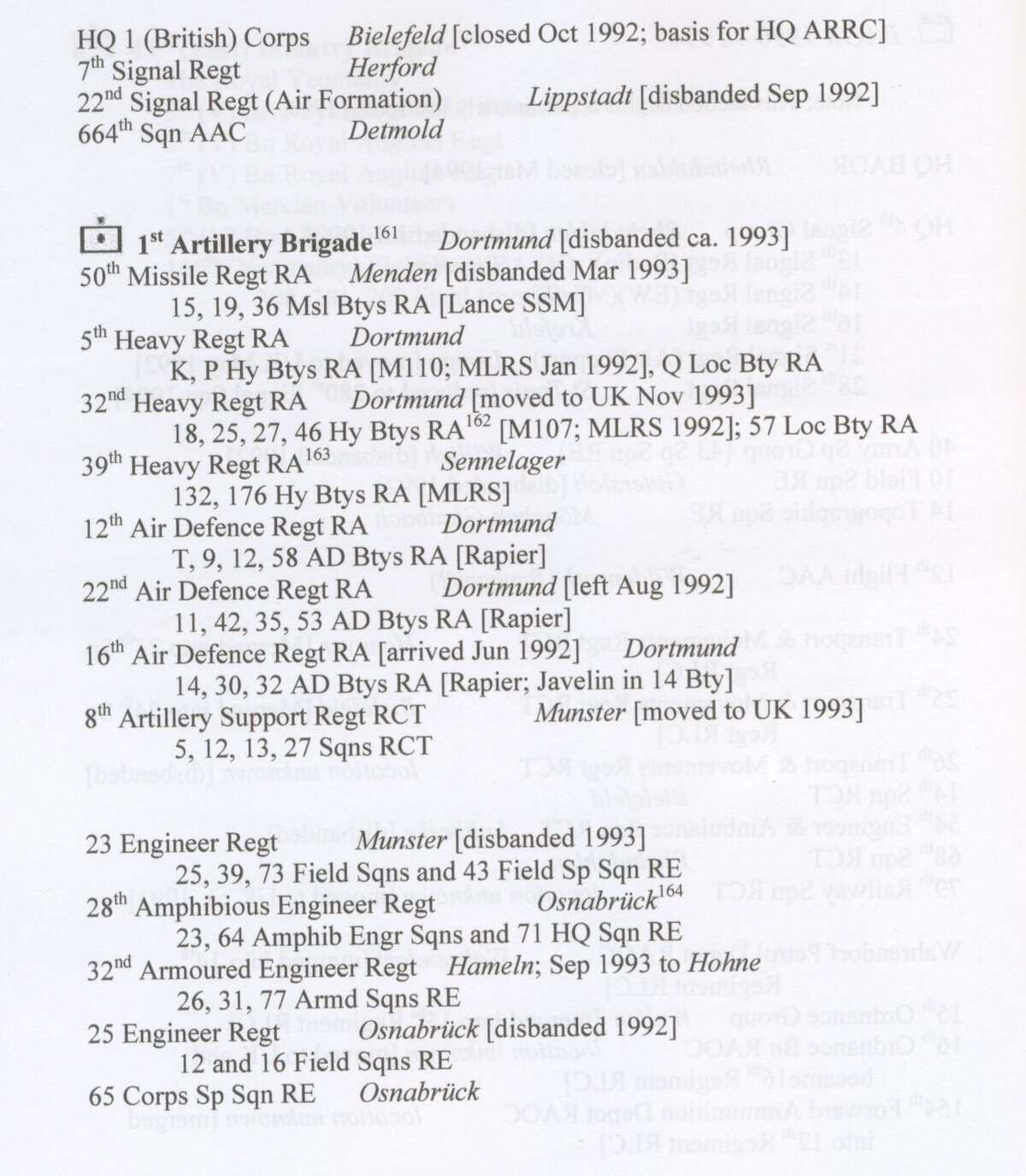
-

- Organizational structure of British forces stationed in Germany between 1990 and 1994. Source: British Army in Germany

-

- Organizational structure of British forces stationed in Germany between 1990 and 1994. Source: British Army in Germany

-

- Organizational structure of British forces stationed in Germany between 1990 and 1994. Source: British Army in Germany

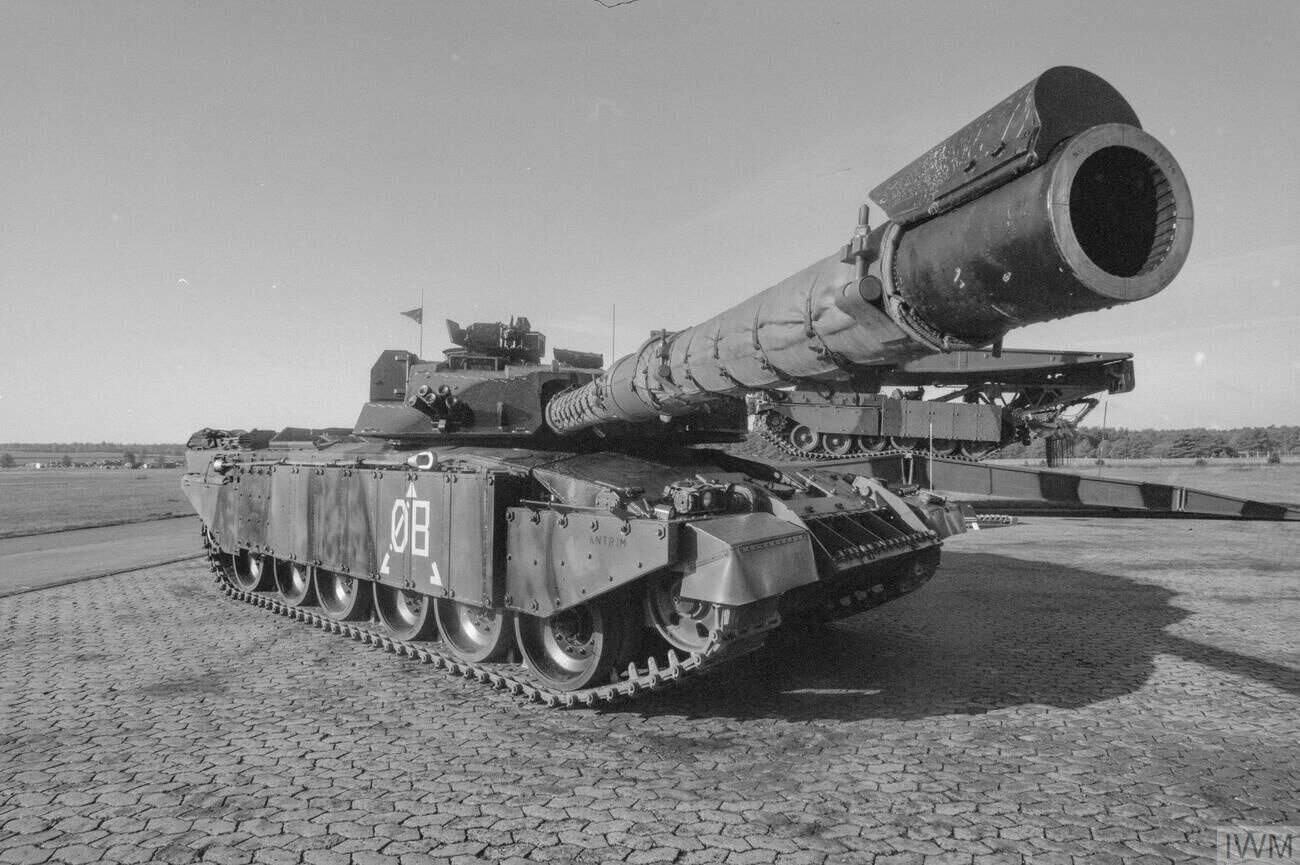
Following the restructuring performed under the Options for Change programme in 1992–93, the British Army was left with only eight armored regiments. The last regiment completed its transition to the Challenger 1 main battle tank in 1994. Of these eight regiments, six were stationed in Germany, and two remained in the United Kingdom.
Each regiment was reduced to three tank squadrons, leaving the Army with a total of 24 squadrons. A regiment now fielded only 38 tanks, a significant reduction compared with Cold War levels.
The later Strategic Defence Review (SDR) introduced another reorganization. The Army was to retain six armored regiments, each consisting of four squadrons and equipped with the new Challenger 2 main battle tank. Under this structure, a regiment would have operated 56–58 tanks.
In practice, however, the introduction of the Whole Fleet Management system in 1999 meant that each regiment permanently held only 30 tanks. Additional vehicles were kept in centralized storage in the United Kingdom and allocated to units only when required for training exercises or operational deployments. As a result, the number of tanks immediately available to frontline units was significantly lower than the Army’s total inventory suggested.
Continued Cutbacks: 1995–2000
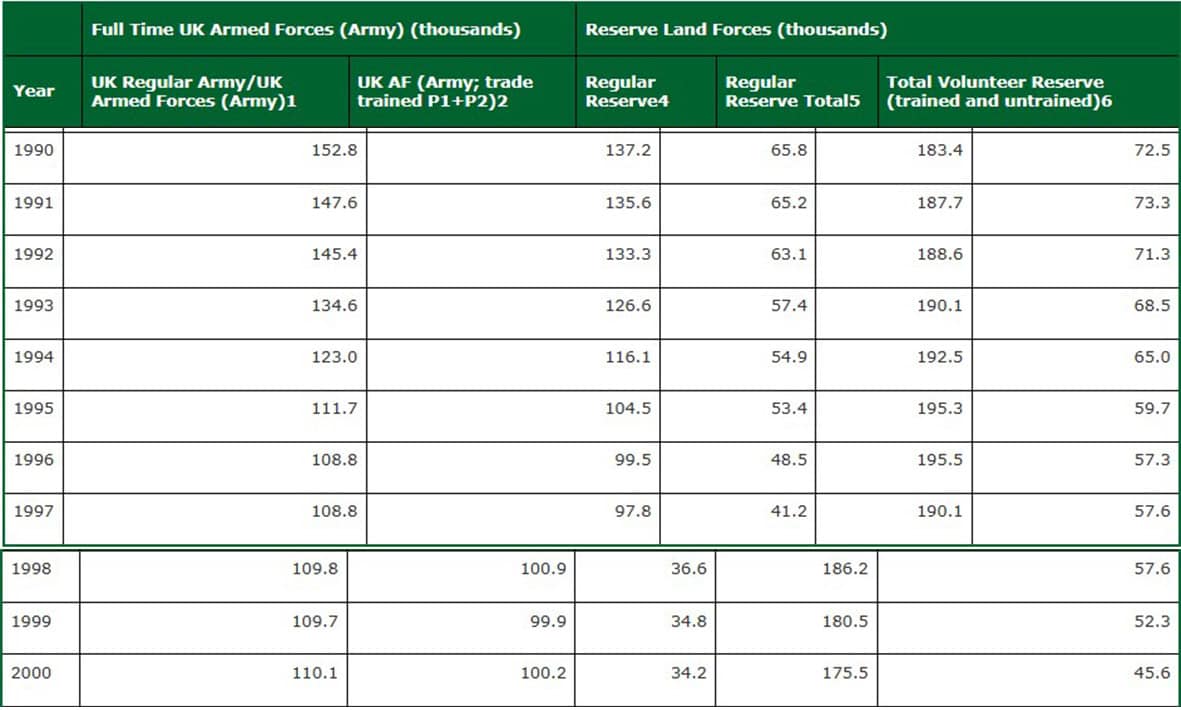
Reducing the size of the armed forces was made more difficult by the need to preserve a balance between experienced officers and younger recruits. Personnel statistics from the mid-1990s reveal a growing problem: many service members were leaving voluntarily.
Alongside compulsory redundancies, the Army experienced high levels of Premature Voluntary Release (PVR). Between 1990 and 1994, roughly 1,000–1,200 officers left the service voluntarily each year. This suggests that many experienced professionals saw limited long-term prospects in a military undergoing constant reductions and restructuring and therefore chose to pursue civilian careers.
The trend was even more pronounced among enlisted personnel (Other Ranks). In the 1989–90 financial year, 17,067 soldiers left the Army through voluntary release. Although this figure had fallen to 7,591 by 1994–95, the decline largely reflected the Army’s shrinking overall size rather than an improvement in retention.
These figures indicate that the British Army entered the 1990s with a significant retention challenge. Many experienced personnel were leaving of their own accord, while ongoing force reductions effectively concealed the scale of the problem by reducing the number of positions that needed to be filled.
Despite the reduction in numbers, the qualitative characteristics of personnel showed attempts at modernization. The average age of officers throughout the 1990s remained stable at around 36 years, while the average age of enlisted personnel increased from 27 to 29 years by 2000. This indicates a gradual shift toward a model of longer professional service and a reduced share of short-term contracts, as part of a strategy to retain experience in a smaller force.
In 1994, as the first wave of Options for Change reductions was coming to an end, the Ministry of Defence launched the Defence Costs Study (DCS), better known as “Front Line First.” While earlier cuts were a response to changes in external threats, the DCS was driven by internal economic pressure and Treasury demands to reduce the budget deficit.
The main idea of the DCS was that reducing defense expenditure did not necessarily have to mean reducing combat capability. The Ministry of Defence aimed to identify every pound of spending that did not directly contribute to the “front line.”
One of the most significant qualitative measures of the DCS was the reform of headquarters structures. The number of personnel in the Main Building of the Ministry of Defence was planned to be reduced from 5,200 to approximately 2,600. The introduction of a New Management Strategy in 1991 gave field commanders greater financial responsibility, helping to reduce intermediate layers of bureaucracy.
The reduction in the size of the British Army was closely linked to a broader reassessment of the UK’s global military presence. A 1995 report shows a rapid withdrawal of personnel stationed overseas. In 1975, there were 109,100 service personnel deployed outside the United Kingdom. By 1990, this number had fallen to 93,200, and by 1995 it had dropped further to just 53,300.
The largest reductions occurred in Continental Europe, primarily in Germany. The number of British Army personnel there fell from 56,600 in 1990 to 26,500 in 1995. This drawdown was accompanied by the closure of RAF airbases at Wildenrath (1992) and Gütersloh (1993), resulting in the disbandment of four interceptor and strike squadrons operating Phantom and Tornado aircraft.
At the same time, data from 2000 indicates that overseas troop levels had stabilized at approximately 47,000–50,000 personnel. This reflected the end of the Cold War-era withdrawal and the beginning of a new phase focused on expeditionary operations. For example, despite the overall reductions, there was a noticeable increase in activity in “other locations,” including peacekeeping missions in the Balkans.
Stagnation and Uncertain Prospects: 2000–2010
The initial impetus for reform came from the Strategic Defence Review (SDR) of 1998 and its follow-up, the “New Chapter” (2002), which was developed in response to the events of 11 September 2001. These doctrinal changes were ultimately consolidated in the 2003 White Paper, “Delivering Security in a Changing World,” and its 2004 supplement, “Future Capabilities” (July 2004).
These documents marked a shift away from preparing for large-scale conventional warfare in Europe toward conducting expeditionary operations of varying intensity anywhere in the world.
The new strategic model envisaged the ability to sustain three concurrent small- to medium-scale operations (for example in Sierra Leone, Afghanistan, or Kosovo), with at least one being a long-term peacekeeping mission.

The conceptual justification for reducing manpower was the introduction of Network Enabled Capability (NEC) and effects-based operations. Military leadership argued that the integration of modern intelligence systems, real-time data sharing, and precision-guided weaponry would enable decisive outcomes with significantly smaller forces.
As a result, planning priorities shifted away from quantitative measures (the “inputs” of personnel and equipment) toward qualitative “effects.” Reductions in platforms and manpower were presented as a natural consequence of increased combat effectiveness provided by precision systems.
In practice, the doctrine of “technology over mass” led to a continuous reduction in both regular and reserve personnel.
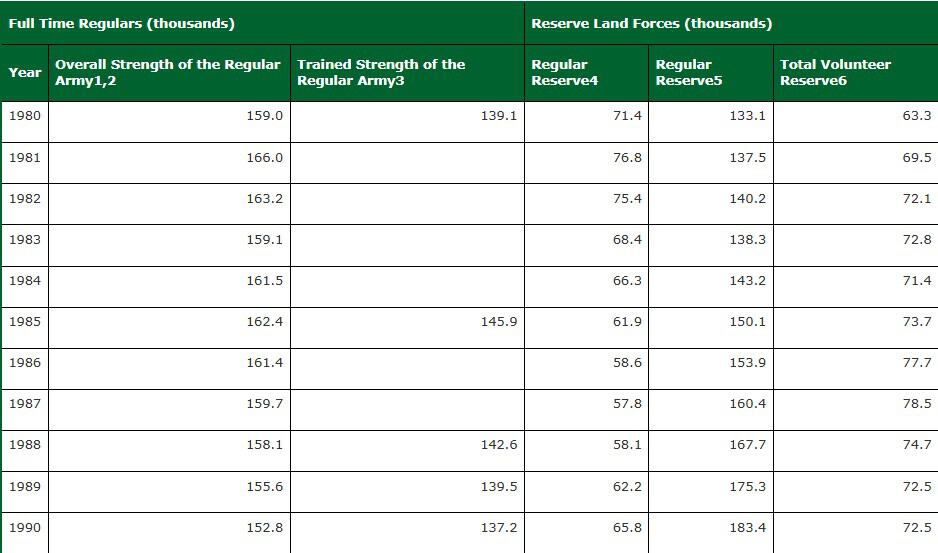
The overall strength of the UK Armed Forces consistently fell short of the officially defined Trained Requirement, indicating systemic difficulties in recruitment and retention amid prolonged overseas operations.
Changes in the size of the Army and its reserve components during the reform period show a clear downward trend in manpower levels.
Analysis of the data indicates that personnel shortages peaked in 2007 (–3.2% across the Armed Forces as a whole, with the trained Regular Army reduced to 99,100 personnel). This coincided with the period of the most intense combat operations in Iraq and Afghanistan.
-

- British armored vehicle fleet as of 1990, 1997, and 2010. Source: Ministry of Defence (ARM0018)

-

- British armored vehicle fleet as of 1990, 1997, and 2010. Source: Ministry of Defence (ARM0018)
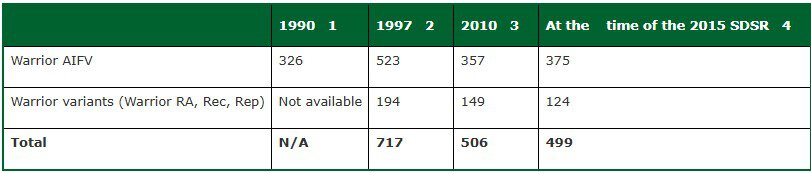
Meanwhile, the Territorial Army (reserve forces) underwent a rapid size reduction — falling from 57,600 personnel in 1998 to 36,800 in 2007. This significantly limited the Ministry of Defence’s (MoD) ability to rotate forces without strain. In addition to the military component, the civilian workforce within the defense establishment also saw major cuts.
The number of MoD civilian employees (Level 0) decreased from approximately 121,300 in 2000 to 85,800 in 2010, a reduction of 29.3% over the decade. By 2012, this figure had fallen by a further 17.3%, reaching 71,000 personnel. This trend reflected the government’s policy of large-scale outsourcing of support functions and the transfer of infrastructure maintenance to private contractors.
Restructuring of the Land Forces: FAS 2004 Reforms and the Hyperion Project
Major changes to the structure of the British Army were implemented under the Future Army Structure (FAS) reform, announced in 2004. The main objectives of this reorganization were to eliminate outdated practices, consolidate combat units, and streamline command structures.
First, the historic system of unit rotation (arms plotting) was abolished. Previously, infantry battalions regularly changed their roles (for example, from light infantry to armored infantry) and their permanent bases, resulting in significant logistical costs, disruption to soldiers’ families, and periods when units were unavailable for operational deployment due to retraining. The shift to fixed roles and permanent basing helped stabilize the force structure.
Second, infantry regiments were consolidated into larger multi-battalion formations. All former single-battalion regiments were merged into larger structures (for example, the Royal Regiment of Scotland). This move drew strong criticism from veterans for eroding local traditions, but it allowed the Ministry of Defence to reduce the number of infantry battalions by four.
The freed-up manpower was redistributed to strengthen areas suffering from shortages, such as logistics, military engineering, communications, and intelligence. New support formations were created, including the 1st Intelligence Brigade, the 12th Signal Group, the 8th Engineer Brigade, and the 2nd Medical Brigade.
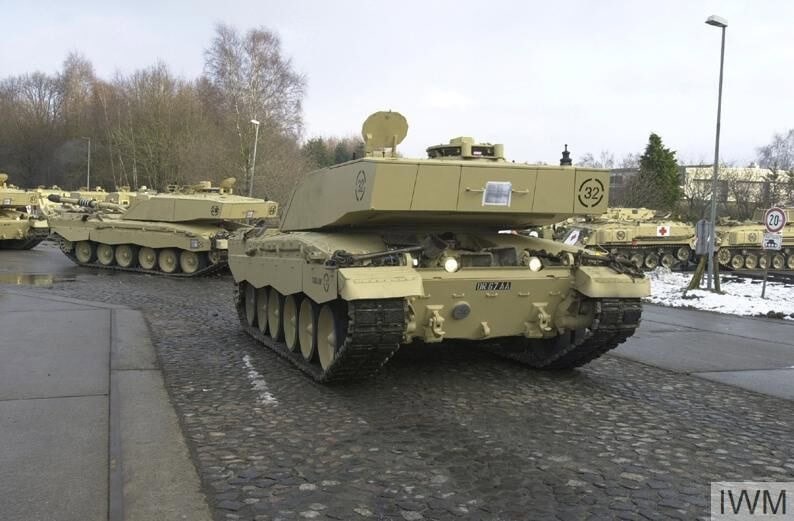
Third, heavy weapon systems and specialist units were optimized. Seven Challenger 2 tank squadrons and six batteries of AS-90 self-propelled artillery were removed from the combat order of battle.
Short-range air defense capabilities were also reduced. Requirements were met with only 24 Rapier fire units and 84 HVM missile launchers, and the Royal Air Force regiment fully relinquished its air defense role in favor of the British Army. One battalion of the Parachute Regiment was reorganized into the tri-service Special Forces Support Group (SFSG).
Following improvements in the security situation in Northern Ireland, the home service battalions of the Royal Irish Regiment were officially disbanded on 31 March 2008.
-

- Equipment strength of the British Army, 2006–2013. Source: Directorate for Arms Control and Counter-Proliferation Policy (CFE Data Exchange Chart IIA)

-

- Equipment strength of the British Army, 2006–2013. Source: Directorate for Arms Control and Counter-Proliferation Policy (CFE Data Exchange Chart IIA)

-

- Equipment strength of the British Army, 2006–2013. Source: Directorate for Arms Control and Counter-Proliferation Policy (CFE Data Exchange Chart IIA)

The practical implementation of these reforms during 2005–2008 was dynamic. In particular, the 19th Mechanised Brigade was successfully converted into the 19th Light Brigade in October 2005 to meet commitments under the NATO Response Force.
By December 2008, the brigade had fully completed its transition to a light-role formation and was redeployed from Catterick Garrison to Northern Ireland and Scotland.
In parallel, the 4th Armoured Brigade was converted into the 4th Mechanised Brigade, a process completed in December 2006, with units subsequently returning from Germany to Catterick in 2008.
To support operations under Operation Herrick in Afghanistan, an additional deployed formation – the 11th Light Brigade – was temporarily created in November 2007. It provided rotational combat forces until April 2010.
The restructuring was accompanied by the consolidation of military structures and the abolition of autonomous defense agencies. On 1 April 2007, several defense agencies lost their status, including the British Forces Post Office, the Defence Bills Agency, and the Defence Transport and Movements Agency.
In the same year, the Defence Procurement Agency (DPA) merged with the Defence Logistics Organisation (DLO) to form a single “mega-organization,” Defence Equipment and Support (DE&S), with a workforce of approximately 23,000 personnel.
In April 2008, the Army Base Repair Organisation (ABRO) and the Defence Aviation Repair Agency (DARA) were merged to create the Defence Support Group (DSG).
As part of the mid-level command restructuring under Project Hyperion, the Headquarters Land Command (Wilton)and the Adjutant General’s Department (Upavon), responsible respectively for operations and personnel, were merged.
As a result, on April 1, 2008, a unified Headquarters Land Forces (HQ Land Forces) was established. The physical relocation of staff to the new headquarters in Andover (Marlborough Lines) was completed in summer 2010, enabling the reduction of more than 110 military and 240 civilian posts within the headquarters structure.
Consequences of a Flawed Reform
The depletion of the traditional domestic recruitment and reserve base forced the British military leadership to seek new sources of personnel to maintain force levels. As a result, the composition of the United Kingdom’s Armed Forces changed significantly between 1990 and 2010.
One clear trend was the steady increase in the proportion of women serving in the Armed Forces. Women accounted for 5.7% of personnel in 1990, rising to 9.0% by 2005, and reaching 9.6% by 2010.
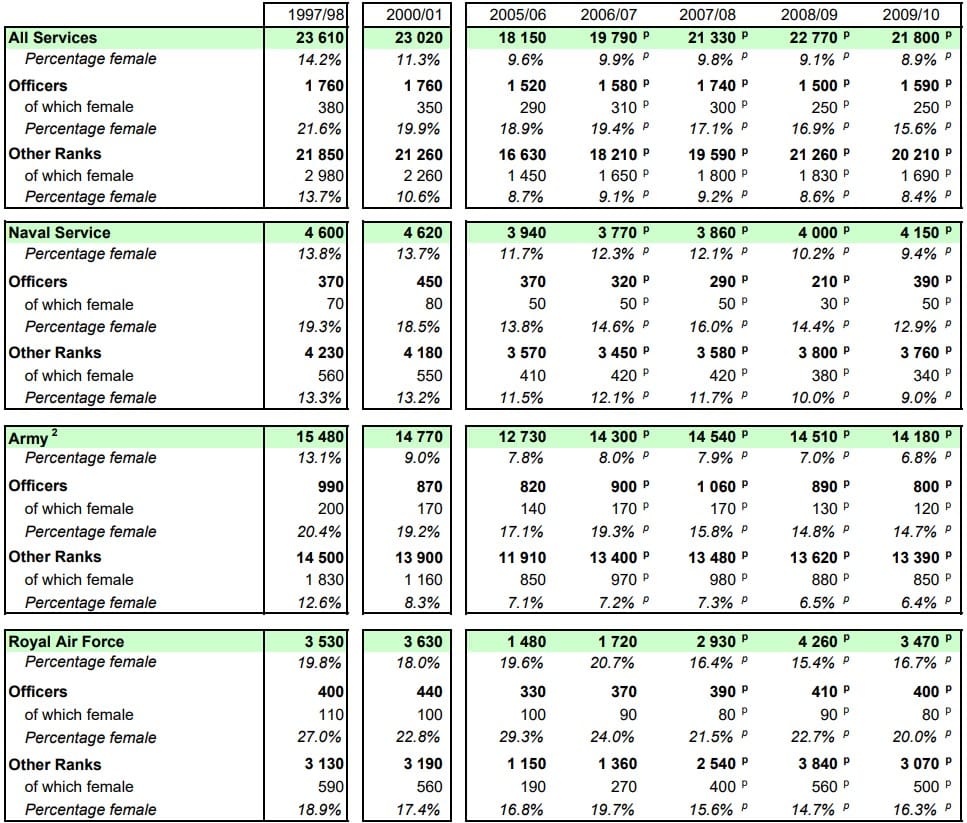
The highest proportion of women was in the Royal Air Force, where they made up 13.7% of personnel in 2010, while in the Army the figure was 7.9%. At officer level, women accounted for 12.2% of all officers across the Armed Forces in 2010.
There was also an increase in the number of personnel from Black and Minority Ethnic (BME) backgrounds. Among enlisted personnel and non-commissioned officers, the number of service members from ethnic minorities rose from 9,145 (5.8% of all Other Ranks) in 2005 to 11,440 (7.4%) in 2010.
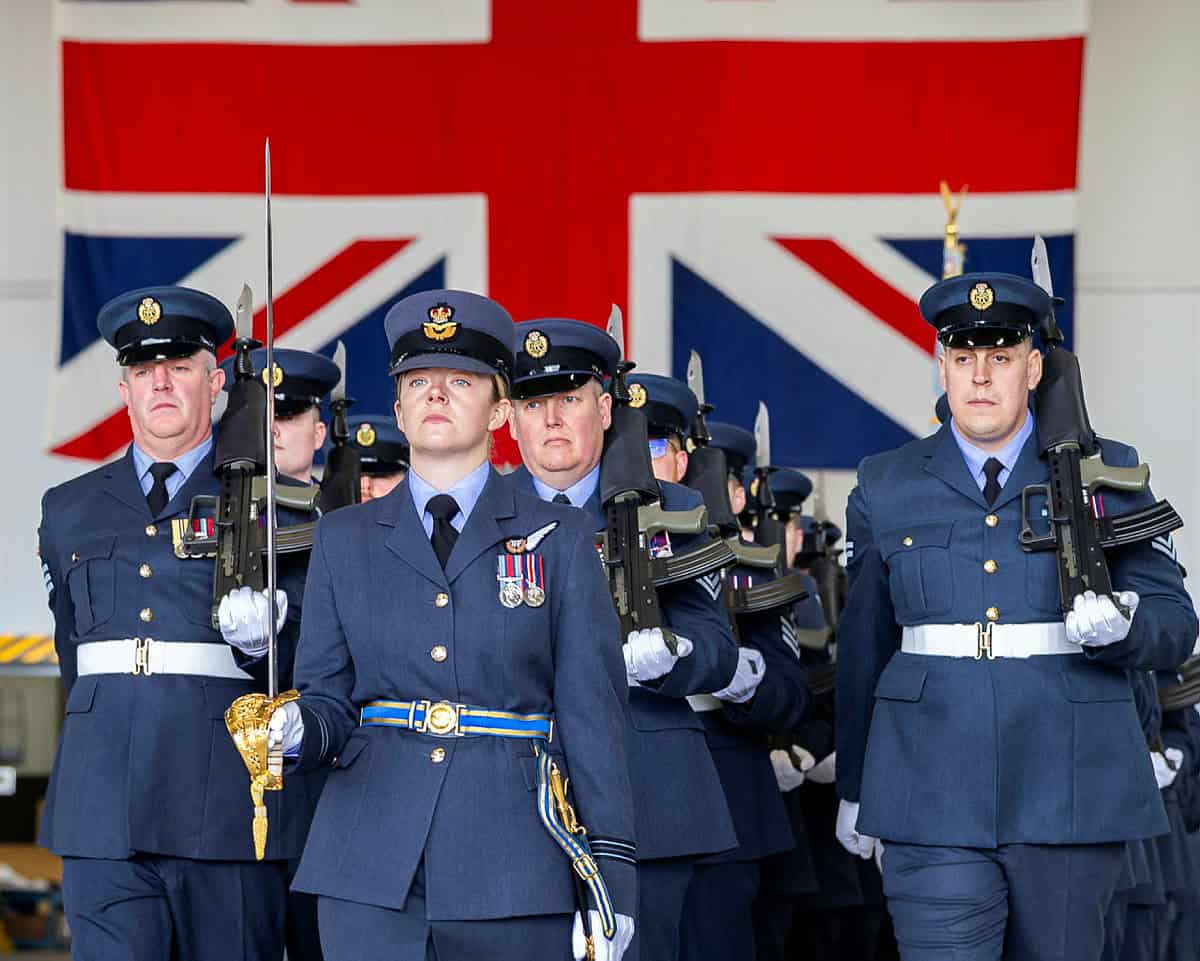
The highest proportion of ethnic minority personnel was recorded in the British Army, where they accounted for 9.4% of the total Regular Army strength in 2010. However, at senior officer level (Lieutenant Colonel and above), the representation of ethnic minorities remained low, at just 2.1% in 2010.
Due to internal recruitment shortfalls, the United Kingdom increasingly relied on foreign nationals. Owing to historical ties and legal provisions, the British Army recruited citizens of the Republic of Ireland and various Commonwealth countries.
The proportion of Non-UK personnel in the trained Regular Forces increased from 3.9% (6,810 personnel) in 2007 to 5.0% (8,620 personnel) in 2010.
A special place within the Armed Forces was held by the Gurkha Brigade, an elite unit recruited from Nepalese citizens. In March 2007, the UK Ministry of Defence implemented reforms to Gurkha service conditions, bringing their rights closer in line with those of British Regular soldiers.
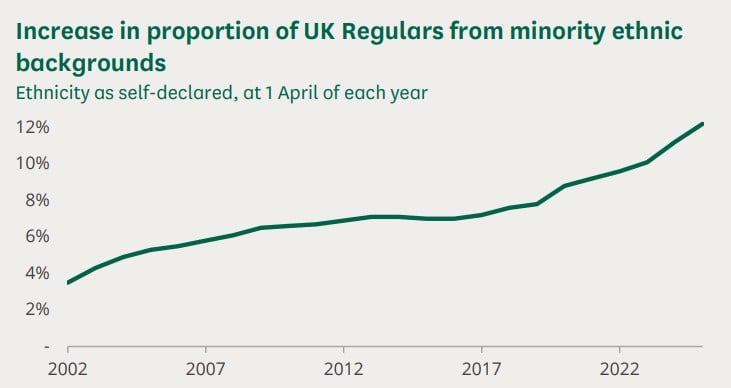
Command policy also ended the practice of long periods of unpaid leave in Nepal (Nepal Long Leave) and replaced it with standard paid annual leave. From 2008 onwards, Gurkhas were allowed to transfer into the UK Regular Forces after completing five years of service and to apply for British citizenship. These changes made service more attractive and further integrated Nepalese units into the wider Armed Forces structure.
Conclusion of Part One
Looking at the reductions in the British Army during the 1990s and 2000s, it is clear that the UK did not yet face a full-scale manpower crisis at that time. However, this period laid the groundwork for later problems. Budget constraints and policy decisions during these years gradually undermined the Army’s long-term ability to maintain sufficient personnel and readiness.
As a result, the British Army, which remained one of NATO’s key forces after the Cold War, slowly lost its role as a global power-projection military and became more focused on regional and expeditionary operations. Its priorities increasingly shifted toward smaller overseas missions and the defense of national territory.
The UK continued to meet its NATO commitments, but over time its ability to fully sustain them became more limited. The second part will examine this development in greater detail.



Visits by Senior Washington Officials to Moscow: The Factors Driving the Kremlin’s Rejection of the White House’s Proposals
In late August and early September 2026, three senior U.S. officials visited Moscow, marking a level of concentrated contact in U.S.-Russian relati...
A Sharp Shift in the Dynamics of Global Confrontation Forces Washington to Rethink How It Builds Its Key Partnerships
On September 12–13, 2026, the 18th BRICS Summit was held in New Delhi. Xi Jinping traveled to India to lead the Chinese delegation, marking his fir...

Xi Jinping’s Washington Visit Outlines the Timeframe for the Active Phase of the Confrontation: Beijing Openly Demands Taiwan’s Return
On September 23–25, 2026, Chinese President Xi Jinping held talks with President Trump at the White House during the first Chinese state visit to t...
