
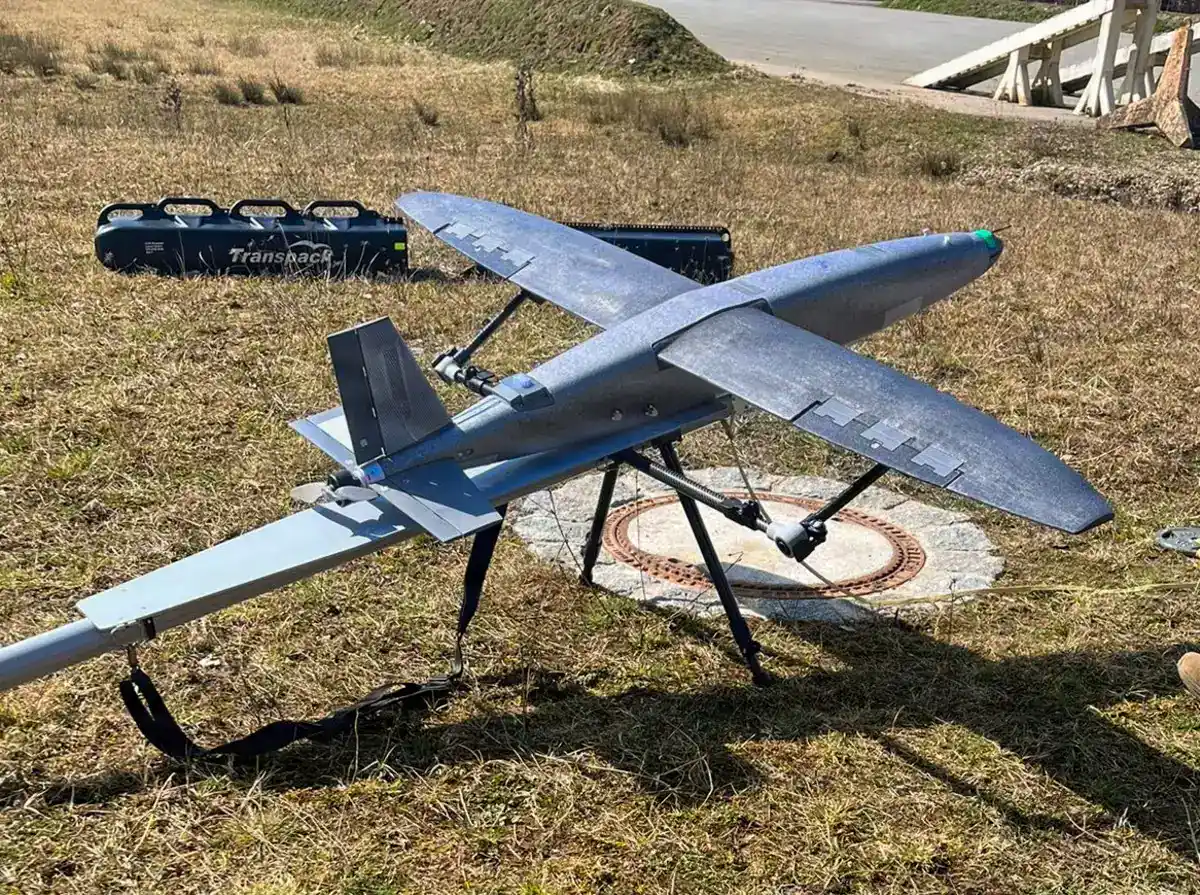
American Hornet: Strike UAV Destroying Russian Logistics

Dmytro Shumlianskyi





Hornet strike drones have already become one of the most widely used and successful weapons in the Defense Forces’ arsenal for striking Russian logistics deep in the rear. However, very little is publicly known about these drones. The manufacturer does not even disclose their general specifications.
Although the technical specifications of the Hornet strike drone are not officially disclosed, thanks to prolonged use, the Russians have been able to accumulate a large number of remains of downed UAVs and debris left behind after their deployment, and examine them.
Given the sensitivity of the subject matter and the need to ensure that this publication does not contain any additional information that could assist the occupiers, Russian analyses of drone debris and open-source media reports were used in preparing this material.
It is known that the Hornet was developed and is manufactured by the American company Perennial Autonomy, already known for its successful Merops interceptor drones. The company is owned by Eric Schmidt, the former CEO of Google.
The drones have been in use in Ukraine since the spring of 2025 and are already in service with a large number of units. In May 2026, US Army personnel also began training on these UAVs.
What is known about the Hornet
According to Russian industry sources, the UAV itself serves as a test ‘platform’ on which technical and tactical solutions are continuously evaluated under combat conditions, as well as the response of Russian military forces and countermeasures to attacks. As operational experience is gained, changes are promptly incorporated into the design.

In general, Russian military communities note that the drone is very well built, using materials and specific components used in aviation, rather than ordinary commercial parts.
According to estimates by Julian Röpke, a military analyst for the German newspaper Bild, the cost of a single Hornet drone is less than €5,000.
It is noted that in most cases, the drone flies at low altitudes, up to 200 meters, along transportation routes. After detecting a target, it locks onto it and strikes using a guidance system. The drone approaches the target very quietly, which reduces reaction time.
According to Russian estimates, it is extremely difficult to shoot it down with small arms unless the flight controller, warhead, or battery is hit. It is also noted that nets along logistics routes are ineffective for protection against this drone. The best countermeasures are said to be an FPV interceptor or the Elka system.
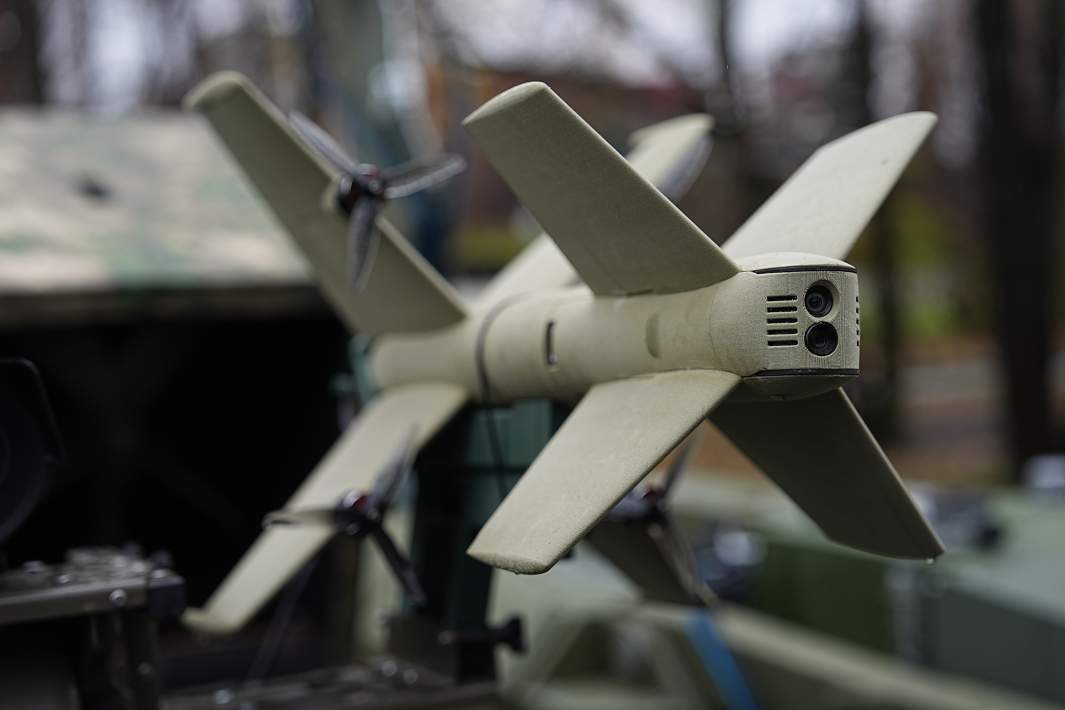
The priority targets of this UAV are military equipment and vehicles. At the same time, in some cases, the drone changed its target and attacked infantry. This suggests that mobile fire teams may also be included in the list of priority targets.
Assessment of the Hornet UAV’s tactical and technical characteristics
The Hornet’s takeoff weight is approximately 15 kg, its wingspan is 2.2 m, and its fuselage length is 1.4 m. The drone’s weight without a warhead and battery is approximately 5 kg, and its maximum payload reaches 5 kg.
The Russians estimate its flight range at 130–145 km, but in fact, its use has already been recorded up to 160 km from the front line.
Warhead
The weight of the Hornet UAV’s warhead can be up to 4.5 kg with a total payload of up to 5 kg. This payload is sufficient to destroy motor vehicles, lightly armored vehicles, and other targets.
At the same time, there have been ongoing attempts to use warheads of various weights and types. Since 2025, the use of warheads weighing from 0.2 kg to 4 kg has been recorded, most often of the cumulative-fragmentation type.

The UAV is equipped with a self-destruction mode. It is programmable and can have different implementation options depending on the specific configuration of the aircraft.
Engine and flight characteristics
Launch is performed using a pneumatic catapult. The drone is equipped with an SE4720 300KV motor, allowing it to reach a cruising speed of 100–120 kilometers per hour. During a dive toward the target, the speed can reach 200 kilometers per hour.
The battery has a 12S2p configuration, dimensions of 180×70×70 mm, and a weight of 1.9 kg. The UAV uses Samsung INR21700-50S batteries, and the battery capacity is 10,000 mAh.
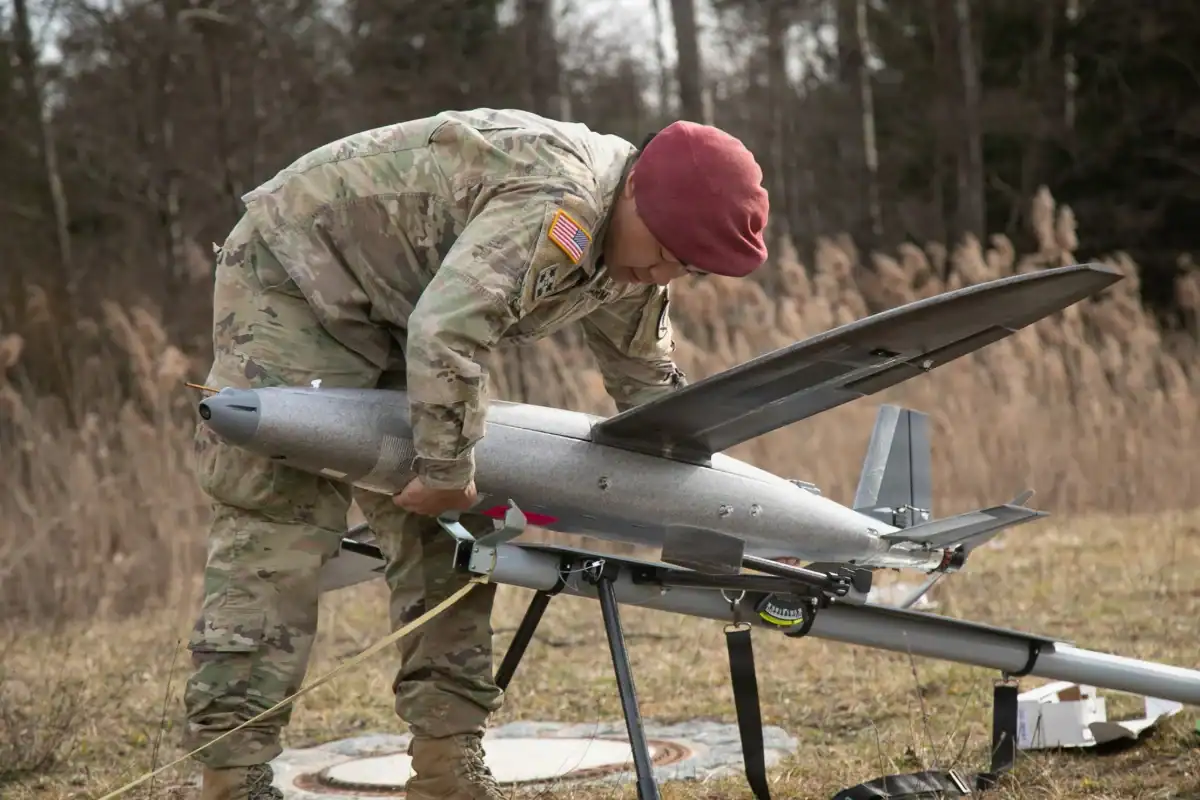
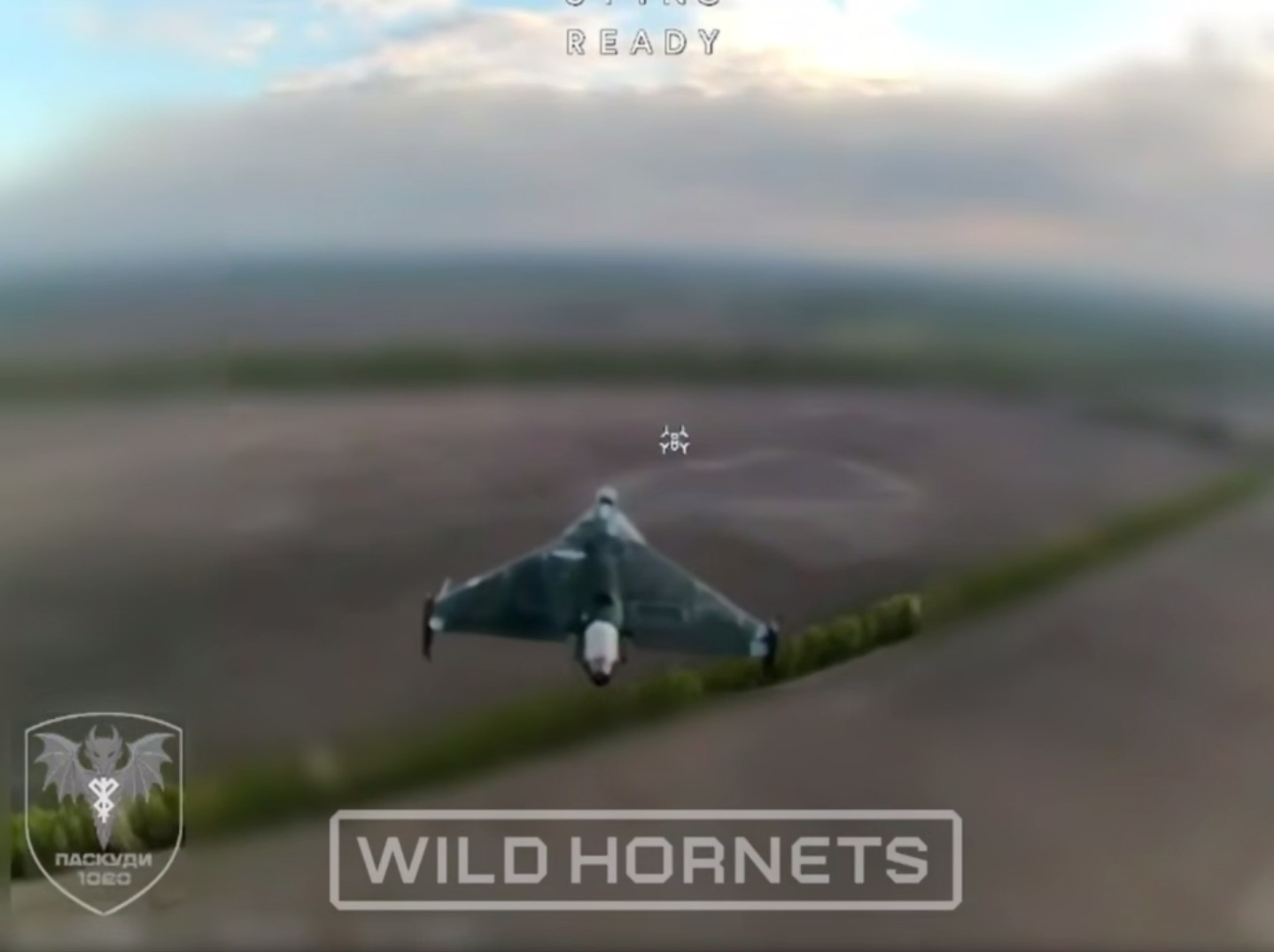
The Russians also highlight the aircraft’s high maneuverability and speed. There have been recorded instances of the UAV flying at altitudes of no more than 5 meters. It has also been reported that controllability is maintained during a dive toward the target, which increases the effectiveness of its use against small and moving objects.
At the same time, automatic diving has limitations. There have been reports of misses when the auto-lock-on system failed to account for small obstacles or had stricter maneuvering restrictions.
Cameras and guidance system
The UAV is equipped with two daytime cameras—a forward-facing and a downward-facing camera. They likely operate as part of a guidance system, and the downward-facing camera may perform auto-lock-on, terrain orientation, and altitude stabilization functions.
Despite the use of daytime cameras, there have been reports of attacks by such drones at dusk. This may indicate the existence of variants with cameras adapted for low-light conditions. In early spring 2026, Russian reports began to emerge regarding the experimental use of a thermal imaging forward-looking camera.

Video cameras and lenses allow for target acquisition from an average distance of 300–500 m. This enables the UAV to autonomously dive toward a target from an altitude of 200–300 m or, while flying at low altitude, engage a target from approximately the same distance. This mode renders most electronic warfare systems installed on vehicles ineffective.
Control and communications
A key feature of the Hornet is the combination of satellite and inertial-optical navigation, an advanced AI-powered optical-electronic target acquisition and recognition system, and the use of non-standard data transmission frequencies.
As a result, the UAV is capable of autonomously flying along a route, minimizing the need for a constant communication channel with the operator and drastically reducing the effectiveness of typical electronic warfare systems and drone detectors.
After objects are identified, the operator receives on-screen prompts regarding the type of detected targets and independently decides which target to engage.
The video transmission channel can operate in several modes. These include two-way radio communication in non-standard frequency bands of 1800–1900 MHz, 2000–2300 MHz, and 3300–3800 MHz; the use of a Starlink Mini terminal; and MESH networks based on modems from Radionor Cordis.
It is worth noting separately that the UAV control channel using the LoRa protocol operates in frequency bands typical of mass-market Russian DMR VHF and UHF radios, including some popular bands used by Azart tactical radios.
The use of such a control channel offers several advantages at once. First, the weak signals of the control channel can be masked in congested areas of DMR network radio traffic, reducing their detectability by electronic intelligence assets. Second, when attempting to jam the UAV’s radio channel with broadband interference, the Russians’ own tactical communications may be simultaneously jammed, disrupting coordination between their units.
At the same time, the polarization of the UAV’s antennas was selected to minimize the chances of its detection and reduce the effectiveness of Russian electronic warfare systems such as the R-934, R-330Zh, and other similar systems.

The Hornet’s frequency bands are largely absent from the operating ranges of typical Russian drone detectors, which is why such devices may fail to detect this UAV. At the same time, portable spectrum analyzers and radio-technical reconnaissance equipment do not have such a strict dependence on predefined frequency bands.
Satellite navigation
The UAV uses a Cirocomm patch antenna with RHCP polarization in the L1 band. The new generation of single-frequency GNSS receivers from LOCOSYS adds support for the B1C and L1C frequency bands of BeiDou-3 and GPS satellites, bringing positioning accuracy close to that of dual-frequency solutions.
The module can simultaneously receive and process signals from all major satellite constellations—GPS, GLONASS, BeiDou, Galileo, and QZSS. Combined with SBAS support, this significantly increases the number of visible satellites and improves positioning and ranging accuracy.
The new architecture allows this receiver to achieve a positioning accuracy of 1.5 m RMS in the absence of electronic warfare (EW) jamming, which is 40% better than that of previous-generation devices. At the same time, no additional shielding around the antennas was detected. This may indicate that the receiver is considered an auxiliary or monitoring element of the navigation system, specifically for detecting the presence of spoofing or jamming of satellite navigation in the flight area.
Conclusion
Considering the combination of characteristics—flight range, resistance to jamming, the difficulty of detecting communications on non-standard frequencies, a warhead capable of destroying even armored vehicles, navigation independent of satellite systems, and terminal guidance, combined with its low price, the Hornet is unrivaled as a means of striking logistics deep in the rear among drones of both Ukrainian and Russian manufacture.


Xi Jinping’s Washington Visit Outlines the Timeframe for the Active Phase of the Confrontation: Beijing Openly Demands Taiwan’s Return
On September 23–25, 2026, Chinese President Xi Jinping held talks with President Trump at the White House during the first Chinese state visit to t...

Netanyahu’s Visit to Abu Dhabi: Israel Builds Partnerships from a Position of Strength, but the Middle East Conflict Is Eroding the Edge of Its Weapons
On September 27, 2026, Israeli Prime Minister Benjamin Netanyahu traveled to Abu Dhabi with the head of Mossad and the head of the National Securit...

Big Tech Pushes the White House Toward Global De-escalation: The Stance of Tech Capital Shapes the Terms for a Deal Between Trump, Putin, and Xi Jinping
As of October 14, 2026, political advertising expenditures in the current U.S. election cycle, including reserved airtime, had exceeded $10 billion...
