




Popular
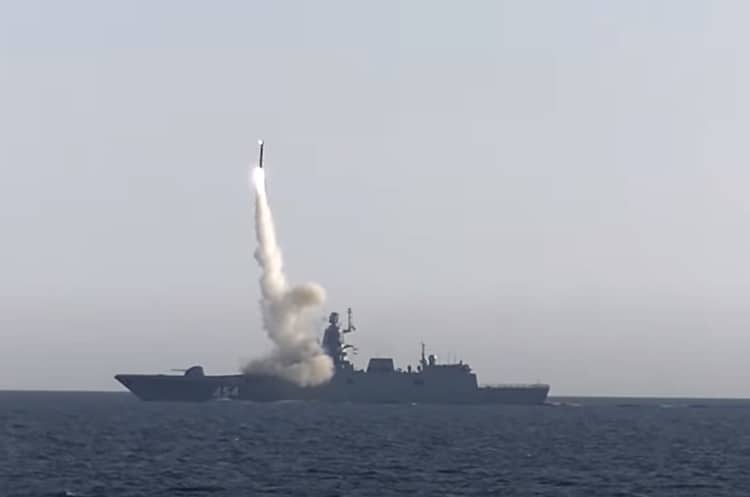
Zircon is likely not a hypersonic cruise missile, which has significantly higher maneuverability, but rather a ballistic missile that follows a quasi-ballistic trajectory.
This is supported by an analysis by independent OSINT analyst Fabian Hinz, who specializes in missile technology. Read the full version of the study on our blog, Zircon — Actually a Quasi-Ballistic Missile.
Currently, there is no independently verified data on the characteristics and design of this Russian missile. According to Ukrainian estimates, the missile flies at a speed of about Mach 5.5, briefly accelerates to Mach 7.5 before entering the target area, and decelerates to approximately Mach 4.5 just before striking the target.
As the analyst notes, the most widely accepted theory is that the Zircon is a hypersonic cruise missile powered by an air-breathing jet engine. This would mean that Russia has mastered the extremely complex technology of the scramjet, a direct-flow air-breathing jet engine.
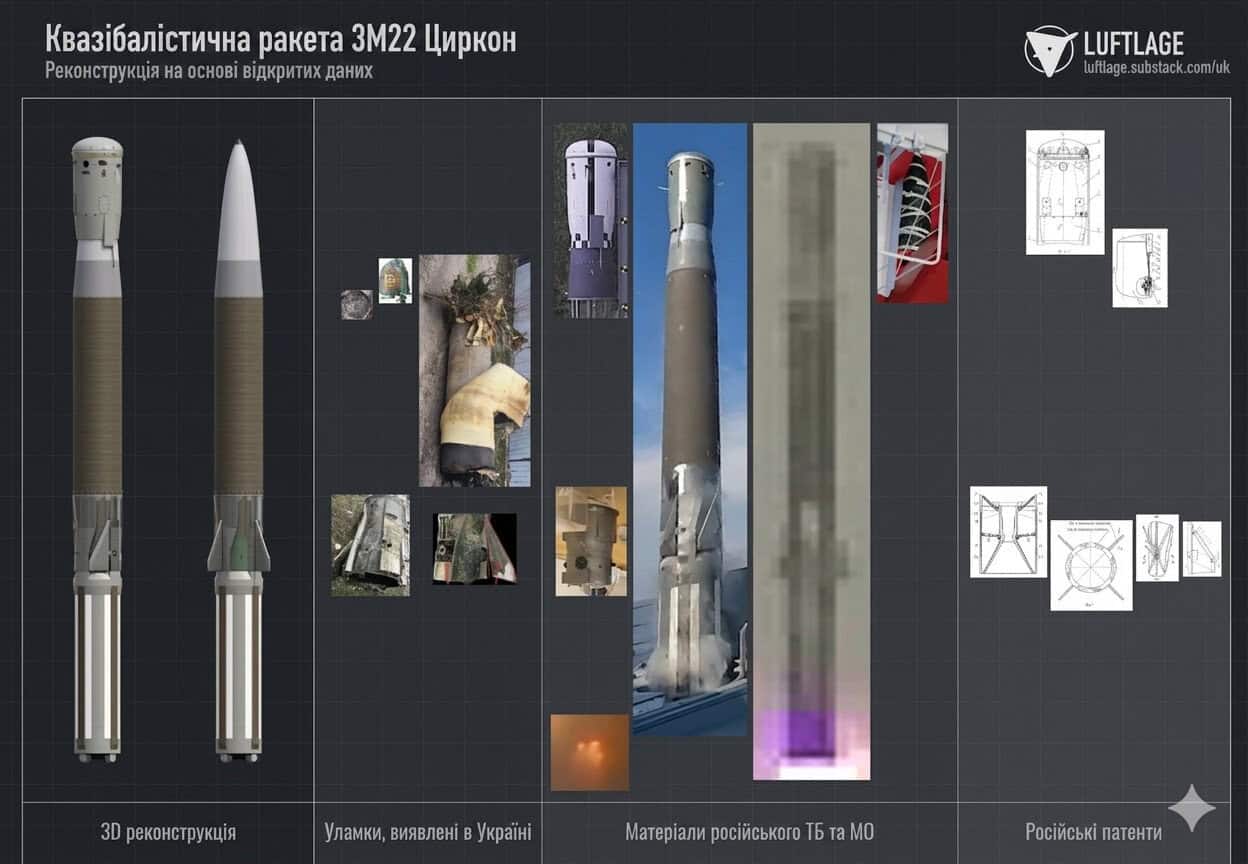
The second theory is that the Zircon may not actually be a hypersonic missile, but rather a high-speed supersonic cruise missile — a development of the P-800 Onyx anti-ship missile. The third theory suggests that the missile is not a winged missile at all, but rather belongs to the class of ballistic missiles that follow a quasi-ballistic trajectory.
Such missiles use a conventional solid-fuel rocket engine instead of a gas turbine engine, but they do not follow a standard ballistic trajectory; rather, they combine a gliding phase with active maneuvers in the atmosphere. This makes their trajectory more unpredictable and complicates interception.
As the analyst notes, despite the lack of official information about the Zircon, there is sufficient publicly available material to assess this system.
Publications about the Zircon often claim that the missile uses the advanced liquid fuel Decilin-M. However, as the researcher discovered, this claim is based on mixed reports: statements by Russian officials about new fuel for cruise and hypersonic missiles were later combined with the first reports of Zircon tests, after which this speculative link was repeatedly cited.
At the same time, in 2023, the Russian government awarded the title of Hero of Labor to Yuri Milehin, who heads the Soyuz Federal Center for Dual-Use Technologies — Russia’s leading developer of solid rocket propellants. The decree cited his role in creating an innovative high-energy solid propellant for the Zircon missile.
As further evidence of the use of a solid-propellant engine, the analyst points to the absence of an air intake, which is necessary for the operation of supersonic and hypersonic cruise missiles. Video footage of Zircon launches released by Russia, as well as photographs of debris, show a tubular composite-fiber structure for the booster stage with no visible signs of an air intake.

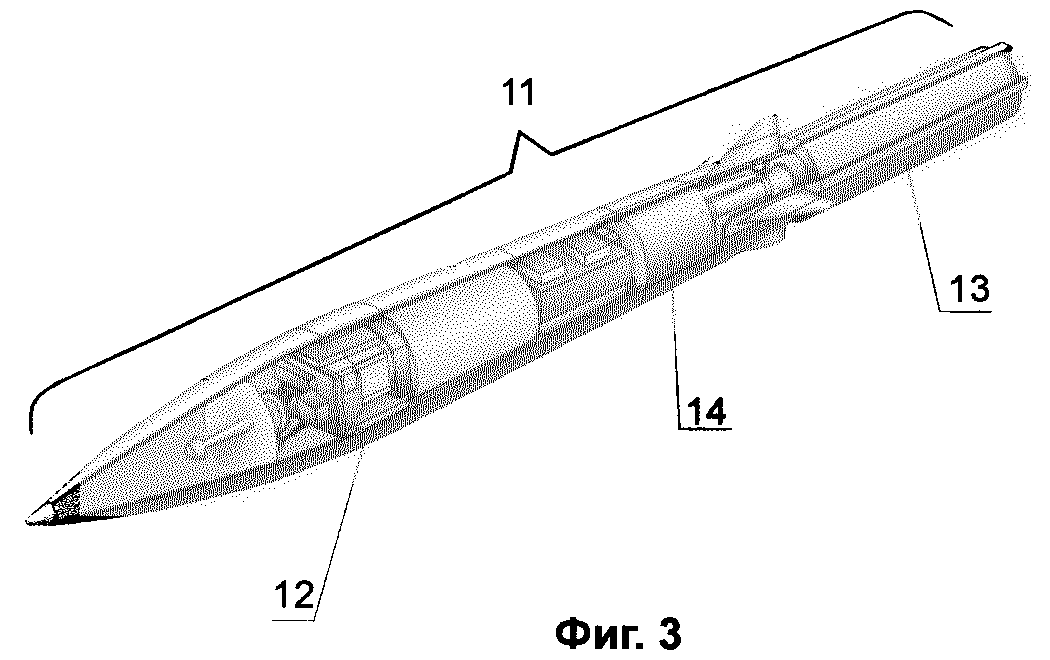
Speculation about a ring-shaped air intake in the nose section, similar to that of the P-800 Onyx missile, is also not supported. A patent for the Zircon’s disposable launch fairing, which includes an image of the missile’s nose section, does not show such an element. Furthermore, in a Russian documentary about the Zircon, the silhouette of the nose section on the test stand also does not indicate the presence of an air intake.
Although the manufacturer of the Zircon missile, NPO Mashinostroyeniya, is known for its work in the field of supersonic anti-ship missiles with air-breathing rocket engines, it also holds patents related to quasi-ballistic anti-ship missiles. Specifically, as early as 1999, a patent was registered for a two-stage solid-fuel anti-ship missile with a quasi-ballistic trajectory, and in 2011, a patent was registered for a maneuvering system designed for flight at high supersonic and hypersonic speeds at altitudes exceeding 20 km.
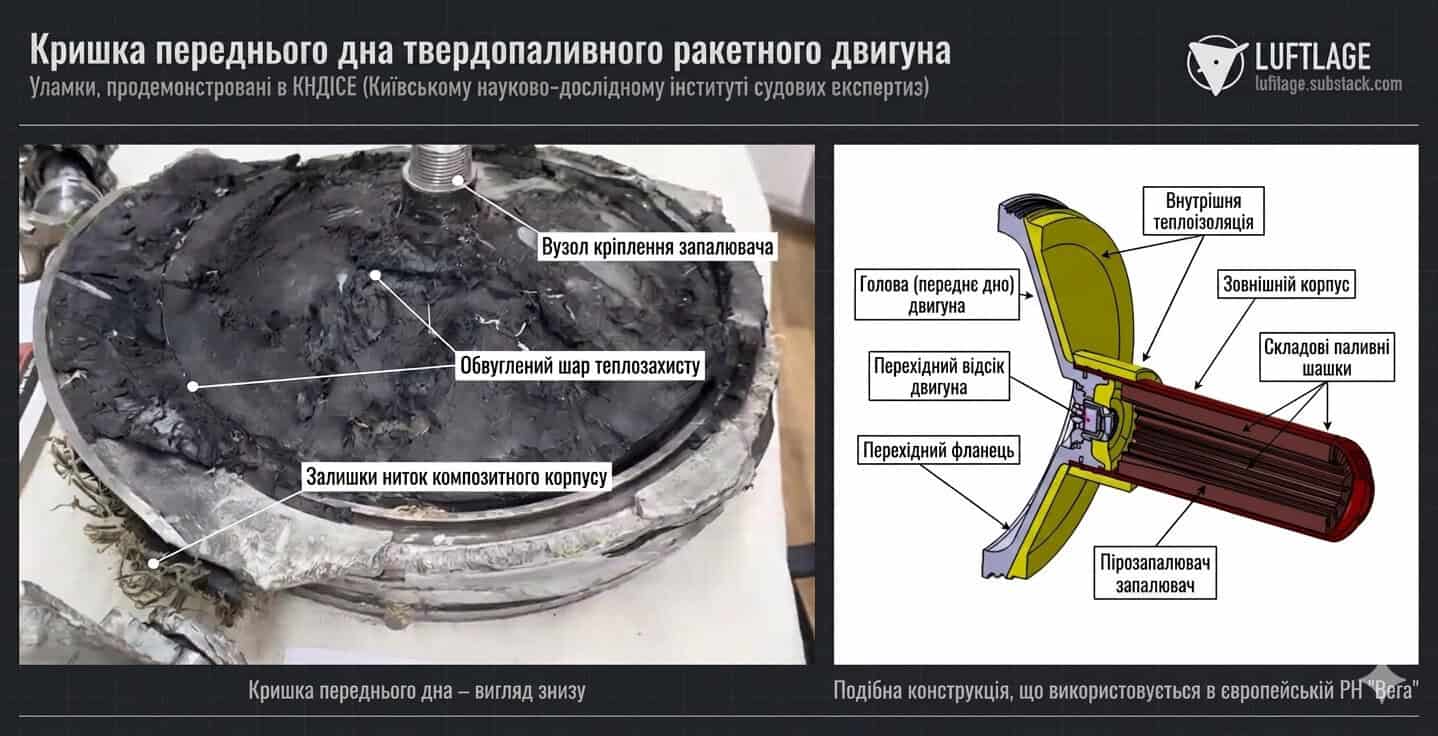
The researcher cites the missile debris found in Ukraine as the most compelling evidence regarding the type of engine used in the Zircon. Among the fragments displayed by the Kyiv Scientific Research Institute of Forensic Expertise, he identified a part resembling the front cover of a solid-fuel rocket engine. It lacks a central air intake, which would be necessary for a direct-flow air-breathing jet engine.
Hinz emphasizes that the simplified distinction between hypersonic and non-hypersonic systems does not reflect the actual complexity of flight at hypersonic speeds. Rather, it is a matter of a spectrum of maneuverability, where systems differ in the degree and duration of maneuvering at hypersonic speeds. Even a quasi-ballistic missile, which is not a hypersonic cruise missile and has less maneuverability, can still pose serious challenges for interception.
Підтримати нас можна через:
Приват: 5169 3351 0164 7408 PayPal - [email protected] Стати нашим патроном за лінком ⬇
Subscribe to our newsletter
or on ours Telegram
Thank you!!
You are subscribed to our newsletter