
Popular
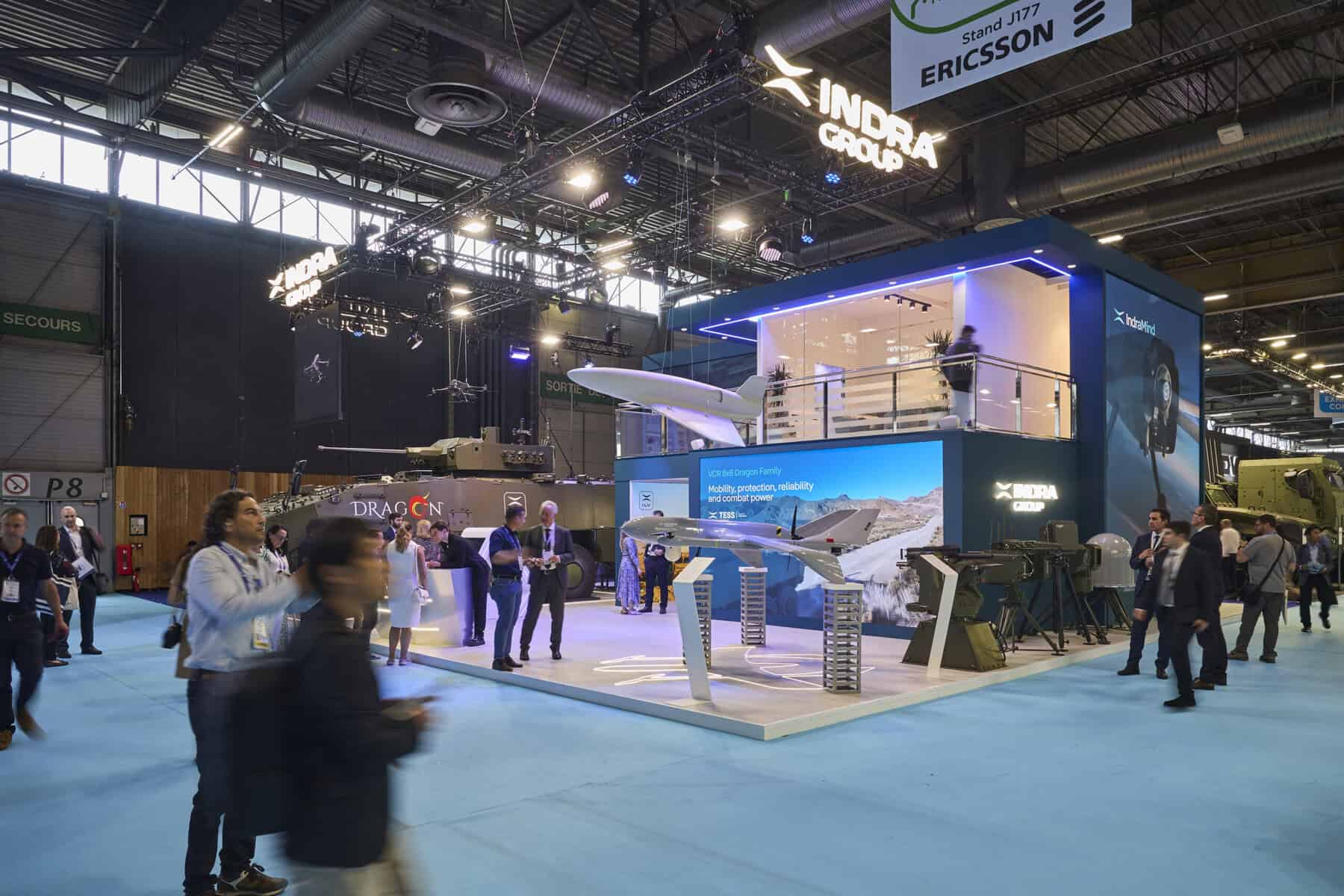
Every major defence exhibition is about more than hardware. It is a snapshot of how the industry imagines the next war. That is why I look at events like this not as a showcase, but as an indicator of mindset: what manufacturers consider important, where they are putting their resources, which threats they see – and which ones, unfortunately, they still do not.
Eurosatory 2026 left me with a mixed impression.
On the one hand, Europe has experienced engineers, capital, a strong manufacturing culture, and deep expertise in armoured vehicles, electronics, communications, and control systems. On the other, I did not see a real breakthrough. Many of the solutions looked as if Europe was finally getting serious about war – but about the war of 2022. Not the war being fought now. And certainly not the one that is coming next.
I saw a lot of armoured vehicles. High-quality, expensive, and well thought out from an engineering standpoint. This is what Europe does well. It knows how to build reliable platforms – how to work with metal, protection, mobility systems, ergonomics, and serial production.
But a modern armoured vehicle has to be more than protected. It has to be part of a combat system: able to see, transmit data, receive target designation, operate under electronic warfare, and stay in the fight even after losing its connection. Without that, armour is no longer an advantage. It is just metal – and often very expensive metal.

Many manufacturers have also started gravitating toward automated turrets – as if they were the universal answer on the modern battlefield. They are not.
A turret without the right software, without a well-developed concept of use, without quality data, without tactics, and without real combat experience is just hardware. It does not replace a human. It does not create an advantage on its own. It becomes useful only when it is part of a combat system – one where it is clear who sees the target, who makes the decision, how communications work, and what happens when things do not go according to plan.
On a trade-show stand, that is easy to demonstrate. In real combat conditions, it is far harder.
A separate topic is unmanned ground vehicles. There really were a lot of them. That’s logical: the war in Ukraine very quickly showed that a human on the front line is becoming too expensive and too vulnerable a unit. Anything that can haul ammunition, evacuate a wounded soldier, bring up supplies, conduct surveillance, or operate in a dangerous zone without a crew has a future. But between “has a future” and “ready for war” lies an enormous distance.
Of everything I saw, only one manufacturer truly looked close to a practically usable solution. Not to a polished presentation. Not to a demo unit. But to an actual product with a chance of surviving real conditions.
Because a ground robot isn’t just a chassis with a camera. It’s resistance to mud, water, shrapnel, signal loss, electronic warfare, rough transport, field repair, clumsy handling, spare-parts shortages, and the need to scale up production. It’s a price an army can sustain. It’s a simplicity a soldier can handle. It’s a logic of use you can explain not at a conference, but inside a unit. A test-range robot and a front-line robot are two different machines, even if they share the same name.

At the same time, I did see the right direction. There are more component makers now. More solutions in navigation, control systems, communications, mesh networking, autonomy, and resistance to signal loss.This is what really matters.
The advantage of the future won’t lie in one “beautiful” platform, but in architecture. In the ability to quickly assemble a system from modules, swap components, update software, and adapt to a new threat in weeks rather than years. In the ability to keep working when GPS is jammed, the comms channel breaks, the operator changes, and the enemy has already found a way to break your previous tactics.
War no longer waits for the classic defence development cycle. It doesn’t wait five years for certification, three for approvals, and another two for procurement. What looks modern today can become an ordinary target tomorrow.That’s why the solutions of today’s war are already starting to fall behind. We need to build and present the products of tomorrow’s war.

Europe has one great strength: it knows how to build reliably. That’s a major advantage. But there’s also a danger – confusing reliability with obsolescence.
Archaic technology can work. It can be proven. It can come with beautiful documentation, a long life cycle, and a convenient service history. But if it can’t change quickly, it loses to the tempo of war.
The modern battlefield punishes the slow quickly. It punishes those who think in platforms instead of systems. It punishes those who believe it’s enough to bolt a camera, a turret, or “autonomy” onto an outdated product and call it ready for the new reality. It isn’t.
The new war is the speed of learning. The speed of production. The speed of updating. The speed of integration. The speed of letting go of what seemed promising yesterday but no longer works today.
European defence plants don’t get hit by missiles and drones every night. Their power grid doesn’t live in a constant cycle of recovery after strikes. Engineers can plan, manufacturers can scale, suppliers can work in a more predictable environment. That’s a huge advantage, but one that only means something when it’s converted into speed.
Because the war of the future demands more than resources. It demands a different culture of decision-making.
Less complacency. Less faith that the old school and old experience will automatically answer a new threat. Less trade-show aesthetics. More honest testing, more contact with combat experience, more openness to the Ukrainian lessons that have been paid for very dearly.
We in Ukraine don’t theorize about this war. Every day we see how fast the front changes. We see how a solution that gave an edge yesterday needs reworking today. We know that the only thing that works is what survives reality.
Eurosatory 2026 showed that Europe is moving. But the key question is whether it’s moving fast enough. Because the next war won’t wait for those still catching up to the last one.
Підтримати нас можна через:
Приват: 5169 3351 0164 7408 PayPal - [email protected] Стати нашим патроном за лінком ⬇
Subscribe to our newsletter
or on ours Telegram
Thank you!!
You are subscribed to our newsletter