




Popular
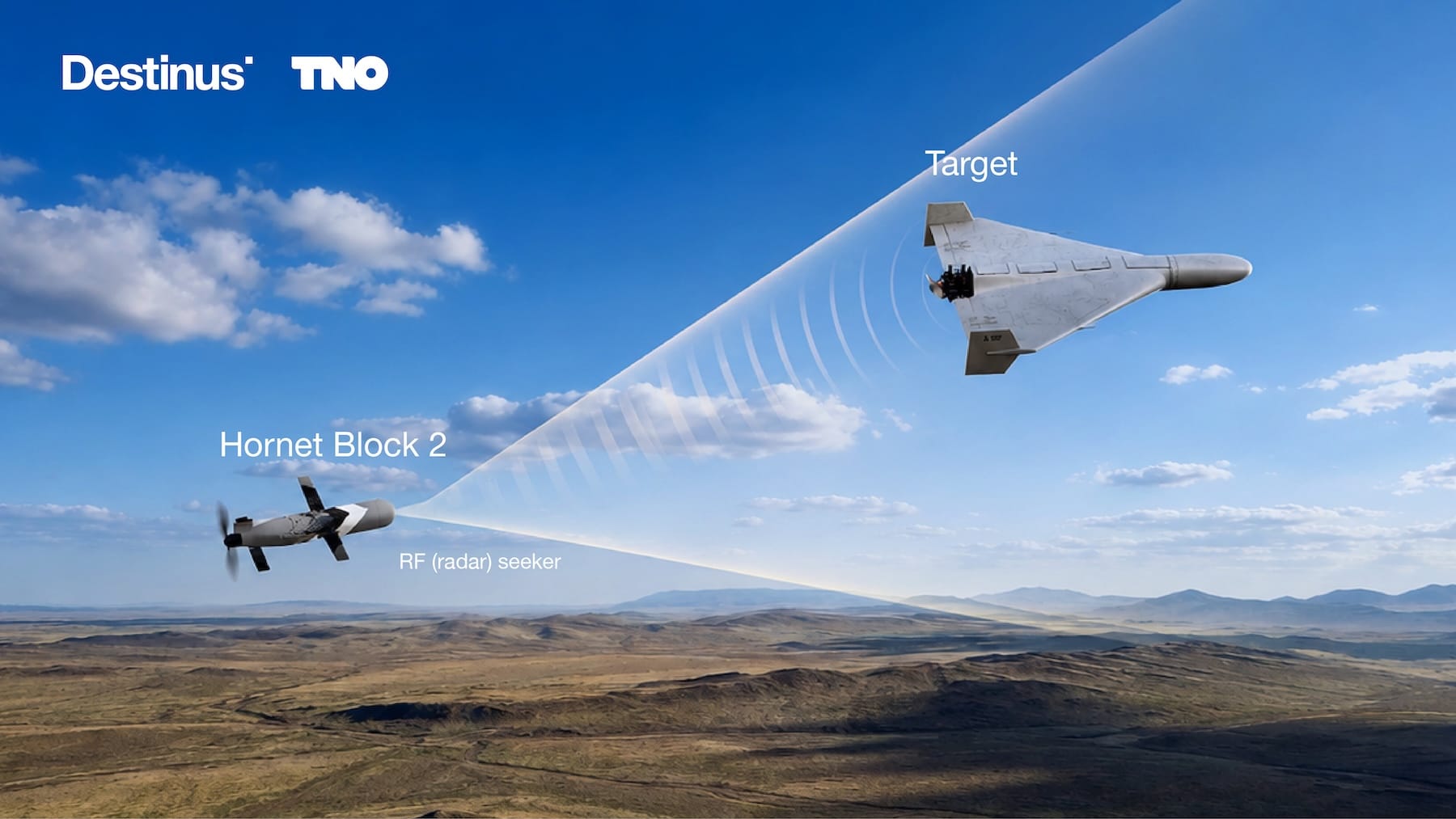
TNO and Destinus have announced plans to establish a joint venture to further develop, scale, and manufacture radar seeker heads.
The Dutch company announced the initiative.
Under the joint venture, TNO will focus on developing and validating technological concepts, architectures, and expertise. Destinus will be responsible for design, engineering, integration, industrialization, and the integration of the systems into air defense solutions. The first demonstration products are expected to be delivered early next year. The establishment of the joint venture remains subject to the necessary approvals, including those from regulatory authorities.
“Success will be determined not only by who can build the greatest number of platforms, but also by who controls the critical technologies that make those platforms effective and reliable. By making these technologies available earlier and at scale, this joint venture creates significant opportunities for Dutch high-tech companies to manufacture, integrate, and scale technologies that are vital to Europe’s defense capabilities,” Tjark Tjin-A-Tsoi, CEO of TNO, shared.
TNO’s radar technology will be used in Destinus’ Hornet interceptor drone, which is expected to be integrated into the air defense systems of Germany, Spain, and France.
The active radar seeker, roughly the size of a hockey puck, effectively serves as the interceptor’s “eyes.” It enables the system to discriminate between genuine targets and countermeasures (decoys) while maintaining reliable performance under varying conditions, including nighttime operations and adverse weather.
“Modern seeker heads are among the most critical guidance technologies in contemporary air defense systems. Radar seekers are essential because they enhance performance in environments where purely optical systems face inherent limitations, such as low visibility, adverse weather, and more challenging target sets. Together with TNO, we can integrate deep radar expertise into a system architecture that Destinus can engineer, industrialize, and scale for European air defense,” Tim Moser, Chief Technology Officer of the Destinus Group, noted.
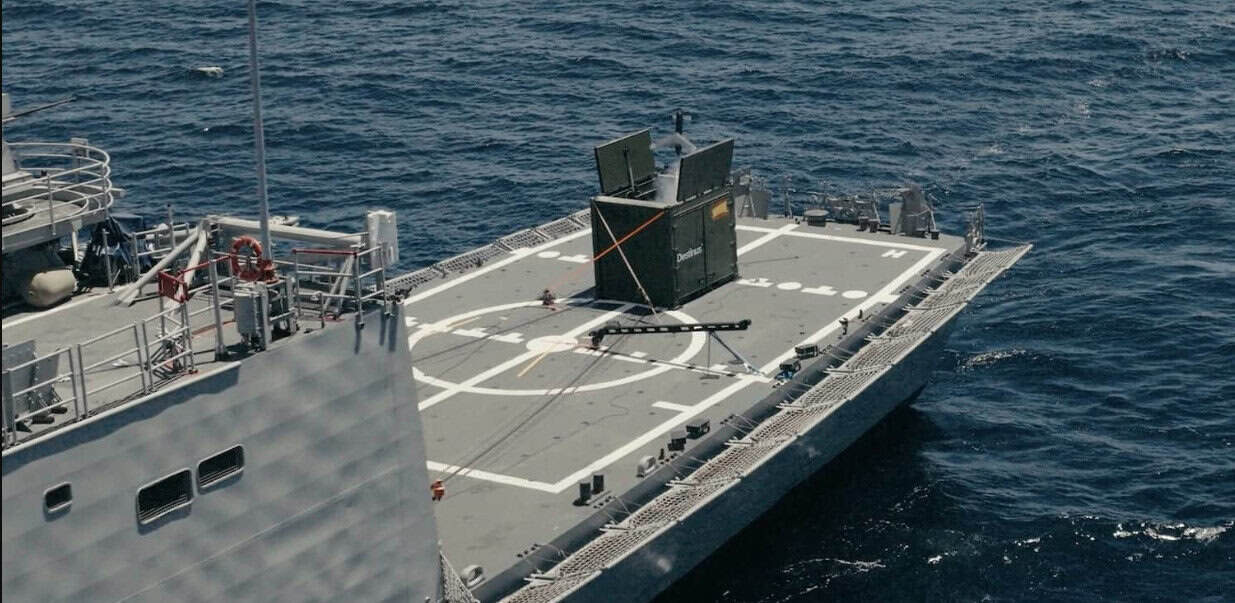
On 12 March, at the BEDEX 2026 exhibition in Brussels, Destinus presented the Hornet Block 2rapid-response interceptor, positioning it as an electrically powered, container-launched system designed to defeat one-way attack drones, reconnaissance unmanned aerial vehicles (UAVs), and helicopters.
The interceptor is intended to bridge the capability gap between Very Short-Range Air Defense (VSHORAD) and Short-Range Air Defense (SHORAD) systems. With a claimed engagement range of approximately 150 km, it aligns with Europe’s objective of developing a scalable, cost-effective air defense solution capable of countering massed aerial threats.
Destinus is also responsible for the development of the Ruta Block 1 missile architecture, the Ruta Block 2 variant, and the long-range deep-strike Ruta Block 3. The latter is planned to be produced jointly with Rheinmetall and is scheduled for operational testing in Ukraine in 2027.

From a strategic perspective, the Hornet Block 2 enters the market at a time when European countries and NATO are accelerating investment in integrated air and missile defense (IAMD). The ability to protect critical infrastructure, forward operating bases, and naval forces against coordinated drone attacks has become a key requirement for modern armed forces.
In this context, interceptor systems such as the Hornet Block 2 could play an important role in strengthening Europe’s layered air defense architecture by providing an intermediate defensive layer capable of engaging unmanned aerial threats before they reach high-value assets.
Підтримати нас можна через:
Приват: 5169 3351 0164 7408 PayPal - [email protected] Стати нашим патроном за лінком ⬇
Subscribe to our newsletter
or on ours Telegram
Thank you!!
You are subscribed to our newsletter