



Popular
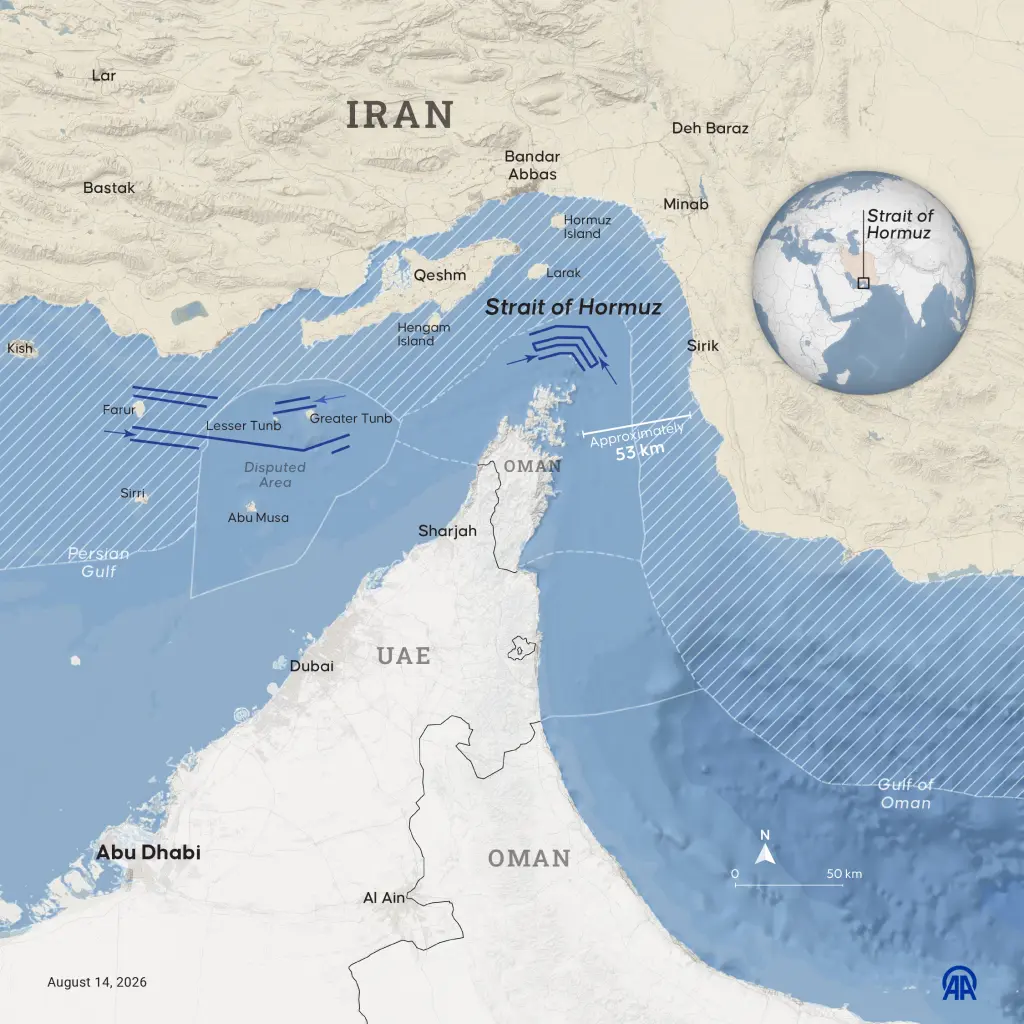
Iran appears to be losing control of the Strait of Hormuz as more ships use a U.S.-backed corridor to safely pass through the waterway. Traffic has surged by nearly 400% over the past two weeks, according to the NY Post.
Nearly 200 ships passed through the strait last week, compared with 150 the week before and just 40 in the two weeks prior, according to data from the United Kingdom Maritime Trade Operations Centre. The increase brings traffic back to about 20% of pre-war levels. Before the war, the strait carried around one-fifth of the world’s oil.
Traffic through the Strait of Hormuz nearly stopped after the war with Iran began in late February. But ships are now increasingly returning to the route despite the ongoing confrontation between Iran and the United States.
Since May, the U.S. has been quietly helping oil tankers pass through the Strait of Hormuz. Some vessels are using ‘shadow fleet’ tactics, such as turning off their tracking systems, to avoid detection and stay close to Oman’s coast.
According to maritime intelligence firm Kpler, more than 80% of liquid cargo that passed through the Strait over the past two weeks either used the Omani route – a U.S.-backed corridor authorized by the UN’s International Maritime Organization but rejected by Iran – or turned off its tracking signals and effectively went invisible. Kpler believes many of these vessels likely used the same Omani corridor.
“It increasingly looks like Iran has at least partially lost control of the strait,” Homayoun Falakshahi, Kpler’s head of crude oil analysis, told CNN this week.
“The Omani route makes the most sense,” said Dan Pickering, founder of Pickering Energy Partners. He noted that using this route could help ships avoid having to pay fees to Iran.
Over the past seven days, 103 vessels entered the Strait of Hormuz and 89 left. That is a 27% increase from the previous week, when 76 vessels entered and 75 left. The increase is even more dramatic compared with two weeks earlier, when only 18 vessels entered the strait and 21 left.
Most of the vessels passing through the strait were registered under the flags of Panama and Liberia. However, a ship’s flag only shows where it is registered, not where the company that owns it is based. About half of the vessels were oil tankers, while the rest were cargo ships.
Five vessels were hit by Iranian strikes over the past week, leaving two sailors injured or dead. The ships were reportedly damaged but remained afloat.
The 60-day deadline for negotiations to end the war expired on Monday, and talks over control of the Strait of Hormuz have broken down. Earlier this week, President Trump said the strait had been fully cleared of mines and was open again, raising hopes that shipping traffic could gradually return to normal. He also announced plans to impose what he called “the most devastating economic operation ever conducted” against Iran through new sanctions.
Meanwhile, Iran’s top security official threatened Trump with an ‘earthquake-like’ response as the U.S. prepared to impose new sanctions on Iran on Monday.
“If Trump wants to take action, we will respond like an earthquake,” Mohsen Rezaei, secretary of Iran’s Supreme National Security Council, said in a televised interview on Saturday.
“We are telling all the countries around us not to join the United States in its economic war. Otherwise, we will consider them enemies. If they cooperate with the Americans in this economic war, we will strike at their interests.”
Meanwhile, the U.S. naval blockade of Iran is continuing, further worsening the country’s economic crisis, according to AP News. Whether this increased economic pressure will lead to military or political concessions from Iran in the near future remains to be seen, but some experts are skeptical.
Iran’s inflation rate is expected to reach nearly 70% by the end of the year, according to the International Monetary Fund. The country’s economy, already weakened by decades of sanctions before the war, is projected to shrink by more than 5%.
Gasoline has remained relatively cheap thanks to government subsidies, but that may not last as supplies decline. An adviser to the president told Iranian state television last week that the country is now consuming more gasoline each day than it produces and may have to raise prices – a move that has triggered mass protests in the past.
Official government statistics put Iran’s unemployment rate at 9.1%, although state media say the actual figure is likely several times higher. A Labor Ministry official said last week that more than 1 million jobs had been lost by the end of May, just three months after the war began.
Amid the economic hardship, Iranian President Masoud Pezeshkian said he supports ending the war through negotiations.
“We are concerned about people’s livelihoods and their economic situation, and we are doing everything we can to address these problems,” he told reporters last week.
Підтримати нас можна через:
Приват: 5169 3351 0164 7408 PayPal - [email protected] Стати нашим патроном за лінком ⬇
Subscribe to our newsletter
or on ours Telegram
Thank you!!
You are subscribed to our newsletter