


Popular
Our enemies are learning fast. For Ukraine, understanding what they are learning, and what they still cannot do, is a matter of survival.
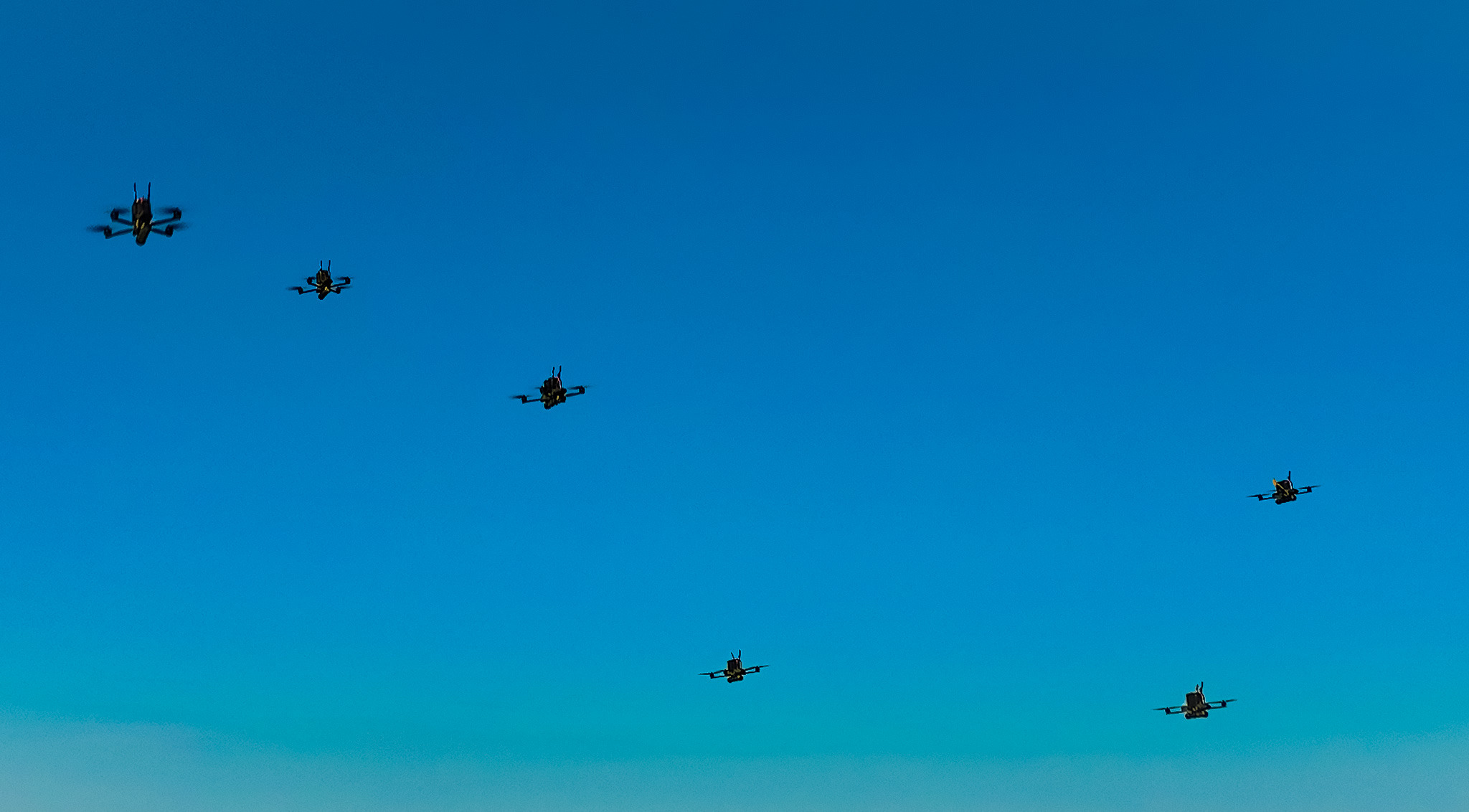
One of the most overused words in this war is swarm. Large russian Shahed attacks are routinely described as swarms, and Ukrainian deep-strike packages often get the same label. Yet hundreds of drones in the air do not necessarily amount to autonomous swarm warfare.
The real test is coordination. Can the systems share information, reassign tasks, adapt to losses, operate through electronic warfare, and produce repeatable effects at the operational or strategic level? Neither side has crossed that threshold at scale. Both are moving toward it.
The most useful military definition is straightforward: a swarm is a group of autonomous systems performing a common mission with limited human control. The key word is autonomous, not simultaneous.
A hundred drones launched at the same time along pre-programmed routes form a large salvo. A hundred drones that exchange information, redistribute targets after losses, and change their behavior as a group are much closer to a genuine swarm.
There is also a middle ground. Drones can follow synchronized plans without communicating with one another. From the ground, the effect may look similar, but the intelligence remains in the planning, not in the group itself.

Today, Ukraine and russia are approaching this problem from almost opposite directions.
russia has built the largest sustained one-way attack-drone campaign in history. Production of Shahed/Geran-type systems has reached thousands of airframes per month, while attacks involving hundreds of drones have become part of Ukraine’s operating environment.
The method is effective. Strike drones are mixed with Gerbera and other decoys, routes and altitudes are varied, and large numbers of tracks are presented to Ukrainian air defense at once. The aim is to overload detection, consume interceptor capacity, and force defenders to spend time and ammunition even on airframes without warheads.
But this is still primarily mass, not swarm intelligence. Individual drones generally follow assigned routes. There is no public evidence of hundreds of Shaheds negotiating targets, redistributing missions after losses, or reorganizing an attack collectively based on what they detect in flight.
Some russian decoy variants may be used as communications or relay nodes during complex raids. That development deserves attention because distributed communications are a building block for more capable systems. Still, a networked salvo is not automatically an autonomous swarm.
The same distinction applies to faster platforms such as the jet-powered Geran-4 and Geran-5. Higher speed compresses reaction time and makes interception harder, but it improves survivability, not collective intelligence.
Ukraine is developing from the other direction. Systems such as Swarmer’s Styx already demonstrate elements of real swarm behavior. An operator defines the mission and target area, while the drones can distribute reconnaissance and strike roles, react to losses, adjust routes, and coordinate parts of the engagement without a separate human command for every decision.
That is fundamentally different from launching several FPVs at the same time. It shifts part of the decision-making from the operator to the network.
The limitation is scale. Current combat deployments remain tactical. Coordinating three, eight, or even twenty-five systems is technologically significant, but it is still far from operating hundreds of autonomous platforms across a large battlespace.
The architecture may be designed to scale further. The battlefield capability has not reached that point. Swarms become strategically relevant only when autonomy and mass are combined.
Operation Spiderweb (Operatsija “Pavutyna”) showed that an autonomous swarm is not the only route to strategic effect. On June 1, 2025, Ukraine used 117 FPV drones positioned deep inside russia to strike strategic aviation bases thousands of kilometers from Ukrainian-controlled territory.
The drones themselves were not operating as a collective intelligence. The decisive element was operational design: target selection, logistics, deception, penetration, timing, and positioning. Eighteen months of preparation turned relatively inexpensive FPVs into a weapon against some of the most valuable assets in the russian arsenal.
Spiderweb matters because it separates technological autonomy from operational intelligence. Sometimes the intelligence sits in the drone. Sometimes it sits in the plan.

It also shows the limit of a single exceptional strike. An operation can destroy strategic assets without becoming a standing strategic capability. That requires repeatability, including the ability to keep producing effects after the enemy understands the method and adapts.
The term air denial is often used too loosely in discussions about mass drone warfare. Denial is not the same as control. Making airspace dangerous for an adversary has value, but it does not necessarily create freedom of action for your own forces.
The russian Shahed campaign imposes real costs on Ukraine. It keeps air-defense crews active, consumes interceptor capacity, and puts sustained pressure on civilian infrastructure and population centers. Yet bombardment alone does not amount to strategic air denial if Ukraine can still move forces, sustain logistics, and conduct operations.
The same discipline should apply when assessing Ukrainian technology. The question is no longer whether drones matter strategically. They clearly do. The harder question is what autonomous swarms would need to become a repeatable strategic instrument.
I see five requirements.
Scaling a swarm is not simply a matter of adding airframes. Every additional autonomous platform creates communications, identification, deconfliction, and decision-making problems.
At scale, the bottleneck becomes the command-and-control architecture. It must assign intent without micromanaging each aircraft, track which nodes remain available, redistribute missions, and prevent hundreds of platforms from interfering with one another. It must also continue working as parts of the network disappear.
Without that layer, more drones simply mean more points of failure. The strategic unit is not the drone. It is the network.
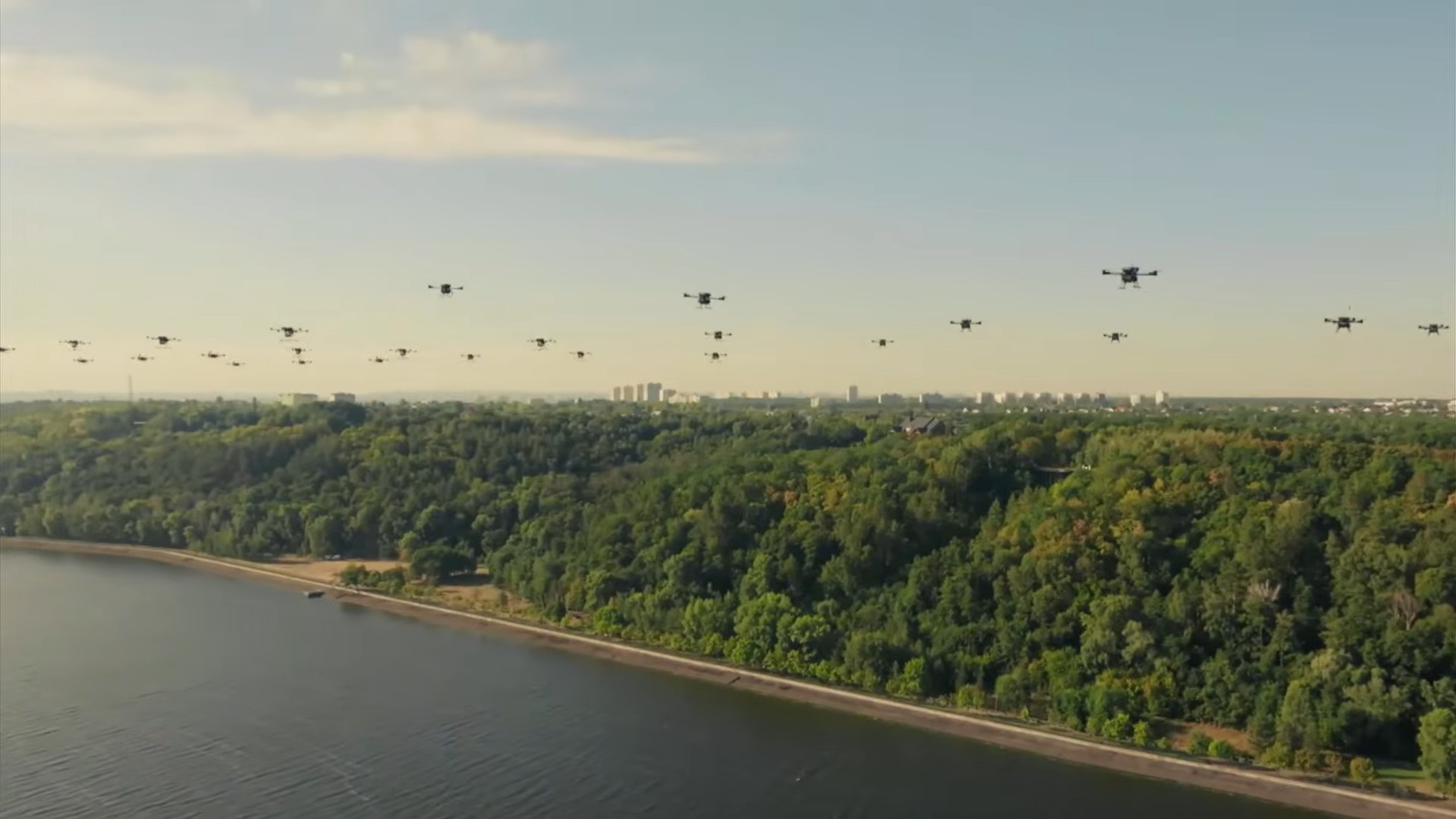
Any architecture built around perfect connectivity will eventually meet russian electronic warfare and fail. A strategic swarm cannot depend on an uninterrupted link to a central server.
It needs layered processing: some outside the contested area, some at the tactical edge, and enough onboard autonomy for individual platforms or smaller groups to remain useful when communications degrade. The system must cope with lost nodes, denied GNSS, reduced bandwidth, and temporary isolation from command.
A system that appears autonomous only while the network is healthy is not ready for battlefield scale. Real autonomy starts when the network fails. Neither Ukraine nor russia has publicly demonstrated that level of resilient coordination at strategic scale.
Autonomy without industrial capacity is a demonstration. Strategy requires repeatable production.
russia has already industrialized long-range one-way attack drones. Thousands can be produced, launched, lost, and replaced. That does not make them a swarm, but it solves one of the prerequisites for eventually fielding one.
Ukraine’s drone industry produces systems at enormous scale across many categories. Still, millions of manually operated FPVs are not the same as hundreds of thousands of platforms equipped with the sensors, computing, communications, and software required for distributed autonomy. The supply chains and economics are different.
For swarm warfare to become strategic, autonomy must be cheap enough to lose and simple enough to manufacture in volume.
Destroying more targets does not automatically create an operational effect. What matters is what the attack enables next.
A swarm may open a corridor for another force, collapse an air-defense sector before a strike package arrives, isolate a unit, or blind command systems at the moment of maneuver. Without that connection to a wider operation, even advanced autonomous systems can become an expensive way to produce tactical kills.
Spiderweb succeeded because inexpensive platforms were connected to a carefully chosen strategic target set. Technology enabled the strike; operational art created its significance. Future swarms will need the same relationship with doctrine. Doctrine must define the strategic problem the technology is meant to solve.
Much of the drone revolution has been driven by a favorable exchange: a cheap aircraft can force the defender to use an expensive interceptor. That advantage is not permanent.
Ukraine is already changing the economics of Shahed defense by using interceptor drones in parts of the engagement chain instead of relying only on expensive surface-to-air missiles. Future swarms will face improved electronic warfare, automated guns, cheap interceptors, counter-swarms, and eventually more directed-energy systems.
The key question is not whether a swarm can overwhelm today’s defense. It is whether the cost exchange still works after the defense adapts. A strategic weapon has to survive the enemy’s learning cycle, not just its first successful campaign.
Neither Ukraine nor our enemies have cleared all five gates.
russia has industrial scale, repeatability, and a willingness to test modifications continuously against Ukrainian defenses. It has built a formidable mass-attack system and may be moving toward more networked operations. For now, however, mass still does most of the work. There is no public evidence of hundreds of russian strike drones operating as a genuinely decentralized autonomous swarm.
Ukraine has a different advantage: stronger evidence of real battlefield coordination, a fast-moving defense-tech ecosystem, and operational creativity developed under combat pressure. We are learning how to distribute autonomy. Our enemies are learning how to industrialize mass.
The dangerous point comes when one side combines both.
The transition from tactic to strategy will not be marked by 500 drones in the sky instead of 200, another viral combat video, or a single spectacular operation. It will happen when a military combines coordination, resilient decentralization, industrial production, operational doctrine, and sustainable economics into a repeatable capability that keeps working while the enemy jams it, shoots at it, and adapts.
That capability does not fully exist yet. Its components already do.
Ukraine cannot afford to wait until our enemies assemble them first.
Підтримати нас можна через:
Приват: 5169 3351 0164 7408 PayPal - [email protected] Стати нашим патроном за лінком ⬇
Subscribe to our newsletter
or on ours Telegram
Thank you!!
You are subscribed to our newsletter