


Popular

While billion-dollar contracts are being signed in Kyiv and drone production is being moved to European factories, and air defense systems are being deployed near Vilnius in response to alarming signals from Moscow, Sweden and Finland are stitching together a joint defense architecture in the air and at sea, showing that the region is becoming significantly stronger. Read more in this week’s NB8 digest.
On August 23-24, Kyiv hosted what was probably the largest recent visit by allies all at once: the leaders of Denmark, Estonia, Latvia, Lithuania, Norway, and Finland arrived in person, while the Swedish prime minister joined the meeting online. Formally, it was a Ukraine-NB8 summit, and the sides signed a joint declaration afterward, setting out specific measures to strengthen air and missile defense, support Ukraine’s energy sector and financial resilience, and advance its path toward the EU. At the same time, the Coalition of the Willing met, with Macron and Merz joining remotely, while Andy Burnham, Britain’s new prime minister, made Kyiv his first foreign trip in office.
But the most interesting developments took place not at the summit itself, but alongside it. Finnish President Alexander Stubb and Zelensky held a separate roundtable on Ukrainian-Finnish defense industry cooperation, resulting in agreements signed by three Finnish companies — Insta, Boomeranger, and Patria — with Ukrainian partners. “Industrial cooperation is advancing in three domains at once: on land, at sea and in the air,” Stubb wrote, adding that both sides would benefit from it.
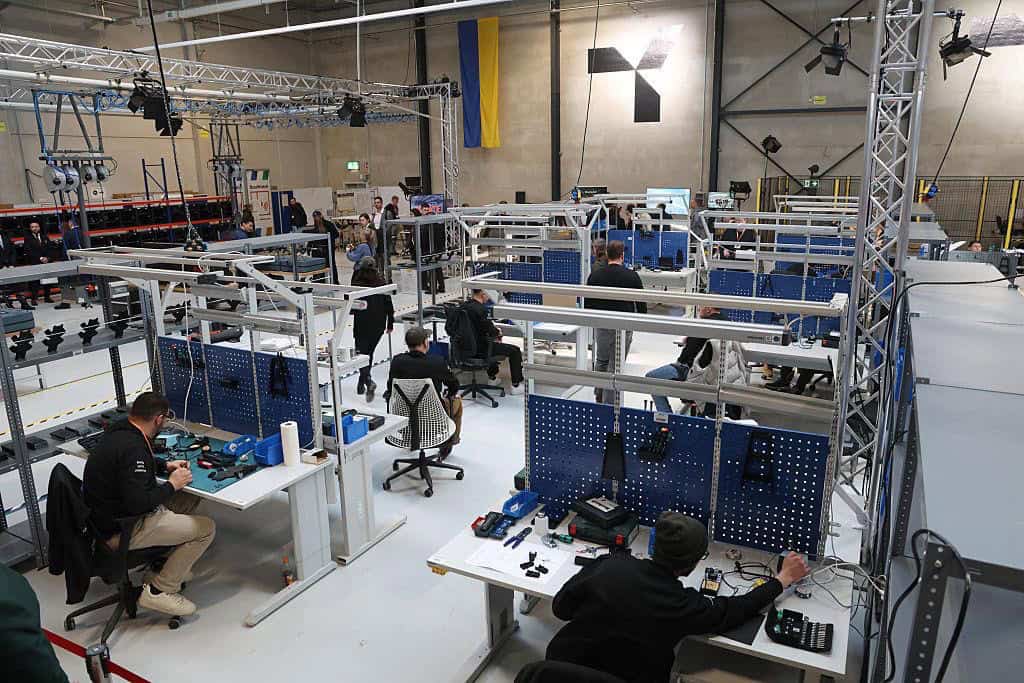
That same day, August 23, Patria also signed a fourth document — a letter of intent with the Ukrainian company General Cherry, one of Ukraine’s largest producers of strike FPV drones. The idea is to localize production of Ukrainian drones directly in Finland, combining Finnish industrial capacity — Patria has more than 100 years of experience in the defense industry and is a co-owner of Nammo — with Ukrainian combat experience and engineering. This is no longer humanitarian or financial assistance in the conventional sense, but rather an attempt to move Ukraine’s wartime technological expertise onto the territory of an ally — a model very similar to what Lithuania is already testing with DEMZ.

On August 25, CIA Director John Ratcliffe made an unexpected trip to Moscow — the first publicly known visit by the head of U.S. intelligence to Russia under the current Trump administration. According to The Wall Street Journal and Politico, the purpose was to warn the Kremlin against attacking NATO countries, with Estonia, Latvia, and Lithuania named specifically. Ratcliffe’s plane spent about 8.5 hours in Moscow, although no specific information is available on how long the meeting itself lasted. Despite some observers’ expectations that the visit might involve a meeting at the highest level, Putin was not among the participants — the talks took place between intelligence officials, while the president, according to Peskov, was briefed afterward.
Politico sources say: U.S. intelligence is concerned that Putin, having found himself in a difficult position because of the war in Ukraine and facing domestic pressure, could escalate from a cyberattack to a small-scale ground incident, most likely against a Baltic country. One interesting detail: ahead of Ratcliffe’s arrival, Washington asked Kyiv to suspend strikes on Moscow for the duration of the delegation’s visit — and Ukraine complied with the request only for the period of Ratcliffe’s actual stay in Moscow.
Journalists immediately drew a parallel: the last time a CIA director traveled to Moscow on a similar mission was in November 2021, when then-CIA Director William Burns warned the Kremlin not to invade Ukraine. The assurances did not work — the full-scale invasion began three months later. This, of course, does not mean the same scenario will automatically repeat itself, but that analogy helps explain why the news triggered such a wave of concern in the Baltics themselves.
Additional context emerged the following day: on August 26, RFE/RL published a letter that three Baltic European commissioners, Kaja Kallas, Andrius Kubilius, and Valdis Dombrovskis, had sent to Ursula von der Leyen on July 30 together with their Polish and Finnish counterparts. The letter referred to a “deteriorating security environment” and “an increase in airspace violations and drone incidents” — essentially the same issue we saw in the previous edition of the digest, now framed as an official political concern at the highest level of the EU.
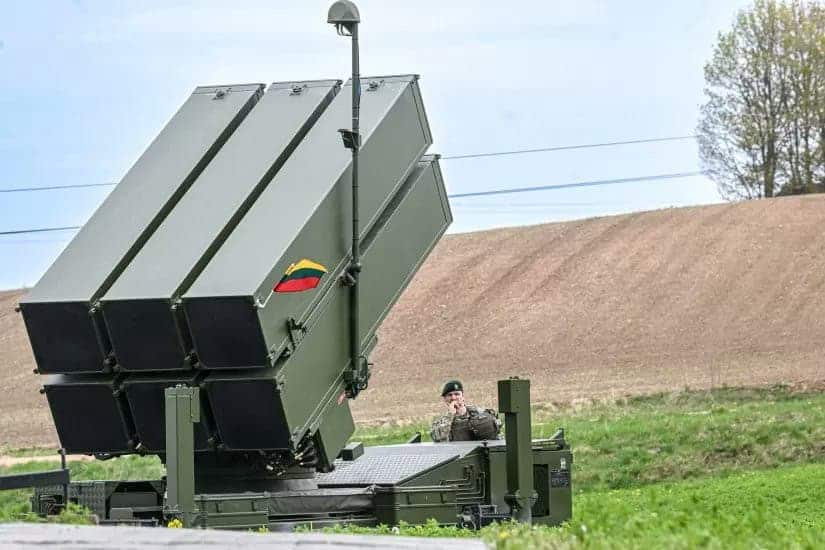
On August 24, the Lithuanian military deployed medium-range NASAMS air defense systems near Vilnius, replacing short-range RBS-70 man-portable systems. According to Raimundas Vaikšnoras, Chief of Defense of the Republic of Lithuania, the decision was driven by the need for more reliable control of the country’s airspace and stronger protection amid a broader rise in risks and incidents along NATO’s eastern flank. Lithuania expects to receive a second NASAMS battery in 2028.
Meanwhile, rhetoric from Latvia’s defense ministry leadership remains more restrained. Earlier, in June, Latvian former Defense Minister Andris Sprūds told LETA that a direct conventional Russian attack on NATO was currently unlikely because Russia’s main forces were tied down in the war in Ukraine. These statements illustrate the broader differences in communication nuances within the region: the military is responding to threats in practical terms by strengthening air defenses, while Latvian officials emphasize that a direct attack is currently unlikely to maintain calm among the population while still preparing for hybrid threats.

While attention is focused on the Baltics, Sweden and Norway took several quieter but telling decisions this week.

This autumn, Sweden will deploy military units to support surveillance of Finnish territory. They may include JAS 39 Gripen fighter jets, Visby-class corvettes, and radar and air defense systems.
Sweden and Finland are stepping up cooperation to jointly monitor territory and protect Finland’s sovereignty, including by countering drone threats. The leaders of both countries emphasize that the move strengthens the bilateral partnership, enhances security on NATO’s eastern flank, and provides a practical demonstration of solidarity among the countries of the region.
Denmark and the Faroese government have formally agreed to increase the Danish Armed Forces’ military activity on and around the Faroe Islands starting in 2026 — part of NATO’s broader presence in the North Atlantic. The agreement puts this into a legally formalized framework of cooperation between Copenhagen and Tórshavn — a step that makes Denmark’s Arctic-Atlantic strategy more systematic.
Denmark has also ordered an AI-powered counter-drone command-and-control system — another piece of the broader Baltic-Scandinavian response to the drone threat we have already mentioned several times. The Danish organization Hjemmeværnet, the Home Guard, is also launching a pilot program to train drone operators, involving 16 new trainees and eight experienced pilots in Nymindegab in western Jutland.
Підтримати нас можна через:
Приват: 5169 3351 0164 7408 PayPal - [email protected] Стати нашим патроном за лінком ⬇
Subscribe to our newsletter
or on ours Telegram
Thank you!!
You are subscribed to our newsletter