






Popular
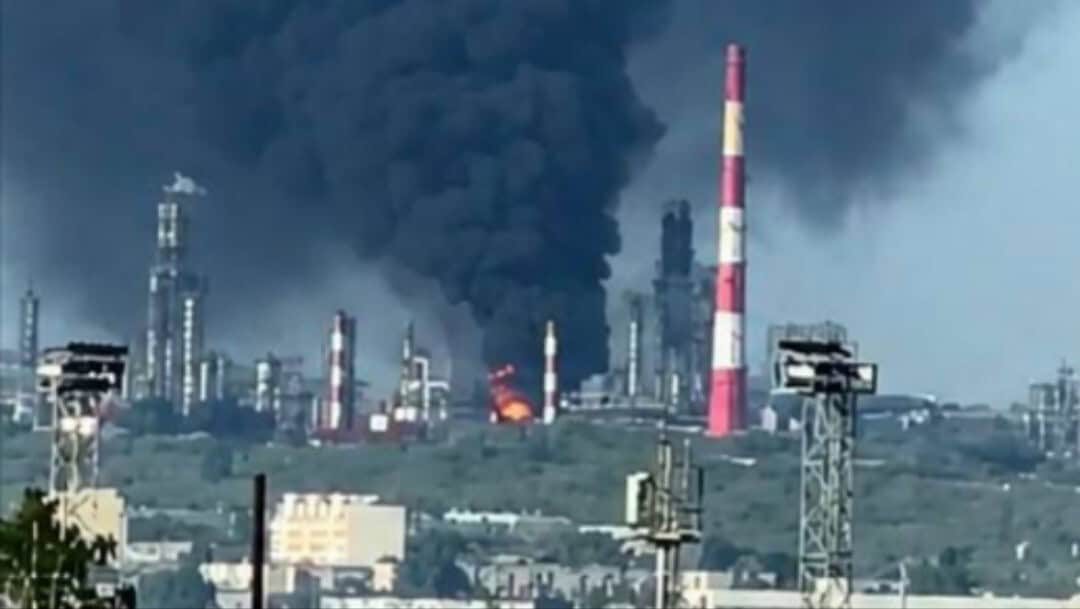
May 2026 saw a massive increase in drone strikes on the territory of the Russian Federation. According to estimates from the Ministry of Defence of the Russian Federation, Russian air defense forces allegedly intercepted a record number—8,973 Ukrainian long-range drones—in a single month.
Ukrainian drone units focused their efforts on destroying the enemy’s oil and gas infrastructure, defense industry facilities, and logistics hubs, significantly reducing Russian oil refining capacity.
Alongside the May strikes, the Ukrainian Defense Forces also demonstrated their ability to strike at extremely long ranges when, in late April, they carried out a historic strike on targets in the Ural region at a range of up to 1,800 kilometers.
These systematic operations clearly demonstrate the ability of Ukrainian drones to penetrate the enemy’s layered air defense and deplete its strategic resources deep in the rear.
An analysis of the chart published by John Felix shows a sharp increase in the number of interceptions of Ukrainian long-range drones reported by the Ministry of Defence of the Russian Federation between 2023 and 2026.
The overall trend shows a shift from isolated mentions in 2023 reports to large-scale figures in 2026 with record-breaking numbers. According to the graph, May 2026 shows a peak in activity—8,973 drones, which is the absolute maximum for the entire observation period.
Compared to previous months, this figure nearly doubles the result from April 2026. At the end of 2025, the statistics reflect rapid growth, reaching 4,370 units in December.

As early as January 2026, the graph shows a brief decline to 3,664 units, after which the numbers rise again. In February 2026, Russian reports already included 4,649 interceptions.
March 2026 ranks among the highest in the statistics, reaching 7,551, second only to the May record.
The overall trend indicates a significant expansion of strike operations deep within enemy territory, even despite the Russian command’s tendency to overstate its own successes.
The destruction of Russian fuel infrastructure remained a priority task for Ukraine’s USF, with the aim of undermining the aggressor country’s export potential and limiting the supply of fuel and lubricants to the occupying forces.
During the attack on the Ryazan Oil Refinery on the night of May 15, 2026, Ukrainian forces employed air defense saturation tactics.
A swarm of 99 drones struck the plant’s critical distillation columns, which is one of the largest producers of automotive gasoline and diesel fuel in central Russia.
Due to the difficulty of extinguishing the burning petroleum products and heavy smoke, a ‘black oil rain’ fell over Ryazan, forcing local authorities to declare a municipal state of emergency and cancel classes in educational institutions in the Oktyabrsky District.

No less devastating in its consequences was the attack on the Moscow Oil Refinery (MOR) in Kapotnya on May 17, 2026. Despite the deployment of approximately 130 air defense systems positions around the Russian capital, dozens of aircraft penetrated the airspace. The plant’s management decided to immediately and completely halt all oil refining operations.
This decision was made to prevent catastrophic explosions, but it led to an immediate drop in fuel production in the Moscow region, where the Moscow Oil Refinery (MOR) meets up to 40% of the market’s needs.
At the same time, in Solnechnogorsk, near Moscow, drones struck the Solnechnogorskaya oil pumping station, causing a massive fire in a fuel tank.
The strike on the Saratov Oil Refinery on the night of May 31, 2026 dealt an additional blow to the logistical support of Russian troops.
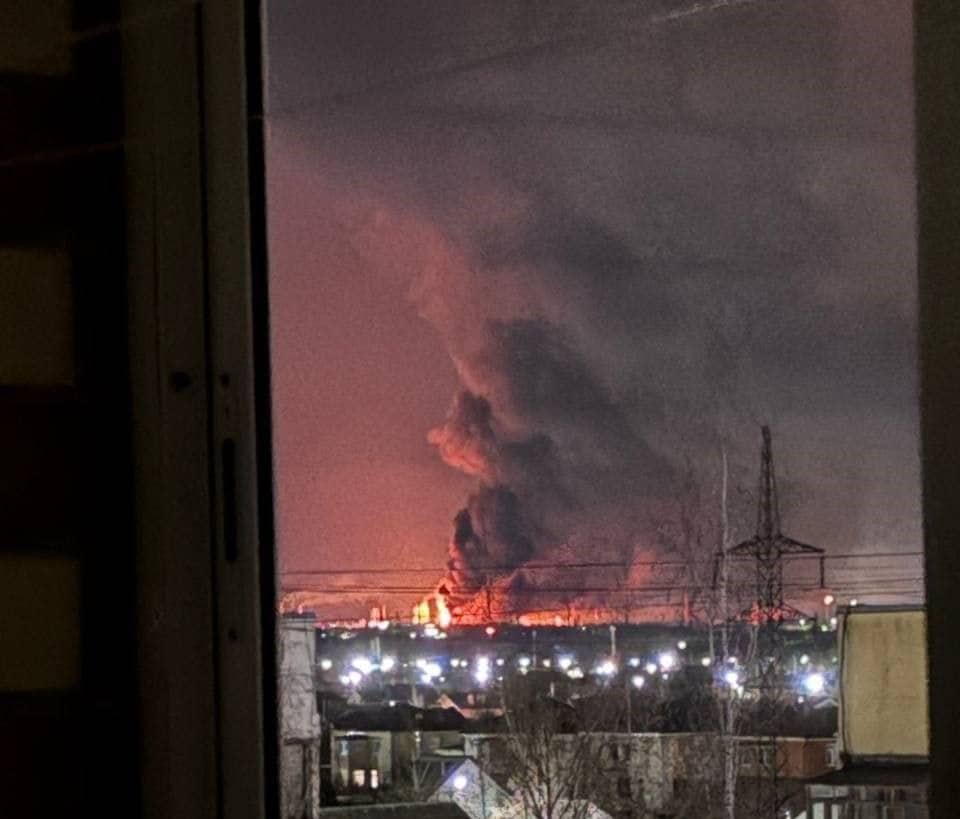
According to OSINT analysis, the strikes simultaneously hit several vital process units at the plant: the ELOU-AVT-6 primary oil refining unit, the visbreaking unit, the catalytic reforming units, and the pentane-hexane fraction isomerization unit.
The ELOU-AVT-6 unit, which is the heart of the plant’s production chain, sustained the most critical damage. This refinery is a key supplier of fuel and lubricants for Russian armored vehicles, so its disruption directly affected the pace of military transport.
That same night, using strike UAVs, the Unmanned Systems Forces of Ukraine (USF) attacked the Lazarevo production and dispatch station in the Kirov region, located 1,300 kilometers from the front line.
This facility is a strategically important transport hub for Transneft, which pumps Siberian oil through the Surgut–Polotsk trunk pipeline toward Belarusian refineries and the export port of Primorsk on the Baltic Sea.
The destruction of the station’s tank farm limited Russia’s ability to reroute oil export flows around previously damaged port terminals.
Massive strikes by Ukrainian long-range drones in May 2026 inflicted devastating damage on the aggressor nation’s energy infrastructure, triggering an acute fuel shortage and paralyzing enemy military logistics.
Ukrainian defense forces struck more than ten key oil refining facilities in the Russian Federation over the course of a month, forcing the complete or partial shutdown of plants in Moscow, Ryazan, Perm, Kirishi, Tuapse, Primorsk, and Yaroslavl.
The shutdown of the Ryazan oil refinery was a true disaster for the Russian economy. This facility processes approximately 13.1 million tons of oil annually, which is equivalent to about 262,000 barrels per day, and accounts for 5% of the country’s total oil refining capacity.

The shutdown of primary units at this facility sharply reduced jet fuel production, which previously reached about 1 million tons per year.
Drones dealt an additional blow to the enemy’s supply system on May 21, damaging the ELOU AVT-6 unit at the Syzran Oil Refinery. This facility has a nominal capacity of 8.5 million tons of crude oil per year, and produces 1.5 million tons of diesel fuel and 800,000 tons of gasoline annually.
Since the damaged unit accounts for over 70% of the plant’s total capacity, its shutdown guarantees a prolonged shortage of the resource on the market.
Overall Russian statistics for 2025 show a 1.4% decline in diesel fuel production, amounting to 84.5 million tons, and a 3% decrease in fuel oil output to 38.8 million tons.
At the same time, diesel fuel production in Russia in May 2026 fell by approximately 10% compared to March figures, which in physical terms amounts to a decrease of 600,000 tons in just the last month of spring.
In addition, from June 1 to November 30, the Russian government announced a temporary ban on the export of jet fuel. This move is an attempt to maintain stability in the domestic fuel market.

An official statement from the press service of the Council of Ministers of Russia explains this decision as an effort to meet the needs of domestic consumers and avoid shortages. However, behind the officials’ terse wording lies a deep crisis in the aggressor country’s oil refining industry.
With the total level of oil refining in the Russian Federation having fallen in May 2026 to its lowest level in 16 years—4.69 million barrels per day—the enemy is losing its ability to maneuver.
The further degradation of oil refining capacity is not only depleting the aggressor’s economic reserves but also limiting the combat capabilities of its troops on the front lines.
Additionally, according to reports by Reuters, in early to mid-May 2026, virtually all major oil refineries in Central Russia halted or reduced fuel production following a series of attacks by Ukrainian drones.
The scope for future Ukrainian strikes on Russian oil and gas infrastructure could expand significantly, given the current pace of Ukraine’s drone production and support from Europe.
Russian oil refineries, despite the damage, are resuming operations: some are doing so quickly, others more slowly.
Nevertheless, Russia is not stopping its efforts to restore capacity for export, as well as to meet both civilian and military needs.
Підтримати нас можна через:
Приват: 5169 3351 0164 7408 PayPal - [email protected] Стати нашим патроном за лінком ⬇
Subscribe to our newsletter
or on ours Telegram
Thank you!!
You are subscribed to our newsletter