

Washington Extends Nuclear Technology to Its Allies: A Widening Korean Conflict Pushes the US to Strengthen Its Partners

Solid Info



On July 22, 2026, US Energy Secretary Chris Wright and Saudi Energy Minister Prince Abdulaziz bin Salman signed a 30-year framework agreement on civil nuclear cooperation. The deal marks a shift in how Washington delegates counter-autocracy tasks to its partners. The United States is now helping those partners build the technological and industrial base they need to deter regional adversaries on their own.
For Riyadh, the agreement opens a path to American consent for a domestic enrichment facility, since it contains no ban on uranium enrichment. The two sides deferred the final decision to a two-year joint study, after which they will conclude a final agreement covering US export licenses. The Kingdom is pressing for authorization to enrich to 20%, a level that would give it a technological base convertible to weapons-grade uranium production. Washington, for its part, retains control over material of US origin.
The White House is prepared to let partners expand their civil nuclear capabilities through commercial projects with American firms while keeping control over transfers of sensitive technology and nuclear material, and over the terms of the fuel cycle.
Since its inception, the latticework security architecture has rested on joint planning, combined exercises, intelligence sharing, and American arms exports, with the industrial base of nuclear deterrence kept on US soil.
The White House revised that model because of a mismatch between the scope of the functions it delegates to security partners in their own regions and those partners’ capacity to carry them out. A partner’s area of responsibility expanded faster than its own technological and industrial base, and closing the gap fell to American forces and American deliveries — the very resources that delegation was supposed to free up.
Beijing, meanwhile, is adapting its own strategy for preparing for a global confrontation, factoring in the failures of Russia, Iran, and other partners that proved unable to shift the regional balance on their own. China is reinforcing their military and industrial base and accelerating the rollout of new regional escalations. That narrows the window in which Washington has to make its own allies capable of deterring the autocratic axis independently.
China’s Strategy of Building Strong Partners Across the Autocratic Axis Has Failed
Beijing and Moscow were the first to strengthen partners across the autocratic axis and hand them authority to escalate. They poured resources into Venezuela, Iran, Yemen’s Houthis, and the Sahel regimes of West Africa, calculating that conflicts unfolding in their partners’ areas of responsibility would stretch US and allied forces across several regions at once. None of those efforts delivered what China and Russia expected.
On January 3, 2026, Nicolás Maduro was flown to the United States, after which the Venezuelan government began aligning its domestic and foreign policy with Washington. Beijing and Moscow lost one of their principal regional footholds without any prolonged commitment of American forces.
In the Sahel, the withdrawal of Western forces opened space for Russian military support and for Chinese loans and infrastructure projects. Moscow, however, failed to give local regimes a decisive edge over jihadist groups, and Chinese investment did not stabilize their political and social base.
The ground campaign waged by the al-Qaeda-linked JNIM against the government in Mali forced the authorities to agree with Washington on resuming American reconnaissance flights. Bamako opened talks on restoring intelligence cooperation with the US in the spring of 2026, and by July 22 Washington had begun working through military options against JNIM.
The failure of the delegation strategy cost Beijing most dearly in maritime logistics. Iran’s closure of the Strait of Hormuz and Houthi attacks on shipping disrupted routes that carry 45–50% of China’s crude oil imports, while US exposure to those same routes remains limited. Chinese reserves cover roughly 115–120 days of net imports, which means Beijing’s own partners are burning through its margin for resolving the crisis.
Moscow and Beijing designed the Russia-Ukraine war to drain the Western coalition, but Ukraine has turned it into a source of long-term costs for Russia itself. By early July, long-range strikes had hit facilities accounting for 42.74% of Russia’s nameplate refining capacity.
Those strikes cut the sector’s operating capacity by more than 30%. The campaign concentrates on critical primary distillation units and other nodes without which refineries cannot sustain a full production cycle.
Ukraine is aggressively developing its own missile and long-range drone programs. Standing up a dedicated long-range strike command has moved attacks on Russian energy and logistics from isolated operations to a sustained campaign backed by domestic production, systematic planning, and repeat strikes on repaired facilities.
Expanded American and French intelligence support has sharpened the selection of vulnerable nodes in Russia’s energy system. Better targeting combined with suppression of Russian interception has improved route planning and extended the duration of the damage inflicted.
As the reach of Ukraine’s long-range systems continues to grow, Russia’s upstream infrastructure now faces a credible prospect of destruction. Unlike the loss of individual refining capacity, strikes on production would cut export revenue directly and demand a far harder recovery. That threat is becoming an additional check on Russian escalation.
Since mid-July 2026, Ukrainian strikes have reached more than a dozen Wildberries logistics sites, with substantial damage confirmed at roughly seven of them. The strikes have knocked out close to half of the marketplace’s warehouse capacity, and preliminary seller losses are approaching $2 billion.
The attacks are disrupting a major channel that converted Russian consumer demand into revenue for Chinese manufacturers, exporters, and suppliers.
At Wildberries, 78% of electronics, 29% of apparel and footwear, and 31% of furniture and home goods were of Chinese origin. Some Russian sellers have set up large-scale production of their own goods in China. Wildberries became one of the principal conduits for Chinese products entering the Russian retail market. By striking its warehouse network with domestically produced long-range weapons, Ukraine is inflicting severe damage on the Russian economy and disrupting the flow of goods and money between Russia and China.
Failed attempts to disperse the Western coalition through escalation in Venezuela and the Sahel, the war in Ukraine, and fighting in the Middle East are forcing Beijing to recalibrate. Rather than relying on numerous unstable escalation points, China is betting on strengthening North Korea.
Beijing Is Building Up North Korean Military Capability to Escalate on the Korean Peninsula
Pyongyang is translating the experience of the Russia-Ukraine war into training and employment programs for the Korean People’s Army. North Korean units in Russia’s Kursk region conduct aerial and artillery reconnaissance, adjust fire, and operate in an environment saturated with FPV drones and electronic warfare. After rotation, some of the trained operators and officers return to North Korea as instructors.
As of January 2026, more than 12,000 North Korean troops had been committed to active combat. Separately, more than 3,000 completed specialized combat assignments designed to build practical skills for subsequent instructor duty back home.
North Korean troops have mastered dispersed small-unit operations, counter-drone measures, and compression of the time between detecting a target and engaging it. The war in Ukraine has become a live proving ground for Pyongyang, one that produces cadre and lets it test organizational solutions before applying them on the Korean Peninsula.
Pyongyang is backing these doctrinal changes with a dedicated production system. Drone development and testing are concentrated in the Unmanned Aerial Technology Complex, which includes a specialized drone institute and affiliated closed enterprises.
At Panghyon, airframe manufacturing is separated from final assembly, avionics integration, and flight testing. Seven new hangars roughly 40 meters wide create the infrastructure for a larger fleet of big airframes.
At Kusong, a 225-meter assembly hall was completed in early 2026, connected to two other buildings to form a single 415-meter complex. Satellite analysis links it to the expansion of the North Korean drone program.
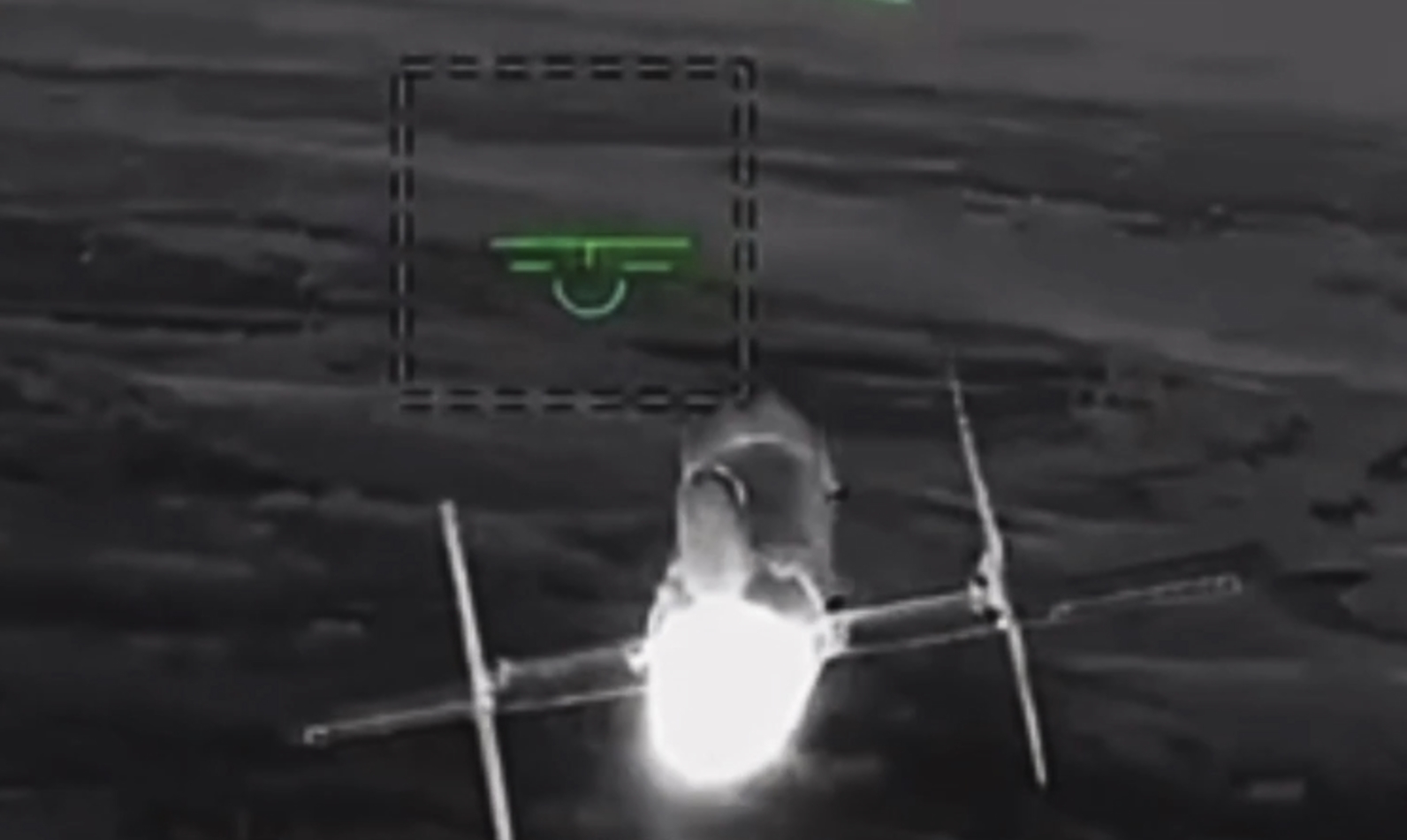
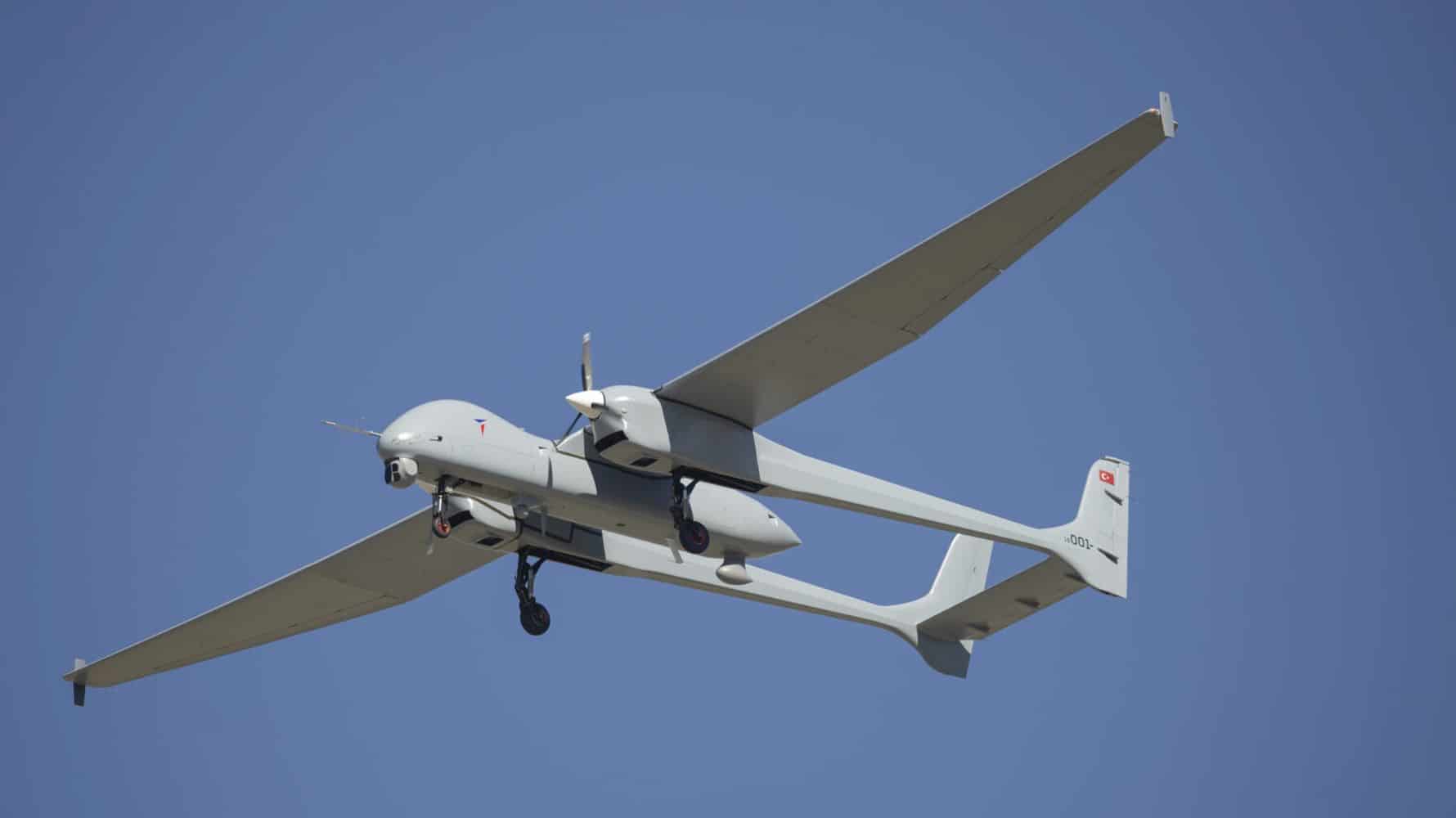
Together these facilities form a distributed production base built for serial output of drones across classes and ranges. Pyongyang is preparing to scale a full line of reconnaissance, strike, and loitering platforms — from cheap tactical systems to larger aircraft for operations deep inside South Korean defenses.
In parallel, North Korea is building production capacity for unmanned ground vehicles capable of reconnaissance, transport, engineering, and strike tasks under intense fire.
Pairing aerial and ground unmanned platforms is meant to reduce the need for personnel when scouting fortified positions, delivering ammunition, and breaching prepared defenses. North Korea has yet to demonstrate an autonomous swarm attack, but the composition of its existing inventory points to a plausible sequence of employment.
Pyongyang is also exploring the integration of low-yield nuclear munitions with unmanned platforms for destroying fortified positions. Systems of this kind shape a modern model of warfare that reduces reliance on personnel and erodes the effectiveness of the layered fortification belt South Korea has built up since the Korean War.
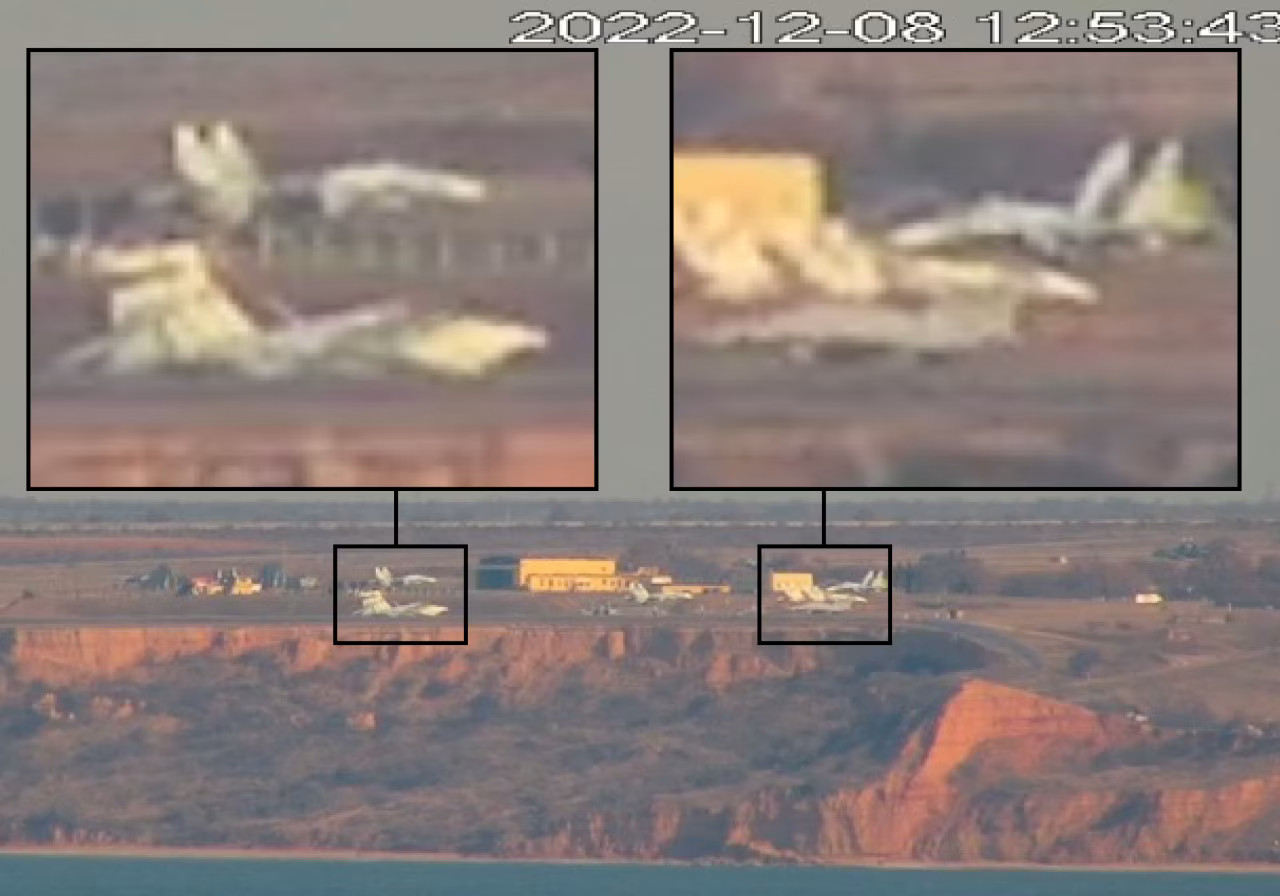
Pyongyang has already tested its drones against South Korea’s air surveillance network. In December 2022, five North Korean aircraft crossed the inter-Korean border; one reached Seoul and briefly entered the no-fly zone around the presidential office, and South Korean forces failed to shoot down a single one. The episode showed that the North Korean program can already pose a practical threat deep inside the South’s defenses.
Russia and China play distinct roles in accelerating the North Korean drone program. Moscow provides access to combat experience, operator training, and select engineering solutions proven in the war against Ukraine.
China’s commercial market supplies engines, optics, microcontrollers, circuit boards, composites, and production equipment.
The IAEA observes continued expansion of uranium enrichment facilities at Yongbyon and Kangson, along with indications of spent fuel reprocessing at the Yongbyon radiochemical laboratory, while Pyongyang continues testing ballistic and cruise missiles and anti-ship systems.
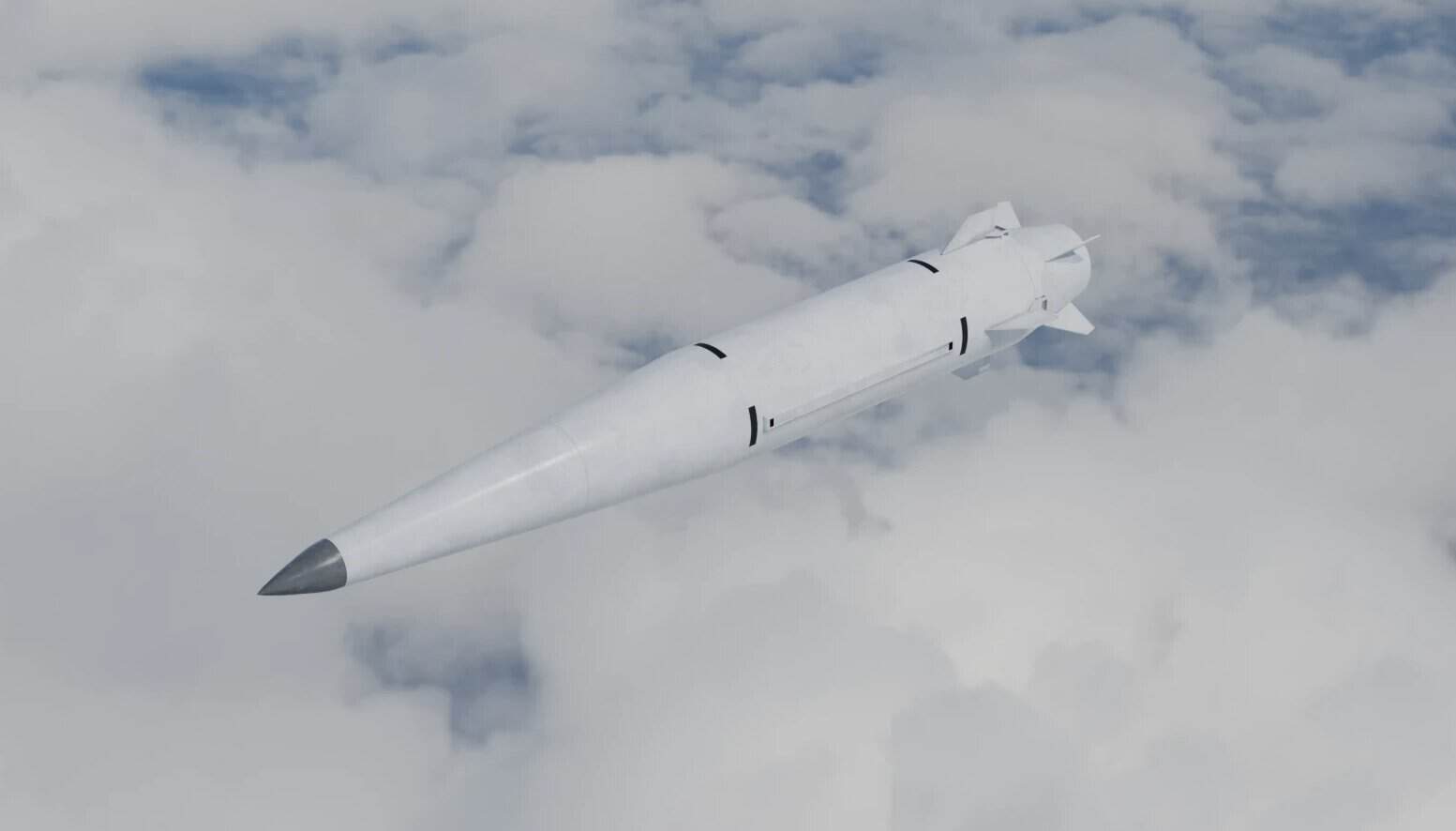
The naval leg of North Korea’s nuclear program takes the form of a nuclear-powered guided-missile submarine already under construction to carry nuclear delivery systems. On the estimate used here, it could be launched in 2028–2029.
Strengthening North Korea gives Beijing a more concentrated and more durable escalation instrument than backing distant partners with unstable domestic foundations. North Korea’s defense industry, its missile and nuclear potential, and its proximity to major American bases make it possible to generate a crisis Washington can neither ignore nor hand off to regional allies alone — one that forces the US to keep missile defense, strategic aviation, and naval platforms in theater and to coordinate continuously with Seoul and Tokyo.
Beijing accepts no responsibility for Pyongyang’s actions and does not acknowledge itself as a party enabling the North Korean nuclear program. The growth of North Korea’s nuclear potential and the modernization of its defense industry push American allies to deepen their own technological readiness, which steadily reinforces the model of nuclear deterrence against China in East Asia.
South Korea’s Joint Chiefs of Staff regularly record GPS jamming from North Korea affecting vessels and civil aircraft in the Yellow Sea. For weapons that rely on satellite navigation, the outcome will depend on the quality of inertial, optical, and other backup guidance channels.
Electronic attack reduces the predictability of South Korean precision capabilities and adds load to backup systems.
South Korean industry is ramping up production of tanks and armored vehicles, which lose survivability quickly on a drone-saturated battlefield. Seoul’s problem lies in the gap between investment in large platforms and the pace at which it fields the cheap mass systems that determine day-to-day resilience in the field.
The result is that South Korea’s rearmament program is largely mismatched to the model of conflict North Korea, China, and Russia are adapting to.
The trajectory of North Korean rearmament puts Pyongyang ahead of the South by 2028–2029 in unmanned systems, massed fires, and tactical nuclear delivery. The pace of serial launcher deliveries to the force, incoming military technology, and Chinese component supply all work in favor of that trajectory.
That advantage lets Pyongyang impose an asymmetric war on Seoul, one in which cheap strike systems steadily consume the more expensive resources of detection, interception, and recovery.
For Beijing, this capability matters well beyond the Korean Peninsula. Simultaneous escalation around North Korea and Taiwan would force the United States to split aviation, naval assets, missile defense, munitions, and intelligence resources between two theaters, while Seoul and Tokyo concentrated first on the direct threat to their own territory.
By China’s calculation, the need to avoid two parallel major conflicts could narrow the military options available to Washington around Taiwan and increase pressure on the Western coalition to seek a diplomatic compromise. That dilemma does not guarantee acceptance of a Chinese intervention in Taiwan, but it raises the political and military price of organizing resistance to one.
Synchronized escalation across two theaters confronts Washington with a choice between settling the Korean crisis diplomatically at the cost of the Taiwan file and holding both fronts beyond what its capabilities allow. Even the hypothetical risk of South Korea passing under Pyongyang’s control — producing a unified Korea that is nuclear-armed, technologically advanced, and authoritarian — is already driving the United States toward emergency measures. China is making that vulnerability the principal lever in its updated scenario for a global conflict.
Even a prolonged war with China alone would leave the United States short of long-range missiles, air defenses, and unmanned platforms. Production timelines for some critical munitions run three to four years, and the backlog of undelivered arms to Taiwan stands at roughly $32 billion.
Beijing calculates that, faced with that choice, the United States and its allies would sooner give up Taiwan and fall back on the 38th parallel than hold both theaters at once.
Raising the Readiness of Riyadh, Seoul, and Tokyo to Deter Tehran, Beijing, and Pyongyang
Washington’s answer to China’s strategy of dispersing American resources is the deliberate defense-industrial strengthening of partners located close to Iran and China.
Under the Saudi nuclear agreement, Riyadh gains a technological base while Washington retains control of the fuel cycle and shuts the region to Russian and Chinese vendors.
The White House applies a similar division of functions in the Pacific, where the model is most developed in relations with South Korea.
Washington supported an expansion of South Korean capabilities in handling nuclear fuel and endorsed its nuclear-powered submarine program, while keeping regulatory control over American material, technology, and fuel.
Seoul gains broader industrial and strategic capability without stepping outside the American nonproliferation system.
Japan’s request to consider a move to nuclear-powered submarines indicates that Washington may extend the model to other partners in the region. Having committed to joint production, development, and sustainment of weapons systems, Tokyo and Washington engage regularly through an extended deterrence dialogue, the most recent round of which was held in Tokyo in June 2026. Under the influence of that approach, the Japanese government is drafting and reviewing proposals to amend the doctrine of the “three non-nuclear principles.”
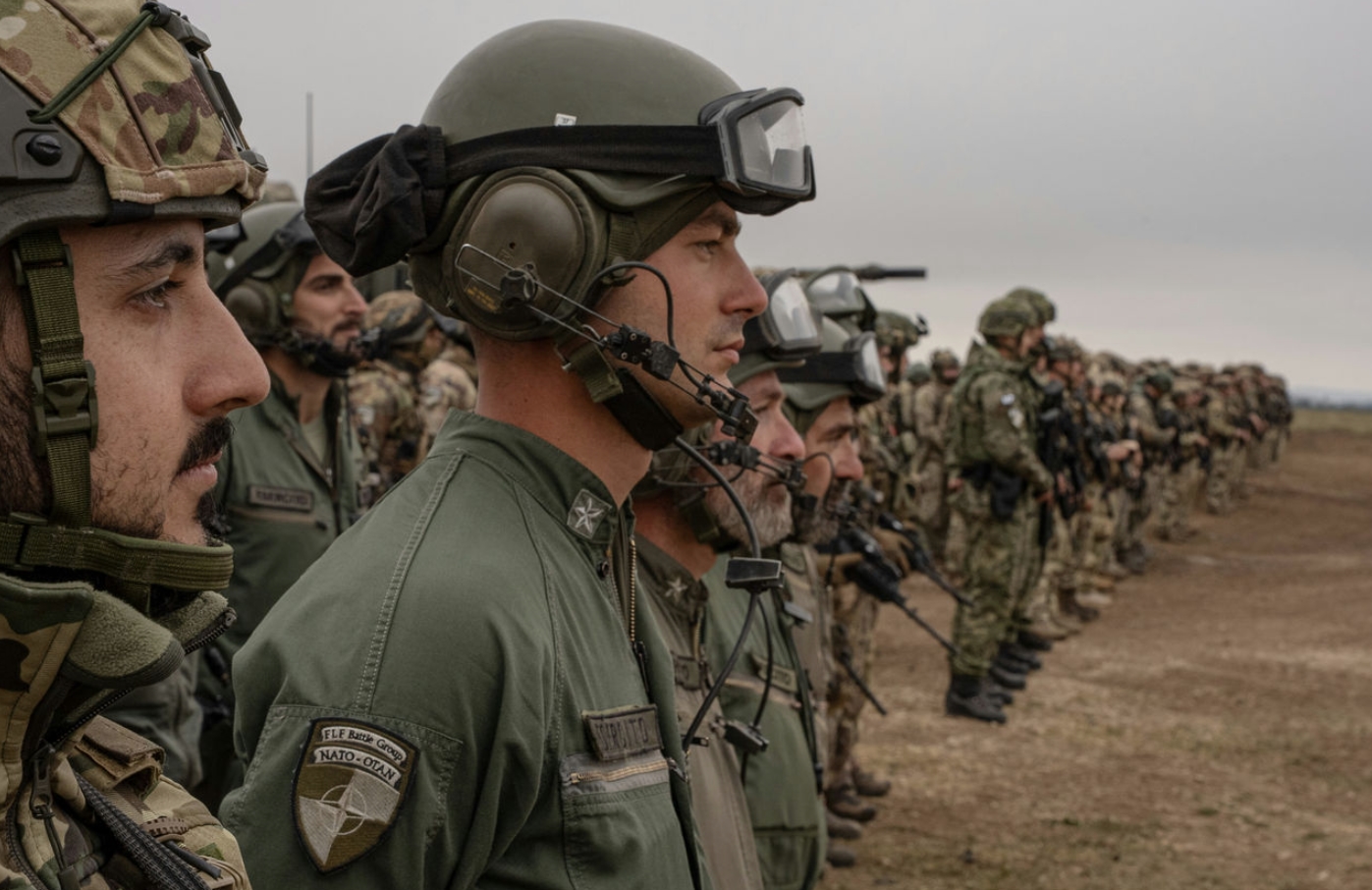
Seoul and Tokyo are financing their own reactors and security infrastructure at an increasing pace and pairing domestic development with technological coordination with the United States. Washington is transferring this model into the key regions of the confrontation and, together with its allies, gaining an edge in the competition with China.
That strategy creates for Beijing several centers of deterrence in the immediate vicinity of Chinese maritime and land borders.
The economic constraints on China’s allies — imposed by sanctions on North Korea and the American military campaign in Iran — leave Beijing financing the modernization of its own arsenal while preserving the economic conditions that allow the Iranian and North Korean nuclear programs to advance.
Iran’s uranium enrichment infrastructure is pushing the United States and its partners to accelerate the buildout of a nuclear deterrence model against the autocracies.
Iran’s ability to rebuild its nuclear potential left the Saudi leadership needing to supplement the guarantees obtained through security agreements with the United States and Pakistan with a civil nuclear base of its own — one that can be redirected quickly to defense purposes.
South Korea remains a party to the Non-Proliferation Treaty and pursues no state program to build nuclear weapons. Public support for a domestic arsenal, however, has run at roughly 75% in recent years, and the government is reinforcing both its civil nuclear industry and its extended deterrence arrangements.
In January 2026, the Lee Jae-myung administration confirmed construction of two new large reactors. The national power development plan calls for raising nuclear generation to 31.8% by 2030 and 35.6% by 2038.
Access to the fuel cycle creates a technological reserve that shortens response time to a North Korean threat while moving Seoul closer to the ability to build a weapon.
Domestic enrichment would give South Korea the technical means to produce a device within months, and Pyongyang called Washington’s decision a “green light” for turning the South into a quasi-nuclear state.
Although Japan continues to observe the three non-nuclear principles, Tokyo is systematically deepening its role in extending American nuclear deterrence.
In late 2024, the United States and Japan agreed on the first dedicated guidelines for consultation, communication, and strategic signaling in the nuclear domain.
In 2025, Japanese and American officials discussed the application of nuclear deterrence in Taiwan-related scenarios. That coordination brings Japan closer to the decision-making process without an arsenal of its own.
Washington sets a distinct form of participation in the nuclear deterrence system for each partner, weighing that country’s existing production capacity, the terms of its current agreements with the United States, and the level of intergovernmental engagement.
Japan and South Korea are both expanding the industrial and resource foundations of their nuclear programs, yet their bilateral agreements, domestic politics, and dependence on American guarantees keep those capabilities within civil bounds.
Washington uses the asymmetry between its allies’ technical capability and the political decision to build a weapon as a means of deterring the Chinese leadership.
Beijing has to reckon with the fact that Chinese expansion and support for the nuclear programs of other states in the autocratic axis will accelerate consultations between the United States and its allies, widen South Korean and Japanese access to nuclear fuel, and deepen defense planning — all without changing the non-nuclear status of those states.
Building Up Partner Capability Shifts the Resource Balance in the US-China Rivalry Toward the Democratic Bloc
American retention of technological control over nuclear projects, combined with partners building out their own infrastructure, leaves Beijing weighing three things at once: the American advantage in weapons of mass destruction, the strengthening of US partners near its borders, and the cost of expanding its own nuclear arsenal — even as the burden on the United States itself declines, because those partners fund their capabilities themselves.
Beijing built its competition with the United States on the calculation that simultaneous development of Russian, Iranian, and North Korean military and nuclear programs would force Washington to divide its forces among regions and erode partner confidence in American guarantees.
The weakness of that calculation is its linearity. The Chinese leadership underestimates the democratic bloc’s ability to restructure how it allocates resources, the limits of the Iranian and North Korean economic base, and the scale of the resistance that arises in response to Beijing’s attempts to execute its plan.
Beijing overestimated the capacity of Iran, North Korea, and Russia to sustain, over time and on their own, military programs meant to stretch the resources of the United States and its allies. Chinese strategy continues to impose additional costs on the Western coalition, but it also obliges China to underwrite its own partners financially and technologically.
The US-Saudi agreement locks in the shift to distributed nuclear deterrence in the Middle East, and the arrangements with Seoul and Tokyo extend that model into the Pacific.
The buildup of nuclear, defense, and technological capability in Riyadh, Seoul, and Tokyo is gradually turning them from dependent recipients of American guarantees into self-sustaining regional centers of deterrence. That reduces Washington’s need to compensate for their weakness with its own forces, while Beijing remains responsible for sustaining the military and technological capability of Iran, North Korea, and Russia. This redistribution of cost and responsibility should return the balance in favor of the United States and its partners.
This publication is the result of a partnership between MILITARNYI and SOLID INFO. An extended version is available on the website of the analytical center.

Xi Jinping’s Washington Visit Outlines the Timeframe for the Active Phase of the Confrontation: Beijing Openly Demands Taiwan’s Return
On September 23–25, 2026, Chinese President Xi Jinping held talks with President Trump at the White House during the first Chinese state visit to t...
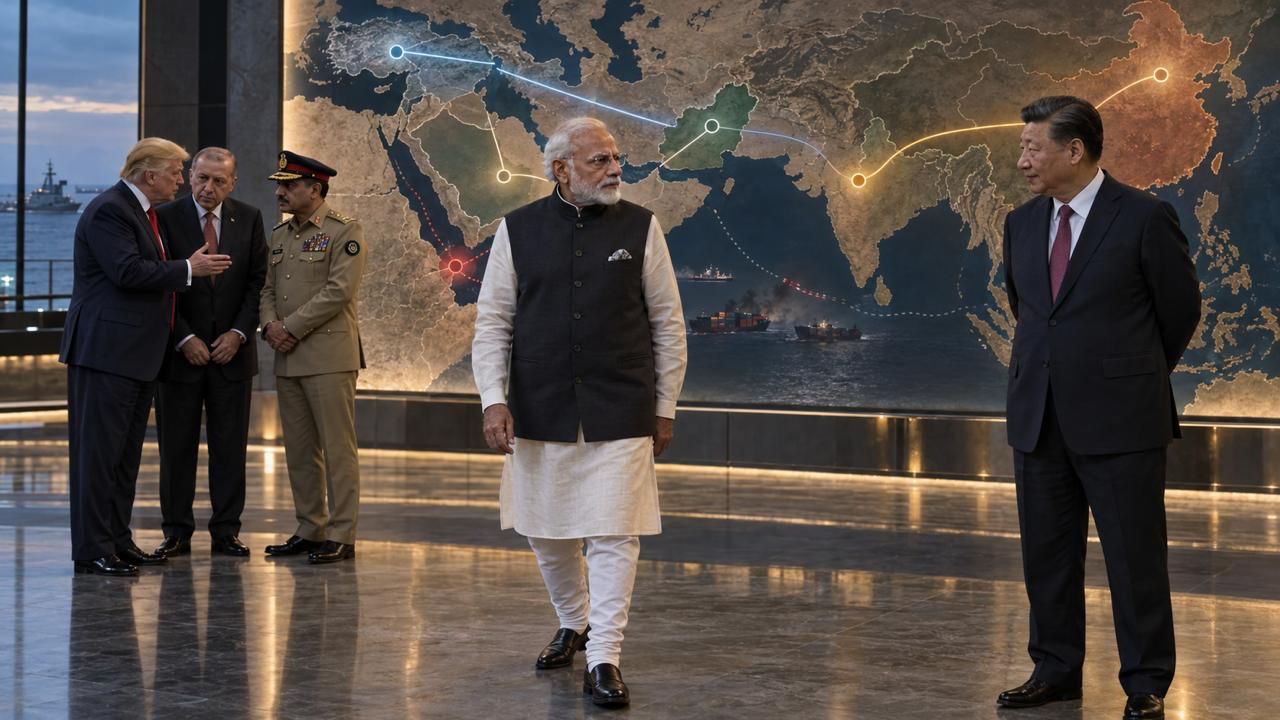
A Sharp Shift in the Dynamics of Global Confrontation Forces Washington to Rethink How It Builds Its Key Partnerships
On September 12–13, 2026, the 18th BRICS Summit was held in New Delhi. Xi Jinping traveled to India to lead the Chinese delegation, marking his fir...
