
Exporting Combat Experience: What Is Drone Deal, and Who Did Ukraine Sign It With?

Dmytro Shumlianskyi


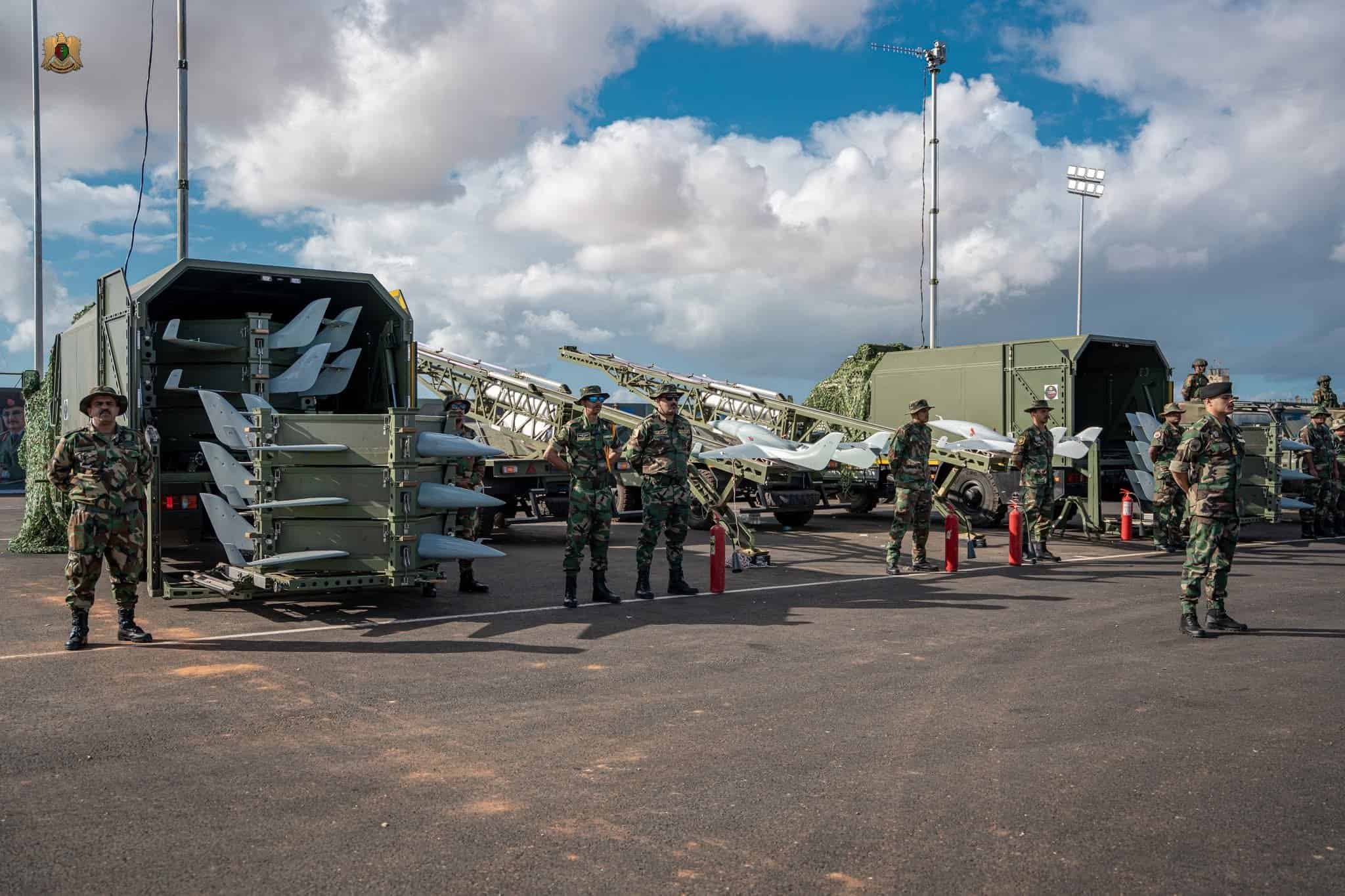

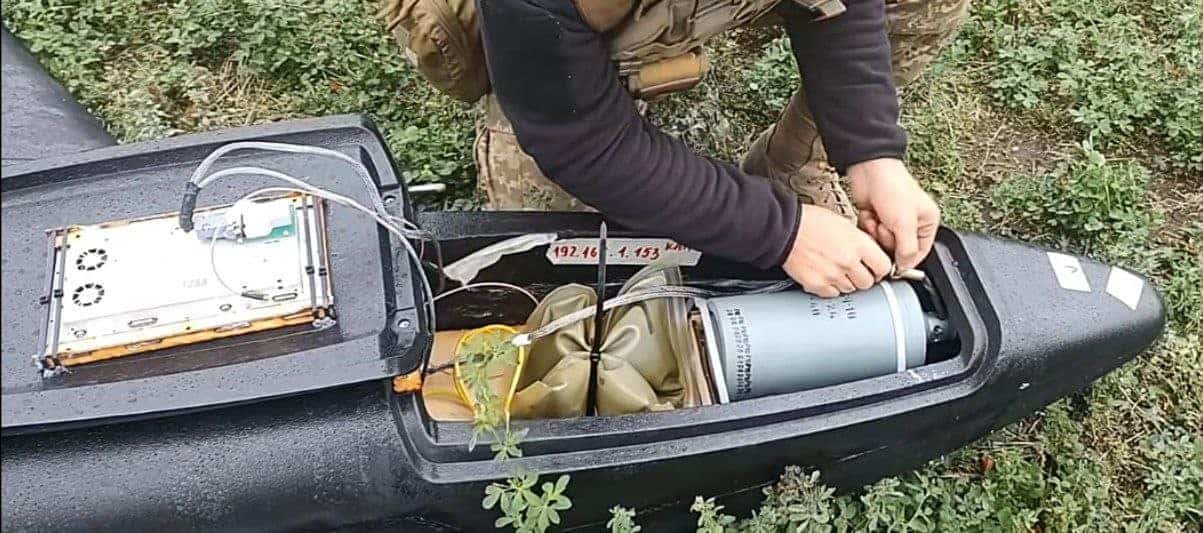
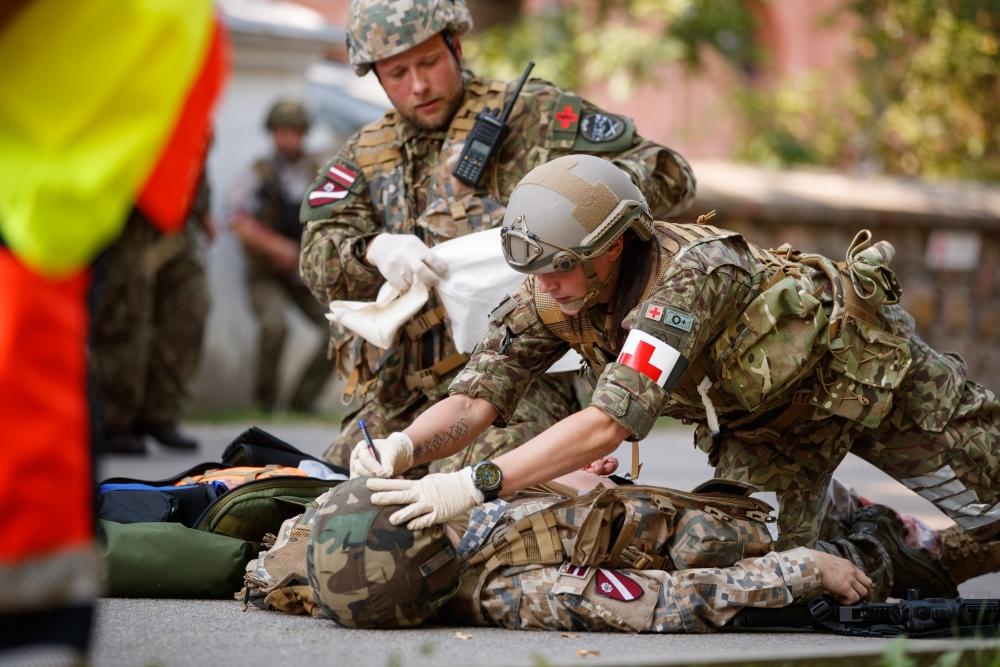
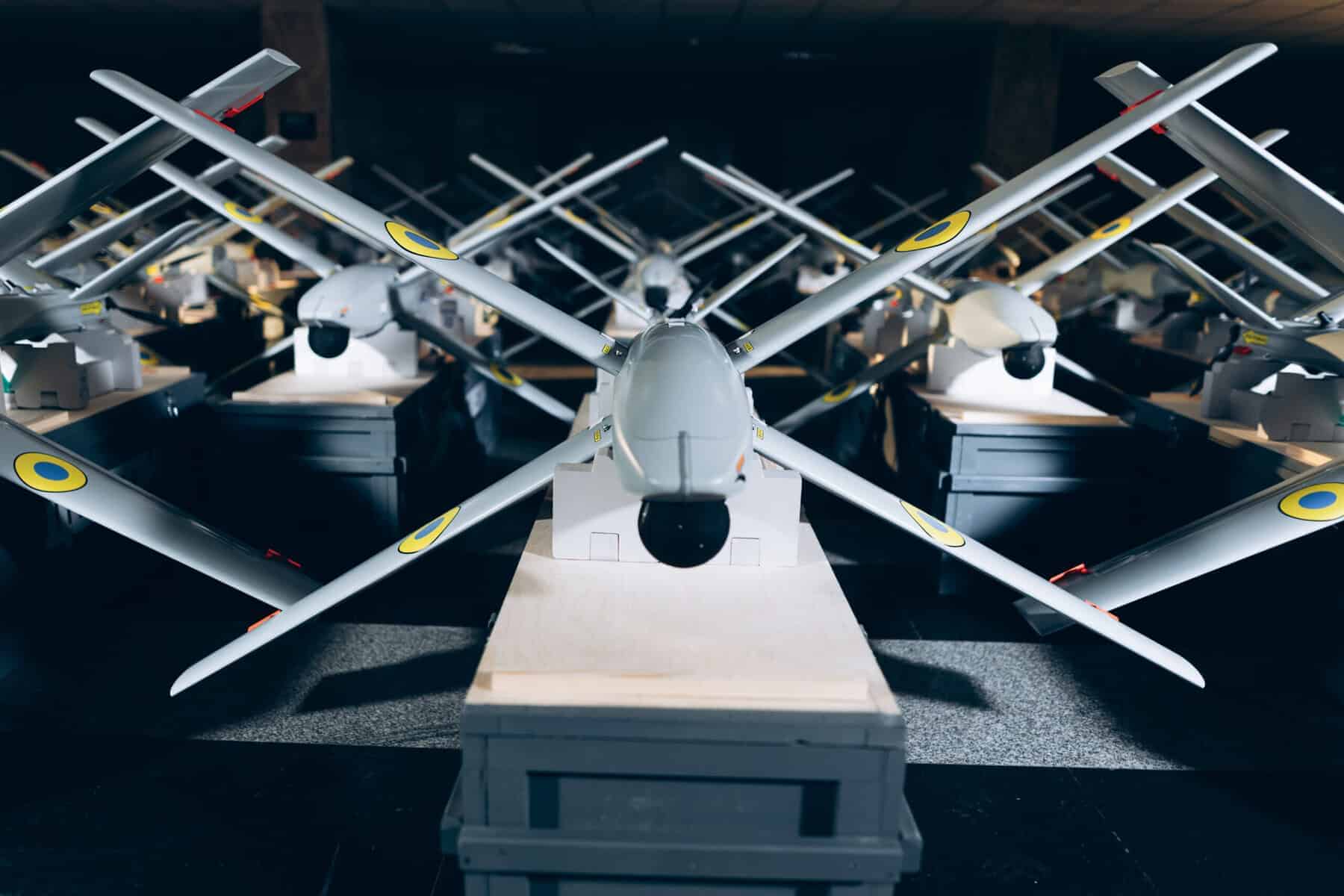
Ukraine is turning the combat experience it has gained in using drones and countering aerial threats into a new model of international cooperation known as the Drone Deal.
Despite its name, the initiative goes beyond the sale of drones. The partnership can include the involvement of Ukrainian military experts, the development of air defense capabilities, technology transfers, localized production, and the creation of joint ventures.
Ukraine first proposed such an agreement to the United States in 2025. Kyiv later expanded the original concept, offering partners a ten-year framework for defense and industrial cooperation.
As of mid-September 2026, Ukraine officially counted agreements with eleven countries as part of this framework.

Meanwhile, Ukraine applied a similar approach in the Middle East. Ukrainian experts helped five Arab countries counter Iranian drones, while Kyiv used the capabilities demonstrated through this work to develop broader defense, economic, and energy ties.
This expert mission was not part of the Drone Deal framework. However, separate ten-year agreements later signed with Saudi Arabia, Qatar, and the United Arab Emirates were included in the broader umbrella concept of the Drone Deal.
From a U.S. Proposal to an International Framework
The term Drone Deal emerged in the summer of 2025 during negotiations between Ukraine and the United States.
The initial proposal called for the United States to purchase Ukrainian drones over a five-year period, invest in Ukrainian defense companies, and potentially establish joint production of some systems.
In October 2025, a Ukrainian delegation held technical talks in the United States with representatives from several branches of the U.S. military. Ukraine presented specific drone models, their technical capabilities, and their combat experience.
In early 2026, U.S. specialists tested several Ukrainian drone systems. However, the two sides have still not reached a final agreement.
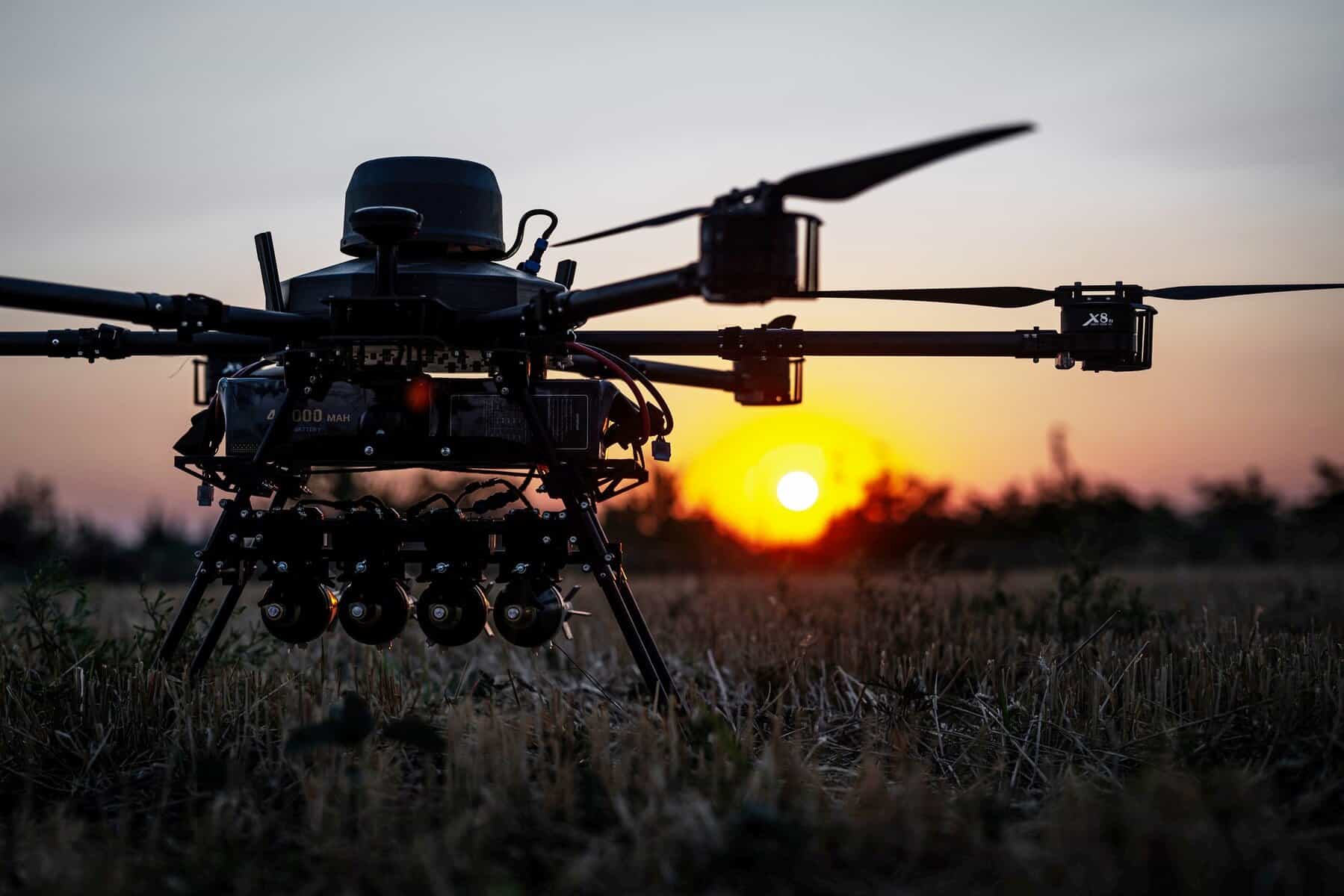
Meanwhile, Ukraine has expanded the original proposal to the United States into a broader model of international cooperation. The National Security and Defense Council of Ukraine describes the Drone Deal as a long-term program for security and defense cooperation. The standard framework is designed to last for ten years.
How the Drone Deal Works and What It Means for Ukraine
The Drone Deal is not a single, standardized agreement. Instead, it provides a general framework for separate deals with individual partner countries.
The terms of each deal can vary depending on the partner’s needs, industrial capabilities, and willingness to finance joint projects.
The cooperation could typically include interceptor drones, reconnaissance and strike systems, maritime and ground systems, electronic warfare equipment, radars, sensors, and software.
Ukraine is offering more than just finished products. It is also offering its experience in building an integrated system that brings different capabilities together into a single network.
Ukrainian defense companies have more production capacity than the government can afford to purchase with its own budget. Partners can buy finished products in areas where production exceeds Ukraine’s domestic demand, provide funding to expand production, or invest in joint development projects. Moving some production facilities abroad would also reduce the risk of them being destroyed by Russian strikes.
Meanwhile, signing a framework agreement does not mean that production will begin immediately. After signing, the two sides still need to agree on specific projects, funding sources, intellectual property rights, technology transfer rules, and export terms.
For example, on September 10, 2026, Canadian Prime Minister Mark Carney said after signing the Drone Deal that Canada aims to expand its production capacity to millions of drones within two years, with one-third of them to be supplied to Ukraine.
A Separate Track in the Middle East
After Iran launched large-scale attacks, Kyiv offered Arab states in the Gulf assistance in countering Iranian Shahed-type attack drones. The proposal was focused primarily not on the Drone Deal itself, but on the operational involvement of Ukrainian military specialists.
Initially, Ukrainian teams were sent to Saudi Arabia, Qatar, and the United Arab Emirates. The mission was later expanded to Kuwait and Jordan. As of March 20, a total of 228 Ukrainian specialists were deployed across the five countries.
They assessed how strategic and energy facilities were protected, how combat air-defense duty was organized, how detection systems operated, and how different elements of the air-defense network coordinated with one another.
The expert mission did not automatically involve the transfer of technology or the creation of joint ventures. At the same time, it demonstrated the capabilities of Ukrainian manufacturers and military specialists and strengthened Kyiv’s position in subsequent negotiations.
Saudi Arabia began negotiations to purchase Ukrainian interceptor drones and electronic warfare (EW) systems. Qatari representatives studied Ukraine’s experience in countering drones, while the UAE expressed interest in technological and industrial cooperation.
Against this backdrop, Ukraine began developing a broader package of agreements covering the defense industry, training, investment, fuel supplies, and access for Ukrainian products to local markets.
On March 26, Ukraine and Saudi Arabia signed a defense cooperation agreement between their defense ministries. Later, Kyiv agreed on a ten-year partnership with Qatar and began working on similar arrangements with the UAE.
The expert mission itself remained a separate initiative. However, in late March, Volodymyr Zelensky referred to three ten-year Drone Deal agreements concluded as part of this broader effort. The National Security and Defense Council of Ukraine later also included Saudi Arabia, Qatar, and the UAE in the official list of countries participating in the format.
Geography of the Agreements
After the three Gulf states, Azerbaijan became the next country to join the official list of partners. On April 25, Kyiv and Baku signed a package of agreements covering defense, industrial, and energy cooperation.
On May 13, Ukraine signed an agreement with Lithuania. It provides for the possible localization of production of Ukrainian long-range, maritime, and strike drones, as well as interceptor drones, and includes the involvement of a Ukrainian military team.
On June 9, Latvia joined the format. The agreement covers airspace protection, technology sharing, specialist training, and joint production.
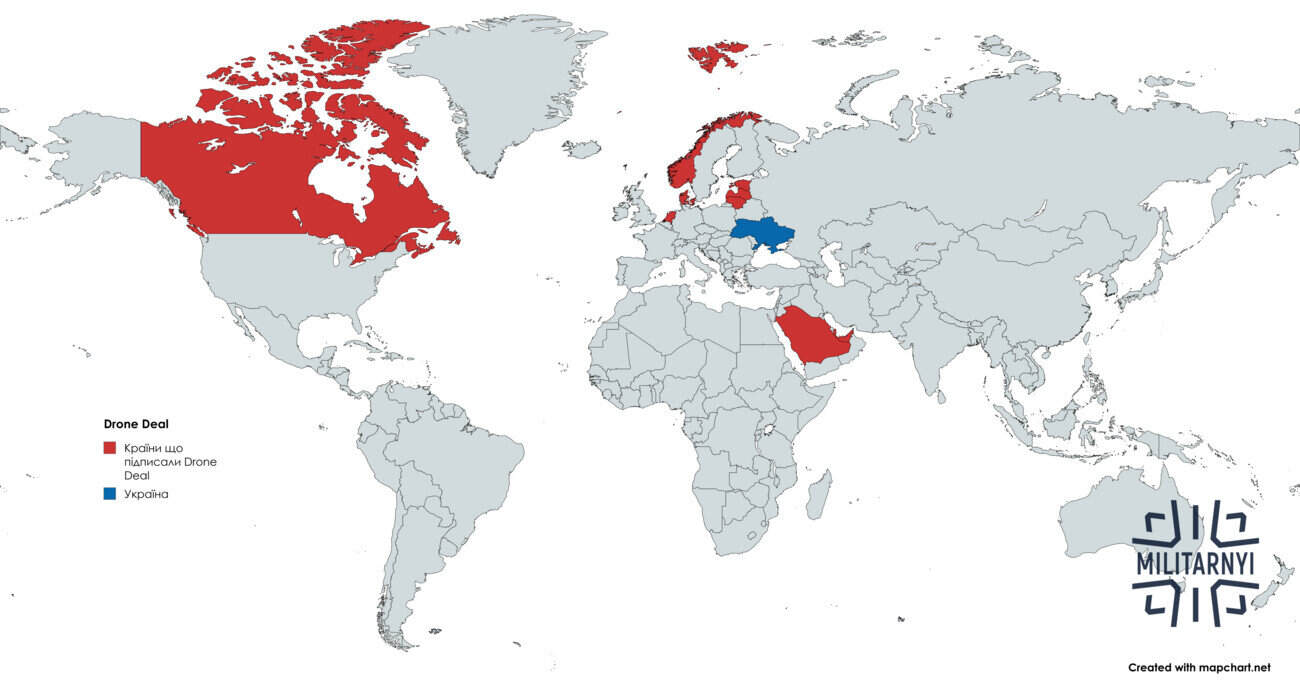
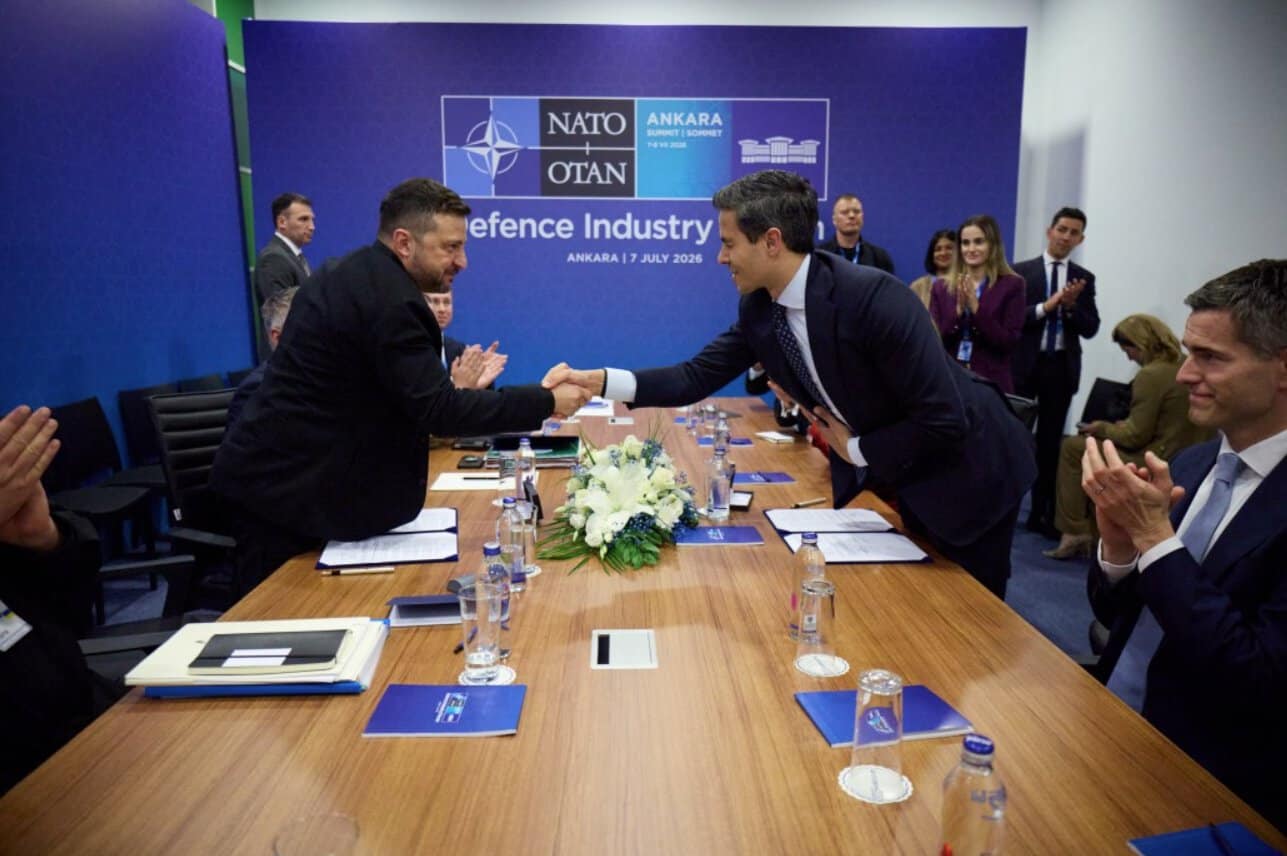
On July 7, during the NATO summit in Ankara, Ukraine signed three more agreements – with Estonia, the Netherlands, and Denmark. They cover technology sharing, financing, and the establishment of production facilities in Ukraine and abroad.
For Denmark, the new agreement builds on an existing model under which foreign funding is directed straight to Ukrainian companies to produce weapons for the Ukrainian Defense Forces.
On August 23, Norway became the tenth partner on the official list. The cooperation covers air defense, unmanned systems, technology sharing, and cooperation between defense companies.
The European Union, the United States, and Future Partners
On July 15, Ukraine and the European Union announced a separate Europe-wide Drone Deal. The partnership is intended to combine Ukraine’s combat experience with European funding, industrial capacity, and secure production facilities. It covers drones, counter-drone systems, joint ventures, and technology transfers.
To implement the initiative, the European Commission established the EU–Ukraine Drone Alliance, bringing together nine Ukrainian and nine European companies.

On September 10, Ukraine and Canada signed the first document paving the way for a future Drone Deal. It provides for long-term cooperation in the production of unmanned systems, counter-drone systems, and priority munitions. However, the two sides still need to finalize the full agreement.
Ukraine is also negotiating with, or is at various stages of signing agreements with, 15 more countries, including Finland, Sweden, Germany, Italy, the United Kingdom, and France.
Conclusion
The Drone Deal is an attempt to turn Ukraine’s technologies and battlefield experience into a long-term system of defense cooperation and, to some extent, open the way for arms exports.
Partners gain access to combat-tested solutions, while Ukraine gains foreign funding, orders, components, and the opportunity to establish production at secure facilities.
Meanwhile, a political agreement only opens the door to specific contracts. The real value of the format will ultimately depend on whether production facilities are actually launched, how much they produce, and what share of that output reaches the Ukrainian military.
The separate Middle East experience showed that Ukrainian expertise can also produce results outside the formal Drone Deal framework. Practical assistance during air attacks helped create new political and industrial ties, some of which Ukraine later turned into long-term agreements.
Xi Jinping’s Washington Visit Outlines the Timeframe for the Active Phase of the Confrontation: Beijing Openly Demands Taiwan’s Return
On September 23–25, 2026, Chinese President Xi Jinping held talks with President Trump at the White House during the first Chinese state visit to t...
A Sharp Shift in the Dynamics of Global Confrontation Forces Washington to Rethink How It Builds Its Key Partnerships
On September 12–13, 2026, the 18th BRICS Summit was held in New Delhi. Xi Jinping traveled to India to lead the Chinese delegation, marking his fir...

Netanyahu’s Visit to Abu Dhabi: Israel Builds Partnerships from a Position of Strength, but the Middle East Conflict Is Eroding the Edge of Its Weapons
On September 27, 2026, Israeli Prime Minister Benjamin Netanyahu traveled to Abu Dhabi with the head of Mossad and the head of the National Securit...
