
A Victory for Pro-American Candidate Bolsonaro Gives Washington an Opening to Leverage China’s Dependence on Brazil and Recalibrate the Global Balance of Power

Solid Info


On October 4, 2026, Senator Flávio Bolsonaro, the son of former President Jair Bolsonaro, won 47.03 percent of the vote in the first round of Brazil’s presidential election, edging out incumbent President Luiz Inácio Lula da Silva, who took 45.16 percent.
Bolsonaro fell three percentage points short of an outright first-round win, and the two candidates will meet in a runoff on October 25. Despite the close first-round result, Flávio Bolsonaro will win the runoff, since major resources are going into a renewed get-out-the-vote effort and the votes of eliminated right-wing candidates are largely shifting to him.
For Washington, the victory will extend the continent’s return to an exclusive U.S. sphere of influence and China’s displacement from it.
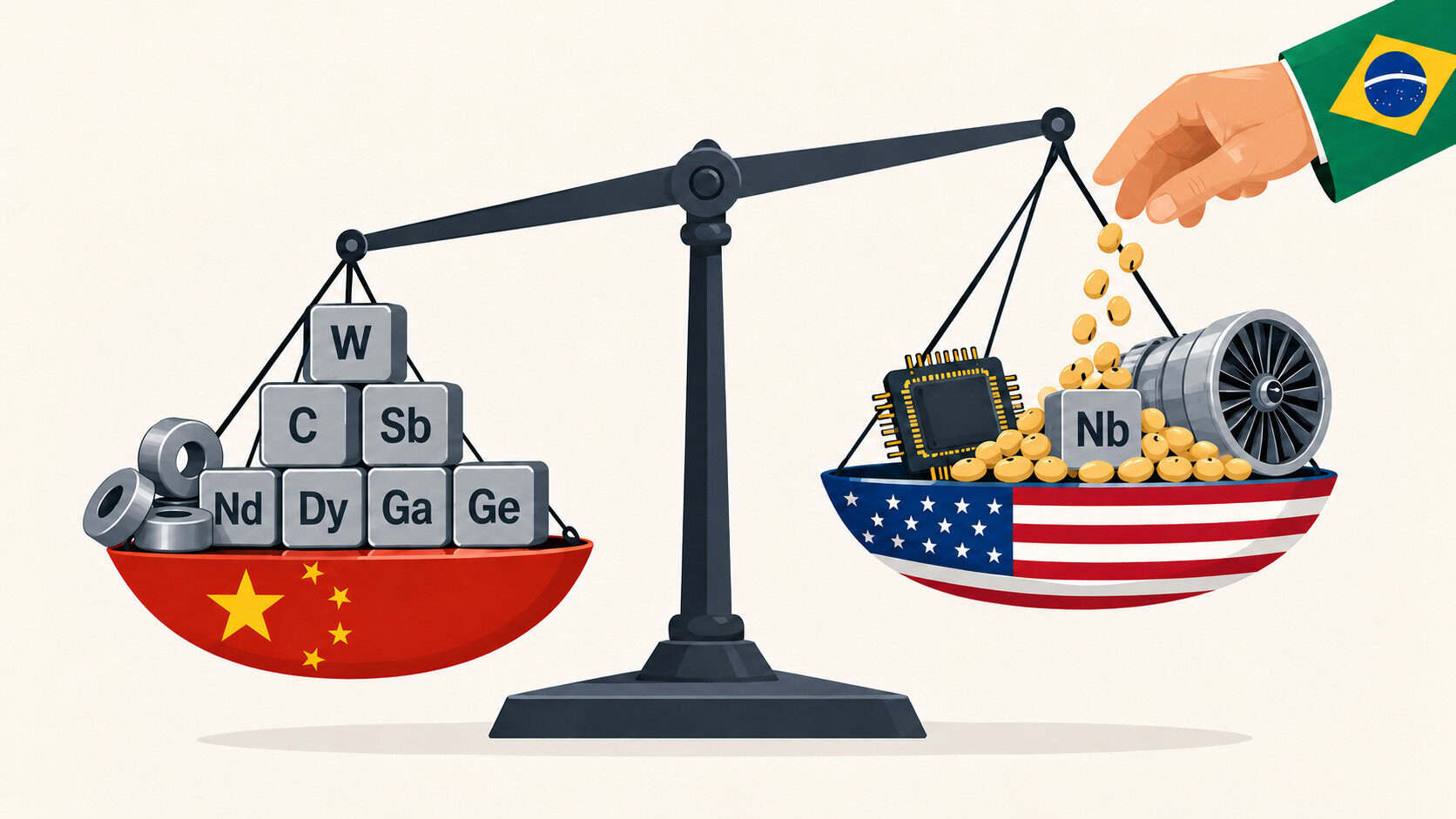
A pro-American president in Brazil also gives the United States leverage over China ahead of a sharpening global confrontation and strengthens Washington’s strategy of restoring a balance of mutual dependence that has tipped critically toward Beijing in recent years.
The winner will govern Latin America’s largest country through the end of 2030, and his term overlaps entirely with the 2028–2030 window, when the risk that the confrontation between Washington and Beijing will enter its peak phase is highest.
For China, Brazil carries critical weight in several areas where Beijing still has no substitute, chief among them food security and the supply of certain critical metals.
The October 25 result will decide the political reliability of the country that supplies the bulk of China’s soybean and beef imports. China’s food balance splits into staple grains, which the country produces itself, and feed and meat, where imports keep its livestock sector running.
China Diversifies Its Food Imports Through Brazilian Agriculture
Brazil supplies the feed without which China’s livestock sector cannot sustain current meat output, and this dependence is becoming a lever for Washington in deterring Beijing’s aggressive designs. Xi Jinping has made food self-sufficiency a state requirement, and China has achieved it in rice, wheat, and corn.
Self-sufficient in what it needs to survive, China depends on imports for what sustains its current consumption of meat, eggs, and cooking oil.
Soybeans are the commodity China depends on most heavily for imports. In 2025, China imported 111.83 million metric tons against a domestic harvest of 20.91 million tons, putting its self-sufficiency at about 17 percent. Soybeans dwarf all of China’s other food imports by volume, given that the country brought in only 25.8 million tons of grain other than soybeans in 2025.
On paper, domestic production covers 98 percent of China’s pork and poultry needs, but both sectors run on imported protein, with soybean meal making up as much as 28 percent of broiler rations. Even with a smaller soymeal share in feed and domestic output rising to 23 million tons, China will remain the world’s largest soybean importer for at least another five years. China will go through the entire 2028–2030 period relying on imports for more than 80 percent of its soybean needs.
China’s soybean stocks stand at about 45.5 million tons, enough for roughly four months of crushing, so reserves cannot replace a year’s imports. In 2025, Brazil accounted for 73.6 percent of China’s soybean imports, or 82.3 million tons, the United States for 15 percent, and Argentina for 7.1 percent, giving the three countries a combined 95.7 percent.
Brazil has become China’s instrument for reducing its dependence on the United States, and the U.S. share of China’s soybean imports fell from about 34 percent in 2017 to 15 percent in 2025.
Brazil also supplies 61 percent of China’s corn imports, 87 percent of its sugar imports, and by various estimates 56 to 59 percent of its beef imports, while in the first half of 2026 it provided 72.9 percent of China’s poultry imports.
Other countries cover the remaining critical items, with Australia supplying more than 70 percent of China’s barley imports, Canada 95 percent of its canola, New Zealand 91 percent of its milk powder, and Indonesia and Malaysia all of its palm oil.
Russia is ramping up shipments of vegetable oil, corn, and barley under a 2023 agreement covering 70 million tons of grain over 12 years, but it cannot replace any of the three main soybean suppliers.
Apart from the United States itself, Canada, Australia, New Zealand, and EU member states are all U.S. allies, and Argentina’s government has aligned itself with the Trump administration.
In a military escalation, these suppliers will fall within the reach of U.S. restrictions, leaving Brazil, whose political alignment the October 25 vote will decide, as China’s only major source of soybeans and corn.
The loss of its Brazilian anchor makes China’s food security dependent on suppliers aligned with Washington, and in the event of a blockade or sanctions, that dependence will drive Beijing’s calculations on the timing and terms of moving the confrontation into its active phase.
Brazil Supplies the Niobium Chinese Metallurgy Cannot Replace
China can replace most Brazilian raw materials with supplies from elsewhere, but niobium is critical to it, and here Brazil has no competitors.
Brazil mines 104,000 of the world’s 112,000 tons of niobium, while Canada’s Niobec mine, owned by Magris Performance Materials, produced about 6,000 tons in 2025, and China just 40 tons.
In 2024, China imported 42,900 tons of ferroniobium, an alloy of iron and niobium, 98.4 percent of it from Brazil, which puts its import dependence for niobium close to 100 percent.
Niobium goes into GH4169-class superalloys for jet and rocket engines, C-103 alloys for spacecraft and the hot structures of hypersonic vehicles, and high-strength low-alloy (HSLA) steels for pipelines, automobiles, bridges, and ships.
As the world’s largest steelmaker, China consumes more than a third of global ferroniobium supply, and vanadium and molybdenum can stand in for niobium only partially, at a cost in quality or price.
Without Brazilian supplies, China loses 98 percent of its ferroniobium imports, the world outside Brazil mines only about 8,000 tons of niobium, and replacing that supply will take more than five years.
Niobium is not on China’s official list of 24 strategic minerals, yet it is the mineral where Beijing has hedged most deeply, through ownership stakes in Brazilian mining.
A Chinese consortium bought a stake in CBMM in 2011, CMOC acquired a mine in Catalão in 2016, and state-owned CNMC purchased Mineração Taboca in 2025.
CBMM, which produces 85 to 89 percent of Brazil’s niobium, is 70 percent owned by the Brazilian Moreira Salles family, which has controlled the company since the 1960s.
CITIC, Baosteel, Ansteel, Shougang, and TISCO, five Chinese state-owned companies, hold another 15 percent of CBMM through a consortium that paid $1.95 billion for the stake in 2011, and a consortium of Japanese and South Korean companies holds the remaining 15 percent.
The Chinese consortium’s stake has not changed since 2011, and it has no known control rights or guaranteed offtake at CBMM.
China’s CMOC mined 10,348 tons of niobium at Catalão in 2025, about 9 percent of world output, and state-owned CNMC has owned the smaller producer Mineração Taboca since April 2025.
Together, Chinese companies control only 11 to 16 percent of Brazil’s niobium, but counting the CBMM stake, their economic presence reaches 25 to 28 percent.
The dependence runs both ways, since China buys 45 to 49 percent of Brazil’s ferroniobium exports and 285 million tons of iron ore, or two-thirds of Brazil’s iron ore exports.
The law establishing the National Policy on Critical and Strategic Minerals, which Lula signed on September 16, 2026, creates CIMCE, a council attached to the presidency, to screen transactions involving foreign capital. Whoever leads the next government will gain, through this council, tools to shape the foreign presence in the sector, including in niobium.
For Washington, influence over niobium supply chains to China does not offset Beijing’s leverage in rare earths, but it adds to the U.S. pressure toolkit a material for which China has no substitute.
Brazil mines only 0.5 percent of the world’s rare earths, and Washington is moving this resource out of China’s reach.
On April 20, 2026, USA Rare Earth signed an agreement to acquire Serra Verde, Brazil’s only rare earth producer, for about $2.8 billion, along with a 15-year offtake commitment covering its entire output.
Financing for the project from the U.S. International Development Finance Corporation (DFC) has grown from $465 million to $565 million, and Serra Verde’s contracts with Chinese processors have been cut back to expire at the end of 2026.
Speaking at CPAC on March 28, 2026, Flávio Bolsonaro called Brazil the solution that will free the United States from its dependence on China for critical minerals.
Chinese investment in Brazilian mining reached $1.76 billion in 2025, the highest since 2011, and under a right-wing government Beijing’s new projects will face competition from American companies.
In 2025, Brazil became the world’s top destination for new Chinese investment, drawing 10.9 percent of all Chinese overseas investment, or $6.1 billion across 52 projects, up 45 percent from a year earlier.
Bilateral trade hit a record $171 billion that year, more than double Brazil’s $83 billion in trade with the United States.
Brazil’s economic weight for China takes institutional form through BRICS, whose only member in the Western Hemisphere is Brazil.
Brazil Gives BRICS a Foothold in the Western Hemisphere
Under Lula, the growth of Brazil-China trade has gone hand in hand with a gradual shift to settlement in local currencies.
In March 2023, Brazil and China reached an agreement allowing them to conduct trade and financial transactions directly in Chinese yuan and Brazilian reais, removing the U.S. dollar as a mandatory intermediary in the relationship.
That same year, Brazil’s Banco BOCOM BBM, the product of a partnership between one of China’s largest commercial banks and the Brazilian financial group BBM, joined China’s Cross-Border Interbank Payment System (CIPS).
These steps toward gradually de-dollarizing bilateral trade gained momentum from a currency swap agreement between the Brazilian and Chinese central banks, which provided the financial system with the liquidity it needed in local currencies, and from record trade volumes.
The tariffs the Trump administration imposed over the course of 2025 pushed Brazil and China to diversify their supply chains more actively and to shield financial transactions from external risks.
BRICS membership lends institutional backing to the Lula government’s push to reduce dependence on the dollar, since during its 2025 BRICS presidency Brazil supported the expansion of the New Development Bank (NDB), which lends to projects in yuan and reais outside U.S.-controlled institutions.
Brazil’s BRICS membership carries added weight because the country is Latin America’s largest economy while retaining democratic governance.
Brazil’s standing makes the BRICS project, an alternative to Western models of cooperation, more attractive to Global South states and encourages Asian and African countries to engage with it more actively.
At the same time, Brazil remains the only major BRICS member in a region that the White House’s foreign policy doctrine defines as an immediate U.S. sphere of influence.
At a September 21 rally in Natal, Flávio Bolsonaro promised economically pragmatic relations with China. His platform, however, calls for joining the OECD and moving closer to the United States, and it makes no mention of BRICS.
Washington Has Retooled Its Brazil Strategy
In the first year of the second Trump administration, the White House responded to the Lula government’s foreign policy course with economic pressure on Brazil. In July 2025, President Trump imposed an additional 40 percent tariff on Brazilian goods on top of the existing 10 percent tariff, for a combined rate of 50 percent.
In November 2025, the tariff policy was adjusted and some goods were exempted, but in July 2026, the Office of the U.S. Trade Representative (USTR) announced an additional 25 percent tariff on most Brazilian goods.
BRICS expansion and the push by several of its members to grow trade outside dollar settlement prompted the Trump administration to warn of new tariff pressure on the bloc’s members.
Although no blanket tariff was imposed on all BRICS countries and Washington instead resorted to country-specific measures against individual members, U.S. pressure left its mark on Brazilian public opinion and voter preferences ahead of the presidential election.
The White House justified the tariffs on Brazil, imposed by President Trump’s executive order in July 2025, by citing the case against former President Jair Bolsonaro, who was later sentenced to 27 years in prison for plotting a coup.
The same day, the Treasury Department sanctioned Justice Alexandre de Moraes, who oversaw the Bolsonaro case, and Secretary of State Marco Rubio had already ordered visa revocations for Moraes and his colleagues on July 18.
Because the U.S. measures were aimed at protecting the interests of a Trump-friendly politician and his family, and the sanctions targeted officials involved in prosecuting Bolsonaro, much of Brazilian society saw the White House’s moves as an attempt to interfere in the country’s internal affairs.
In a Genial/Quaest poll conducted July 10–14, 2025, 72 percent of Brazilians said it was wrong to justify the tariffs by pointing to Bolsonaro’s prosecution, and approval of the Lula government rose from 40 percent in May to 46 percent in August 2025.
With a November 20, 2025, executive order, the White House lifted U.S. tariffs on a range of Brazilian food products, and on December 12, 2025, the Treasury Department removed Justice Moraes from its sanctions list.
Flávio Bolsonaro’s electoral support declined after the U.S. tariffs took effect.
In July 2026, the younger Bolsonaro decided to appeal to USTR in person and meet with U.S. officials in Washington about lifting the tariffs on Brazilian goods, even as the share of voters ready to back him in a runoff fell to 37 percent.
The Genial/Quaest poll had Flávio Bolsonaro trailing Lula by eight points in July, and despite a partial recovery in his numbers in August 2026, the incumbent kept his lead in the polls.
The shift in the tariffs’ rationale was driven by the U.S. Supreme Court, which on February 20, 2026, struck down the tariffs imposed under the International Emergency Economic Powers Act (IEEPA), so the administration grounded the new tariffs in a Section 301 investigation opened in July 2025.
Section 301 requires a finding that a trading partner’s practices burden U.S. commerce, so Washington justified the new tariffs on trade grounds, and the Jair Bolsonaro case dropped out of its argument.
Washington presented the July 2026 tariff on most Brazilian imports as a response to Brazil’s trade practices.
With the Bolsonaro case gone from the U.S. rationale, part of the Lula government’s sovereignty argument lost its force.
Defending Brazilian sovereignty remained one of the key themes of Lula’s campaign rhetoric, and on September 22, 2026, he devoted much of his speech at the United Nations to the elections and to the need for third countries to refrain from interfering in them.
Brazilians’ negative view of U.S. policy, which topped 50 percent in July 2025, had ceased to be a decisive factor in the campaign by September 2026.
In the summer of 2026, Quaest polls gave Lula an eight-point lead, and analysts, including those at Solid Info, were forecasting a loss for Flávio.
By then, Washington was already adjusting its approach to address the risks those forecasts identified, and by September the adjustment had paid off at the ballot box.
Secretary of State Marco Rubio personally handles the Brazil file, pursuing a strategy of coercive diplomacy that erodes domestic support for the Lula government, narrows China’s influence over Brazil, and brings the country back into closer partnership with the United States.
Under Rubio, the State Department revoked the visas of Justice Moraes and his colleagues and designated Brazil’s Primeiro Comando da Capital (PCC) and Comando Vermelho (CV) gangs as Specially Designated Global Terrorists on May 28, 2026, followed by Foreign Terrorist Organization designations effective June 5.
At a June 2, 2026, hearing of the Senate Foreign Relations Committee, Rubio publicly contrasted Brazil with the rest of the region’s states, which look to partnership with the United States.
With that statement, the top U.S. diplomat signaled to Latin American governments that close partnership with the United States will bring their countries economic support and political advantages, while the Lula government’s chosen course of cooperation with China exposes Brazil to U.S. economic and diplomatic pressure.
The signal comes with resources attached, and on September 15, 2026, the State Department notified Congress that it was reprogramming $52.1 million in Foreign Military Financing (FMF) from Slovakia, North Macedonia, Tunisia, and Iraq to Panama, Peru, Ecuador, and Colombia.
The money goes to the region’s right-wing governments, which have aligned themselves with Washington.
Flávio Bolsonaro Makes Security and Crime the Centerpiece of His Campaign
Flávio Bolsonaro announced his candidacy on December 5, 2025, citing his father’s endorsement, which he received during a prison visit, and started out 19 points behind Lula, according to AtlasIntel.
By May, the right-wing field had narrowed, with Ratinho Júnior out of the race and Tarcísio de Freitas opting to stay on as governor of São Paulo, and Datafolha had Flávio rising from 33 to 35 percent.
On May 13, 2026, Intercept Brasil released audio of Flávio asking banker Daniel Vorcaro for money for a film about his father, and the senator’s support fell from 35 to 31 percent.
Lula’s share, meanwhile, barely changed, and in July Quaest put Senator Bolsonaro at a low of 28 percent.
His recovery began in August, when a crisis at the Supreme Federal Court (STF) came to the fore over messages the Federal Police attributes to Justice Moraes and Vorcaro, and the campaign pinned the crisis on Lula.
Flávio’s first-place finish on October 4 came from voters opposed to the Workers’ Party (PT) consolidating behind a single candidate bearing the Bolsonaro name, while Lula’s ceiling held steady.
In the run-up to the election, Brazilians focused on the country’s domestic economic problems and the Lula government’s policy missteps, which allowed Flávio Bolsonaro’s campaign to win back voter support.
Voters began demanding concrete steps from the Lula government to protect producers from external pressure, and negative perceptions of the economy sharpened their criticism of the incumbent.
Forty-nine percent of respondents believe Brazil’s economy has worsened over the past year, and more than half of voters say their income has either stayed flat or grown more slowly than the cost of living.
Inflation, corruption ties within the administration, and high crime, which about a third of Brazilians rank among the country’s main problems, pushed disapproval of the Lula government to 50 percent, up from 48 percent in August 2026.
Flávio made security and the fight against crime the main theme of his campaign, an arena where he drives the agenda with initiatives while the Lula government is left answering accusations and explaining the situation.
His “Brazil Without Fear” plan calls for five new maximum-security federal prisons on the Salvadoran model, 500,000 new prison beds, and an end to lighter custody regimes for those convicted of serious crimes.
On August 30, 2026, Flávio met with El Salvador’s Minister of Justice and Public Security, Gustavo Villatoro, and promised to create a stand-alone Ministry of Public Security.
Homicides in Brazil have fallen to their lowest level since 2012, but fraud has risen 430 percent since 2018, and the number of criminal groups keeps growing.
According to a March 2026 Datafolha survey, 40.1 percent of Brazilians had been victims of crime over the previous year, and 14.5 percent had lost money to fraud involving banking apps or the Pix payment system.
Criminal groups operate in neighborhoods home to 41 percent of Brazilians, and fear of robbery or fraud shapes voter sentiment more strongly than homicide statistics do.
Safer regions voted for Flávio, while the Northeast, the most dangerous region, backed Lula, so voters’ choices are driven by a perception of threat that does not match the actual level of violence.
Votes From Other Right-Wing Candidates Give Flávio an Edge Lula Cannot Offset Without Better Mobilizing His Base
Polls ahead of the first round captured the shift only in part, and the final Datafolha survey, released October 3, had Lula at 45 percent to Bolsonaro’s 42 percent.
Pollsters underestimated the right-wing candidate’s margin by about five points, and analysts interviewed by Reuters attribute the gap to an anti-Lula protest vote that had been expected only in the runoff.
Compared with the 2022 first round, Lula lost 3.3 points, while Flávio got 3.8 points more than his father did then, so the right has widened its base over the past four years.
Bolsonaro’s Liberal Party (PL) finished first in both chambers of Congress, winning 121 of the 513 seats in the Chamber of Deputies to form the largest caucus since 1988.
In the Senate, the party won 19 of the 54 seats up for election on October 4 and will hold 28 of 81 seats from 2027, against only 9 for Lula’s PT.
Flávio draws his strength from evangelicals, among whom Datafolha has him ahead 47 percent to 27 percent, and from agribusiness, while Lula’s base is concentrated in the Northeast.
Three right-wing candidates took a combined 4.69 percent, and the votes of Renan Santos, Ronaldo Caiado, and Romeu Zema are enough to carry Flávio past the 50 percent threshold even if Lula picks up all of centrist Augusto Cury’s 2.89 percent.
First-round abstention reached 21.08 percent, or 33.5 million voters, the highest since 1998, and abstention has historically risen in the second round.
Votes will flow to Bolsonaro, since Renan Santos has called Flávio the next president, Zema endorsed Flávio on October 5, and none of the eliminated candidates has backed Lula.
Reelected São Paulo Governor Tarcísio de Freitas is campaigning publicly for Flávio, and the right is going into the runoff united.
Beijing Keeps Its Role as an Indispensable Market That Washington Seeks to Strip of Decisive Political Weight
The approach the Trump administration has chosen toward Brazil does not envision a significant reduction in Brazil’s trade with China, because the very structure of Brazilian exports rules that out. China buys 79 percent of Brazil’s soybean exports, 67 percent of its iron ore, and 45 percent of its oil, and Brazil has no alternative buyer of that scale.
The agribusiness conglomerates that form one of Flávio’s main pillars of support also depend on this market, so even with Flávio in office Brazil will need a place to sell its soybeans, and soy will work as leverage over China only in the short run.
Washington cannot become an alternative market for these goods, since the United States itself produces and exports them.
Given this structure of production and trade, U.S. strategy does not aim to sever Brazil-China economic ties altogether, but rather to leave Beijing the role of a trading partner stripped of decisive influence over Brazil’s foreign policy and domestic reforms.
A Bolsonaro victory will deprive Beijing of a political partner in the region’s largest country, which until now has remained outside Washington’s orbit.
The precedent set by former President Jair Bolsonaro confirms this inertia, since from 2019 to 2022 the president with the most anti-China rhetoric kept trade with China intact, hosted Xi Jinping at the BRICS summit in Brasília, and secured Chinese approval for 45 meatpacking plants.
Yet entrenched Brazil-China trade ties and the heavy presence of Chinese capital in the country mean that Beijing, as the largest buyer of a number of Brazilian resources, takes on the weight of a decisive political partner for Brazil.
Chinese ownership of assets in Brazilian resource companies takes economic ties with Beijing beyond the purely commercial and turns them into a lever of foreign policy influence, as control over deposits and infrastructure lets China shape decisions on how Brazil’s resources are managed.
Foreign capital’s ability to determine where Brazilian raw materials are sold, at what price, and on what terms becomes a question of sovereignty, which is why deeper integration of foreign investors worries Brazilian voters.
In a September Quaest poll, 42 percent of Brazilians said they feared China would end up running their country.
Control over the country’s resources has become politically charged and one of the campaign’s main themes. The two leading presidential contenders give opposite answers, with Senator Bolsonaro proposing to open Brazil’s mineral resources to U.S. companies.
President Lula counters with national control over the resource base, under which raw materials must be processed only in Brazil and the profits must flow to the national budget.
The terms and scale of foreign capital’s future access to Brazil’s extractive and processing industries, as well as to innovative sectors of the economy, are part of a broader choice of foreign policy course for the next four years, between moving closer to the United States and preserving the partnership with China.
Under Lula, Brazil remained Beijing’s principal major partner outside the world of autocracies, able to keep supplying products China strategically needs even amid global confrontation, and also the country in whose trade relations China was building an alternative to the dollar through BRICS mechanisms and local-currency settlement.
As a result, a right-wing victory in Brazil will push Beijing back into reviewing its economic ties and searching for new trading partners, none of which can match the scale of Brazil’s exports to China.
Beijing has an interest in a Lula victory and has media tools and a social media presence at its disposal, and the runoff will show whether it uses them to mobilize Lula’s voters, although there is no evidence of Chinese interference in Brazil’s elections.
Brazil Strengthens the U.S. Strategy of Rebalancing Dependencies in Which China Still Outpaces Washington
Rare earths, magnets, gallium, germanium, graphite, antimony, and tungsten are the seven groups of critical materials in which China outpaces the United States, and each of them leaves American industry critically dependent.
The United States depends on imports for 100 percent of its heavy rare earths, gallium, and natural graphite and for 91 percent of its antimony, while China accounts for 94 percent of global sintered magnet production.
China’s rare earth export controls have been in place since April 2025, and as early as May, Ford shut down Explorer SUV production at its Chicago plant for a week because of the resulting shortage.
Washington is responding with chip export controls against China, reshoring production, and funding domestic capacity, including MP Materials’ new magnet plant, whose entire output the Pentagon has committed to buy starting in 2028.
Even with these efforts, the balance of dependencies will not level out before the 2028–2030 window. Brazil speeds up this strategy by giving Washington leverage where China is the dependent side, in the form of Brazilian soybeans, on which Chinese livestock farming depends, and niobium, for which Chinese metallurgy has no substitute.
The acquisition of Serra Verde by an American company also takes Brazil’s rare earths, which the United States needs for its own magnet production, out of China’s reach. Each such lever raises the cost to Beijing of a decision to escalate even before escalation begins, because once the confrontation turns military, trade levers stop working.
Beijing will therefore make any decision on escalation knowing that all of its major suppliers of food and niobium will be in the camp of states aligned with Washington.
Latin America’s largest country will remain nothing more than a market for Beijing, one where it holds no decisive influence. For Washington, influence over Brazil and the rest of Latin America will become a pillar of the effort to rebalance the dependencies on which China’s escalation calculus turns.
This publication is the result of a partnership between MILITARNYI and SOLID INFO. An extended version is available on the website of the analytical center.


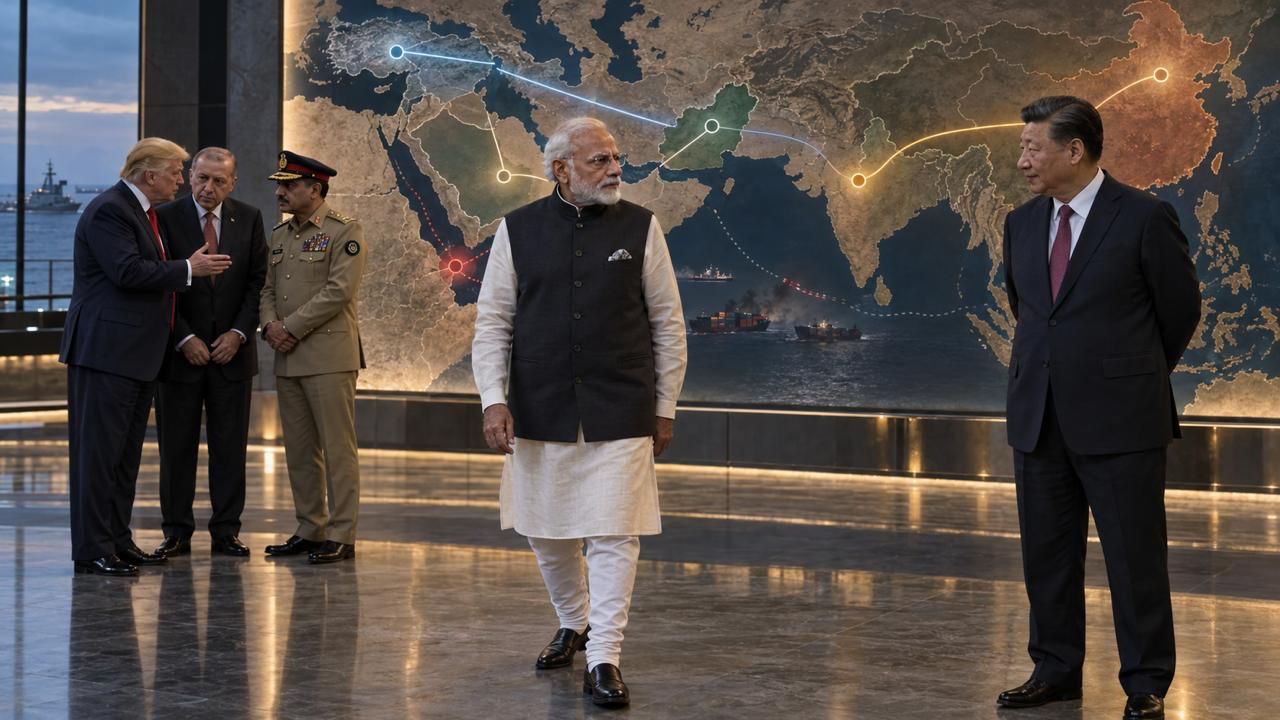
A Sharp Shift in the Dynamics of Global Confrontation Forces Washington to Rethink How It Builds Its Key Partnerships
On September 12–13, 2026, the 18th BRICS Summit was held in New Delhi. Xi Jinping traveled to India to lead the Chinese delegation, marking his fir...
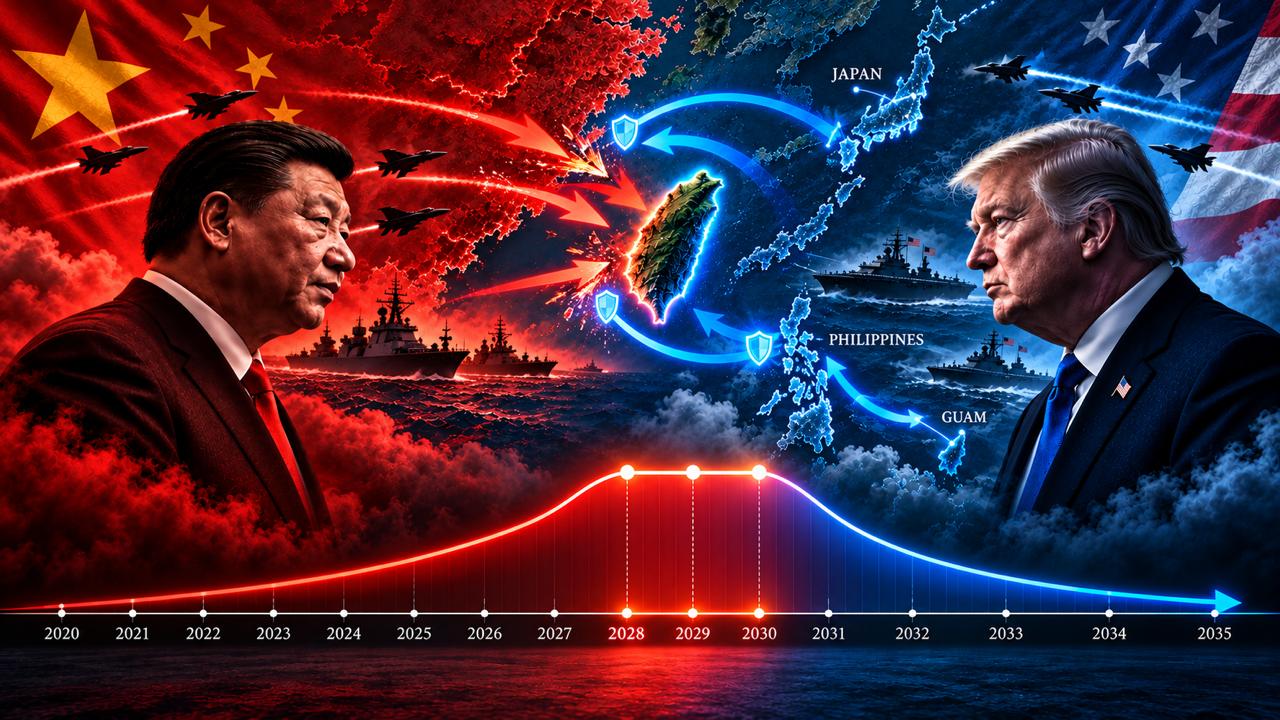
Xi Jinping’s Washington Visit Outlines the Timeframe for the Active Phase of the Confrontation: Beijing Openly Demands Taiwan’s Return
On September 23–25, 2026, Chinese President Xi Jinping held talks with President Trump at the White House during the first Chinese state visit to t...
