




Popular
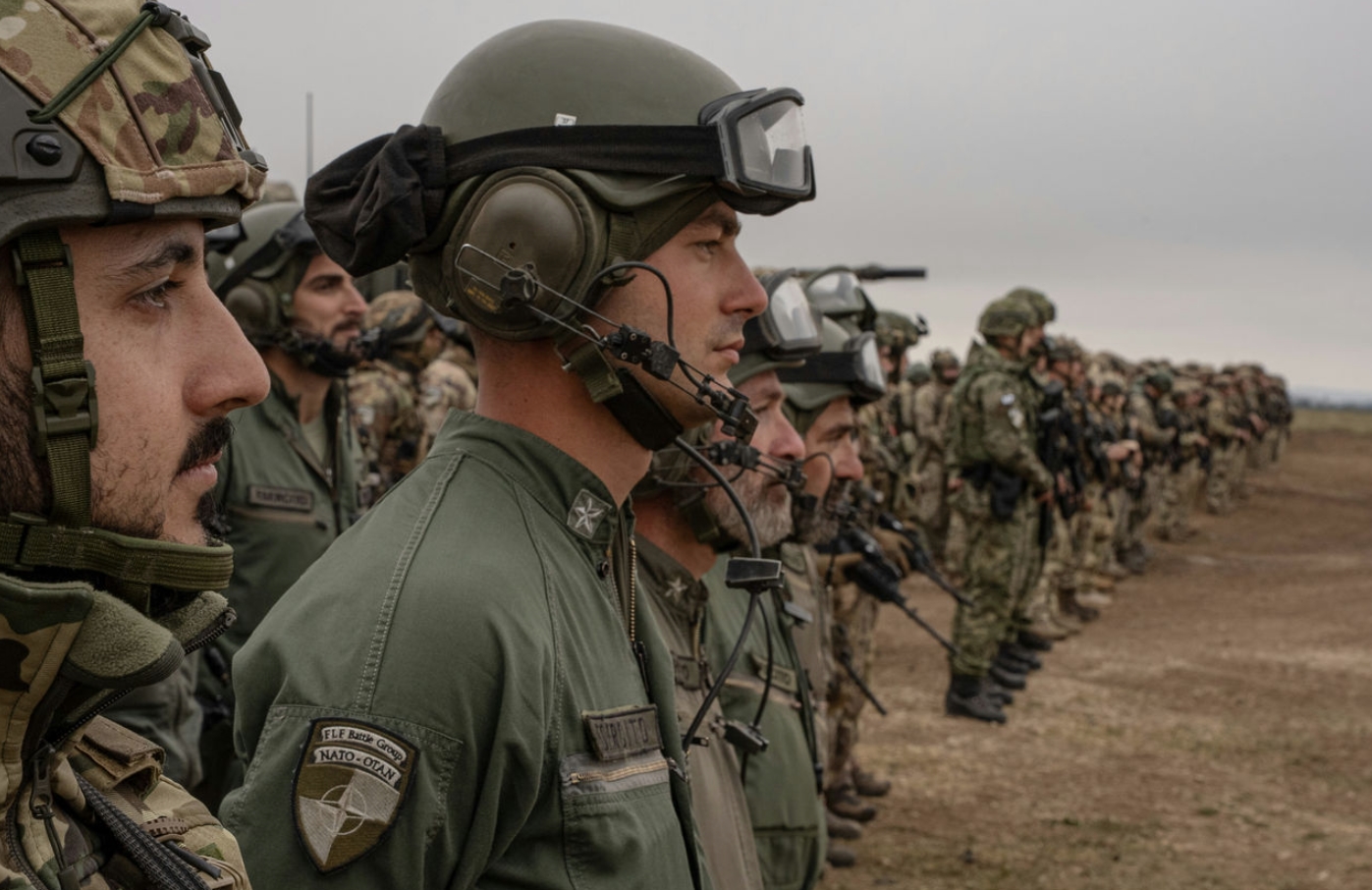
NATO has developed a concept for repelling a potential Russian attack on the Alliance, which calls for strikes on military targets near St. Petersburg, in the Kaliningrad region, and in Belarus.
This was announced by Alexus Grinkewich, Supreme Allied Commander Europe, during a speech at a security forum in Warsaw. The Wall Street Journal reports on this.
According to Grinkewich, the plan involves a set of measures to halt the initial attack and, should the aggression continue, to deprive the enemy of the ability to effectively command its troops and supply them with everything they need.
The main goal is to stop an invasion at an early stage, minimizing the risk of escalation into a conventional or nuclear war.
One of the key elements of the concept is the creation of a large “autonomous zone” in which drones and ground-based robotic systems would deter a Russian offensive. This approach is intended to reduce the risk of significant casualties among Alliance troops.

At the same time, NATO is considering the use of long-range missiles to strike Russian command posts and air defense systems.
The plan lists potential targets as facilities in the Kaliningrad region, near St. Petersburg, and within Belarus.
Such strikes are expected to weaken Russia’s ability to control the airspace and create conditions for the Alliance’s ground forces to launch a counteroffensive. In particular, the plan mentions the U.S. Army’s V Corps, which, along with other NATO units, is to be deployed in further combat operations.
Another component of the defense strategy is the operational use of aviation. According to the plan’s authors, NATO aircraft will strike Russian reinforcements as they advance toward the battlefield and will also attack other military targets behind enemy lines.
Operations are planned to be coordinated using a so-called “digital backbone.”
This refers to a system for exchanging classified target data between military units of allied countries via a cloud-based infrastructure. This is intended to accelerate the transmission of information and the coordination of actions among various components of the Alliance’s forces.
As the WSJ notes, certain elements of this digital network were tested in the Middle East during the U.S. military campaign against Iran. The experience gained could be used to improve coordination mechanisms among allied forces in the event of a large-scale conflict. The concept has been named the Eastern Flank Deterrence Initiative.
In September, Russia warned NATO of the possibility of using nuclear weapons should the Alliance attempt to isolate the Kaliningrad region.
Підтримати нас можна через:
Приват: 5169 3351 0164 7408 PayPal - [email protected] Стати нашим патроном за лінком ⬇
Subscribe to our newsletter
or on ours Telegram
Thank you!!
You are subscribed to our newsletter