
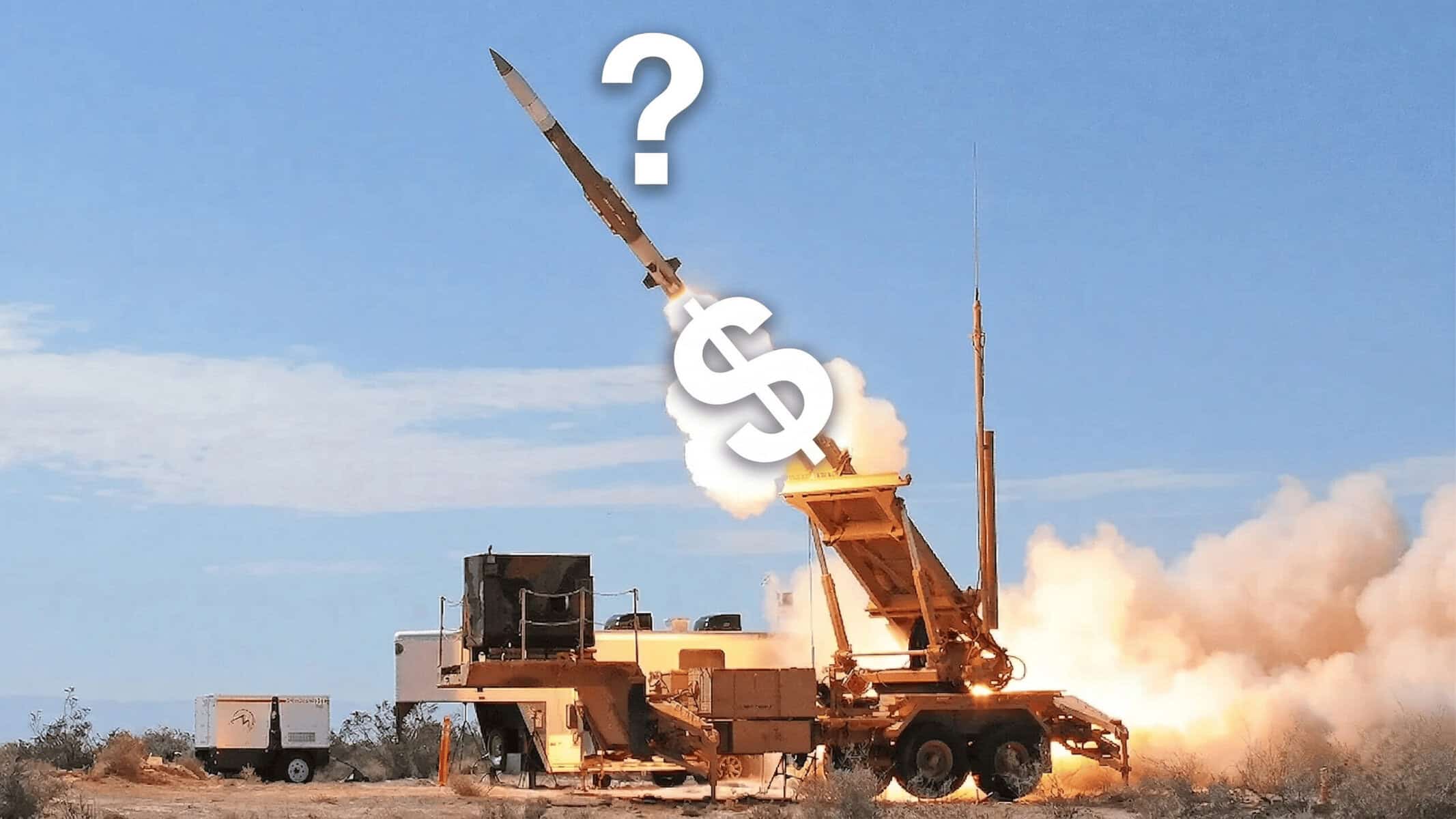
The Cost of Interception: Order Trends and the Cost of Surface-to-Air Missiles for the USA

Roman Pryhodko


The active use of anti-aircraft missiles by the United States and its allies in the Middle East has raised a logical question: how many missiles of various types does the US purchase in total, and what is the cost of these contracts? Many Western media outlets publish articles that critically—and sometimes with a lack of understanding—describe the situation the Pentagon finds itself in.
How do procurements take place?
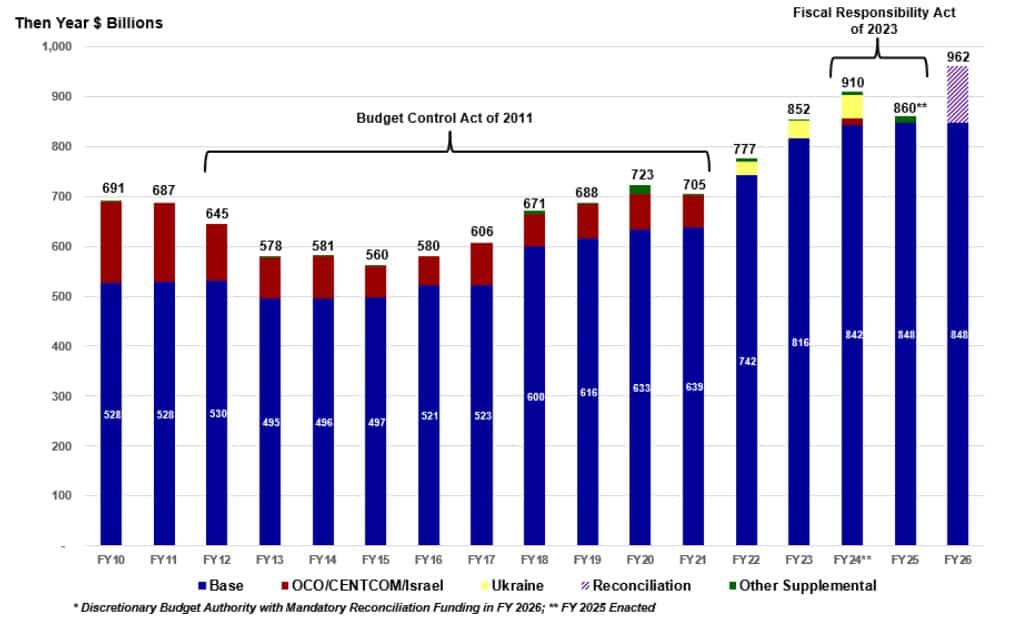
The current structure of the US defense budget indicates that the Pentagon maintains a significant focus on procurement. In the US Department of Defense (DoD) budget presentation for fiscal year 2026, the total request amounts to $961.6 billion, of which $848.3 billion is discretionary funding, and $113.3 billion is mandatory and reconciliation funding.
Following this same logic, procurement in fiscal year 2024 amounted to $171.1 billion, in 2025 to $167.8 billion, and in the 2026 request to $153.3 billion; research and development (RDT&E) expenditures amounted to $147.1 billion, $140.6 billion, and $142.0 billion, respectively. If we consider the figures on a reconciliation-inclusive basis, then in fiscal year 2026, procurement and RDT&E amount to $205.224 billion and $179.070 billion, respectively.
In this case, procurement accounts for approximately 53.4% of the total investment basket (procurement + RDT&E). Separately, the Pentagon notes that 78.6% of mandatory funding in fiscal year 2026 is directed to investment accounts.
For the defense industry, this is the best possible signal. The Pentagon is effectively telling businesses: “Build factories, expand production lines—the money will be there, and demand is stable.”
This is precisely the foundation the US has lacked in recent decades to truly scale up production.
An analysis of budget trends over the past three years indicates that following a certain decline in fiscal year 2025, the Pentagon plans a large-scale financial expansion in 2026. While total investments in procurement and research (RDT&E) amounted to $354.1 billion in 2024, they fell to $315.6 billion in 2025; however, the new request for 2026 calls for $384.3 billion.
Procurement spending, after falling to $174.4 billion in 2025, is expected to rise to $205.2 billion in 2026, while the research and development sector is projected to jump from $141.2 billion to $179.1 billion.
At the agency level, the US Navy remains the primary beneficiary: its procurement budget is approximately $95.3 billion in 2026, up from $81.8 billion in 2025; the Air Force’s budget rises to about $67.6 billion; the US Army’s to about $28.4 billion, up from $25.6 billion in 2025 and $40.1 billion in 2024.
In the missile and drone defense segment, the “Weapons” section for fiscal year 2025 includes a separate line item for “Missile Defense Programs” at approximately $13.5 billion.
In the 2026 budget request, this category has been expanded to “Missile Defeat and Defense Programs,” with a budget of approximately $40.2 billion, encompassing a broader range of capabilities to counter air threats; therefore, these figures are not directly comparable.
Ground-based systems
Patriot
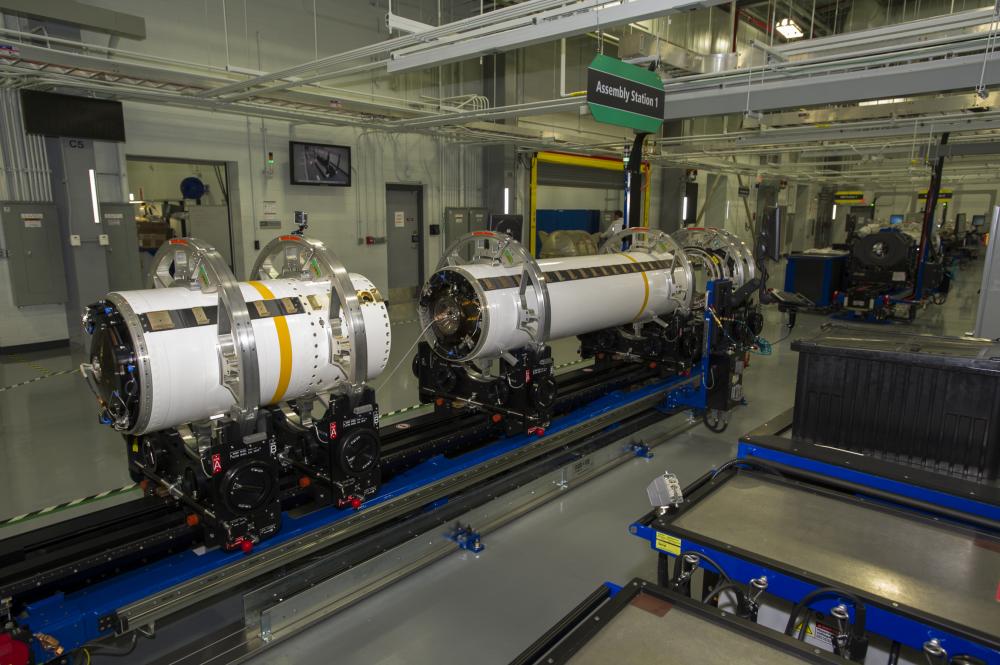
The Patriot PAC-3 Missile Segment Enhancement (MSE) remains a key instrument of US air and missile defense. The scale of its production and cost is currently undergoing a major transformation, as reflected in recent defense contracts.
In September 2025, the US Army finalized a $9.8 billion multi-year contract covering fiscal years 2024–2026, which calls for the delivery of 1,970 PAC-3 MSE interceptors and associated equipment to US and international customers.
According to US Army budget documents, the PAC-3 MSE procurement program does indeed demonstrate a high degree of dependence on order volumes and the structure of advance procurement.
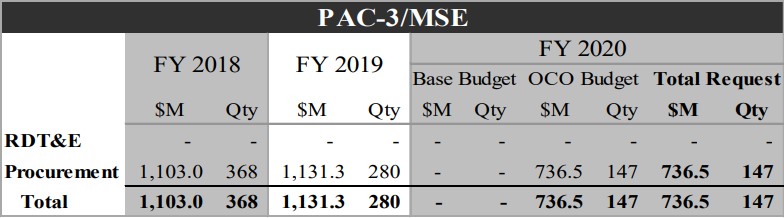
Specifically, in fiscal year 2024, 230 missiles were procured for $2.5 billion; in the approved budget for 2025, 214 missiles were allocated for $905.06 million, and the budget request for 2026 includes 233 missiles worth $1.3 billion in the total request, of which the discretionary portion amounts to $1.07 billion.
We also recommend reading the author’s article on Militarnyi: “MIM-104 Patriot: The Path to Perfection.”
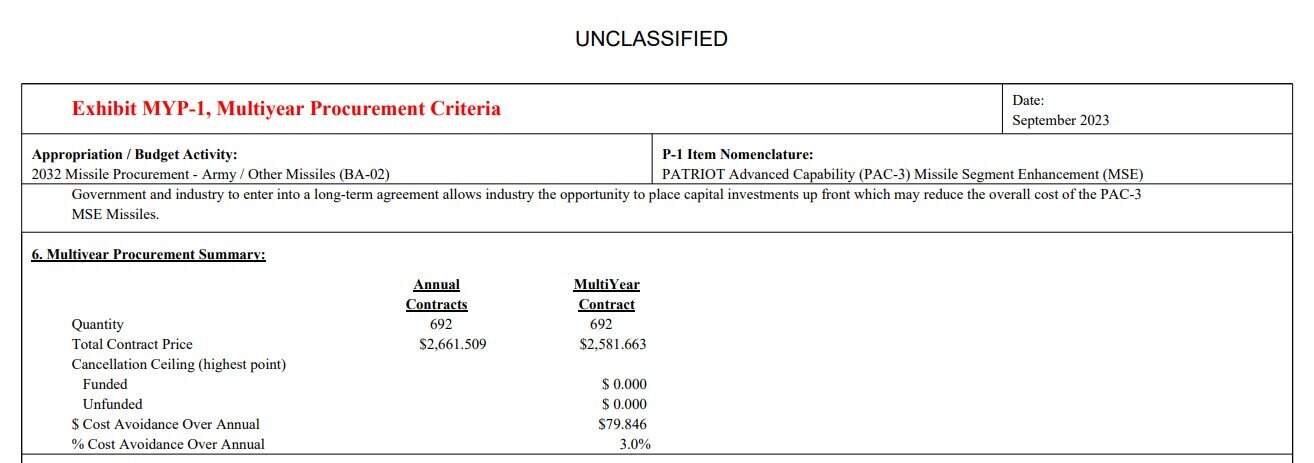
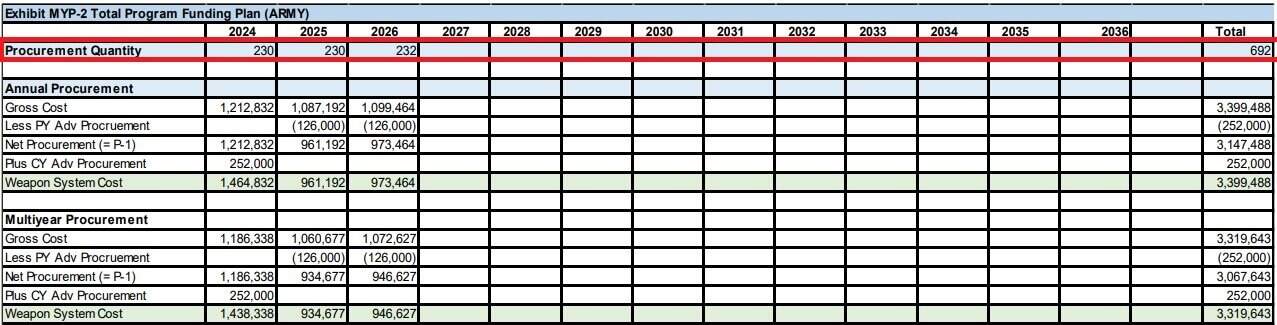
Separately, the MYP exhibit from September 2023 for the Army procurement package covered 692 missiles for fiscal years 2024–2026 and estimated savings of approximately $79.845 million, or 3%, compared to three separate annual contracts.
To meet unprecedented demand, Lockheed Martin signed a framework agreement with the US government in January 2026 to increase annual PAC-3 MSE production from 600 to 2,000 units over seven years. The main production center is the plant in Camden, Arkansas, which was modernized thanks to the company’s internal investments and government support.

In 2025, the company delivered 620 missiles, a 20% increase over the previous year, and plans to maintain this pace of capacity expansion. Such measures are critical, as the Patriot system is currently used by 17 partner countries, placing significant pressure on supply chains.
THAAD
The THAAD (Terminal High Altitude Area Defense) system is, without exaggeration, the “top tier” of US missile defense. Its unique feature is that it is the only mobile system capable of intercepting ballistic missiles of any range (from short to extended) both in the air and—most importantly—in outer space, as the missile approaches its target.
Previously, the Pentagon took a laid-back approach to this program: they purchased a few units, purely for routine inventory replenishment. But an analysis of budget documents from 2020 to 2026 indicates that this period has ended. There has been a sharp shift from gradual stock replenishment to an emergency buildup of capabilities.

The reason is simple yet alarming: actual combat operations and constant tension have depleted arsenals faster than expected. The US suddenly realized that “artificial” production is no longer enough. Now, the 2026 budget is designed to ensure that factories operate at full capacity, transforming THAAD from an expensive luxury into a mass-produced defense tool for conflict zones.
An analysis of budget documents shows that the THAAD program has long depended on additional congressional decisions. In fiscal year 2021, the Pentagon planned to purchase 39 THAAD interceptors with a gross weapon system cost of $578.335 million and an average unit cost of $14.829 million; the net price per interceptor was $9.743 million.
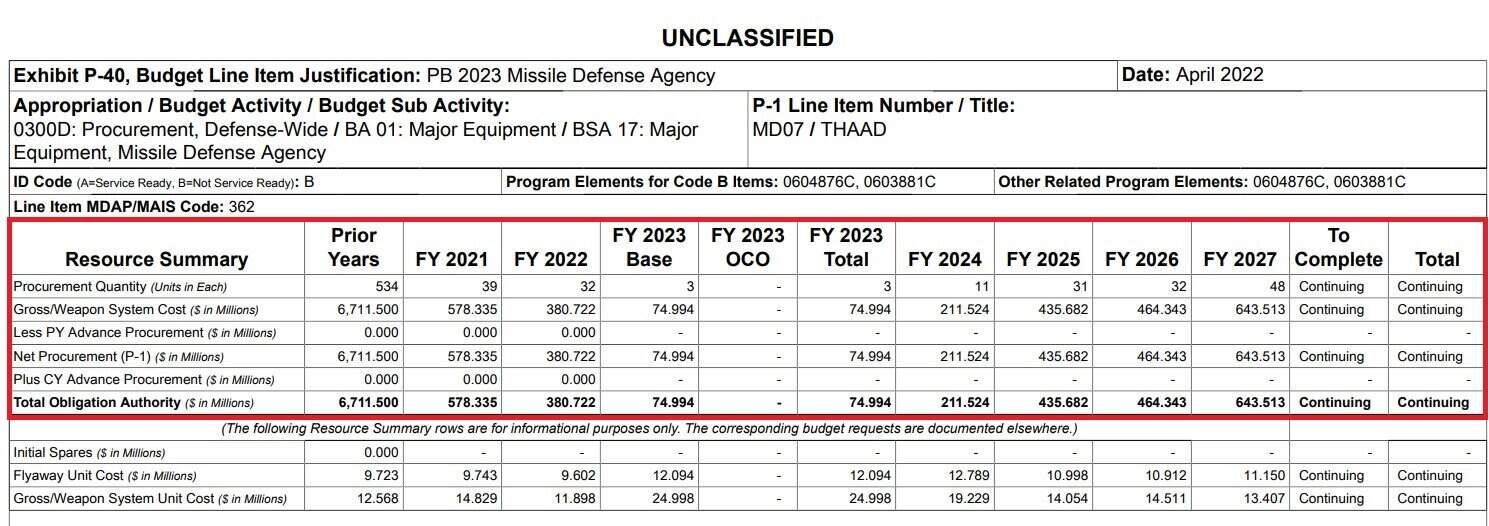
In fiscal year 2022, the number of procurements decreased to 32 units, corresponding to a total cost of $380.722 million, an average price of $11.898 million, and a flyaway unit cost of $9.602 million. In fiscal year 2023, orders dropped to 18 units, and in 2024 to 11, with a total cost of $216.782 million and the average unit price rising to a record $19.707 million.
In fiscal year 2025, the plan was to purchase 12 interceptors for $246.995 million, corresponding to an average cost of $20.583 million and a flyaway unit cost of $12.773 million. Finally, the budget request for fiscal year 2026 calls for 25 interceptors in the base request at $523.125 million, and with mandatory reconciliation, 37 interceptors at $840.1 million; MDA estimates the unit cost at $12.4 million for the entire procurement batch.
Naval systems
Standard Missile Series (SM-6 and SM-3)
The US Navy relies on the Standard Missile series manufactured by RTX (Raytheon) to provide multi-layered defense for carrier strike groups. A special place in this hierarchy is held by the SM-6 (Extended Range Active Missile)—a unique solution with no analogs in the US arsenal for its multifunctionality.
This missile is the only system capable of simultaneously performing air defense, anti-ship warfare, and ballistic missile interception tasks in the terminal phase of flight. Thanks to the integration of an active seeker and a powerful engine, the SM-6 provides fleet protection against the widest range of threats—from low-flying cruise missiles to high-speed ballistic targets.
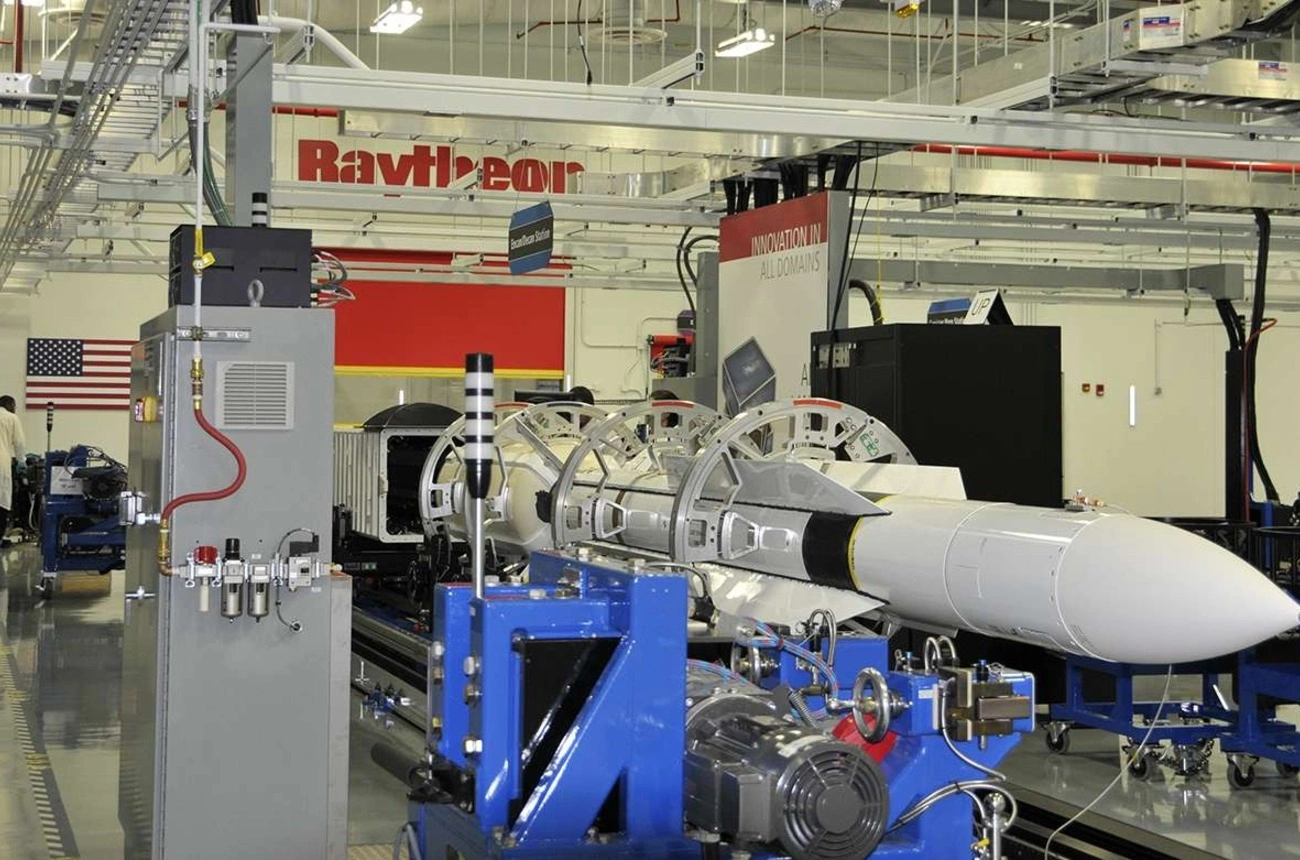
Due to critically low stockpiles resulting from intense combat operations in the Red Sea, the US Navy has adopted a “Buy-to-Budget” strategy to acquire as many missiles as possible within the allocated funding.
An analysis of the figures shows that in fiscal year 2024, 97 SM-6 missiles were actually purchased at a total cost of $1,503.7 million.
In 2025, orders fell to 78 missiles, with a total cost of $982.7 million; however, in the 2026 budget request, the Pentagon plans a jump to 139 units.

Due to the 2026 funding structure, the total amount is $1,262.5 million: 10 missiles are allocated under mandatory funding at $632.5 million, and another 129 under discretionary funding at $630.0 million.
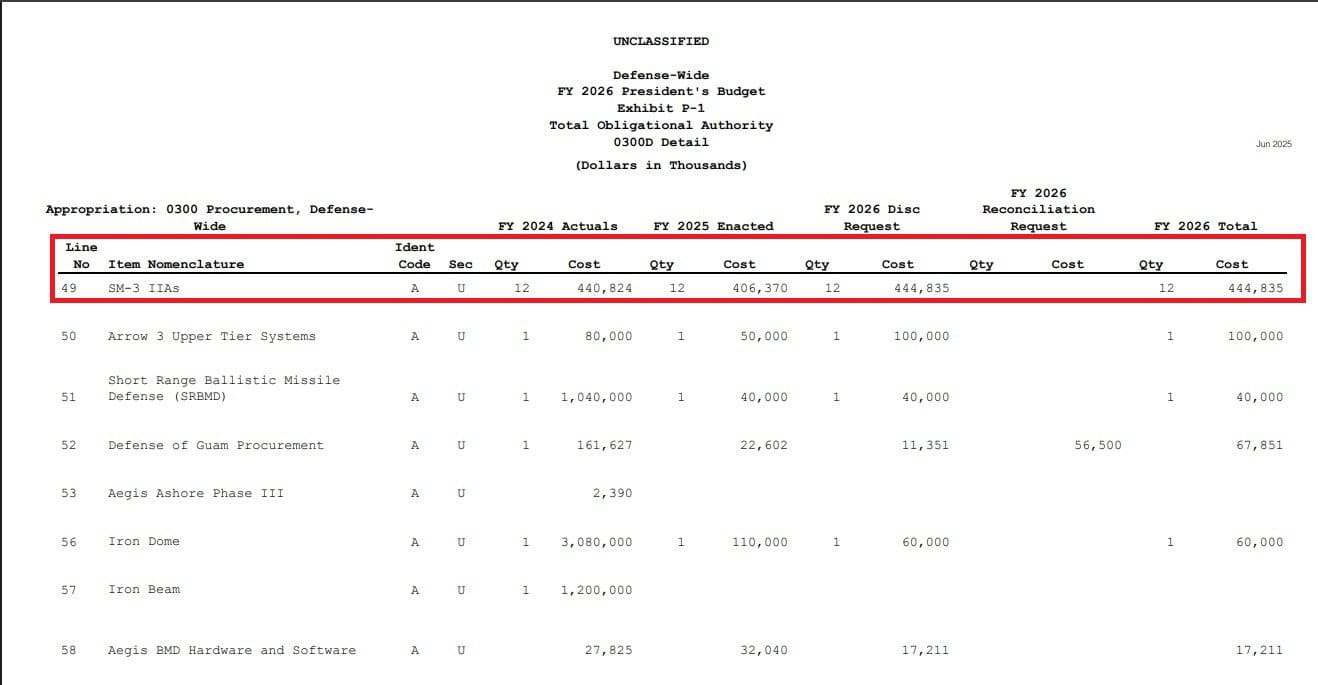
At the same time, an analysis of the figures shows that the SM-3 IIA program maintains a significantly more stable profile than the SM-6: in fiscal year 2024, the Pentagon’s budget documents listed 12 missiles at $440.8 million; in the approved budget for fiscal year 2025, there were also 12 missiles, but at $406.4 million, and the request for fiscal year 2026 again calls for 12 units at $444.8 million.
This indicates a continuation of serial production and maintenance of the baseline procurement rate rather than a large-scale increase in volumes.
However, the Pentagon and the Missile Defense Agency (MDA) are gradually increasing the production rate of SM-3 missiles. Budget documents and official reports from Raytheon show a clear breakdown of production volumes by specific variants.
The SM-3 Block IB model is typically produced at a rate of 3-4 units per month, which amounts to approximately 36–48 missiles per year.
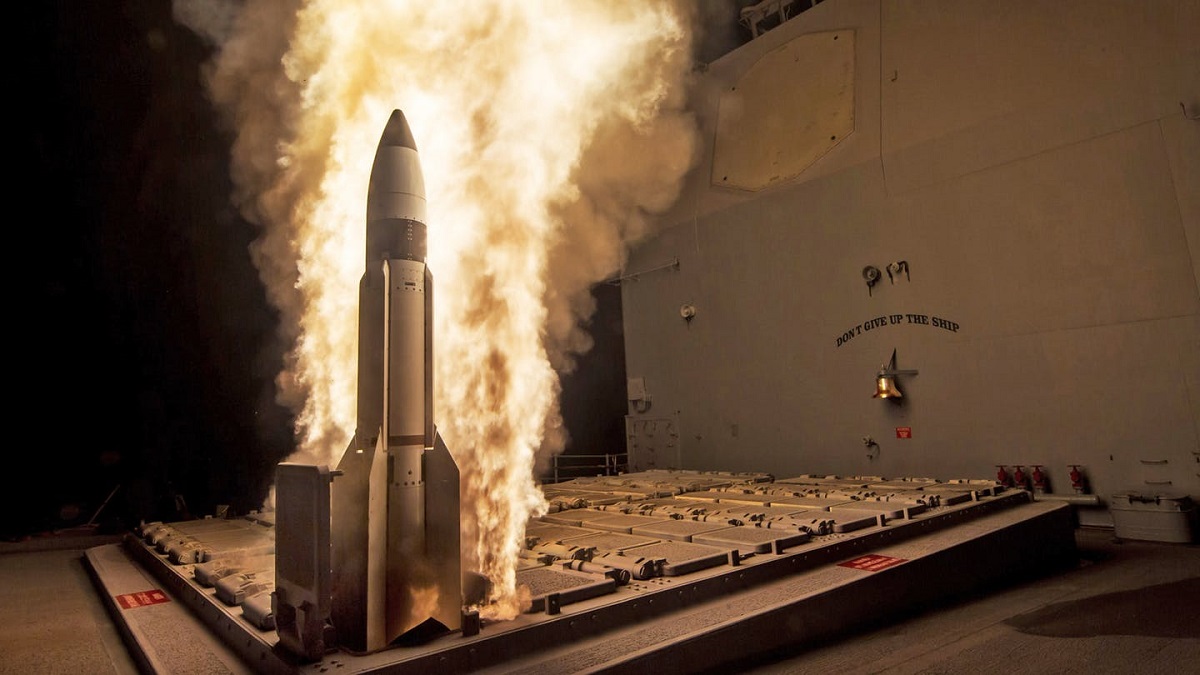
The line’s maximum capacity allows for the production of up to 60 such interceptors annually.
Production of the more complex SM-3 Block IIA variant remained at 2 units per month, or 24 missiles per year, for a long time.
In April 2026, the United States and Japan agreed on a large-scale expansion of these production capacities. The updated plan calls for a fourfold increase in SM-3 Block IIA production, bringing the annual output to 100 missiles.
Air-launched weapons
AIM-120
The AIM-120 AMRAAM missile has remained the primary means of engaging medium-range air targets for the US Air Force and Navy for decades. From 2020 to 2025, the program focused on introducing the most advanced variant, the AIM-120D, which offers increased range, improved navigation equipment, and updated data links.

The period from 2020 to 2025 is characterized by a gradual increase in order volumes, peaking in requests for fiscal years 2024 and 2025. In 2020, the AMRAAM program still relied heavily on mixed funding, including the base budget and Overseas Contingency Operations (OCO) funds.
For example, in fiscal year 2020, the Navy requested $224.5 million to purchase 169 missiles, with a significant portion of these funds allocated specifically through OCO to support operations in hotspots.
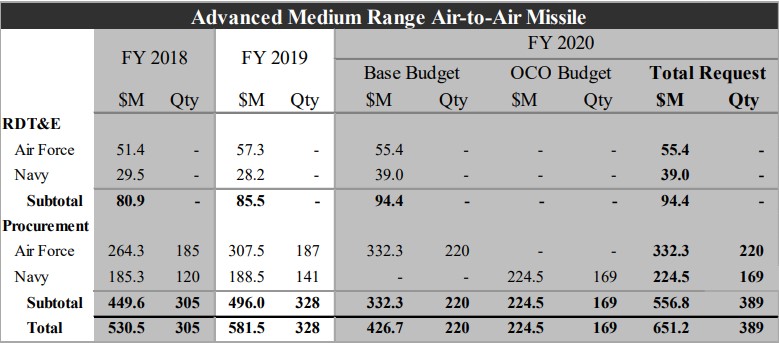
Funding trends for the program in previous years were as follows: in 2018, 305 units were actually purchased for $530.5 million (including $80.9 million for RDT&E—“research, development, testing, and evaluation”), and in 2019, 313 missiles worth $574.3 million were approved (of which $78.4 million was allocated to research). In 2020, the total request amounted to 389 units for $613.1 million, with the RDT&E share increasing to $89.6 million.
Throughout 2021 and 2022, the figures fluctuated: initially, 414 missiles were approved for the Air Force at a cost of $453.2 million, but subsequently, 395 units were procured at a cost of $482.2 million. Starting in 2023, volumes began to rise again—to 625 units for $773.4 million, reaching a request in 2024 for 831 missiles with a total value of $1,223.6 million (including $82.9 million for RDT&E).
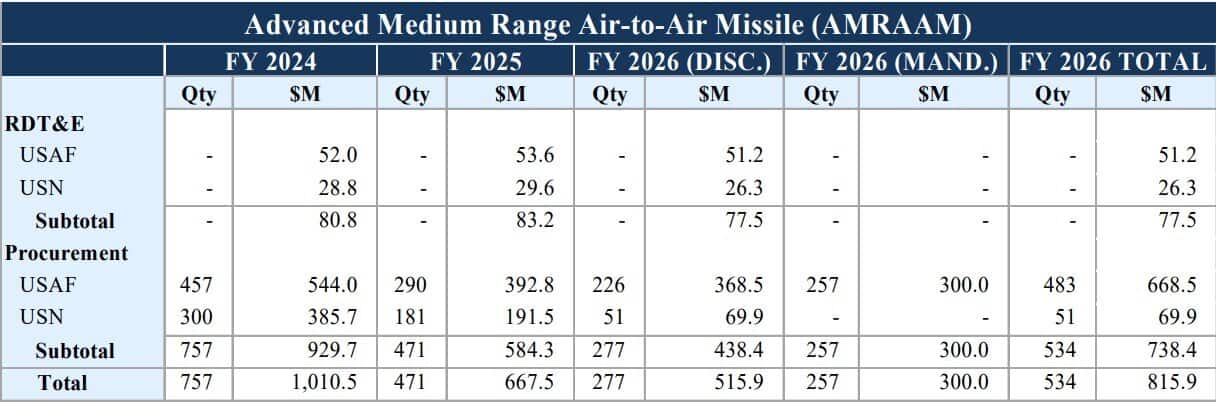
In fiscal year 2025, the Air Force’s request was for 723 units, totaling $810.2 million, of which $83.2 million was allocated to research and development.
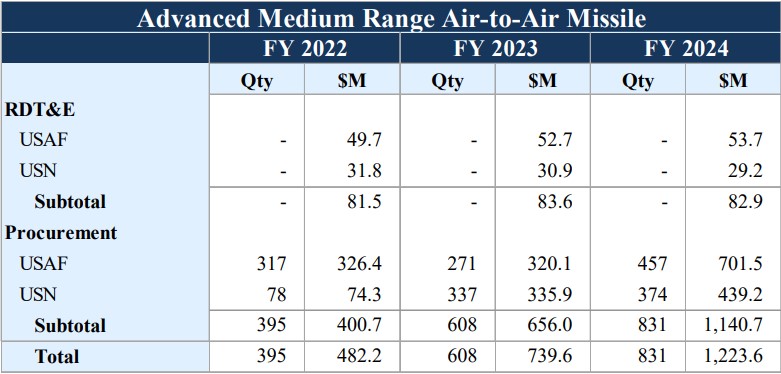
These figures indicate a significant increase in spending in 2024, when the funding request exceeded $1.2 billion. The increase is directly linked to the launch of the LLP pilot project, which included the AIM-120D among four critical guided-missile programs.
In 2025, the trend toward increasing volumes generally continued, but the structure of the request changed. According to budget documents, the total request for the Air Force was 723 missiles. However, publicly available materials do not confirm the breakdown of the base request and the additional funding through the reconciliation mechanism, in the form of 226 and 257 units, respectively.
An analysis of the unit cost of the AIM-120 missile requires distinguishing between the flyaway unit cost and the gross/weapon system unit cost, which includes spare parts, technical documentation, and support equipment.
We also recommend reading the author’s article on Militarnyi: “The AIM-120 Missile: Real Capabilities and Myths.”
As of 2019, the cost of the AIM-120D was estimated at approximately $1.095 million. By 2021, the Flyaway Unit Cost for the Air Force was about $959,000 per combat missile (AUR) and $526,000 per training missile (CATM).
However, the average price increased in 2024–2025. According to the 2025 budget plans, the average purchase price of a missile for the Air Force is approximately $1.38 million per unit. This price increase is due to several technical and economic factors.
First, the F3R modernization program, which involves redesigning the guidance section due to the obsolescence of Application Specific Integrated Circuits (ASICs), has led to significant R&D&E costs, which are then passed on to production units.
Second, integrating new capability packages under the System Improvement Program (SIP), such as SIP-3F and the upcoming SIP-4, requires ongoing investment in testing and coding.
In addition, the export component plays a significant role: the cost for foreign military sales (FMS) customers is higher, ranging from $2 million to $2.7 million per unit, as it includes more extensive support packages and development contributions.
AIM-9X
AIM-9X Sidewinder is the most modern iteration of the world’s most successful infrared-guided missile. Between 2020 and 2025, its role has transformed: from a purely airborne weapon, it has become a key component of ground-based air defense systems, notably NASAMS, and naval defense systems.
The AIM-9X program shows a steady order volume, although the number of units has declined slightly compared to the peak years of the previous decade, yielding priority to long-range missiles.

However, in 2025, a sharp increase in interest was recorded due to the need to replenish stocks and expand production lines.
The funding dynamics for the AIM-9X Sidewinder program in previous years were as follows: In 2018, 495 missiles were purchased for a total of $272 million, of which $70.4 million was allocated to RDT&E (“research, development, testing, and evaluation”), and $201.6 million directly to procurement. In 2019, the volume increased to 567 missiles with a total value of $320.1 million ($77.3 million for RDT&E and $242.8 million for procurement).
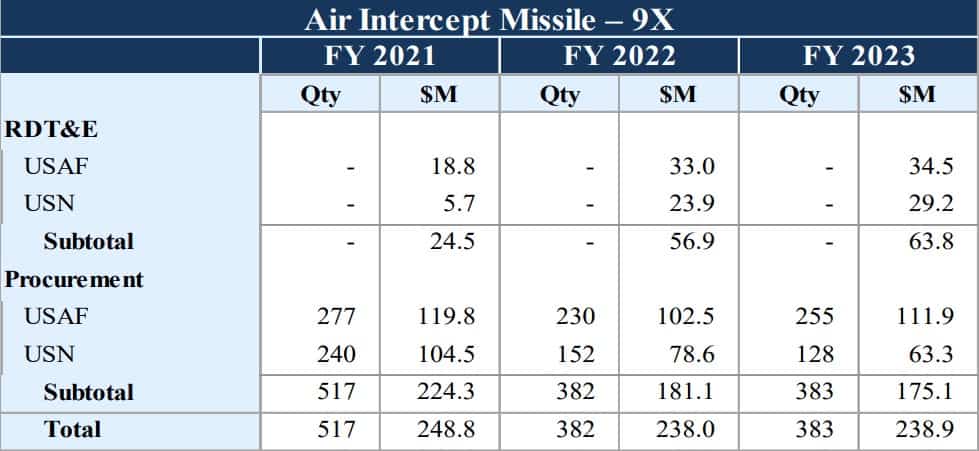
In 2020, the total request amounted to 647 missiles, valued at $309.7 million, of which $29.8 million was allocated to RDT&E and $279.9 million to procurement. The funding structure was divided between the base budget and OCO: in the base budget, the Air Force planned for 355 missiles worth $160.4 million, while through OCO, primarily for the Navy, an additional 292 missiles worth $119.5 million were allocated.
In 2021, 517 missiles were approved at a cost of $248.8 million. During 2022 and 2023, the figures stabilized: 382 missiles at $236.3 million and 383 missiles at $237.9 million, respectively.
We also recommend reading the author’s article on Militarnyi: “Venomous Rattlesnake: AIM-9 Sidewinder”.
In 2024, the request amounted to 339 missiles, valued at $252.2 million, of which $173.8 million was allocated to procurement and $78.4 million to RDT&E.
In fiscal year 2025, the volume of procurements increased to 362 missiles totaling $259.4 million.
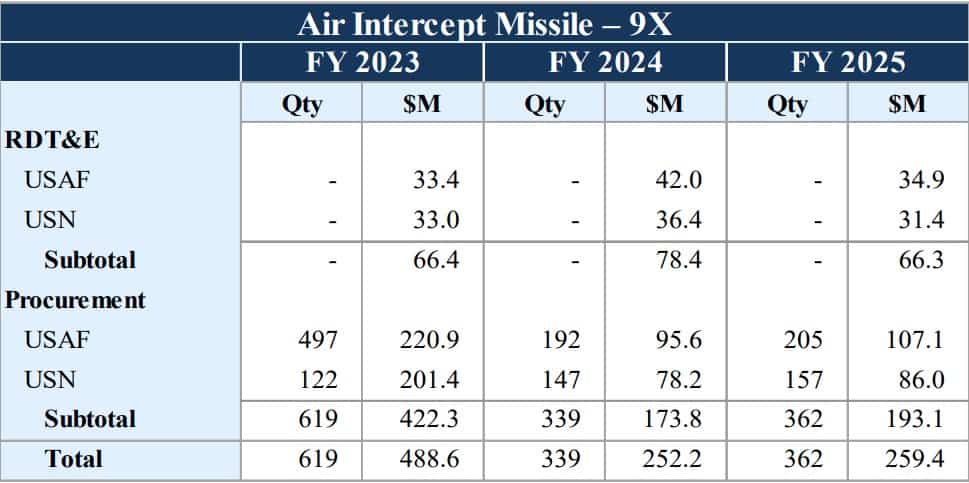
The cost of the Sidewinder remains significantly lower than that of the AMRAAM, making it the better choice for intercepting cruise missiles or UAVs, where the use of expensive long-range munitions would be economically unfeasible.
In fiscal year 2021, the purchase cost of a single AIM-9X missile for the Air Force was approximately $497,700, and in the 2024–2025 budget documents, the unit price (Flyaway) ranges from $500,000 to $550,000.
Key modifications during this period include the Block II version, which features an updated data link enabling “lock-on-after-launch” capability, and the Block II+, which includes updated components to address obsolescence. Also important is the SIP IV improvement program, which began in 2023 and focuses on modernizing sensors and electronics to counter threats after 2030.
Conclusion
In summary, it is worth noting that the United States and the US Department of Defense, despite having at their disposal capabilities from Raytheon Technologies, Lockheed Martin, Northrop Grumman, and other major defense contractors, are not ordering missiles in sufficient quantities to avoid shortages, even during local operations. There are currently no official explanations for this strategy.
At the same time, the Pentagon recognizes the need to scale up production and is attempting to rectify the situation, although the pace of this process remains uncertain.
On the other hand, given the high cost of modern missiles, it becomes clear that in conflicts such as the hostilities in the Middle East, where the US and Israel face the mass deployment of cheap Iranian drones, the air force does not need missiles costing over $1.5 million, but significantly cheaper weapons—roughly in the range of $5,000 to $100,000.
This problem concerns not only aviation but also ground-based air defense systems. In particular, for the MIM-104 Patriot system, PAC-3 missiles cost about $4 million per unit.
At the same time, the total cost of intercepting a single target, including logistics and operational expenses, can reach $5–10 million, making such systems economically inefficient against cheap drones.



RM-48U Missiles for the S-400 Cannot Be Launched Without Foreign Components: How Russia Depends on the West for Its New Ballistic Missiles
Russia continues to use RM-48U ballistic missiles against Ukraine, which are based on the 48N6 anti-aircraft missiles of the S-400 system. Analysis...


Washington Backs Syria’s Emergence as an Independent Actor in the Islamic World and Its Reintegration into the Western Sphere
On August 24, 2026, the United States revoked Syria's designation as a state sponsor of terrorism, a status the country had carried since 1979. The...

Visits by Senior Washington Officials to Moscow: The Factors Driving the Kremlin’s Rejection of the White House’s Proposals
In late August and early September 2026, three senior U.S. officials visited Moscow, marking a level of concentrated contact in U.S.-Russian relati...
