
Persistent Issues, Emerging Threats: Germany’s 45th Panzer Brigade and Hybrid Vulnerabilities in Lithuania

Lukas Šimonis




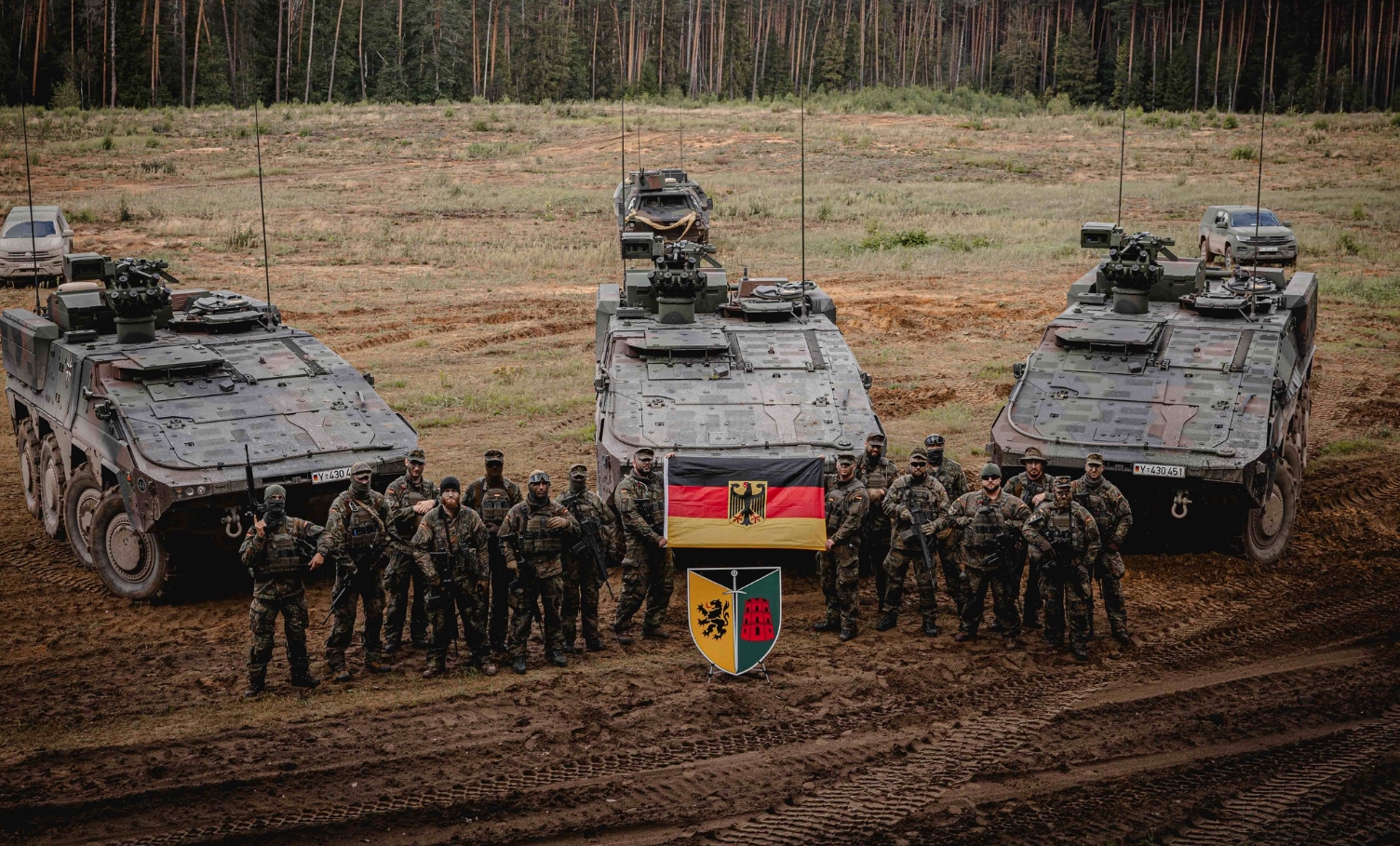
On December 2019, 2023, Germany and Lithuania signed an official agreement on a deployment of armored German brigade in Lithuania. This was a historic moment for both nations.
For Lithuania, it was a massive diplomatic and strategic achievement, securing ties with one of the Europe’s major powers, and bolstering security and deterrence in the wake of the Russian invasion of Ukraine. While a battalion strong German forces (Bundeswehr) operated in Lithuania as part of the NATO Enhanced forward presence, an armored brigade would take it to a next level.
For Germany, this was a historic change in foreign policy, a largest permanent deployment of German troops since the WW2. With this movie, Germany largely silenced critical voices that Europe’s major power was not doing enough for collective European security, especially on the critical Eastern flank.
The newly created brigade was promptly called the “45th Panzer Brigade” (also known in in Germany as “Lithuanian” brigade) and as the name suggests, will consist of more than 4800 troops with armored fighting vehicles, such as state-of-the-art Leopard 2a8 tanks or Puma infantry fighting vehicles. As mighty as it sounds, ahead of its full operational capacity in 2027, several overlooked issues linger. While there are many articles about the strength and capabilities of the 45th Brigade, fewer talk about the issues I am about to discuss in this article. These challenges concern primarily manpower, disinformation, and logistics, and must be addressed before the full deployment of the 45th brigade in 2027.
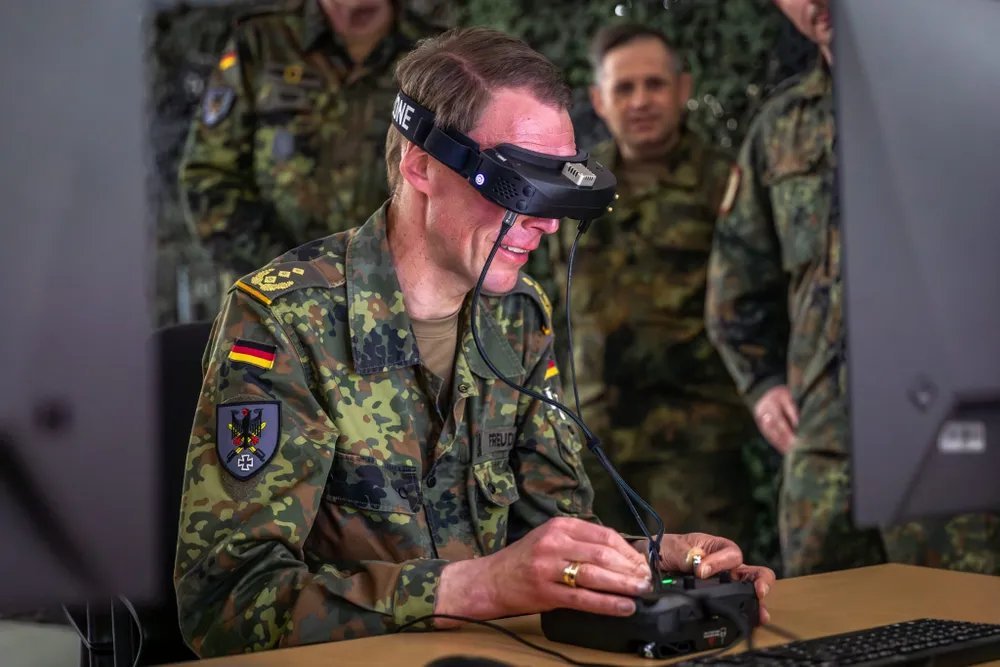
One of the main challenges faced by the Bundeswehr in not only deploying the 45th in Lithuania, but by rebuilding its Cold war era strength is manpower, or lack of thereof. While currently the Bundeswehr is around 185.000 strong, the army component (Heer) is made up of 64.000 soldiers. Recognizing that such numbers are not enough, Germany had presented an ambitious plan to increase its armed forces to 460.000 combat-ready personnel by 2035. However, recruitment is going slowly, and Bundeswehr is struggling with retaining recruits, for as much as 20 percent drop out during the initial training.
This problem persists in troop deployment to Lithuania as well. So far, only around 10 percent of needed soldiers have volunteered to serve in Lithuania. If incentives such as financial bonuses fail, German military might be forced to make the assignments to mandatory, further straining troop morale. Nevertheless, Boris Pistorius, the German minister of defense claims that the brigade will be fully operational in time. To be fair, Germany is not the only country facing problems with recruitment, but with the great on NATO’s eastern border growing stronger, this issue needs to be solved, and fast.
There are several ways to tackle this issue, both short term and long term. In short term, Germany should continue increasing financial and other incentives to the troops, to make not only deployment to Lithuania attractive, but thee soldier profession in general. This, however, will only work in short term, and is unlikely to attract best specialists, especially in critically important fields, such as air defense or cybersecurity, for people with education and experience can easily find a better paying and overall easier civilian jobs.
Thus, tackling recruitment issue long term will require unpopular, but much needed decision of reintroducing mandatory military service. The Parliament of Germany (Bundestag) has already passed the Military Service Modernization Act, under which, all 18-year-old men will be required to fill a questionnaire about their suitability and motivation for military service, and starting 2027, all men born after 2008 will be required to undergo medical evaluation. Now, this law is aimed at making voluntary military service more attractive, but, if it is necessary, Bundestag can pass a law that will make military service compulsory. While draft of all military aged men is not needed (and is too much of a burden), limited military service is necessary. In traditional, Cold war German fashion, mandatory service would allow to build a large reserve force in Germany, while best troops would be free to serve on the NATO’s Eastern flank.
It is important to point out two things about the conscription though. One, while the German government has mentioned that it can make military service compulsory “on demand” in the times of need, that would likely not work. Germany is infamous for slow and complicated bureaucracy and political decision making; thus, such an important law would not be passed quickly or lightly, given immense societal and political pressure. And even when (or if) it happens, it will take at least several years before first conscripts will start their service, and several more years before a combat-ready reserve will be built. And time is not on our side. Therefore, mandatory service act must be passed way before actual need arises.
Secondly, both the German public and German servicemen must be taught that such preparations are made in order to avoid war, not to get ready to fight in it. It is understandable, given current geopolitical situation, that average fighting age male or a soldier in Germany is cautious about military service, especially on the NATO Eastern flank, but as the old saying goes, Si vis pacem, para bellum – if you want peace, prepare for war.
In other words, conscription is needed to avoid having to fight the war in the first place.
There is no way to sugarcoat the fact that Russia has been waging an informational war upon European countries for more than a decade. Bot farms spreading disinformation about the Russian invasion of Ukraine, NATO support for Ukraine, interfering with election processes in various European countries and so on. The purpose of it is to sow division in targeted countries, undermine Ukrainian war effort, turn public support against important defense projects and elect pro-Russian politicians in power.
Recent example of such disinformation campaign was directed against Kapčiamiestis project in Lithuania. The Lithuanian government, as part of its military buildup, has decided to build a training ground near the town of Kapčiamiestis, close to Lithuania’s southern border with Poland, at the very heart of Suwalki corridor, a key area in defending Lithuania. The reason why I mention this, is because the project became a target for Russian disinformation campaign, aimed at riling up not only the natives of Kapčiamiestis, but the better part of Lithuanian population, in attempt to shut it down. Troll farms were creating groups and fake accounts on Facebook to incite nationwide unrest against the Kapčiamiestis project. These groups and accounts were spreading fake news and repeating usual Kremlin narratives about the “warmongering NATO” and “Lithuania provoking Russia”. However, due to swift interference of the Lithuanian authorities, the spread of disinformation was contained, and the project itself passed voting phase in the Lithuanian parliament.
Now, the disinformation campaign against Kapčiamiestis training ground was only a small part of the larger Kremlin led effort to sabotage defense projects in Lithuania and Europe in general. The reason why it is important is because the imminent arrival of the 45th brigade will be (and already is) a subject to a similar informational warfare campaign. Pro-Kremlin groups repeat narratives about “occupation of Lithuania”, going as far as comparing it to Nazi occupation of Lithuania, or creating fake news about crimes committed by German soldiers, such as murder or rape of civilians. Given the German history, it is a very sensitive topic.
While the absolute majority of Lithuanians do support German brigade deployment to Lithuania, these (mostly online) groups remain. Unfortunately, with arrival of such a large force (almost 5000 soldiers), the risk of accidents and provocations increases substantially. It is of utmost importance that ordinary German soldiers and officers must be taught, that Russian propaganda will look for any, however small opportunities to discredit NATO and German military as whole and will try to provoke them.
Germans must understand that they will be “under the magnifying glass”. Any real incident or crime committed by German troops, blown out of proportion by social media disinformation might end up as a political fallout in both Lithuania and Germany, and a massive propaganda victory for Russia. The Bundeswehr must not underestimate this threat and understand that victories in propaganda/information war are as important as victories gained in battlefield and can often lead to victory or defeat even before bullets start flying.
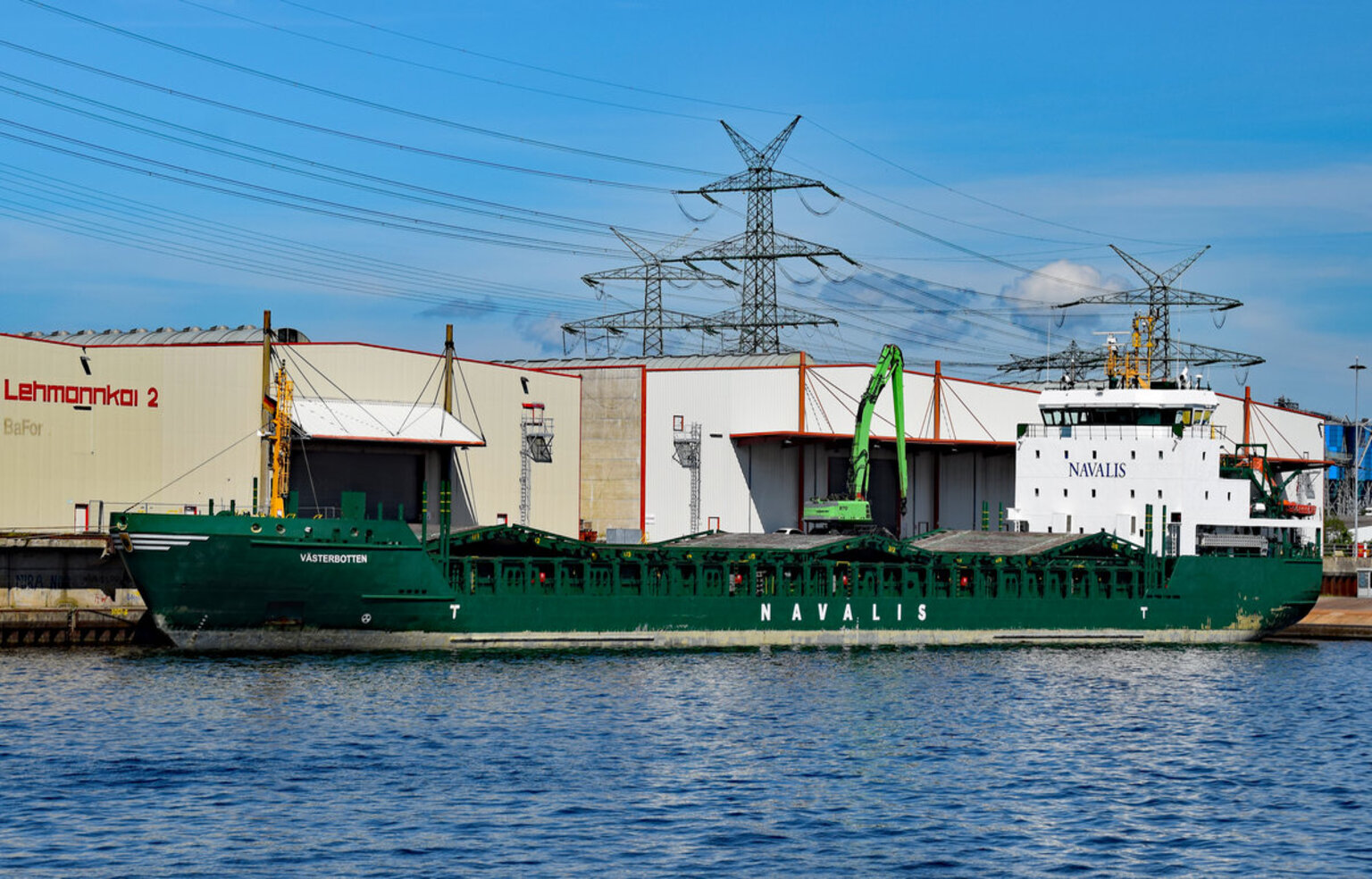
Omar N. Bradley, a 5-star US Army WW2 General, has said that “Amateurs study tactics; professionals study logistics”. Deploying large volumes of troops and equipment to Lithuania requires an efficient logistics and supply hubs in both Germany and Lithuania. Lithuania is building an entire military town for German troops and their families, and other necessary infrastructure. While building the supply chains from Germany to Lithuania poses a challenge on its own, there is a key element to logistics that is often overlooked, especially in the peacetime. And that is security.
To provide the 45th brigade with troops and equipment, Germany must create secure supply corridors to Lithuania. While this is seemingly simple, we must look into factors that affect security. After the Russian invasion of Ukraine in 2022, Russia began waging a sabotage campaign all over Europe, targeting defense facilities, factories, critical infrastructure. These attacks are often carried out by local Russian collaborators, recruited through social media or messaging apps. While these collaborators often employ crude methods, and are unsuccessful, they can still do damage, especially when it comes to logistics.

Last November, saboteurs blew up a railway track in Poland. In January, unknown individuals damaged railroad tracks in Germany Using these simple methods, Russia can significantly hinder troop and material deployment to NATO’s Eastern flank even in peace time, without triggering NATO article 5.
The very nature of these attacks, employing civilians from vulnerable groups, such as Russian foreign diaspora, ideologically aligned groups or just people looking to make quick money makes such attacks extremely unpredictable and hard to stop. Worse of all, Russian intelligence groups often use teenagers recruited through social media to carry out sabotage or spying operations. This not only radicalizes youth but puts them in significant danger as well. While the danger of sabotage always existed, nowadays, through the power of internet and social media, these attacks can be carried out quickly, unpredictably, and at a minimal cost to the organizer. And truth to be told, no matter how much we educate our societies, there will always be someone willing to commit sabotage for quick cash, or worse, or ideological purposes.
This problem can be tackled in several ways. Firstly, Lithuania and Germany must rapidly increase railway security, through camera and drone surveillance, physical barriers and cybersecurity, especially at key transport hubs. Such measures would deter most amateur saboteurs employed by Russian intelligence, requiring more sophisticated, costly and riskier operations. Secondly, German military command, while planning their operations (even in peacetime) must consider possibilities of such incidents and supply shortages caused by it. While it is unlikely that sabotage will considerably delay the arrival of the German brigade to Lithuania, Russia will nonetheless continue to look into any possibility to undermine the full operational capability of the 45th brigade.
To summarize, Germany is preparing for the largest permanent deployment of troops since the WW2, by sending almost 5000 strong 45th Panzer brigade to Lithuania. While it is undoubtedly a much-needed deterrence measure, it comes with challenges unique to the current geopolitical climate. From lack of manpower to informational warfare against NATO forces and sabotage campaigns in Europe. All of this requires Germany and Lithuania to act swiftly and decisively, and not to be afraid of taking necessary, albeit unpopular decisions, such as passing mandatory military service.
While Russia is unable to stop the 45th brigade from deploying to Lithuania altogether, it will undoubtedly seek to exploit any opportunity slow down, discredit or otherwise hinder its capabilities.
It is of utmost importance to understand that being aware of unconventional threats, such as disinformation or sabotage, is as important as air defense or armor. The German military must not ignore this and build up capability to respond not only to conventional warfare, but to afore mentioned threats.



Visits by Senior Washington Officials to Moscow: The Factors Driving the Kremlin’s Rejection of the White House’s Proposals
In late August and early September 2026, three senior U.S. officials visited Moscow, marking a level of concentrated contact in U.S.-Russian relati...

A Sharp Shift in the Dynamics of Global Confrontation Forces Washington to Rethink How It Builds Its Key Partnerships
On September 12–13, 2026, the 18th BRICS Summit was held in New Delhi. Xi Jinping traveled to India to lead the Chinese delegation, marking his fir...
