King Charles III’s Visit to Washington: U.S. Big Tech vs. the Core Centers of Global Capital

Solid Info








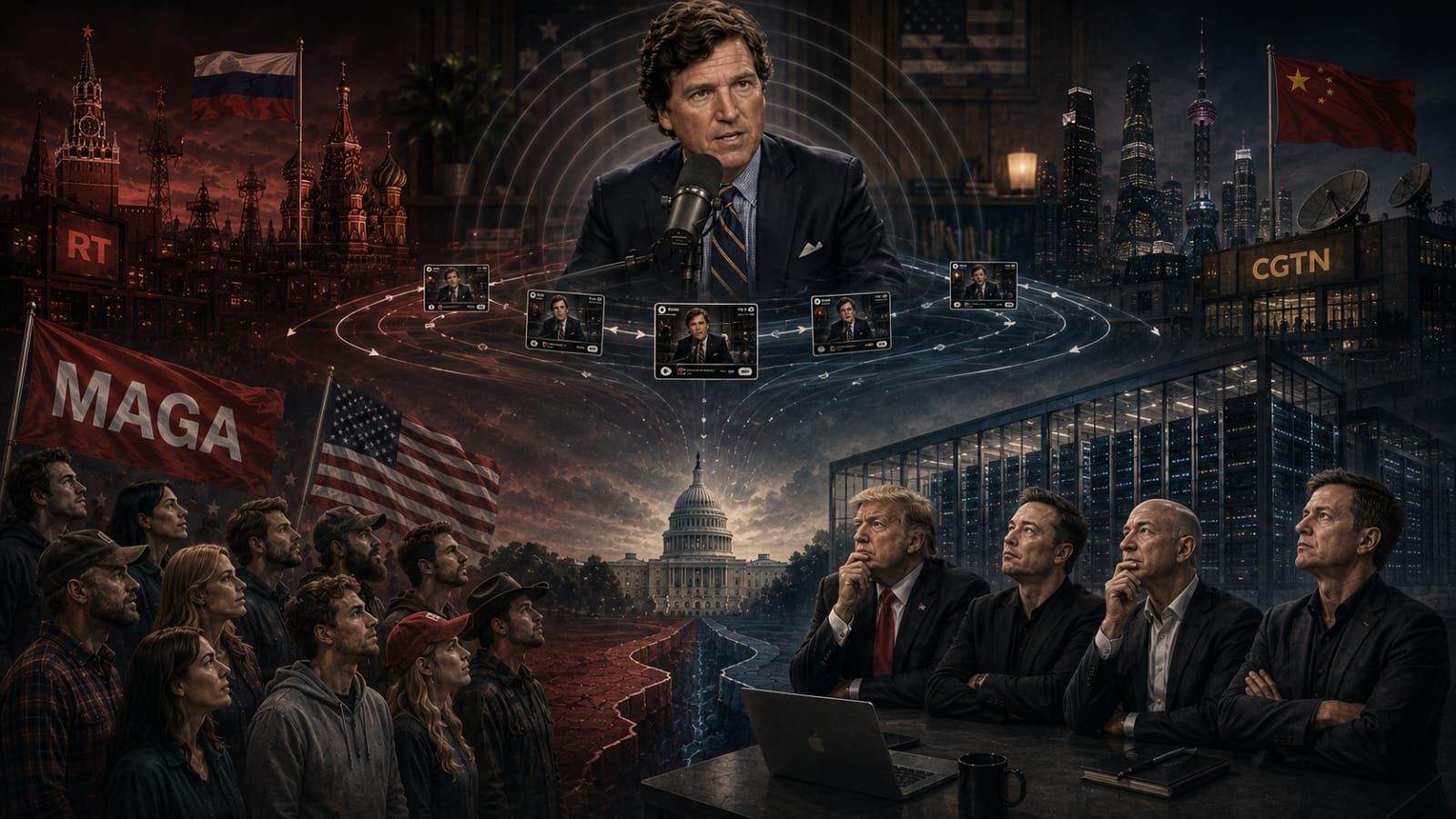
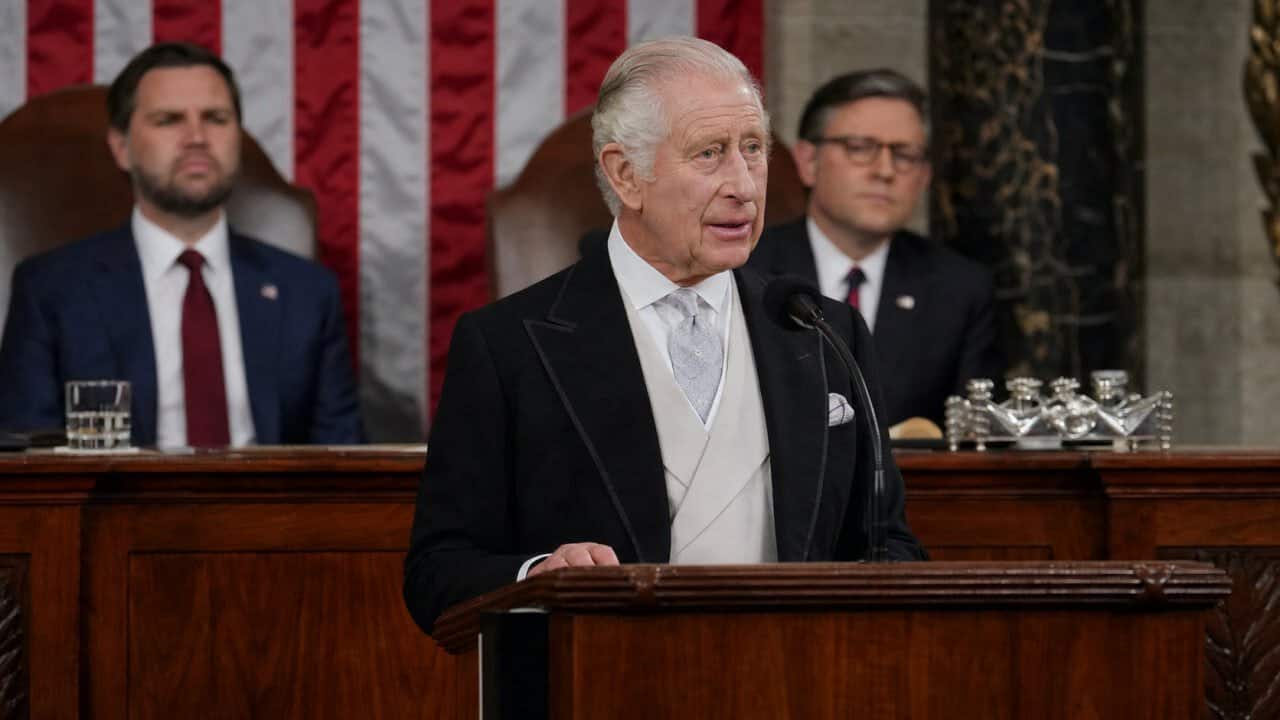
From April 27 to 30, 2026, King Charles III made the first state visit by a British monarch to the United States in nearly two decades. The very fact of the trip amounted to a public acknowledgment that the rift inside the Western world has reached a level at which ignoring it is no longer tenable. The fault line runs not between democracy and autocracy, but between the new technological capital of Silicon Valley and “old money” — the traditional global transatlantic elite that has formed over centuries around the British monarchy, the aristocracy, and the financial institutions of the City of London. In his speech at the White House state dinner, the King emphasized that he represents not only the United Kingdom but also the community of fifteen Commonwealth realms of which he is the head of state — a symbolic figure who embodies this broader community as a whole.
Charles III remains essentially the only figure in the democratic world with whom President Trump engages with respect and as an equal, since Trump himself seeks to put his own family on a par with aristocracy and to build his own dynastic brand. The King’s address to Congress was a public manifestation of the presence and weight of the classical transatlantic community, directed at the bipartisan portion of the American political establishment that remains committed to a rules-based world order. The thunderous applause underscored just how many such adherents remain on Capitol Hill, and it came against the backdrop of the deepest crisis in Anglo-American relations in seventy years — a crisis driven by a clash between two elite factions of the Western world holding fundamentally different views on the future of the global financial and economic order.
The first of these factions is the new Big Tech elite of the United States, which through the mid-2020s operated within the global financial-regulatory system without sufficient leverage to reshape its terms. With the outcome of the 2024 election, they gained direct access to decision-making in the White House, cementing their role as the political voice of the high-tech business sector.
The second faction, represented by King Charles, is part of the classical transatlantic elite anchored in the City of London — a separate jurisdiction with its own governance structures and direct influence over British political processes. This community spans a network of financial and legal institutions that has developed on both sides of the Atlantic over decades. It encompasses Lloyd’s of London and the British insurance syndicates; HSBC, Standard Chartered, Barclays, and Lloyds Banking Group; the Magic Circle law firms; the trade and livery associations of the City; the New York giants JPMorgan and Goldman Sachs; and the world’s three largest asset managers — BlackRock, Vanguard, and State Street.
Together, these institutions manage assets of unprecedented scale. Assets under management at the world’s 500 largest players exceed $150 trillion, of which North American funds hold more than $95 trillion and the British asset-management industry holds roughly $14 trillion. Asset managers in the United States and Britain together control more than 70 percent of the world’s managed capital.
Beyond financial infrastructure, the classical transatlantic community also rests on the traditional institutions that have provided its legitimacy for centuries. A week before the King’s visit, the Pope met with the new Archbishop of Canterbury, the first woman to hold the office. Charles III remains the Supreme Governor of the Church of England, so the Pope’s gesture was directed precisely at the figure of the monarch. The exchange demonstrated mutual recognition by the West’s two largest Christian denominations of their shared responsibility for preserving the institutional foundation of European civilization.
At the same time, the dismissive attitude of the U.S. President and his inner circle toward the Pope and the Vatican stands in sharp contrast to the demonstration of unity between the Vatican and the Church of England — a contrast that only deepens the determination of the transatlantic elite to consolidate its symbolic and institutional resources in the face of the Big Tech challenge.
In the concentration of these resources, the City retains an advantage that Big Tech cannot quickly replicate. Brexit and the COVID-19 pandemic did not prove ruinous for the City, despite forecasts of capital flight to Frankfurt, Paris, and Dublin. Its economic weight remains substantial: in 2024, Britain’s financial sector generated 224 billion pounds sterling. London retains the lead in seven of the twelve key segments of international finance — more than 50 percent of global trading in over-the-counter derivatives, more than 45 percent of the specialty insurance market, and roughly 38 percent of foreign-exchange derivatives.
Beyond financial instruments, the City’s edge extends into the legal and institutional dimensions. In January 2026, London topped the Global Power City Index for the fourteenth consecutive year, reflecting its standing as a leading global financial center. English law is the standard for the vast majority of international maritime contracts and for charter and ship-insurance agreements; more broadly, it governs roughly 40 percent of global corporate arbitrations and M&A transactions, regardless of the parties’ jurisdictions.
This concentration of financial, legal, and institutional instruments makes the City a conduit through which capital has circulated for decades across the world’s leading industries. Data centers, the defense industry, and infrastructure projects are sustained by the long-horizon capital infrastructure of the City of London. Big Tech capital today also flows through this same infrastructure, generating fees for British financial intermediaries. On every dollar earned from technological innovation, layers of global financial instruments accumulate — and these instruments multiply their own returns at the expense of the value created by the new economy.
Big Tech regards this arrangement as an unfair redistribution of value in favor of the financial infrastructure of the transnational elite, and it is now seeking to extract its own capital from this system and redirect it onto its own platforms. To that end, the tech magnates are pushing for the deregulation of financial markets, the legalization of stablecoins as a payment instrument, and lower transparency requirements for technology platforms.
Of all the fronts in the confrontation between Big Tech and transnational financial groups, the sharpest collision of the two models is taking place around the unit of account in the digital economy of the future. Big Tech is promoting stablecoins and digital tokens as the basis for settlements between software algorithms that execute financial transactions without human involvement. The spread of these instruments erodes the central banks’ monopoly on issuance and shrinks the base on which the British model of financial-instrument regulation has been built.
The Bank of England responded with a concrete regulatory requirement, obliging stablecoin operators to hold 40 percent of their assets at the Bank of England without earning interest. This converts a stablecoin into a regulated instrument inside the British jurisdiction and is designed to limit any capacity to build a parallel settlement system outside it.
The Bank of England’s actions are part of a broader regulatory front through which British institutions are restraining U.S. tech corporations’ access to the domestic market. The Digital Markets, Competition and Consumers Act of 2024 granted the Competition and Markets Authority (CMA) the power to curb the market dominance of the largest technology companies.
In October 2025, Apple and Google were designated as having Strategic Market Status, and on April 1, 2026, the CMA imposed obligations on Apple to open iOS to third-party payment systems and to bar the use of user data for training artificial intelligence without consent. The CMA is also conducting major antitrust investigations against the cloud arms of Microsoft and Amazon, whose combined share of the British compute-infrastructure market runs between 70 and 90 percent.
Joining this regulatory front are the Crown Estate Commissioners — the body that manages the assets of the Crown and that requires data-center operators to pay rent for seabed rights. American corporations are pressing for priority connection to the British power grid for AI infrastructure, but the United Kingdom’s energy strategy denies any such priority, citing green-energy obligations and the need to ensure even supply across consumers. The CMA, the Bank of England, and the Crown Estate are jointly turning Britain into a market in which Big Tech corporations are forced to operate under rules shaped beyond their reach.
British regulatory standards have ceased to be external constraints to be factored in by Big Tech and have instead become obstacles that this group is seeking to remove through political leverage.
The voices of this group include Elon Musk, Peter Thiel, Marc Andreessen, Ben Horowitz, and other visionaries of the new American technological economy, who view the traditional financial elite as a parasitic component of today’s economic model.
Their tool for influencing British politics is funding political allies inside the United Kingdom. In January 2026, Nigel Farage’s right-populist Reform UK party announced it would accept donations through the crypto platform Radom — a company traceable directly to the network of American techno-oligarchs supporting the Trump administration.
Radom co-founder Marielle Yonnadam previously worked at Faire, a startup backed by Peter Thiel’s Founders Fund. Whereas the City has historically been tied to the Conservative Party through figures such as Kemi Badenoch and the Institute of Blockchain, Reform UK is functioning as the political channel of American Big Tech. Similar processes are unfolding across Europe, where U.S. tech magnates are advancing political platforms aligned with their interests.
Alongside this dimension of influence, the Big Tech elite has consistently backed the Trump administration’s course of dismantling international institutions, drawing down U.S. forces from European bases, pressuring NATO’s structure, and deregulating the financial sector. The withdrawal of 5,000 American service members from Germany, announced shortly after King Charles’s visit, is read in London as a deliberate move to weaken the security perimeter that underwrites the safety of the classical “safe havens” for global capital.
The mechanism of destabilization is built on creating conditions in which autocratic states will read the rupture of transatlantic unity as an open window for aggression. A reduced American presence in Europe and the weakening of NATO guarantees send Moscow a signal of Western disunity that is highly likely to be read in the Kremlin as grounds for a military operation on the alliance’s eastern flank. A Russian assault on Europe would shatter the perception of the continent as a protected jurisdiction for global capital and would force major asset holders to seek security guarantees that traditional financial centers can no longer provide.
It is precisely at this moment of escalation in the global confrontation that the Big Tech elite is positioning digital infrastructure as the only environment that maintains functionality regardless of regional turbulence — turning every new crisis in Europe into an argument for its own model. The strategic calculation is that each new crisis erodes confidence in the classical global system and intensifies the pressure on capital to migrate to digital infrastructure.
Argentina as a Test Bed for the Big Tech Model
In parallel with destabilizing the classical centers of capital, the Big Tech elite needed territorial proof that a state model built on minimal regulatory constraints and transactional relations between government and business can function at the scale of an entire country. That proof has come in the form of Argentina under President Javier Milei, who took office in late 2023.
In 2024, the newly elected President met with the heads of Google, Apple, Meta, and OpenAI, shifting the relationship into a format of direct dealings between the President and platform CEOs. In April 2026, Peter Thiel arrived in Buenos Aires; in October 2025, OpenAI announced the construction of a $25 billion data center in Patagonia. Investment commitments at the “Argentina Week” series of meetings in March 2026 exceeded $16 billion, and projected foreign direct investment for 2026–2028 stands at $42 billion.
Beyond the inflow of capital, Big Tech is gaining access in Argentina to critical resources. As one of the three countries holding the world’s largest lithium reserves, Argentina has opened its subsoil without the environmental and social constraints typical of British and European regulators. A successful outcome of this transformation will be presented by the U.S. tech elite as an argument for analogous changes inside the United States after the 2028 elections.
Argentine leadership escalated its rhetoric on the Falklands in 2025–2026: President Milei publicly stated that the Malvinas Islands — as Argentina refers to the Falklands — “were, are, and will always be Argentine.” The Trump administration has weakened its public support for British sovereignty over the islands. This is not about a real military threat — both sides understand that no armed clash is on the horizon. The Falklands storyline functions as a positioning signal for the two camps in the global contest.
The White House’s readiness to revisit a diplomatic stance built up over decades as part of the transatlantic consensus shows that no element of the classical international architecture remains untouchable in the new configuration of power.
This signal carries concrete financial consequences that reach far beyond the question of sovereignty over the Falklands.
According to the Federal Reserve, Cayman Islands hedge funds purchased roughly 37 percent of net new issuance of medium- and long-term U.S. Treasury securities over the period 2022–2024 and held about $1.85 trillion at the end of 2024 — equivalent to the combined purchases of all other foreign investors. The Cayman Islands hosts more than 30,000 investment funds with a combined AUM of approximately $16 trillion, including vehicles tied to Robinhood Markets Ltd. and a range of SPAC entities.
The Cayman Islands is a British Overseas Territory, just like the Falklands. Any softening by the White House of diplomatic support for British sovereignty over one such island territory creates a precedent that calls into question the stability of the entire network of British overseas jurisdictions. In response to that signal, capital holders will begin reassessing the risks of placing assets in the British offshore network.
Chinese Capital as a Lever for Preserving the Balance
In response to this multidimensional assault by Big Tech on its own financial-institutional architecture, the classical transatlantic community has activated a strategic lever that, until 2025, did not extend beyond expert circles. That lever is Chinese capital, which has developed for decades within the British system of financial, investment, and trade rules.
The City is demonstratively keeping a Chinese presence inside its regulated environment as leverage in negotiations with the White House — negotiations whose stakes turn on whether Big Tech will be permitted to rewrite those rules unilaterally. Chinese corporations list securities on London exchanges, raise financing through British markets, and execute deals under English law.
Since 2006, Chinese companies have been listing on the London Stock Exchange’s Alternative Investment Market, and the Shanghai-London Stock Connect, established in 2019, has allowed PRC corporations to tap British capital. In 2014, the People’s Bank of China issued the first offshore renminbi bonds denominated in pounds sterling; in 2026, the Industrial and Commercial Bank of China signed a memorandum on expanding cross-border yuan operations through London.
The approach of Chinese banks and corporations reflects a pragmatic calculation in Beijing: rules built on jurisdictional stability and the open movement of capital provide Chinese business with a competitive environment. The British model structures the market and limits political uncertainty, which makes it acceptable to Beijing even given the restrictions on access to strategic sectors.
By contrast, the Big Tech model envisions sweeping deregulation and unconstrained competition without institutional limits — and for Chinese corporations, that approach generates greater risks than the regulatory barriers of the financial-network model, since at the core of those new rules sit, first and foremost, the interests of the Big Tech elite itself.
The acceptability of the British model does not mean that China is an unconditional ally of the classical transatlantic community. On every dollar earned by Chinese corporations, layers of British-American financial intermediation accumulate, through which transnational financial groups extract their margin from China’s growth.
Beijing has its own ambitions for an alternative reserve currency and is advancing the digital yuan project, yet at this stage it has chosen to exploit the gaps in the existing system rather than accelerate the construction of an alternative.
The logic of stoking regional conflicts is partly advantageous to Beijing as well — each new crisis sets capital in motion, and China captures part of that flow through jurisdictions removed from the epicenters. The Russian-Ukrainian war became an illustration of this mechanism, as the Chinese economy gained access to Russian resources at depressed prices and expanded its presence in financial formats outside the dollar system. Analysts characterize Beijing’s position as one of interest in seeing globalism, as a model, fade out gradually — long enough for China to consolidate the resources needed to build its own alternative.
London’s pragmatic approach to China comes with a complicated historical backdrop. British policy toward China is historically burdened by the legacy of the Opium Wars and other episodes of colonial confrontation, which Beijing keeps in its historical narrative as a case of the humiliation of Chinese sovereignty by Western powers. Despite that legacy, at a moment of deteriorating political relations with Washington, the British government granted China a parcel of land in the heart of London for a new embassy — a substantial building that is becoming a platform for showcasing China’s weight in global politics.
This gesture conveys the message to Beijing that Britain recognizes China as a partner and is prepared to ensure China’s visibility in its own political space, despite historical grievances. It signals that British capital views preserving a Chinese presence inside the regulated system as a more advantageous outcome than backing the Big Tech effort to rewrite the rules altogether.
This stance aligns with the views of part of the British political establishment. As Chancellor of the Exchequer, George Osborne spoke of the need for a “golden decade” in relations with China, and under his stewardship the City’s integration with Chinese financial markets deepened.
After the end of his term, David Cameron became co-chair of the UK-China Fund. Both cases demonstrated that, for various groups within the British elite, preserving a stable rules-based system with a Chinese presence inside it is a more acceptable trajectory than a transition to an order in which the rules are set by the owners of the digital infrastructure.
The Trump administration, by contrast, is consistently walking away from commitments that defined the U.S.-British partnership for decades, in order to force a rewrite of the global financial system’s rules — the very rules under which Chinese capital has been expanding its footprint. London’s response is the demonstrative preservation of a Chinese presence within the regulated model — a signal to the White House that the full displacement of Chinese capital is not achievable, and that any attempt to force it will only accelerate the formation of parallel financial-economic formats outside American influence.
At the same time, internal discussions within the PRC leadership over a negotiated settlement of the Taiwan crisis — activated on the eve of Trump’s May 2026 visit to China — have revealed a willingness on the part of some of the Communist Party to accept partial compromises with the United States.
While the Five Eyes intelligence partnership, AUKUS cooperation, and joint military projects within NATO retain sufficient stability, security interdependence no longer defines the character of economic interaction between the two countries at the level that existed before Big Tech achieved standing as an independent center of influence over American foreign and trade policy.
It was to this transformed dimension of the relationship that King Charles’s address to Congress on April 28, 2026, was directed. The speech moved beyond the bounds of ceremonial protocol and served a different purpose than reminding the audience of the sheer material scale of the classical transatlantic community.
The King represented a force that, while it controls more than 70 percent of the world’s managed capital through a network of financial, legal, insurance, and religious institutions, derives its principal weight not from the size of that capital. This community rests, first and foremost, on a value foundation that has historically distinguished it from other economic models in the world.
Evidence of this came in one of the King’s central messages, addressed to Congress and through it to the American people — a call for shared responsibility for safeguarding the planet and its natural environment. The call may seem unexpected against the backdrop of more pressing threats to global stability, yet it is precisely a marker of the ethical framework of the community the King represents. Wielding global resources, the members of this community recognize their own responsibility before the planet and the generations that will come after them. Big Tech is not in a position to quickly replicate either the institutional network of the classical transatlantic community or the value foundation that has sustained its moral authority for centuries.
This publication is the result of a partnership between MILITARNYI and SOLID INFO. An extended version is available on the website of the analytical center.







China Launches a Scheduled Container Service Through the Arctic: Moscow and Beijing Push a Distorted Picture of the Far North’s Potential
The northern route between Asia and Europe has scheduled container service for the first time. On August 12, 2026, the container ship Istanbul Brid...