
Gewehr 3 and Gewehr 36: How German Rifles Performed on Front Lines
Andrii Sukharov



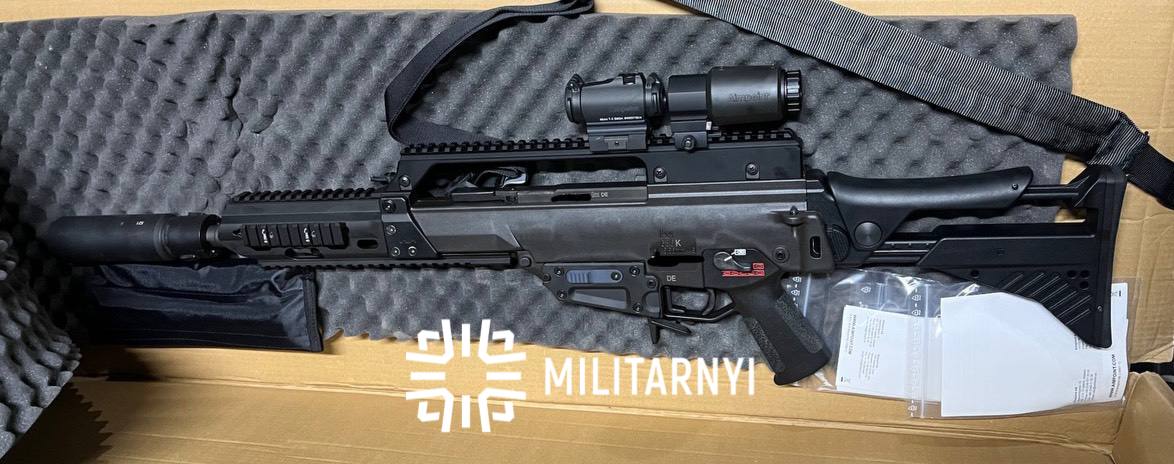
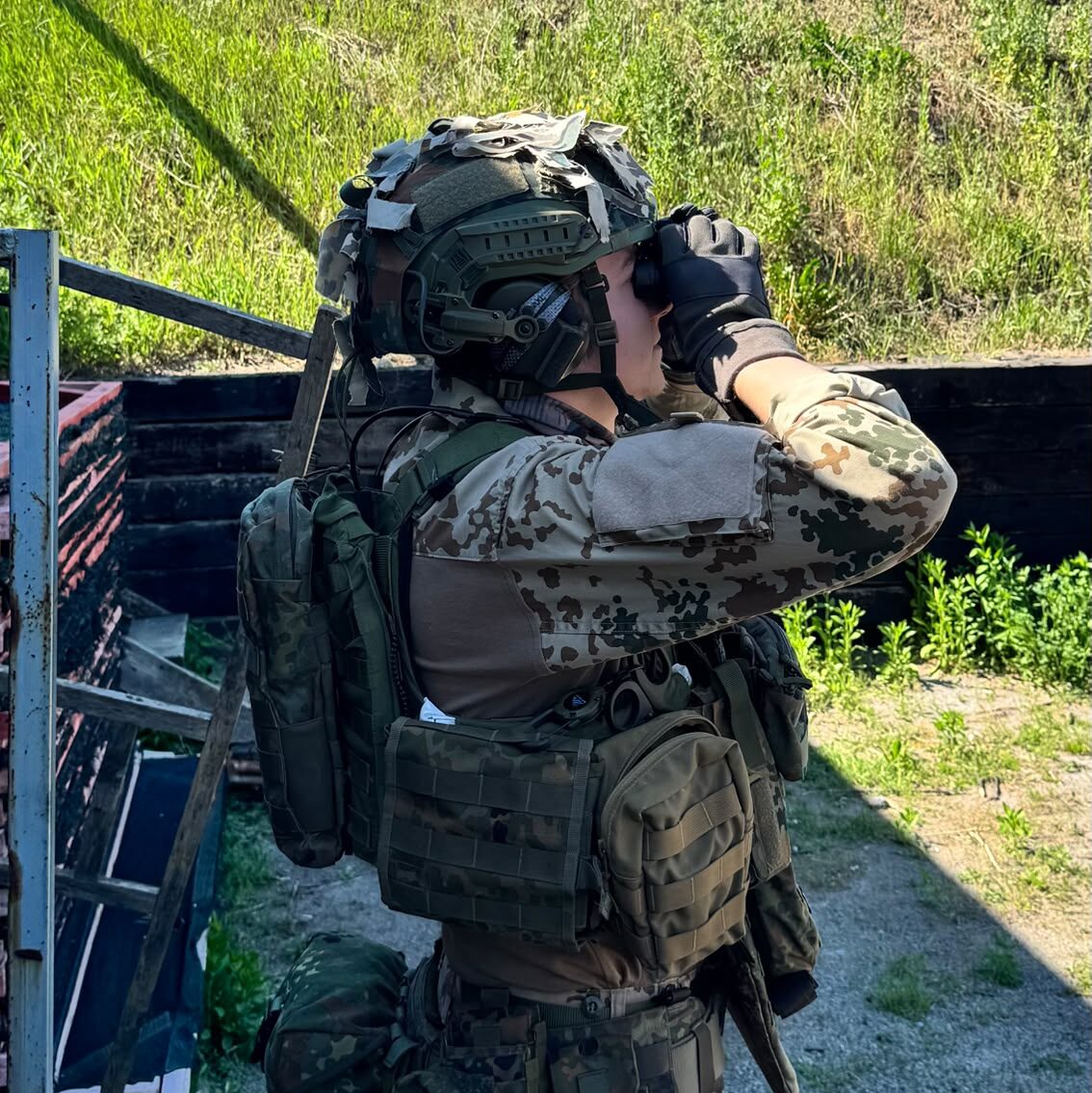
Among the small arms that Germany has provided to Ukraine as part of its military aid are Heckler & Koch G3 assault rifles. Ukrainian troops also use rifles from the G36 family.
Militarnyi spoke with Ukrainian soldiers who have experience using the G3 and G36 to find out how these German rifles are performing in Ukrainian conditions.
Gewehr 3
The Heckler & Koch G3 is a German automatic rifle chambered for the 7.62×51 mm NATO cartridge.
Its design is based on a development by German engineers, which was continued in Spain after World War II. The CETME rifle was created based on this work. Germany acquired a license to manufacture it, after which Heckler & Koch adapted the design for the 7.62×51 mm NATO cartridge.
In 1959, the G3 was adopted by the Bundeswehr, where it became the standard infantry rifle.
The rifle saw widespread use outside of Germany. It was manufactured under license in countries including Greece, Mexico, Norway, Pakistan, Portugal, Saudi Arabia, Sweden, and Turkey. In total, the G3 was used by the armed forces of more than 50 countries.
In Germany, the G3 was later replaced by a new rifle chambered for the less powerful 5.56×45 mm cartridge—the G36.
In 2025, Germany officially included 3,769 G3 rifles in its list of military aid to Ukraine.

One of the servicemen of the National Guard of Ukraine, who has experience using the G3, notes its greater weight compared to assault rifles of the AK family.
“It’s heavier than the AK. Overall, the rifle is suitable for marksmanship and defensive tasks. It’s cumbersome to operate inside buildings. In terms of firepower, the rifle is excellent,” said the National Guard servicemember.
According to the servicemember, the G3 is well-suited for tasks where its firepower characteristics are important, particularly for marksmanship and defensive tasks.
At the same time, the rifle’s greater weight and size can cause difficulties when operating in confined spaces.
Gewehr 36
The Heckler & Koch G36 was developed as the successor to the G3. After the end of the Cold War, the Bundeswehr needed a lighter rifle chambered for the standard NATO 5.56×45 mm cartridge.
Polymer materials were extensively used in the G36’s design, which reduced its weight compared to the G3. The rifle also features a modular design and several variants, including the G36K and G36C.
The G36 was adopted by the Bundeswehr in 1997. It became the standard individual weapon for German military personnel and remained so for nearly three decades.
In addition to Germany, the G36 is used or has been used by the armed forces of other countries. Among its major military users, Heckler & Koch specifically mentions Spain, Lithuania, and Latvia.
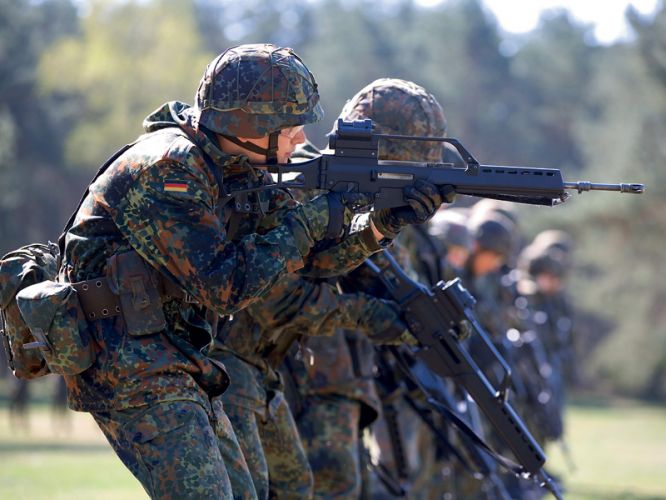
The G36 has also become widespread among special operations and law enforcement units in various countries.
In the Bundeswehr, the G36 is currently being phased out and replaced with the new G95 rifle. The first G95s began to be issued to German troops in December 2025.
The Ukrainian military uses, in particular, the G36K and G36C variants.
According to one servicemember with experience using the G36, the rifle has a number of shortcomings, primarily related to ergonomics. At the same time, he considers it sufficiently reliable provided it is properly maintained.
“It’s quite reliable if you take good care of it regularly. I can’t say anything bad about its shooting performance. It’s quite pleasant in that regard,” the soldier told “Militarnyi.”
The soldier cites ergonomics as one of the drawbacks. According to him, the G36K feels quite bulky, especially when using a silencer. Regarding the G36C, he specifically notes the stock design.
The soldier also had to get used to the cocking handle. He says it takes some getting used to in order to operate it quickly while wearing gloves. At the same time, its ambidextrous design is an advantage—it doesn’t require any adjustments depending on the shooter’s handedness.
A separate comment concerns the fire-selector switch. According to the soldier, it looks unreliable, although he cannot recall any instances of it breaking during use.
Despite the large number of plastic parts, he has not experienced any serious malfunctions with the G36 in his experience.
G36 in Ukrainian conditions
According to the soldier, the G36 generally performs well under Ukrainian conditions.
“There are issues in clay-rich terrain, but this applies to all firearms in principle. Where the soil is drier, everything works fine as long as the barrel is properly maintained,” he noted.
The soldier also gave a positive assessment of the configuration of the G36K he received. He said that along with the rifle, he received everything necessary for combat, including a laser designator.
Magazines remain a separate issue. The G36 is designed to use its own proprietary magazines, but soldiers adapt the weapon to use standard STANAG magazines.
According to the soldier, they installed special STANAG-compatible magazine wells on the G36K, so the compatibility issue can be resolved with the appropriate modifications.
Another modernization option is replacing the top rail. According to the soldier, a shorter rail, designed for the sight, makes it easier to operate the cocking handle.
Two rifles from different generations
The G3 and G36 were developed as the Bundeswehr’s primary rifles during different periods. The former was adopted in 1959, and the latter in 1997.
They also represent different concepts in small arms design. The G3 uses the 7.62×51 mm NATO cartridge and is heavier, while the G36 is chambered for the 5.56×45 mm NATO cartridge and was designed as a lighter and more modern replacement for the G3.
According to feedback from Ukrainian military personnel, the G3 performs well in combat and is suitable for marksmanship and defensive tasks, but its weight and size create difficulties in confined spaces. The G36, in turn, is regarded as a sufficiently reliable weapon, though with a number of ergonomic concerns.
Thus, both German rifles, designed for different generations of the Bundeswehr, are now gaining new combat experience amid the Russo-Ukrainian war.


Xi Jinping’s Washington Visit Outlines the Timeframe for the Active Phase of the Confrontation: Beijing Openly Demands Taiwan’s Return
On September 23–25, 2026, Chinese President Xi Jinping held talks with President Trump at the White House during the first Chinese state visit to t...

A Sharp Shift in the Dynamics of Global Confrontation Forces Washington to Rethink How It Builds Its Key Partnerships
On September 12–13, 2026, the 18th BRICS Summit was held in New Delhi. Xi Jinping traveled to India to lead the Chinese delegation, marking his fir...

Netanyahu’s Visit to Abu Dhabi: Israel Builds Partnerships from a Position of Strength, but the Middle East Conflict Is Eroding the Edge of Its Weapons
On September 27, 2026, Israeli Prime Minister Benjamin Netanyahu traveled to Abu Dhabi with the head of Mossad and the head of the National Securit...
