
A Change of Government in the United Kingdom: Britain’s Establishment Moves Preemptively to Preserve the Union and the Sovereignty of Its Political System

Solid Info








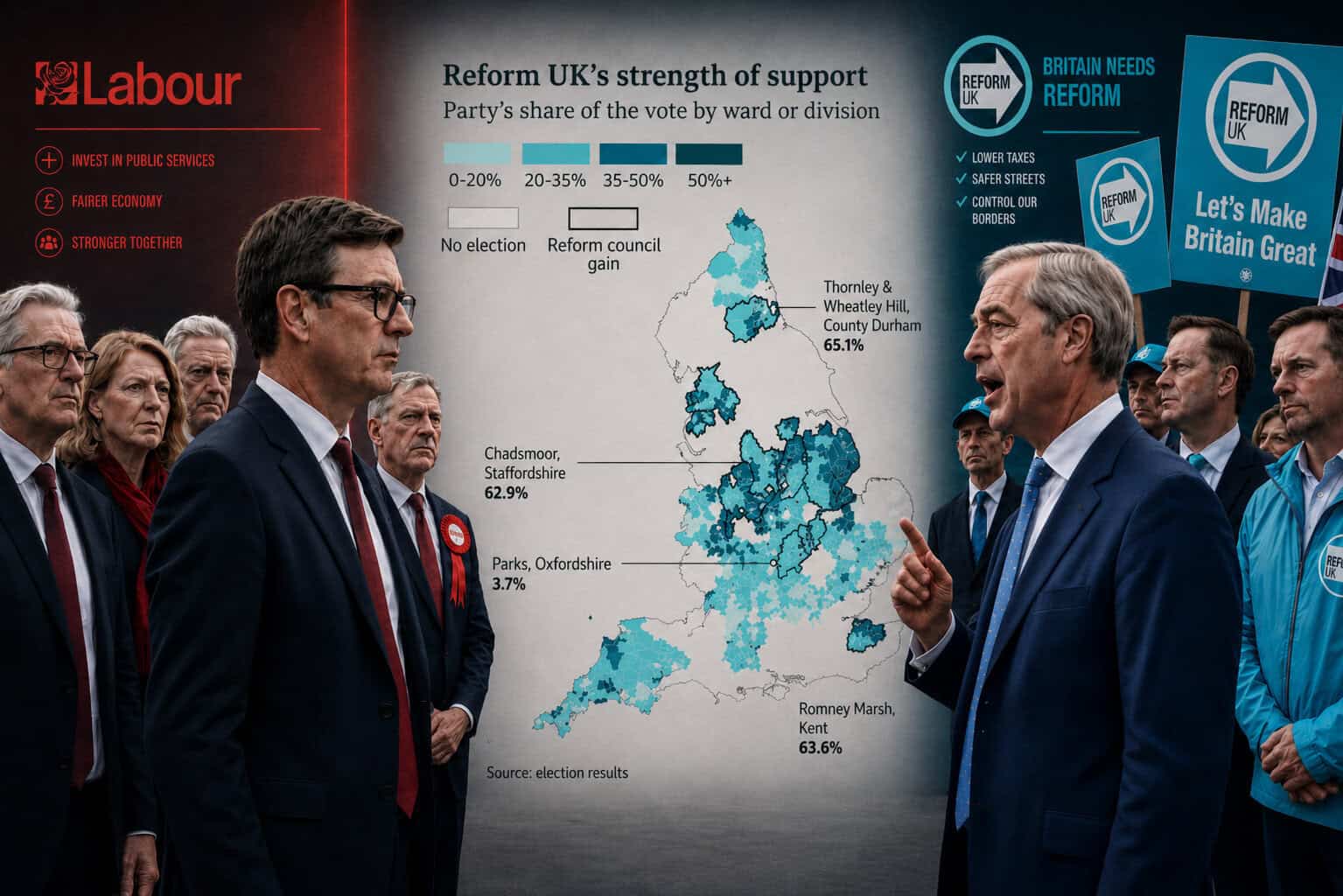
The fall of UK Prime Minister Keir Starmer’s government on June 22, 2026 was Britain’s Establishment responding to a challenge without precedent in the country’s history. The change of government was preemptive in nature, the consequence of the electoral catastrophe that preceded it.
In the local elections of May 7, 2026, combined support for the two traditional parties—Labour and the Conservatives—fell to 35% of the National Equivalent Vote (NEV), an all-time low, while Nigel Farage’s Reform UK, with 27%, overtook both for the first time.
For decades the British two-party system rested on the alternation of the Conservatives and Labour: a defeat for one meant power for the other, but both remained systemic players and kept the rules of the game unchanged. The Establishment’s stability rested on this cyclicality, because what was lost in one electoral cycle could be won back in the next. Reform UK’s arrival in power breaks that rule, carrying the risk of changing the very fundamental rules by which the traditional elites exist.
Keir Starmer will remain prime minister until power is handed to his successor. A new Labour leader must be chosen no later than August 29, 2026. The frontrunner for the premiership is Greater Manchester Mayor Andy Burnham, who returned to the House of Commons in the by-election of June 18, 2026 and is campaigning on stronger public control of critical infrastructure and tougher regulation of Big Tech.
The traditional parties have no effective answers to the challenges facing British society. Labour’s defeat is above all structural, because Britons’ real incomes are stagnating while the cost of living rises at an outpacing rate, eroding trust in the government regardless of its political rhetoric.
Over the past five years food prices have risen 38.6%, adding more than £1,300 a year to the average household’s grocery bill—an increase that previously took thirteen years. By contrast, according to the Joseph Rowntree Foundation, drawing on Office for Budget Responsibility forecasts, the average real household income after housing costs will rise by just £40 over the entire parliamentary cycle, from April 2024 to April 2029.
The Office for Budget Responsibility forecasts real wage growth of just 0.5% a year on average between 2025 and 2029. Projections show that, after April 2026, the incomes of British citizens are set to fall by a further £580 over three years.
This translates directly into voter dissatisfaction with the government’s performance. As of January 2026, 85% of Britons judged the government to be handling the cost of living badly—the worst reading since YouGov began tracking the question in late 2022.
Among the country’s top concerns, the cost of living ranked first at 54%, followed by immigration at 49% and access to healthcare at 43%. It is on these issues that Nigel Farage’s Reform UK builds its support, offering voters simple answers to high prices, to the pressure migration places on the labor market and public services, and to a sense of lost control.
Economic insecurity is the chief driver of voter defection, which explains the simultaneous outflow of votes to Reform UK, the Liberal Democrats, and the Greens.
American Big Tech is exploiting British voters’ discontent, treating the crisis of confidence in the traditional parties as a lever against the old money of the City of London, whose regulatory policy restricts the spread of American digital products.
For decades Big Tech’s capital has circulated through the City’s long-established financial system, and onto every dollar earned from innovation British intermediaries layered instruments that multiplied their own profit.
The problem for Big Tech is that this money settles with the classic financial Establishment, which favors tougher regulation of the technology sector. In this way the corporations use their own capital to strengthen those who seek to constrain them—which is precisely what drives their push to weaken the traditional elites.
American tech capital converts the political fallout of the UK crisis into political resources of its own by financing far-right groups and Reform UK, and by promoting the party’s agenda on the information platforms it controls.
The change of government was therefore a preemptive step, an attempt to seize the initiative before the discontent could harden into a Farage victory in a general election.
Big Tech’s support both for the right-wing populists of Reform UK and for separatist movements in the devolved regions of Scotland, Wales, and Northern Ireland strikes at British stability from two sides at once.
Although the right-wing leader Nigel Farage is a committed unionist who seeks to prevent the breakup of the United Kingdom, the stronger his party grows, the more separatist sentiment on the periphery intensifies. This same dynamic is also exploited by the City of London’s opponents in the United States.
American Big Tech Destabilizes Northern Ireland
Big Tech’s actions are felt most acutely in the deepening fragmentation of Britain’s domestic politics. The escalation of internal conflicts in the devolved regions creates the risk of a rewrite of the state’s very constitutional architecture.
After the 2026 elections, the Scottish National Party under John Swinney formed a government for a fifth consecutive term, while in Wales Plaid Cymru overtook Welsh Labour for the first time, pushing it into third place.
At the same time, Reform UK was strengthening its positions in the devolved regions by appealing to the defense of the United Kingdom’s unity. As a result, London faces two opposing trends at once—the rise of regional nationalism and the strengthening of British right-wing populism—which further complicates governing the state.
These processes have been sharpest in Northern Ireland. The Belfast riots of the summer of 2026 were a continuation of the wave of digital radicalization that began to take shape during the British riots of 2024, after the Southport tragedy.
At that time Elon Musk published dozens of posts that together drew more than 1.2 billion views, and one of his comments about the “inevitability of civil war” became one of the most widely cited messages of the period.
According to Amnesty International, anti-Muslim content spread far faster at the time than material debunking the false information.
In September 2025 Musk also addressed, by video link, a mass far-right rally in London, and during the Belfast riots the Center for Countering Digital Hate documented that his account substantially boosted the reach of Tommy Robinson’s anti-immigration content.
The algorithms of the major platforms are capable of significantly accelerating the radicalization of conflicts, as confirmed by a separate Sky News investigation that, on the basis of an analysis of roughly 90,000 posts, found a disproportionate promotion of far-right content regardless of users’ political leanings.
This is why British state institutions increasingly view the regulation of digital platforms as a tool of internal security. Herein lies the fundamental difference between the approaches of London and Silicon Valley: the technology companies appeal to the broadest possible interpretation of free speech, whereas the British state increasingly links digital regulation to the prevention of political destabilization.
Farage opposes Northern Irish separatists and seeks to renegotiate the terms of the 1998 Good Friday Agreement, not to destroy the union.
Scotland, Wales, and Northern Ireland have their own legislatures with varying scopes of authority, and in Northern Ireland the constitutional question is already open, since First Minister Michelle O’Neill has called for preparations for a referendum on Irish unification by 2030.
The consequences of this destabilization extend well beyond the information sphere. A poll by European Movement Ireland recorded record support for Irish unification on both sides of the border, which lends O’Neill’s call real political weight.
The British government’s options are therefore severely limited, because—in order to preserve the Good Friday Agreement and avoid a new customs crisis in the Irish Sea—London is compelled to continue aligning its regulatory rules with the European Union.
At the same time, that course diverges ever more from the American model of digital-economy deregulation and creates new frictions in relations between London and Washington.
The United Kingdom’s political destabilization coincides with a rethinking of the U.S. role in European security. Washington increasingly views its allies as an instrument in its rivalry with China, which puts additional pressure on traditional political models in Europe.
In parallel, at the institutional level, the conflict between European regulators and Big Tech is deepening—above all over the Digital Services Act and the Digital Markets Act, antitrust investigations, and control over infrastructure.
Burnham’s Nomination as an Attempt to Recover Lost Ground Before the 2029 General Election
The change of prime minister was an attempt to stabilize the situation before the next election and to offer voters a leader capable of winning back support for the party.
Burnham’s nomination reflects Labour’s reorientation toward a politician who combines a socioeconomic agenda with a tougher stance on Big Tech.
Unlike Starmer, who was losing support in the traditional industrial regions, Burnham—over nine years as Mayor of Greater Manchester—built a reputation as an effective administrator focused on the concerns of local communities.
The Conflict Between the City of London and American Big Tech Over British Regulatory Sovereignty
The change of government was a logical continuation of the British Establishment’s course toward strengthening state control over the digital economy, following King Charles III’s state visit to Washington on April 27–30, 2026.
During a reception at Blair House, the King held separate meetings with Silicon Valley leaders, among them Amazon founder Jeff Bezos, Nvidia CEO Jensen Huang, and the heads of Apple, Google, and Salesforce. Alongside discussion of funding for technology startups, the King stressed the need for regulatory safeguards around the development of artificial intelligence.
Because the monarchy holds no executive powers, this position required a continuation at the level of government, and Burnham’s nomination moves the defense of regulatory sovereignty from the symbolic level into practical policy.
This shift is occurring amid a deepening conflict between two models of development in the Western world. On one side stands the Big Tech of Silicon Valley, which pushes the large-scale digitalization of finance, the development of stablecoins, and the minimization of state regulation. On the other, the City of London remains one of the world’s key centers of the classic financial system and has an interest in preserving regulatory control over the movement of capital.
According to the Investment Association, as of 2024 the British asset-management industry controlled roughly £10 trillion, more than half of which consisted of overseas clients’ funds.
In response, British regulators are building a regime of control over the digital financial sector. On June 22, 2026, the Bank of England unveiled regulation of systemic stablecoins that eased consumer limits—scrapping the £20,000-per-person cap—while preserving a structural safeguard, namely a £40 billion issuance limit per product.
The regulator tied the step to protecting bank funding and preventing a mass outflow of deposits from banks.
In parallel, the Competition and Markets Authority—having opened an investigation in January 2025—in October 2025 granted Apple and Google Strategic Market Status, which opens the door to additional regulatory constraints. On June 23, 2026, the authority also fined the platform StubHub £889,200 for concealing mandatory fees.
In parallel, the influence of tech capital on British politics is growing. Reports of a possible donation to Reform UK from Elon Musk, estimated at up to $100 million, drew considerable attention. Musk later said no decision had been made, yet the mere emergence of such a scenario prompted the British government to review the rules on political-party financing.
A further signal was Reform UK’s decision to become the first major British party to accept cryptocurrency donations, through the Radom platform.
After acquiring the platform X, Elon Musk restored access for a number of previously banned far-right accounts, and its algorithms—as the studies cited above have shown—disproportionately spread far-right content.
The Results of the 2026 Local Elections and the Risk of the United Kingdom’s Political Degradation
The two traditional parties’ all-time low was the result of Reform UK’s breakthrough in precisely those regions that for decades had delivered Labour its parliamentary majority.
Labour suffered the heaviest losses. The party lost control of 38 local councils and shed more than 1,500 councillors, while its NEV fell to a critical 15%.
This meant not only a defeat in the local elections but the loss of the organizational infrastructure that traditionally ensured voter mobilization in general-election campaigns. Maintaining the existing course risked the same kind of defeat in a general election.
The lost ground was therefore quickly filled by alternative political forces. On the right flank, Reform UK won 27% of the NEV and made a record gain of 1,451 council seats, effectively establishing dominance across much of the post-industrial “Red Wall.” Barnsley, Gateshead, Sunderland, and Wakefield—for decades symbols of Labour’s electoral supremacy—passed under Farage’s party’s control.
The loss of these territories deprived Labour of its historic core, without which forming a parliamentary majority became all but impossible.
At the same time, pressure was mounting from the left flank as well. The Green Party under Zack Polanski achieved a historic result of 18% of the Projected National Share (PNS) and, for the first time, took control of a number of London boroughs, including Hackney and Lewisham.
The party was losing both its working-class electorate in the North and its progressive voters in the big cities, which left the leadership unable to balance between the two groups.
After the elections, the intra-party crisis quickly moved into the open. Close to a hundred Labour MPs publicly called on Keir Starmer to set out a timetable for his departure or to step down voluntarily, and Wes Streeting’s demonstrative exit from the cabinet signaled the start of the fight over the party’s leadership.
Under these conditions, Starmer’s resignation became a necessary condition for preserving the party’s competitiveness.
In this situation, Andy Burnham’s candidacy took on strategic significance, because the party needed a leader capable of winning back “Red Wall” voters and neutralizing Reform UK’s advance.
The Battle for Downing Street
In the Makerfield by-election of June 18, 2026, Burnham won 54.8% of the vote against 34.5% for Reform UK’s candidate, Robert Kenyon. The decisive factor was tactical voting, as Liberal Democrat (11%) and Green Party (1%) voters consolidated around Burnham to keep Nigel Farage’s candidate from winning.
This result was the first instance in which Reform UK’s advance was halted on its own electoral turf, through a broad consolidation of the centrist and left-leaning electorate.
The political foundation of Burnham’s campaign was the concept of “Manchesterism,” which envisions returning strategic infrastructure to public control.
This concerns rail transport (the Bee Network), the energy sector, housing policy, water supply, and, in particular, the possible nationalization of Thames Water.
At the same time, Burnham favors a substantial tightening of the regulation of Big Tech and artificial intelligence, comparing the present situation to the period before the 2008 financial crisis.
The previous government had been steadily losing political control over this debate, and Burnham’s arrival represents an attempt to turn the defense of British regulatory sovereignty into the official policy of the future government.
In parallel, Burnham sought to win back “Red Wall” voters. He backed a tougher approach to immigration policy, proposed by Home Secretary Shabana Mahmood, which calls for cutting the number of work visas and raising the qualification requirements for migrants.
No less important was the question of financial-market confidence. Burnham confirmed his readiness to abide by the Treasury’s existing fiscal rules, even if that required restraining public spending and cutting certain social programs to fund defense.
Even so, the very prospect of a larger role for the state in the economy provoked an immediate reaction from investors. After Starmer’s resignation was announced, the yield on ten-year British gilts rose to 4.85%, but quickly fell back to 4.72% once it became clear that Burnham faced no serious rivals.
Within the Labour Party, two visions are colliding. Part of the Establishment leans toward restoring relations with the EU and a gradual return to the single market, whereas Burnham regards restoring the United Kingdom’s internal regulatory sovereignty as the priority.
Burnham plans to combine active diplomacy with the EU and pressure on American Big Tech with a cautious diversification of foreign economic ties with the PRC. Andy Burnham has many years of experience attracting Chinese investment to Greater Manchester.
In 2018 he personally presented the region’s investment portfolio in Beijing, and the development of air links between Manchester and Beijing helped boost exports through Manchester Airport by 41%, to £1.29 billion. The cooperation was carried out through the Manchester China Forum, MIDAS, and The Growth Company.
On April 17, 2026, Burnham also held an official meeting with China’s Consul-General; the two sides discussed expanding cooperation in the green economy, electric transport, and high-tech manufacturing. These contacts have already drawn a negative reaction in Washington.
Washington is troubled by how deeply Chinese capital is already embedded in the British financial system and directly in the City of London. This presence stems from the fact that the yuan is still not a fully convertible currency, so for settlements Beijing needs external financial hubs.
The principal such hub outside Asia became London itself. It was here, in 2014, that the first yuan clearing bank outside China began operating, and in 2016 the PRC placed in London its first sovereign yuan bond outside its own jurisdiction.
Since then, yuan transactions of a colossal volume have passed through the London clearing system—reaching, according to official City of London Corporation data, roughly 126 trillion yuan on a cumulative basis by the end of 2024, that is, tens of trillions of dollars over twelve years of operation.
The scale of this flow makes the City an indispensable node for the internationalization of the yuan. For that reason, preserving Chinese capital’s access to London’s infrastructure is a strategic interest for Beijing—and, accordingly, a powerful lever for the British Establishment in its bargaining with Washington.
For the United States, a potential deepening of British-Chinese economic cooperation poses an additional challenge, because it runs counter to the American strategy of reducing the West’s technological dependence on China.
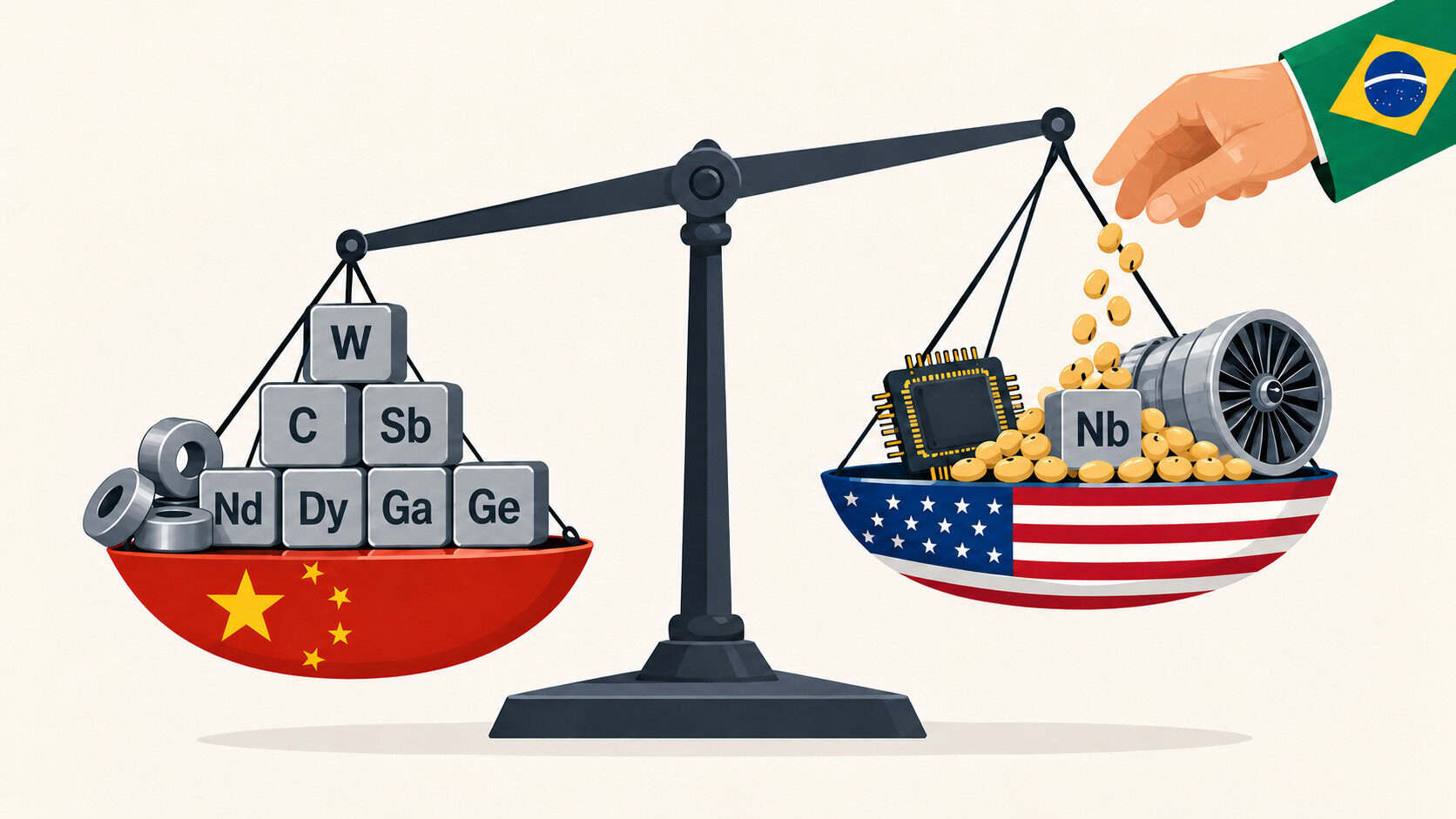
It is in precisely this context that Washington is promoting the FORGE initiative, intended to create a preferential system for the supply of critical minerals beyond Chinese influence.
As a result, the internal struggle over British regulatory sovereignty is gradually becoming one of the factors in the broader competition between the United States and China over the future architecture of the world’s technological economy.
Britain’s interest in rapprochement with China has a deeper subtext than trade. The regional escalations of recent years have each led to a flow of critical resources and capital to the benefit of the United States, and a new clash in the Indo-Pacific would, in all likelihood, repeat that scenario. For some European capitals, cooperation with Beijing is becoming a way to avoid being drawn into that confrontation.
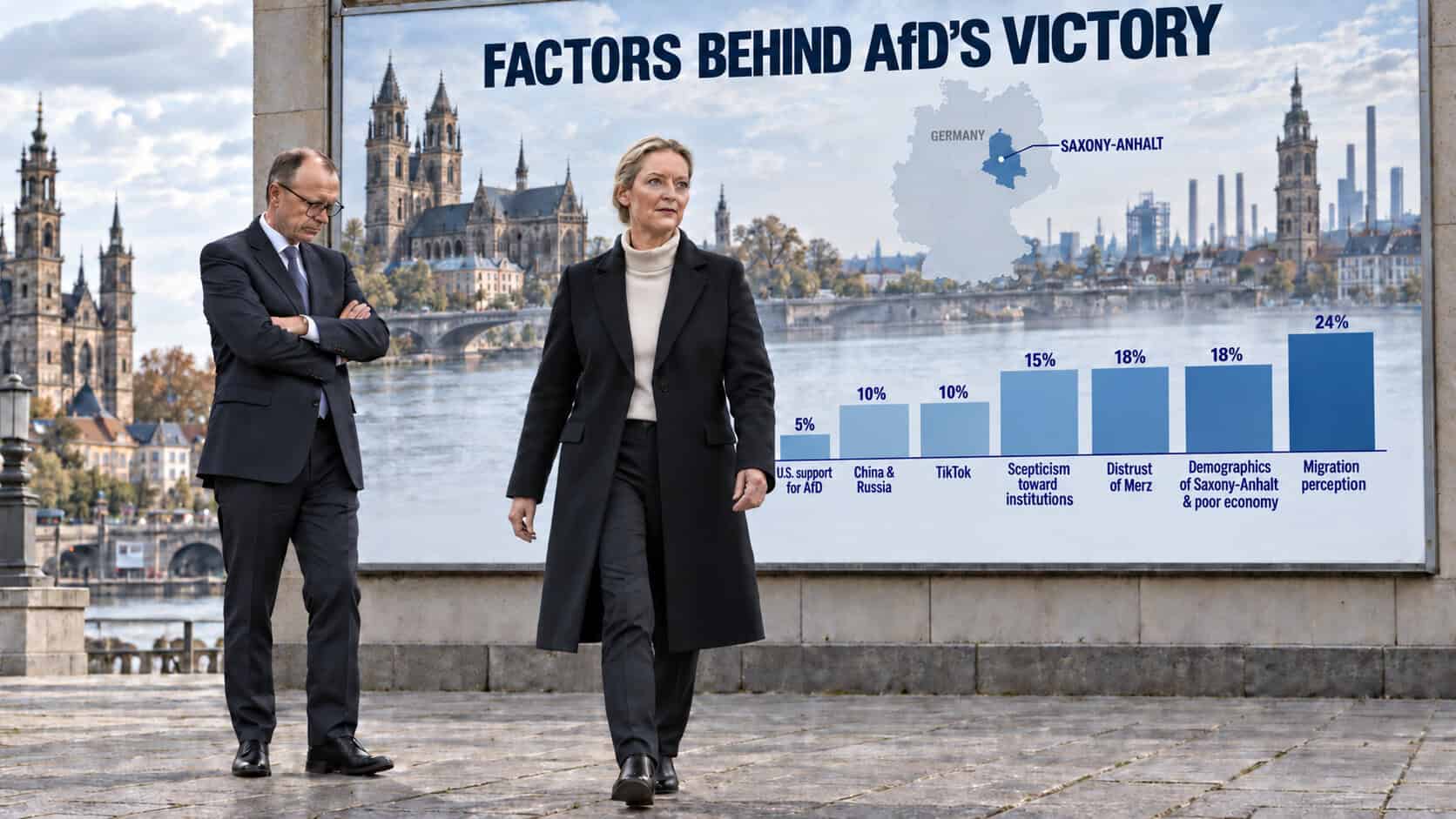
The Manchester model of countering right-wing populism—combining a socioeconomic agenda with regulatory pressure on digital platforms—has significance beyond the United Kingdom. It draws particular attention where far-right forces are growing fastest, above all in Germany, given the rise of Alternative für Deutschland (AfD).
This makes the British experience a precedent for the broader European debate over the limits of regulating Big Tech, and turns the British political crisis into an early indicator of how democracies will seek a balance between technological capital and state control.
This publication is the result of a partnership between MILITARNYI and SOLID INFO. An extended version is available on the website of the analytical center.

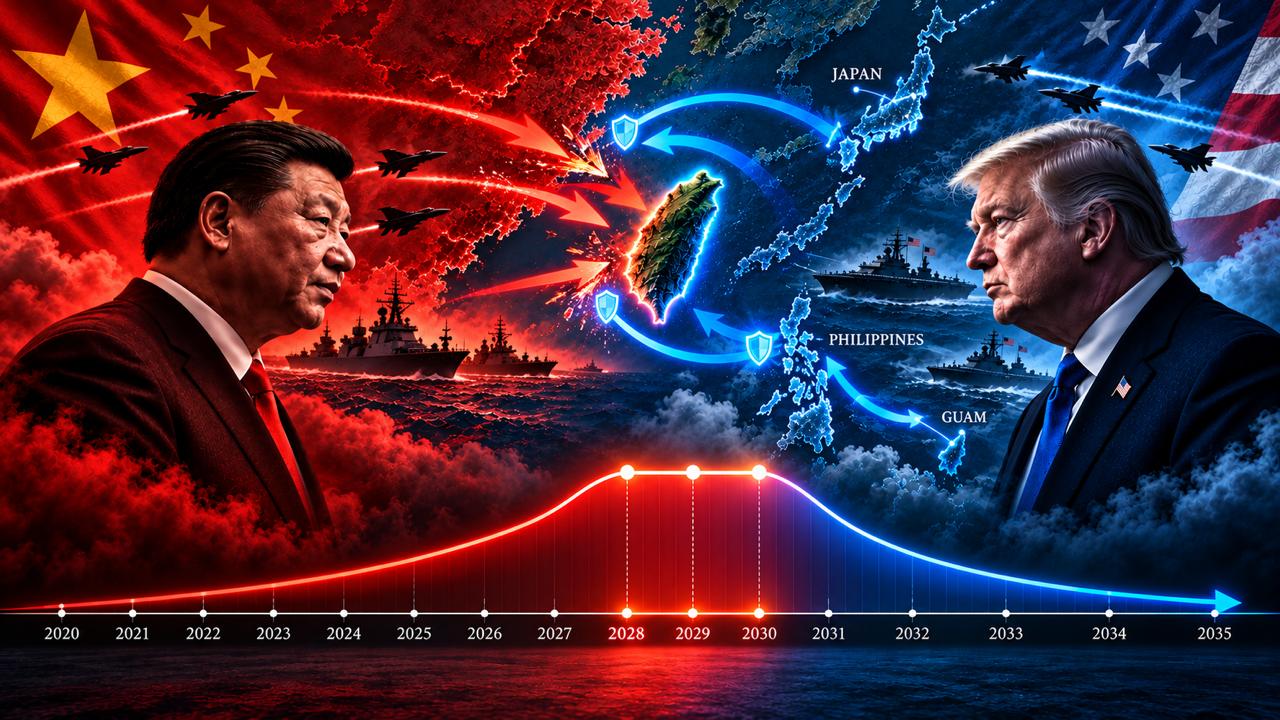
Xi Jinping’s Washington Visit Outlines the Timeframe for the Active Phase of the Confrontation: Beijing Openly Demands Taiwan’s Return
On September 23–25, 2026, Chinese President Xi Jinping held talks with President Trump at the White House during the first Chinese state visit to t...

A Sharp Shift in the Dynamics of Global Confrontation Forces Washington to Rethink How It Builds Its Key Partnerships
On September 12–13, 2026, the 18th BRICS Summit was held in New Delhi. Xi Jinping traveled to India to lead the Chinese delegation, marking his fir...

Netanyahu’s Visit to Abu Dhabi: Israel Builds Partnerships from a Position of Strength, but the Middle East Conflict Is Eroding the Edge of Its Weapons
On September 27, 2026, Israeli Prime Minister Benjamin Netanyahu traveled to Abu Dhabi with the head of Mossad and the head of the National Securit...
