


Popular
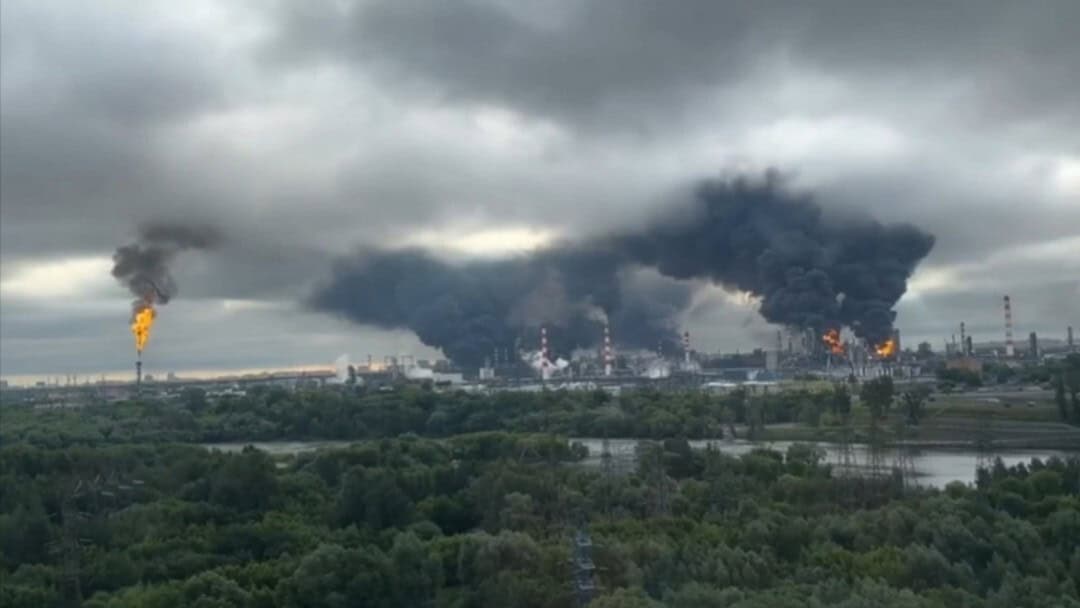
On the morning of June 18, Ukraine launched its largest-scale strike on the Moscow Oil Refinery (MNPZ), owned by Gazprom Neft and located 15 kilometers from the Kremlin—in the Kapotnya district of the Russian capital.
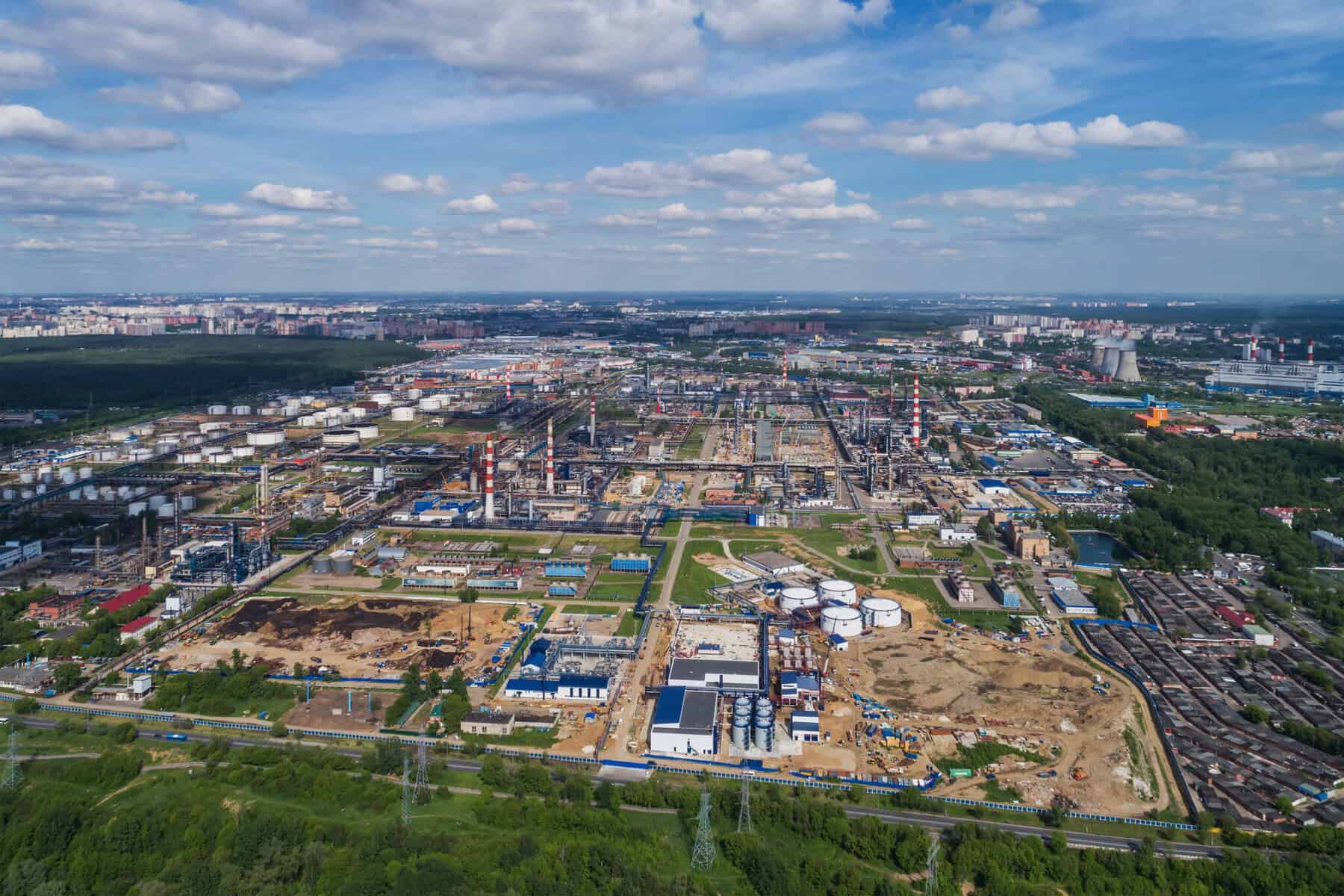
The facility’s design capacity is approximately 12 million metric tons of crude oil per year. The refinery is of critical importance to the Russian capital and the entire central region.
The facility supplies up to 40% of Moscow’s gasoline needs and about 50% of its diesel fuel needs. The refinery also supplies jet fuel to Moscow’s airports.
At the same time, the facility is considered one of the most compact oil refineries of its class—it covers just 284 hectares. The production facility includes more than 30 processing units for various purposes, including catalytic and thermal cracking, as well as reforming.
Following the Defense Forces’ operation, Ukrainian President Volodymyr Zelensky stated that Ukrainian long-range sanctions had struck the Moscow Oil Refinery for the second time in a week.
“This is a fully justified response to Russian strikes on our cities and communities and yet another important result of our soldiers’ efforts against facilities that support the Russian war machine,” Zelensky emphasized.
Robert “Madyar” Brovdi, Commander of the Unmanned Systems Forces, reported that operators from the 1st USF Operations Center, the 9th Kairos Battalion of the 414th Madyar’s Birds Brigade, the 413th Raid USF Operational Unit, and the 412th Nemesis USF Brigade, in coordination with the Special Operations Forces, the SSU, and the Main Intelligence Directorate.
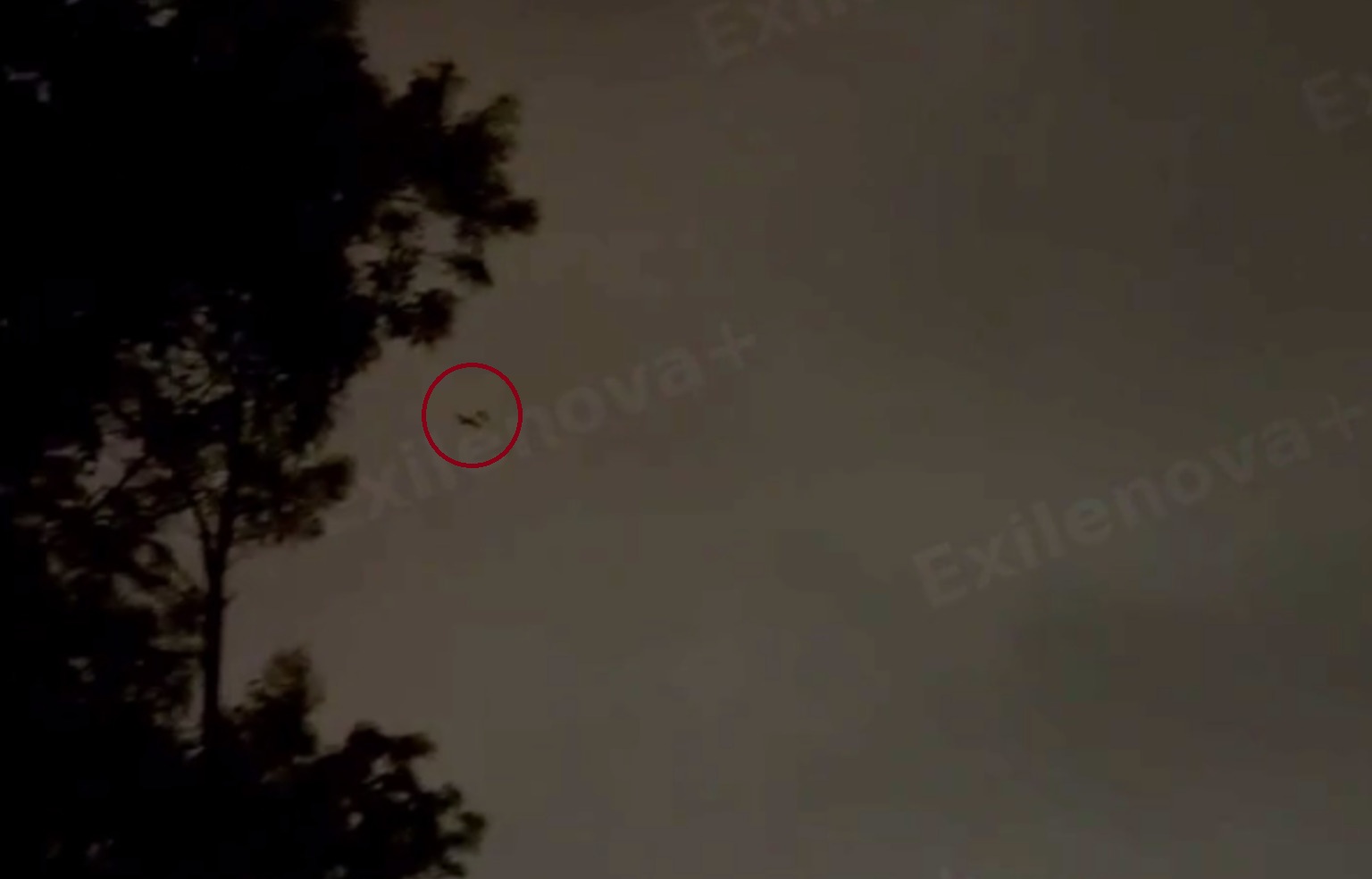
Footage captured by eyewitnesses in Moscow shows Ukrainian defenders deploying various types of drones, including the FP-1, the An-196 Liutyi, and the Bars jet-powered UAV.
Strikes and large-scale fires were recorded at at least five locations within the oil refinery facility.
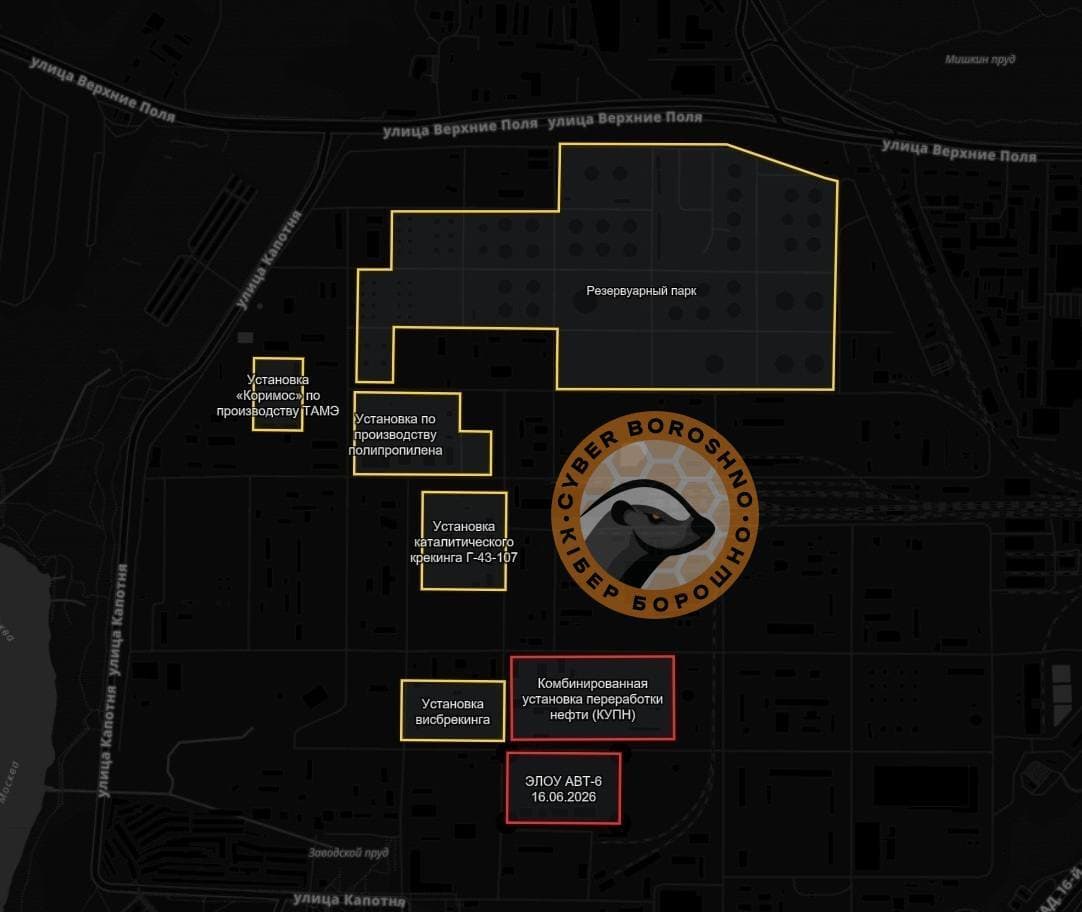
Intelligence analysts from the CyberBoroshno project, after analyzing available footage from the scene, determined that a significant number of primary and secondary oil-refining units were struck.
“Today, the integrated crude oil processing unit, which includes the second AVT-6 unit, was hit. Therefore, we can conclude that over the course of several days, Ukrainian drones have struck 100% of the primary oil refining capacity at the Moscow Oil Refinery and completely halted refining operations,” the analysts believe.
Fires were also reported at the facility’s tank farm. Footage from locals shows that one of the tanks exploded after being struck by a Russian air defense missile that was attempting to shoot down a Ukrainian UAV.
At the Russian “Moscow Oil Refinery,” oil is refined by two AVT-6 units, each with a capacity of 6 million metric tons per year. From there, the fractions from the AVT units are distributed throughout the plant for further processing into various types of fuel. This is precisely why Ukrainian drones are targeting these critical units, effectively crippling the refinery’s operations.
The sudden shutdown of such a large fuel producer could create a significant logistical burden and divert resources from regions of the aggressor country, where the gasoline shortage is already critical following previous Ukrainian strikes on refineries and oil depots.
In total, over the past month, the Ukrainian Defense Forces have struck refineries in Moscow with drones three times.
The first attack took place on May 17. According to local authorities and plant representatives, it allegedly “did not cause significant damage” to the facility. However, operations were halted for several days “for safety reasons” to avoid potential risks. Moscow authorities stated that a shift of construction workers was injured as a result of the attack at the plant’s entrance.
The next strike on the Moscow Oil Refinery took place on the morning of June 16. A drone struck the ELOU-AVT-6 unit directly. This unit is designed for the preparation and initial processing of crude oil. Its main task is to separate crude oil into basic fractions (distillates) for subsequent fuel production.
In October 2024, anti-drone protective nets were spotted on the plant’s grounds, installed to strengthen the facility’s defenses; however, judging by the attack’s outcome, they did little to help.
Ukrainian drones managed to break through the multi-layered air defense system built up around Moscow over the years of the full-scale war.
The backbone of the aggressor nation’s capital’s air defense consists of about a hundred Pantsir-S1 anti-aircraft missile and gun systems and a small number of Tor air defense systems, designed to intercept Ukrainian drones and cruise missiles. About two dozen S-400 batteries supplement these. Additionally, the Russians have reinforced their air defense with mobile fire groups.
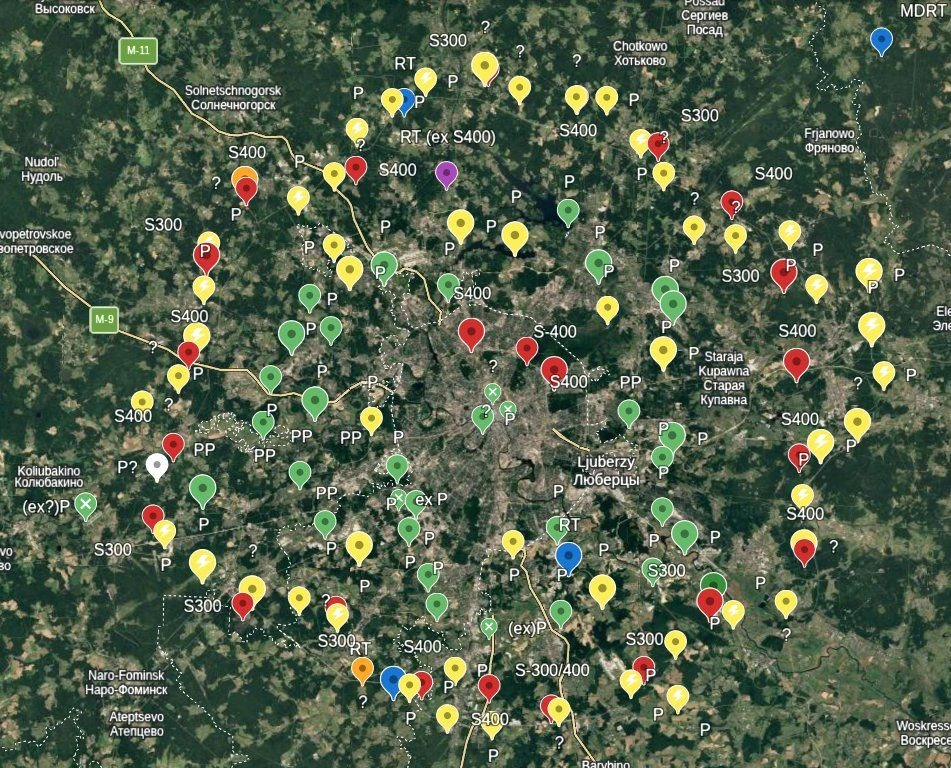
Overall, as of spring 2026, Moscow is protected by two dense rings of air defense systems, in addition to several positions within the city itself. According to Open Source Intelligence (OSINT) estimates, there are over 100 air defense system positions in and around the city. The second ring of air defense system positions was established in 2025.
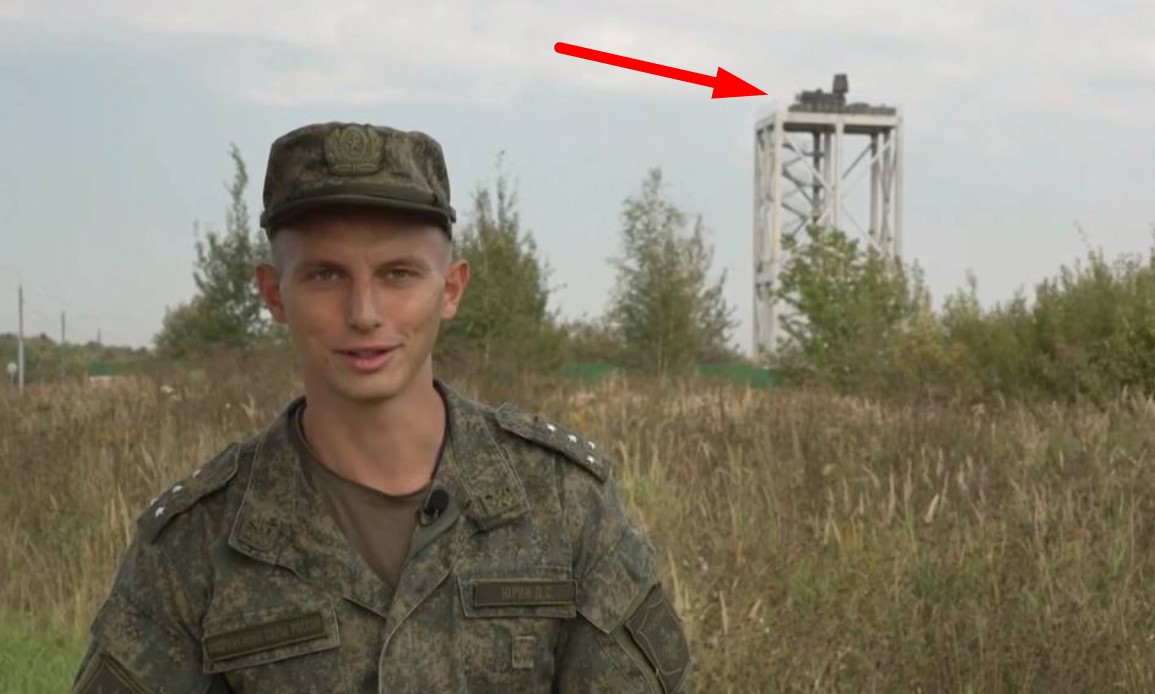
Following the May 2026 drone attack on the Russian capital, they built at least seven new towers to house Pantsir missile-and-gun systems. In particular, according to analyst Mark Krutov, the Russians established one of their positions directly near the Moscow Oil Refinery but did not have time to deploy the air defense system there.
The new SMD-E version of the Pantsir systems began to be installed directly on the roofs of residential buildings, shopping centers, and business centers in Moscow.

In particular, at the end of May, it was reported that such a system had been deployed on the roof of the “Nordstar Tower” business center, located on Begovaya Street in the Northern Administrative District of the Russian capital.
Due to the actions of Russian air defense systems and electronic warfare (EW) capabilities, some of the drones fell on civilian facilities or crashed into high-rise buildings.
Moscow Mayor Sergei Sobyanin stated that a falling UAV damaged the Sadovod shopping center in the capital. Meanwhile, the governor of the Moscow Region stated that “debris” landed on the roof of the Belaya Dacha shopping center, causing a fire. Following this, the shopping center was temporarily closed for “technical reasons.”
Residents of Moscow and the Moscow Region complained about an “oil rain” following the Ukrainian strike on the oil refinery. They complained about the lack of SMS messages, alerts in chat rooms and on social media, and air raid sirens in the city.
The attack led to the simultaneous suspension of operations at four Russian airports: Vnukovo, Domodedovo, Sheremetyevo, and Zhukovsky.
According to a report from the aggressor country’s Ministry of Defense, its air defense system allegedly shot down 555 Ukrainian UAVs overnight over various regions, including the Moscow region. Meanwhile, the mayor of Moscow reported in the morning that a total of about 200 drones were allegedly shot down as they approached the city. However, like the military, he did not specify how many drones reached their targets.
In general, the figures cited by the occupiers should be viewed with skepticism, as they constantly lie about their “achievements” and failures in the war.
The strike on the Moscow oil refinery continues a series of Ukrainian strikes against Russian oil storage facilities and refineries, which in recent months have become a regular part of the campaign to destroy infrastructure that funds Russia’s war against Ukraine and supplies fuel to the invaders.
Such strikes, for example, are already prompting Russia to plan to import gasoline by sea in an attempt to overcome the fuel shortage that arose after large-scale drone attacks on oil refining infrastructure and fuel tankers, Reuters reported on June 17, citing its own sources.
According to the agency, in June, Russia—one of the world’s largest exporters of oil and petroleum products—is set to receive a shipment of gasoline through one of the Western seaports.
Підтримати нас можна через:
Приват: 5169 3351 0164 7408 PayPal - [email protected] Стати нашим патроном за лінком ⬇
Subscribe to our newsletter
or on ours Telegram
Thank you!!
You are subscribed to our newsletter