




Popular
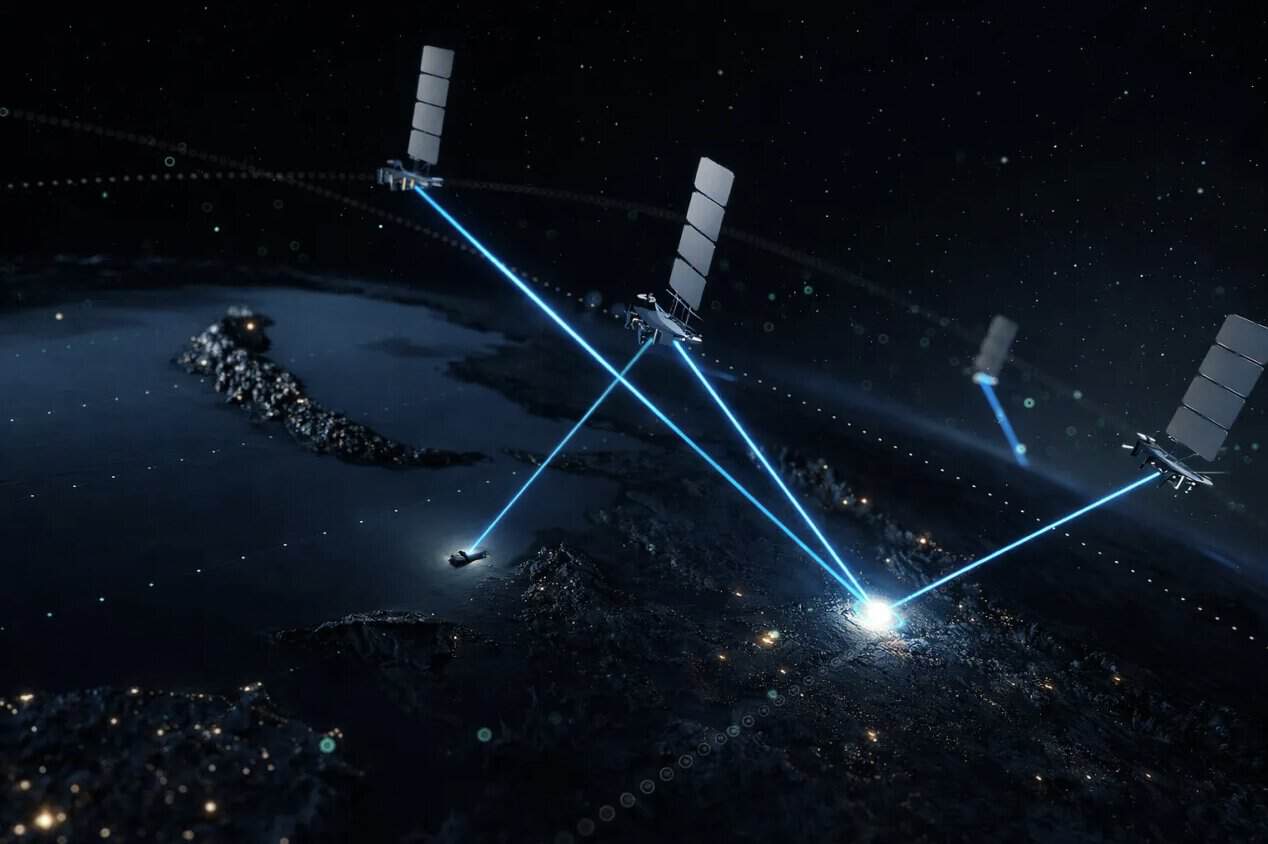
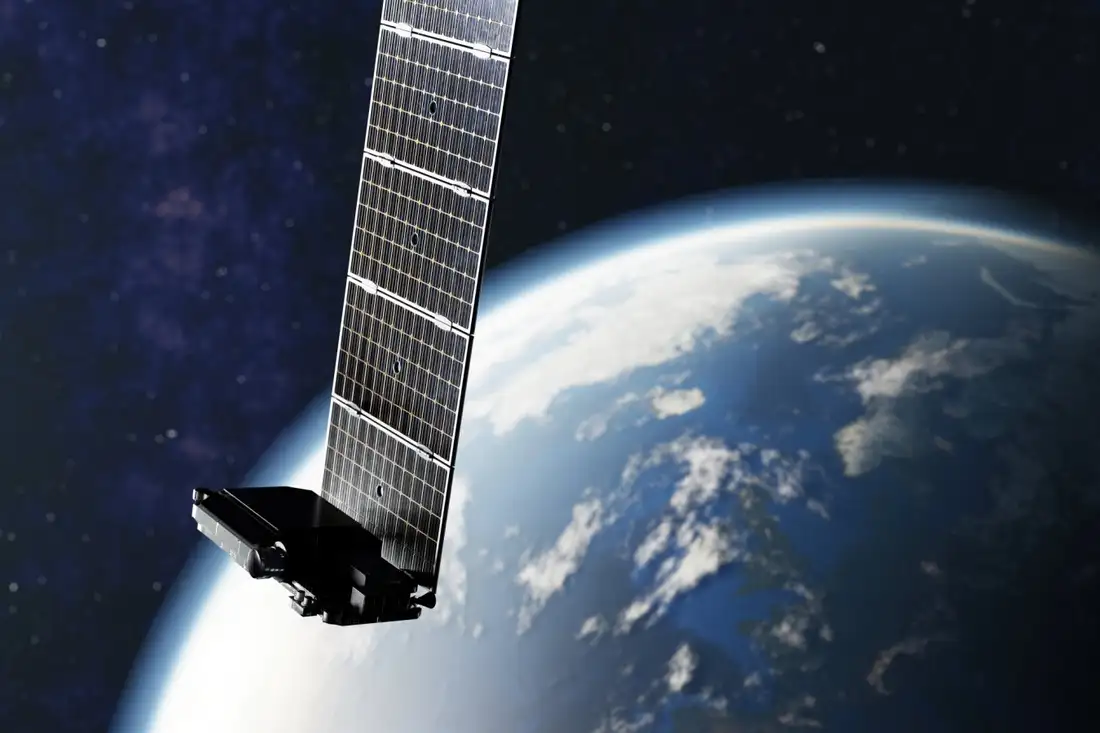
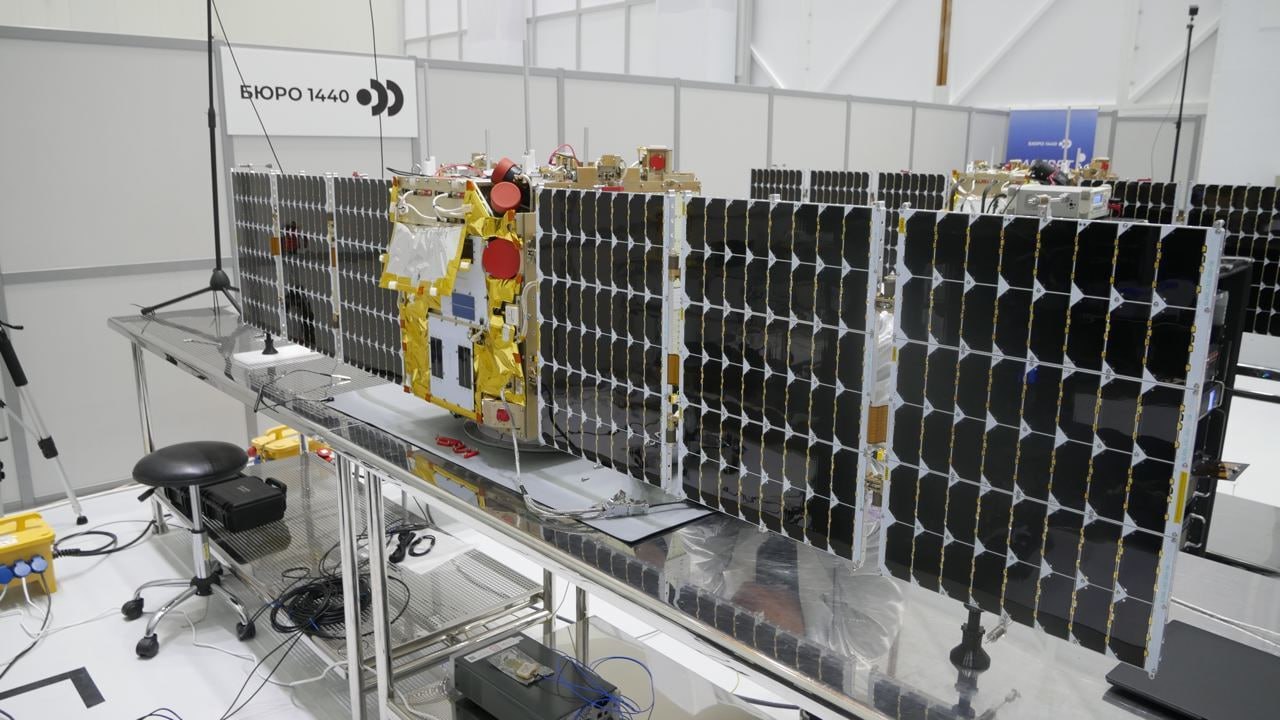
Russia is gradually deploying its own low-Earth orbit Rassvet satellite communications system, which is being developed by Bureau 1440.
Once fully deployed, the constellation is expected to provide broadband network access for both stationary and mobile users. Officially, the company states that the system is intended exclusively to meet civilian needs and provide communications for aircraft, ships, and ground vehicles. However, top military and political leadership in the Russian Federation explicitly states that it will have future military applications.
Rassvet can provide Russian troops with a communication channel independent of foreign operators, and enable all types of drones, and even cruise missiles, to be controlled beyond line of sight. The satellite can transmit video and telemetry, update routes, and change targets even during flight.
On March 23, 2026, Russia launched the first group of 16 production-model Rassvet satellites into orbit. One satellite fell out of orbit, 12 formed an operational constellation, and three more continued to ascend into higher orbit. The second batch of 16 satellites was launched on July 19.
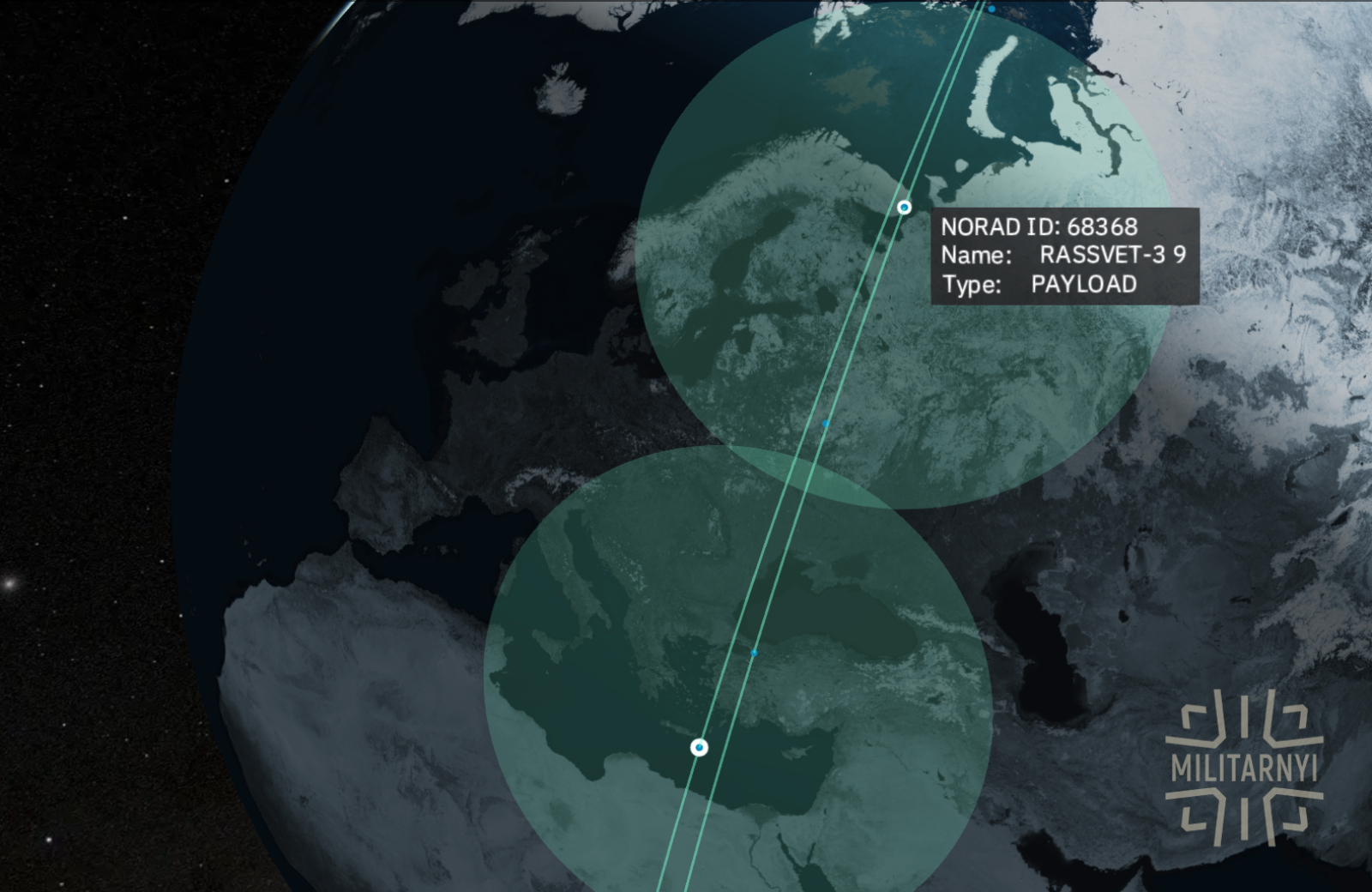
This is not yet sufficient for continuous coverage of Ukraine. However, an analysis of the orbits shows that the first production constellation already provided at least two stable communication windows per day over Ukraine, each lasting more than an hour. Russia can already plan specific operations during the satellites’ passes, even if it is not yet capable of maintaining a constant communication channel.
In June, Russian dictator Vladimir Putin directly linked the Bureau 1440 project to the prospect of controlling heavy drones. According to Russian plans, the number of drones is set to grow rapidly, with a transition to commercial operation planned for 2027. As the fleet expands, individual coverage windows will merge into continuous coverage, and the network will gain more backup satellites.
That is precisely why the development of countermeasures cannot be postponed until mass-produced terminals appear on Russian drones. Once hundreds of drones are fully deployed, suppressing the network will become significantly more difficult, and the Russians will scale up their operations extremely quickly; therefore, any delay will come at a high cost to Ukrainian defenders.
Ukraine has already demonstrated just how dangerous the combination of a relatively inexpensive strike drone with stable satellite communications can be. According to Reuters, most Ukrainian middle strike missions are carried out using Starlink.
The most comprehensive public picture of this campaign is provided by reports from the Ghosts special unit of the DIU and Robert Madyar Brovdi, commander of the Unmanned Systems Forces.
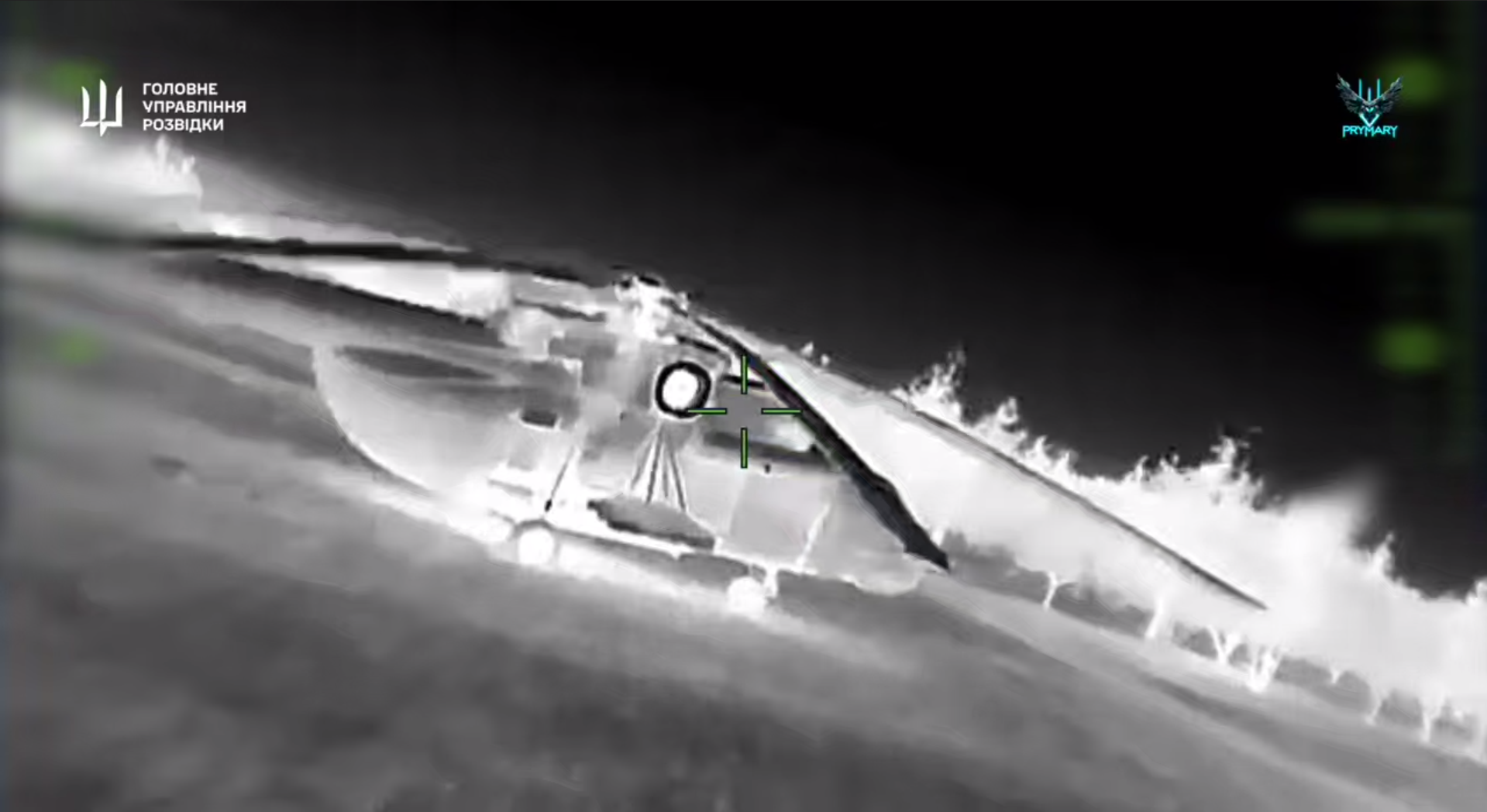
One of the main priorities has been the systematic destruction of Russian air defense systems. According to Brovdi, between January and July 2026, USF units struck 236 anti-aircraft systems, radar stations, and other air defense elements with a total value of over $5.4 billion. The DIU’s Ghosts are simultaneously targeting Russian air defense systems along the entire front line and in occupied Crimea, where they are striking not only radars and anti-aircraft systems but also electronic warfare assets, communications nodes, and aviation support infrastructure.
The destruction of air defense systems was the first stage of a broader campaign against Russian logistics. In just the first two weeks, Ukrainian strikes reduced freight traffic on the key R-280 highway — which connects Russia with the occupied cities of Mariupol, Berdyansk, Melitopol, and Crimea — by 71%.
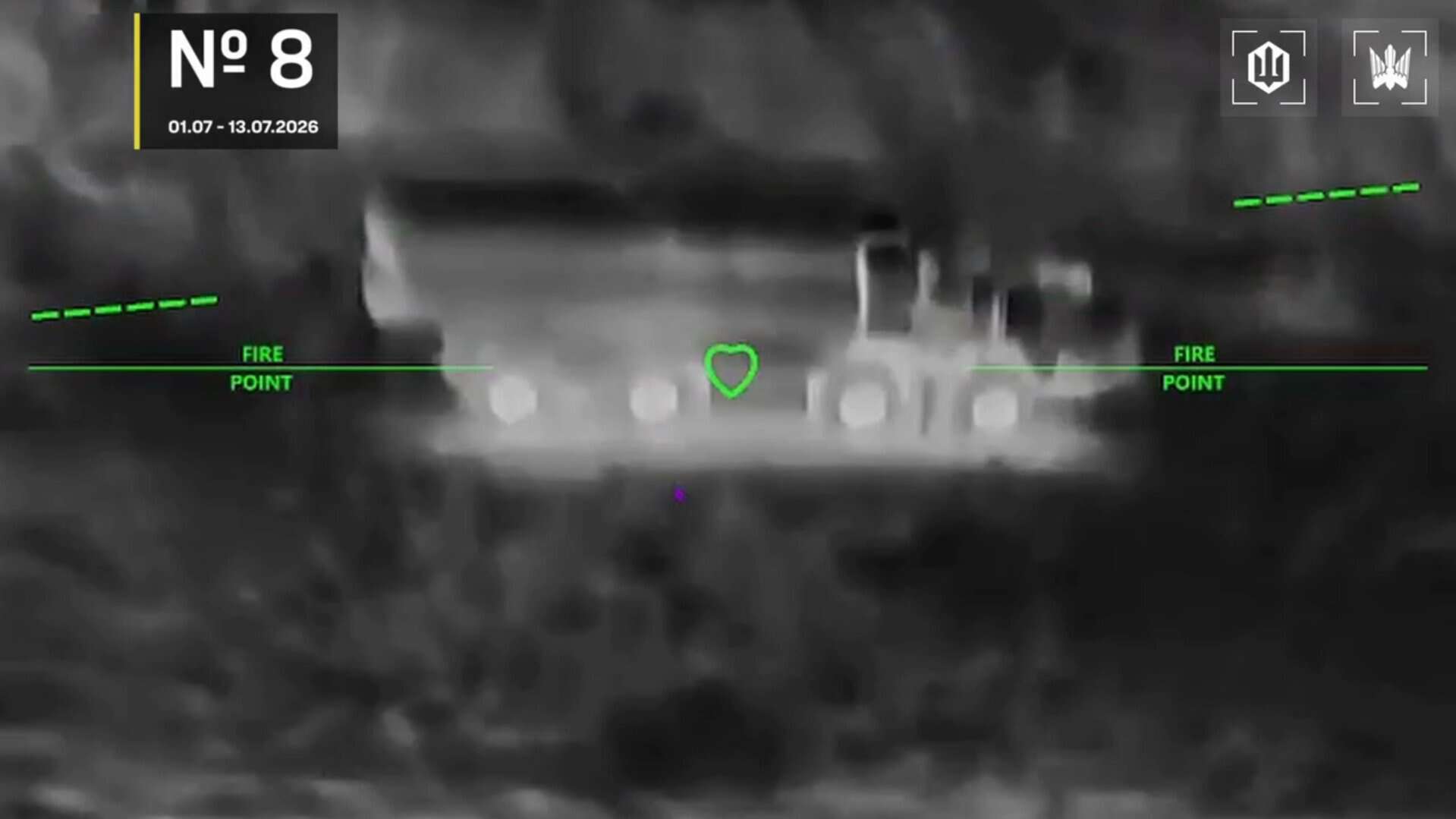
Ukraine’s experience shows that satellite communication transforms an affordable drone into a tool for systematic operational impact, capable of systematically destroying air defense systems, paralyzing logistics, and depriving the enemy of a secure rear. This is precisely why Rassvet poses an extraordinary threat. Once it secures an independent satellite channel, Russia will be able to attempt to replicate the Ukrainian model and deploy guided drones on a massive scale to target Ukrainian air defense systems, aircraft, command centers, and supply routes. At the same time, unlike Ukraine, the occupiers will face no artificial restrictions on the geographic scope of their strikes.
An example of this approach is the Russian Volna Kupol Garant system, designed to counter Starlink. It operates in the 14-14.5 GHz band and directs jamming not at the subscriber terminal but toward the satellite. The frequencies almost completely coincide with the Rassvet Ku-band uplink channel.

According to publicly available data, the system uses several directional antennas and creates interference in specific frequency channels. Serhiy Beskrestnov, an advisor to Ukraine’s Minister of Defense, reported that a single system is capable of disrupting Starlink over an area of approximately 20 square kilometers.
However, despite its jamming capabilities, the system has significant drawbacks. SpaceX instantly detects interference in communication channels, and the radio-reconnaissance satellites of partner countries detect the system’s powerful emissions, making it easier to identify the target.
The Russian manufacturer Russky Kupol does not disclose the system’s technical specifications, but the cost of a single unit is 150 million rubles.
Presumably, the future system is intended to operate similarly to Russian EW systems that jam Starlink terminals — by attacking the uplink channel so that the satellite cannot see the signal from ground terminals. To jam the downlink, the transmitter would have to be positioned relatively close to the Russian terminal and overcome the spatial selectivity of its directional antenna. In contrast, when jamming the uplink, the target is the receiver of a known satellite, whose trajectory can be calculated in advance.

According to official documents, it is known that the Russian regulatory authority allocated two frequency bands in the Ku and Ka bands for the Rassvet uplink. In the Ku band, subscriber ground stations will transmit signals to the satellite at frequencies of 14-14.495 GHz; in the Ka band, a frequency band of 29.5–30 GHz has been allocated.
According to Russian documents, the 29.5-30 GHz band has been allocated for mobile satellite service terminals — that is, likely for equipment that can potentially be installed on land, sea, and air platforms.
Jamming the Rassvet satellites will require a fundamentally different approach than the countermeasures against UAVs or communication systems that Ukrainian developers are accustomed to.
A dome-shaped electronic warfare station creates interference around a protected object and affects receivers that fall within its range. In the case of a satellite network, the target is the onboard receiver at an altitude of approximately 500-550 kilometers, and potentially up to 800 kilometers. Therefore, the system must not form a constant dome, but rather direct a narrow beam at a specific satellite and track it as it passes over the horizon.
For Ukrainian manufacturers, this represents a new class of challenges. Most publicly presented Ukrainian anti-drone systems operate at frequencies up to 6 GHz, and in some cases up to 9 GHz. There is no information in open sources about Ukrainian mass-produced systems capable of generating directional radiation at frequencies around 14 or 30 GHz while simultaneously automatically tracking low-Earth-orbit satellites.
Operating in the Ka-band will be particularly challenging. With the same antenna gain, free-space losses at 30 GHz are nearly five times greater than at 14 GHz. These losses can be compensated for by increasing power or the antenna gain, but both methods have limitations. High-power amplifiers operating at 30 GHz are more complex, more expensive, and less efficient, and losses in waveguides, feedlines, and connections become more significant. The Ka-band is also significantly more sensitive to rain, wet snow, and atmospheric moisture.
A high gain requires a very narrow beam pattern. This allows the necessary power to be delivered to the satellite, but it sharply increases the requirements for pointing accuracy. A low-Earth-orbit satellite moves rapidly across the sky, and an error in orbital data, antenna calibration, or drive operation can cause it to move out of the beam.
The size of the constellation further complicates the task. Once hundreds of satellites are deployed over Ukraine, several Rassvet satellites will be present at all times, and terminals will be able to transfer connections from one satellite to another. This will require a network of synchronized stations, multiple antennas or multi-beam phased arrays, as well as automatic handover between positions.
Another problem is the near-complete overlap of frequencies with some of the Starlink channels. The Rassvet 14-14.495 GHz band overlaps with one of Starlink’s 14-14.5 GHz uplink channels, and the 29.5-30 GHz frequencies also fall within the authorized Ka-band uplink spectrum of the SpaceX system.
Selectivity will have to be ensured solely through a narrow beam, precise satellite tracking, and time restrictions. The station must automatically cease transmission when Rassvet passes near a Starlink satellite and must also control the antenna’s side lobes. Otherwise, an attempt to jam the Russian network could interfere with the satellite communications used by the Ukrainian military.
Finally, the allocated frequencies alone do not reveal the structure of the Rassvet signal. The channel bandwidths, polarization, modulation and coding methods, frequency hopping, and algorithms for forming on-board beams remain unknown. Uniform jamming of the entire band, approximately 500 MHz wide, would require an extremely high total power output. Targeting individual channels with jamming would be more effective but would require prior signal interception and analysis, as well as a rapid response to frequency changes.
Currently, Rassvet has not yet become a full-fledged Russian Starlink, but developing countermeasures will take time: it is necessary to analyze the signals, create a component base for the Ku and Ka bands, test targeting of fast low-Earth orbit satellites, and learn how to avoid interfering with Ukraine’s own communications.
If this work begins only after Rassvet has been deployed on a massive scale, Russia will already have an extensive fleet and experience in its combat use. Ukraine must not miss the current limited window of opportunity.
Підтримати нас можна через:
Приват: 5169 3351 0164 7408 PayPal - [email protected] Стати нашим патроном за лінком ⬇
Subscribe to our newsletter
or on ours Telegram
Thank you!!
You are subscribed to our newsletter