



Popular
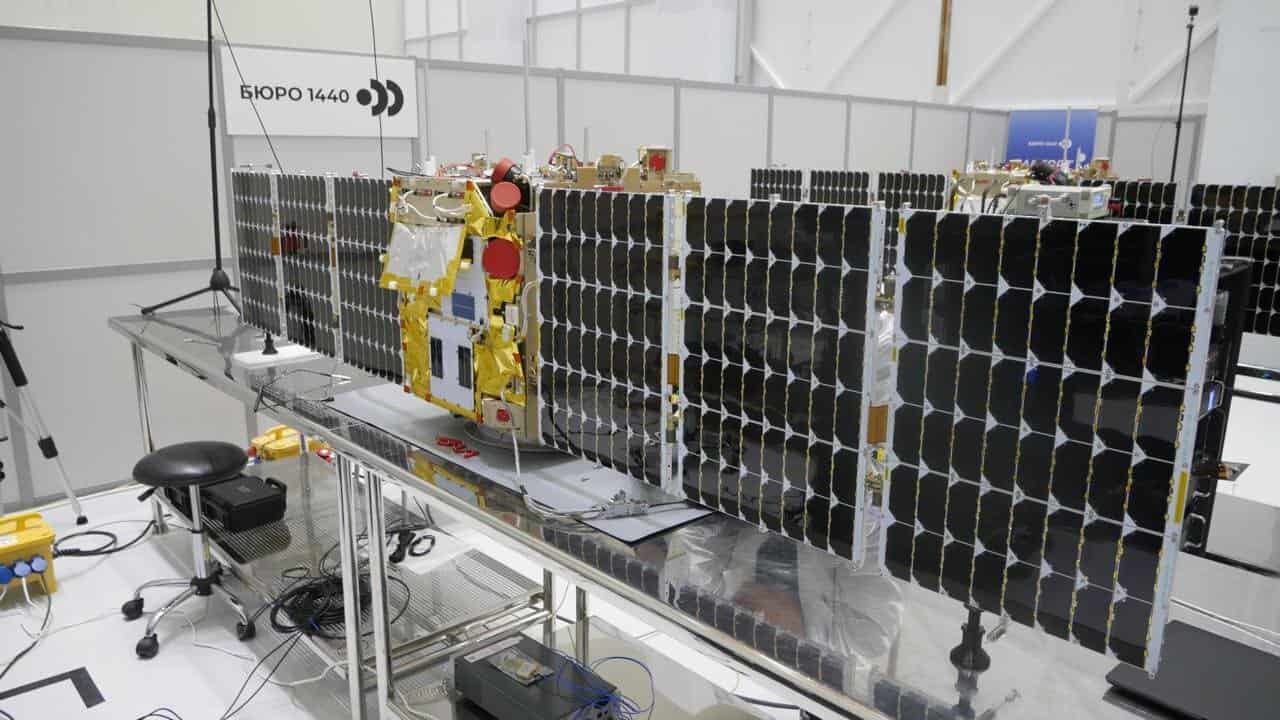
Business Insider reported what it described as an allegedly unsuccessful launch of 16 satellites from the second batch of Russia’s Rassvet communications constellation, developed by Bureau 1440, which is intended to become an ‘analogue of Starlink.’
The journalists cited the Institute for the Study of War, which noted that, approximately one and a half months after launch, the spacecraft were still predominantly operating at altitudes of 300–400 km.
However, an analysis by Militarnyi of the satellites’ altitude-gain dynamics shows that, at this stage, most of the newly launched spacecraft are actually at higher altitudes than the satellites from the first batch were at the same point in their deployment.
An analysis of these satellites’ trajectories shows that the launch vehicle places them into an orbit at an altitude of approximately 300 km, from which they raise their orbits using their own propulsion systems. This process takes several months and may include pauses between individual series of maneuvers.
The first production batch of 16 Rassvet satellites, numbered 1–16, was launched on March 23, 2026. The first noticeable changes in the orbits of satellites No. 1 and No. 16 were recorded approximately 17–18 days after launch. By late April, four to five weeks after launch, most of the operational spacecraft were already performing orbital maneuvers.

The satellites raised their orbits in two main groups. Both groups performed their initial orbital adjustments at roughly the same time, but they began their sustained altitude increases at different times.
The first group consisted of satellites No. 3, No. 5, No. 6, No. 7, No. 12, and No. 13. It began the main phase of orbital raising around April 20. Five of these spacecraft crossed the 500 km altitude mark 79.5–84.9 days after launch. The sixth reached that altitude in July, following a pause in its maneuvering activity.
The median rate of altitude gain for the first group, measured from the beginning of its orbital-raising phase rather than from launch, was approximately 3.68 km per day.
The second group consisted of satellites No. 1, No. 2, No. 8, No. 9, No. 11, No. 14, No. 15, and No. 16. Following their initial corrections, they remained at approximately 300–320 km throughout May. Continuous altitude raising began in early June, approximately 70 days after launch.
Six spacecraft in this group reached 500 km 97.9–124.3 days after launch. From the beginning of their continuous altitude gain, they required approximately 28–54 days to reach that altitude. The median rate was approximately 4.27 km per day.
Satellite No. 10 was an outlier. Its orbit continued to decay until almost the end of June, reaching an altitude of approximately 275 km, after which the satellite began raising its orbit with a significant delay. It crossed the 500 km mark only 158.6 days after launch.

In total, 13 satellites have stabilized in an orbit suitable for sustained operations at an altitude of approximately 508 km. They have already been deployed into a ‘chain’ formation and currently provide at least two daily communication windows over Ukraine, each lasting more than one hour.
The second batch of 16 satellites was launched on July 19. The first spacecraft began showing noticeable altitude gains as early as approximately 10–13 days after launch. By the 19th day, 11 satellites were showing signs of sustained orbital raising, while No. 32 joined them at approximately day 32.
Thus, the majority of the July batch began using their propulsion systems earlier than the satellites from the first launch.

As of September 3, 46 full days had elapsed since the second launch. Twelve satellites from the second batch, with no apparent anomalies, had been raising their orbits from the beginning of sustained orbital ascent at average rates ranging from 1.24 to 4.02 km per day.
The median rate was approximately 2.42 km per day – 34% lower than that of the first group and 43% lower than the rate recorded for the second group from the March launch.
Although this rate is currently lower than that of the first group, the much earlier activation of their propulsion systems means that the second-batch satellites are already at significantly higher altitudes than the spacecraft from the first launch were at the same point after launch.
The median altitude of the new spacecraft was 365.1 km, compared with 313.5 km for the first batch on day 46. Thirteen satellites were above 320 km, ten were above 350 km, and No. 29 had reached 410.8 km. At the same stage, the corresponding figures for the first batch were five, one, and zero satellites, respectively.
Although the Rassvet satellite deployment program as a whole cannot be considered a failure, the first two production batches, as expected, have exhibited a significant number of ‘teething problems’ and hardware defects.
In the first batch, satellite No. 4 has now been definitively lost. It never began raising its orbit and reentered the atmosphere on June 6. Satellites No. 11 and No. 14 performed orbital maneuvers but stalled at altitudes of approximately 363 and 353 km, respectively. Their current orbital dynamics indicate a gradual loss of altitude. They will likely be unable to reach stable operational orbits and will eventually reenter the atmosphere over the next several years.
Temporary deviations in orbital-raising activity were also observed for satellites No. 13 and No. 2. Both paused their ascent for two to three weeks but ultimately managed to reach altitudes above 500 km.

In the second batch, the most obvious problems are with satellites No. 17 and No. 23. They have shown no significant orbital raising and have descended from approximately 305 km to 284 km. Without activating their propulsion systems, they will likely reenter the atmosphere within the next few weeks and burn up.
Satellite No. 26 briefly climbed to 305.8 km but then descended again to approximately 299 km. This could indicate an unsuccessful attempt to initiate orbital raising or a malfunction of its propulsion system. However, satellite No. 10 from the previous batch was able to begin raising its orbit from an even lower altitude, so it is still too early to conclude that the loss of No. 26 is inevitable.
Satellite No. 28 also warrants monitoring. It reached 339 km and then ceased gaining altitude. Since similar pauses were observed during the deployment of the first batch, it is currently impossible to distinguish between a malfunction and a planned pause in orbital-raising operations.
The second batch has two clearly problematic satellites, another spacecraft exhibiting unstable orbital dynamics, and a fourth whose status remains uncertain. Nevertheless, most of the spacecraft in the second batch began raising their orbits earlier and, at the same stage after launch, are at higher altitudes than the satellites from the first batch.

Based on the experience of the first batch, a definitive assessment of the second launch will be possible in approximately 100–125 days – the timeframe in which most spacecraft from the previous launch reached altitudes above 500 km.
In its official publications and registration documents, Bureau 1440 lists an orbital altitude of approximately 800 km as the target orbit. The stabilization of the first batch at around 500 km could indicate a last-minute change of plans or deliberate misinformation regarding the future configuration of the constellation.
At the same time, an altitude of around 500 km in itself should not prevent the system from operating. It falls within the approximate altitude range at which Starlink operates. During 2026, SpaceX plans to move satellites from orbits at around 550 km to an altitude of 480 km. Therefore, the deviation from the originally stated plans would not create a technical obstacle to Rassvet’s operation. Moreover, it cannot be ruled out that the current altitude is only an intermediate stage and that the satellites will resume raising their orbits later.
However, even in the event of temporary setbacks and a significant number of defective spacecraft, it would be dangerously naive to assume that Russia will abandon such a strategically important program because of increased costs or delays relative to the planned schedule.
This is particularly relevant given that Ukraine’s Defense Forces have clearly demonstrated to the Russian military how critical affordable satellite communications are for command and control, as well as how dangerous unmanned systems equipped with satellite control links can be.
For more details on the threat posed by Russia’s Starlink analogue, Militarnyi’s dedicated article, “Russian Rassvet Satellite System: Strategic Threat to Ukraine and the Democratic World” is available.
Підтримати нас можна через:
Приват: 5169 3351 0164 7408 PayPal - [email protected] Стати нашим патроном за лінком ⬇
Subscribe to our newsletter
or on ours Telegram
Thank you!!
You are subscribed to our newsletter