
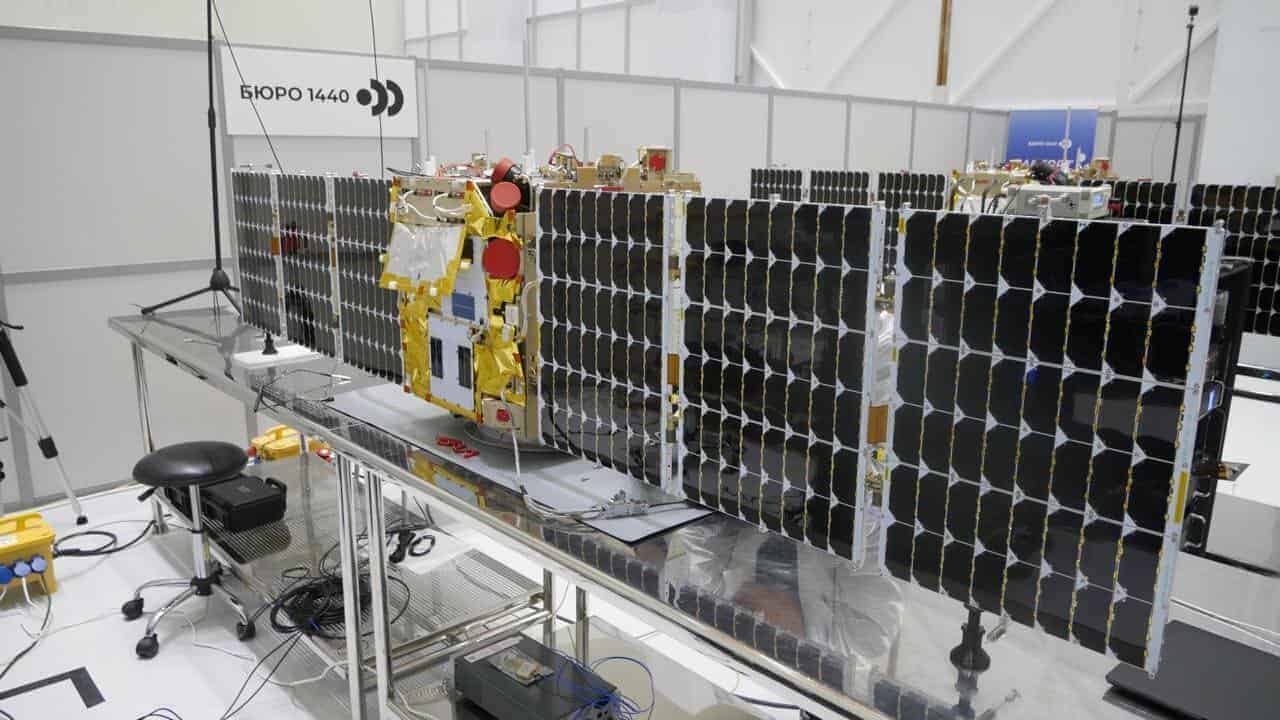
Russian Rassvet Satellite System: Strategic Threat to Ukraine and the Democratic World

Dmytro Shumlianskyi




On March 23, 2026, the Russian company Bureau 1440 launched its first operational group of 16 satellites into orbit. These satellites will serve as the foundation of the future Rassvet satellite system.
This launch marked the beginning of Russia’s deployment of a Starlink-like satellite network, which poses a strategic threat not only to Ukraine but also to democratic countries worldwide.
Bureau 1440
The company was established in 2020 under the original name MegaFon 1440 as part of the telecommunications company MegaFon. The project was initially led by Alexey Shelobkov, who was also known at the time as the head of the IT company Yadro, the largest Russian firm specializing in data storage systems.
At its inception, the project was designed to develop a viable economic model, build the necessary technological foundation, create hardware prototypes, and conduct testing both on Earth and in space.
In 2021, the VTB Group acquired a 15% stake in the MegaFon 1440 project, investing 2 billion rubles. In 2022, the company became part of ICS Holding and was renamed Bureau 1440. The holding itself is subject to US blocking sanctions (SDN list) for supporting aggression against Ukraine.
ICS Holding is Russia’s largest developer of hardware and software, the second-largest manufacturer of equipment, and the fourth-largest IT company in the country by revenue.
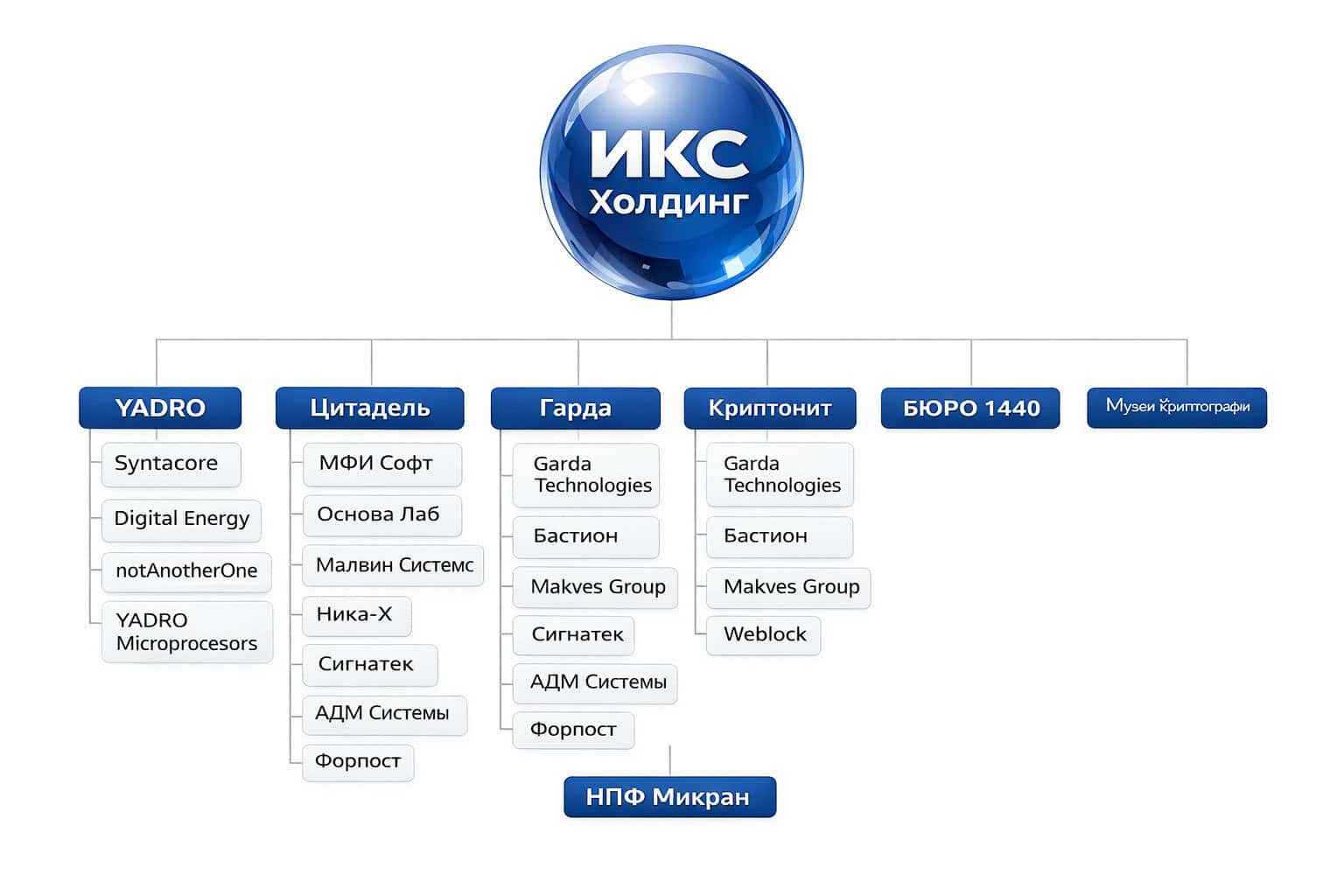
The holding includes the computing hardware developer Yadro, the private space company Bureau 1440, the Garda Technologies group of companies (information security), the Citadel Group (SORM systems), and the scientific and technology company Kritponit.
ICS Holding has leased large facilities in the ZIL technopark in Moscow – nearly 50,000 square meters at a cost of 1.5 billion rubles per year. This site hosts pilot satellite production, laboratories, and engineering offices. The company also states that it manufactures ground stations, terminals, and control systems within Russia.
Satellite launches are carried out from the Vostochny and Plesetsk cosmodromes using Russian Soyuz-2 rockets.
In 2023, Bureau 1440 submitted three applications to the International Telecommunication Union (ITU) for satellite constellations: Rassvet, Rassvet-1, and Rassvet-2.
In June 2025, a production line for space-grade solar panels for these satellites was opened in Moscow at the Pechatniki technopolis, with a total annual capacity of up to 750,000 watts. Solar panels are a key component of satellites, and the start of their mass production indicates broader readiness for serial satellite manufacturing.
According to Ukraine’s Foreign Intelligence Service, the First Deputy CEO of the holding is 29-year-old Boris Korolev, the son of Sergey Korolev, Deputy Director of the Federal Security Service of the Russian Federation (FSB), who is already being considered a future head of the agency.
The ultimate beneficiary of the holding is believed to be oligarch Alisher Usmanov. In addition, 76-year-old FSB Colonel General Andrey Fetisov serves as an advisor to the CEO. He is a former head of the service’s scientific and technical division responsible for special equipment and encryption, and his son has been appointed head of the procurement department.
The company also receives substantial funding from the Russian federal budget – 102 billion rubles under the Data Economy national project. It also plans to raise an additional 329 billion rubles independently.
The company claims that the key modules, components, and the satellite platform itself are developed in-house by Bureau 1440. It is working on several areas, including laser communication terminals, propulsion systems, power systems, and both onboard and ground-based communication systems, with a strong focus on maximizing domestic production.
However, according to experts interviewed by Militarnyi, there is a high probability that much of the satellites’ and terminals’ core hardware is actually built using off-the-shelf Chinese components.
One of the company’s main strengths is its vertical integration within ICS Holding, which allows it to leverage the expertise of other companies in the group. For example, it collaborates with Yadro’s telecommunications division on radio electronics, as well as on integrating and optimizing components to ensure reliable data transmission and high system performance.
Much of the development work focuses on antennas, amplifiers, and other key elements of both satellite and ground infrastructure. The network’s core hardware and software are also being developed through this internal cooperation.
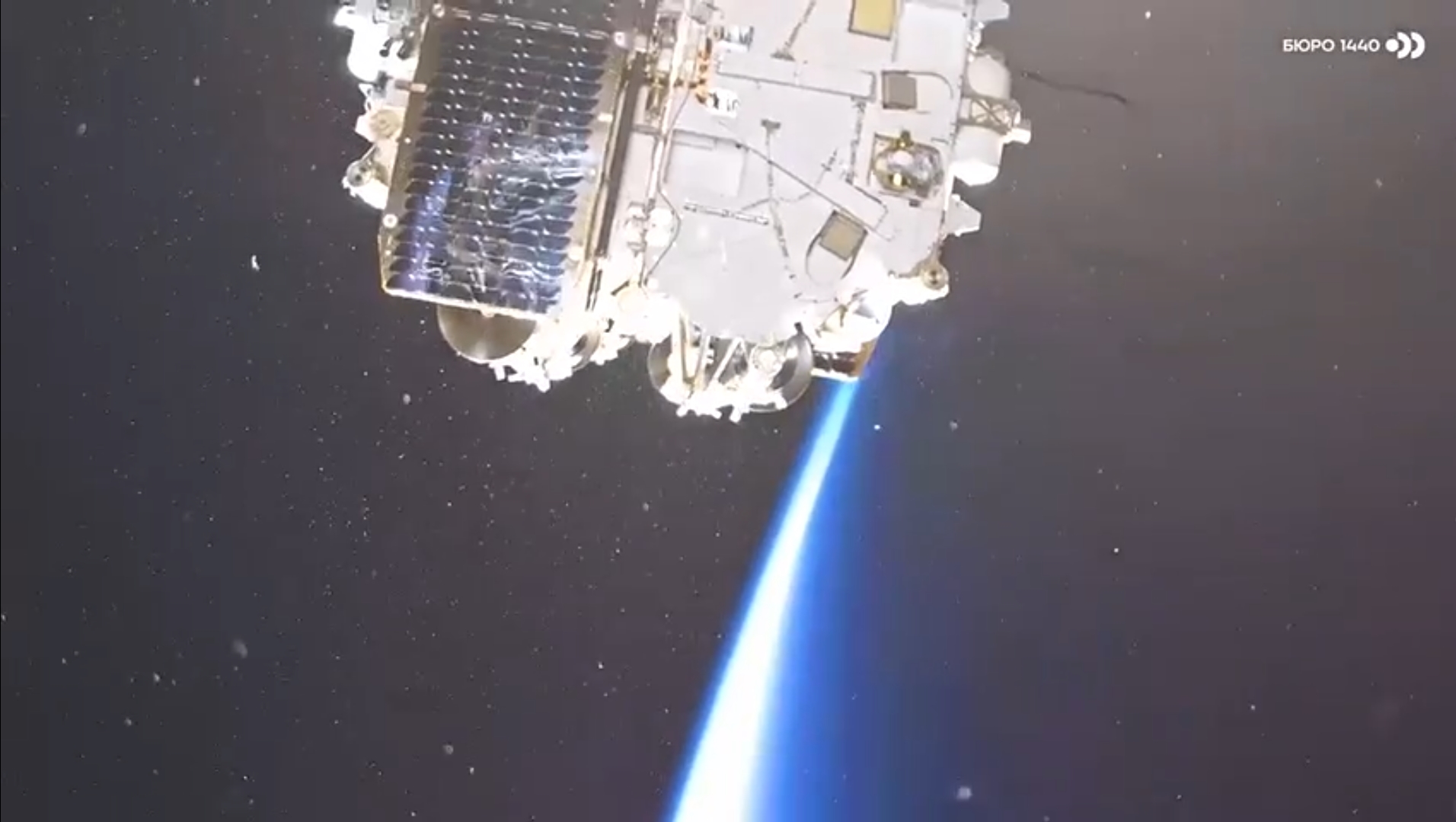
The ultimate aim of Bureau 1440 is to build a low-Earth-orbit satellite constellation and provide broadband data services with global coverage.
Russia’s Starlink
The system is expected to deliver high data transmission speeds of up to 1 Gbps per user terminal, with latency of around 50–70 ms.
This represents a significant improvement over Russia’s current geostationary satellite communications systems, where latency can exceed 600 milliseconds and data speeds are usually limited to only tens of megabits per second.
The satellites will communicate with ground stations using Ka- and Ku-band frequencies. These bands are difficult to jam with electronic warfare systems and also harder to detect with electronic intelligence systems, partly because specialized detection equipment for these frequencies is limited.
The constellation is planned for an orbital altitude of around 800 kilometers. This is higher than typical Starlink orbits, but lower than those used by OneWeb satellites.
Industry experts interviewed by Militarnyi believe that during the development of its own communications satellites, the Russian company may have ‘borrowed’ certain design solutions and system architecture from the 36 OneWeb satellites that were being prepared for launch from Baikonur Cosmodrome and were seized by Russian authorities after the start of the full-scale invasion of Ukraine in 2022.
The data transmission network is being built with a backbone architecture in which most data processing is performed on the ground – in control centers and terrestrial data centers. At the same time, the satellites handle basic processing functions, including signal conversion and routing.
The final Bureau 1440 constellation is expected to include inter-satellite laser communications, which were developed and tested in space on satellites from the second experimental Rassvet-2 batch.
Communication is based on the 5G-NTN (non-terrestrial network) standard, enabling compatibility with hybrid communication networks, including terrestrial systems. The onboard relay system operating on this protocol has already completed orbital tests and successfully exchanged signals with Earth.
Network deployment
The first three satellites of the Rassvet constellation were launched into orbit from the Vostochny Cosmodrome in 2023. They were part of the Rassvet-1 mission and were sent into space together with other Roscosmos payloads.
These satellites were not intended for full operational service of the network; instead, they were used for testing – verifying data transmission, communication stability, and on-orbit system performance. This marked the first stage in which Bureau 1440 tested its core technologies.
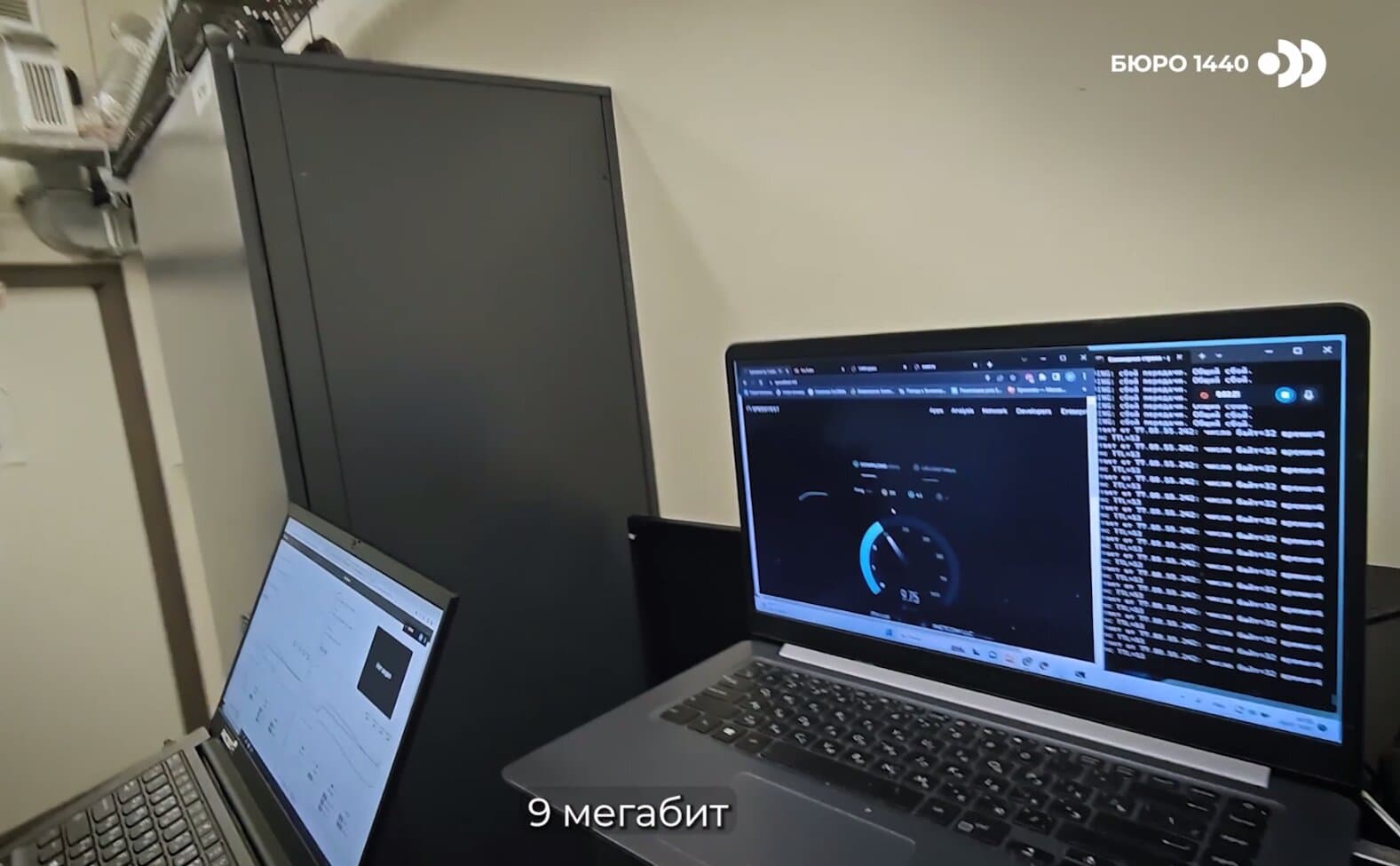
On July 1, 2023, Bureau 1440 conducted its first communication session with the initial three satellites of the Rassvet-1 mission. Data transmission speeds at the time reached 10 Mbps, with a latency of 41 ms.
In May 2024, under the Rassvet-2 mission, three additional satellites were launched from Plesetsk Cosmodrome. These spacecraft were larger than the previous ones and already represented full-scale prototypes of the future production satellites.
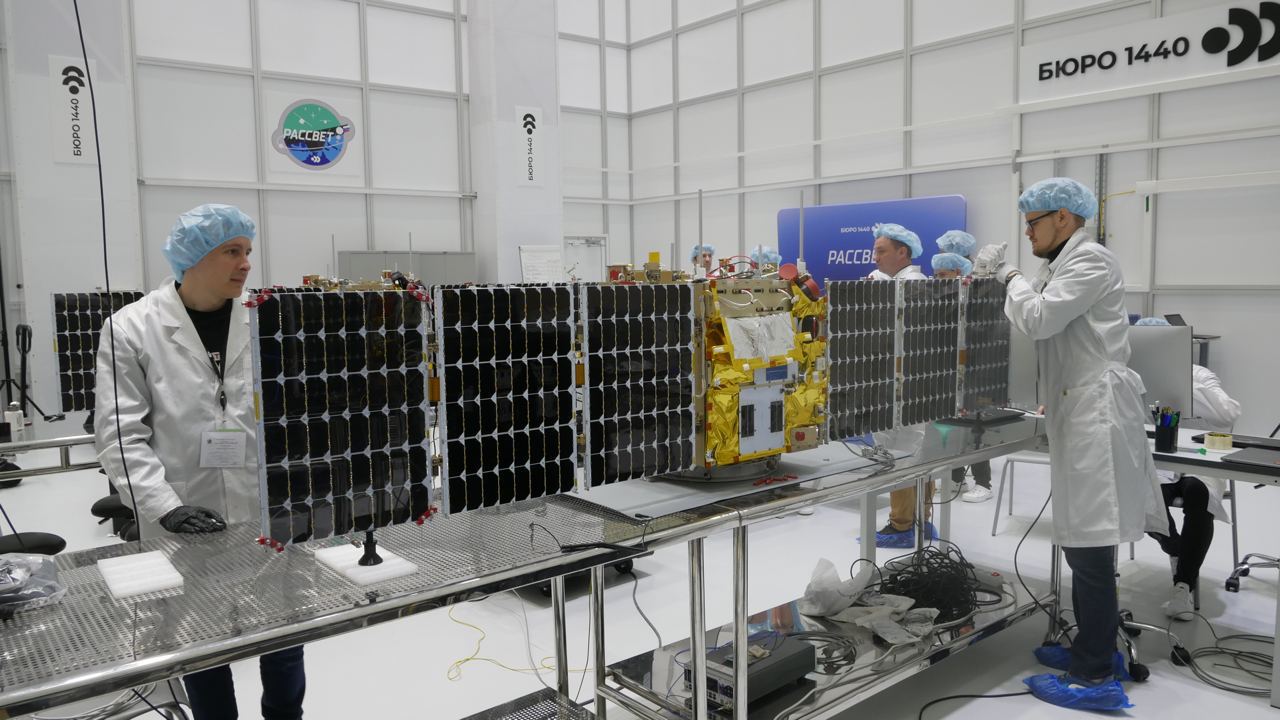
The hardware and software of the satellites were upgraded. In particular, they tested satellite communications equipment supporting the 5G NTN (non-terrestrial network) standard, as well as inter-satellite laser communication links. During the tests, 14 laser communication experiments were conducted over distances of 30–220 km, with a total of 1.5 TB of data transmitted; in a single session, 450 GB were transferred without loss.
On March 23, 2026, with a delay of approximately three months from the original schedule due to satellite production issues, Bureau 1440 announced the launch of 16 satellites into orbit. These satellites will form the foundation of the future Rassvet system.
Russia’s Internet Access Infrastructure federal project provides for the phased deployment of the Rassvet satellite system: 156 satellites in 2026, 292 in 2027 (enabling full commercial service launch), and 318 in 2028. It is stated that by 2035 the company could deploy more than 900 satellites in low Earth orbit if necessary.
The operational lifespan of the satellites, determined by battery resources and fuel reserves, is estimated at five years.
Given the delay in the launch of the first batch, this deployment schedule may shift somewhat. However, even partial implementation of the 2026–2027 plans would allow the Russian military to regain access to a reliable Starlink-like satellite communications system.
Global threat
The subscriber terminals developed by Bureau 1440 measure up to 60 cm in length and width and weigh less than 15 kg. Each terminal has a data throughput of up to 1 Gbps. The design was created with Russia’s climate conditions in mind and can operate in temperatures ranging from −40°C to +40°C.
Like Starlink terminals, the Russian devices are based on active phased array antenna (APAA) technology, which allows the terminal to automatically locate a satellite, establish a connection, and maintain it.
According to open-source data, the company has already completed development of the basic terminal version and is preparing for mass production.

It is also known that Bureau 1440 is developing an aviation-type user terminal to provide satellite internet access onboard aircraft, officially intended for Sukhoi Superjet 100 SSJ-100, MS-21, and Tu-214 aircraft.
As part of this project, a cooperation agreement has been signed with PJSC Aeroflot to develop digital services. Major Russian aircraft manufacturers are involved in integrating the terminal into aircraft systems.
In November 2025, Bureau 1440 also presented a prototype of a special satellite communication terminal designed for trains. It can operate in temperatures from −50°C to +50°C and at train speeds of up to 400 km/h.
Given the nature of the terminals being developed by the company and its leadership structure, it is highly likely that these terminals will be rapidly adopted by Russian military forces, and their use will not be limited to ground-based systems.
It should be expected that such terminals could be deployed on military platforms, including drones based on Geran-2/3/5 and Garpia drones, as well as cruise missiles.
In addition, given the company’s technological base, the development of miniaturized terminals suitable for smaller reconnaissance and strike drones is also a realistic possibility.

This will not only provide a continuous command-and-control link for strike drones and missiles, but will also allow them to effectively operate at extremely low altitudes, as demonstrated by Ukrainian strike drones that regularly destroy Russian air defense systems in temporarily occupied territories.
At the same time, unlike the Starlink terminals used by Ukraine, Russian terminals will not have geographic restrictions that prevent similar systems from being used to conduct strikes on Russian territory. Russian military forces, as well as allied or proxy paramilitary groups, will be able to use these systems anywhere and at any time.

It is important to emphasize that Ukrainian operational experience and Russian attempts to jam Starlink satellite communications have shown that this is technically extremely difficult, and outside the protection of localized point targets it is practically impossible due to the large number of satellites and their rapid movement across the sky.
At the same time, detection and countering of strike systems are significantly complicated by their very low flight altitude and, as a result, the difficulty of detection and the short reaction time.
In theory, satellite communication terminals also require GNSS antennas to determine their coordinates and can therefore be subject to spoofing. However, such terminals can be paired with anti-jamming CRPA antennas such as Kometa, or integrated with alternative navigation systems (inertial navigation, PNT, etc.).
Ukrainian context
At the time of writing, analysis of the flight trajectories of the first production batch of Russian communications satellites is not yet possible, as they have not reached their final orbits and have not been assigned NORAD catalog identifiers.
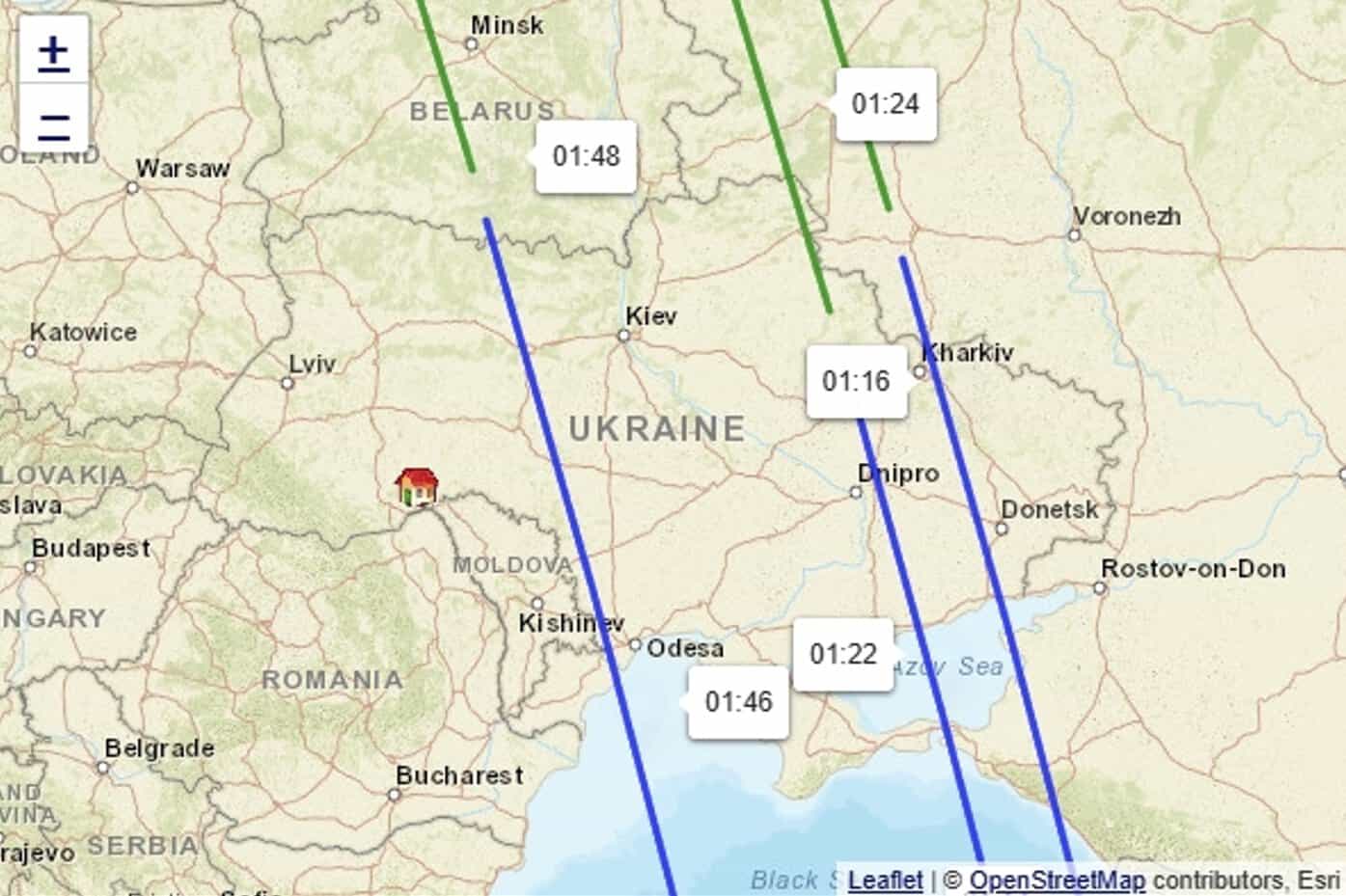
The orbital paths of three fully operational prototype satellites show that they fly in a tight cluster and pass directly over Ukraine two to three times per day. Each pass creates a communication ‘window’ lasting about 15–20 minutes.

Based on this data, it can be estimated that even in a worst-case scenario, if the satellites are optimally positioned to support Russian military operations in Ukraine, the first batch of 16 satellites alone could provide regular communication ‘windows’ lasting several hours per day, occurring multiple times daily.
This makes it necessary to develop countermeasures immediately, without waiting for full-scale deployment, since operational use could begin long before the constellation is completed.
Conclusion
A Russian Starlink-like system would not be competitive with Starlink as a commercial service. However, that does not mean it is insignificant. Its capabilities would be sufficient to meet the needs of the Russian military, state agencies, and major corporations for reliable global communications and command links for strike systems.
There is also a risk that access to this satellite network, and systems controlled through it, could be extended to Russia’s partners, including Iran, North Korea, African military regimes, and paramilitary groups in Africa and Asia. This would create a global security risk affecting not only Ukraine, but also Europe, the Persian Gulf, Japan, South Korea, and US interests worldwide.


Xi Jinping’s Washington Visit Outlines the Timeframe for the Active Phase of the Confrontation: Beijing Openly Demands Taiwan’s Return
On September 23–25, 2026, Chinese President Xi Jinping held talks with President Trump at the White House during the first Chinese state visit to t...

Netanyahu’s Visit to Abu Dhabi: Israel Builds Partnerships from a Position of Strength, but the Middle East Conflict Is Eroding the Edge of Its Weapons
On September 27, 2026, Israeli Prime Minister Benjamin Netanyahu traveled to Abu Dhabi with the head of Mossad and the head of the National Securit...

Big Tech Pushes the White House Toward Global De-escalation: The Stance of Tech Capital Shapes the Terms for a Deal Between Trump, Putin, and Xi Jinping
As of October 14, 2026, political advertising expenditures in the current U.S. election cycle, including reserved airtime, had exceeded $10 billion...

Japan Rapidly Builds Up Its Defense Capabilities: Personnel Shortages and Low-Cost Weapons Set the Pace of the Self-Defense Forces’ Modernization
On October 13, 2026, lawmakers from Japan’s ruling Liberal Democratic Party, led by former Defense Minister Itsunori Onodera, established a parliam...
