




Popular
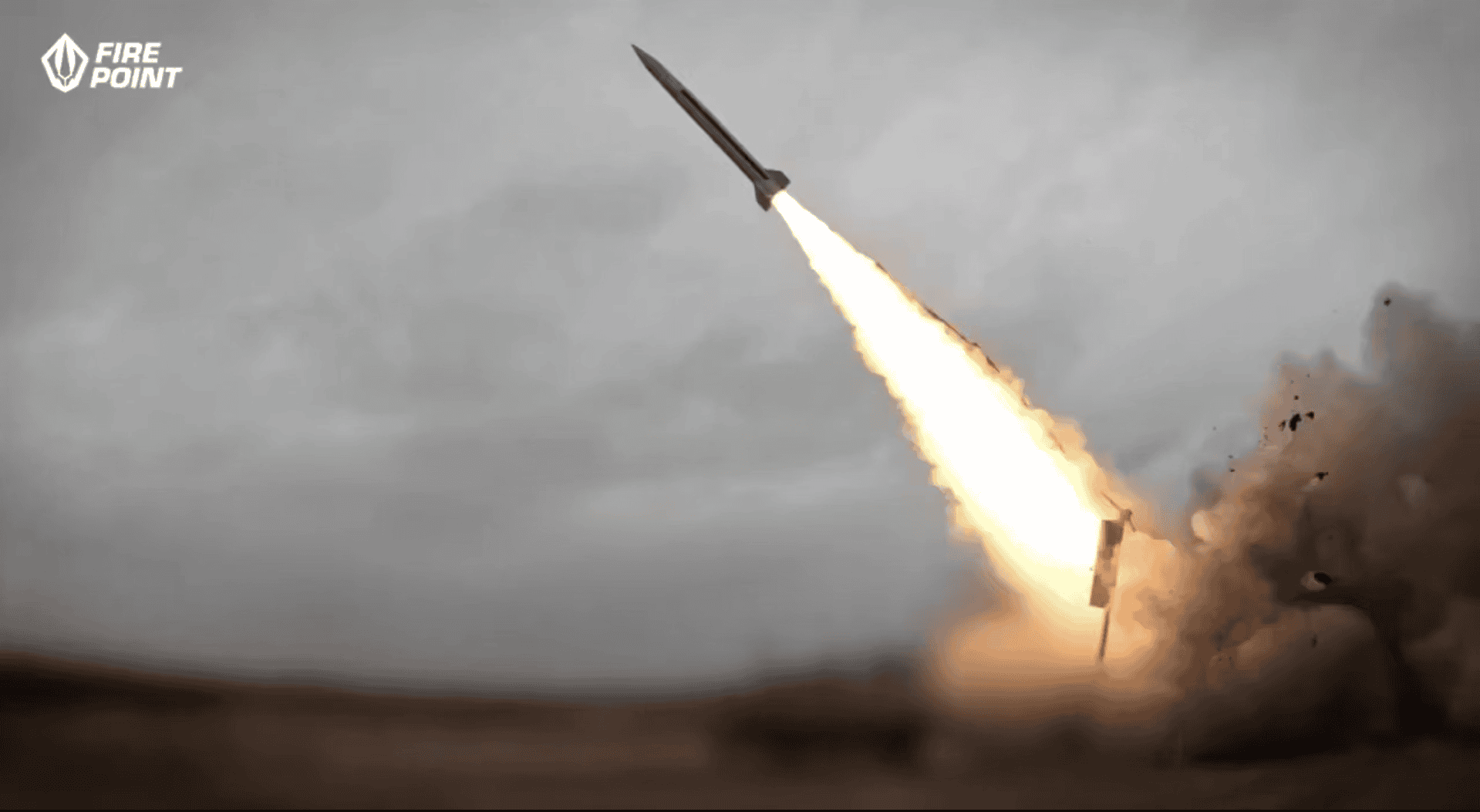
All components of the FP-7.x interceptor missile are manufactured in Ukraine, except for one component. Developed under the Freya project, the missile is designed to intercept ballistic missiles during the terminal phase of flight at altitudes of up to 20 km.
This was revealed by Fire Point co-founder and chief designer Denis Shtilerman on the “Rendezvous with Yanina Sokolova” podcast.
“We created a clone of the S-400, which we named the FP-7. It’s made of carbon fiber, so it’s lighter; therefore, it will likely fly even farther and be more maneuverable than the S-400,” he stated.
According to the chief designer, unlike the FP-5 cruise missile, whose bottleneck is related to import restrictions on turbojet engines, the FP-7.x has a fully established production cycle, “except for one part.”
“As for that one part we don’t manufacture in Ukraine, we’ve contracted a certain quantity of it. We already have it,” he emphasized.
The goal of the Freya project is to create a unified, pan-European air and missile defense system. The FP-7.x interceptor missile was developed specifically for this purpose.
According to the plan, the interceptor will be equipped with either an infrared or a semi-active homing seeker. It will be capable of reaching speeds of 1,500-2,000 m/s.
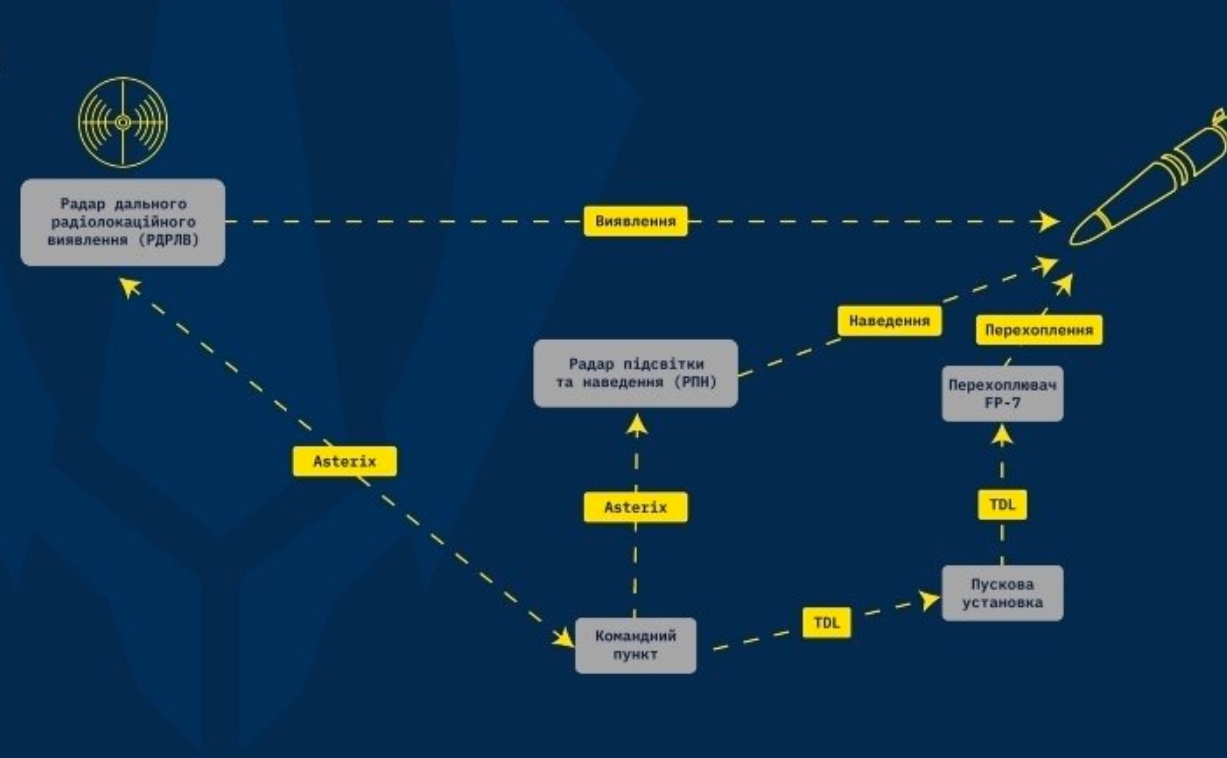
Three options are planned for ground-based long-range radar detection: the SAAB Giraffe 8A/4A (Sweden), the Thales Ground Master 400 (France), and the Hensoldt TRML-4D (Germany). The illumination and guidance radar is the Weibel GFTR-2100/48.

The command center is a Kongsberg Fire Distribution Center with open architecture and Network Access Nodes modules. A lightweight mobile launcher of domestic production is planned to be used as the launch platform.
Підтримати нас можна через:
Приват: 5169 3351 0164 7408 PayPal - [email protected] Стати нашим патроном за лінком ⬇
Subscribe to our newsletter
or on ours Telegram
Thank you!!
You are subscribed to our newsletter