

Popular
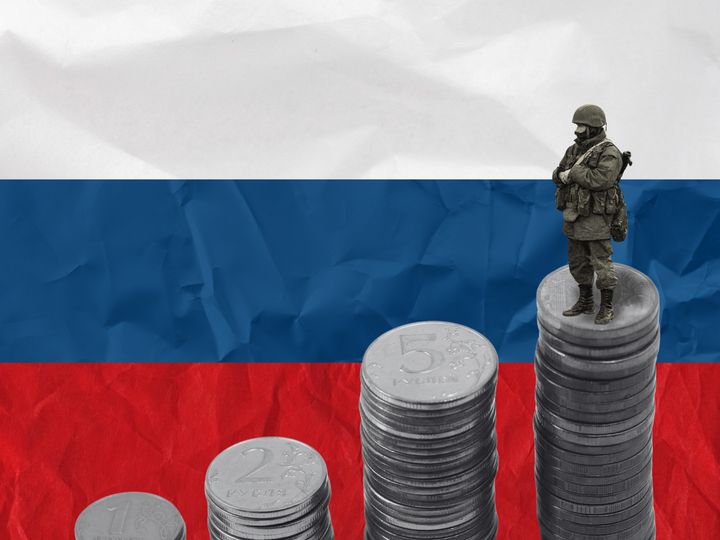
In the first quarter of 2026, Russia increased its military spending by 30% compared to the same period last year, despite the Kremlin’s stated intentions to gradually reduce the share of defense spending in the economy.
This was reported in an analysis by Janis Kluge, an expert at the German Institute for International and Security Affairs (SWP), who analyzed data from the Russian Federation’s federal budget for the first quarter of 2026.
According to his estimates, Russia’s military spending in January-March reached 5.9 trillion rubles, compared to 4.5 trillion rubles a year earlier. Thus, the increase amounted to about 30%.
The main factor behind the increase was classified budget expenditures. Their volume grew by 43% — from 3.4 trillion to 4.9 trillion rubles on an annual basis.
Overall, the Russian Federation’s federal budget for the first quarter projected expenditures of 12.8 trillion rubles. Of this amount, 38.2% was classified, marking a record high for the entire period under review.

According to Russia’s current budget legislation, approximately 85% of all classified expenditures are related specifically to military needs, including the procurement of weapons, the production of military equipment, and the provision of supplies to the armed forces.
It is noteworthy that the official budget for 2026 called for a reduction in military spending from 7.8% to 6.2% of gross domestic product. However, by the end of the first quarter, it already accounted for approximately 2.5% of Russia’s projected annual GDP.
When compared to the quarterly economic output, military spending amounted to approximately 12% of the country’s nominal GDP. According to estimates by InVEB analysts, the size of the Russian economy during this period was about 48.4 trillion rubles.
In the federal budget structure, the military accounted for about 46% of all expenditures. In fact, nearly every second ruble spent by the Kremlin in the first quarter was related to the war effort.
At the same time, Russia’s budget revenues for this period amounted to only 8.3 trillion rubles. Thus, military spending accounted for nearly two-thirds of all federal budget revenues.

Kluge notes that the sharp increase can be partly explained by so-called “accounting acrobatics.”
This refers to the possible transfer of part of the classified expenditures from the end of 2025 to the beginning of 2026 to formally comply with last year’s budget deficit targets.
It will be possible to definitively assess the true scale of Russian military spending after the release of detailed statistics for the second quarter.
If current trends continue, war spending in 2026 could reach 9-10% of Russia’s GDP, significantly exceeding the Kremlin’s official budget plans.
Meanwhile, following the attack on Moscow, the Russians built seven more towers for the Pantsir air defense systems.
Підтримати нас можна через:
Приват: 5169 3351 0164 7408 PayPal - [email protected] Стати нашим патроном за лінком ⬇
Subscribe to our newsletter
or on ours Telegram
Thank you!!
You are subscribed to our newsletter