







Popular
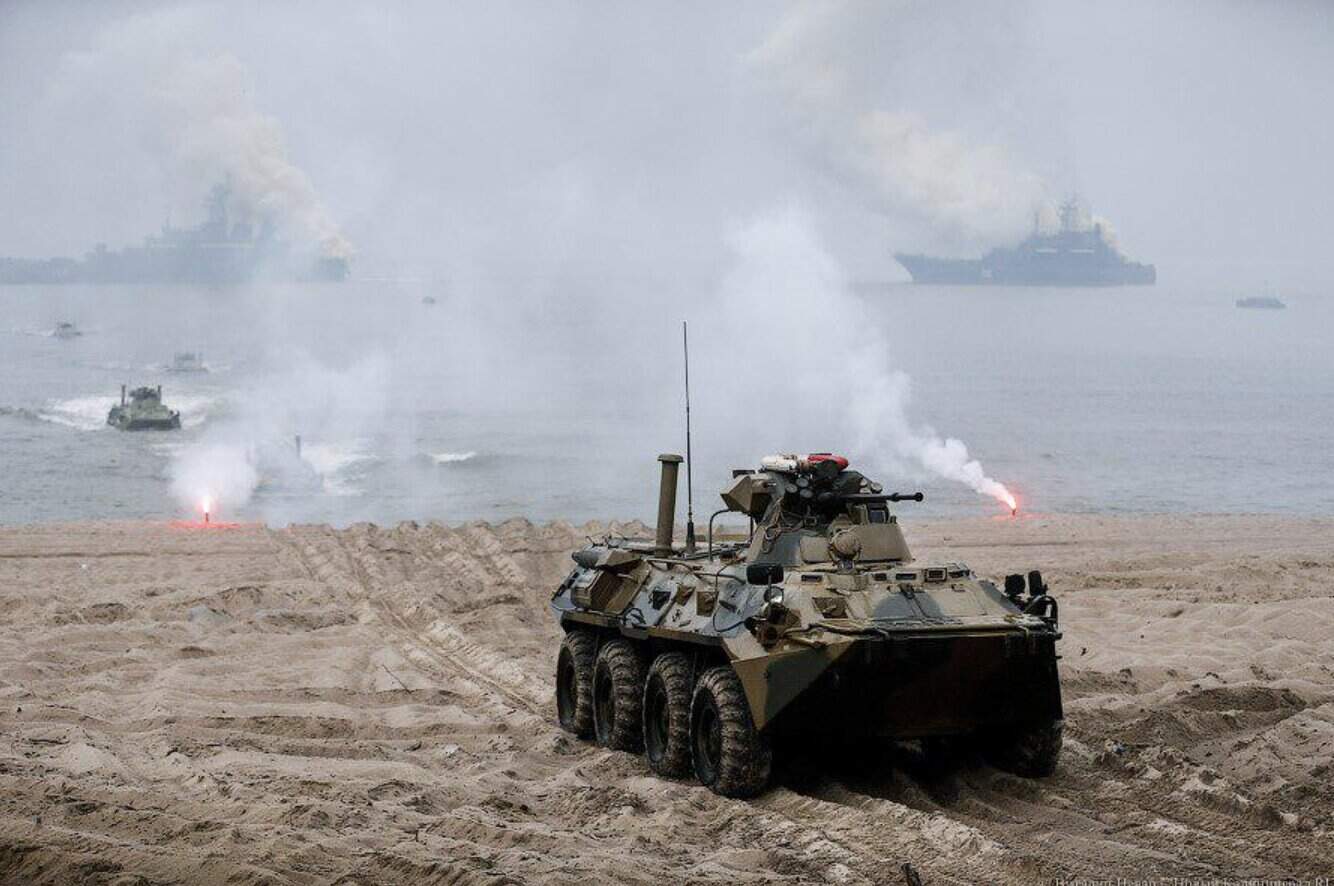
Russia may attack NATO member states relatively soon if it deems the timing favorable, in order to test the Alliance’s response and the effectiveness of Article 5 on mutual defense.
This was reported by SVT, citing a report by Sweden’s parliamentary defense committee.
The report highlights the growing uncertainty of the security situation in Europe and emphasizes that an armed attack on Sweden or NATO allies cannot be ruled out.
The Defense Committee brings together representatives of all Swedish parties represented in parliament. Its work forms the basis for the country’s long-term defense planning.

“We can state that the security and political situation remains serious and is characterized by significant uncertainty. There is a risk of rapid deterioration with serious consequences for the security of Sweden and Europe,” Committee Chair Jörgen Berglund stated at a press conference.
The report also notes that Russia could take such a step even without the military power traditionally considered necessary for an attack.
The report also notes that the United States is “key to the security and well-being of Sweden and Europe,” but emphasizes that “Europe’s relationship with the United States is changing” because “US foreign and security policy under President Donald Trump has undergone a significant transformation.”
According to analysts at the Sahaidachnyi Security Center, as of early 2026, Russia’s actions already differ significantly from classic sub-threshold operations, which were previously carried out primarily in the informational, psychological, and political spheres, as well as through isolated special operations in European countries aimed at improving its own position.
Analysts emphasize that Russia could impose a format of war on European countries that would be bloody, protracted, and politically extremely inconvenient for European societies and political elites. Among the tools of such pressure, they cite the use of long-range strikes and large-scale cyberattacks.
As researchers emphasize, although the global hybrid campaign against NATO is a secondary line of effort in the current war against Ukraine, the specific intensification and qualitative shift in hybrid measures focused on the Baltic region bear clear signs of operational environment preparation (OPE) on Russia’s part.
This likely means that activities on the very threshold of open conflict are not merely pressure tactics, but a deliberate preparatory phase for regional conventional aggression that replicates the established Russian invasion pattern.
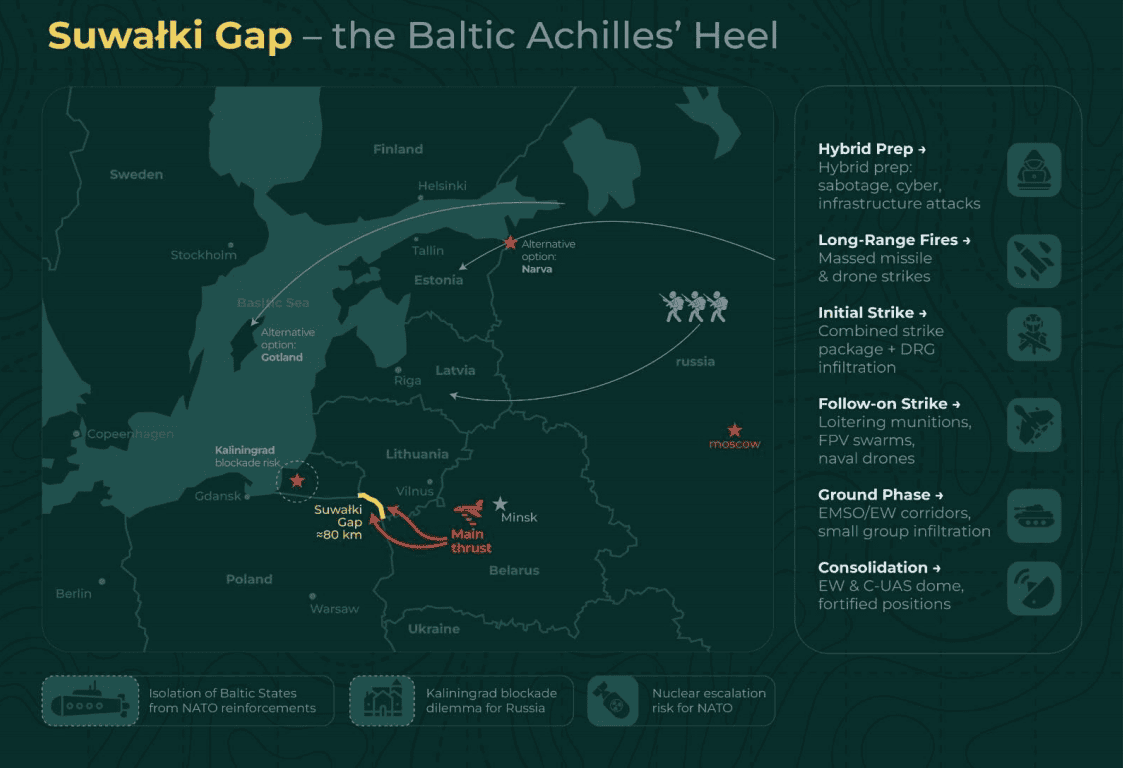
According to estimates, the most likely scenario involves a sudden attempt to seize a limited but strategically important area — most likely the 80-kilometer Suwalki Corridor between Kaliningrad and Belarus. Other likely targets include the islands of Gotland and Spitsbergen, the Saaremaa and Hiiumaa archipelagos, or the Narva region in Estonia.
At the same time, it is emphasized that Russia does not need to immediately seize any country militarily: the main goal may be to undermine trust in and the functioning of NATO in the event of a “sluggish” response to the invasion. This would not only bring the Putin regime a significant geopolitical victory but also make European countries extremely vulnerable to new invasions.
You can read more in our article “Undeclared War: How Russia is Attacking Europe.”
Підтримати нас можна через:
Приват: 5169 3351 0164 7408 PayPal - [email protected] Стати нашим патроном за лінком ⬇
Subscribe to our newsletter
or on ours Telegram
Thank you!!
You are subscribed to our newsletter