
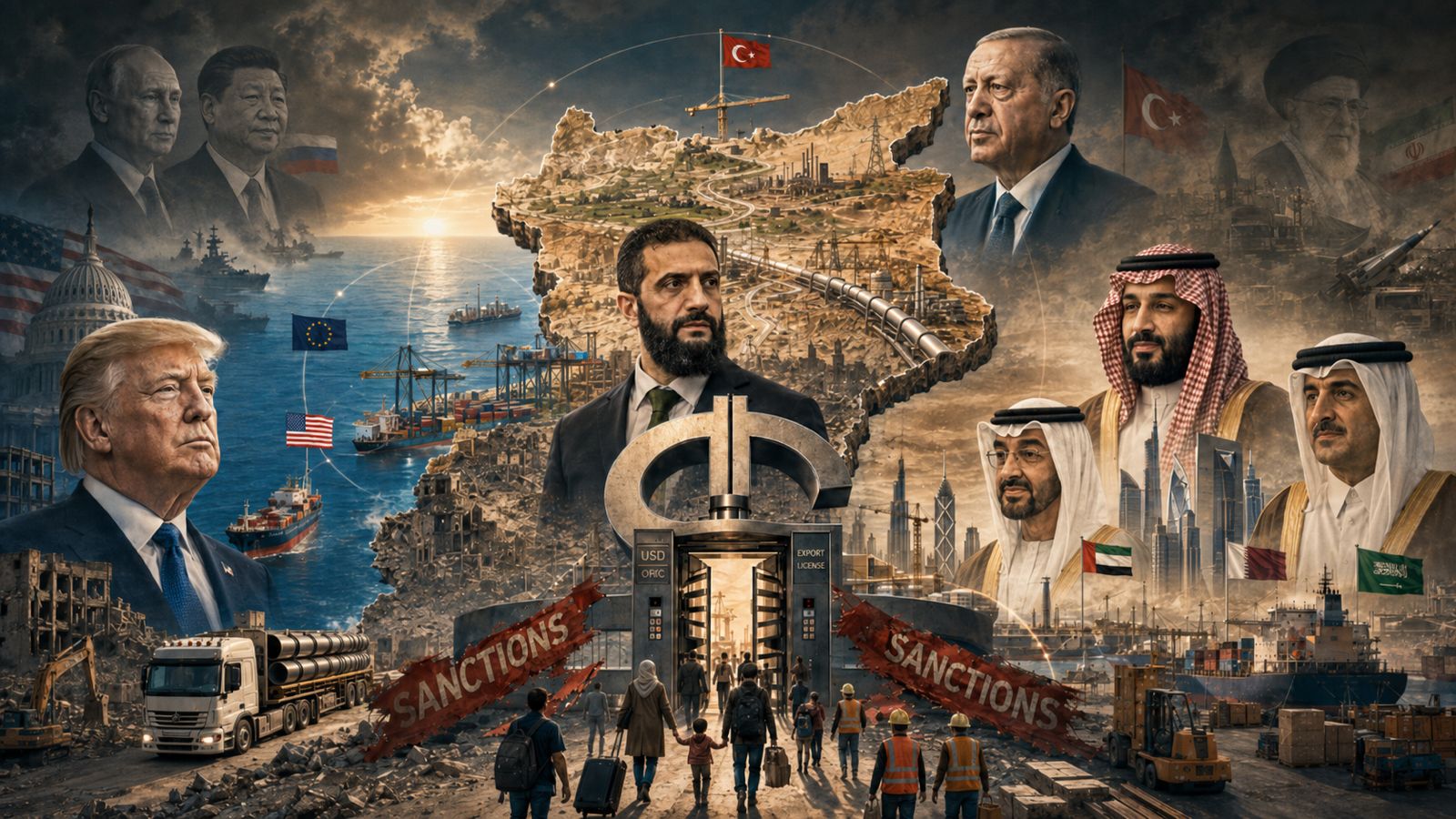
Washington Backs Syria’s Emergence as an Independent Actor in the Islamic World and Its Reintegration into the Western Sphere

Solid Info




On August 24, 2026, the United States revoked Syria’s designation as a state sponsor of terrorism, a status the country had carried since 1979. The decision took effect after Congress declined to block the White House initiative within the 45-day review window; that process began on July 8, 2026, when the administration moved to remove Damascus from the list of countries supporting international terrorist activity.
The same day, Washington removed Hayat Tahrir al-Sham — the group once led by current Syrian President Ahmed al-Sharaa — from the Specially Designated Global Terrorists list and lifted OFAC sanctions on the organization.
The decisions Washington adopted over the summer of 2026 eliminated the last operative restrictions of the sanctions architecture the American administration had built consistently while the Assad family held power in Syria.
Washington is working to build Syria into a sovereign, competitive, and economically capable state moving along the path of open societies. Syria joins a coalition in which every new participant removes part of the load from the American budget.
The United States commits no capital of its own to Syrian projects, yet it retains the instruments to control the access of foreign companies and capital to the Syrian market.
Washington holds the authority to impose targeted sanctions on specific market participants, to license exports of American-origin technology, and to deny dollar clearing to companies the Treasury places on its sanctions lists.
The World Bank estimates Syria’s reconstruction at $216 billion, while the country’s annual output stands at $21–22 billion. Western and Gulf capital’s interest in Syria rests on the scale of postwar recovery and reindustrialization projects, and on a resource base capable of delivering returns on large investments.
Part of that resource is created by reconstruction itself: the first wave of capital builds ports, power plants, and roads, while the second buys the finished construction industry, transport, and energy sector. Entry occurs at the bottom of the cycle, so an asset acquired cheaply appreciates with every facility brought online.
Syria’s principal advantages lie in a large share of young population, a geographic position with access to Mediterranean logistics, and a resource base holding reserves of phosphates, fuel, bitumen, ore, and metals.
With a median age of roughly 23.5 years, a working-age share of 62.8%, and children under 14 accounting for about a third of residents, Syrian demographics cover the additional labor the reconstruction requires.
Foreign investors who gained access to Syrian projects during 2025–2026 can hire directly inside the country, while for al-Sharaa’s government new jobs reduce the social risks driven by mass unemployment.
As of 2025, unemployment stands at 13.6%, and among those under 24 it reaches roughly 33%.
Syria’s role as a transit country is equally critical for global markets, since Iran’s blockade of the Strait of Hormuz sharply raised the importance of Syrian logistics for world fuel supply routes.
Recurring transit restrictions through Hormuz, which the clerical regime uses as leverage over Arab oil producers and over fuel consumers in the democratic bloc, pushed exporters to seek overland routes to the Mediterranean bypassing both Hormuz and Bab al-Mandab.
With routes across Syrian territory becoming a sought-after alternative for fuel transit, Middle Eastern governments accelerated agreements with Damascus on restoring energy supply corridors.
On July 17, 2026, in Washington, the Syrian Petroleum Company and Iraq’s Basra corporation signed two memoranda covering the Haditha–Banias corridor, a segment of the Kirkuk–Banias pipeline.
Transit potential runs to 2 million barrels per day, covering roughly 60% of Iraqi exports through Hormuz, which reached 3.3 million barrels per day before Operation Epic Fury.
Local phosphate reserves, estimated at 1.8–2.1 billion tons, rank among the world’s largest, and open-pit extraction requires no lengthy preparation, so export volumes of this commodity will grow without multiyear capital outlays.
In November 2025, the Al-Sawwana al-Sharqiya complex in Homs province resumed operations after a decade-long shutdown, and TERYAQ, a subsidiary of Serbia’s ELIXIR group, signed an agreement with the Syrian government covering exploration, extraction, investment, and the export of up to 1.5 million tons of Syrian phosphates during 2026.
Two weeks before the Damascus fair opened, Jordan’s Arkan proposed an investment in the Sawwana phosphate block using selective extraction to raise ore quality.
Saudi Arabia’s Sami Rock agreed with Damascus in April 2026 to produce diammonium phosphate fertilizer from oil shale. A ton of finished fertilizer sells for several times the price of a ton of raw ore, so processing on site raises the yield from the same deposit.
Ore is already moving out through Mediterranean ports, so Syrian phosphate reaches the regional fertilizer market without a lengthy preparatory stage.
Lifting sanctions on Syria and restoring political contacts between Western states and the new government in Damascus form part of a United States strategy aimed at drawing into the Western financial and political system those countries that curtailed their engagement with the autocratic axis during 2025–2026.
A state that has scaled back cooperation with China, Russia, and Iran gains access to Western markets, finance, and technology, and with that access comes a supplier pool Washington defines. Capital returning from the autocratic axis to such a market becomes impossible without American permission.
Economic recovery proceeds under the supervision of Western banks and auditors, while American requirements on ownership transparency and the origin of funds push new governments to replace former autocratic assets with investment from the United States, Europe, and the Gulf monarchies.
By securing control over the rules under which a state is rebuilt, the United States is systematically taking over influence in the former strongholds of autocracies across several regions of the Global South at once.
In the Middle East, this approach was first tested in Syria, since through dollar clearing, licensing, and sanctions screening Washington determines who participates in the reconstruction and who invests in the Syrian market.
While opening the door to legal economic activity for loyal Western and Arab companies, the United States simultaneously narrows the market for structures tied to Moscow and Tehran.
Lifting sanctions on Damascus and granting several competing political dynamics access to the Syrian market strengthens the sovereignty of al-Sharaa’s government.
The approach Washington chose shields the country from monopoly Turkish influence, as Ankara seeks to convert its economic weight over Syria into political and diplomatic dependency.
By drawing in Turkish, Western, and Arab capital simultaneously, al-Sharaa’s government works toward the same end of keeping the country out of exclusive Turkish control.
By maintaining cooperation with several political dynamics at once, none of which becomes decisive, the current government in Damascus seeks to avoid dependency on the scale Tehran held over the Assad regime from the start of the civil war.
Islamic dynamics enter Syria alongside capital, and Ankara, Riyadh, Doha, and Abu Dhabi push them in different directions on different value foundations. The current Ankara advances carries the largest resource, having formed over years in territories under its control through religious education, local administrative cadres, and charitable foundation networks.
A stronger Damascus counterbalances that vector and prevents Ankara from deploying the neo-Ottoman model across the Middle East at full scale. The same architecture also balances the Arabian Peninsula monarchies, whose religious schools compete with one another no less sharply than their investment offers do.
Syria enters this environment with a distinct vision of its own. The appearance of another independent center raises competition inside the Islamic dynamic, and that internal contest prevents any single current from expanding to a dangerous scale.
The White House and al-Sharaa’s administration converge on attracting as many investors as possible into Syrian reconstruction: for the United States the principle at stake is preventing Ankara’s monopoly over Damascus, while the Syrian government aims to preserve its ability to balance among several partners.
Washington’s instrument for reaching that outcome is control over access to the Syrian market, which the United States widens for foreign capital in proportion to the steps Damascus completes.
The requirements the White House treats as non-negotiable cover the final dismantling of Syria’s dependency on the Shiite axis of resistance and on Russian resources, a negotiated settlement with Kurdish forces, the reorganization of armed formations into a single army, and transparency of the investment regime.
Relying on funds raised from creditors with divergent geopolitical interests, Damascus can finance its recovery without American economic or security guarantees, which spares Washington the obligation to deploy military contingents, bases, and defensive weaponry on Syrian territory.
American banks now service Syrian institutions without a separate OFAC authorization, yet they screen every counterparty against a sanctions list of 140 individuals tied to the Assad regime.
Exporters may ship civilian goods without licenses or restrictions, though suppliers must obtain separate authorizations for dual-use equipment suitable for military purposes.
By establishing a flexible order of restrictions and permissions, Washington gained the ability to oversee most agreements concluded with Syria through its power to block dollar payments and shipments of high-technology equipment of American origin.
By lifting sanctions and granting the democratic bloc and the Gulf monarchies access to a reconstruction market worth roughly $216 billion, Washington created the conditions to transfer Syrian port infrastructure, banks, deposits, and pipelines to commercial structures loyal to the United States.
Investment offers from the capital of several states at once are eroding Ankara’s dominant influence over al-Sharaa’s government, an influence it accumulated systematically over the years of civil war.
During the fighting in territories controlled by Hayat Tahrir al-Sham, the Turkish lira became the primary currency of settlement, while electricity supply, goods, and border crossing operations came under Turkish control.
Lifting sanctions and stimulating rapid reconstruction became the instrument that prevented this model of Turkish influence from spreading and consolidating across all of Syria.
Every new branch of the Syrian economy that runs on dollar settlements, American equipment, and American insurance becomes part of infrastructure Washington controls and narrows the window for the Turkish model of influence.
Removing Damascus from the terrorism sponsors list opened the Syrian market to large capital
Despite the 2025 suspension of sanctions imposed under the Caesar Act, the UN Security Council’s lifting of restrictive measures against members of al-Sharaa’s government, and the alignment of military and political cooperation between Washington and Damascus, Syria’s retained status as a terrorism sponsor held back capital investment even where commercial interest existed.
Facing the threat of secondary sanctions and loss of access to the American market, major Western companies did not resume business activity in Syria, and banks in democratic states avoided clients on sanctions lists.
The State Department’s revocation of Syria’s designation removed the principal barrier to attracting large capital, while Washington simultaneously retained personal sanctions against Assad’s circle and restrictions against producers and sellers of captagon.
The targeted restrictions that replaced the general sanctions regime operate under the PAARSSR program, which extends additionally to arms traffickers, members of the Shiite axis of resistance, and Wahhabi structures.
Under the Assad regime, Syria produced roughly 80% of the world’s captagon with an annual turnover exceeding $10 billion, and that flow gave Damascus hard currency outside the sanctions system and leverage over its neighbors. The PAARSSR program now closes that channel to the remnants of Shiite formations that maintain contact with the autocratic axis.
Al-Sharaa’s government dismantled more than ten major laboratories and workshops, intercepted sixteen shipments ready for export, and in June 2025 Interior Minister Anas Khattab stated that no production facilities remained in the country.
On June 19, 2026, FATF placed Syria on its list of jurisdictions under increased monitoring, so even after political restrictions were lifted, financial transactions undergo enhanced scrutiny of the origin of funds.
The cost of compliance checks and the obligation to document the lawful origin of funds limit smaller investors’ access to Syrian reconstruction and reindustrialization projects, with the result that the Syrian market will draw predominantly large companies able to meet American financial control requirements.
Because Syrian infrastructure is to be reconstructed and built with capital from Western states and the Gulf monarchies, the reconstruction will be carried out by several political dynamics at once.
Settlements, equipment, and insurance for the facilities built with that capital, however, will remain under American control, which allows the postwar reconstruction to be organized and used coherently in the strategic interests of the entire democratic bloc.
Syria’s banking system remains weak after prolonged isolation from international financial mechanisms and years of outdated regulation. Saudi Arabia and Qatar’s repayment of Damascus’s debts to the International Development Association in May 2025 opened Syria’s access to World Bank lending, in which the American government remains the largest shareholder.
That step by the Gulf states enabled Syria to receive $146 million for electricity restoration projects and $100 million for financial sector modernization, though international financial institutions demand a full rebuild of the country’s banking system.
Because the local financial sector needs fundamental reform, the competitive advantage in Syrian reconstruction goes to investors whose own banks are already integrated into the Western financial system and can execute payments unavailable to Syrian institutions.
Gulf monarchy capital holds that capability first and foremost, and its investors were the first to use access to the desanctioned Syrian market.
Investment from Western states and the Gulf monarchies balances Turkish influence over the Syrian economy
A sweeping reform of Syrian investment law, initiated by Decree No. 114 that Ahmed al-Sharaa signed in July 2025, granted foreign nationals the right to own 100% of the capital of companies established in Syria.
Under the reform, company registration by foreign investors, business licensing, and supplementary permits now run through a single body, the Syrian Investment Agency.
Foreign investors received a guaranteed right to transfer after-tax profits out of Syria in convertible currency, and agricultural and export production was exempted from profit tax.
In 2026, an Arbitration Center of the Syrian Investment Agency was established to hear investor disputes with the state.
The government presented the updated tax and investment policy on the eve of the 63rd Damascus International Fair, which runs from August into September 2026 and drew roughly 1,000 organizations and enterprises from more than 60 countries.
Al-Sharaa’s government pushed the investment sector reform aggressively before the forum in order to hand foreign companies ready legal guarantees and steer the discussion straight to specific deals.
That calculation paid off: during the Damascus investment forum, al-Sharaa’s government signed a memorandum of understanding with Saudi Arabia’s Ithraa Group covering the reconstruction, modernization, and operation of a steel plant in the city of Hama.
At the same event, Syrian leadership signed an agreement with the Turkish firm iSRA to expand the industrial zone of Bab al-Hawa, adding roughly 2,000 investment slots to the city’s industrial base.
Before the investment forum, al-Sharaa’s government had already concluded an agreement with France’s CMA CGM on the management and operation of the container terminal at the port of Latakia for a term of 30 years.
In May 2026, the state-owned Syrian Petroleum Company signed a memorandum of understanding with ConocoPhillips, TotalEnergies, and QatarEnergy covering oil and gas exploration in Syrian territorial waters along with technical studies.
The agreement with Turkey’s iSRA and the drive by Turkish and Syrian officials toward $10 billion in bilateral trade show that Syria relies on Turkey as the state that secures goods transit and participates in delivering key infrastructure projects.
At the same time, the Damascus international investment forum and the package of agreements with foreign investors demonstrate that the new government builds its policy on distributing investment and infrastructure projects among several external partners, and through that approach prevents any one of them from dominating.
Attracting European and Gulf capital proceeds in parallel with Syria’s continued military and political cooperation with Turkey.
Damascus and Ankara jointly created a standing intergovernmental body, the High-Level Cooperation Council, covering defense, Syrian army training, energy, and trade, and President al-Sharaa has announced his intention to turn relations with Turkey into a strategic partnership.
Syrian Foreign Minister al-Shaibani publicly refused to limit military cooperation with Ankara ahead of his meeting with an Israeli delegation.
The position the Syrian diplomat articulated indicates that Damascus can lean on Gulf investment for economic reconstruction, but the formats European and Arab states offer cannot replace engagement with Turkey on joint defense projects.
Even in Syria’s largest projects involving Turkish contractors, the lead executors are companies of non-Turkish origin.
Qatari capital directs these initiatives, which concentrate mainly in the energy sector. On November 6, 2025, Syria’s Ministry of Energy concluded final concessions with a consortium led by Qatar’s Urbacon Holding covering eight power plants with a combined capacity of 5,000 MW, while Turkey’s Kalyon and Cengiz joined the consortium as ordinary partners.
The $4 billion contract to expand Damascus International Airport, the largest investment in Syria to date, followed an identical model. On November 24, 2025, Syria’s General Authority of Civil Aviation signed concessions with a consortium led by Qatar’s UCC Holding, while three Turkish companies received a stake without a leading position and the right to perform contracting work.
Doha holds the decisive role in the airport modernization, which gives Qatari capital control over a strategic transport hub and long-term revenue from its operation, while the Turkish contractors’ principal gain will be a one-time construction profit.
The combined value of contracts involving Turkish companies exceeds $11 billion, yet Turkish firms act as contractors in this work, while the projects themselves are financed by companies from the Gulf monarchies and the United States, which take ownership of the completed facilities.
Beyond Qatari investors, the largest ownership stakes in Syrian assets belong to the UAE’s DP World and to Saudi investors, who are currently gaining control over Syria’s ports, banks, and energy sector.
Constraining Turkish capital’s influence in Syria, which Washington uses to prevent Damascus from growing more dependent on Ankara, became achievable once the United States opened dollar clearing to Arab investors and stimulated competition between Arab and Turkish investment offers.
Commercial agreements concluded during 2026 show that Arab investors are taking the largest stakes in strategic assets through that competition.
In April 2026, Qatar’s Estithmar acquired 49% of Shahba Bank and is currently negotiating the purchase of roughly 30% of Syria International Islamic Bank.
On July 31, 2026, the Qatari food company Baladna announced a $3.3 billion agricultural project in the Euphrates basin, in which Baladna covers $250 million from its own funds while the remaining financing is to be raised from international banks.
The interaction between Arab and Western capital in Syria has brought both of the country’s key ports under operators oriented toward Western markets.
After the new Syrian government annulled a 49-year contract with Russia’s Stroytransgaz over an unfulfilled commitment to invest $500 million in modernizing Syrian port infrastructure, the UAE’s DP World received Tartus on a 30-year concession.
Since the container terminal at Latakia passed to 30-year management by France’s CMA CGM in spring 2025, the autocratic axis can no longer retain influence over Syria’s principal maritime logistics.
Although Western investment in Syria currently amounts to less than $1 billion, it is directed into offshore exploration, energy, ports, and other sectors most promising for the country’s economy.
American and French companies are securing the most valuable assets in these sectors, yet building and operating maritime terminals, power plants, and oil and gas fields requires substantial labor, which investors expect to draw from Syria’s favorable demographic structure.
The return of refugees supplies reconstruction with labor and relieves European budgets
The end of the civil war’s active phase brought demobilization of fighters and the return of part of the refugee population to Syria. This is already affecting employment: between 2023 and 2025, the unemployment share rose by 0.3%.
Low living standards and the combat experience of a large number of men create favorable conditions for illegal armed formations and criminal structures to recruit young people, so mass employment on new projects directly lowers the risk of renewed violence.
Building working mechanisms to stabilize Syria through reindustrialization, postwar reconstruction, and the presence of foreign capital lays the groundwork for overcoming the consequences of the past decade’s migration crisis, which still leaves between 6.5 and 7.5 million Syrians outside the country.
The migration wave of 2015–2016 brought more than 1 million Syrian refugees into the European Union, prompting European governments to raise social spending and tighten security screening. Integration of this group proved slower than others, and according to France’s National Institute of Statistics and Economic Studies, 91% of French residents raised in Muslim families practice their parents’ religion.
Slow cultural adaptation among Muslims who migrated from Syria and elsewhere raised the risk of radical Islamic currents arriving in Europe and, given the closed nature of these social communities, using them as an environment for building extremist networks.
Taken together, these processes form a compound challenge for European governments, which face the need to head off the buildup of internal risks.
Lifting sanctions on the Syrian market, active development of investment projects, and improving security conditions establish circumstances in which refugees will view return to Syria as an advantageous alternative.
Weekly violent deaths in Syria fell from 134 in early 2025 to roughly 25 by year’s end, and through 2026 the figure has held at 11 per week.
The UN deputy special envoy noted that March 2026 recorded the lowest level of violence since the start of the country’s civil war.
Capital investment in Syrian reindustrialization and infrastructure reconstruction will create the conditions to meet the country’s needs in housing, jobs, and educational and medical facilities, while reduced security threats will further encourage Syrians to return to permanent residence.
An additional factor accelerating return will be the gradual reduction of social programs in European states, a necessity emphasized simultaneously by representatives of Euroskeptic parties and moderate political forces in Europe.
In November 2025, Friedrich Merz stated that the end of the civil war on Syrian territory eliminated the causes that previously gave Syrians objective grounds to leave their country, and expressed his conviction that grounds for granting them asylum in Germany no longer exist.
Syria’s gradual stabilization and European states’ drive to launch return mechanisms have already produced a first wave of Syrian refugee repatriation.
Since December 2024, roughly 1.75 million refugees have returned to Syrian territory from abroad. According to UNHCR surveys, between 14% and 18% of Syrian asylum seekers intend to return to their country within the coming year, and up to 80% of Syrians living abroad reported plans to repatriate over a longer horizon.
New jobs in Syria give European and North American governments the means to accelerate Syrians’ return home while reducing spending on social benefits and resettlement, and easing the social tensions the migration flows of 2015–2016 produced.
Western and Arab investors are taking over Russian control of Syrian deposits and transit
Syria’s postwar reconstruction needs exceed the capacity of its economy several times over: annual GDP is estimated at $21–22 billion, while the World Bank puts direct damage to infrastructure and buildings at $108 billion.
The Syrian government’s inability to fund recovery from its own resources means that for years ahead Damascus will order works, equipment, and raw materials from abroad.
For Western and Gulf contractors, suppliers, and traders, Syria’s reconstruction and reindustrialization creates a stable order book for decades, while a population exceeding 20 million provides substantial consumer demand and favorable conditions for sales.
Foreign investors’ priority allocation of capital to extractive industry means Syrian raw materials return to external markets first.
Phosphate exports are already generating Damascus’s first hard currency revenues, while oil production remains a sector in which Syrian supply stays marginal on the world market.
Although proven oil reserves on Syrian territory reach roughly 2.5 billion barrels, even before the civil war daily output stood at 380,000–400,000 barrels, less than 0.5% of global production.
The fighting cut Syrian energy output by roughly 80%, and in the first half of 2026 Damascus averaged about 82,000 barrels per day.
Even before the civil conflict, Syria remained a net crude exporter while purchasing refined products abroad, since the refineries at Banias and Homs, with a combined capacity of about 240,000 barrels per day, did not cover domestic demand.
The country has also imported gas since 2008, so even restored production will not give Damascus significant weight on the world market.
The only supply route restored after the civil war is the Azerbaijan–Kilis–Aleppo gas pipeline with a capacity of 1.2 billion cubic meters per year, operating since August 2025.
This pipeline increases Ankara’s influence over energy supply to Syria, since a substantial portion of it crosses Turkish territory, and Erdogan’s government has separately committed to raising electricity supply to Syria to 900 MW in 2026.
With the risk of Damascus becoming substantially more energy-dependent on Ankara, al-Sharaa’s government, supported by the United States, is admitting Gulf and Western operators into offshore exploration projects and port infrastructure.
Alongside joint projects with ConocoPhillips, TotalEnergies, and QatarEnergy, the Syrian Petroleum Company signed an exploration assessment memorandum with Chevron and UCC Holding. On May 11, 2026, the parties announced a specific block on the Syrian shelf in the Eastern Mediterranean where the companies will conduct exploration.
The intensified engagement between Syria and American business at the first Syrian-American Business Forum in July 2026 created the conditions to convert memoranda of understanding signed with American companies into actual investment agreements.
The condition for further development of Syrian projects, however, is the complete removal of the autocratic axis from key sectors of the Syrian economy and the minimization of Syria’s trade ties with Russia and Iran. Investors from democratic states prioritize capital allocation to sectors where the presence of Moscow and Tehran has been reduced to a minimum.
The scale of new investment and Damascus’s currency inflows depend directly on further narrowing Russian and Iranian control over the Syrian economy.
After the collapse of the Assad regime, Iran’s influence network in Syria was effectively liquidated, which reduced security threats in the country and helped open the economy to new capital.
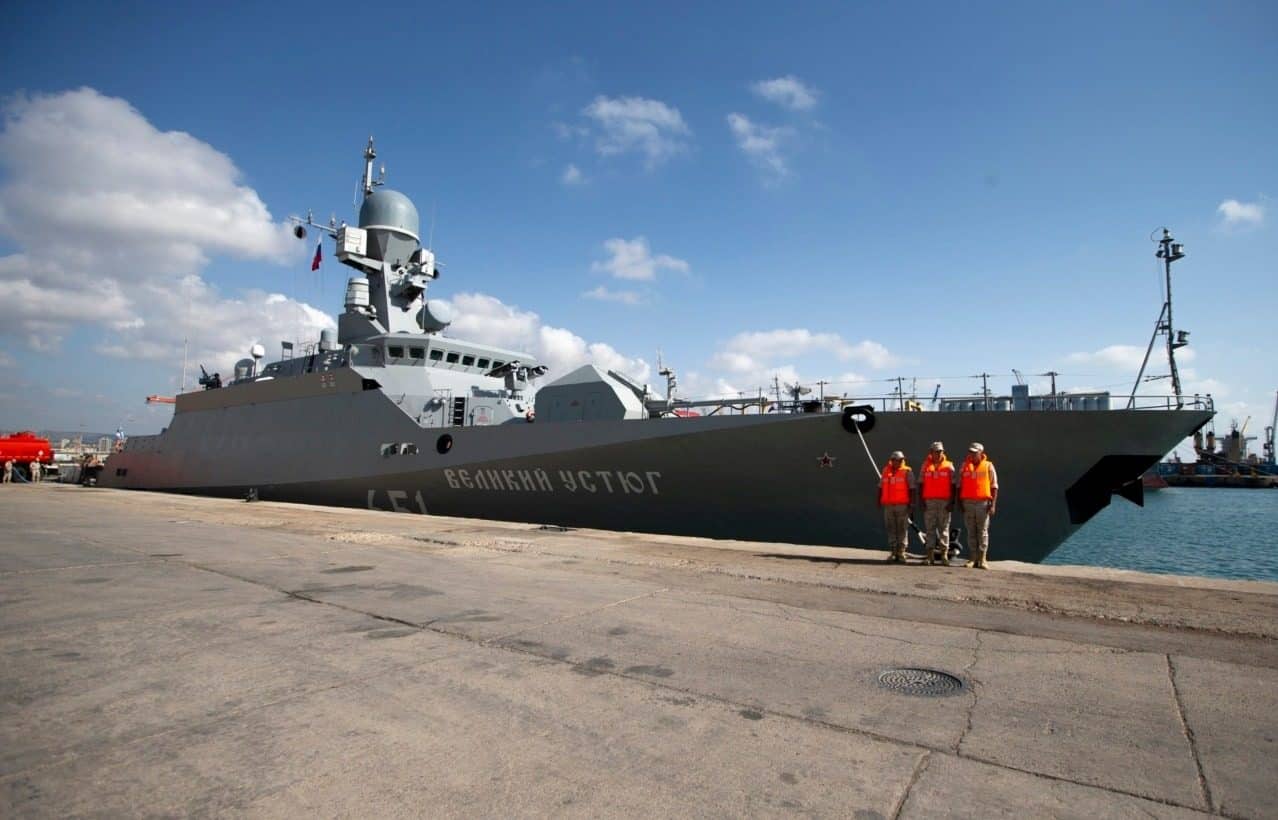
For Moscow, Syria was its sole non-European base of permanent military presence, and it was through Tartus and Hmeimim that the Russian navy and air force reached the Eastern Mediterranean.
Beijing secured Syria’s reconstruction in advance: in September 2017, Damascus named China, Russia, and Iran as the governments that would receive priority in postwar projects.
On January 12, 2022, Syria signed a memorandum joining the Belt and Road Initiative, and at the first Syrian reconstruction fair in Beijing more than 1,000 Chinese companies declared intentions worth $2 billion. With the fall of the Assad regime, none of these projects materialized.
Tehran’s military presence in Syria, which under Assad comprised 570 facilities and roughly 15,000 personnel from the IRGC and the regular Iranian army, ceased to exist within the first weeks after the change of power in Damascus.
Iran simultaneously lost control of the Iraq–Syria–Lebanon land corridor through which the clerical regime supplied weapons to Hezbollah formations, and lost its role as the principal fuel supplier to Damascus.
Whereas in 2024 Tehran supplied all 22.2 million barrels of oil Syria imported, purchases of Iranian fuel halted after Assad’s fall.
The new government’s assumption of power in Damascus removed the main competitor of Arab, Turkish, and Azerbaijani energy companies for access to the Syrian market.
Russian-Syrian trade and economic ties, substantially expanded during the civil war, have not been neutralized completely.
During 2025–2026, Syria purchased 2.9 million tons of Russian wheat, accounting for 85% of Damascus’s total imports of that commodity. In 2025, Moscow supplied Syria with an average of 46,000 barrels of oil per day, and in the first months of 2026 fuel imports from Russia rose by 75% to 60,000 barrels per day.
Since neutralizing Russian influence in Syria became one of the informal conditions of financial assistance to the new Syrian government, the Russian military presence in the country contracted from 114 bases and positions to two facilities at Hmeimim and Tartus.
Under the terms of the memorandum of August 9, 2026, these key Russian military bases in the Eastern Mediterranean are to be converted into joint training centers under Syrian control.
Because Moscow retains influence over Damascus through fuel and food supplies despite the substantial reduction of its military presence, capital investment in the country’s food and fuel sectors has become a key direction for investors from Western states and the Gulf monarchies.
Developing refining capacity, concluding contracts, and securing the logistics that give Damascus permanent access to food resources allow al-Sharaa’s government to shed dependency on Russian deliveries for good.
This narrows Moscow’s last instruments of influence over the new Syrian administration, while Western and Arab suppliers increase their control over these sectors of the Syrian economy.
Among Chinese business and political circles, a widespread assessment holds that Beijing wins in Syria under any scenario, since no one but Chinese companies can carry out reconstruction, supply equipment, and offer reengineering solutions. These inflated expectations reach investment committees and the Chinese suppliers themselves, who plan their entry into the Syrian market without accounting for American financial controls.
Chinese manufacturers will continue to supply low-cost consumer goods, but industrial equipment passes through American export licensing, and settlements and insurance for large contracts run through the dollar system. Through its mechanism of financial control over market participants, Washington denies Beijing the winner’s position and leaves it the low-price tier of supply.
By revoking Syria’s designation as a state sponsor of terrorism, Washington completed the model of American-managed selective access for foreign investors to the Syrian market, which the administration had been building consistently since the start of 2025.
The final repeal of the sanctions regime against Damascus allowed Gulf investors, Western companies, and Turkish capital to compete for reconstruction projects, through which Washington protected al-Sharaa’s administration from a monopoly consolidation of Ankara’s influence over Syrian politics and economics.
Damascus’s new creditors invest in Syrian reconstruction under American financial oversight, whereas Russian and Iranian investments under the Assad regime flowed into a closed economic system without audit or accountability.
Capital from the Gulf monarchies and Western states enters Syria under World Bank supervision and passes through risk insurance and arbitration protection.
The accountability of the investment system Washington built makes the new financing model more durable and gives Damascus the capacity to balance among competing investors.
The successful test of a strategy of managed reintegration of former autocracies into cooperation with Western states, now under way in Syria, will allow this model to be used subsequently to restore the democratic bloc’s influence in states where the autocratic axis is losing control.
This publication is the result of a partnership between MILITARNYI and SOLID INFO. An extended version is available on the website of the analytical center.
Xi Jinping’s Washington Visit Outlines the Timeframe for the Active Phase of the Confrontation: Beijing Openly Demands Taiwan’s Return
On September 23–25, 2026, Chinese President Xi Jinping held talks with President Trump at the White House during the first Chinese state visit to t...

Netanyahu’s Visit to Abu Dhabi: Israel Builds Partnerships from a Position of Strength, but the Middle East Conflict Is Eroding the Edge of Its Weapons
On September 27, 2026, Israeli Prime Minister Benjamin Netanyahu traveled to Abu Dhabi with the head of Mossad and the head of the National Securit...
Big Tech Pushes the White House Toward Global De-escalation: The Stance of Tech Capital Shapes the Terms for a Deal Between Trump, Putin, and Xi Jinping
As of October 14, 2026, political advertising expenditures in the current U.S. election cycle, including reserved airtime, had exceeded $10 billion...
