

Dual-Track Strategy: Washington and Seoul’s Peace Initiatives Unfold amid South Korea’s Large-Scale Rearmament

Solid Info

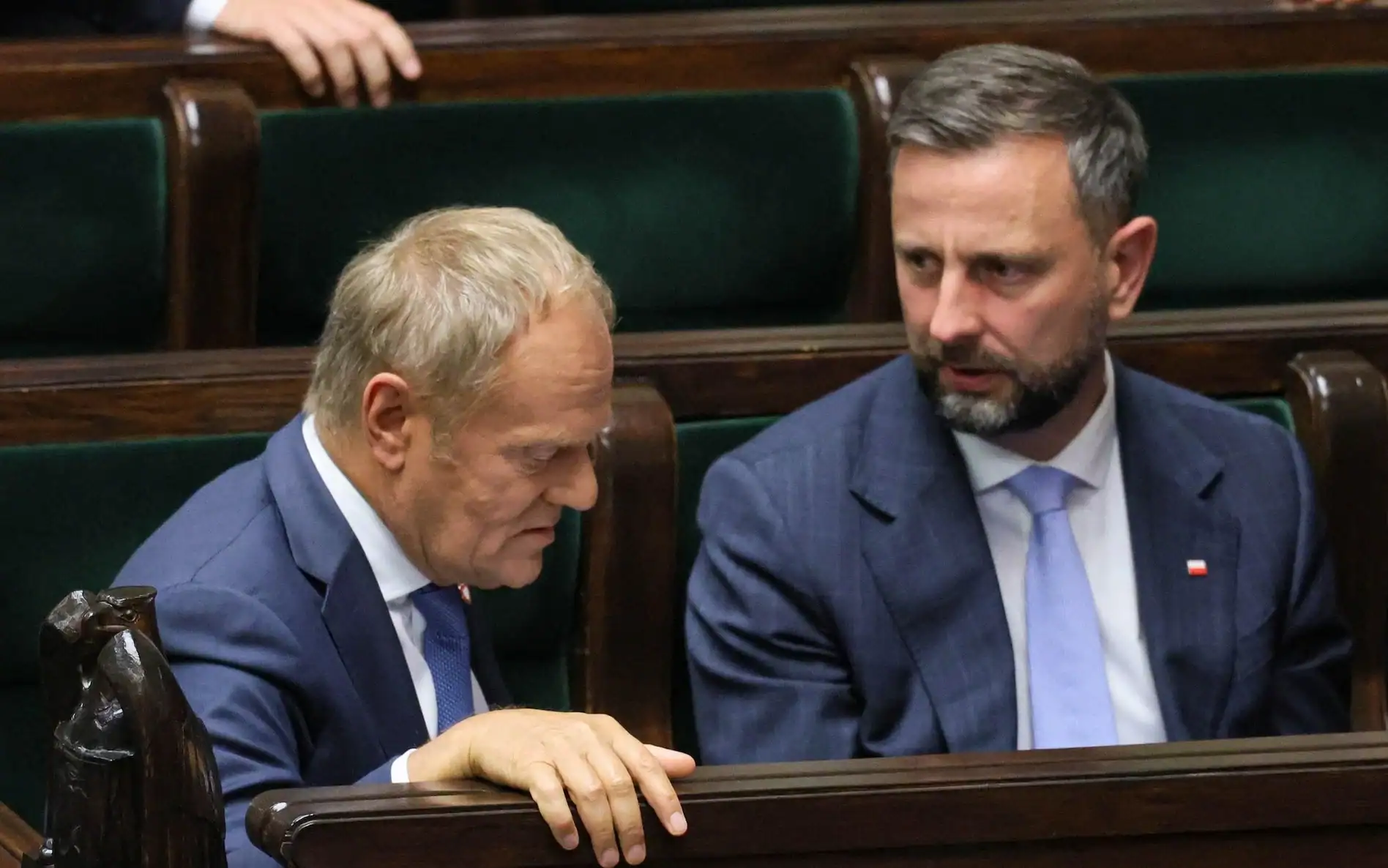

On August 24, 2026, Secretary of State Marco Rubio and South Korean Foreign Minister Cho Hyun agreed in a phone call to maintain close coordination on the North Korean nuclear issue and to meet in the near future.
On August 16, 2026, Trump used a social media post to announce a significant scaling back of joint drills, praise Kim Jong Un, and rebuke Seoul for refusing to help with Iran’s denuclearization.
Viewed separately, these events look like signs of a rift within the alliance, but together they point to a shared course toward coordinated de-escalation ahead of the September talks between Trump and Xi Jinping.
The Pentagon shortened the Ulchi Freedom Shield command post exercise and canceled the Ssangyong amphibious exercise scheduled for September 2026. The scope of the cuts was left undefined, and until then the militaries of both countries had maintained that the exercises would be held at the scale of previous years.
The JAROKUS trilateral format uniting the United States, Japan, and South Korea remains unchanged, however, and the cuts affected only the bilateral block of exercises.
Washington and Seoul are pursuing a dual-track strategy in which the public track promotes de-escalation ahead of negotiations with Beijing while materiel preparations for high-tech warfare accelerate in the background. The public scaling back of exercises runs in parallel with the growth of South Korea’s defense budget, which Seoul approved at about $45 billion for 2026, up 7.5%, and the request for 2027 has reached $53.5 billion, an increase of 8.2%.
Capital spending on weapons modernization rose 11.9% to $13.5 billion, and research and development grew 19.4% to $4 billion.
The Korean three-axis system remains the core of South Korea’s defense strategy, and its funding for 2026 was increased by 21.3% to $6 billion. Its three elements are Kill Chain, KAMD, and KMPR.
Kill Chain, the preemptive strike system, received the lion’s share of $3.6 billion, which is directly tied to the start of mass production of the KF-21 fighter. Korea Air and Missile Defense (KAMD) was funded at $1.2 billion, and the Korea Massive Punishment and Retaliation (KMPR) system received $484 million, covering the operational deployment of high-powered ballistic missiles.
The United States remains the key supplier of the most advanced systems, mainly aircraft and missiles, that South Korea cannot quickly localize.
Between 2023 and 2026, through Foreign Military Sales and Direct Commercial Sales channels, Seoul initiated the purchase of 25 more F-35A fifth-generation fighters worth about $5.06 billion on top of the 40 already in service, a deep upgrade of its fleet of 59 F-15K fighters with a Defense Security Cooperation Agency (DSCA) ceiling of $6.2 billion, 36 AH-64E Apache attack helicopters for $3.5 billion, and advanced SM-6 surface-to-air missiles for sea-based missile defense along with AIM-9X Block II missiles.
South Korea’s Defense Acquisition Program Administration (DAPA), meanwhile, has shown that it is ready to drive a hard bargain. When Boeing’s offer for four E-7 Wedgetail airborne early warning and control aircraft reached $4.9 billion, Seoul scrapped the tender and chose an alternative from the L3Harris and Bombardier consortium, based on the Global 6500 aircraft with Israel’s IAI EL/W-2085 radar, for $2.2 billion.
The political commitment to buy $25 billion worth of U.S. weapons by 2030, discussed at bilateral summits, rests on double counting.
DSCA notifications cleared by Congress for 2026 total roughly $16–18 billion, including the F-35A, F-15K, AH-64E, SM-6, and logistics support, but the actual contract value of these deals is much lower. DSCA valued the F-15K upgrade program at $6.2 billion, while the actual contract with Boeing for the system design and development phase was signed for $2.8 billion.
Walking away from the E-7 purchase took $4.9 billion out of U.S. exports and left a serious gap in meeting the political quota. Actual contracts with the United States amount to roughly $12–13 billion, so Seoul will have to look for openings for new megadeals in 2027–2029, such as additional PAC-3 MSE batteries, P-8A maritime patrol aircraft, or long-range missile systems.
K-Defense, the domestic defense-industrial strategy, is focused on achieving maximum technological autonomy. The armed forces are procuring K2 Black Panther main battle tanks, K9 Thunder self-propelled howitzers, and K239 Chunmoo multiple rocket launchers in large numbers.
Under the Defense Innovation 4.0 initiative, South Korea has launched an across-the-board automation program and intends to produce more than 500,000 military drones for various missions by the end of 2026.
The program to build the indigenous KF-21 Boramae 4.5-generation fighter has moved into initial serial production. In 2023, the Korea Institute for Defense Analyses (KIDA) recommended cutting the first Block I batch from 40 to 20 aircraft because deeper verification was needed, and the Ministry of National Defense approved a compromise schedule of 20 aircraft by 2027, followed by another 20.
Program funding in the 2026 budget has all but doubled, from $880 million to $1.6 billion, and includes development of a domestic turbofan engine and indigenous long-range air-to-air missiles. The budget also funds early research toward a homegrown fifth-generation stealth fighter.
In parallel with KF-21 development, foreign platforms are reinforcing the air force’s strike power. A critical element of the strategy is the $2.8 billion contract signed with Boeing in early 2026 for a comprehensive upgrade of the 59 F-15K Slam Eagle heavy fighters already in service.
With a total value of up to $6.2 billion, the program will turn the F-15K into a 4++ generation platform, fitting it with the EPAWSS electronic warfare suite, the APG-82(V)1 AESA radar, and new ADCP II mission computers. The upgrade will allow the older jets to survive in dense air defense zones and operate as arsenal planes integrated with drones and stealth aircraft.
Korea’s KAMD missile defense architecture is being built out at unprecedented speed as it shifts to a multilayered structure.
In November 2025, DAPA signed serial production contracts for the L-SAM long-range surface-to-air missile system, which forms the upper tier and intercepts targets at altitudes of 40–60 km. Hanwha Aerospace received $479 million to produce interceptor missiles with divert and attitude control system (DACS) technology, and Hanwha Systems received $243 million for multifunction radars.
In the middle tier, South Korea has deployed the M-SAM Block II Cheongung II medium-range surface-to-air missile system, which has proven its effectiveness and become an export breakthrough, winning contracts worth $3.2 billion from the UAE, Iraq, and Saudi Arabia. Seoul has also started developing next-generation systems, the L-SAM II for altitudes above 60 km and the M-SAM Block III.
The purchase of U.S. SM-6 missiles strengthens the sea-based segment of missile defense, and their integration with the new KDX-III Batch-II destroyers will make it possible to intercept ballistic targets over the ocean.
The most radical shift in the balance of power on the Korean Peninsula has been the operational deployment of the Hyunmoo-5 “monster missile” in 2024–2026. With a launch weight of 36 metric tons, it carries a warhead weighing 8 to 9 metric tons, unprecedented for a conventional weapon.
During its ballistic descent, the missile exceeds Mach 10 and becomes a kinetic projectile capable of penetrating up to 100 meters of reinforced concrete. The Hyunmoo-5 underpins the KMPR strategy and is designed for the assured destruction of North Korea’s top leadership sheltering in deep mountain bunkers.
In kinetic and psychological effect, the missile is regarded as a non-nuclear equivalent of a tactical nuclear weapon. With the warhead reduced to one metric ton, its range grows to 3,500–5,500 km, which technically makes it an intermediate-range ballistic missile capable of reaching targets deep inside the territory of potential adversaries in the Indo-Pacific.
The naval component is in transition to a blue-water navy. Construction is underway on KSS-III Batch-II submarines of the Jang Bogo-III class, which for the first time are being fitted with lithium-ion batteries that dramatically extend submerged endurance, as well as with at least ten vertical launch cells for Hyunmoo ballistic missiles.
Under the 2027 budget, the government is for the first time allocating more than $7 million to the Jang Bogo-N program, which covers early design and technology development for a nuclear-powered submarine. Seoul is aiming this program at China’s growing submarine fleet. The $5.3 billion KDDX next-generation destroyer program calls for six ships, and in July 2026 Hanwha Ocean won the competition for the detailed design and construction of the lead ship.
Seoul’s dependence on U.S. intelligence is shrinking rapidly thanks to the Project 425 space program. In November 2025, a SpaceX Falcon 9 rocket placed the fifth military reconnaissance satellite into orbit, completing the first phase of a constellation of one electro-optical reconnaissance satellite and four synthetic aperture radar satellites.
The constellation allows the South Korean military to conduct independent, all-weather monitoring of North Korean territory, with data refreshed every two hours. For airborne early warning and control, the Global 6500 platform was chosen to replace the aging Boeing E-737s, significantly strengthening South Korea’s sovereign capacity for electronic warfare and intelligence.
Artificial intelligence integration is the foundation of the Defense Innovation 4.0 doctrine. Implementation is planned in three stages, moving from initial autonomy, which includes reconnaissance systems such as Project 425 satellite imagery analysis, through partial autonomy with rapid target allocation and logistics, to decision-making intelligence that will control drone swarms and manned-unmanned teaming systems. Significant funding is going toward the development of unmanned underwater and surface vehicles for anti-submarine warfare, which will help offset the navy’s shortage of sailors.
To neutralize North Korea’s advantage in cheap reconnaissance drones, South Korea became the first country in the world to move to large-scale deployment of combat lasers. The 2026 budget provides $48 million for mass production of the Laser Block-I air defense system, which destroys drones at a near-zero cost per shot compared with interceptor missiles.
The Lee Jae-myung administration has raised the defense spending target to 3.5% of GDP by 2035, up from 2.4% in 2017. The defense budget stood at about $27 billion in 2017, $37 billion in 2022, and nearly $42 billion in 2025. Capital spending on combat capabilities has held above 30% of the total, one of the highest shares among the world’s militaries.
The spending increase is also driven by the projected reduction of the armed forces from 480,000 to 370,000 service members by 2040. The demographic collapse is forcing Seoul to replace manpower with capital-intensive systems.
Together with satellite reconnaissance and early warning aircraft, this architecture is geared toward interdicting sea lines of communication in the event of a crisis around Taiwan.
The weapons Seoul is building up have a potential that far exceeds the needs of a defense strategy on the peninsula. A missile able to hit targets 3,500–5,500 kilometers away with a lighter warhead, a nuclear-powered submarine fleet, and a sovereign satellite constellation have no application in a theater no more than 300 kilometers wide.
South Korea depends on sea lines of communication running past Taiwan and the Philippines for 99.7% of its foreign trade and energy supplies. Seoul needs the capacity to control these routes regardless of the North Korean front.
North Korean launches into the Sea of Japan and July provocations by the People’s Liberation Army (PLA) near South Korea’s borders are a reaction to these rearmament programs.
In response to the exercise cuts, the Lee Jae-myung administration announced an immediate review of Seoul’s approach to Iran and its readiness to keep increasing defense spending.
The exercise cuts fit the joint Washington–Seoul line of reducing tensions with Pyongyang and Beijing ahead of the September talks between Trump and Xi Jinping. Washington lacks a strong negotiating position, since none of the operations launched this year has produced a conclusive result.
The Iran campaign has continued since late February with the Strait of Hormuz closed, the Díaz-Canel regime has survived on Chinese aid since Maduro’s removal on January 3, and developments on the Ukrainian and Myanmar fronts are trending against the democratic bloc.
A show of restraint gives Washington time to improve its position before the September talks with Xi Jinping, to build up the defense budget, and to work with political forces in South Korea’s National Assembly.
Washington does not object to Seoul’s public flexibility, because that flexibility gives Beijing the very picture of reconciliation it has been waiting for. On August 18, Lee Jae-myung told a Cabinet meeting that a strong alliance reinforces national security, adding that Seoul’s value as an ally grows as it builds up its own strength.
Behind the allies’ outward unity lies a disagreement over the wartime operational control (OPCON) transition, which would give Seoul more autonomy in setting the level of its military response to conflicts in the Indo-Pacific.
Reorienting U.S. Forces Korea (USFK) from the North Korean threat to the Chinese one shifts full responsibility for deterring North Korea onto Seoul and damages its relations with Beijing for years to come.
The public cutback leaves real gaps that President Lee and both of Korea’s main political forces — the ruling Democratic Party of Korea (DPK) and the opposition People Power Party (PPP) — will be forced to close. Higher defense spending and a larger role for Seoul in military planning limit the President’s ability to conduct diplomacy with autocracies on his own, without the support of the National Assembly.
The same mechanism is pushing South Korean elites on both the right and the left toward deeper security ties with Japan. Only Japanese critical infrastructure and logistics can make up for the scaled-back U.S. presence and sustain South Korea in the event of an open conflict with North Korea.
Seoul carried out its share of the demonstrative de-escalation in three steps over ten days in early August, and Washington did not publicly object to any of them.
On August 5, 2026, the South Korean government announced its intention to unfreeze construction of a railway between Seoul and North Korea’s Wonsan to restore tourism and economic exchanges.
In 2024, Kim Jong Un ordered the destruction of cross-border infrastructure and declared South Korea a “hostile state,” so the railway proposal itself is probably aimed more at Beijing than at Pyongyang.
On August 7, Seoul for the first time arrested leaders of the North Korean defector movement, whom Kim Jong Un regards as personal enemies. Seoul cited their visits to Ukraine as the formal grounds for the arrests; these groups have historically been close to the U.S. Republican Party and linked to former President Yoon Suk Yeol.
Seoul moved furthest from the course agreed with Washington with Lee Jae-myung’s statement of August 15. The President announced his intention to open talks with North Korea on formally ending the Korean War and on a peace treaty with the participation of the United States and China.
Washington objects not to negotiations with Pyongyang as such, only to a format in which Beijing becomes a co-author of the settlement. A direct channel gives Washington leverage in Pyongyang that Beijing does not control and cannot shut off.
De facto recognition of its nuclear status and the prospect of partial sanctions relief make Pyongyang less willing to act on Chinese requests to support Russia. This opens a window for the White House to arrange a meeting between Trump and Kim Jong Un before the APEC summit in Shenzhen, and thus ahead of a potential trilateral summit of the U.S., Chinese, and Russian leaders.
Taken together, these steps add up to a new status quo in which Seoul presents itself as a neutral party while remaining under U.S. security guarantees. This status quo relieves South Korea of its anti-China commitments without a formal renunciation, and Washington does not contest it.
Seoul’s moves worked, and on August 19 Wang Yi arrived in South Korea for the first time since 2021 to restore dialogue and advance China’s role in engagement with North Korea. Beijing views these moves as a sign that Seoul is ready to revise its position.
Lee Jae-myung’s attempts to balance engagement with China and North Korea were a consequence of direct Chinese interference.
Throughout July 2026, the PLA and the Russian military carried out a series of naval and air provocations near South Korea’s borders.
North Korea joined in the regional destabilization, launching a series of ballistic missiles into the Sea of Japan in August. A week before Lee Jae-myung’s statement on a four-party peace agreement, Pyongyang sent ground troops to the Military Demarcation Line, and South Korean forces fired warning shots.
Although these Beijing-backed actions were aimed primarily at destabilizing Japan, which continues to build up its military and political weight, they also bore directly on South Korea.
These provocations spelled out for Lee Jae-myung the price of moving closer to Tokyo and Washington, since the same pattern of pressure is unfolding against Seoul without any prior announcements.
The consequence will be a weakening of both the South Korean economy, which depends on ties with China, and electoral support for the DPK.
For Beijing, the Korean front holds value beyond the peninsula, because simultaneous escalation around North Korea and Taiwan forces Washington to spread its forces across both theaters.
The Lee Jae-myung government dismissed the Trade Minister, whom the United States had accused of delaying the $350 billion in investment Seoul pledged under the broader bilateral deal.
That sum approaches one-fifth of South Korea’s annual GDP, so the pace of its disbursement matters more to Washington than any rhetorical concession from Seoul. President Lee turned Donald Trump’s rhetorical attack itself into an argument for further diplomacy with Kim Jong Un.
Despite the public tension between Donald Trump and Lee Jae-myung, the United States and South Korea continue to maintain close strategic engagement at various levels.
The catalyst for sustaining it was Michelle Steel’s assumption of office as U.S. Ambassador to South Korea on August 12, 2026. After arriving in Seoul, Ambassador Steel held a series of consultations with the heads of the Japanese and Israeli diplomatic missions, as well as with representatives of the American business community in South Korea.
She then focused on building working relations with the leadership of South Korea’s National Assembly as the central lever of influence over Seoul. Her conclusions formed the basis of the White House’s current response policy.
Through the end of 2026, Ambassador Steel will concentrate on organizing talks between Donald Trump and Kim Jong Un, using South Korea as a controlled intermediary.
The agreement on close coordination on the North Korean nuclear issue, reached in Rubio’s August call with Cho Hyun, gives this work a formal framework.
She will also take firmer charge of the OPCON (operational control of forces) transfer process on U.S. terms.
Washington will not hand Seoul the authority to command defensive or offensive operations on its own until South Korea builds a coordination system that meets U.S. standards.
The Trump administration is working from projections that Seoul will be able to reach this level by 2030. Lee Jae-myung, by contrast, wants to announce the return of OPCON as soon as possible, as early as 2027–2028, the midpoint of his presidential term.
The electoral calculus here is straightforward, because regaining OPCON casts the DPK in voters’ eyes as the party defending national sovereignty.
China seeks a similar timeline for this decision, seeing it as a chance to drive a wedge between Korean forces and USFK and to weaken the First Island Chain architecture in order to preserve South Korean “neutrality” in the event of hostilities. This fits Pentagon doctrine, under which it is the Korean Peninsula that determines U.S. force posture in East Asia.
Donald Trump’s current course on South Korea is designed for the medium term. The administration is preparing for South Korea’s next National Assembly elections, due in April 2028.
The White House has a particular interest in boosting support for the conservative PPP and eroding public trust in the DPK. Behind this lies Washington’s need for a South Korean government ready for broader military cooperation with Japan to deter its autocratic neighbors over the long term.
The North Korea track, meanwhile, offers a way to intervene in South Korean politics. According to polling by Realmeter, a South Korean polling firm, Lee Jae-myung’s approval rating plunged to an unprecedented 40.2% immediately after Washington stepped up pressure on Seoul.
The survey also showed support for the conservative PPP rising to 37.6%, a sign of the right’s rehabilitation after the Yoon Suk Yeol episode.
These electoral figures are consistent with deeper data on the transformation of South Korean society. According to a public opinion survey conducted by South Korea’s East Asia Foundation (EAF) together with the Japanese think tank Genron NPO, 54% of South Koreans have a favorable view of Japan, the highest figure since such surveys began in 2013.
Meanwhile, a study by the JoongAng Ilbo newspaper and the Institute for Strategic Studies found that 9 in 10 South Koreans have come to view China as a security threat.
The Trump administration is factoring these trends into the implementation of its Korea strategy. Accordingly, starting in the fall of 2026, the United States will directly influence South Korea’s domestic political dynamics.
Yoon Suk Yeol’s legacy gives the White House an opportunity to narrow the space for Seoul’s “strategic ambiguity” without making any public statements.
As a result, every step Seoul takes away from the anti-China bloc costs it part of its security guarantees, and its room for a different choice shrinks with each round of pressure.
By shifting a significant share of the financial and defense burden onto Seoul, the United States is simultaneously cementing Seoul’s cooperation with Tokyo and shaping a new model of relations to underpin the First Island Chain.
Holding on to OPCON longer, meanwhile, guarantees that the United States will retain the right to determine the extent of South Korean forces’ involvement in potential operations, so the Lee Jae-myung administration will not be able to strike a separate deal with China in the event of escalation.
The Trump administration is deliberately converting external pressure into a slide in Lee Jae-myung’s approval ratings and the marginalization of the DPK, preparing the ground for the return of the conservative PPP in 2028.
From the White House’s perspective, this will ensure the uninterrupted functioning of the JAROKUS coalition over the long term.
By holding Seoul back from independent arrangements with autocracies, Washington is clearing the way for its own channel to Kim Jong Un.
Chinese pressure on this front produced exactly the result Beijing had planned. Washington cut back the exercises, Seoul unfroze the railway to Wonsan, arrested defector leaders, and proposed a peace treaty with China’s participation, while the democratic bloc’s operational preparations slowed.
At the same time, South Korea’s defense budget is growing at its fastest pace in twenty years, Seoul is designing its own nuclear-powered submarine fleet, and its Strategic Command has been operating since October 2024. Seoul assesses the threat from North Korea as real.
Since the summer, Washington has been transferring to its allies nuclear technology capabilities it had never before shared with anyone. The July 22 framework agreement with Riyadh, support for South Korea’s nuclear fuel-cycle program, and approval for a nuclear-powered submarine fleet all proceed from the expectation of a clash on the Korean Peninsula for which the allies must be ready without direct U.S. involvement.
Washington and Seoul chose the dual-track strategy because they need time. The public track postpones the moment when the global confrontation enters its active phase and buys time to build up the capabilities of allies who must be ready by the time that phase begins.
This publication is the result of a partnership between Militarnyi and SOLID INFO. The extended version is available on the analytical center’s website.

A Sharp Shift in the Dynamics of Global Confrontation Forces Washington to Rethink How It Builds Its Key Partnerships
On September 12–13, 2026, the 18th BRICS Summit was held in New Delhi. Xi Jinping traveled to India to lead the Chinese delegation, marking his fir...
Xi Jinping’s Washington Visit Outlines the Timeframe for the Active Phase of the Confrontation: Beijing Openly Demands Taiwan’s Return
On September 23–25, 2026, Chinese President Xi Jinping held talks with President Trump at the White House during the first Chinese state visit to t...
