
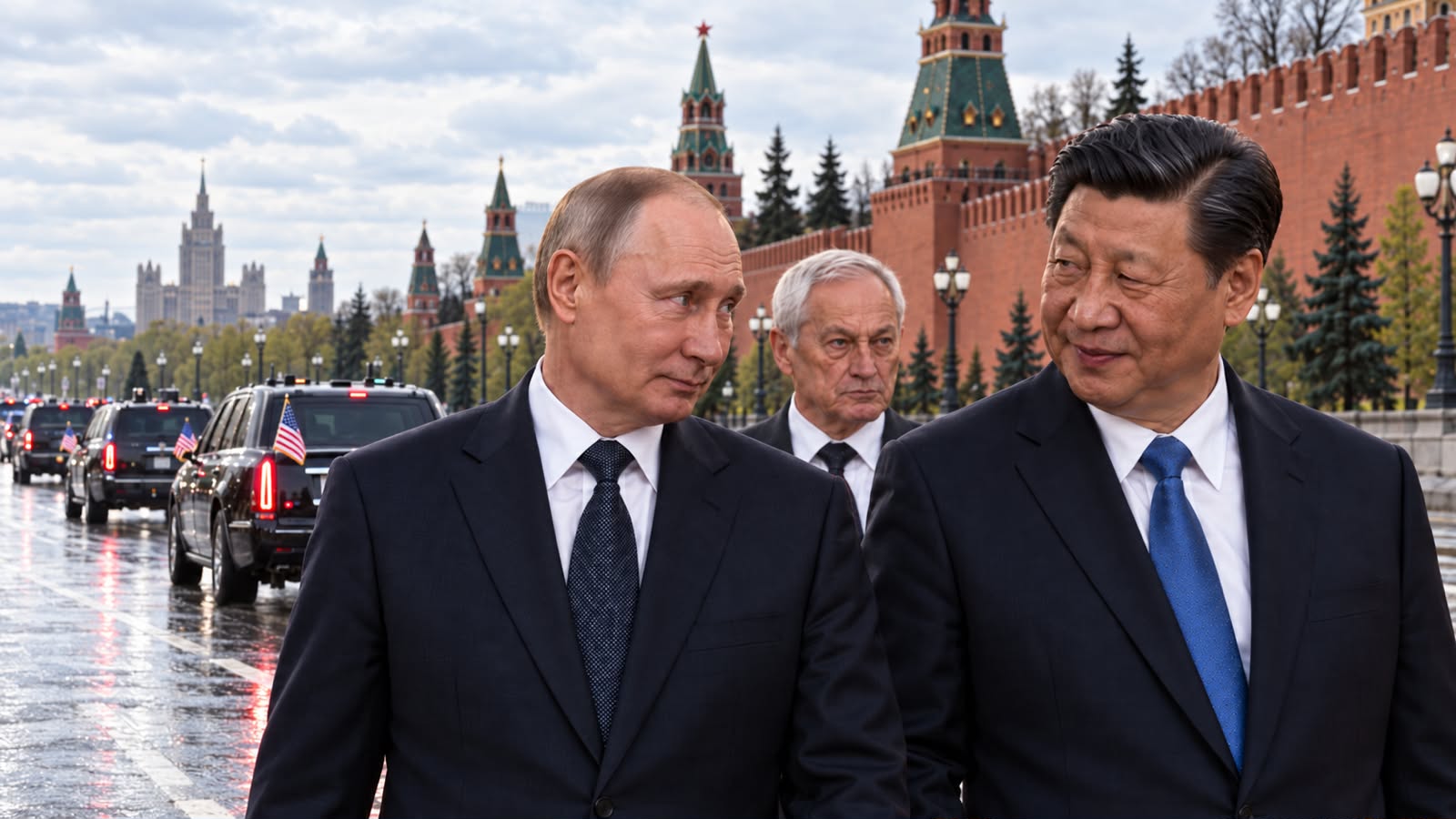

In late August and early September 2026, three senior U.S. officials visited Moscow, marking a level of concentrated contact in U.S.-Russian relations unseen for a long time. On September 5–6, 2026, U.S. Special Envoys Steve Witkoff and Jared Kushner held talks with the Russian and Ukrainian Presidents in Moscow and Kyiv.
CIA Director John Ratcliffe visited Moscow on August 25, while both sides kept the substance of the talks entirely classified. Various theories have circulated among experts. The most common links the visit to preparations for Russian provocations against the Baltic states, although there is no confirmation of this account. A planned meeting between Ratcliffe and President Putin did not take place, and the Kremlin offered no public explanation for its cancellation. Following both visits, the parties announced neither agreed terms for ending the war nor a date for a trilateral meeting.
President Putin’s refusal to negotiate is driven by his interest in continuing the war, whose trajectory, in his view, creates a firm prospect of achieving Russia’s military objectives without diplomacy.
An end to hostilities also runs counter to Beijing’s interests because the war diverts U.S. and European resources and gives China time to prepare for a future global conflict. For China, the war is also a means of destabilizing the political systems of European states and promoting pro-Chinese figures within local elites.
The degree of Moscow’s dependence on Beijing has entrenched Russia’s position as a “junior partner,” with foreign-policy priorities determined by the stronger party. This narrows the Kremlin’s capacity for independent foreign-policy choices and renders any American proposal largely moot.
For Russia, China continues to consolidate its position as its principal foreign economic partner. China accounts for roughly 34 percent of Russia’s foreign trade, ranking first among its trading partners. In three years, that share has nearly doubled from 18 percent in 2021.
Chinese goods account for 57 percent of Russian imports, up from 23 percent in 2021, while China’s share of Russian exports rose from 15 percent to 30 percent over the same period. Russia-China trade reached a record $244 billion in 2024, and in January–April 2026 increased by 19.7 percent to $85.24 billion. The scale of these ties leaves Moscow no meaningful room to balance between Beijing and Western states.
The American proposal requires Moscow to make a decision that conflicts with the interests of China, which supplies 57 percent of its imports and handles 90 percent of its foreign settlements. Beijing controls supplies of machine tools, chips, microelectronics, optics, cameras, and raw materials used in carbon fiber production, and the continuity of these flows is essential to Russian weapons manufacturing.
Any reduction in these volumes would halt defense plants, while some deliveries are routed by Chinese state-owned companies in ways that conceal the cargo’s intended use.
The American side presented Russia’s political elites with an assessment under which every additional month of war costs Russia more than it costs Ukraine. Reciprocal attacks on critical infrastructure produce unequal economic consequences for the belligerents: Russia must rebuild damaged facilities exclusively with its own domestic resources, while Ukraine’s losses are offset by financial assistance from the Western bloc.
Ukraine’s expansion of its arsenal of strategic-level strike capabilities, including jet-powered unmanned aerial vehicles and ballistic missiles, will inevitably lead to systematic attacks on oil and gas extraction infrastructure, a critical vulnerability of the Russian economy. The logic of escalation is constrained in this scenario, and the loss of these capacities would compel the Kremlin either to use tactical nuclear weapons or publicly threaten to do so.
Such a scenario would further isolate Russia and draw it deeper into China’s sphere of influence. Because a prolonged conflict intensifies the economic exhaustion of the belligerents and Ukraine’s Western partners, China derives the strategic benefit from continued hostilities.
By refraining from direct involvement in the Russian-Ukrainian war, Beijing extracts economic dividends from Russia’s isolation through imports of discounted Russian fuel and revenues generated by supplying dual-use goods to Russia’s military-industrial complex.
From April 2022 through February 2026, the average discount on Russian oil for Chinese buyers was 7.7 percent, generating approximately $18.3 billion in savings for China.
The discounts granted to Chinese refiners in 2025 alone are estimated at $2.2 billion. A prolonged war will deepen Russia’s dependence on China.
Beijing acquired its advantage in energy trade as a result of Western sanctions imposed after the full-scale invasion. Having lost the European market, Moscow redirected the released volumes of oil, gas, and coal primarily to China and was left with a single major buyer.
The asymmetry of Russian-Chinese trade gives Beijing the ability to exert growing influence even over sectors of the Russian economy and industry in which Chinese capital is not directly invested. Alongside this, Russia’s dependence on China is deepening as a result of the support Moscow receives from the axis of autocracies in prosecuting the war against Ukraine.
The erosion of Russian agency within the authoritarian axis leaves Moscow increasingly unable to advance an independent agenda in negotiations with the West. As a result, it will face growing pressure to subordinate its foreign-policy ambitions as fully as possible to China’s interests.
Once the Kremlin’s dependence on China reaches a critical level, the conditions will be in place for key decisions on the security architecture of Eastern Europe to be made through direct dialogue between Washington and Brussels on one side and Beijing on the other, while Moscow’s influence over the course of those negotiations will be limited.
The active phase of the war makes it impossible to restore the multi-vector foreign policy that Russia retained to some extent before 2022. Even so, several groups within the Russian leadership are competing over Moscow’s future geopolitical course.
A pragmatic coalition within the security establishment, to which the White House conveyed its position through the CIA Director, sees partial stabilization of relations with the Republican administration as a means of preserving some of Russia’s geopolitical agency.
Supporters of further expansion of economic and military-industrial ties with China are concentrated primarily around the leadership of the Russian Ministry of Defense, the heads of state-owned energy corporations, and officials responsible for investment, finance, and economic policy within the Russian government.
The position and activities of this group, deeply integrated into Russian-Chinese economic and technological cooperation, have strengthened Moscow’s dependence on China in recent years, turning that dependence into a central factor sustaining Russia’s current model of state power.
Moscow is losing autonomy in decision-making, while the People’s Liberation Army (PLA) and Chinese defense corporations gain access to military-technological developments tested in Ukraine, and Beijing’s intelligence activity inside Russia is increasing. Russia’s security establishment treats these three processes as a direct threat to the independence of the Russian state.
Further growth in Russia’s dependence on Beijing will increase these risks. Russian intelligence and security services are therefore attempting to constrain Chinese influence by countering Chinese agent networks and maintaining discreet contacts with Washington, while publicly preserving the rhetoric of an alliance with China.
Belousov’s Reforms Increased Russia’s Defense-Industrial Dependence on Chinese Supplies
An important factor behind President Putin’s continued course toward integration with China is that the model designed to protect the Russian economy from sanctions was developed by Andrey Belousov, the current Minister of Defense and a figure who enjoys the Russian President’s particular trust.
Publicly, Belousov is best known for his appointment in May 2024, but for years beforehand he was responsible for Russia’s economic integration into China’s economic sphere. President Putin values Belousov as a product of the Soviet system and trusts his calculations regarding the Russian economy’s ability to survive sanctions by reorienting itself toward China’s resource base.
Andrey Belousov was born in Moscow in 1959. His father, Rem Belousov, participated in the development of the Kosygin reforms of the 1960s and worked on pricing issues within the planned economy.
He headed a department at the Academy of Social Sciences under the Central Committee of the Communist Party of the Soviet Union and passed on to his son an intellectual tradition in which the economy is subordinate to the political will of the state. Belousov is an unequivocal advocate of state regulation and does not accept that markets are capable of independently determining a country’s economic course.
Belousov graduated with honors from the Faculty of Economics at Moscow State University, specializing in economic cybernetics, and from 1981 to 1986 worked at the Laboratory for Modeling Human-Machine Systems at the Central Economics and Mathematics Institute. He emerged from the research group led by Alexander Anchishkin, which in the final Soviet years prepared economic calculations for reforming the planned economy.
This school made Belousov a systems architect who substantiates decisions through econometric models and calculates their consequences in advance. He applied the same toolkit in the 2010s, when the Russian economy began preparing to operate under external restrictions.
Belousov’s calculations first passed a major test in 2008, when he headed the Department of Economics and Finance in the government apparatus during the global financial crisis.
Ahead of the occupation of Crimea, Belousov argued — against the position of virtually every other government official — that Russia would withstand the sanctions imposed in response to the annexation. The forecast proved correct, giving Belousov a level of authority unmatched by any other economist in the Russian state apparatus.
From June 2013 to January 2020, Belousov served as Presidential Aide for economic affairs and reported directly to President Putin. Belousov remains one of President Putin’s key points of reference in decisions about how to steer the country under sanctions pressure.
In China, Belousov saw an alternative resource base capable of replacing Western markets and technologies. Unlike many Russian officials who operated through shadow channels, Belousov worked through formal mechanisms and served as co-chair of the Russia-China Intergovernmental Commission on Investment Cooperation.
As Russian Deputy Prime Minister, Andrey Belousov participated in negotiations on investment and infrastructure with Chinese Vice Premier Ding Xuexiang.
These negotiations helped synchronize Russian projects with the Belt and Road Initiative and opened new channels for Chinese investment in Russian transport and agricultural infrastructure, initiatives announced at the 10th meeting of the Russia-China Investment Cooperation Commission in 2023.
Since the early 2010s, Belousov had participated in developing trade and economic mechanisms that, after 2014, became part of the foundation enabling the Russian economy to function under European and U.S. sanctions. Later, while serving as Chairman of Rosneft’s Board of Directors in 2015–2020, the current Minister of Defense helped attract financing from Chinese state-owned banks.
The system sustaining Russia’s sanctioned economy simultaneously replaced the dollar with the yuan in settlements, Western banks with Chinese creditors, and European and American suppliers with Chinese factories.
Each such substitution removed one layer of dependence on Western financial and industrial infrastructure while creating dependence on Chinese infrastructure in its place. By 2026, a mechanism originally designed to circumvent sanctions had become the principal channel of Chinese influence over the Russian economy.
Belousov lobbied for shifting 95 percent of settlements with China into yuan and rubles and set a target of $300 billion in annual bilateral trade by 2030. These projects deepened the integration of the Russian and Chinese economies and made him an acceptable interlocutor for Beijing.
By the end of 2025, currencies of the so-called “friendly countries,” dominated by the yuan, accounted for more than 30 percent of Russia’s foreign-trade settlements, compared with less than 2 percent for the yuan before the war. Russian payments consequently became dependent on Chinese banks and on liquidity in a currency regulated by Beijing.
On May 14, 2024, President Putin appointed Belousov Minister of Defense by Decree No. 383, replacing Sergei Shoigu, who had held the post since November 2012.
The reforms implemented by Belousov during 2024–2026 were primarily intended to subordinate the economy to wartime needs and replace Western technologies with domestic production.
The Kremlin replaced Sergei Shoigu with Andrey Belousov specifically to carry out these tasks. Belousov addresses them through Beijing because Chinese markets, capital, and equipment substitute for Western supplies lost under sanctions.
Beijing designated a separate senior official to work with Belousov, giving the Russian Minister access to Chinese resources outside the normal queue of interagency coordination. The Chinese leadership treats support for the Russian defense establishment as a priority of its own, giving its support for Belousov a personal dimension.
Deeper coordination with the PLA and the integration of Chinese dual-use technologies into Russia’s military-industrial complex are proceeding under the leadership of the Defense Ministry’s reconstituted apparatus. Belousov staffed it largely with officials drawn from the financial and economic policy establishment.
The appointment of managers associated with Belousov to key positions overseeing Russia’s military-industrial sector created the conditions for this new team from the financial and economic bloc to control the entire cycle of equipping the Russian military.
Defense-budget formation, allocation of funds among military-industrial enterprises, procurement of foreign components and technologies, and fulfillment of state orders for finished weapons have increasingly been subordinated to a single center that gives priority to Chinese suppliers and creditors.
Belousov’s distance from established defense-sector influence groups and the absence of business interests of his own were central to his appointment because the Kremlin needed an executor with no incentive to distort its calculations in favor of individual elite factions.
Belousov’s authority extends beyond the Defense Ministry because he is responsible for putting the entire Russian economy on a war footing. He determines which industries, industrial groups, and production segments are redirected toward servicing defense orders and which remain outside that system.
The Kremlin, which in the first years of the full-scale Russian-Ukrainian war faced the need to improve the effectiveness of the Defense Ministry, was able to delegate the task to an official who does not compete with other centers of power in Russia.
For the Chinese leadership, Belousov’s appointment established a direct and predictable channel for coordinating military efforts between Moscow and Beijing, enabling more active joint exercises, naval cooperation, and exchanges of defense technology.
Belousov’s relationships with key Chinese officials had been established before his appointment to the Defense Ministry.
Moving Belousov into the post of Minister of Defense enabled the Chinese leadership to maximize synchronization between the needs of Russia’s military-industrial complex and the production and export cycles of Chinese suppliers of machine tools, chips, and microelectronics, whose output and uninterrupted exports are essential to Russian weapons production.
On August 2, 2024, at Belousov’s direction, the Russian Ministry of Defense established the Rubikon Center for Advanced Unmanned Technologies, subordinated directly to the Ministry’s leadership.
After Belousov’s appointment, the program was expanded to include the formation of a separate unmanned-systems branch within the Russian Armed Forces. The mass deployment of drones gave Russia a depth of strike capability beyond the reach of most other systems and brought it closer to Ukraine’s level of UAV employment.
The Rubikon Center gives Beijing access to unique combat experience accumulated in a modern war fought with new methods and innovative weapons. This experience allows the Chinese command to identify effective methods and instruments of warfare more precisely and prepare for direct confrontation with Western militaries.
China approaches Russian battlefield experience systematically. Russia remains a testing ground for China, and an end to hostilities runs counter to Beijing’s interests because it would deprive it of this source of experience.
According to Chinese customs data, exports of fiber-optic cable from China to Russia accelerated during the summer of 2025. In August 2025, Russia purchased 328,000 miles of fiber-optic cable, compared with 119,000 miles in May of the same year.
Alongside the Chinese leadership’s work with Prime Minister Mikhail Mishustin’s apparatus, Belousov remains a principal channel of coordination with Beijing.
Since mid-2024, Belousov’s official contacts have focused primarily on expanding cooperation between the Russian Armed Forces and the PLA and coordinating the positions of the Russian and Chinese defense establishments.
The principal Chinese counterparts of the Russian Minister of Defense have been Chinese Defense Minister Dong Jun and Vice Chairman of China’s Central Military Commission Zhang Youxia.
Broader Chinese-Russian integration is achieved by maintaining continuous contacts and joint projects across energy cooperation, major investment projects in the Arctic, and economic initiatives advanced through the Russia-China Business Council and the Russia-China Investment Fund.
North Korean Forces in Ukraine Are Gaining Valuable Combat Experience for Future Conflicts
Another reason the Kremlin rejects American proposals and continues drawing closer to Beijing lies in the structure through which North Korean resources sustain the Russian military. Pyongyang supplies Moscow with manpower, ammunition, and missile systems, while decisions on the scale and timing of these deliveries are made in coordination with Beijing.
The June 2024 Treaty on Comprehensive Strategic Partnership between Russia and North Korea and the agreement on deepening the Russian-Chinese partnership signed by President Putin and General Secretary Xi Jinping in May 2025 provided a legal framework for this cooperation.
The presence of the Korean People’s Army on Russian territory turns what appears to be a bilateral partnership into a mechanism of control by Beijing, with Moscow acting as the host.
By authorizing the deployment of North Korean troops, the Russian authorities legitimized external control over their own political course. The continued presence of the Korean People’s Army (KPA) contingent in Russia following the fighting in Kursk Oblast is coordinated primarily by Beijing.
A North Korean missile unit has been deployed in Voronezh Oblast as part of the 112th Missile Brigade, equipped with six launchers and more than 100 KN-23 and KN-24 missiles, while approximately 9,500 North Korean service members are simultaneously stationed in Kursk Oblast.
Pyongyang gains combat experience and access to Russian technologies, Beijing studies the conduct of war against the Western bloc, and Moscow acquires another source of dependence through the KPA’s presence. In this arrangement, North Korea functions as Beijing’s proxy because its foreign-policy decisions are coordinated with China.
The Korean People’s Army is among the world’s largest militaries by personnel strength, and in Ukraine it is gaining experience in modern warfare for the first time. This experience is being combined with North Korea’s own nuclear program and the production of new weapons systems, which Pyongyang has expanded since the early 2020s.
Western expert assessments systematically underestimate the risks created by this combination because the North Korean military continues to be described as obsolete. For Beijing, however, it means having an ally with a million-strong military capable of operating according to modern standards of warfare.
Between the fall of 2024 and spring of 2025, Russia paid the North Korean regime more than $600 million for the participation of KPA personnel in combat operations.
The total amount Pyongyang received from Moscow for supplying weapons, ammunition, and military equipment to the Russian Armed Forces during the first three years of the Russian-Ukrainian war is estimated at between $7 billion and $13.8 billion. By actively drawing on North Korean material and human resources in combat operations, Moscow has financed, at its own expense, the strengthening of its dependence on the axis of autocracies.
A break with Beijing would close the North Korean channel to Moscow because Pyongyang does not alter the scale of its participation in the war without coordination with the Chinese leadership.
Seeking to reduce the threat posed by an uncontrolled acceleration of Russian-Chinese integration, the White House is maintaining channels of communication with Russian intelligence while simultaneously offering Pyongyang a resumption of dialogue.
In August 2026, President Trump ordered the annual joint U.S.-South Korean military exercises shortened from 11 days to five, and that same month President Trump announced plans to meet Kim Jong Un.
The results of General Secretary Xi Jinping’s first visit to Washington in 11 years, scheduled for September 23–25, 2026, will be a factor in determining whether North Korean forces become more deeply involved in combat operations in Ukraine.
Even an outcome favorable to Washington would not change China’s position on the war because Beijing does not acknowledge its own role in the conflict’s escalation. Beijing extracts economic concessions through other instruments, including its control over supplies of rare-earth elements.
China has not abandoned its plans regarding Taiwan, and implementing them requires instruments for pressuring and exhausting the democratic allies. The war in Ukraine is one such instrument, meaning that no basis for winding it down will emerge from any negotiations in Washington.
FSB Counterintelligence Operations Reflect the Security Establishment’s Demand to Preserve Russian Agency
In June 2025, the hacker group Ares Leaks published a draft document that it attributed to the Seventh Department of the FSB’s Counterintelligence Operations Department. Its authenticity has not been independently confirmed, but the document’s contents are consistent with subsequent Russian counterintelligence activity directed against Chinese operations.
The document identifies China as a source of threats to Russia’s national security, an assessment based on Beijing’s operations on Russian territory since 2022. Chinese intelligence is studying the conduct of combat operations, Western methods of warfare, and the Wagner Group’s experience in conducting hybrid operations abroad.
Chinese entities have intensified espionage activities in the Arctic through mining companies and university centers and expanded efforts to recruit pilots, engineers, and scientists working in aviation development.
Chinese-origin groups TA428, Space Pirates, and Twisted Panda have targeted Russian defense enterprises in the nuclear, aerospace, and naval sectors. They breached the systems of a contractor that designs submarines for the Russian Navy and obtained intellectual property belonging to aerospace and defense research institutions.
Russian security services regard these episodes as concrete threats and record them in internal counterintelligence documents. Yet they do not view the West as an alternative, and the reason lies not in ideology but in the experience of recent decades.
The United States abandoned its Kurdish allies in Syria, withdrew troops from Afghanistan without coordinating with its partners, and declined to support the Iranian opposition in favor of arrangements with Israel. European governments did not break with Moscow after the annexation of Crimea, and none incurred political responsibility for failing to do so.
The Russian state apparatus treats each of these episodes as evidence that Western commitments last only until the first shift in political circumstances.
The combined capabilities of Western states exceed those of Russia and China several times over in technology, human resources, and defense production. Yet this advantage does not translate into negotiating power because the West has failed to develop a common position and lacks a mechanism for coordinating one.
Responding to Russian-Chinese integration requires coordinated action by the Western bloc, and the absence of such coordination leaves Washington unable to influence Russia’s strategy toward China. In a conflict of civilizational significance, the American negotiating position is being shaped by Special Envoys operating outside the institutions formally responsible for diplomacy. Even Secretary of State Marco Rubio, the senior official responsible for the administration’s foreign-policy activity, was not involved in developing the proposal that the delegation carried to the Kremlin.
The Kremlin sees no actor within the democratic bloc capable of making commitments that extend beyond a single electoral cycle. The composition of the U.S. Congress will change after the midterm elections, while the political future of the current administration beyond its term remains uncertain.
Europe’s political landscape is changing faster and more radically, meaning that none of its current governments can guarantee that its commitments will be carried forward by its successor. Moscow sees Beijing’s involvement in these radical shifts, giving it another reason not to break with China.
The Western bloc’s lack of unity has ceased to be merely an internal problem for its members and has become an operational parameter that the authoritarian axis incorporates into planning its actions years in advance. This strengthens the consensus within Russia’s political elite in favor of continued rapprochement with China, and that position will not change until Western states develop a common strategy for responding to the expansion of the authoritarian axis.
This publication is the result of a partnership between MILITARNYI and SOLID INFO. An extended version is available on the website of the analytical center.

Visits by Senior Washington Officials to Moscow: The Factors Driving the Kremlin’s Rejection of the White House’s Proposals
In late August and early September 2026, three senior U.S. officials visited Moscow, marking a level of concentrated contact in U.S.-Russian relati...
A Sharp Shift in the Dynamics of Global Confrontation Forces Washington to Rethink How It Builds Its Key Partnerships
On September 12–13, 2026, the 18th BRICS Summit was held in New Delhi. Xi Jinping traveled to India to lead the Chinese delegation, marking his fir...
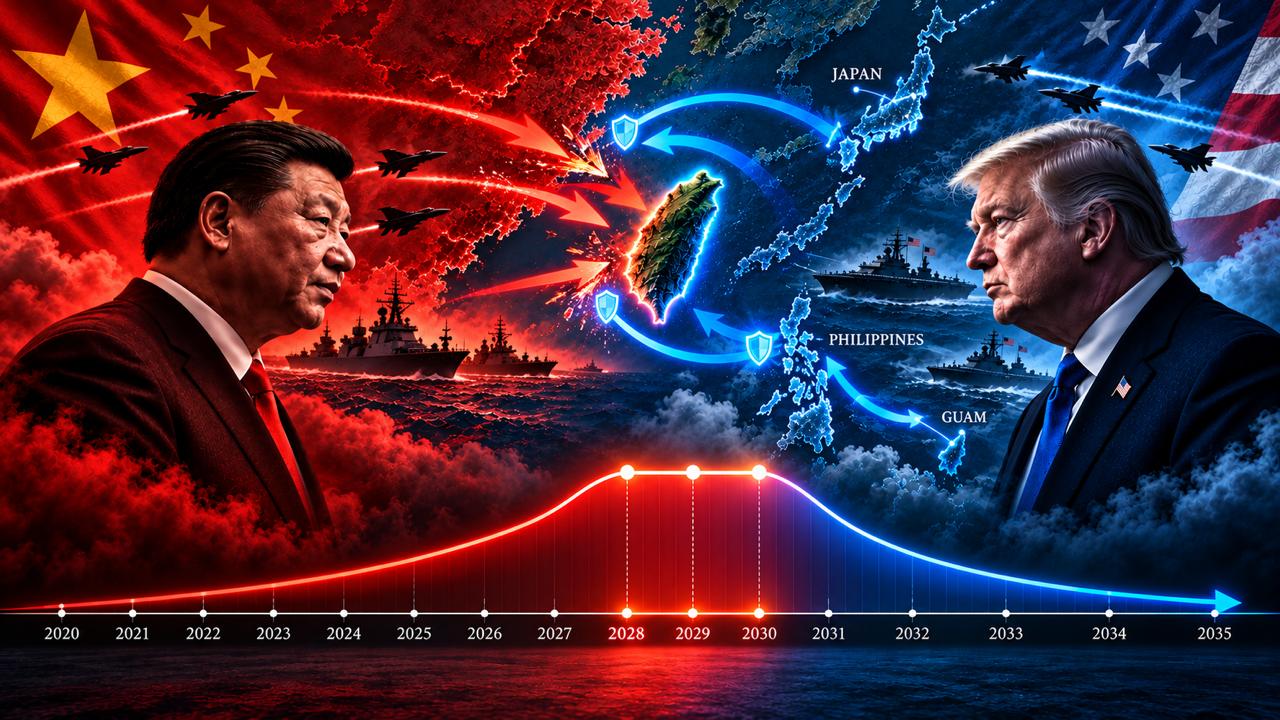
Xi Jinping’s Washington Visit Outlines the Timeframe for the Active Phase of the Confrontation: Beijing Openly Demands Taiwan’s Return
On September 23–25, 2026, Chinese President Xi Jinping held talks with President Trump at the White House during the first Chinese state visit to t...
