






Popular
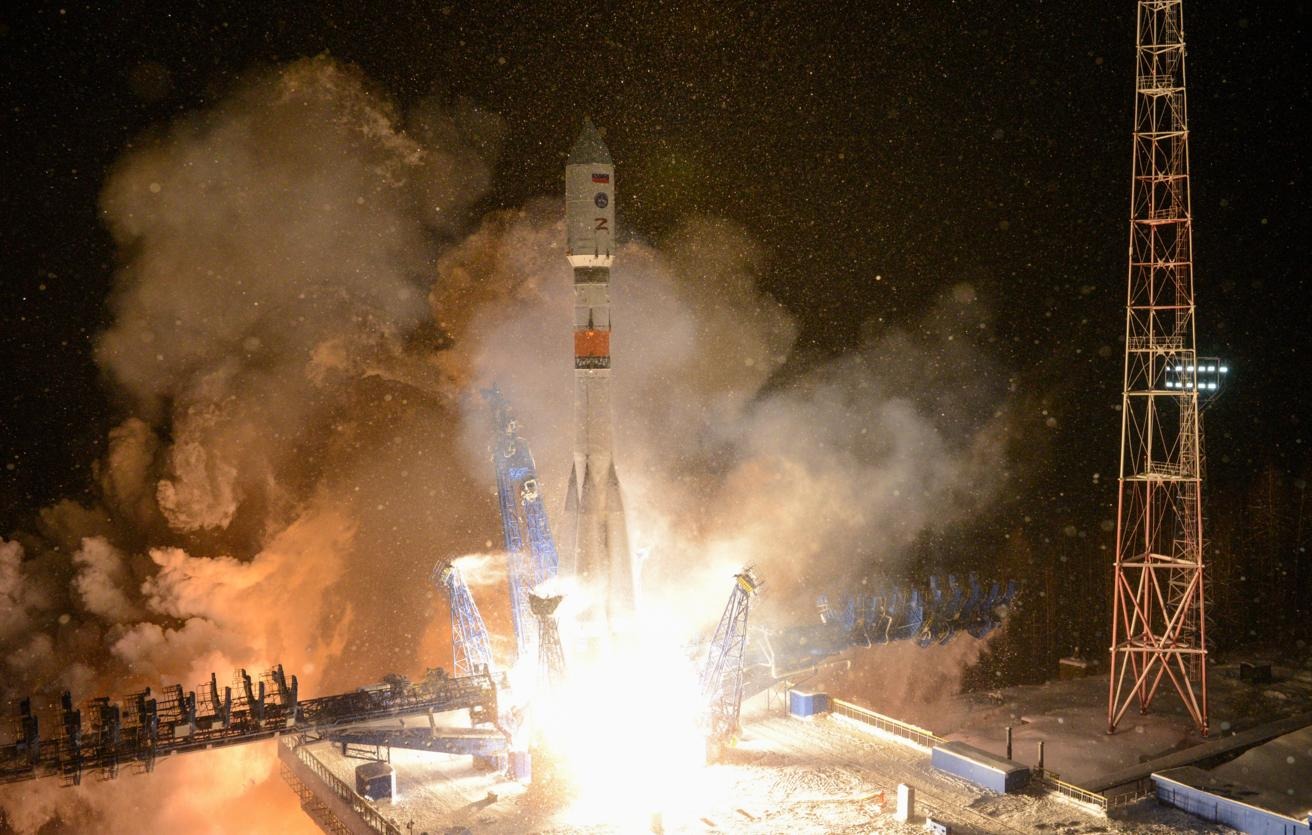

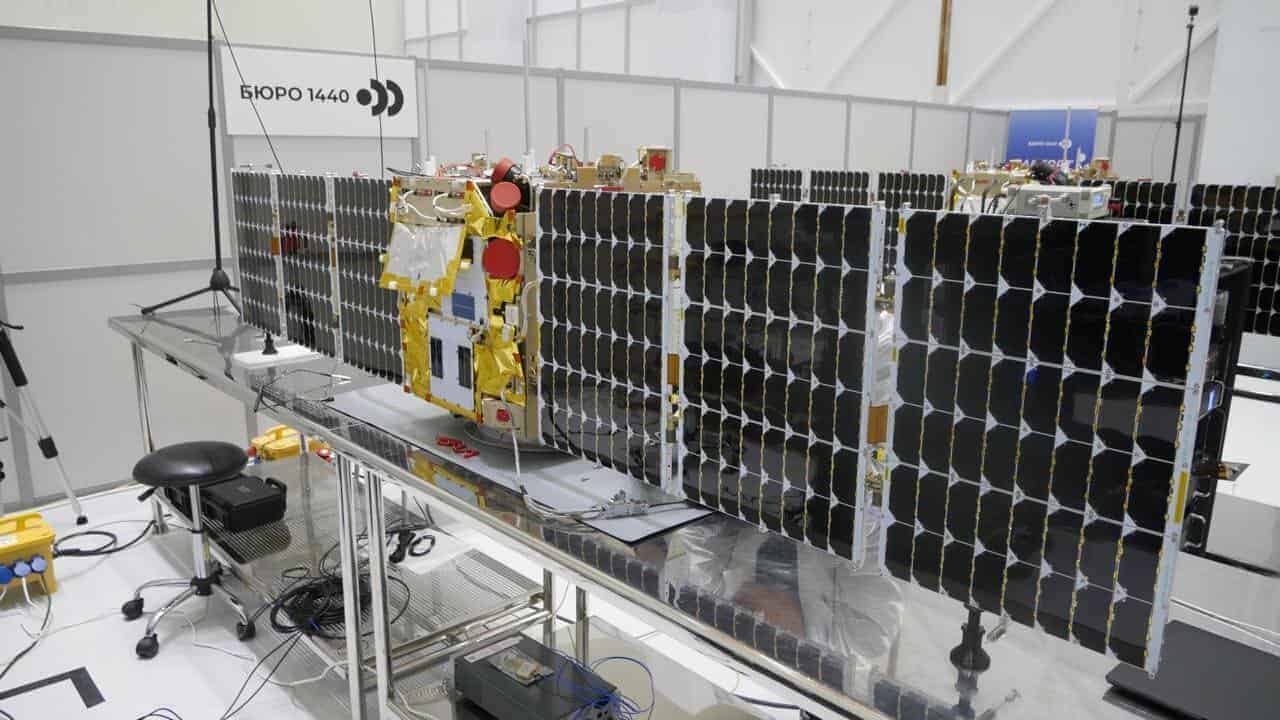
The vast majority of satellites launched by the Soviet Union between 1961 and 1991 performed military missions. At the same time, the USSR publicly denied the very existence of a military space program. In the early 1960s, to ensure the “camouflage” of its military space program, the Soviet government introduced the practice of assigning all military satellites entering orbit names from the “Kosmos” series.
This series also included non-military spacecraft whose missions were to remain secret. This primarily applied to failed launches, as the USSR could not publicly acknowledge failures in its prestigious space program.
After the collapse of the USSR, Russia shifted to a more “Western” approach to disclosure: military launches began to be explicitly identified as such, although they continued to receive names from the “Kosmos” series with a corresponding number, while civilian missions were no longer classified.
However, there is still no publicly available reliable data on the functions of most Russian satellites. Often, under the guise of “scientific” or “civilian” missions, Russia launches dual-use satellites, concealing their true capabilities. At the same time, series names are often repeated and can be used for decades. Sometimes the differences between generations are minimal, while in other cases it is essentially a new satellite with the same name.
Many Russian satellites are built on identical or similar platforms. For example, a significant portion of communications satellites — both civilian and military — use variants of the “Express-2000” platform, which is also used by the “Lotos-S” and “Pion” satellites.

Since the start of the full-scale invasion in 2022, Russia has launched 150 new satellites into low Earth orbit. In total, as of early 2026, Russia has approximately 300 satellites of all types at its disposal, about 250 of which are low-Earth orbit satellites, which primarily provide reconnaissance capabilities.
According to a report by the Swedish Institute of Defense Studies (FOI) titled “Russia in Space: From Satellites to Sanctions. A Defense and Security Perspective,” Russia rarely reports on the decommissioning of satellites, so an assessment of the actual capabilities of the satellite constellation is based on indirect indicators.
In some cases, determining the status is easier — this applies, in particular, to the GLONASS constellation’s navigation satellites, satellites in geostationary orbit, or commercial Earth observation satellites, as there are clear signs of their decommissioning, such as transfer from operational orbit to the so-called graveyard orbit for inactive satellites.
Another way to assess whether a satellite is operational is to analyze its design life and time in orbit. However, this method is not very accurate, as satellites often operate longer than their stated lifespan. Many satellites are equipped with multiple sensors, and even if only one of them is functioning, the satellite may be considered operational, even though it does not fully meet its specifications.
Moreover, most Russian satellites are based on outdated technological solutions that require pressurized electronic compartments. This creates an additional risk: in the event of a pressure loss, the payload, and thus the entire satellite, becomes unusable. Such an incident has already occurred with at least one GLONASS satellite.

Bars-M is an electro-optical satellite system designed for mapping. It provides wide-angle coverage for mapping applications and a resolution of 1-1.35 m per pixel.
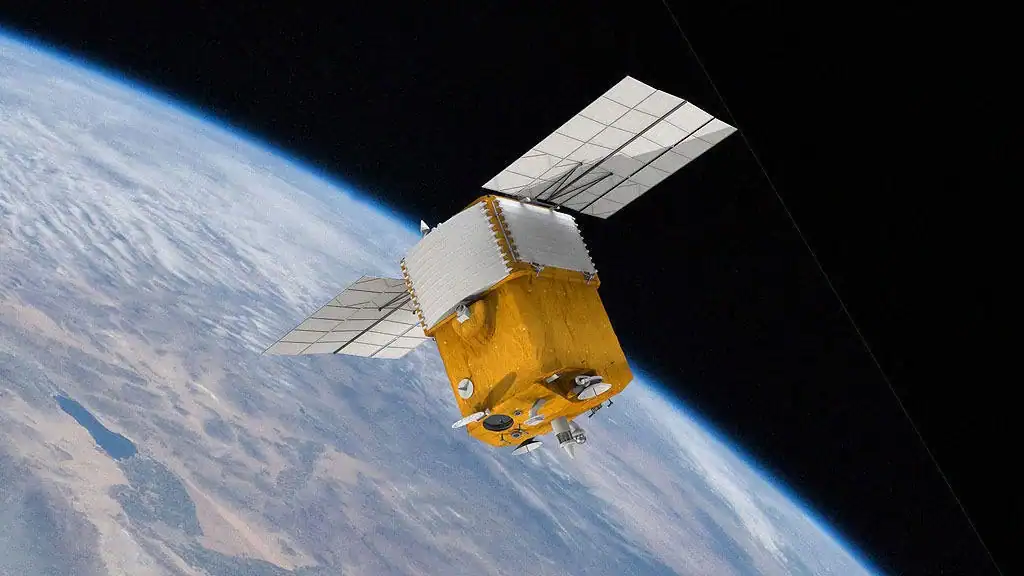
The Russian Ministry of Defense is responsible for operating the satellite. It is used to create maps and imagery, primarily to determine the coordinates of targets for Russian intercontinental ballistic missiles. The satellites are likely equipped with laser altimeters for topographic measurements.
In total, six satellites of this type were launched into orbit between 2015 and 2024, with a stated service life of five years. Thus, the first two, launched in 2015 and 2016, have long since exceeded their design lifespan, but may still retain at least some functionality.
Kanopus-V is a series of optical Earth remote sensing satellites designed to monitor natural disasters and crisis situations in real time. Other areas of application include mapping, agriculture, forest fires, as well as monitoring the sea and ice conditions.
Images are sold on a commercial basis through the “Research Center for Operational Earth Monitoring” in Moscow. The satellites have a stated resolution of approximately 2 meters.

They were launched between 2012 and 2018 with an estimated service life of about five years.
During the launch of Kanopus-V-1 in 2012, an exact copy of the satellite from Belarus — BKA-1 — was also launched. Additionally, in August 2022, Russia launched one Kanopus-V satellite named Khayyam on behalf of Iran.
Roscosmos noted in its 2021 report that five satellites remain in operation. As of 2024, at least one satellite in the constellation remained operational.
Persona is a Russian military optical reconnaissance satellite system. The exact resolution is classified. The primary optics of the Persona satellite consist of a 1.5-meter-diameter primary mirror with a focal length of approximately 20 meters. According to calculations, at an orbit of approximately 700 km, the theoretical resolution is about 0.3 meters.
The satellites are capable of transmitting data in near real time, in less than a few hours, and likely use relay satellites to transmit data even beyond the line-of-sight range of ground stations. The time from image acquisition to its availability is likely limited by the ground segment rather than the space segment.

A total of three Persona satellites have been launched. The first ceased operations almost immediately after launch in 2008, likely due to problems with the onboard electronics. The second and third satellites, launched in 2013 and 2015, also experienced issues with onboard electronics, but their systems were successfully stabilized. The estimated service life is 5-7 years.
Resurs-P is the civilian version of an older generation of Russian military reconnaissance satellites. It is equipped with several optical sensors, including Russia’s first multispectral sensor.
In addition to high-resolution Earth observation, the satellites are also used to study space weather. The maximum resolution of one of the instruments is approximately 1 m.

Resurs-P 1 was launched in 2013, Resurs-P 2 in 2014, and Resurs-P 3 in 2016. The fourth and fifth satellites were launched in 2024 and 2025, respectively.
It is known that the first satellite was decommissioned at the end of 2021, more than 3.5 years after the end of its estimated five-year service life. Additionally, in 2022, it was reported that the second and third satellites were not functioning due to electronic failures.
Aist is a small satellite for optical Earth observation. The program is demonstrational in nature, and the optical system’s resolution is stated to be 1.5–5 meters. As part of the program, one satellite was launched in 2016 and decommissioned in 2024.

Based on this design, two Aist-2T satellites were created and launched into orbit in late 2025. They are designed to photograph the planet’s surface and capture stereoscopic images, which are used to create digital terrain models. Such models are needed, in particular, for programming cruise missiles and strike drones for low-altitude flight.
The planned operational lifespan of the satellites is at least five years.
Kondor exists in three versions: military — Kondor and Kondor-FKA — and an export version — Kondor-E. The satellite platform is considered highly flexible and allows it to be equipped with either a synthetic aperture radar (SAR) station or an optical sensor.
The satellite’s ground segment is compact, so the data reception and processing center can be designed as a mobile station and deployed at any location.

Kondor and Kondor-FKA are equipped with an S-band SAR radar, which can either observe small areas with high resolution or large territories with lower resolution. In high-resolution mode, the resolution is approximately 1-2 meters over a swath width of 10-20 km. In lower-resolution mode, the resolution is 5-30 meters over a swath width of 20-150 km and a length of up to 4,000 km.
Russia launched the first version of Kondor in 2013, and in 2014, Kondor-E was launched at the request of South Africa. The estimated operational lifespan was 3-5 years.
Two satellites of the more modern Kondor-FKA version were launched in 2023 and 2024. They became among the few Russian satellites built using non-pressurized technology, which is said to have increased their operational lifespan to 10-12 years.
Neitron was launched in early 2022 into an unusually high orbit — about 2,000 km. This allows it to have a significantly larger field of view than low-orbit satellites, although it slightly reduces the maximum image resolution.
There is speculation that the satellite is built on the same platform as Kondor, but optimized for a much higher altitude. In that case, it could be a type of radar satellite.
It has been officially declared a “technology demonstrator for testing radiation exposure conditions,” but space tracking data indicates that it is a reconnaissance satellite.
Obzor-R is a new type of radar satellite. It is reported to be equipped with a new Kasatka-R radar, built using AFA technology, with a claimed resolution of “no more than 1 m,” covering an area 15-20 km wide and 10 km long.
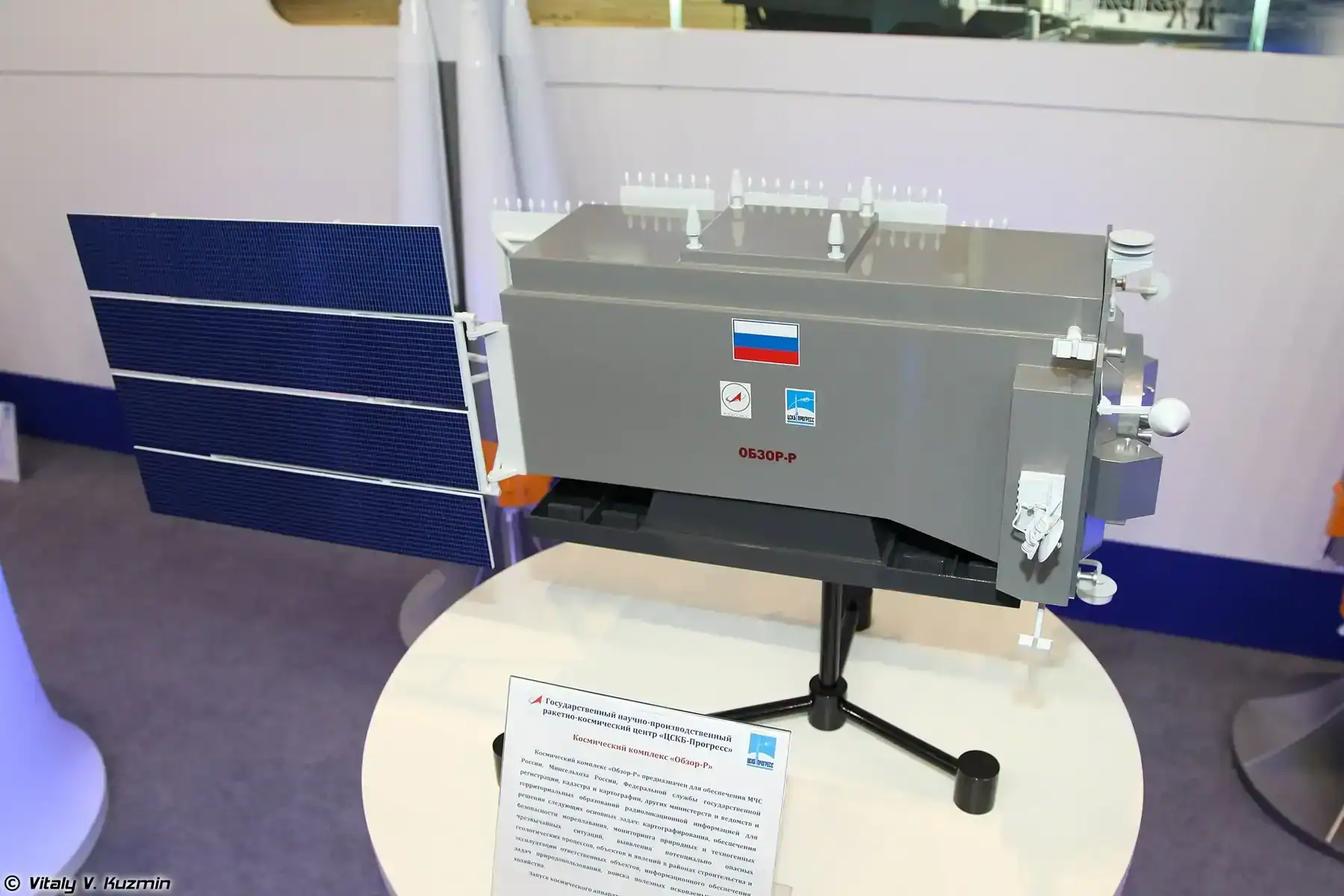
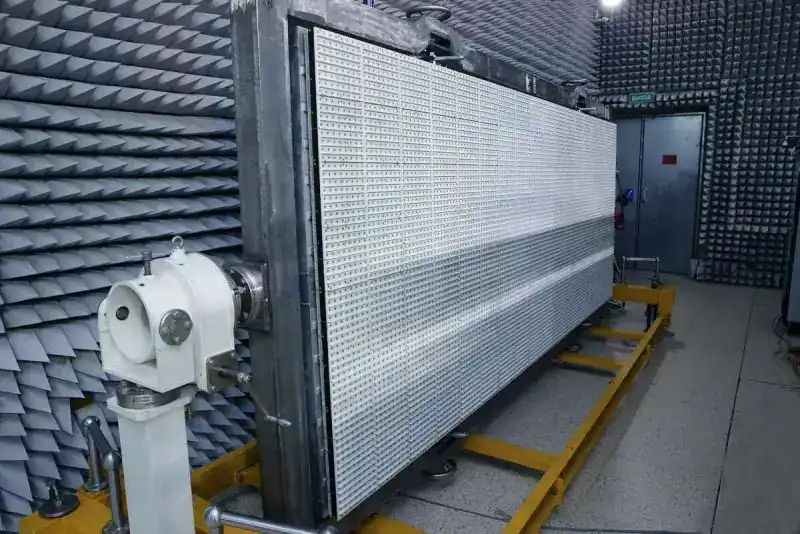
The first satellite in the series was successfully launched on December 25, 2025. Its operational life is projected to be at least 5 years.
Liana is the general name for the Russian global satellite maritime and space reconnaissance and target designation system, which is intended to replace the Tselina and US-PU satellites.
The system consists of two types of satellites: Lotos, which replaces Tselina, and Pion-NKS, which replaces US-PU.
The preliminary design of the system was completed in 1993, after which development continued for many years. In the 1990s, development was significantly delayed because Russia refused to use the Ukrainian launch vehicles originally planned for the initial phase. Due to this and other issues, the system was not launched until 2009.

Originally, the Liana constellation was to consist of two Lotos satellites in higher orbits (800-900 km) and two Pion-NKS satellites in lower orbits, around 400 km. However, significantly more Lotos satellites were launched than necessary given their operational lifespan, while only one Pion-NKS was launched.
Lotos is a versatile electronic intelligence satellite capable of tracking various types of military equipment and objects equipped with passive radio reconnaissance equipment.
Due to budgetary and technical issues, the initial version was simplified and renamed Lotos-S. The satellites have a service life of about five years.
The first satellite in the series, which was likely a demonstrator, was launched in 2009. Seven more satellites were launched after that, with the last one in October 2023.
Pion-NKS is built on the same platform as Lotos. According to some reports, it is equipped not only with passive electronic intelligence (ELINT) capabilities but also with an active radar for maritime surveillance.
The first satellite was scheduled for launch in 2015, but the launch did not take place until June 2021 due to repeated delays. Its stated operational lifespan is approximately four years.
Russia operates at least 17 optical satellites, 5 SAR radar satellites, and 8 electronic intelligence satellites, supplemented by an unknown number of “civilian” dual-use satellites. At the same time, due to the large number of overdue satellites, as well as Russia’s traditional secrecy regarding the actual state of its space technology, the actual technical condition of a significant portion of the constellation remains unknown.
This constellation provides Russia with basic reconnaissance capabilities, though they are quite limited compared to those of NATO countries and China. This was one of the reasons for the active procurement of high-quality satellite imagery from Chinese “commercial” companies following the start of the full-scale invasion of Ukraine.
Підтримати нас можна через:
Приват: 5169 3351 0164 7408 PayPal - [email protected] Стати нашим патроном за лінком ⬇
Subscribe to our newsletter
or on ours Telegram
Thank you!!
You are subscribed to our newsletter