
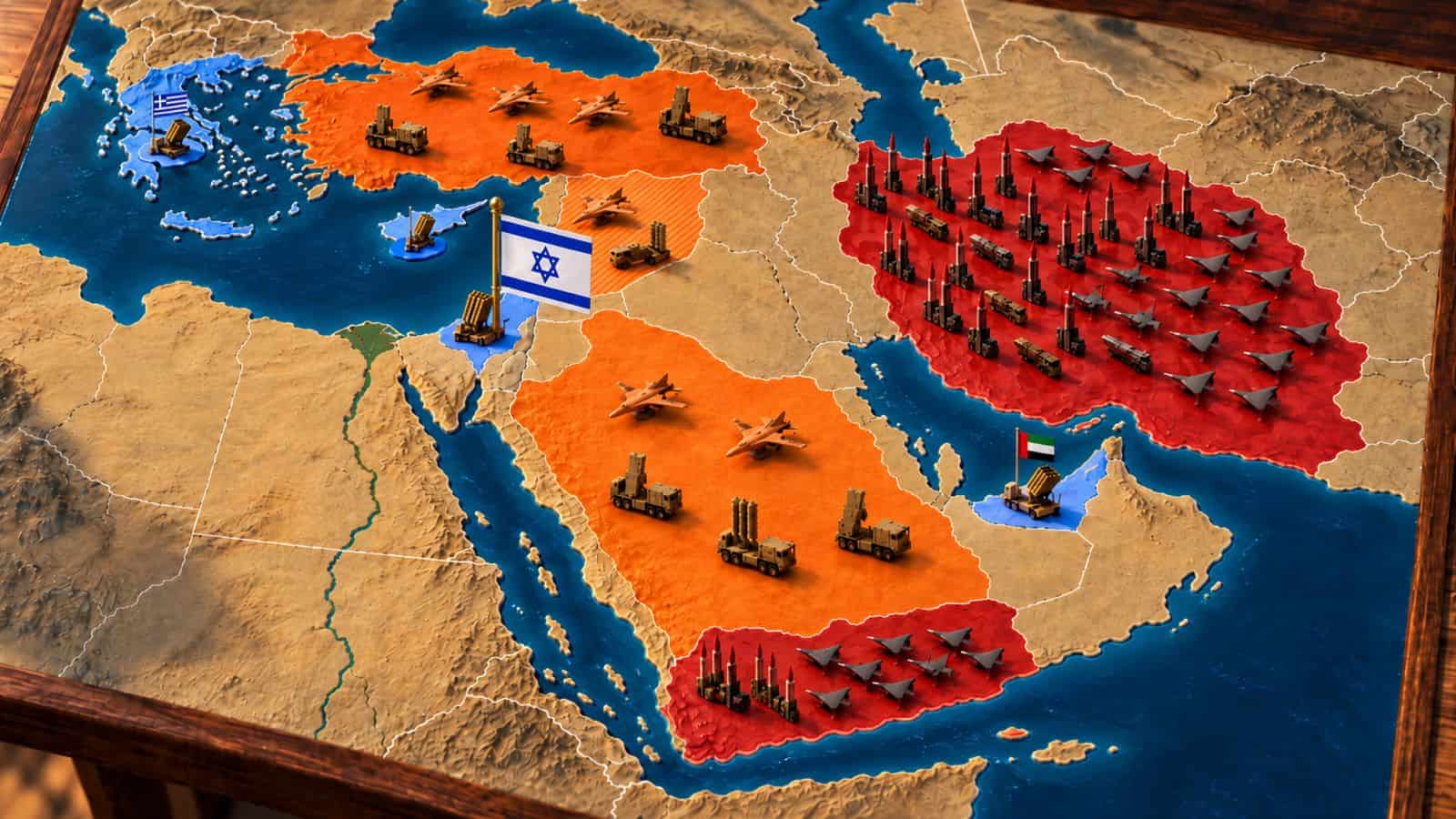
Netanyahu’s Visit to Abu Dhabi: Israel Builds Partnerships from a Position of Strength, but the Middle East Conflict Is Eroding the Edge of Its Weapons

Solid Info




On September 27, 2026, Israeli Prime Minister Benjamin Netanyahu traveled to Abu Dhabi with the head of Mossad and the head of the National Security Council at the invitation of UAE President Mohamed bin Zayed Al Nahyan. The visit was kept secret, and the Emirates confirmed it only the following day through the state news agency WAM. Netanyahu’s meeting with Mohamed bin Zayed was preceded by a series of bilateral contacts between Israel and the UAE, including secret visits to the Emirates by senior Israeli intelligence officials, during which the two countries’ intelligence services discussed coordinating measures to counter the Iranian regime.
In the opening weeks of the war with Iran, Israel deployed an Iron Dome tactical missile defense battery beyond its borders for the first time in history, sending several dozen Israeli military operators to the UAE along with the system.
Meanwhile, the Israeli Air Force carried out numerous strikes against short-range missiles in southern Iran, destroying them before they could be launched at the Emirates and other Gulf states. Iran fired approximately 550 ballistic and cruise missiles and more than 2,200 drones at the UAE alone, with the Israeli Iron Dome battery intercepting dozens of the missiles.
The Emirates needs Israeli protection, and Mohamed bin Zayed therefore invited Netanyahu as a partner whose military power had already defended Emirati territory against Iranian missiles.
Israel’s interceptor missile stocks have been dwindling since October 2023 because of the war against the “axis of resistance” — Iran and the groups it supports, including Hamas, Hezbollah, the Houthis, and Iraqi Shiite militias. Nevertheless, Netanyahu’s government agreed to deploy a missile defense battery on the territory of an Arab state with which Israel has no defense treaty.
Israel itself also needs its partnership with the Emirates. Three years of war against the “axis of resistance” have demonstrated that Jerusalem lacks the defense resources to achieve its strategic objectives in the region on its own.
Israel is building these partnerships from a position of strength. In 2025, while fighting on several fronts, it signed a record $19.2 billion in new defense export contracts. In 2026, Israel deployed Iron Dome in the UAE and signed a €3.035 billion ($3.5 billion) agreement with Greece, known as “Achilles Shield.” Both partners are integrating Israeli systems into their own air defenses.
This new periphery provides Israel with sites for radars and interceptors closer to Iran, while generating orders that finance its defense industry’s production lines during a war of attrition. These relationships also reinforce Israel’s value as a strategic asset to the United States. Whether the partnerships become permanent will determine Israel’s ability to withstand a prolonged war with Iran and its allies as the United States concentrates its resources on the active phase of its confrontation with China.
Israel Supplies Partners with Its Weapons and Ties Them to Its Defense Industry
Israel’s position of strength rests on the superiority of its weapons, tested in combat across multiple fronts and purchased by countries from Europe to India that are preparing for missile and drone attacks. By selling these weapons, Israel makes its customers’ defenses dependent on Israeli industry and gains partners with a vested interest in keeping that industry strong.
In 2025, Israel set a new defense export record for the fifth consecutive year. According to the Ministry of Defense, the value of new export contracts rose from $14.8 billion to $19.2 billion, with government-to-government agreements accounting for more than half the total. These record contracts spread the costs of weapons development and production lines — which the Israeli military itself also needs — across foreign customers.
Missiles, rocket systems, and air defense equipment accounted for the largest share of exports at 29 percent, followed by surveillance and electro-optical systems at 22 percent, and radar and electronic warfare systems at 11 percent.
Europe accounted for 36 percent of new contracts, the Asia-Pacific region for 32 percent, the Middle East and North Africa for 15 percent, and North America for 13 percent.
According to the Stockholm International Peace Research Institute (SIPRI), India received 29 percent of Israeli arms deliveries between 2021 and 2025, Germany 21 percent, and the United States 7.8 percent.
In late 2025, Germany expanded its contract for Arrow 3 missile defense systems by another $3.1 billion. Combined with the $3.5 billion agreement signed in 2023, the purchase became the largest in the history of Israeli defense exports.
Gulf states are purchasing Israeli drones, counter-drone systems, air defenses, and electronic warfare equipment because they have been using Patriot interceptors costing more than $3 million each to destroy Iranian Shahed drones worth between $20,000 and $50,000.
In May 2026, according to Middle East Eye, Israel and the UAE established a joint fund for weapons procurement and development, although neither government has confirmed its existence.
Between 2021 and 2025, the UAE, Bahrain, and Morocco purchased a combined $8.8 billion worth of Israeli weapons. The Emirates was the largest buyer among them, acquiring SPYDER and Barak air defense systems. The UAE’s state-owned defense company EDGE Group also acquired a 30 percent stake in Israeli military technology company Thirdeye Systems.
Each contract draws the buyer into an ongoing relationship with Israel, since maintenance and upgrades depend on Israeli industry, giving Jerusalem grounds to seek preferential terms of cooperation. Through these relationships, Jerusalem is assembling a network of partnerships that serves as a substitute for formal defense alliances, providing influence over customers without obligating Israel to fight on their behalf.
Meanwhile, the war surrounding Israel is expanding into areas where the superiority of its weapons cannot determine the outcome. Its position of strength is being eroded by factors that Israel cannot control on its own.
War in Yemen Strengthens Iran’s Proxy Network and Opens the Gulf Monarchies to Turkish Influence
The war on the Arabian Peninsula has become a major factor eroding Israel’s position of strength. Jerusalem has no influence over its course, even though its outcome will determine the security of Israel’s southern borders.
Since September 3, the Iran-backed Houthis have been advancing against Yemeni government forces. They captured the port of Mokha on September 10, Perim Island near the Bab el-Mandeb Strait the following day, and cut the road between Taiz and Aden on October 4.
On September 10, drones launched from Iraq damaged two of the 11 pumping stations along Saudi Arabia’s East-West Pipeline, which allows Riyadh to bypass the Strait of Hormuz.
On October 8, Houthi strikes on King Khalid International Airport in Riyadh killed three Saudis. On October 10, a missile struck a terminal, killing at least 12 people and injuring 309.
As part of Iran’s regional network, the Houthis pose a first-order challenge to Israel. The war against Iran has failed to weaken Tehran’s allies, and since early September, the group has reached Bab el-Mandeb and struck the capital of the Gulf’s largest monarchy with missiles. Having already attacked Eilat and closed the Red Sea to Israel between 2023 and 2025, the Houthis grow stronger with every city they capture.
The Gulf monarchies are preparing for another round of war with Iran, which threatened in August 2026 to strike their oil, energy, and water infrastructure if the United States launched further attacks. Tehran has also developed plans for a ground operation in Kuwait in the event of another war. The Emirates is therefore seeking protection from Israel, while Saudi Arabia is turning to Turkey and Pakistan.
Turkey presents a second-order challenge. Along with Syria, with which it maintains close ties, Ankara is gaining influence over the Gulf monarchies through the war against the Houthis, far beyond what its contribution to the fighting would otherwise justify. This is disrupting the balance of power emerging in the region.
Under the Makkah Joint Defence Agreement, which Turkey signed with Saudi Arabia and Pakistan on August 7, 2026, Ankara is supplying Riyadh with air defense equipment, weapons, and intelligence. Turkey has also agreed to join the Saudi-led coalition tasked with securing navigation in the Red Sea.
The text of the Makkah agreement has yet to be made public, but according to statements from Ankara and Islamabad, it establishes the principle that an attack on one member constitutes an attack on all. It also allows each country to address gaps in its defenses by drawing on its partners’ resources.
By contrast, Israel’s cooperation with the Gulf monarchies remains confined to bilateral relationships and has not developed into a collective defense alliance. The limits of these ties became apparent after Israel struck Hamas leaders in Doha in September 2025, an attack condemned by every Gulf monarchy.
Turkish defense exports rose 48 percent in 2025 to $10.05 billion, with Ankara selling drones and naval vessels to Saudi Arabia, the UAE, and Qatar. Turkish industry is entering Gulf markets where Israel supplies air defense systems, bringing the two countries into competition for the same customers.
Israel’s partnership network is competing with Turkey’s neo-Ottoman model, through which Ankara is reestablishing influence over Arab Muslim states that were once part of the Ottoman Empire. The war in Yemen is opening a path for Turkey into the Arabian Peninsula.
Muslim states and movements across the region are fighting one another, and Saudi Arabia is seeking foreign troops for its war against the Houthis. On October 6, according to Axios, Saudi Crown Prince Mohammed bin Salman asked Syrian President Ahmed al-Sharaa to send troops against the Houthis, although Damascus denies this.
Meanwhile, Damascus is moving closer to Ankara, with which it signed a military training and advisory agreement in August 2025. On August 18, 2026, Israel carried out eight strikes against Syria’s Abu al-Duhur airbase to prevent Turkish forces from deploying there. U.S. Special Envoy for Syria Tom Barrack described the strikes as an unnecessary escalation.
The war in Yemen directly affects Israel because whoever wins will gain control over Bab el-Mandeb and command a battle-tested army positioned along the maritime route to Eilat.
Israel Builds a Partnership with Greece and Cyprus to Contain Turkey’s Growing Influence
Israel is building a counterweight to Turkey in the Mediterranean alongside Greece and Cyprus. On August 31, 2026, it signed the €3.035 billion “Achilles Shield” agreement with Athens. The deal provides for an air defense network based on Israeli David’s Sling, SPYDER, and Barak MX systems, with €750 million of the contract value going to 19 Greek companies.
Cyprus has already received Israeli Barak MX systems, while in April 2026 Greece signed a $750 million contract with Israel for PULS multiple-launch rocket systems.
The three countries have no mutual defense treaty, and the “3+1” framework involving the United States remains an energy and political platform without a unified command.
Israel, Greece, and Cyprus share concerns about Turkey’s growing power, meaning their partnership will endure even after the war with Iran ends.
On October 9, Greek Prime Minister Kyriakos Mitsotakis stated that Athens was building relations with Israel as a state, regardless of its current government.
Israel gains orders for its defense industry through its partnerships with Greece and Cyprus, while the three countries are forming an alliance that constrains Ankara in the Eastern Mediterranean, regardless of who wins the Knesset elections.
Israel Battles for American Public Opinion
Another factor eroding Israel’s position of strength is declining support among the American public, whose attitudes shape Congress’s annual decisions on military assistance to Israel.
Relations with the United States, Israel’s principal partner, rest on a memorandum signed in 2016 providing $38 billion in military assistance from fiscal years 2019 through 2028, with Congress appropriating the funds annually. Under the memorandum, the share of assistance that Israel is required to spend within American industry rises from 75 percent in 2019 to 100 percent in 2028.
Jerusalem depends on American supplies: the United States accounted for 68 percent of Israel’s arms imports between 2021 and 2025, and all combat aircraft operated by the Israel Defense Forces (IDF) are manufactured by American corporations.
Washington has also committed to maintaining Jerusalem’s military superiority in the region. The two countries conduct missile defense programs under agreements between the U.S. Department of Defense and the Israel Missile Defense Organization.
Israel holds U.S.-designated major non-NATO ally status. The two countries fought together against Iran in June 2025 and again beginning on February 28, 2026, and maintain extensive security cooperation. Nevertheless, Washington and Jerusalem still have no legally binding mutual defense treaty. According to Israel’s Institute for National Security Studies, a formal alliance would require Israel to revise its nuclear doctrine.
Despite their joint war against Iran, the Trump administration conducted its own negotiations with Tehran and rejected Riyadh’s request for strikes against the Houthis on September 10. Only on October 10, after a missile struck the airport terminal, did President Trump say he was considering joining Saudi strikes.
Washington evaluates each operation in light of its limited resources and its own priorities, providing partners only with assistance whose costs it considers justified.
According to Gallup, in February 2026, 41 percent of Americans sympathized more with the Palestinians and 36 percent with the Israelis. For the first time in the poll’s 25-year history, sympathy for the Palestinians surpassed sympathy for the Israelis.
Americans are also developing a more negative view of Israel. According to Pew Research Center, 60 percent of respondents viewed the country unfavorably in March 2026, up from 53 percent a year earlier. That figure reached 80 percent among Democrats and 57 percent among Republicans under age 50.
In July 2026, according to the Chicago Council on Global Affairs, 56 percent of Americans favored reducing or ending military assistance to Israel, compared with 38 percent in 2012.
Influential voices on the American right have also become critics of Israel, including Tucker Carlson, Steve Bannon, and former Representative Marjorie Taylor Greene. Bipartisan support for Israel increasingly rests on older generations of voters.
Only missile defense continues to attract bipartisan backing. In July 2025, the House of Representatives rejected an amendment to cut $500 million in missile defense funding by a vote of 422 to 6. By contrast, in July 2026, 103 of the House’s 212 Democrats supported an amendment to terminate Israel’s annual $3.3 billion in military assistance.
American support persists where Israel is defending itself, but weakens where its military campaigns produce humanitarian crises that alienate voters in both parties.
Negotiations on a new memorandum began in June 2026, envisioning a shift from aid to partnership. Secretary of State Marco Rubio confirmed this approach before the House of Representatives on June 2.
The United States will hold congressional elections on November 3, 2026, determining the composition of the Congress that appropriates funds for Israel’s military assistance each year. In the 2026 Democratic primaries in New York, Colorado, and New Jersey, progressive candidates critical of the U.S. alliance with Israel won their races.
American assistance to Israel is not disappearing, but its opponents are gaining influence in both parties. The terms of the next memorandum will therefore depend on whether Israel can regain the support of American society.
Israel is losing that support because of its methods of warfare, in which the destruction of civilian infrastructure accompanies every campaign. According to the United Nations Satellite Centre, 81 percent of all structures in Gaza had been damaged as of October 11, 2025.
On April 7, 2026, Netanyahu announced the destruction of 70 percent of Iran’s steelmaking capacity. Such strikes set the development of entire societies back and foster a new generation of irreconcilable opponents of Israel.
The West Is Turning Away from Israel, While West Bank Annexation Threatens Its Partnership with the Emirates
Israel is losing support across the West. In September 2025, the United Kingdom, Canada, Australia, Portugal, and France recognized Palestine, while in May 2026 the European Union imposed sanctions on Israeli settlers.
The loss of Western goodwill is already affecting Israeli exports. Europe’s share of new contracts fell from 54 percent in 2024 to 36 percent in 2025. Meanwhile, the Middle East and North Africa accounted for 15 percent of new contracts in 2025, more than North America.
On September 23, 2025, Spain, which had recognized Palestine in May 2024, imposed an arms trade embargo on Israel. Madrid canceled contracts for Spike anti-tank missiles from Rafael worth $272 million, Litening 5 targeting pods worth $218 million, and the PULS-based SILAM multiple-launch rocket system worth $763 million, of which Elbit was to receive $152 million.
Slovenia had already become the first EU member to ban arms trade with Israel in August 2025, including procurement and transit, while Belgium extended its embargo to transit shipments in October. In June 2025, French authorities closed the exhibition stands of Elbit, Rafael, Israel Aerospace Industries (IAI), and UVision at the Paris Air Show in Le Bourget after the companies refused to remove offensive weapons from their displays.
At the same time, Germany, Greece, Cyprus, the Czech Republic, and Romania continue to purchase Israeli systems. Rejecting them therefore remains a political decision made by individual governments.
The October 27 Knesset elections offer little prospect of a stable majority. Polling averages give the governing bloc 53 seats, short of the 61 required for a majority, while the opposition is projected to win 54 and the Arab parties 13.
A new Netanyahu government would depend on more radical partners such as Bezalel Smotrich, who would push the cabinet toward tougher responses and the annexation of the West Bank. This course is already underway. On February 15, 2026, the government initiated land registration in Area C of the West Bank for the first time since 1967, with Smotrich describing the measures as a “settlement revolution.”
The UAE considers West Bank annexation a red line. Such a coalition would therefore threaten even the partnership Netanyahu sought to reaffirm in Abu Dhabi.
Israel’s wars are now just one among many active conflicts, from Russia’s war against Ukraine to the fighting in Yemen and Sudan. They no longer command the center of global attention.
Western support for Israel is weakening even as the war surrounding it expands. Jerusalem has sufficient military capacity for operations of limited duration, but not to bring a prolonged war against the “axis of resistance” to an end on its own.
Asymmetric Warfare Is Changing the Value of the Precision Weapons Israel Sells to Partners
Another factor eroding Israel’s position of strength is a new form of warfare to which it has not adapted. The precision weapons that drove its record exports are losing their decisive advantage against large numbers of cheap enemy systems.
Israeli military doctrine, established under David Ben-Gurion, rested on deterrence, early warning, rapid victory, and carrying the war onto enemy territory. As a result, before 2023, the country had not prepared for a prolonged war on multiple fronts.
The major escalation involving Hamas, Hezbollah, and Iran has shown that limited numbers of precision weapons can no longer identify and destroy targets fast enough. The number of threat locations has exceeded the systems Israel has available to address them.
Ben-Gurion’s doctrine no longer guarantees a rapid end to hostilities, and prolonged fighting on multiple fronts has forced Israel to urgently adjust its defense strategy.
Hezbollah, which resumed hostilities on March 2, 2026, launched 160 drones against Israeli forces during March and April, including 90 fiber-optic first-person-view (FPV) drones. The IDF separately reported that Iron Dome intercepted 27 drones. Fiber-optic guidance makes these drones immune to electronic warfare interference, prompting the IDF to deploy shotguns, nets, and specialized units against them.
In late March, Hezbollah released its first videos showing FPV drones striking Merkava tanks. Fiber-optic drones can bypass the Trophy active protection systems installed on these vehicles.
Drones costing between $300 and $4,000 that can strike Merkava tanks are neutralizing Israel’s qualitative military edge on the ground. U.S. law defines that edge as the ability to defeat adversaries with minimal casualties through superior military capabilities available in sufficient quantities.
Israel retains the ability to conduct precision strikes against targets in Iran, Lebanon, and Syria. Yet it has expended approximately 80 percent of its prewar Arrow interceptor stockpile and 55 percent of its David’s Sling inventory, according to estimates by the Royal United Services Institute (RUSI). Israeli officials described these figures as exaggerated, but on April 6, 2026, they announced an acceleration of Arrow production.
The Iron Beam laser system, intended to replace some missile interceptors and reduce the cost of destroying drones and mortar rounds, was delivered to the IDF on December 28, 2025. As of August 2026, the military had one system, which was not yet operational.
In April 2024, Congress allocated $4 billion to replenish Iron Dome and David’s Sling stocks. On October 9, 2026, the Raytheon-Rafael plant in Arkansas delivered its first Tamir interceptors, marking the first time they had been manufactured in the United States.
Replenishing these stocks depends on American funding and components. Israel Aerospace Industries produces Arrow in cooperation with Boeing, while Rafael manufactures David’s Sling and Tamir in partnership with Raytheon.
During the 2026 war, the upper tier of missile defense depended on the United States, which launched more than 200 THAAD interceptors and more than 100 SM-3 and SM-6 missiles, while Israel used fewer than 100 Arrow interceptors.
The principle of independent defense no longer applies to Israel’s missile protection, since the United States now provides both upper-tier interception capabilities and the replenishment of interceptor stocks.
A shortage of mobilization capacity has become another major problem. During the first year of the war with Hamas, reserve service periods increased to 136 days for enlisted personnel and 168 days for commanders. Before the escalation, reservists had performed operational duties for 25 days every three years.
In August 2026, IDF leadership estimated a shortage of 12,000 personnel, primarily combat troops. A month earlier, the Knesset had temporarily maintained mandatory military service at 32 months instead of the planned 30. The military had requested 36 months and warned that it would otherwise have to disband five battalions.
With approximately 75 percent of reservists absent from work because of military service aged between 25 and 44, prolonged fighting has removed the most productive segment of the workforce from the labor market.
Every month of prolonged war draws workers out of the economy who would otherwise contribute to public revenues. Israel’s human resources are being depleted both at the front and at home. No partner can replace Israel’s reservists, so Jerusalem expects its partnerships to provide intelligence, early warning, and the interception of incoming threats before they reach Israeli territory, reducing the burden on its military.
According to the Bank of Israel’s annual report, published in March 2026, the war between 2023 and 2025 cost the economy 8.6 percent of annual GDP, equivalent to approximately $57 billion in lost output.
The budgetary cost of the war from 2023 through 2026 reached 350 billion shekels, or $110 billion, half of which the government financed through borrowing.
Jerusalem was forced to revise its 2026 state budget after the war with Iran began. On March 30, the Knesset added $10 billion to defense spending, bringing the Ministry of Defense budget to $44.7 billion.
Public debt reached 68.5 percent of GDP at the end of 2025, while the government is covering its remaining costs through higher taxes and cuts to civilian programs. Defense expenditure rose from 4.2 percent of GDP in 2022 to 7.8 percent in 2025, and the Bank of Israel expects it to exceed prewar projections by 1.5 percent of GDP through 2030.
Asymmetric warfare of attrition is stripping Israel of the advantage once provided by precision strikes, as its interceptors, reserves, and budget are being depleted faster than they can be replenished.
Iran Has Withstood the Strikes and Retained Its Nuclear Program, Remaining Israel’s Principal Threat
The final, but no less important, factor eroding Israel’s position is Iran, which has preserved its nuclear program, missile arsenal, and political regime despite Israeli and American strikes.
The Israeli-American campaigns against the Iranian regime in 2025 and 2026 demonstrated that Israel’s own capabilities are insufficient to strike Tehran’s hardened nuclear infrastructure.
Destroying the facilities at Fordow and Natanz remained possible only with the United States playing the leading role. During Operation Midnight Hammer in June 2025, American B-2 bombers struck Iran’s uranium enrichment facilities.
In February and March 2026, Washington again struck Natanz with bunker-busting munitions as part of Operation Epic Fury.
Israel conducted parallel strikes against other targets during these campaigns but could not reach nuclear facilities buried inside mountains, since Jerusalem lacks strategic bombers and heavy bunker-busting bombs comparable to the American GBU-57 Massive Ordnance Penetrator (MOP).
The American-Israeli strikes of 2025 and 2026 failed to eliminate Tehran’s capacity to enrich uranium, leaving the Iranian regime’s nuclear program as Israel’s principal threat. The distance from Kermanshah, Tabriz, Khorramabad, and other major Iranian missile launch areas in the country’s west to Israeli territory is approximately 1,200 kilometers. Israel therefore lies within range of all Iran’s principal strike systems.
Iranian medium-range missiles — including the Shahab-3, Emad, Ghadr, Sejjil, Khorramshahr, and Fattah — can reach Israeli cities in 10–15 minutes. Each carries a warhead weighing between 500 and 1,000 kilograms, sufficient to accommodate a nuclear payload.
According to the International Atomic Energy Agency (IAEA), Iran had accumulated more than 440 kilograms of uranium enriched to 60 percent as of June 2025. Further enrichment to 90 percent would provide enough material for approximately ten nuclear weapons. The IAEA last inspected Iran’s nuclear material in June 2025, and inspectors have since been denied access to three key Iranian nuclear facilities. As a result, the location of the uranium has remained unverified for more than a year.
A memorandum signed by the United States and Iran in June 2026 provided for diluting the uranium on-site under IAEA supervision. The agreement collapsed in July, however, and the 60-day deadline for reaching a final settlement expired on August 17 without a result.
On September 9, 2026, the IAEA Board of Governors referred Iran’s case to the UN Security Council for the first time in 20 years. Russia, China, and Niger voted against the decision.
The IDF claimed to have destroyed 300 Iranian missile launchers during the first days of March 2026. Yet according to a U.S. intelligence assessment in May, Iran retained two-thirds of its prewar launcher inventory. Tehran restored access to 90 percent of its underground missile bases and regained control of 30 of the 33 missile positions near the Strait of Hormuz.
In September, American and Middle Eastern officials reported that Iran had resumed assembling ballistic missiles at underground facilities, including Khojir.
The killing of Ali Khamenei and several senior officials failed to break the regime. On March 8, 2026, the Assembly of Experts elected his son, Mojtaba Khamenei, as Supreme Leader, and the Islamic Revolutionary Guard Corps (IRGC) immediately pledged its support. The authorities had already suppressed the mass protests that began in Iran in late 2025 by January 2026, before the fighting started.
By mid-March, the regime had emerged from the strikes weakened but more hardline, with the IRGC tightening its control. Mojtaba Khamenei himself has not appeared in public since his election, and his decisions are communicated exclusively through his office.
The war created no conditions for regime change from within. The uprising anticipated by proponents of such a transition never materialized, while the protests that resumed during the summer have remained focused on economic grievances.
The authorities used the war as a pretext for a crackdown on the opposition. In May, police commander Ahmadreza Radan announced that more than 6,500 people had been arrested on charges of treason and espionage.
In mid-July, the United States reinstated its naval blockade of Iranian ports. In September, for the first time since the war began, Iran loaded no oil shipments onto tankers. The regime is also enduring the economic siege because its survival rests on the security apparatus. Economic exhaustion therefore remains the principal threat to its stability.
In early October, the Pentagon instructed U.S. Central Command to complete preparations for a resumption of large-scale hostilities against Iran. On October 8, President Trump pledged not to attack Iran before the November 3 congressional elections. Israeli officials believe the likelihood of another round of war will rise substantially afterward.
With the Iranian regime and its nuclear program intact, countering the Iranian threat has shifted from a one-time military operation to indefinite deterrence, which Israel cannot sustain with its own resources.
The Retreat from Soft Power Programs Is Multiplying Israel’s Adversaries and Increasing Its Security Risks
Israel’s military campaigns, whether conducted independently or alongside the United States, have produced only partial political results, such as the return of the living hostages in October 2025. They have not reduced the threats surrounding the country. Having secured the return of all hostages and retained control over 64.9 percent of Gaza, Israel has still failed to disarm Hamas. In February 2026, the IDF itself estimated that at least 60 percent of the group’s tunnel network remained intact.
Meanwhile, humanitarian crises across the region are deepening hostility toward Israel among Arab populations. According to the 2025 Arab Opinion Index, only 6 percent of respondents across 15 Arab countries supported recognizing Israel.
Arab Barometer data show that support for normalization in Morocco fell from 31 percent to 13 percent after the Gaza war began. Between 2023 and 2024, support did not exceed 13 percent in any of the seven Arab countries surveyed. Even before the war, only 5 percent of respondents in Egypt and Jordan, both of which have peace treaties with Israel, supported normalization.
In Saudi Arabia, 81 percent of respondents surveyed by the Washington Institute for Near East Policy in May 2025 considered normalization with Israel harmful to the kingdom.
Peace treaties and the Abraham Accords were concluded by Muslim rulers acting against prevailing public sentiment in their own societies. Every new Israeli military campaign therefore raises the political cost of cooperation with Jerusalem for these governments. Arab countries have rapidly growing young populations, and the generation forming its views of Israel through images from Gaza will exert pressure on regional governments for decades.
Soft power is the principal means of changing attitudes within Arab societies. Soft power is becoming increasingly important to Israel’s security. Three years of military campaigns have failed to eliminate any of the threats surrounding it, while images from each operation spread worldwide within hours.
In the United States, the American Israel Public Affairs Committee (AIPAC) systematically promotes support for Israel, lobbying Congress and backing electoral candidates. In 2026, Israel increased its public diplomacy budget more than fourfold to $730 million, directing the funds toward Western audiences.
At the same time, Israel is scaling back its soft power instruments beyond the West. In 2025, its official development assistance fell by 9.9 percent in real terms to $309 million. According to preliminary data from the Organisation for Economic Co-operation and Development (OECD), this assistance represented just 0.05 percent of the country’s gross national income.
Israel has no large-scale programs directed at Middle Eastern societies. Its efforts to influence Western audiences therefore do nothing to contain the regional hostility from which new security threats emerge.
Israel’s security is also shaped by global developments that, at first glance, appear to have little direct connection to it.
China Benefits from a War That Keeps the IMEC Corridor from Moving Beyond a Memorandum
Israel seeks to become the central hub of the India-Middle East-Europe Economic Corridor (IMEC), launched at the G20 summit in September 2023 as an alternative to China’s Belt and Road Initiative. Achieving this goal requires Israel to normalize relations with Arab states and weaken Iranian influence in the region.
Before the Hamas attack, Jerusalem had been moving toward that goal by expanding the Abraham Accords and developing closer ties with Saudi Arabia in cybersecurity and financial technology.
The October 7, 2023 Hamas attack and the subsequent wars with the “axis of resistance” froze normalization with Riyadh and slowed Jerusalem’s integration into regional projects.
The attack occurred just 28 days after the corridor was announced. Then-U.S. President Joe Biden linked it to an attempt to derail Israel’s regional integration, although he acknowledged having no evidence to support that assessment.
Civilian preparations for IMEC in Israel have still not reached the construction stage. Of the $1.04 billion estimated cost of the railway from Beit She’an to the Jordanian border, the government allocated just $4.2 million for planning back in 2019.
Israel needs Saudi Arabia to participate in the corridor. Without the kingdom, the route cannot connect the Gulf to Jordan and Israel. Yet Riyadh is building its security relationships with Turkey and Pakistan.
The IMEC corridor offers countries along the route from India to Europe a shared space of prosperity, aligning the interests of Israel’s partners with its own. The corridor’s Mediterranean outlet runs through the Israeli port of Haifa, but the war in Gaza has impeded the project since October 2023.
The IMEC memorandum imposes no binding obligations on its eight participants, which do not include Israel or Jordan, even though the corridor’s northern branch runs through both countries. The railway from the Gulf to Haifa still requires another 560–680 kilometers of track across Saudi Arabia, Jordan, and Israel, at an estimated cost of $5.3–6.8 billion. No party has committed to financing it, meaning the line will not become operational before 2032–2035.
IMEC does not exist as a continuous transport corridor and will not emerge as one in the near future. During wartime, no investor is prepared to commit billions of dollars to a railway through Jordan when its costs would increase the price of every shipment.
In 2026, Jordan and Saudi Arabia signed memorandums on railway cooperation with Turkey, aiming to connect the Gulf with Anatolia while bypassing Israel. Iraq is building its Development Road from the port of Al-Faw to the Turkish border, while the Emirati company DP World has committed $800 million to Syria’s port of Tartus.
Transit alone will not make Israel indispensable. Even 1.5 million twenty-foot equivalent units (TEUs) annually would generate only $400–750 million in revenue, primarily benefiting the operators of Haifa’s ports — India’s Adani and China’s SIPG.
The corridor’s digital component offers more durable benefits. India generates 20 percent of the world’s data but possesses only 3 percent of global data center capacity. Yet the TEAS cable project running through Israel and Saudi Arabia has been frozen since the war began.
When Israel’s security becomes a condition for the corridor’s operation, regional states acquire a direct interest in containing Iran and protecting infrastructure of which Jerusalem is an indispensable component. This dynamic is already evident in natural gas trade. Under an agreement signed in August 2025, Egypt, where only 4 percent of respondents support normalization with Israel, will receive up to 130 billion cubic meters of Israeli gas through 2040.
Developments surrounding Israel cannot be separated from the global context, since wars in the Middle East divert resources from democratic states. In August 2026, the United States redeployed the Japan-based aircraft carrier USS George Washington to the Middle East, temporarily leaving the western Pacific without a carrier presence.
According to a Congressional Budget Office assessment dated September 15, 2026, the United States has expended between half and two-thirds of its inventory of Patriot, THAAD, SM-3, and SM-6 interceptors since June 2025. Replenishing these stocks will take at least five years.
The inventories will therefore not be restored before the end of the decade, and Washington has already postponed some deliveries to allies in the Baltic states and Northern Europe.
The diversion of American resources benefits Russia and China, both of which seek to reshape the world order in their favor and support Iran and its allies.
Russia has supplied Tehran with intelligence and drone components, while China purchased 90 percent of Iran’s exported oil before the naval blockade was reinstated. During the first half of 2026, China sent approximately 1,300 shipments of dual-use goods to Iran’s Ministry of Defense.
China also benefits from IMEC’s failure to move beyond the memorandum stage. The corridor was intended to accelerate economic growth in India, Beijing’s principal Asian competitor, and strengthen the Gulf states that oppose Iran, China’s partner.
According to Bloomberg, the Houthis, who closed the Red Sea to vessels linked to Israel, promised China as early as March 2024 that they would not attack Chinese ships.
In April 2025, the U.S. Department of State accused the Chinese company Chang Guang of supplying the Houthis with satellite imagery for attacks against American interests.
China and Russia also benefit from the information war, in which Israel and the United States are losing the sympathy of Western societies. In late 2023, data researcher Anthony Goldbloom calculated that videos carrying pro-Palestinian hashtags on the American version of TikTok, then controlled by China’s ByteDance, received 54 times more views than those carrying pro-Israeli hashtags. The company disputed his findings.
Israel is fighting Iran and the Houthis, whose weakening runs counter to China’s interests, while India, which received 29 percent of Israeli arms deliveries, seeks to transport goods to Europe through Haifa.
Netanyahu’s government is building partnerships from a position of strength, but precision weapons cannot suppress adversaries that exploit asymmetric warfare and benefit from China’s interests.
The era in which Israel regarded itself as separate from great-power competition has ended. Soft power is becoming increasingly important to its security because military campaigns have failed to eliminate the threats it faces, while hostility among regional populations continues to intensify. Long-term security in the Middle East will become possible when Israel’s interests align with those of its neighbors and protecting Israel becomes a shared regional undertaking.
This publication is the result of a partnership between MILITARNYI and SOLID INFO. An extended version is available on the website of the analytical center.
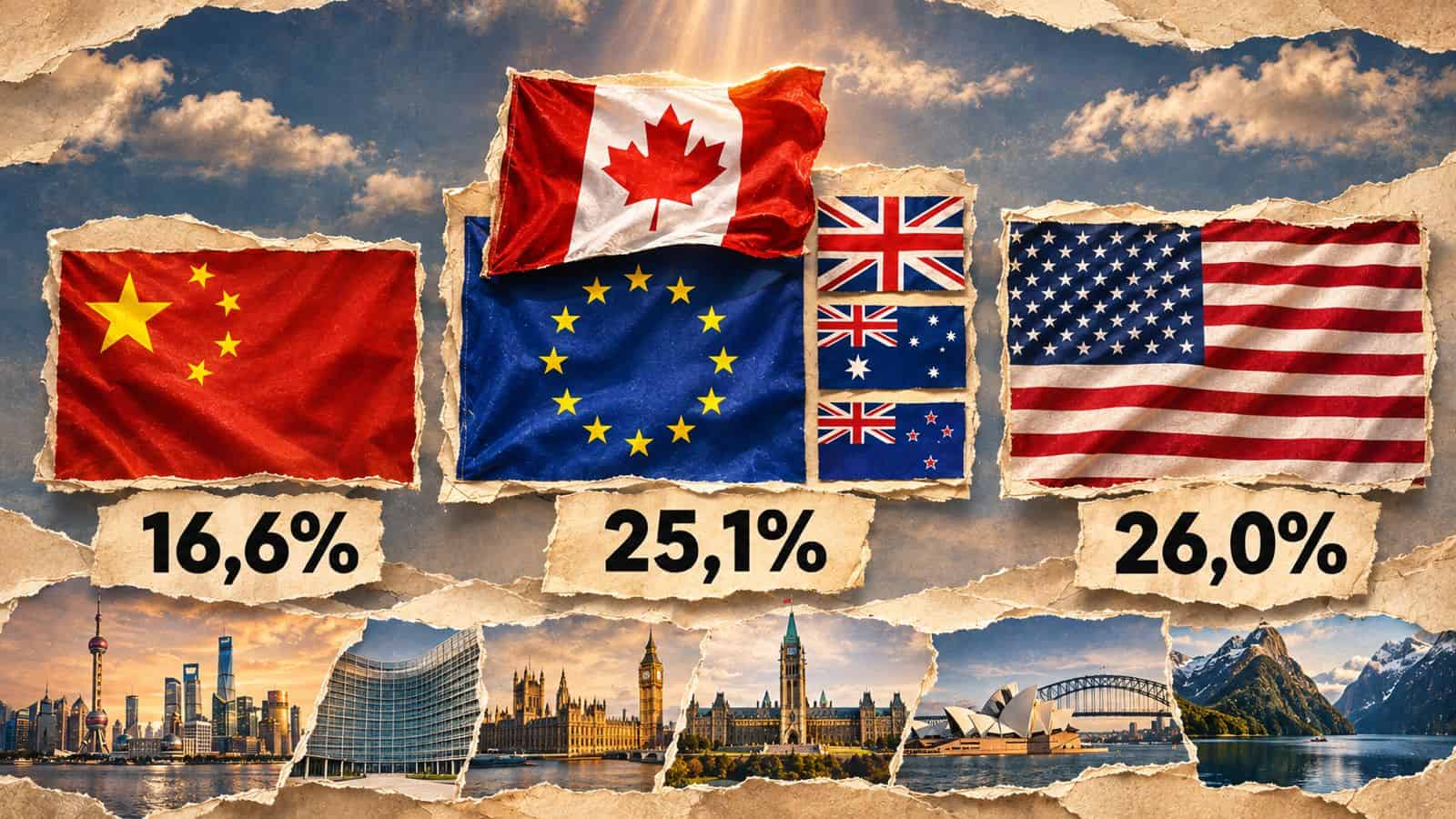

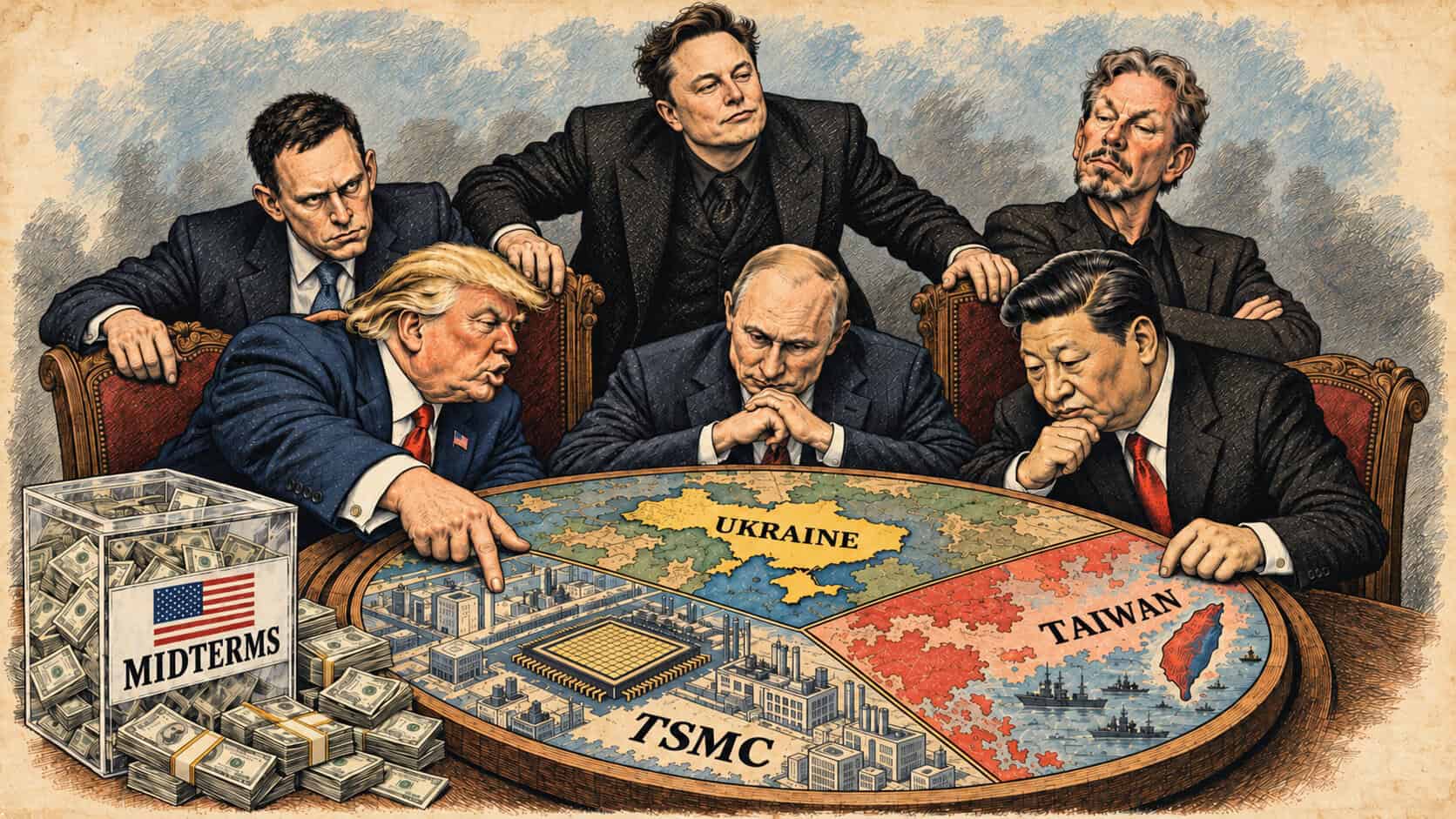
Big Tech Pushes the White House Toward Global De-escalation: The Stance of Tech Capital Shapes the Terms for a Deal Between Trump, Putin, and Xi Jinping
As of October 14, 2026, political advertising expenditures in the current U.S. election cycle, including reserved airtime, had exceeded $10 billion...
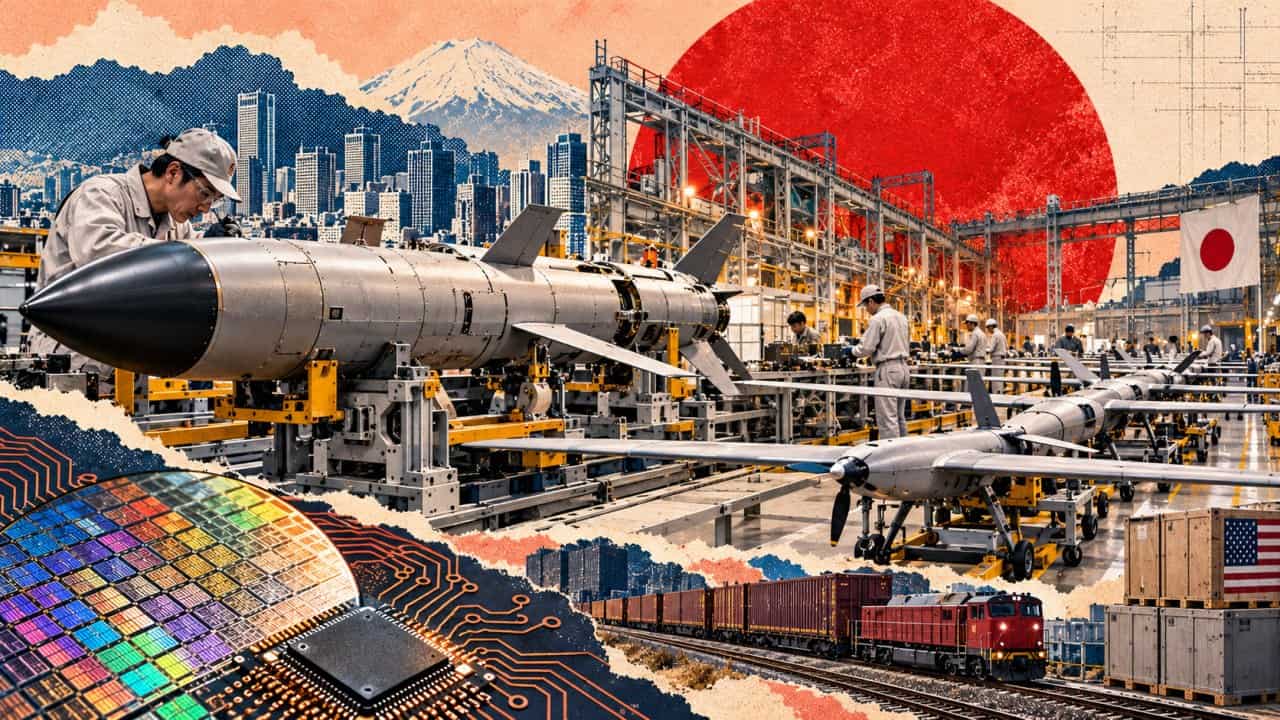
Japan Rapidly Builds Up Its Defense Capabilities: Personnel Shortages and Low-Cost Weapons Set the Pace of the Self-Defense Forces’ Modernization
On October 13, 2026, lawmakers from Japan’s ruling Liberal Democratic Party, led by former Defense Minister Itsunori Onodera, established a parliam...
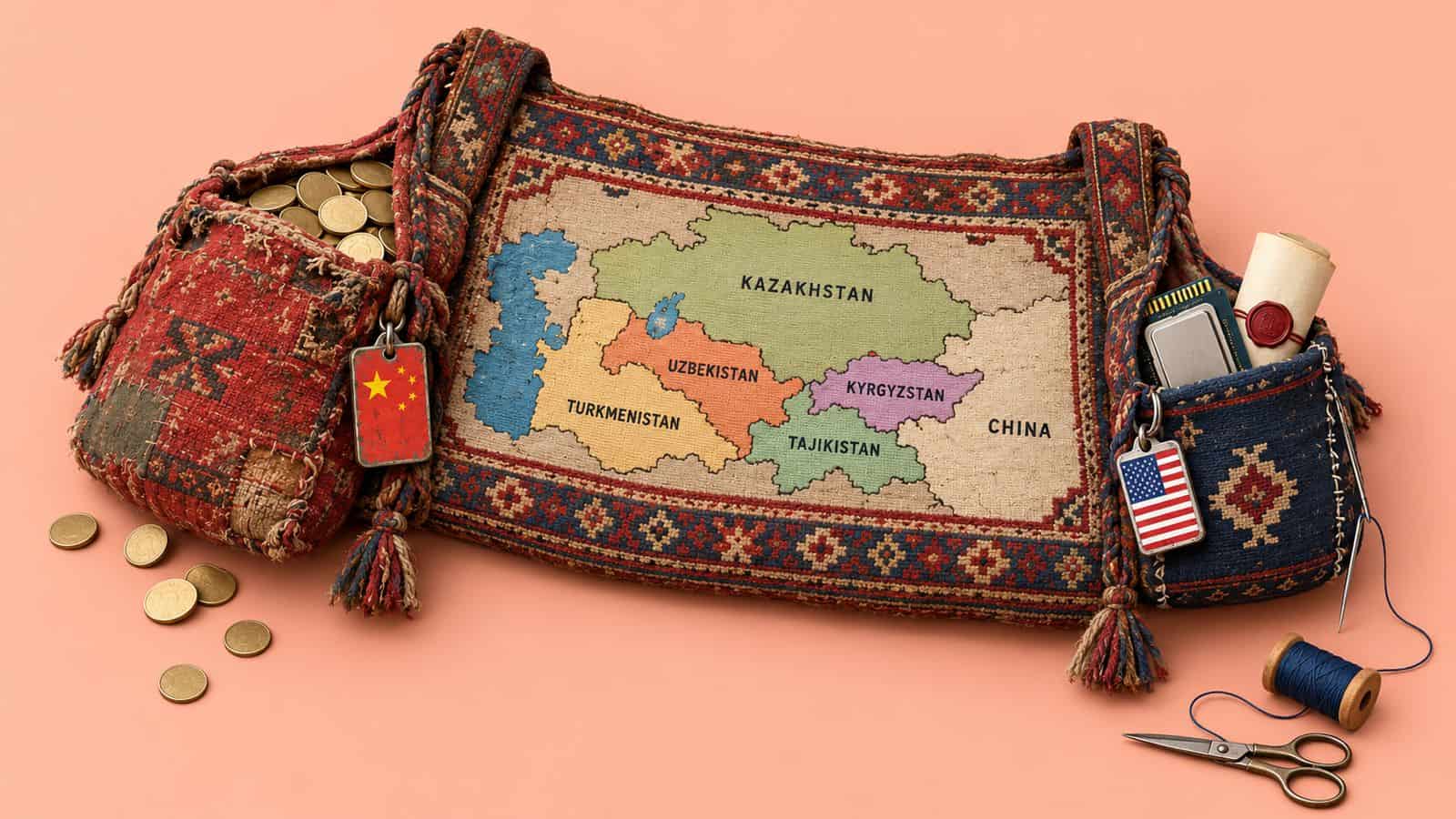
Secretary of State Rubio’s Visit to Uzbekistan: U.S. Tech Capital Moves into Central Asia, Leaving Beijing No Zones of Exclusive Influence
On October 18, 2026, U.S. Secretary of State Marco Rubio arrived in Samarkand, Uzbekistan, where he attended a C5+1 meeting with the foreign minist...
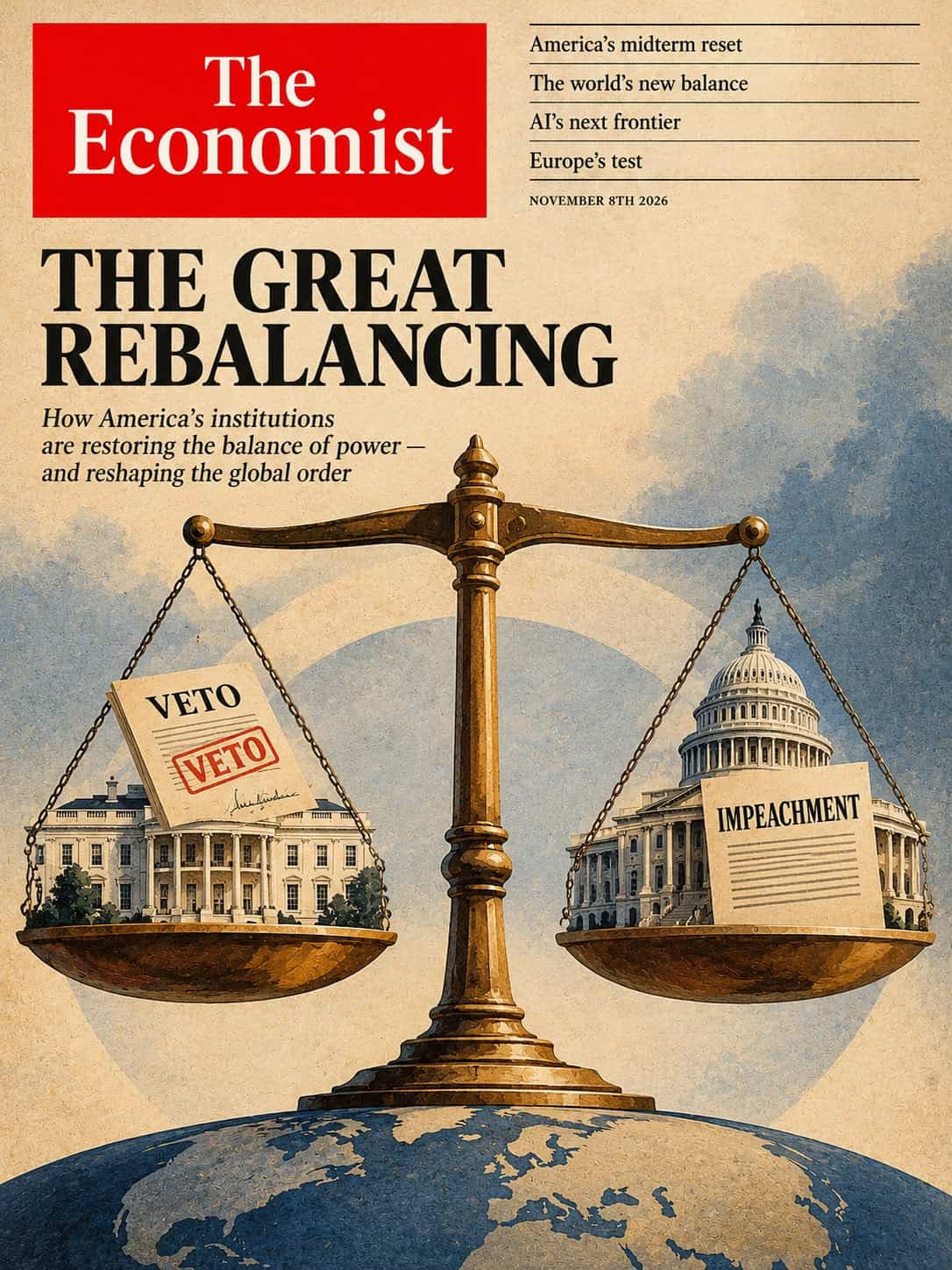
The U.S. Midterm Results: Democratic Institutions Set a Course Toward Restoring the Balance Between the Branches of Government
Following the November 3, 2026, midterm elections, the Democratic Party secured majorities in both chambers of the U.S. Congress, whose new term wi...
