
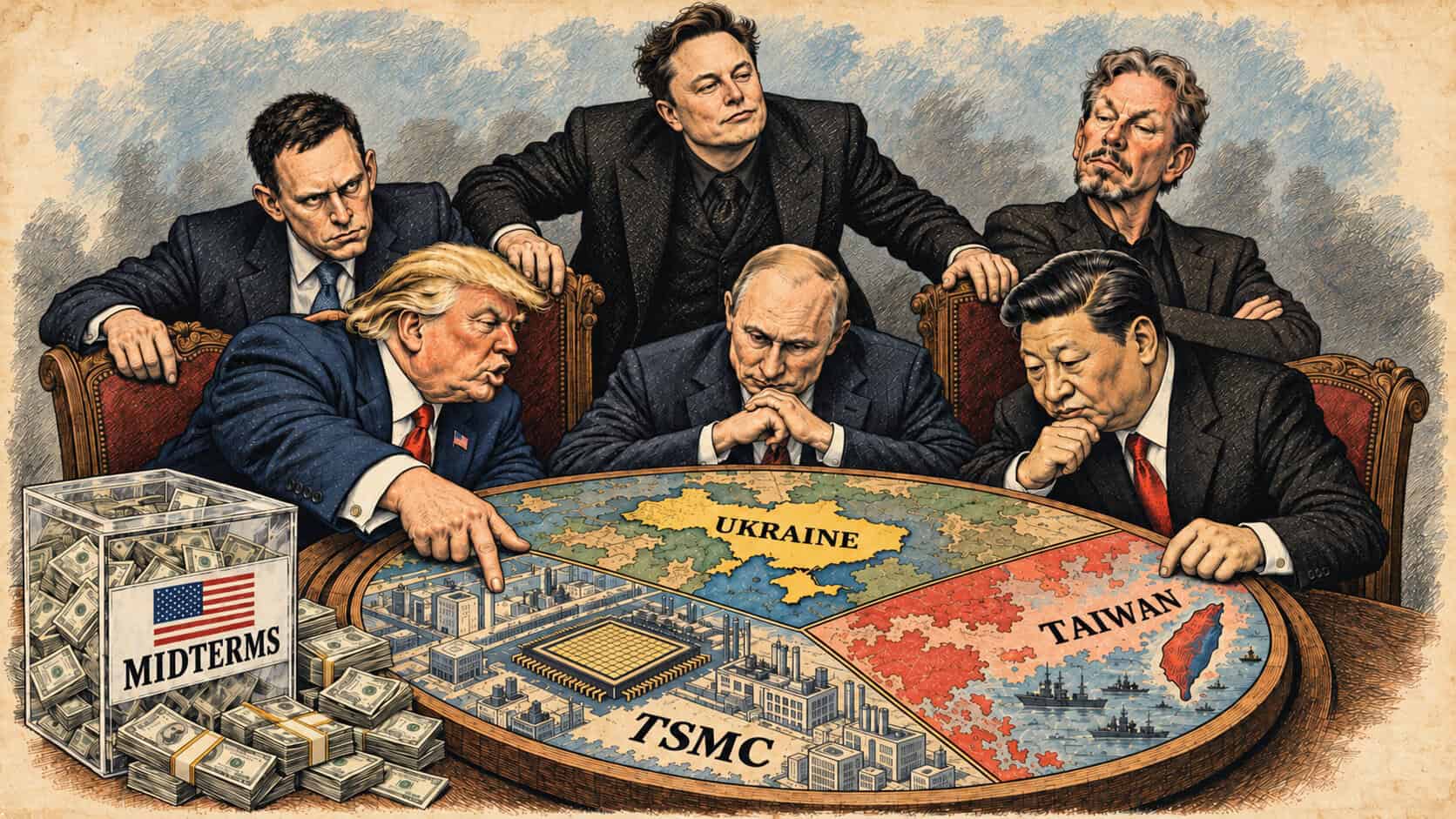
Big Tech Pushes the White House Toward Global De-escalation: The Stance of Tech Capital Shapes the Terms for a Deal Between Trump, Putin, and Xi Jinping

Solid Info





As of October 14, 2026, political advertising expenditures in the current U.S. election cycle, including reserved airtime, had exceeded $10 billion. AdImpact projects that spending will reach a record $11.6 billion, surpassing the $11.2 billion spent during the 2024 presidential cycle. In terms of campaign advertising expenditures, the 2026 cycle is set to exceed every previous U.S. election cycle, including presidential elections. Elon Musk has emerged as the cycle’s largest donor, contributing $366 million to Republican campaigns, compared with $291.5 million during the 2024 presidential race.
In the 2026 election cycle, technology capital has become one of the principal sources of financing for primary campaigns and candidates seeking seats in the U.S. Congress.
The shift of influential Big Tech business figures toward the Republican Party has resulted in Republicans receiving several times more funding from technology megadonors than Democrats.
After Musk, the largest contributions among technology donors came from Andreessen Horowitz founders Marc Andreessen and Ben Horowitz, who provided $92.2 million, the Winklevoss brothers with $55.3 million, and Greg and Anna Brockman with $50 million.
By contrast, the families of prominent Democratic philanthropists Dustin Moskovitz and Reid Hoffman collectively allocated $37.6 million to individual Democratic campaigns and Democratic super PACs.
Reid Hoffman, the largest of these donors, contributed nothing to the Democratic National Committee during this cycle. As a result, technology money on the Democratic side is strengthening individual candidates without establishing a centralized party-level power base for the industry.
The record cost of campaigns and the concentration of technology funding in the hands of a handful of megadonors make the 2026 cycle a breakthrough for Big Tech capital into U.S. party politics, allowing the technology elite to convert its economic weight into influence over Congress and the White House.
Since the beginning of President Trump’s second term, representatives of technology capital have steadily strengthened their political positions, as industry profits depend on federal decisions concerning artificial intelligence regulation, export controls, and government procurement.
According to ING, investment in the AI sector, adjusted for imports, accounted for 36 percent of annual U.S. GDP growth in the second quarter of 2026. Microsoft, Alphabet, Amazon, Meta, and Oracle have planned $755 billion in capital expenditures for 2026, compared with $380 billion in 2025, demonstrating how the technology sector is becoming the principal driver of growth in the American economy.
Technology Elites Advance Loyal Candidates into Congress Through Trump’s Endorsements and Primaries in Safe Seats
Elon Musk channels part of his contributions through political committees associated with Republican Party leadership, which then direct the money toward specific electoral contests.
In September 2026, Musk contributed $158 million to the Senate Leadership Fund (SLF), the Republican Party’s principal super PAC for Senate elections. The contribution became one of the largest known political donations in U.S. history.
The entire amount provided by Musk, representing 58 percent of all funds raised by SLF in the third quarter of 2026, was transferred by the fund to the Texas PAC super PAC in support of Ken Paxton. Each transfer was made the day after Musk’s corresponding contribution.
According to polls conducted by the Texas Politics Project, Marist University, and ReconMR/Siena, Paxton trails Democrat James Talarico by two to four points. Musk also contributed $10 million to Lone Star Liberty PAC, a super PAC supporting Paxton through television, radio, and digital advertising.
Musk’s extensive support for Ken Paxton demonstrates that the businessman finances candidates whose nominations President Donald Trump has personally endorsed. Just one week before the Republican primary runoff in Texas, the President endorsed Paxton’s candidacy.
In the May 26 runoff, Paxton defeated incumbent Senator John Cornyn, whom Trump had declined to endorse. The White House also backed Vivek Ramaswamy for Governor of Ohio, along with Jon Husted and Mike Rogers in the Senate races in Ohio and Michigan, respectively.
By the end of September 2026, Musk and his super PAC, America PAC, had directed between $3.4 million and $5 million toward supporting each of these candidates. Their election to the respective offices would expand the group of Republican politicians who advance and implement administration initiatives without resisting the President’s agenda from within the party.
A group of reliable supporters of the President’s agenda in the next Congress is also taking shape among candidates running for Senate seats in states where Republicans have a strong likelihood of victory.
Barry Moore in Alabama, Andy Barr in Kentucky, and Julia Letlow in Louisiana, all currently members of the House of Representatives, are seeking to replace Senators Tommy Tuberville, Mitch McConnell, and Bill Cassidy.
Tuberville is running for Governor of Alabama, while McConnell and Cassidy have clashed with Trump for years. With Trump’s backing, Letlow eliminated the incumbent Senator from the primary contest in May 2026.
Victories in these and other states by Republican politicians loyal to the White House and personally endorsed by Trump would expand the group of Republicans in the next Senate willing to vote for the technology donors’ agenda. Through the votes of this group, that agenda would influence both the administration’s domestic policies and its foreign policy.
At the same time, Big Tech elites have provided financial support to at least 24 Republican candidates for the House of Representatives through affiliated campaign finance committees, Fairshake and Leading the Future.
A total of 35 new Republicans — three running for the Senate and 32 for the House — are competing for seats rated safe for their party by the Cook Political Report, meaning their path to Congress was effectively decided in the primaries. Technology donors are directing money into these primaries and toward incumbent members of relevant congressional committees because influencing the composition of the future Republican caucus is less expensive at this stage.
Within the U.S. administration, the interests of technology elites are represented by Vice President JD Vance, who also serves as finance chair of the Republican National Committee and has longstanding business and personal ties to Peter Thiel.
Vance worked at Thiel’s Mithril Capital investment firm in 2016–2017. In 2021–2022, Peter Thiel directed $15 million to Protect Ohio Values, a super PAC supporting the future Vice President’s election to the Senate.
That contribution accounted for 75.8 percent of the funds raised by Protect Ohio Values during that election cycle and became one of the largest donations by an individual contributor to a single Senate campaign.
Technology capital distributes contributions between both parties but provides Republicans with more systematic and extensive support, combining financing for party organizations with targeted contributions to a select group of candidates.
The Trump Administration Seeks a Deal with Moscow on Russian Terms and Pressures Ukraine to Focus Resources on Containing China
As digital capital accounts for a growing share of the economy, Big Tech conglomerates are gaining greater influence over the White House’s foreign policy. That policy determines the conditions under which companies in the modern technology industry can enter markets in other macroregions.
Amid the current confrontation, China and Russia remain restricted markets for American AI products, as the governments of both countries regard them as instruments for collecting sensitive data. In July 2025, the Cyberspace Administration of China demanded that Nvidia explain the risks of tracking and remote shutdown capabilities in its H20 chips. In November, according to Reuters, Beijing banned foreign AI chips from newly constructed, state-funded data centers.
For representatives of the U.S. technology industry, establishing a foothold in these markets becomes realistic only if confrontation with China and Russia de-escalates. The profit growth model of American AI companies also depends on uninterrupted supplies from Taiwan, which would be substantially reduced if active armed conflict broke out in the Indo-Pacific.
The key condition deterring China from using force against Taiwan is Beijing’s assessment that a military operation would produce an unfavorable outcome. That assessment can be maintained through coordinated deterrence by the United States and its allies, which must be able to concentrate their resources in the Indo-Pacific. Washington’s first step, therefore, is reaching an agreement with Moscow to end the war in Ukraine, which continues to tie down U.S. and European military resources.
Washington initially sought to bring such an agreement closer by putting pressure on the Russian economy. Following a July 2025 conversation between President Trump and President Volodymyr Zelenskyy, U.S. intelligence intensified its assistance to Ukraine in planning drone strikes against Russian oil refineries, according to the Financial Times. Washington calculated that these attacks would reduce the Kremlin’s foreign currency revenues and push Putin toward negotiations on a settlement more quickly.
Strikes against the Baltic export terminals of Ust-Luga and Primorsk, attacks on Black Sea port infrastructure in Novorossiysk, and damage to oil refineries in Ryazan and Volgograd undermined Russia’s export and refining capacity while worsening diesel shortages. Over the first nine months of 2026, Russian oil refining volumes declined by 14 percent, from 197 million to 170 million metric tons. On July 8, Moscow imposed a complete ban on diesel exports.
The reduction in Russian diesel exports opened the market to American suppliers. By late July 2026, weekly U.S. distillate exports had reached a record rate of 1.88 million barrels per day. For Europe, American energy supplies were becoming a substitute for Russian imports, and the European Union had already announced in July 2025 its intention to purchase $750 billion worth of U.S. energy by the end of 2028.
The Trump administration’s position toward Ukraine underwent a fundamental reassessment that coincided with a September 24, 2026, meeting in New York between Kirill Dmitriev, a special representative of the Russian President, Steve Witkoff, and Jared Kushner.
The administration shifted its pressure from Moscow to Kyiv as an end to Ukrainian strikes on Russian oil refineries became one of the conditions for an agreement with the Kremlin, while U.S. diesel prices exceeded $6 per gallon for the first time ahead of the elections.
In September 2026, U.S. Energy Secretary Chris Wright identified Ukrainian strikes against Russian oil refineries as the principal cause of record diesel prices, while President Trump publicly urged Kyiv to refrain from attacking Russian diesel production.
The course of the Russian-Ukrainian war became an opportunity for the Trump administration to demonstrate to Moscow and Beijing its ability to influence the level of escalation by reducing funding for Ukraine, declining to expand the volume of contracts, and restricting Kyiv’s access to U.S. intelligence. As of March 31, 2026, $13.49 billion under the Ukraine Security Assistance Initiative (USAI) remained under contract but had not been disbursed.
On July 21, 2026, Senator Dick Durbin reported that the administration would withhold most of the $400 million in military assistance to Ukraine approved by Congress in the fiscal year 2026 defense appropriations until the next U.S. President took office.
In October 2026, according to reports by Axios, the Financial Times, and CNN, Trump’s negotiators threatened to terminate intelligence sharing with Kyiv if Ukrainian drone strikes against Russian oil refining infrastructure continued. The administration has publicly denied these reports.
According to the same reporting, the negotiators also threatened to suspend European purchases of American weapons for Ukraine through the PURL program. On October 14–15, the Ukrainian military experienced reduced access to Starshield for more than a day.
On October 9, 2026, following a telephone conversation with Vladimir Putin, U.S. President Donald Trump announced an agreement to restore supplies of Russian diesel fuel to the global market.
That same day, the U.S. Treasury Department’s Office of Foreign Assets Control (OFAC) issued General License 135 (GL 135), authorizing trade in diesel fuel involving sanctioned Russian companies through April 7, 2027.
Two days later, President Trump announced an energy ceasefire in the Russian-Ukrainian war, which the White House defined as a mutual commitment by Kyiv and Moscow to refrain from strikes against oil refineries. Moscow, however, did not confirm these terms.
The announced phased delivery of 4.8 million metric tons of Russian diesel is equivalent to less than 10 days of U.S. consumption of this type of fuel.
The U.S.-Russian agreement is therefore incapable of substantially reducing diesel prices in the coming weeks or stabilizing public approval of the White House’s economic policies ahead of the midterm elections.
On October 16, President Trump issued an executive order declining to apply the sanctions and tariffs established under the September legislation named after Lindsey Graham, including tariffs of up to 100 percent on goods from the largest purchasers of Russian oil and gas, among them China and India.
The order justifies this decision on the grounds of U.S. national interests and remains in effect until the President or Secretary of State determines that other action is appropriate. Trump has therefore postponed pressure on Moscow and its largest customers.
White House spokesperson Taylor Rogers explained the decision by arguing that imposing sanctions now would undermine U.S. efforts to secure a lasting and wide-ranging peace agreement. For the sake of negotiations with the Kremlin, the Trump administration declined to use a direct instrument against the economic and energy ties that intensified between Moscow and Beijing in 2022 following the introduction of Western sanctions against Russia.
The parties’ dependence on these ties is unequal. China has become Russia’s principal market for energy exports, and since December 2022, Beijing has purchased 50 percent of Russia’s crude oil exports, 36 percent of its coal exports, 32 percent of its pipeline gas exports, and 25 percent of its liquefied natural gas (LNG) exports. In September 2026, China accounted for 55 percent of Russia’s energy export revenues from its five largest buyers, or $10.5 billion, including $6.9 billion from crude oil.
For China, by contrast, Russian supplies carry considerably less weight. Although Russia has been China’s largest crude oil supplier since 2023, it supplied 100.7 million metric tons in 2025, representing just 17.4 percent of Chinese imports of that fuel. In 2024, the Russian Federation became China’s second-largest coal supplier, accounting for 17.2 percent of Chinese coal imports.
These ties have strengthened further in 2026, with China’s seaborne imports of Russian oil in September rising 22 percent year over year. At the same time, Russian budget revenues from oil and gas fell by 17.2 percent in ruble terms over the first nine months of 2026, to $64.3 billion. Russia’s Finance Ministry consequently lowered its annual revenue target by $15.3 billion to $89.1 billion.
The tariffs envisaged by the Graham legislation therefore threatened Moscow with the loss of its principal customer, on which its foreign currency revenues for financing the war depend. They also confronted Beijing with a choice between access to the U.S. market and the Russian supplies that account for 17.4 percent of its oil imports.
By setting aside this instrument in the interests of Big Tech groups, which need peace, Taiwanese chips, and access to markets, the Trump administration chose to pursue an end to the war on Russian terms while pressuring Ukraine. Having failed to weaken Moscow’s ties with Beijing through its earlier attempts to influence Russia, the administration now proceeds from the assumption that separating Russia from China is currently impossible. It is therefore structuring its negotiations with Moscow around two positions.
The first is that the White House is not seeking to obtain decisions from Moscow without Beijing’s participation and recognizes that China remains a party to the dialogue. Washington calculates that, following the end of the war in Ukraine, this dialogue will encourage China’s leadership to postpone military scenarios for establishing control over Taiwan and refrain from steps that could escalate into an open confrontation with the United States.
The second position, which creates the possibility of reaching agreements, rests on the Kremlin’s need to exit the war on its own terms to maintain control over Russian society. The Trump administration accepts this condition because it has chosen Russia over Ukraine as a strategic priority and is consequently applying pressure on Kyiv.
The strategic objective of the Republican administration’s policy of de-escalation with autocracies remains a trilateral agreement among the American, Chinese, and Russian leaders to reduce global confrontation, an initiative promoted primarily by Moscow.
On September 1, 2026, Russian Presidential Aide Yuri Ushakov stated that the possibility of such talks was being discussed in connection with the November 18–19 APEC summit in Shenzhen. He subsequently emphasized that General Secretary Xi Jinping could take steps to arrange the meeting.
On October 19, 2026, President Trump stated that he was prepared to participate in such a meeting if Xi Jinping wanted it and that the discussions would focus primarily on nuclear disarmament, with Ukraine taking a secondary place.
China’s leadership has not officially confirmed the Russian proposal. In October 2026, China’s Foreign Ministry stated that it had no information on the matter and described demands for China to join trilateral nuclear disarmament negotiations as unfair and unrealistic.
China’s restrained position reflects the risk that a joint meeting between Putin, Xi Jinping, and Trump would allow the Kremlin to present itself as an independent partner of Washington. Such a meeting would also publicly confirm the emergence of a structured model of dialogue between the United States and Russia and lay the foundation for a permanent channel of Russian-American communication.
At the same time, formally establishing high-level U.S.-Russian contacts during a meeting attended by Xi Jinping would encourage China to become a participant in the de-escalation process.
The greatest risk to the entire strategy of managed de-escalation, in which American technology capital has a vested interest, is an escalation around Taiwan.
Because of this risk, the de-escalation process initiated by the Trump administration consists of preventing a direct conflict in the Taiwan Strait and reaching a settlement with Moscow on Russian terms.
Despite the construction of semiconductor fabrication plants in the United States, advanced semiconductor manufacturing remains concentrated in Taiwan. Even after TSMC completes its announced $265 billion investment program in Arizona, the facilities there will account for only about 30 percent of its production of chips at the 2-nanometer node and beyond.
The 3-nanometer manufacturing process, which TSMC launched in Taiwan in December 2022, will not reach mass production in Arizona until the third quarter of 2027. Amkor will open the first high-volume advanced chip packaging facility in the United States in Arizona in early 2028, meaning AI accelerator packaging is still being performed in Taiwan.
TSMC has been mass-producing 2-nanometer chips in Taiwan since the fourth quarter of 2025. In 2027, it will more than double its annual capacity for this process, and in 2028, it will begin mass production using the A14 process. Taipei is keeping the most advanced manufacturing technologies on the island, as legislation adopted in 2025 requires TSMC’s overseas fabrication plants to operate one process generation behind the latest technologies available in Taiwan.
In February, Taiwan’s government declared Washington’s January 2026 objective of relocating 40 percent of the Taiwanese chip supply chain to the United States impossible. Consequently, in 2028–2030, a period coinciding with the beginning of the active phase of the U.S.-China confrontation, the most advanced chip manufacturing will remain in Taiwan.
As long as the island remains outside Beijing’s control, U.S. export restrictions limit China’s access to advanced Taiwanese chips, slowing the country’s development as a technological competitor to the United States.
At the same time, agreements governing the supply of microchips and semiconductors after the island comes under Beijing’s control lack a reliable foundation. China’s ease in undermining the principle of “one country, two systems” by dismantling Hong Kong’s autonomy following the adoption of the 2020 national security law illustrates this risk.
The U.S. technology industry is counting on a broader reduction in confrontation that would allow manufacturing and supply chains to continue functioning regardless of the island’s status.
The Trump administration has already extended its trade truce with China until January 10, 2027, and is withholding a $14 billion arms package for Taiwan as a bargaining instrument in negotiations with Beijing.
Russian Energy Assets Remain a Point of Convergence for U.S., Russian, and Chinese Interests
U.S.-Russian negotiations, which have now entered a new phase, are centered on specific agreements involving Russian energy assets and the gradual easing of sanctions.
U.S. government entities, major donors to the Republican Party and President Donald Trump, and Persian Gulf capital are seeking to acquire Lukoil’s overseas assets.
On October 22, 2025, the United States placed Lukoil on the Specially Designated Nationals (SDN) sanctions list, leaving the Treasury Department to authorize only negotiations concerning the sale of its international holding company, Lukoil International GmbH.
Under the GL 131 series of licenses, any prospective buyer of these assets must completely sever ties with Lukoil, while proceeds from the sale must be deposited into a blocked account in the United States.
The current license, GL 131J, was issued on September 18, 2026, and expires on October 22, 2026, making it impossible to complete the transaction under the present authorization. After the deadline for Lukoil’s agreement with Carlyle expired in the summer of 2026, a consortium led by Trump donor Todd Boehly emerged as the principal bidder. Boehly contributed $1 million to the Republican super PAC MAGA Inc. in December 2024 and another $1 million to Trump’s inaugural committee.
Government participation in the consortium is represented by the U.S. International Development Finance Corporation (DFC), which is seeking a 10–20 percent equity stake and expects to control a majority of the board of directors together with Todd Boehly.
The private side consists of Boehly’s own holdings, the Middle Eastern conglomerate IHC, associated with Sheikh Tahnoon of Abu Dhabi’s ruling family, and Qatar’s Al-Khayyat family. The United States is simultaneously acting as the transaction’s regulator through OFAC, which issues licenses and determines sanctions conditions, and as a prospective co-owner of the assets through DFC.
The Trump administration’s decisions on licensing and sanctions relief directly affect the value of the stake the U.S. government itself seeks to acquire. As a result, the administration’s sanctions authority becomes an instrument for advancing American commercial interests.
In 2024, Lukoil’s overseas assets were valued at approximately $22 billion, although the actual transaction price has not been disclosed. For 2025, Lukoil reported a net loss of $12.5 billion, partly reflecting a $19.7 billion write-down of its investment in Lukoil International.
Because completing the sale of Lukoil International requires the simultaneous approval of Washington and Moscow, the outcome of the agreement will demonstrate whether the U.S. and Russian leaderships are willing and able to move beyond political contacts toward concrete commercial transactions despite sanctions.
While the sale of Lukoil remains a bilateral U.S.-Russian transaction involving assets owned by the Russian side, other projects Moscow is proposing for dialogue with Washington involve Chinese co-owners and purchasers.
These include the Russian LNG projects Arctic LNG 2 on the Gydan Peninsula and Sakhalin-2 in the Russian Far East, through which liquefied natural gas is supplied to China.
As early as August 2025, according to Reuters, U.S. and Russian officials discussed Russia’s purchase of American equipment for LNG projects, including Arctic LNG 2. On October 16, 2026, Kirill Dmitriev identified the Arctic and LNG as the next areas of cooperation with the United States following the diesel agreement.
In Arctic LNG 2, where China’s CNPC and CNOOC each hold a 10 percent stake, China is the only known buyer, with all recorded shipments from the project received by a single terminal operated by the state-owned company PipeChina. In 2025, the Beihai terminal in China received 23 Arctic LNG 2 shipments totaling 1.3 million metric tons. Since the beginning of 2026, it has received at least 31 shipments totaling 2.3 million metric tons. For China, these supplies accounted for less than 2 percent of LNG imports in 2025, while the Chinese market remains the project’s only outlet.
Sakhalin-2 in the Russian Far East, in which Gazprom holds a 77.5 percent stake, produced 10.3 million metric tons of LNG in 2025. Japan received 58 percent of this volume, China 23.9 percent, and South Korea 17.5 percent. Transactions through Gazprombank related to the project, along with shipments of Sakhalin oil to Japan, are authorized under an OFAC license valid until December 18, 2026. The Trump administration has extended this license three times since June 2025 to protect Japan’s energy security.
Transactions involving sanctioned assets, even those with Chinese capital participation, already require Washington’s authorization, giving the United States a continuing instrument of influence over both Moscow and Beijing. The United Kingdom placed the Beihai terminal on its sanctions list on October 15, 2025, while the Trump administration has refrained from imposing sanctions on the terminal, PipeChina, Chinese buyers, or the banks processing payments for these shipments.
Because China remains a party to the dialogue, Moscow and Beijing are coordinating their positions in advance through direct contacts between senior officials.
As part of this coordination, Russian Presidential Aide Nikolai Patrushev visited China on October 8–13, 2026, to present a maritime and Arctic program, while Chinese Premier Li Qiang is scheduled to visit Russia on October 20–22, 2026.
These visits constitute a preparatory stage for the trilateral meeting proposed by Moscow, during which Russia and China are discussing a broad package of agreements that will also cover the Arctic program. The parties developed the framework for this package during Patrushev’s visit and will finalize it during Li Qiang’s visit. The Arctic agenda presented by Patrushev covers the same areas the Kremlin is proposing for cooperation with Washington following the diesel agreement.
American instruments of influence extend only to agreements that require U.S. licenses, depend on infrastructure in which American entities hold ownership stakes, or involve payments that the White House can block.
The direct channel of communication established between senior officials ahead of the APEC summit in Shenzhen allows Moscow and Beijing to coordinate supply volumes, prices, and routes outside the conditions underpinning U.S. control. The actual volumes involved in the Arctic projects are small, so agreements with Moscow are needed by the Trump administration primarily to achieve the de-escalation sought by Big Tech groups.
A potential trilateral meeting between Trump, Putin, and Xi would give the U.S. President an opportunity to demonstrate his influence over the course of the Russian-Ukrainian war.
The Trump administration is showing Moscow and Beijing that it possesses instruments of influence over Kyiv’s decisions because the volume of military assistance, Ukraine’s access to U.S. intelligence, and weapons deliveries depend on Washington. This demonstration is intended to convince the Russian and Chinese leaderships that the Trump administration can demand concessions from Kyiv during negotiations even when those concessions run counter to Ukraine’s interests.
A clear mechanism for applying such pressure is not yet apparent, but influence over Kyiv is already becoming a distinct bargaining argument for Trump in negotiations with Moscow and Beijing.
U.S. Foreign Policy Is Becoming Systematically Aligned with the Commercial Needs and Strategy of Technology Capital
The composition of the next Congress, to be elected on November 3, 2026, will influence the continuation and eventual effectiveness of the Trump administration’s policy of de-escalation with autocracies. Democratic majorities in the Senate and the House of Representatives, which the prediction market Polymarket estimated as having probabilities of 65 percent and 91 percent, respectively, as of October 19, would not change the White House’s chosen approach to foreign policy.
A Congress opposed to the President could only slow certain decisions and obstruct the Republican administration on issues indirectly related to the United States’ geopolitical course.
Big Tech groups are advancing their regulatory agenda for artificial intelligence and cryptocurrencies on a bipartisan basis, supporting sympathetic lawmakers from both parties to preserve and expand favorable regulatory conditions for the AI and cryptocurrency industries regardless of the election results.
By contrast, the foreign policy course toward de-escalation depends on the White House and will therefore continue only if a politically cohesive Republican congressional caucus loyal to the President takes shape — a process Big Tech elites are currently helping to advance.
In foreign policy, the American Big Tech sector is relying on the normalization of relations with Russia, through which the Trump administration is postponing escalation with autocracies and pursuing an end to the war on the Kremlin’s terms while pressuring Ukraine.
The balance between the foundational values that position the United States as a guarantor of democracy worldwide and the commercial interests of Big Tech elites is shifting decisively in favor of technology groups. These groups are absorbing the leading centers of influence within the political establishment and seeking to shape a new agenda for American society and a new direction for U.S. foreign and domestic policy. The integration of technology capital, leading media organizations, and the principal political forces is creating a new reality in American politics that the rest of the world will have to reckon with.
This publication is the result of a partnership between MILITARNYI and SOLID INFO. An extended version is available on the website of the analytical center.


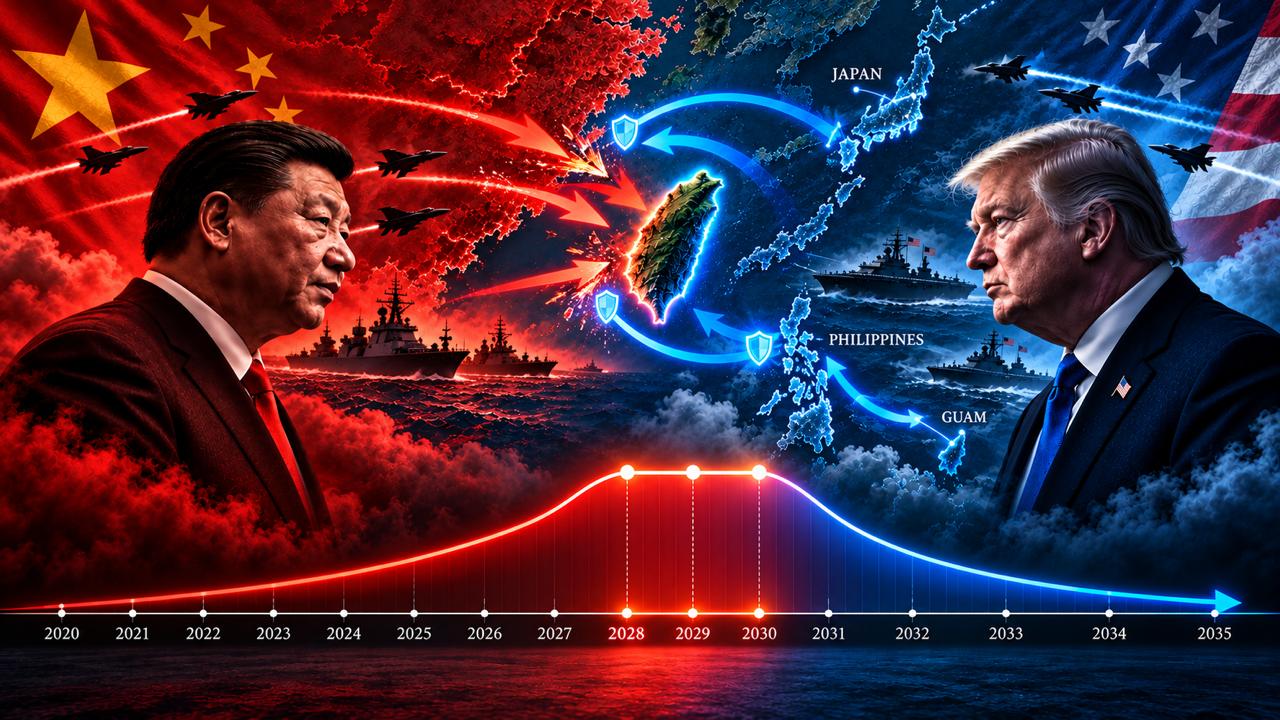
Xi Jinping’s Washington Visit Outlines the Timeframe for the Active Phase of the Confrontation: Beijing Openly Demands Taiwan’s Return
On September 23–25, 2026, Chinese President Xi Jinping held talks with President Trump at the White House during the first Chinese state visit to t...

Netanyahu’s Visit to Abu Dhabi: Israel Builds Partnerships from a Position of Strength, but the Middle East Conflict Is Eroding the Edge of Its Weapons
On September 27, 2026, Israeli Prime Minister Benjamin Netanyahu traveled to Abu Dhabi with the head of Mossad and the head of the National Securit...
Big Tech Pushes the White House Toward Global De-escalation: The Stance of Tech Capital Shapes the Terms for a Deal Between Trump, Putin, and Xi Jinping
As of October 14, 2026, political advertising expenditures in the current U.S. election cycle, including reserved airtime, had exceeded $10 billion...
