
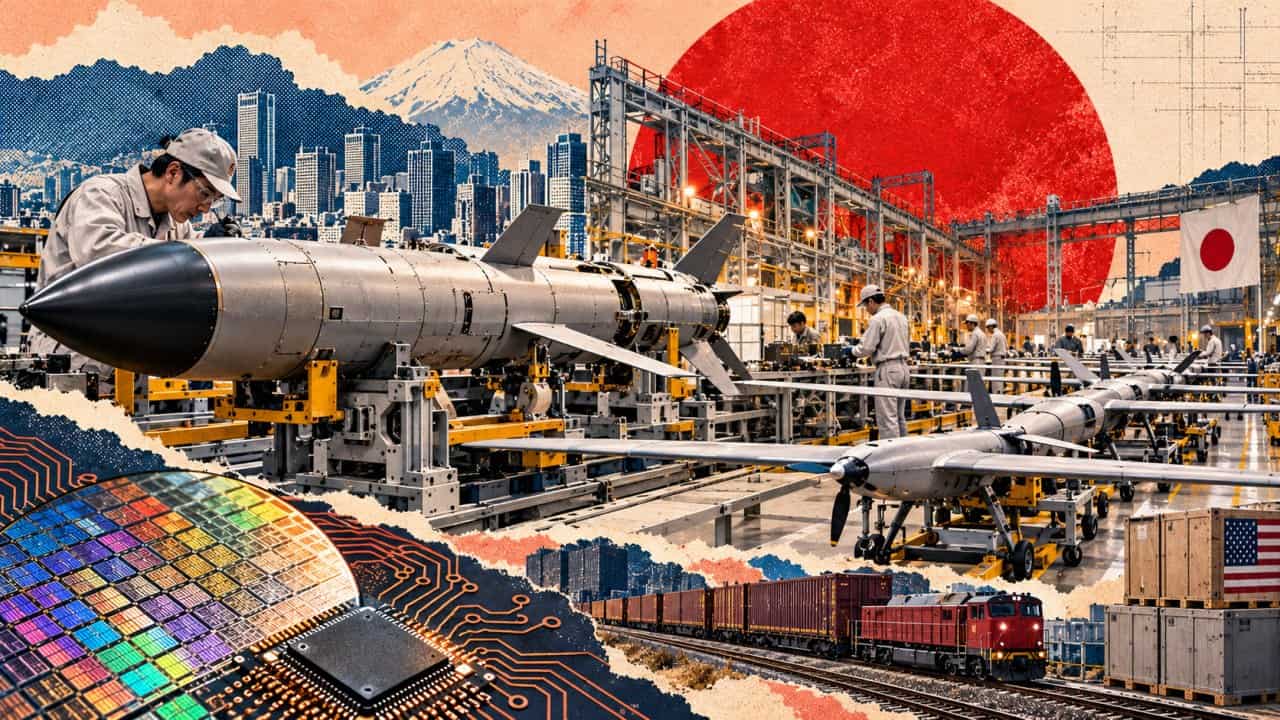
Japan Rapidly Builds Up Its Defense Capabilities: Personnel Shortages and Low-Cost Weapons Set the Pace of the Self-Defense Forces’ Modernization

Solid Info



On October 13, 2026, lawmakers from Japan’s ruling Liberal Democratic Party, led by former Defense Minister Itsunori Onodera, established a parliamentary group to prepare proposals on military compensation and personnel support for inclusion in the country’s new security documents. In fiscal year 2025, the Self-Defense Forces fulfilled only 72 percent of their recruitment target, and as of March 31, 2026, they were 29,453 service members short of their authorized strength.
Prime Minister Sanae Takaichi’s government is pursuing greater defense autonomy under pressure from Washington’s transactional policy. However, the pace of the Self-Defense Forces’ modernization through 2030 will be determined primarily by personnel shortages and a new balance between expensive precision weapons and inexpensive weapons designed for mass deployment.
Observing how the United States is reallocating limited resources between the Euro-Atlantic and Indo-Pacific regions in favor of priority theaters, the Japanese government is factoring in the risk of uncontrolled security gaps emerging in East Asia.
Because Tokyo regards a reduced American presence in the Taiwan Strait and on the Korean Peninsula as a potential trigger for large-scale escalation by autocracies, the government continues to accelerate defense reforms aimed at establishing active asymmetric deterrence.
Although Japan’s reforms are driven primarily by concerns about its own security, they align with the geopolitical interests of its allies.
From Washington’s perspective, Japan’s accelerated rearmament is the optimal way to reduce the American defense burden while maintaining firm control over developments along the first island chain.
The defense policy review, which will culminate in the revision of three security documents at the end of 2026, is intended to compensate for personnel shortages through unmanned systems and combine expensive precision weapons with inexpensive, mass-produced alternatives. The documents must also identify funding sources constrained by the government bond market and revise the rules for counting defense expenditures.
The most severe constraint is personnel. As of March 31, 2025, the Self-Defense Forces had filled only 60.7 percent of their enlisted positions, compared with 92.8 percent of officer positions. Extrapolating fiscal year 2024 figures without accounting for new benefits, the Ministry of Defense calculated that the actual number of service members would decline by 40 percent by 2045.
With the recruitment-age population projected to shrink by 30 percent by 2045, the Ministry of Defense has acknowledged that personnel measures alone cannot offset demographic decline. In fiscal year 2025, the Ground Self-Defense Force fulfilled only 47 percent of its recruitment target for noncommissioned officer candidates, the principal source of new enlisted personnel.
Despite a 14.9 percent increase in recruitment during fiscal year 2025, the actual strength of the Self-Defense Forces declined by 2,551 personnel over the year. With early departures in fiscal year 2024 equivalent to 58 percent of annual recruitment, higher enlistment numbers are failing to halt the decline.
In response to personnel shortages, the government increased fiscal year 2026 spending on strengthening its personnel base by 41.9 percent. The Ministry of Defense has scheduled the first review of military compensation in 70 years for fiscal year 2027.
Because the 2022 Defense Buildup Program does not increase total authorized personnel strength through the end of fiscal year 2027, joint units and the Maritime and Air Self-Defense Forces are receiving approximately 2,000 positions transferred from the Ground Self-Defense Force. Due to a shortage of sailors, the government has proposed transferring operation of the successor to the icebreaker Shirase to the Japan Agency for Marine-Earth Science and Technology beginning in fiscal year 2034.
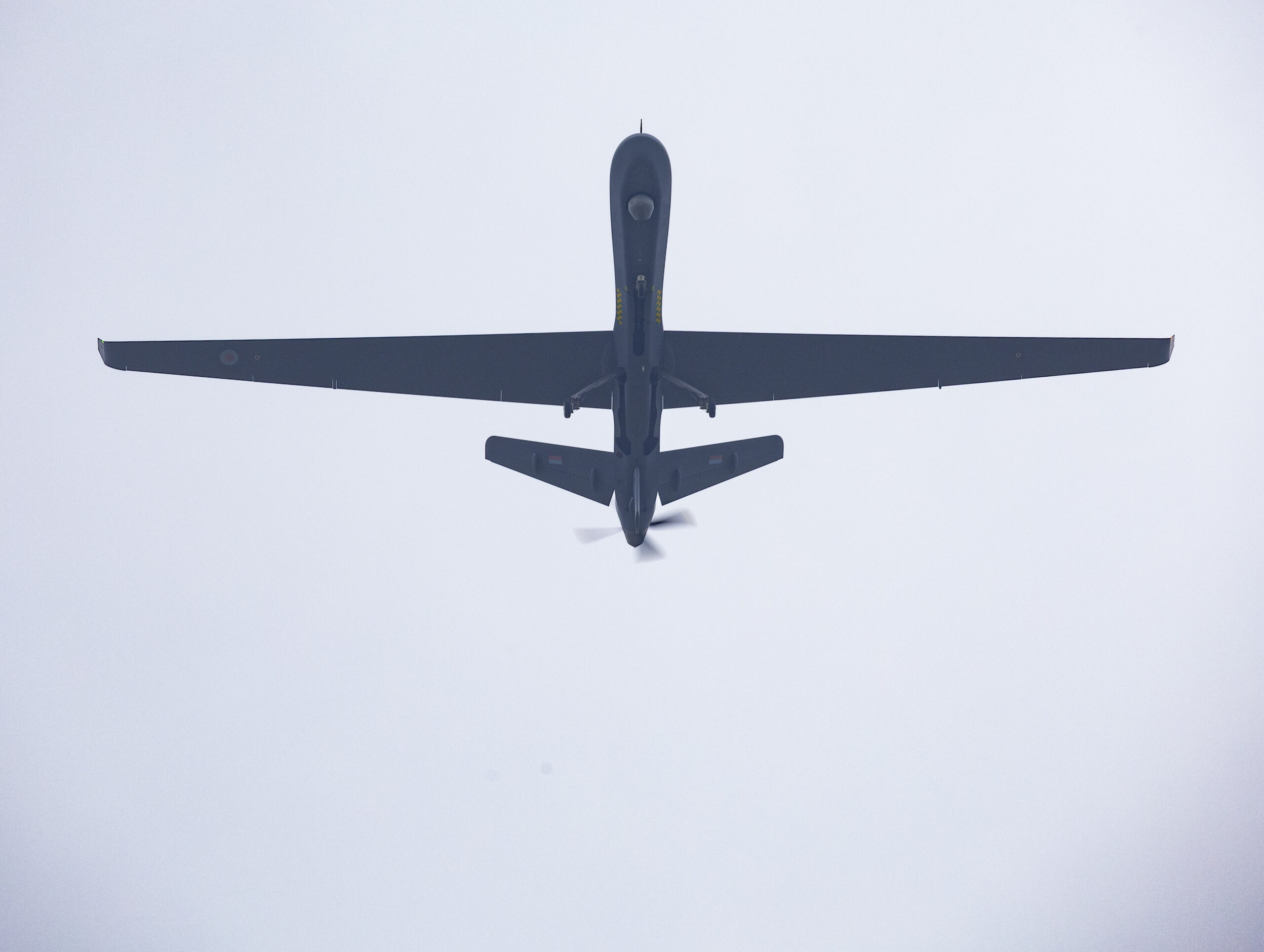
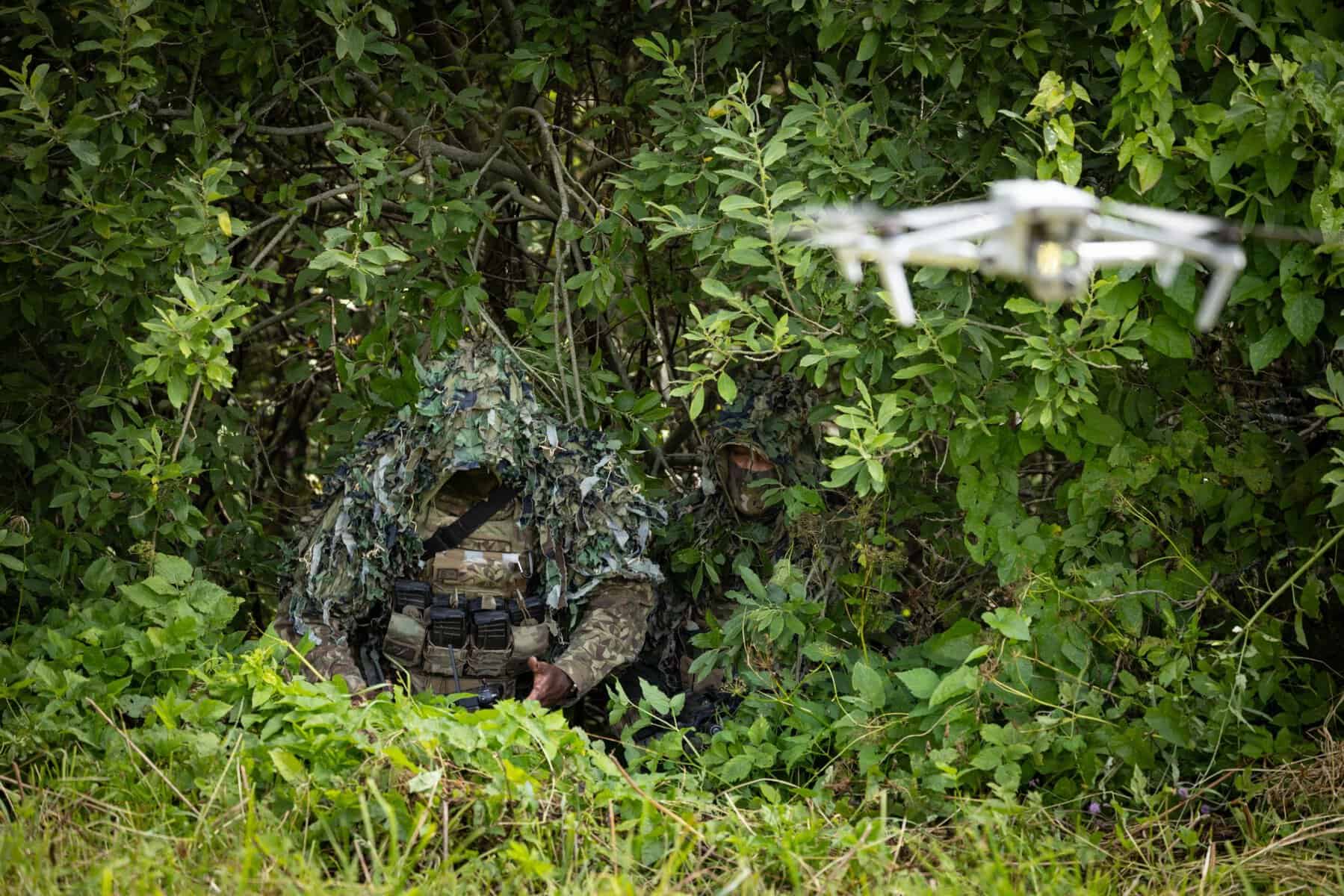
Inexpensive missiles and drones are becoming a necessary substitute for the recruits the Self-Defense Forces lack even for their existing missions. In February 2026, the Ministry of Defense explicitly linked the adoption of unmanned systems and automation to Japan’s demographic challenges.
In its fiscal year 2027 budget request, the Ministry set the objective of making the Self-Defense Forces the world’s most extensive user of unmanned systems, transferring some functions currently performed by crewed platforms to unmanned alternatives. The request allocates $230 million for small attack drones for the Ground Self-Defense Force and includes funding to develop unmanned ground vehicles and procure interceptor drones.
The Maritime Self-Defense Force is already designing warships around personnel constraints. Mogami-class frigates operate with crews of 90 sailors, half the complement of general-purpose destroyers. A new Aegis-equipped vessel will have a crew of 240, compared with 300 aboard a Maya-class destroyer equipped with the same system.
Because no government decision will eliminate personnel shortages by 2030, the Self-Defense Forces will expand their capabilities primarily through unmanned systems and automation.
Japan’s 2026 Defense White Paper identifies mass attacks by inexpensive kamikaze drones and decoys that overwhelm air defenses and clear the way for missiles as emerging methods of warfare. In 2024 alone, the Russian military received more than 1.5 million drones, while in Russia’s war against Ukraine inexpensive systems have been destroying far costlier equipment.
China has converted at least 200 of its more than 500 decommissioned J-6 fighters into attack drones and deployed them near the Taiwan Strait. American analysts regard them as instruments for overwhelming Taiwanese, U.S., and Japanese air defenses.
Carrying the principle of affordable mass over to missiles, Japan’s Ministry of Defense for the first time included the domestic development of a low-cost, long-range cruise missile in its fiscal year 2027 budget request. The new missile is intended to complement expensive American Tomahawk precision weapons.
Alongside the inexpensive cruise missile, the Ministry plans to develop a low-cost, long-range attack drone using civilian components and mass-production technologies, which would operate in conjunction with these missiles. On April 27, 2026, the Acquisition, Technology & Logistics Agency (ATLA) issued a request for information on low-cost guided missiles, restricting participation to Japanese companies with their own manufacturing capabilities and experience developing missiles.
The budget request does not specify an amount for the project. According to Nikkei, however, development of the new cruise missile will begin in fiscal year 2027, a ground-launched version will be ready by 2029, and mass production will begin no earlier than fiscal year 2030.
Analyzing the low-cost missile program on October 4, 2026, military commentator Shinichi Kiyotani attributed the Ministry of Defense’s inability to achieve inexpensive mass production to the absence of procurement plans specifying quantities and deadlines, along with orders for only a handful of units.
The missile must be substantially cheaper than the Tomahawk, which costs approximately $2.5 million per unit. To reduce costs, the design will use more readily available civilian components, including cameras, instead of specialized military electronics, while incorporating a lighter warhead.
According to Kyodo, the new missile will have a range exceeding 1,000 kilometers and use commercially available aviation products for its engine and guidance system. Its principal weaknesses will be limited accuracy and vulnerability to interception. The developer will be selected through a competition, with Nikkei identifying Mitsubishi Heavy Industries, Kawasaki Heavy Industries, Mitsubishi Electric, and Toshiba among the likely participants.
The Ministry of Defense intends to deploy these missiles in substantial numbers to exhaust enemy air defenses, increasing the probability that subsequent missiles will reach their targets.
If satellite signals are jammed, the inexpensive missile’s accuracy will depend on its onboard gyroscopes and accelerometers. Since 2017, Japan has been developing quantum-gyroscope-based navigation for autonomous underwater vehicles. The government’s K Program aims to achieve a navigational error of approximately two kilometers over 30 days underwater by 2029.
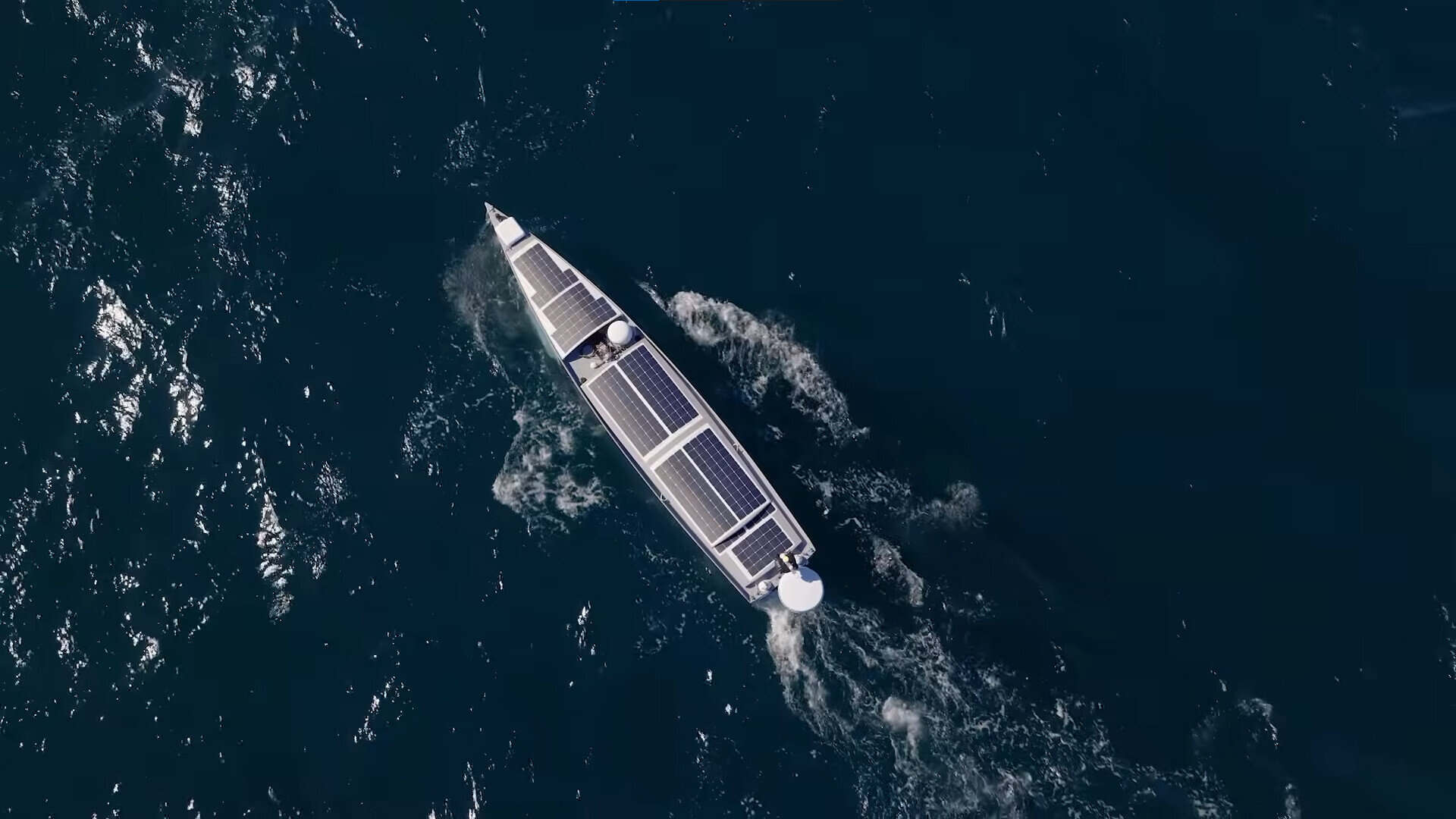
The fiscal year 2027 budget request also includes research into a module that would enable unmanned underwater vehicles to launch long-range missiles. Such platforms would allow the Self-Defense Forces to conduct unexpected saturation strikes with inexpensive missiles, overwhelming enemy air defenses before expensive precision weapons arrive.
On May 13, 2026, the Pentagon awarded framework agreements to Anduril Industries, CoAspire, Leidos, and Zone 5 under the Low-Cost Containerized Munitions program, which calls for the procurement of more than 10,000 inexpensive cruise missiles over three years beginning in 2027. Zone 5’s Rusty Dagger missile costs approximately $250,000, one-tenth the price of a Tomahawk, establishing a cost benchmark for Japan’s program.
Until its domestically developed missile becomes available, Japan is considering purchasing foreign systems, including the Barracuda-500 from U.S. company Anduril Industries. On May 13, 2026, the U.S. Army reached an agreement to begin receiving at least 1,000 ground-launched Barracuda-500 missiles a year starting in 2027.
Japan’s industrial base is impeding the mass production of inexpensive weapons. Since 2003, 102 companies have withdrawn from the defense industry, including Komatsu, which ended armored vehicle development in 2019, and Sumitomo Heavy Industries, which discontinued machine gun production in 2021.
Although the Ministry of Defense builds a profit margin of approximately 8 percent into contract prices, it found that aerospace contractors earned only 2–3 percent on defense orders in fiscal year 2019.
Because ATLA has limited its request for information to companies with missile development experience, Japan’s program is so far reproducing conventional weapons in less expensive versions manufactured by major defense contractors rather than establishing genuine mass production. Achieving scale requires a separate commercial supply chain, large production volumes, and long-term orders of the kind provided by the Pentagon in the United States. Japan will need exports to establish such a model.
Of the amounts allocated to expensive long-range precision missiles in the fiscal year 2027 budget request, 95.6 percent will go to Japanese manufacturers, while only $147 million is designated for Norwegian JSM and American JASSM missiles.
On March 31, 2026, the Ground Self-Defense Force deployed Type 25 anti-ship missiles at Camp Kengun in Kumamoto. These are an upgraded version of the Type 12 missile and have a range of approximately 1,000 kilometers, according to Hokkaido Shimbun. For fiscal year 2027, the Ministry of Defense is requesting $997 million to procure Type 25 missiles and associated ground equipment, along with $574 million for their ship-launched and air-launched variants.
The request allocates another $1.06 billion to procure domestically developed hypersonic missiles and their ground equipment. These weapons travel at least five times the speed of sound and are difficult to intercept.
Japan will modify all eight of its Aegis-equipped destroyers and two new vessels equipped with the system to carry Tomahawk missiles. Deliveries of the 400 missiles Japan has purchased run from fiscal year 2025 through fiscal year 2027.
In November 2025, Japan completed the transfer to the United States of PAC-3 missiles manufactured by Mitsubishi Heavy Industries under license from Lockheed Martin. For the first time, Japan replenished American interceptor stockpiles with its own production. Washington is counting on Japanese factories to expand PAC-3 output as the United States distributes its resources among several priority theaters.
Under the 2023 defense industrial base legislation, the government had supported more than 240 contractor projects by fiscal year 2025. To prevent weapons production from stopping during a prolonged conflict, the Ministry of Defense is proposing that the government acquire defense manufacturing plants and transfer their operation to private companies.
Beijing is restricting raw materials and components needed for defense production. Since January 2026, China has prohibited exports of dual-use goods to Japan’s military, while rare earth shipments to Japan fell by half during the first six months of the year.
In February, Beijing prohibited such shipments to 20 Japanese organizations, including Mitsubishi Heavy Industries subsidiaries, and placed another 20, among them Subaru and Mitsubishi Materials, on a list subject to enhanced controls. Consequently, every company Tokyo brings into its defense supply chains becomes another potential target of Chinese economic pressure.
Japanese industry already has the inertial navigation expertise the low-cost cruise missile needs. Japan Aviation Electronics Industry (JAE) developed the inertial measurement units for the H3 launch vehicle. These systems use ring laser gyroscopes to measure angular velocity and accelerometers to determine acceleration.
An important feature of JAE’s approach has been its effort to reduce costs by using automotive-grade electronic components instead of more expensive space-grade components while maintaining the required level of reliability.
The H3 experience demonstrates a broader engineering principle: reducing the cost of a sophisticated system does not necessarily require sacrificing accuracy. It can instead be achieved by reconsidering component requirements, system architecture, and manufacturing processes.
Other companies active in this field include Tamagawa Seiki, Tokyo Keiki, and TKK. They have experience developing production-scale systems based on ring laser and fiber-optic gyroscopes.
A promising direction for miniaturization is Toshiba’s work on microelectromechanical systems (MEMS). The company has presented a compact inertial module with a volume of approximately 200 cubic centimeters and a claimed navigation-grade bias stability of 0.01 degrees per hour. If these specifications are confirmed under the required operating conditions, the technology could potentially contribute to the development of more compact and less expensive inertial systems.
Another promising area involves hemispherical resonator gyroscopes, including Tokyo Keiki’s work related to MEMS-HRG technology. In parallel, Science Tokyo, MIZUSAQI, and JAE are working on quantum gyroscope technologies.
A separate group consists of Japanese companies involved in developing satellite navigation using low Earth orbit satellites (LEO PNT). These include ArkEdge Space, Furuno, Murata, and CORE. Their work focuses on developing alternative or complementary satellite positioning capabilities.
By combining its domestically produced Type 25 missiles with American Tomahawks, Japan acquired its initial counterstrike capability in 2026. However, imports will provide the volume needed for its arsenal through 2030, as mass production of the inexpensive domestic missile will begin no earlier than fiscal year 2030. Small procurement orders, supplier withdrawals, and Chinese restrictions are constraining the Self-Defense Forces’ transition to inexpensive, mass-produced weapons more severely than funding limitations.
Japan is financing 24.2 percent of its fiscal year 2026 budget through new borrowing. When investors question Prime Minister Sanae Takaichi’s policy of increased spending and demand higher bond yields, the government must allocate a larger share of expenditures to creditors, leaving less available for defense. On October 6, 2025, the first trading day after Takaichi’s election as leader of the Liberal Democratic Party, yields on 30-year government bonds rose by 0.13 percentage points.
The government’s borrowing costs are increasing. On September 1, 2026, the yield on Japan’s ten-year government bonds reached 3 percent for the first time since 1996. Takahide Kiuchi, an economist at the Nomura Research Institute, calculated that of the 1.4-percentage-point increase in ten-year bond yields over the year, up to 0.6 percentage points resulted from growing risks to public finances.
In fiscal year 2026, debt servicing expenditures increased by $19.4 billion, 9.3 times the increase in the Ministry of Defense budget. For fiscal year 2027, the Ministry of Finance has allocated a record $232 billion for debt servicing, four times the entire Ministry of Defense budget request, as it expects to pay an annual interest rate of 3.8 percent on new borrowing instead of 3 percent.
Because the defense enhancement fund will be exhausted after fiscal year 2027, the government is considering an additional corporate tax increase to finance annual defense spending exceeding $63.3 billion. A 4 percent defense surcharge on corporate income tax has already been in effect since April 2026, and the government will introduce a 1 percent surcharge on personal income tax in 2027.
With each new loan becoming more expensive and businesses resisting additional taxes, the bond market will determine how quickly Tokyo can meet Washington’s defense spending demands through 2030.
On May 30, 2026, Pentagon chief Pete Hegseth publicly demanded on behalf of the White House that allies spend 3.5 percent of GDP on defense. Under this transactional pressure, the Takaichi government is defining defense expenditures more broadly than the Ministry of Defense budget. By including defense-related spending from a supplementary budget, the government reached 2 percent of GDP in fiscal year 2025 under its own methodology, two years ahead of its announced schedule.
The government’s methodology calculates spending as a share of 2022 GDP and includes expenditures by other ministries. As a result, the fiscal year 2026 figure equals 1.9 percent of 2022 GDP but only 1.5 percent of projected GDP for 2026. In fiscal year 2025, 15 percent of the initial reported defense spending figure, or $9.5 billion, came from the budgets of government agencies outside the Ministry of Defense.
Prime Minister Sanae Takaichi’s government is considering including railways in defense expenditures as part of its review of the three security documents scheduled for completion by the end of the year.
The government is not incorporating a target of 3.5 percent of GDP into these documents because achieving it would require tax increases. Instead, it is discussing a new category of integrated security expenditures covering space, AI development, and energy networks.
Railways are expected to provide supply routes for Self-Defense Forces units and enable the transportation of defense equipment during a crisis, strengthening Japan’s ability to sustain military operations.
The “public infrastructure” category of defense expenditures currently covers 24 civilian airports and 33 seaports that the Self-Defense Forces and Coast Guard would use during a crisis.
If the railway network is added to this category, projects with low commercial profitability but critical importance for military logistics will become eligible for defense funding.
This category would cover government subsidies for low-demand railway lines, construction of double-track sections, enlargement of tunnels to accommodate oversized military equipment, and development of rear-area logistics hubs directly integrated into the railway network.
Moreover, broadening the definition of defense expenditures allows the government to increase the overall reported figure by including spending by other ministries, aligning with Washington’s pressure. A similar approach was established at the 2025 NATO summit, which allows up to 1.5 percent of GDP in broader security expenditures to count toward the 5 percent GDP target, alongside 3.5 percent for core defense.
By refusing in November 2025 to disclose the composition of $6.3 billion in expenditures on research, infrastructure, cybersecurity, and international assistance, the government has made it impossible to verify the military value of these budget items.
Because expanded accounting adds airports and ports to the reported figure without providing additional service members or missiles, the government is approaching the U.S. spending target faster than the Self-Defense Forces are increasing their actual capabilities.
The defense policy review, spanning service conditions, inexpensive missiles, and railway logistics, will face its first test in the December draft budget, which will establish the new military compensation arrangements, the amount allocated to the low-cost missile program, and decisions on additional taxes.
This course relies on the American security umbrella while developing Tokyo’s ability to independently build and sustain a deterrence architecture in East Asia. Japan seeks to become a country without which the American regional security system cannot function.
Dependence on the United States nevertheless persists. In 2021–2025, Japan was the world’s sixth-largest arms importer, receiving 95 percent of its imported weapons from the United States.
Washington’s transactional approach is forcing allies to assume an increasingly large share of their own defense costs. The redistribution of American resources toward other theaters threatens to create gaps in regional security, intensifying the risks posed by China, Russia, and North Korea.
Washington’s strategic interest remains the synchronization of Japan’s defense policy review with the rearmament of South Korea, Taiwan, and the Philippines, reducing the financial burden on the United States while collectively raising the cost of Chinese escalation.
The pace of Tokyo’s rearmament will be determined primarily by personnel shortages, which the Self-Defense Forces are compensating for through unmanned systems, and by the combination of expensive precision weapons with inexpensive weapons intended for mass deployment. At the same time, the bond market will constrain rearmament financing, which expanded accounting makes appear larger only on paper. Because mass production of the inexpensive missile will begin no earlier than fiscal year 2030, Japan will purchase mass-produced strike systems from its allies and remain dependent on the scale of the American presence as the U.S.-China confrontation enters its active phase in 2028–2030.
This publication is the result of a partnership between MILITARNYI and SOLID INFO. An extended version is available on the website of the analytical center.

Netanyahu’s Visit to Abu Dhabi: Israel Builds Partnerships from a Position of Strength, but the Middle East Conflict Is Eroding the Edge of Its Weapons
On September 27, 2026, Israeli Prime Minister Benjamin Netanyahu traveled to Abu Dhabi with the head of Mossad and the head of the National Securit...
Big Tech Pushes the White House Toward Global De-escalation: The Stance of Tech Capital Shapes the Terms for a Deal Between Trump, Putin, and Xi Jinping
As of October 14, 2026, political advertising expenditures in the current U.S. election cycle, including reserved airtime, had exceeded $10 billion...
Japan Rapidly Builds Up Its Defense Capabilities: Personnel Shortages and Low-Cost Weapons Set the Pace of the Self-Defense Forces’ Modernization
On October 13, 2026, lawmakers from Japan’s ruling Liberal Democratic Party, led by former Defense Minister Itsunori Onodera, established a parliam...

Secretary of State Rubio’s Visit to Uzbekistan: U.S. Tech Capital Moves into Central Asia, Leaving Beijing No Zones of Exclusive Influence
On October 18, 2026, U.S. Secretary of State Marco Rubio arrived in Samarkand, Uzbekistan, where he attended a C5+1 meeting with the foreign minist...
