
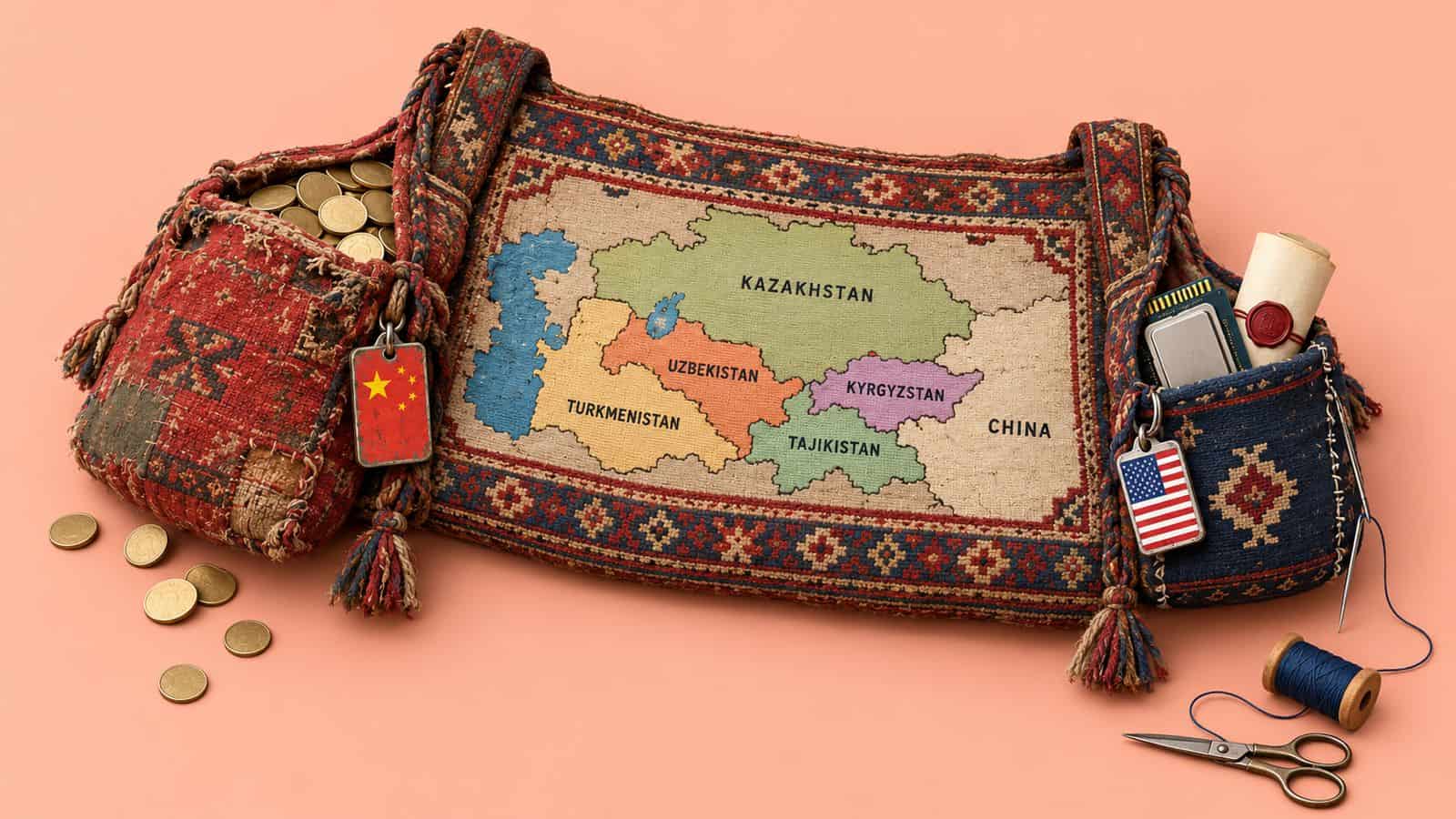
Secretary of State Rubio’s Visit to Uzbekistan: U.S. Tech Capital Moves into Central Asia, Leaving Beijing No Zones of Exclusive Influence

Solid Info

On October 18, 2026, U.S. Secretary of State Marco Rubio arrived in Samarkand, Uzbekistan, where he attended a C5+1 meeting with the foreign ministers of the Central Asian states the following day. Following the meeting on October 19, 2026, Uzbekistan announced a $12 billion package comprising 54 trade, investment, and technology agreements and initiatives.
Rubio was accompanied on his visit to Uzbekistan by a business delegation of more than 200 executives from American aerospace, technology, agricultural, and financial companies. On the day Rubio arrived, Premier of China’s State Council Li Qiang departed Uzbekistan, where the country’s leadership had reaffirmed a $60 billion portfolio of joint projects with China during his visit.
Washington’s interest in Central Asia is driven by two factors. One is the concentration of capital within the United States, which is prompting American businesses to seek new investment opportunities and customers for computing capacity abroad.
The other, equally important factor is Washington’s determination to prevent the emergence of enclaves under exclusive Chinese-Russian influence. American capital is therefore entering a region where China became the largest trading partner of all five Central Asian states in 2025.
Rather than pressuring the ruling elites, Washington is offering them co-investment in data centers and energy projects while retaining control over licenses for the supply of advanced chips on which regional computing infrastructure depends. The region’s ruling elites are accepting the American offer despite the smaller investment volumes compared with China, because business with Russian and Chinese partners generates only current income, whereas assets developed jointly with Western capital have market liquidity.
Trade between the United States and Uzbekistan increased by 33.4 percent to $810.4 million in January–August 2026, while Rubio’s visit initiated a dialogue on an enhanced strategic partnership. The agreements were announced at the second meeting of the U.S.-Uzbekistan Business and Investment Council, which serves as a permanent mechanism for coordinating contracts.
With American companies establishing a foothold as trade expands and an established mechanism for concluding contracts already in place, Washington’s next objective is to scale this model of cooperation across Central Asia.
While in Samarkand, Rubio raised the possibility of visiting Kazakhstan after the G20 summit in Miami, scheduled for mid-December 2026. In Astana, the State Department will similarly seek agreements with local elites to expand trade and investment cooperation and implement agreements in energy, critical minerals, digitalization, transportation, and logistics.
Beijing Is Cementing Central Asia’s Role as Its Continental Hinterland and Export Market
While the American delegation’s visit sought to define the contours of a U.S. presence in Central Asia through trade and investment cooperation, critical minerals, energy, and technology, China’s simultaneous diplomatic efforts were intended to demonstrate the results of several decades of investment in the region.
The railways, pipelines, and communications networks that have been built with Chinese investment give Beijing an entrenched economic presence that the United States lacks in Central Asia.
Chinese infrastructure supports freight transit across the region, domestic logistics within Central Asia, and the operation of energy systems, industrial facilities, and digital services throughout the five Central Asian states.
While American capital is still negotiating investments in individual projects and negotiating contracts with local businesses, Beijing is demonstrating its geopolitical ambitions through a portfolio of joint projects backed by binding agreements, which Uzbekistan’s leadership valued at approximately $60 billion during Li Qiang’s visit.
Through the Chinese Premier’s visit to Tashkent on October 17–18, 2026, Beijing sought to reaffirm that the region’s key economic sectors are already structured around China.
While Rubio attended the C5+1 meeting in Samarkand, Li Qiang held talks with Emomali Rahmon in Dushanbe, where Tajikistan was hosting a meeting of the Shanghai Cooperation Organization’s (SCO) heads of government, before traveling onward to Russia.
During his meeting with Uzbekistan’s Prime Minister Abdulla Aripov, the Chinese side emphasized the importance of constructing the China–Kyrgyzstan–Uzbekistan railway and deepening cooperation within the SCO and the Central Asia–China framework.
Beijing is directing its lobbying efforts toward sectors that strengthen the region’s transportation links with China and create additional opportunities for trade, assigning Central Asia the role of China’s continental hinterland and export market.
Between 2021 and 2025, bilateral trade between China and Uzbekistan tripled, reaching nearly $18 billion by the end of 2025.
China’s cumulative foreign direct investment in Uzbekistan reached $10.7 billion by mid-2025, while 6,241 enterprises with Chinese capital were operating in the country as of August 1, 2026.
In its dealings with other regional governments, Beijing similarly places Central Asia’s integration into China’s economic sphere at the center of its agreements.
The prolonged expansion of Central Asian states’ trade and investment dependence on the Chinese market and capital has made China the largest trading partner of all five Central Asian countries as of the end of 2025.
Chinese direct investment in Kyrgyzstan increased from $826 million to $2.1 billion between 2016 and 2025, while Chinese investment in Tajikistan grew by 13 percent in 2025 alone.
America’s AI Industry Is Seeking Cheap Energy and Government Customers Abroad
The American delegation’s visit to a region where China has maintained a substantial economic presence for decades was driven by the concentration of global capital in U.S. equities, which accounted for 64.21 percent of the MSCI ACWI index’s market capitalization as of September 30, 2026.
Private-sector services account for 72.9 percent of U.S. GDP, with finance, insurance, and real estate remaining the largest industry grouping at 22.6 percent, compared with manufacturing’s 9.7 percent. The digital economy contributed 10 percent of GDP in 2022 and grew by 6.3 percent, three times faster than the economy as a whole. AI-related investment accounts for between 2.3 percent and 8.2 percent of GDP, depending on the calculation methodology, but contributed between 21 percent and 45 percent of U.S. economic growth over the year ending in the second quarter of 2026.
Capital within the American economy is becoming concentrated in AI, prompting U.S. high-tech companies to intensify their search for new investment opportunities and markets abroad.
The combined capital expenditures of Amazon, Alphabet, Microsoft, and Meta for 2026 total an estimated $730 billion, 6.3 times the combined annualized recurring revenue of OpenAI and Anthropic, estimated at $115 billion in 2026.
Because major technology companies such as Microsoft, Amazon, and Nvidia finance OpenAI and Anthropic, which in turn purchase their chips and use their data centers, capital circulates within a narrow group of companies, prompting the market to reassess the valuation of the AI economy.
At the same time, maintaining high valuations depends on continually expanding computing capacity, while the construction of such infrastructure within the United States is constrained by expensive electricity and opposition from local communities.
Chipmakers and data center operators therefore need to find new customers for computing capacity among foreign governments and companies, as well as cheaper electricity.
For data centers in Ekibastuz, Kazakhstan, the government is considering an electricity tariff of 2.5 cents per kilowatt-hour, fixed for 10–20 years and made possible by coal-fired generation near the Bogatyr open-pit mine, one of the world’s largest.
The average U.S. industrial electricity price, at 8.62 cents per kilowatt-hour in 2025, was approximately 3.4 times this tariff, making computing costs in the region lower than in the United States.
This cost advantage has attracted Firebird and Nvidia to Ekibastuz. On June 15, 2026, Kazakhstan’s government concluded a $10 billion package of agreements with the companies for the Data Center Valley project, designed to provide one gigawatt of capacity and accommodate 100,000 graphics processing units (GPUs).
The full one-gigawatt cluster will consume up to 8.8 billion kilowatt-hours annually, equivalent to 7 percent of Kazakhstan’s current electricity generation. In 2025, the country covered an electricity deficit of 1.5 billion kilowatt-hours through imports, primarily from Russia, while the government plans to commission 12.56 gigawatts of new generating capacity by the end of 2029.
In October 2026, Nvidia CEO Jensen Huang described Kazakhstan as a future computing hub for Europe, while Astana expects to convert cheap energy into exports of computing services, generating at least $3 billion in annual revenue.
According to the government’s estimates, a 250-megawatt cluster would generate that revenue while consuming approximately $55 million worth of electricity annually at the 2.5-cent tariff. Energy would therefore account for less than two cents of every dollar in projected export revenue.
Beyond the economic advantages of low energy costs, Central Asia is emerging as a new destination for American AI capital because regional governments want to develop their own computing infrastructure. The authoritarian political systems of the region also allow energy-intensive projects to receive rapid approval without the risk of a public veto.
In July 2026, Kazakhstan’s Digital Code entered into force, requiring citizens’ personal data to be stored within the country. Foreign cloud providers must therefore host such data in local data centers.
At the same time, decisions reached between foreign investors and Central Asian leaders are not blocked by government bodies independent of the President or by local opposition groups. In the United States, such opposition blocked or delayed 120 data center projects worth approximately $198 billion in the first half of 2026.
Washington does not need to negotiate with local populations and instead needs to agree on projects only with Central Asian Presidents, officials close to their families, and executives of state-owned corporations. In return, Washington offers the ruling elites stakes in joint ventures, contracts for assets under their control, and access to American capital.
Another advantage for foreign capital in the region is its substantial pool of educated workers, whose continued growth is supported by the demographic structure of Central Asian societies. The five countries have a combined population exceeding 80 million, with an average age of 26.8 years and a fertility rate of approximately 3.1 children per woman. In the European Union, by contrast, the fertility rate stands at 1.38, below the population replacement level.
Central Asia’s working-age population numbers approximately 50 million and is expected to reach around 71 million by 2050. The region will therefore expand both its labor force and domestic market over the coming decades.
For American capital, the region’s demographic potential and positive population growth will increase the supply of workers available to operate data centers and digital services. They will also support the expansion of the region’s production base and market for goods and services, advantages that Western economies lack.
Soviet and post-Soviet education policies have produced near-universal literacy in the region, at approximately 99 percent, while governments are expanding technical training. IT service exports by Uzbekistan’s IT Park grew by 30 percent in the first half of 2026, reaching an estimated $392.5 million, with a substantial share destined for the U.S. market.
The combination of an educated population and cheap energy makes the region suitable for hosting computing infrastructure while relying on local specialists to operate it.
Most advanced chips supplied to Central Asian data centers are delivered under licenses issued by the U.S. Bureau of Industry and Security (BIS), which Washington can revoke. This gives the United States a source of influence over regional governments.
In October 2026, Nvidia announced that Firebird holds a U.S. export license for 45,000 Nvidia Grace Blackwell processors for the first phase of Data Center Valley. Firebird plans to launch that phase with Kazakhtelecom in the third quarter of 2027.
Revoking a license would halt GPU imports, equipment replacement, and capacity expansion, making even the operation of already constructed data centers dependent on U.S. authorization.
Through American investment in Central Asia’s AI sector, the United States becomes both an investor in the region and the regulator of access to essential equipment. Washington’s influence over investment and its control mechanisms increase the dependence of regional states in the computing infrastructure sector.
U.S. instruments of influence over regional AI infrastructure do not extend to other economic sectors, where American capital still accounts for only a small share. The value of agreements announced during meetings between regional leaders and American business elites exceeds the volume of contracts actually financed, as only a minority of arrangements reach the signing and financing stages.
Since the C5+1 summit in Washington on November 6, 2025, Uzbekistan and the United States have agreed on a $35 billion portfolio of projects. Yet in September 2026, Uzbekistan’s Minister of Investment Laziz Kudratov said that projects worth only $7 billion had been implemented and completed. The $12 billion in initiatives agreed upon in Samarkand therefore remains an announced figure rather than a measure of realized investment. Although smaller than the announced investment volumes, American capital creates assets for the ruling elites that can be sold to Western investors or pledged as collateral for loans — opportunities that business with Russian and Chinese partners does not provide.
The U.S. approach gives regional financial and political elites access to investment while ensuring the preservation of their positions in Central Asia, because Washington no longer attaches political demands to cooperation.
Providing capital and technological support in exchange for equity stakes, government contracts, and market access, without requiring political reforms, establishes the foundation for a transactional model of cooperation acceptable to regional governments.
Washington Has Dropped Political Demands and Is Dealing Directly with Central Asia’s Ruling Clans
Joint statements issued by the United States and Central Asian governments following the C5+1 meetings in 2025 and 2026 contain no demands concerning human rights, the democratization of regional societies, or media freedom. They mention human trafficking solely as a security threat.
On August 12, 2025, the State Department released a shortened version of its annual human rights report. Tajikistan and Turkmenistan remain designated as Countries of Particular Concern under the International Religious Freedom Act, as they were under previous administrations, while Washington continues to waive the sanctions associated with that designation.
Authoritarian governance practices and political persecution had been major sources of disagreement between the White House and Central Asian governments for decades, prompting local elites to rely on Moscow and Beijing as guarantors of their regimes’ survival.
By removing the democratization of Central Asian states from the negotiating agenda, Washington has weakened one of the incentives for regional governments to align with Russia and China while reducing the risks that cooperation with the United States presents to their ruling elites.
For nearly half a century, the Foreign Corrupt Practices Act (FCPA) has held American companies accountable for bribing foreign officials. In a region where business with state-owned companies passes through structures controlled by ruling families, the risk of prosecution has discouraged U.S. firms from operating.
On February 10, 2025, President Trump signed Executive Order 14209, suspending new FCPA investigations and enforcement actions for 180 days and directing the Department of Justice to review existing cases.
Although a June 9, 2025, memorandum issued by Deputy Attorney General Todd Blanche resumed enforcement of the law, its priorities were narrowed largely to cases involving U.S. national interests.
By keeping the law in force while easing its enforcement, the Trump administration removed a legal obstacle for U.S. companies in Central Asian markets and subordinated anti-corruption oversight to the interests of American capital entering the region.
With this obstacle removed, American capital can work directly with the ruling clans that control the distribution of government positions, state-owned companies, and access to major contracts across the region.
In Uzbekistan, President Shavkat Mirziyoyev’s eldest daughter, Saida Mirziyoyeva, has headed the Presidential Administration since June 2025. Since September 2026, she has also led the Tashkent International Financial Centre and represented it to foreign investors.
In Tajikistan and Turkmenistan, presidential families retain control over political power, while Turkmenistan’s gas exports to China are controlled by the Berdimuhamedow family.
Confiscations in Kazakhstan remind ruling families that clan property remains protected only as long as the clan retains power. Assets with a market valuation and Western legal protection therefore offer them a means of preserving their wealth.
Russian and Chinese businesses have long accommodated the region’s clan-based power structures, entering its markets through the personal interests of ruling families and compensating them with bribes, board positions, or equity stakes in joint ventures.
Russia’s MTS entered Uzbekistan’s mobile telecommunications market through Uzdunrobita and paid approximately $420 million in bribes to entities belonging to Gulnara Karimova, the daughter of the country’s first President, between 2004 and 2012. In 2012, Tashkent revoked Uzdunrobita’s license, and MTS lost a business valued at more than $1 billion.
Chinese goods similarly entered Kyrgyzstan for years through the family of Raimbek Matraimov, the former deputy head of the State Customs Service. According to an investigation by the Organized Crime and Corruption Reporting Project (OCCRP), Radio Free Europe/Radio Liberty, and Kloop, the family ensured that shipments handled by a network belonging to China-born Khabibula Abdukadyr could cross the border without obstruction. Matraimov’s wife and the Abdukadyr family were constructing a five-story building in Dubai. In December 2020, the U.S. Treasury Department sanctioned Matraimov over a customs scheme through which at least $700 million had been siphoned out of Kyrgyzstan.
American investors conclude agreements with state-owned companies controlled by these families, meaning that stakes in joint assets with the United States go to the same clans that conduct business with Moscow and Beijing.
The shift in Washington’s approach to investment and business activity in Central Asia has left U.S. sanctions pressure focused primarily on methods of circumventing restrictions against Russia and Iran, particularly the reexport of Western dual-use goods and banking transactions involving sanctioned activities.
In January 2025, the Office of Foreign Assets Control (OFAC) added Kyrgyzstan’s Keremet Bank to its sanctions list. In August 2025, Kyrgyzstan-registered Grinex and Old Vector, which were part of Russian money-laundering networks, were also designated.
In October 2026, the Russian-Kyrgyz A7 Network, a payment and financial network established to facilitate cross-border settlements, was designated a significant transnational criminal organization.
This adjustment in sanctions policy has shifted Washington’s pressure away from broad public warnings about secondary sanctions toward targeted designations of specific companies and individuals, alongside closed-door coordination of export controls with individual regional governments.
Washington has dropped human rights and anti-corruption demands concerning domestic governance but has retained its requirement that the region not become a transit route for resources needed by Moscow and Tehran.
For Central Asia’s ruling elites, American resources have become accessible without the need for domestic reforms. This has made U.S. investment proposals more attractive and given Washington a means of preventing the region from becoming a zone of exclusive influence for the autocratic axis.
Business Partnerships with Russia and China Generate Income for Central Asian Elites but No Marketable Assets
American investment reaches state-owned companies controlled by Central Asia’s ruling elites through co-financing for new data center, computing infrastructure, and energy projects.
Partnerships with Russia and China in the commodities, infrastructure, and banking sectors provide regional power groups with current income, while U.S. investment creates assets that can be sold to Western investors or pledged as collateral for loans.
By benefiting from both forms of business cooperation, Central Asia’s political and financial elites maintain joint projects with Moscow and Beijing while simultaneously attracting Western capital.
Timur Kulibayev, a son-in-law of Kazakhstan’s former President Nursultan Nazarbayev, served on the board of directors of Russia’s Gazprom from 2011 to 2022. His holding company, Almex, owns 61.9 percent of Halyk Bank, Central Asia’s largest financial institution.
In November 2025, Almex sold a 7.6 percent stake in the bank for $475 million, with investors outside Kazakhstan purchasing 17.4 million of the 17.6 million global depositary receipts offered.
Turkmenistan sends approximately 90 percent of its gas exports to China and has no alternative export market purchasing comparable volumes. For Beijing, however, Ashgabat is merely one of several suppliers.
Tajikistan transferred the Upper Kumarg and Eastern Duoba gold deposits to China’s TBEA as payment for the first phase of the Dushanbe-2 combined heat and power plant, while the government must repay China Eximbank a $331 million loan for the second phase.
Because the principal economic interests of Central Asia’s ruling elites are concentrated in partnerships with Russia and China, they cannot significantly reduce this dependence without incurring substantial losses.
In 2025, China’s trade with the five Central Asian states increased by 12 percent to $106.3 billion, while cumulative Chinese investment in the region reached $35.9 billion by mid-2025.
Russia and China’s ability to dictate the terms of their partnerships with Central Asian power groups simultaneously deprives local capital owners of the freedom to dispose of their assets and restructure business relationships without damaging their own enterprises.
Together, Russia and China accounted for approximately 59 percent of Kazakhstan’s imports in 2025, while Russia represented 88.6 percent of Kazakhstan’s trade within the Eurasian Economic Union. As all five Central Asian states expand trade with China, local businesses become increasingly integrated into Central Asian-Chinese economic networks. Restructuring these relationships would affect the very foundation of regional elites’ income.
The principal value of a business lies in the ability to sell it, pledge it as collateral, or obtain financing against it. Russian and Chinese co-ownership, however, substantially limits these opportunities.
Following the imposition of Western sanctions against Russia, attracting new buyers for businesses with Russian shareholders has become more difficult. The risk of sanctions against co-investors based in countries belonging to the autocratic axis also reduces the marketability of such assets.
Kazakhstan’s Ministry of Energy approached the U.S. Treasury Department after Washington sanctioned Lukoil on October 22, 2025, seeking authorization to purchase the Russian company’s 13.5 percent stake in the Karachaganak field, its 5 percent stake in the operator of the Tengiz field, and its 12.5 percent stake in the Caspian Pipeline Consortium.
Owners cannot freely withdraw funds invested in Chinese entities because China restricts the conversion of yuan into foreign currency for transferring capital abroad, while cross-border transfers require regulatory approval.
Although partnerships with Russian and Chinese capital generate income for Central Asian power groups, Western investors are not interested in acquiring or participating in such businesses, and banks in the democratic bloc are unwilling to accept them as collateral for loans.
For Central Asia’s regional elites, business cooperation with Moscow and Beijing remains a source of income that cannot be converted into capital suitable for sale or collateralization. The value of such business cooperation is therefore limited to current payouts, without a realizable market price for the underlying asset itself.
Income from joint ventures with Russian and Chinese investors, alongside the parallel development of their own companies, leaves Central Asian elites with only relatively small assets in trade and services, which cannot serve as collateral for loans from Western banks.
Scaling regional businesses requires access to regulated markets, the acquisition of competitors, and financial instruments. These opportunities are restricted for owners whose principal partners are Moscow and Beijing.
Since substantial capital is accumulated by concentrating resources in a particular sector and increasing a company’s value and market share under transparent rules, extensive cooperation with China and Russia limits an owner’s access to major markets and credit.
An ownership stake in a business with a Russian or Chinese co-owner lacks sufficient protection because the owner has no effective legal recourse against a partner connected to the political elites of Russia or China. Nor can the owner safely transfer the stake to heirs or sell it.
Such partnerships operate under informal rules, allowing parties to unilaterally revise their original agreements and impose new conditions. The dependence of the Russian and Chinese judicial systems on centralized political authority deprives owners of effective judicial protection against partners with government connections.
In the 2025 World Justice Project Rule of Law Index, China ranked 92nd out of 143 countries, Russia was among the countries experiencing the largest annual declines in its score, falling by 4.9 percent, while Britain ranked 14th.
In contrast to the business model offered by Moscow and Beijing, cooperation with Western investors relies on a legal system that enforces ownership rights. This makes an owner’s stake suitable for sale, collateralization, and inheritance, with judicial protection available to enforce those rights.
Aware of the risks involved in launching major projects with Russian and Chinese businesses, Central Asia’s ruling elites recognize this distinction and are choosing not to concentrate their capital exclusively in Moscow- and Beijing-linked ventures, instead seeking investment from the autocratic powers’ geopolitical competitors.
Britain has established a substantial presence in Kazakhstan, having invested approximately $23 billion in its economy since 1993, while 516 enterprises with British participation operate in the country. Kazakh capital can obtain Western-style judicial protection domestically because the Astana International Financial Centre (AIFC) Court operates under English common law. Since November 2023, the Court has been headed by Ian Burnett, Lord Burnett of Maldon, who served as Lord Chief Justice of England and Wales from 2017 to 2023.
Since 2018, the AIFC Court and International Arbitration Centre have resolved more than 4,600 cases involving parties from 36 countries, while the total value of disputes exceeded $2.5 billion for the first time in 2025. Britain is also deepening its presence in Kazakhstan through education. Nearly 6,000 Kazakh students have studied in Britain under the Bolashak program, while Coventry University opened its second campus in Kazakhstan, located in Almaty, on September 22, 2026.
Recognizing the risks Central Asian elites face from deeper integration into Chinese-Russian business arrangements, American and British investors impose their own conditions on regional power groups, including ownership transparency, sanctions compliance, and financial oversight.
While retaining these instruments of influence over Central Asian elites, Western partners offer them a different form of dependence, in which local capital enjoys stronger legal protection but remains subject to chip export licenses and the investor’s right to terminate financing.
Central Asia’s authoritarian governments and their associated economic elites, which faced political conditions from Washington for years, remain skeptical of their new counterparties. Nevertheless, the risks of excessive dependence on Russia and China are pushing them to diversify their business relationships.
U.S. Presence in the Region Is Driven by Surplus Domestic Capital and Competition with China
Central Asian elites’ willingness to give American investors access to state-owned companies under their control coincides with the United States’ own need to deploy capital outside its domestic economy.
Capital concentration within the United States has reached a level that poses risks to the stability of its financial system. The seven largest technology companies now account for more than 35 percent of the S&P 500’s market capitalization, compared with 12 percent a decade ago.
In October 2026, the International Monetary Fund identified a correction in AI-related equities as one of the three principal risks to global financial stability. By directing some capital abroad, American businesses reduce domestic pressure, making Central Asia one of the destinations for this capital outflow.
The economic motivations that are paramount for the American AI sector are reinforced by the White House’s competition with China for influence across different regions of the world. Consequently, expanding the reach of American capital beyond Western jurisdictions has become a priority for both the current administration and the largest U.S. technology entrepreneurs.
The approaching escalation of global confrontation is prompting Washington to establish American capital’s influence in regions previously dominated by China. Investment in Central Asia gives the United States a competitive position in territories that had until now remained exclusively within the influence of capital from autocratic states.
The United States is pursuing the same objective of establishing a lasting presence for American capital in other regions, including through agreements with Indo-Pacific countries and stable economic relationships with Latin American governments aligned with Washington. Central Asia thus represents one component of Washington’s coherent geopolitical strategy.
Because the U.S. strategy in Central Asia simultaneously seeks to relieve pressure from surplus capital and compete with China for regional influence, the American business presence rests on both the White House’s political motivations and the commercial objectives of private capital.
Although most agreements promoted by Washington remain at the project stage, the region’s ruling elites are attracting American capital because their businesses with Moscow and Beijing lack the market valuation that jointly owned assets with the United States can provide.
Having abandoned the objective of politically transforming Central Asia, the White House gains access to the ruling clans and establishes a lasting presence for American capital through permanent cooperation frameworks.
These arrangements give Washington an outlet for surplus capital, a stake in the regional economy, and influence over Central Asia’s foreign policy orientation, while regional elites gain access to American capital and legally protected assets. Ahead of the active phase of confrontation with China in 2028–2030, the American presence is creating the conditions to deprive Beijing of a guaranteed continental hinterland in Central Asia.
This publication is the result of a partnership between MILITARNYI and SOLID INFO. An extended version is available on the website of the analytical center.

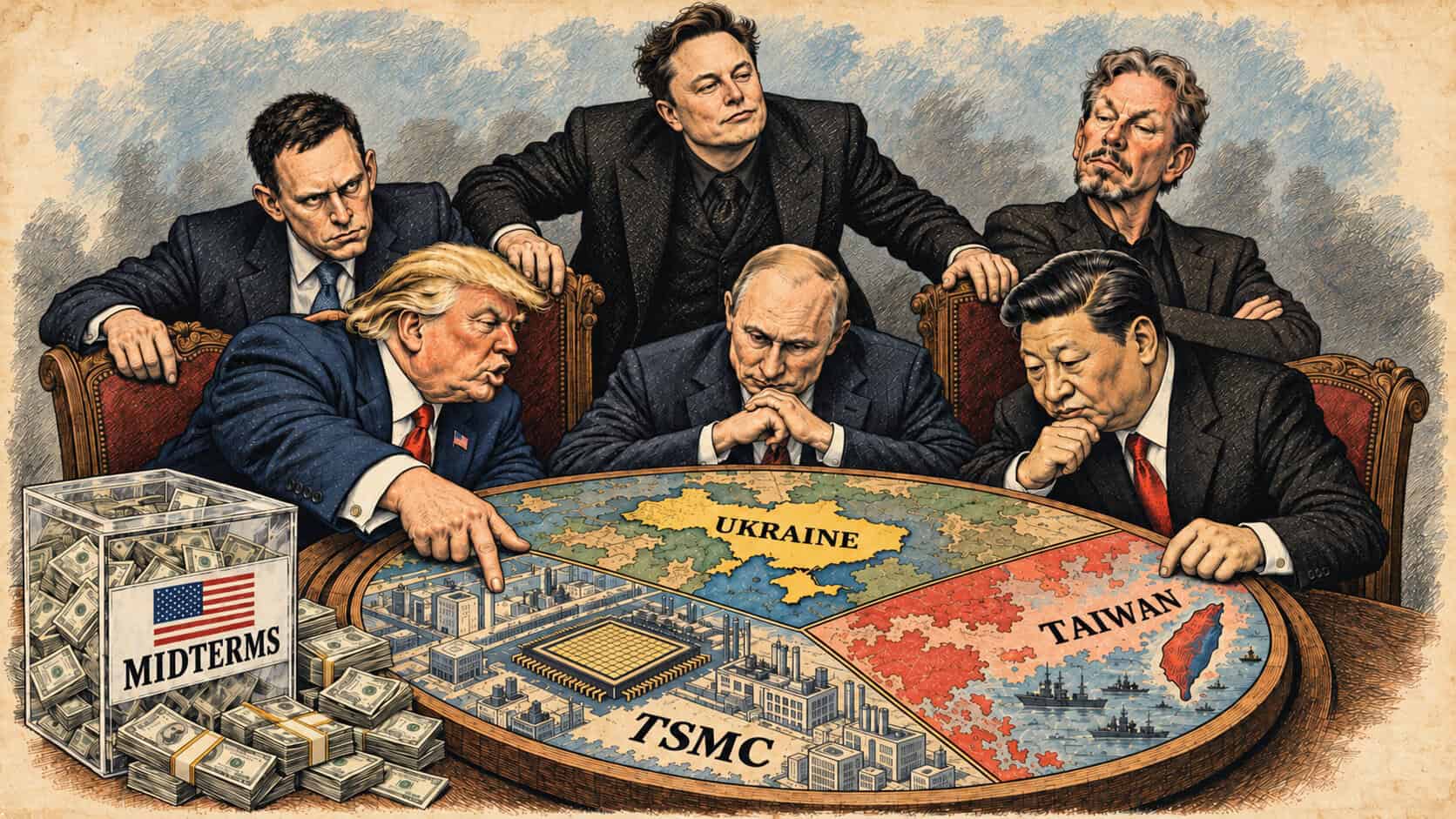
Big Tech Pushes the White House Toward Global De-escalation: The Stance of Tech Capital Shapes the Terms for a Deal Between Trump, Putin, and Xi Jinping
As of October 14, 2026, political advertising expenditures in the current U.S. election cycle, including reserved airtime, had exceeded $10 billion...
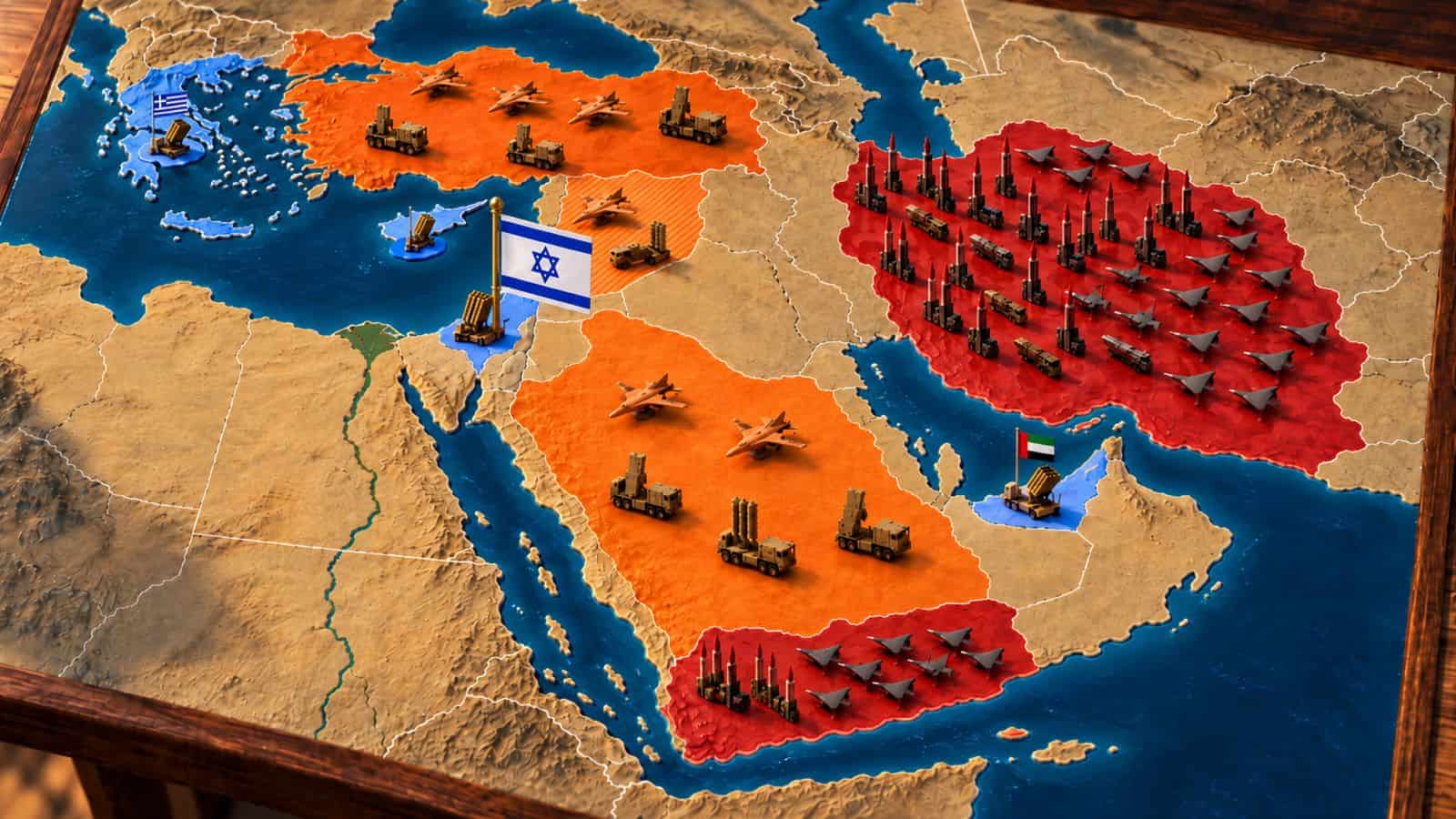
Netanyahu’s Visit to Abu Dhabi: Israel Builds Partnerships from a Position of Strength, but the Middle East Conflict Is Eroding the Edge of Its Weapons
On September 27, 2026, Israeli Prime Minister Benjamin Netanyahu traveled to Abu Dhabi with the head of Mossad and the head of the National Securit...
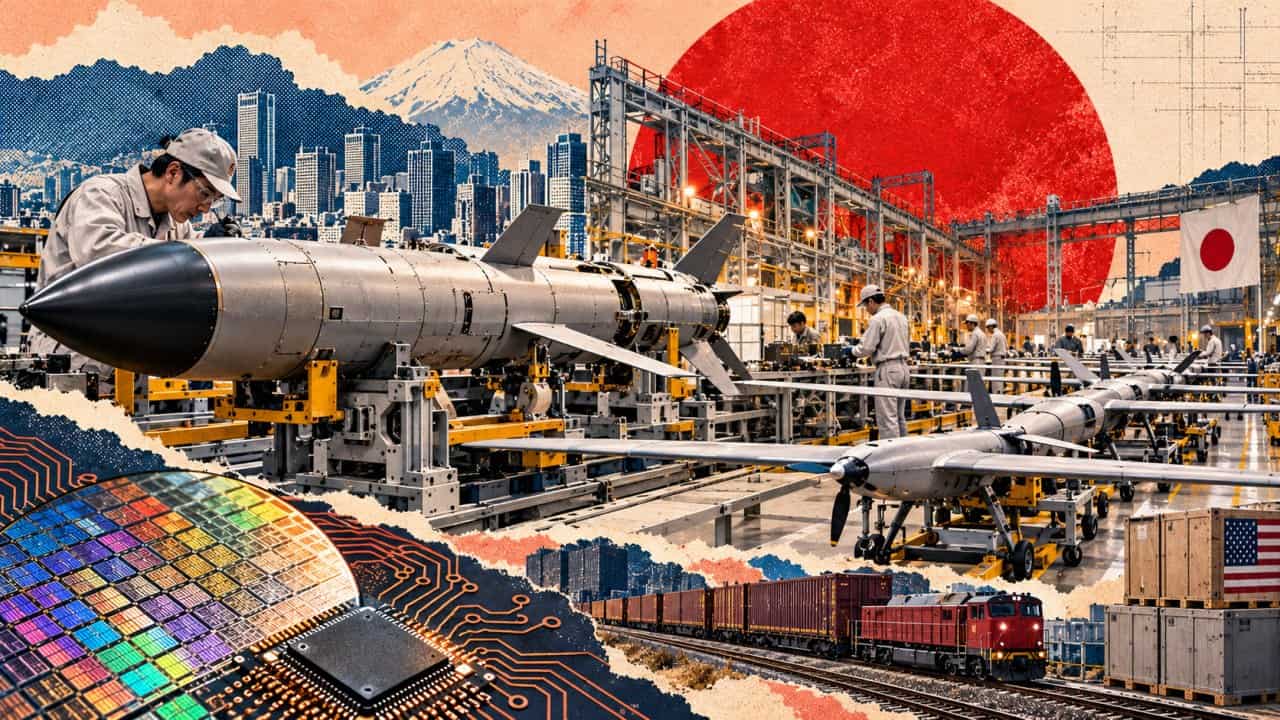
Japan Rapidly Builds Up Its Defense Capabilities: Personnel Shortages and Low-Cost Weapons Set the Pace of the Self-Defense Forces’ Modernization
On October 13, 2026, lawmakers from Japan’s ruling Liberal Democratic Party, led by former Defense Minister Itsunori Onodera, established a parliam...
Secretary of State Rubio’s Visit to Uzbekistan: U.S. Tech Capital Moves into Central Asia, Leaving Beijing No Zones of Exclusive Influence
On October 18, 2026, U.S. Secretary of State Marco Rubio arrived in Samarkand, Uzbekistan, where he attended a C5+1 meeting with the foreign minist...
