



Popular

The commander of the U.S. 8th Army in South Korea said he is experimenting with generative chatbots to refine decision-making processes.
Business Insider reported that Maj. Gen. William Taylor, commander of the 8th Army, is using generative AI to improve how his headquarters makes operational and day-to-day decisions.
“Chat and I” have become “really close lately,” he told reporters during a roundtable at the annual meeting of the Association of the U.S. Army in Washington.
“I’m asking to build, trying to build models to help all of us,” Taylor said.
He explained that he uses the technology to analyze how he makes both military and personal decisions affecting not only himself but the thousands of soldiers under his command.
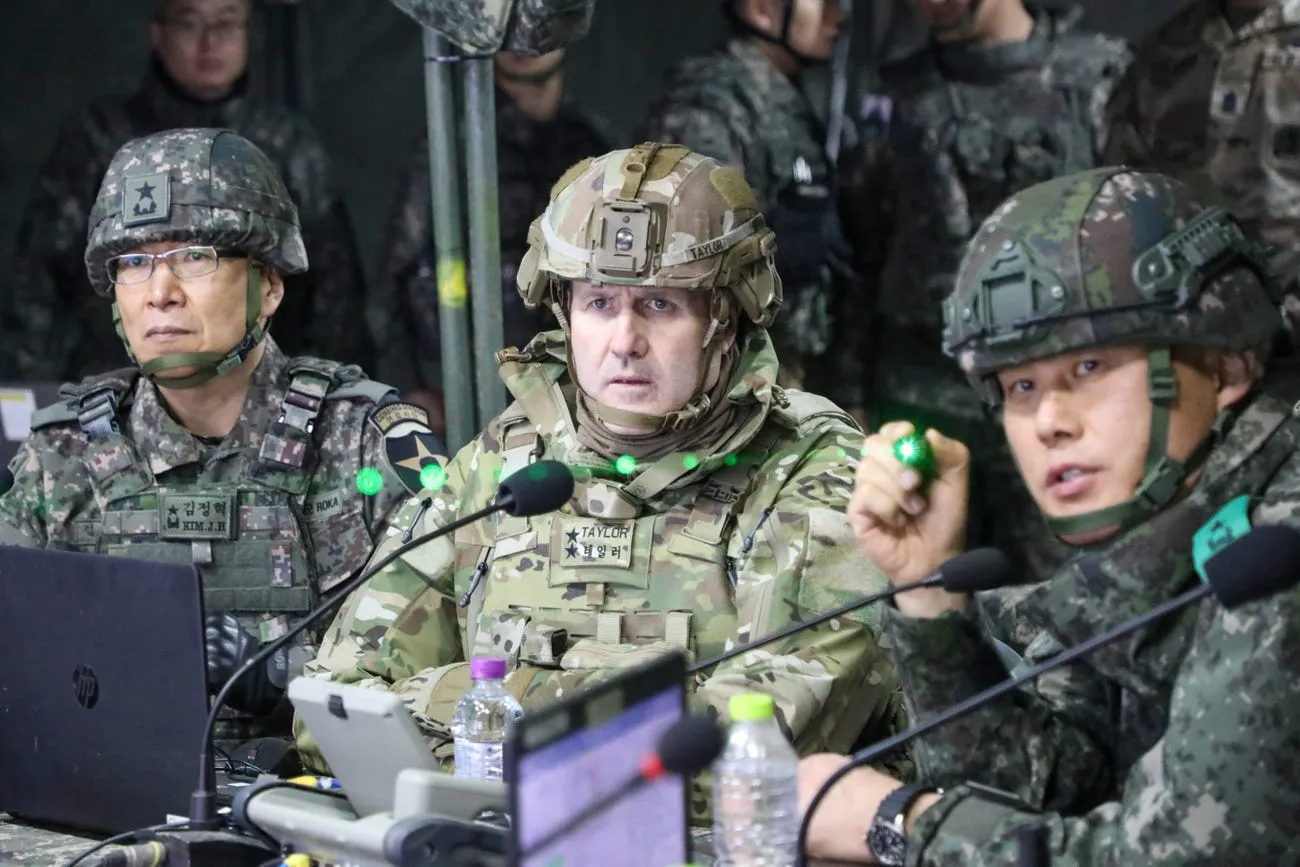
“As a commander, I want to make better decisions. I want to make sure that I make decisions at the right time to give me the advantage,” Taylor shared.
Commanders like Taylor are focusing on faster decision-making and how AI can provide an edge through the “OODA loop” — the theory that those who can observe, orient, decide, and act faster than their opponents often gain an advantage.
U.S. Special Operations Forces are also integrating AI into their work to “reduce the cognitive load” on personnel. AI tools are being used for administrative tasks, report preparation, operational planning, logistics management, and other routine functions.
At the same time, the Pentagon has urged caution as commanders test these tools, warning that generative AI can “leak” sensitive information.

Officials also noted that AI can produce highly inaccurate outputs if not properly trained, posing potential risks if commanders rely on it for critical decisions.
For example, during a U.S. Air Force experiment, AI algorithms produced attack plans about 400 times faster than humans, but not all of those plans were viable.
Without elaborating, Maj. Gen. Robert Claude said the mistakes were not obvious but subtle, such as choosing the wrong type of sensor for certain weather conditions, rather than attempting to send tanks on air missions.
Підтримати нас можна через:
Приват: 5169 3351 0164 7408 PayPal - [email protected] Стати нашим патроном за лінком ⬇
Subscribe to our newsletter
or on ours Telegram
Thank you!!
You are subscribed to our newsletter