




Popular
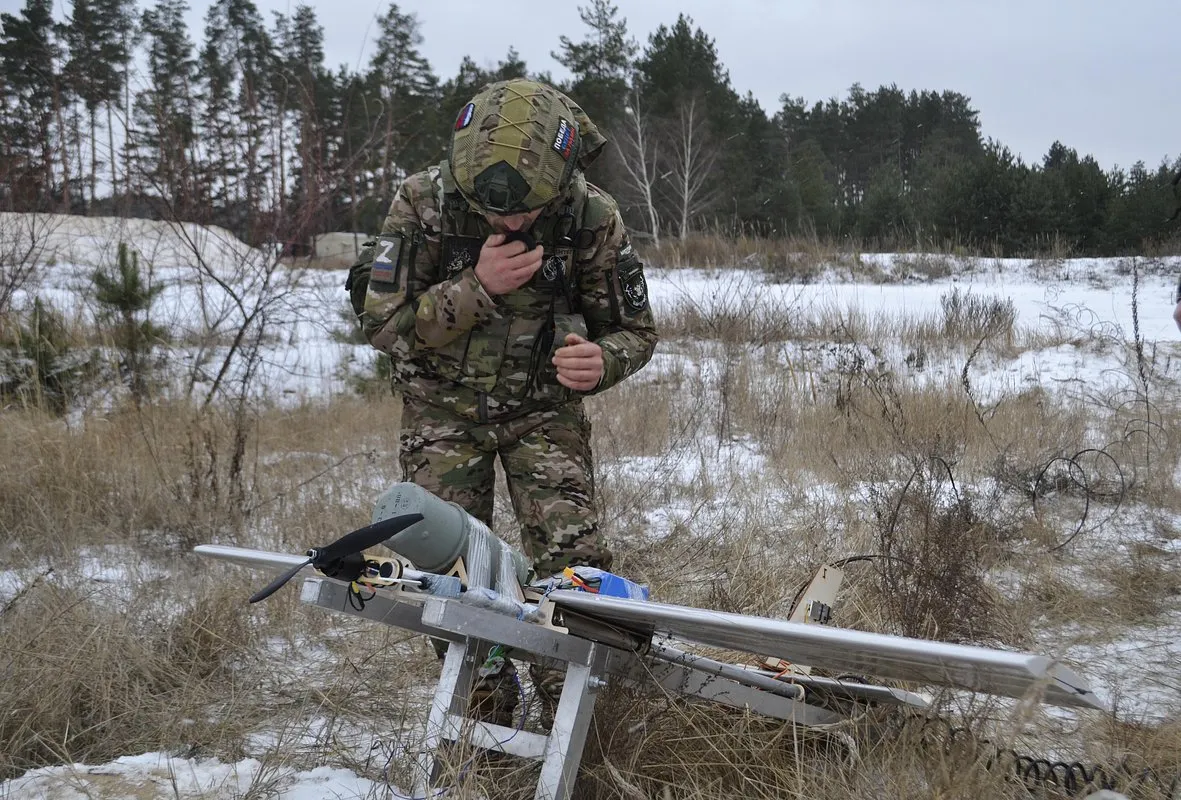
During the combat operations of 2024–2026, one of the most significant institutional shifts in the Russian army was the creation and rapid expansion of the Advanced Unmanned Technologies Center “Rubikon.”
A detailed analysis of Rubikon’s structure, objectives, operational history, and the crises the organization faces in 2026 is presented in a Two Marines article by former U.S. Marine Rob Lee and Ukrainian Marine Dmytro Putiata.
This structure, subordinate to the Main Directorate for Advanced Interbranch Research and Special Projects of the Russian Ministry of Defense, was Moscow’s attempt to systematically respond to Ukrainian innovations, in particular the “Drone Line” initiative and effective Ukrainian UAV units.
The Rubikon Center was officially established on August 2, 2024, by order of Russian Defense Minister Andrey Belousov, just a few months after his appointment.
Prior to this, Russia had separate initiatives, such as the “Doomsday” project, but their implementation was uneven across the army, and funding largely depended on volunteers. Belousov prioritized centralization.

Rubikon was designed as a centralized umbrella organization responsible for:
The Center was granted top priority and substantial funding. It operates outside the framework of conventional military forces and has developed a distinct organizational culture.
The salaries and benefits of its specialists were brought in line with those of Russia’s Special Operations Forces (SOF), significantly exceeding the compensation of regular military personnel.
During its formation, Rubikon maintained highly selective recruitment standards and was authorized to transfer the most capable and experienced UAV crews directly from frontline units into the organization.
The Center’s organizational structure is constantly evolving as it scales. It combines management, research, training, and combat blocks.
Command and Headquarters (~100 people)
Command group: Led by the center commander. He has seven deputies responsible for: religion (chaplains), physical training, legal issues, research and development (R&D), combat training (G7), combat operations (G3), and military-political work/FSB counterintelligence.
Headquarters (led by the Chief of Staff): Includes the operations department (G3), communications department (G6), intelligence (G2), command post, personnel department (G1), state secrets protection service, unmanned aerial systems service, electronic warfare service, and communications control post.
Support block: Consists of the technical directorate (deputy for armaments, technical control point, motor pool) and logistics directorate (G4) with planning department and material-technical department. This also includes the financial department, HR department, and special services (NBC defense and air defense officers).
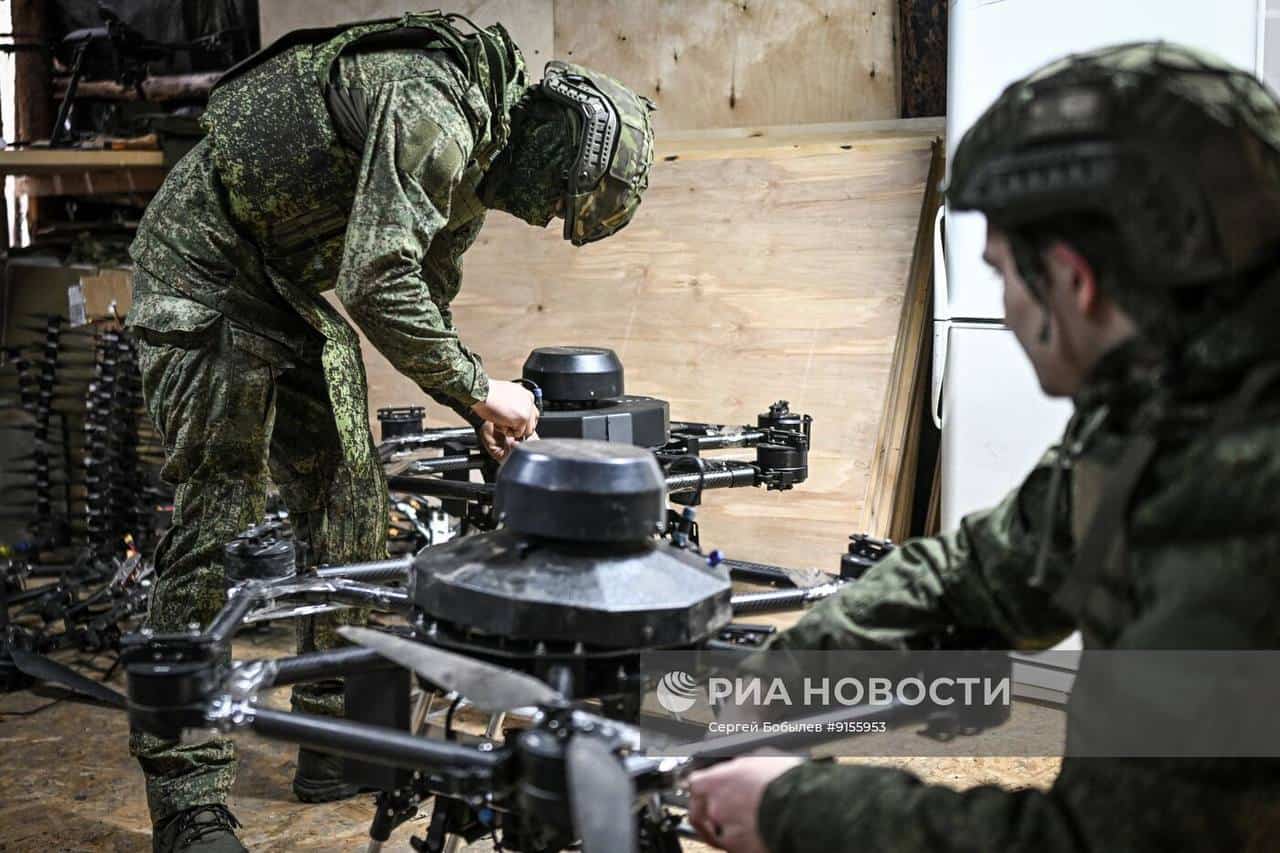
Operational Testing and Combat Employment Block
Includes testing units for:
Support Units
Warehouse sections, medical post (Role 1), motor transport company, maintenance and repair unit, and a security platoon.
Research and Development Block (6 Departments)
Department of Innovation and Advanced Technologies: Has functional groups for multirotor and fixed-wing UAVs, ground and maritime systems, computer vision, artificial intelligence, software development, EW systems, electronic intelligence, UGV control systems, field testing, reverse engineering, and interaction with the defense industry.
Department of Capability Integration and Implementation: Groups for integration of FPV drones, medium-range heavy UAVs, EW/ELINT systems, maritime drones, ground platforms, and technical support.
Analytical Department: Groups for analysis of UGV employment, internal system support, software engineering, and OSINT analysis.
Medical Technology Development: Operator performance and human factors laboratory, and laboratory of interactive training systems.
Training Department: Command element, 6 training platoons (18 personnel each), and a training support platoon. In total, about 700 personnel in the training and support structure.
Department of Communications and Control Systems: Groups for testing experimental communications, integrating operational systems, and maintenance.
The main combat force of Rubikon consists of its separate units, which operate in the most critical sections of the front as assets within troop formations.
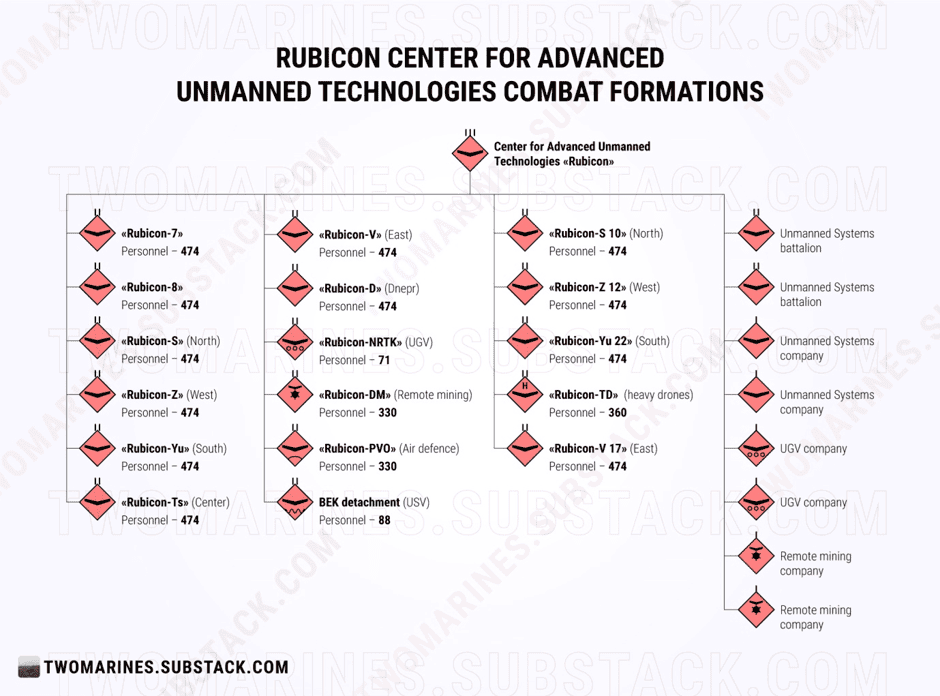
Initial phase (April 2025)
At the beginning of 2025, there were 8 units. Six of them were assigned to the corresponding Russian force groupings:
The standard unit strength at the time was 149 personnel (in reality – 120–141 personnel, about 85% of full strength). Separately, there were the Rubikon-Reserve and Rubikon-DM (Remote Mining) units under the direct command of the Joint Group of Forces of General Gerasimov.
Kursk operation and fighting in Donbas (2025)
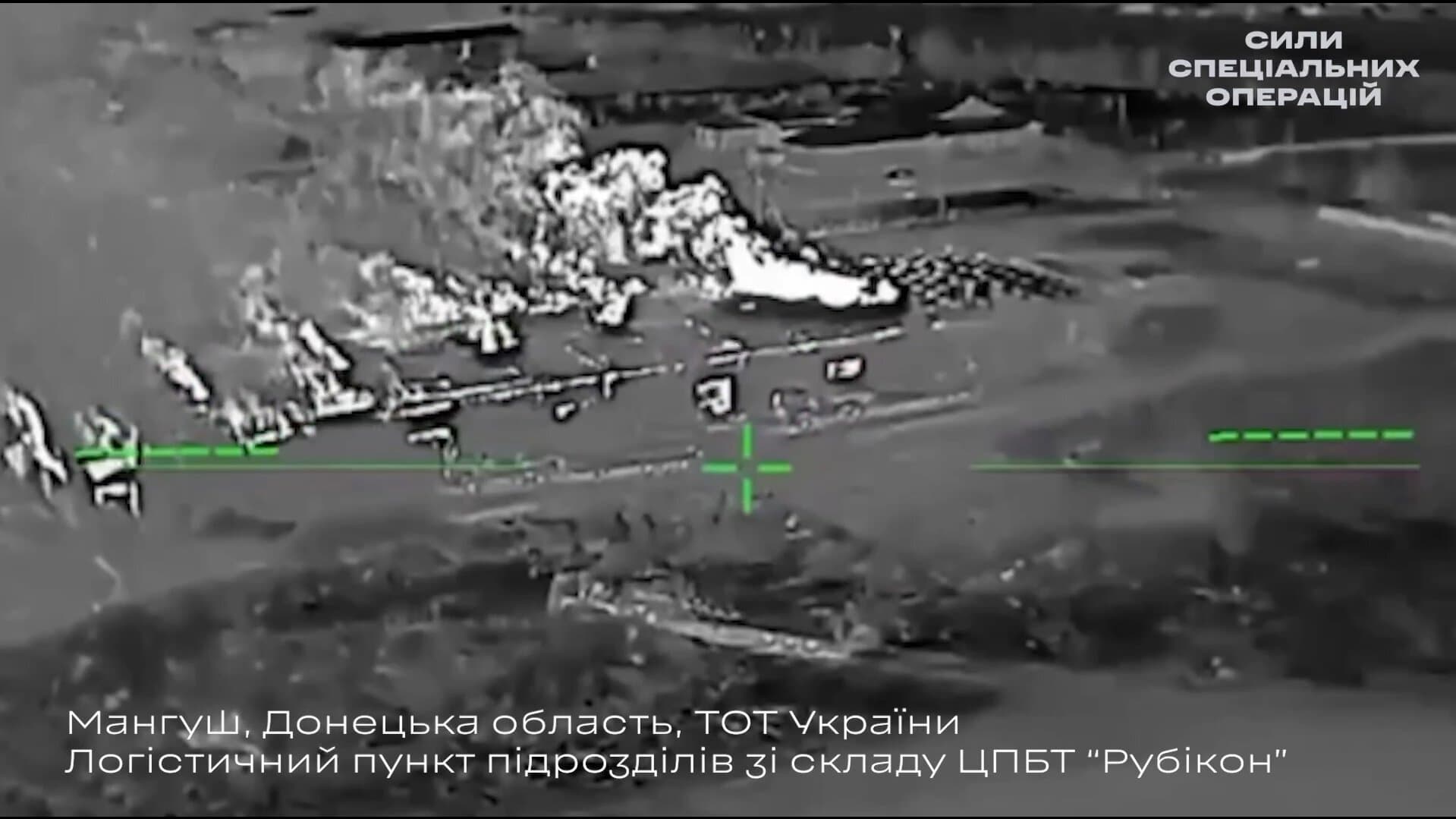
Elements of the North, South, and Dnepr units were deployed to the Kursk region, where they played a significant role in Russian efforts to retake the Sudzha bridgehead. Russia used them as elite strike units to cut Ukrainian logistics.
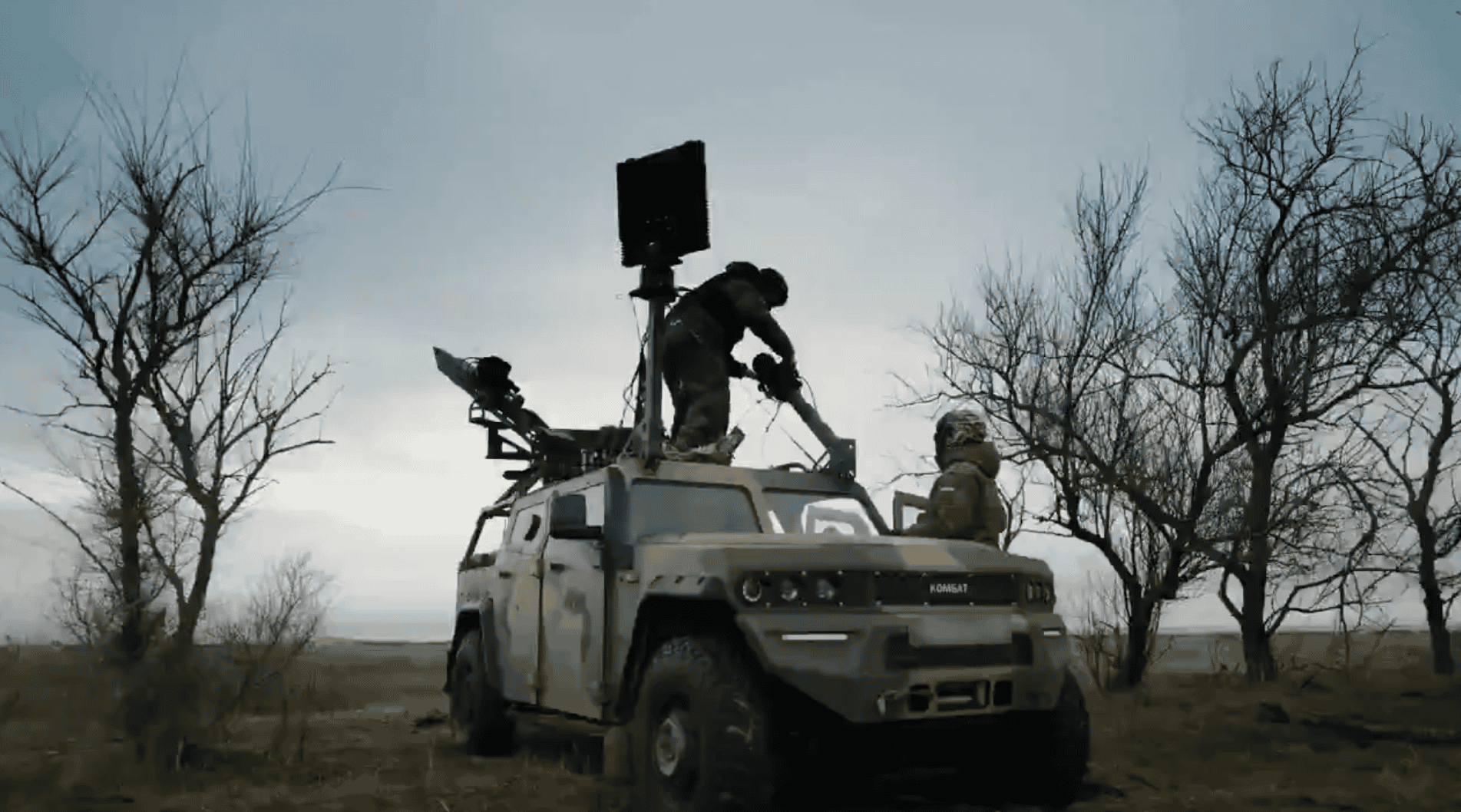
In April 2025, these forces were redeployed to the Donetsk region. Throughout the summer and autumn of 2025, several units (Center, elements of Dnepr, Rubikon-7, Rubikon-8, Rubikon-DM, and Rubikon-Air Defense) supported the Russian Center grouping in the direction of Pokrovsk, Myrnohrad, and Dobropillia. Russia attempted to advance toward Barvinkove (Kharkiv region) to link up with the “West” grouping and encircle the Sloviansk–Kramatorsk–Druzhkivka–Kostiantynivka agglomeration.
In this sector, Rubikon forces were opposed by Ukraine’s strongest UAV units (the 414th Brigade “Birds of Madyar”, Lasar’s Group, the 427th Regiment “Rarog,” etc.). Russian forces captured most of Pokrovsk and Myrnohrad. Still, Ukrainian forces were able to stabilize the deep breakthrough toward Dobropillia by deploying assault regiments and SOF, and by redeploying the headquarters of the 1st Azov Corps.
Despite this, Ukrainian brigades in the Kostiantynivka sector noted that Rubikon’s actions significantly complicated defense: when drone strikes made it impossible to supply positions, infantry units were forced to withdraw.
To operate more autonomously, Rubikon units were reorganized and expanded – their strength increased from 149 to 474 personnel (52 officers, 46 warrant officers, 78 sergeants, and 298 soldiers).
Internal structure of the updated unit:
Command and headquarters (39 personnel): Commander, deputy commander, deputy for operations (S3), deputy for logistics (S4), communications chief (S6), deputy for armaments. The headquarters includes 22 personnel (chief of staff, deputy, assistants, instructor, a 3-person reconnaissance group, and a 14-person combat command group).
Combat component (245 personnel):
Aerial reconnaissance group (35 personnel): 2 Orlan-10 crews (5 personnel each, led by officers) and 6 standard reconnaissance crews (3 personnel each, led by sergeants).
Counter-UAV group (29 personnel): 2 radar, electronic warfare (EW), and electronic intelligence (ELINT) crews.
Support: Communications platoon (15 personnel), armaments group, maintenance group, support platoon, and medevac group.

Currently, Rubikon has grown to 17 units, 2 UAV battalions, and 6 companies.
As of spring 2026, Rubikon’s total personnel numbered approximately 5,000 (with an authorized strength of 9,000). By comparison, in spring 2025, the Center had about 1,450 personnel (an authorized strength of 2,500). About 175 people work in the headquarters, 270 in the seven research departments, 700 in training, and the rest on the front lines.
Despite significant numerical growth, Rubikon in 2026 faced serious challenges:
Leadership Crisis and Reorganization
The former Rubikon commander, Colonel Sergey Budnikov (from the 61st Marine Brigade and the 9th Artillery Brigade), was removed from his post. The new commander became Sergey Zbukaryov.
Budnikov was transferred to command the newly formed 50th Varyag UAV Brigade, and about 600 Rubikon specialists accompanied him. This indicates internal struggles and a likely loss of Rubikon’s exclusive role. Attempts emerged to downsize the Center’s structure, including proposals to eliminate or reduce its research and development block.
New Tasks: Countering Ukraine’s “Long Reach”
In 2026, both Rubikon and the 50th Varyag Brigade were tasked with countering increasingly successful Ukrainian medium- and long-range strikes. Responsibilities were divided: the 50th Brigade deploys battalions to protect airspace in Russian regions bordering Ukraine, while Rubikon focuses on defending occupied Ukrainian territories.
Personnel Shortage and Declining Quality
In trying to meet the expansion plans for the entire UAV force (which numbered 87,000 personnel at the end of 2025 and was expected to grow to 165,000 by the end of 2026), Russia faces a shortage of personnel:
According to Two Marines, this repeats a mistake Ukraine once made during the deployment of its own large drone formations: taking the best pilots into rear or specialized units temporarily leaves conventional units at the front weakened in reconnaissance and fire support.

The Rubikon Center proved effective as a rapid-response unit and an experimental platform. However, the 2026 attempt to turn this elite innovation hub into a large mass military structure led to internal conflicts and a decline in personnel quality.
Підтримати нас можна через:
Приват: 5169 3351 0164 7408 PayPal - [email protected] Стати нашим патроном за лінком ⬇
Subscribe to our newsletter
or on ours Telegram
Thank you!!
You are subscribed to our newsletter