



Popular
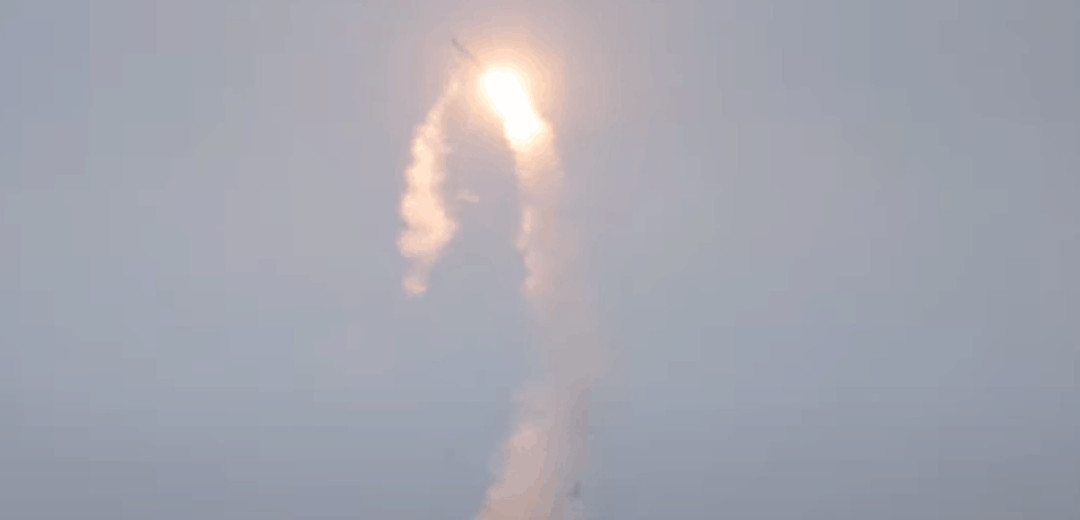
In the first 19 days of July, Russia used two-thirds of its planned annual production of 3M22 Zircon missiles, while the number of ballistic missiles used exceeded their total monthly production.
Militarnyi came to this conclusion after analyzing reports from the Ukrainian Air Force and regional air commands.
Including the massive strike on the night of July 19, Russia has used 107 ballistic missiles and 20 3M22 Zircon missiles since the beginning of the month.
For comparison, in June 2026, Russian forces used a total of 102 Iskander-M/S-400 ballistic missiles, two Kh-47M2 Kinzhal missiles and 15 3M22 Zircon missiles.

According to estimates by the Defense Intelligence of Ukraine (DIU), in 2026 Russia produces about 60 9M723 ballistic missiles for the Iskander-M system and 40 RM-48U missiles launched from S-400 systems each month. Their combined monthly production is approximately 100 missiles. Thus, in less than a full month of July, Russia has already used more ballistic missiles than it can produce in one month.
At the same time, Russia plans to produce only 30 3M22 Zircon missiles in 2026. Thus, in 19 days, Russia has used two-thirds of the planned annual production of this type of missile.
According to DIU estimates, before the attack, Russia had more than 100 9M723 ballistic missiles for the Iskander-M system, more than 400 RM-48U missiles for S-400 systems, and more than 120 Zircon missiles.
For comparison, since December 2025, the invaders have maintained a stock of approximately 200 Iskander-M ballistic missiles.
The intensive use of accumulated stocks may indicate Russia’s desire to take advantage of the limited anti-missile reserves of the Ukrainian Defense Forces and inflict maximum damage during massive strikes. At the same time, such a rate of use is gradually reducing Russian missile reserves, which the defense industry cannot fully replenish in time.
It was recently reported that the Zircon is probably not a hypersonic cruise missile but a ballistic missile that follows a quasi-ballistic trajectory.

This is evidenced by an analysis by Fabian Hinz, an independent OSINT analyst specializing in missile technology. The full version of the study is available on our blog under the title “Zircon Is Actually a Quasi-Ballistic Missile.”
Hinz emphasizes that the simplified division into “hypersonic” and “non-hypersonic” systems does not reflect the real complexity of flight at hypersonic speeds. Rather, the issue concerns a spectrum of maneuverability, with systems differing in the degree and duration of maneuvering at hypersonic speeds.
Even a quasi-ballistic missile, which is not a hypersonic cruise missile and has less maneuverability, can still pose serious challenges for interception.
Підтримати нас можна через:
Приват: 5169 3351 0164 7408 PayPal - [email protected] Стати нашим патроном за лінком ⬇
Subscribe to our newsletter
or on ours Telegram
Thank you!!
You are subscribed to our newsletter