

Popular
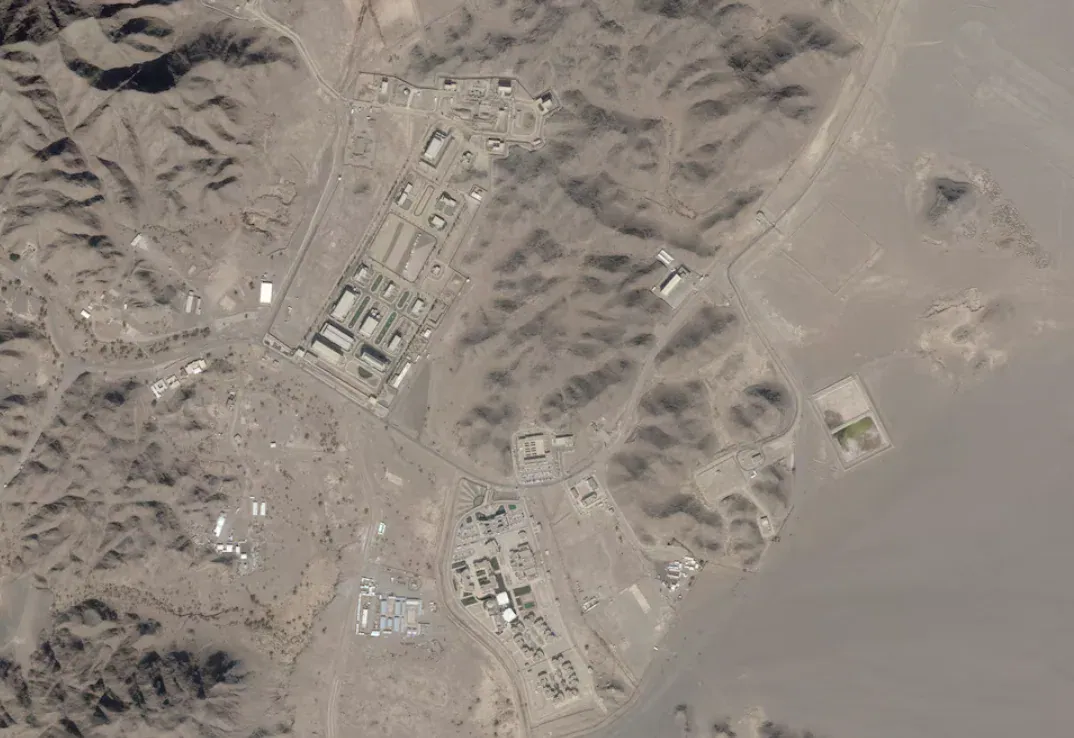
According to two American researchers who have been analyzing commercial satellite imagery for over a year, Saudi Arabia appears to be expanding its ballistic missile plant to build larger solid-fuel rockets capable of traveling greater distances or carrying heavier warheads, Reuters reports.
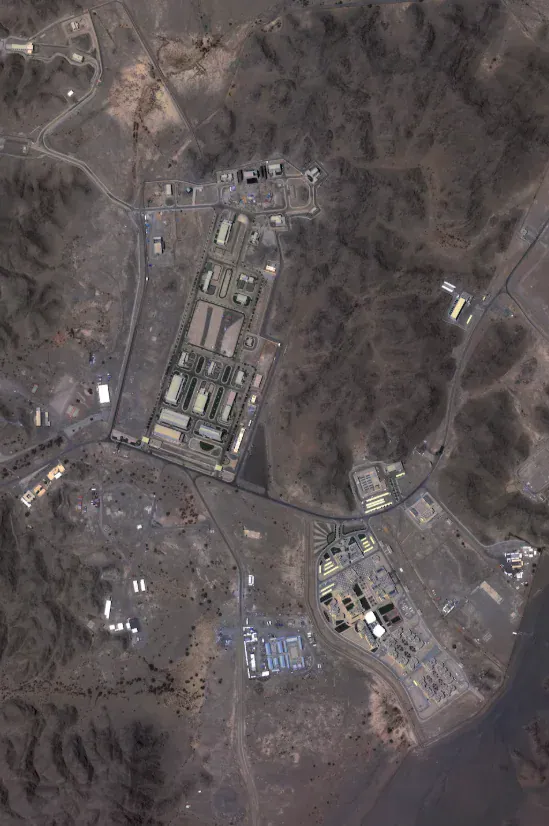
The American satellite company Planet Labs captured images of the Al-Duwadimi complex, located approximately 125 miles (200 km) west of Riyadh, between April 2025 and September 2026.
Two researchers from the Foreign Policy Research Institute (FPRI), Sam Lair and Michael Duitsman, concluded that these images show a new structure housing casting pits — depressions where a mixture of fuel components is poured into rocket engine casings, after which it solidifies there.
As Lair and Duitsman note in their assessment, this building, which appears to be surrounded by protective walls designed to shield neighboring structures from accidental explosions, is at least twice as large as the one believed to house the plant’s existing casting pits. The Foreign Policy Research Institute (FPRI) is an independent research organization based in Philadelphia.
The second new building may be used to store fuel or finished missile components, the researchers reported.
The military prefers solid-fuel rockets because they can be stored for long periods and launched more quickly than liquid-fuel rockets.
More powerful missiles could help Saudi Arabia deter attacks from Iran, make its military more self-sufficient, and strengthen its position in the conflict with the Houthis in Yemen.
However, Saudi Arabia risks fueling a regional missile race and intensifying opposition in the U.S. Congress to the civil nuclear cooperation agreement between Washington and Riyadh, which has already raised concerns about the risks of nuclear technology proliferation.
Lair and Duitsman, along with experts from the London-based International Institute for Strategic Studies (IISS) and the research organization CNA, told Reuters that the composition of Saudi Arabia’s missile forces indicates that the al-Duwadimi complex is based on Chinese technology. Sam Lair and Michael Duitsman noted that the system’s specifications are also similar to those of Chinese missile systems.
According to a 1991 CIA assessment, Saudi Arabia secretly purchased about 40 liquid-fueled DF-3 ballistic missiles from China in 1987. Two of them were first displayed at a military parade in April 2014, as evidenced by YouTube videos and photographs from the event.
The FPRI team also recently concluded, after analyzing videos and photos on social media, that Saudi Arabia may have launched a Chinese-designed DF-15 missile, as evidenced by the debris found.
Lair reported that the kingdom is now capable of producing DF-15 solid-fuel missiles, and the modernization of the al-Duwadimi complex is likely linked to the production of longer-range DF-21 missiles or similar systems.
It is believed that Riyadh turned to Beijing because Washington has long restricted the export of longer-range missile systems.
Saudi Arabia’s apparent drive to acquire more powerful missiles comes as other Gulf states are also seeking to expand their offensive and defensive capabilities, noted Decker Eveleth, a CNA analyst who has been tracking the construction of the al-Duwadimi complex using commercial satellite imagery and agreed with the FPRI’s assessment.
“This is a recurring pattern across the Middle East,” he said. “You see the same thing in the UAE. The same thing is happening in Turkey. Everyone is doing it now.”
Підтримати нас можна через:
Приват: 5169 3351 0164 7408 PayPal - [email protected] Стати нашим патроном за лінком ⬇
Subscribe to our newsletter
or on ours Telegram
Thank you!!
You are subscribed to our newsletter