
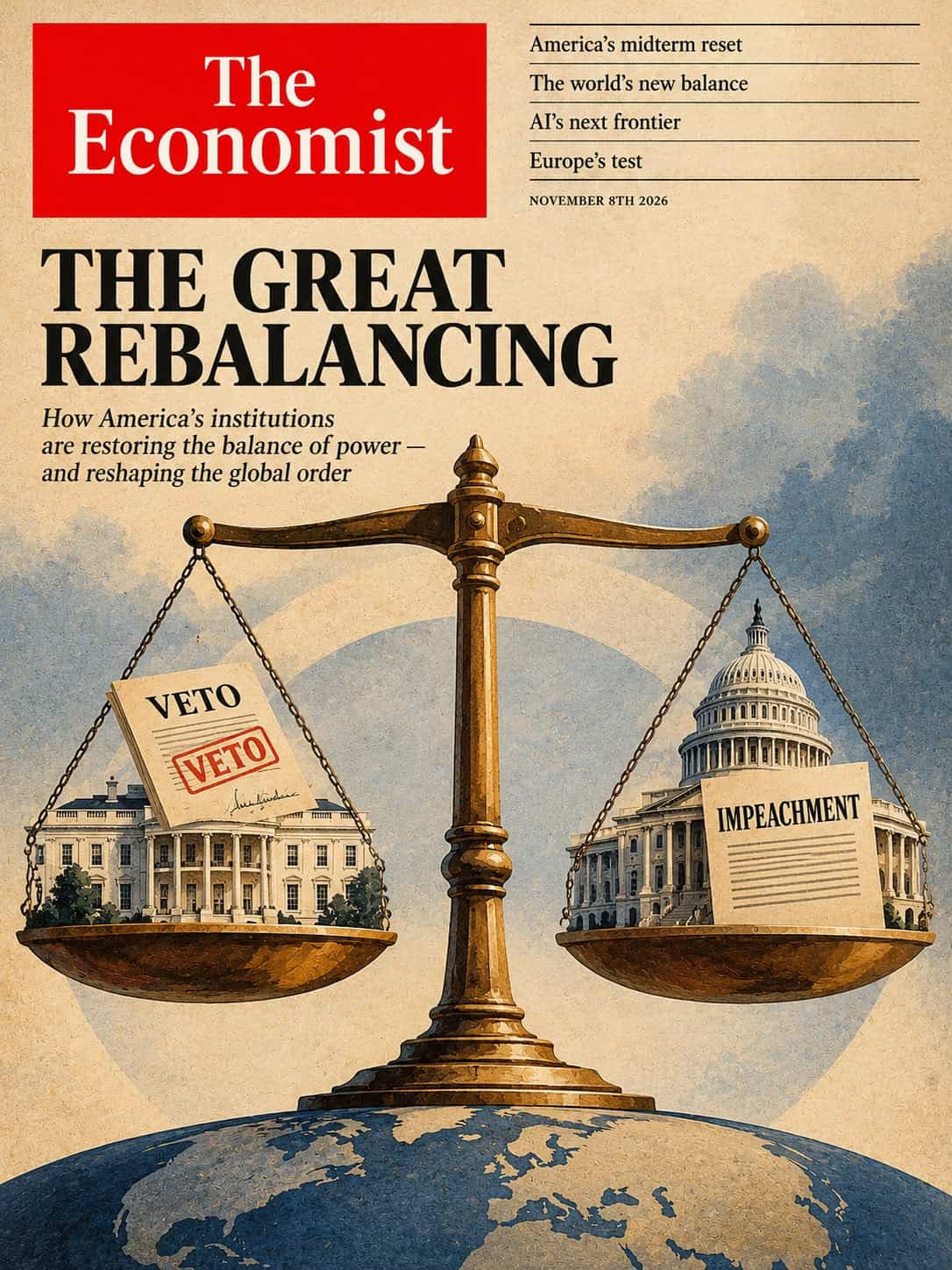
The U.S. Midterm Results: Democratic Institutions Set a Course Toward Restoring the Balance Between the Branches of Government

Solid Info








Following the November 3, 2026, midterm elections, the Democratic Party secured majorities in both chambers of the U.S. Congress, whose new term will begin on January 3, 2027.
The United States is undergoing a stress test of its institutions’ resilience, and the shift in congressional control is restoring Congress’s standing as a coequal branch of government. During President Trump’s second term, the balance of power shifted toward the White House as the Republican-controlled Congress ceded its own authority to the President.
From March 2025 to January 2026, the Republican majority in the House of Representatives used procedural resolutions to block votes on terminating the national emergencies that provided the legal basis for President Trump’s tariffs. In July 2025, Congress approved a presidential request to rescind previously appropriated funds for the first time since 1999, cutting $9 billion from foreign aid and public broadcasting.
The new majority is seeking to reclaim congressional authority to restore the balance among the branches of government and overcome the crisis of one-man rule. The United States is entering a period of intense confrontation between Congress and the President over major international issues, with the threat of impeachment adding to the pressure.
As early as January 6, 2026, President Trump warned fellow Republicans that defeat in the midterms would lead to his third impeachment. Republican Thomas Massie has threatened to bring eight articles of impeachment against Secretary of Defense Pete Hegseth to a vote in the House of Representatives if Hegseth refuses to resign.
Where the White House needs funding, legislation, or Senate confirmation of appointments, the President will have to proceed more cautiously. In foreign policy, however, President Trump retains considerable room for abrupt moves, while his veto power allows him to block congressional initiatives.
The day after the election, President Trump pledged to veto legislation passed by the new Congress. Of the 10 vetoes he issued during his first term after Democrats took control of the House of Representatives in 2019, lawmakers overrode only one.
Until the new Congress takes office, the U.S. government will continue operating under fiscal year 2026 appropriations, which remain in effect through December 11, 2026.
With none of the 12 appropriations bills for fiscal year 2027 yet enacted, responsibility for approving new government funding falls to the outgoing Congress, where Republicans hold 53 seats in the Senate.
Even with their Senate majority, Republicans lack the votes needed to overcome a filibuster. As a result, before the new Congress even begins its term, the White House will have to make concessions to Democrats to end debate on government funding legislation.
While negotiations in December 2026 will be confined to a specific budgetary decision, once the 120th Congress convenes, the White House will need to negotiate with opposition lawmakers across every area in which the administration requires new funding.
The terms and desired outcomes of such cooperation will be shaped by different groups of Democratic politicians, whose positions on U.S. strategy in the highest-priority areas of foreign policy diverge.
Most members of the incoming Democratic congressional caucuses favor ending the U.S. campaign in Iran and will deny the presidential administration additional appropriations for its continuation.
Most Democrats seek to structure U.S. relations with Israel around continued defense cooperation, coupled with a requirement that the State Department report on how Israeli security forces use weapons supplied by Washington.
At the same time, majorities are forming in both chambers of the 120th Congress in favor of assistance to Ukraine. The emergence and durability of this support are reinforced by Democratic efforts to restrict the President’s authority to waive sanctions.
Congress’s more favorable position toward Kyiv reflects its determination to preserve its existing foreign policy powers. The White House used an executive order to suspend sanctions against Russia enacted by Congress, invoking the waiver authority granted by the legislation itself.
Restoring Congress’s primary authority to determine whether sanctions remain in force has become a means for lawmakers to consolidate their influence over Washington’s foreign policy. Kyiv can therefore count on support from Democratic members of Congress regardless of their positions on the scale and format of assistance to Ukraine.
The issues that became central to U.S. foreign policy following the intensification of the global confrontation with autocracies, and that remained relevant throughout the current congressional term, will shape the agenda of the incoming Senate and House of Representatives.
The new Congress will take office amid a sharp decline in global confidence in the United States. In the spring of 2026, China received more favorable ratings than the United States in 25 of 36 countries surveyed by the Pew Research Center, the first such result in two decades of polling.
The United States maintained its advantage over China in only six countries. Among Canadians, 44 percent of respondents viewed China favorably, compared with 33 percent for the United States, whereas in 2023 the respective figures were 14 percent and 57 percent.
The Democratic majority will work to preserve Washington’s influence in countries where it is weakening, demonstrating to the world that Americans recognize the imbalance within their own system of government and are taking steps to correct it.
Although the direction of U.S. foreign policy will remain unchanged, and the powers of the White House and State Department will continue to be decisive in shaping Washington’s strategy toward other countries, Democrats will gain greater influence over that strategy in the new Congress through control of the Appropriations Committee.
Majorities in both chambers will allow Democrats to deny the White House funding for military campaigns abroad, demand administration documents detailing the conduct and costs of military operations, and seek explanations of the October 2026 U.S.-Russia agreements that provided the basis for suspending sanctions.
Government defense procurement will become a separate focus of congressional investigations, as the Pentagon has been providing Congress with sufficiently detailed, complete, or timely information about the costs of military contracts and programs.
The head of the Golden Dome missile defense program estimated the cost of the system’s planned architecture and configuration at $185 billion. By contrast, in May 2026, the Congressional Budget Office estimated that developing, deploying, and operating such a system over 20 years would cost $1.2 trillion.
Meanwhile, the U.S. administration’s fiscal year 2027 budget request provides for an average of approximately $15 billion annually for the Golden Dome for America Fund over the next five years, a funding level that does not correspond to either estimate.
Without complete data from the Department of Defense on the project, Congress cannot reliably plan program expenditures, while insufficient information makes it difficult for lawmakers to assess whether the costs are justified.
The Pentagon’s inadequate reporting also makes it harder to scrutinize the recipients of defense contracts, which business elites aligned with the Republican Party have actively received during President Trump’s term.
According to calculations by Democracy Defenders Action, Elon Musk’s companies received at least $10 billion in new federal contracts during the 17 months following his departure from the Department of Government Efficiency.
Democrat Robert Garcia, a contender to chair the House Oversight Committee in the new Congress, has already announced plans by Democratic lawmakers to examine these contracts and establish whether Musk’s corporations received preferential treatment from the administration.
The election results have laid the groundwork for personnel changes at the State Department and Pentagon, and new appointments to these institutions will require Senate confirmation.
A Republican-controlled Senate confirmed nominees to President Trump’s second Cabinet, with several nominees securing only the narrowest margins. Secretary of Defense Pete Hegseth was confirmed by a 51–50 vote, with Vice President JD Vance casting the deciding vote.
With the new majority, such a margin will be unattainable, giving Congress additional influence over the White House’s defense and foreign policies as the presidential administration will need to reach agreement with Democrats on nominees.
The deepest divide between the incoming Congress and the White House concerns authoritarian states, whose threats President Trump downplays by invoking his personal relationships with their leaders.
In September 2025, ahead of a parade in Beijing where Xi Jinping, Vladimir Putin, and Kim Jong Un appeared together for the first time, President Trump declared that he was not concerned at all about a China-Russia axis because the United States possessed the world’s strongest military.
During his state visit to Beijing in May 2026, President Trump described Xi Jinping as a great leader and promised the best bilateral relations in history. After hearing Xi’s objections, he postponed a decision on an arms package for Taipei.
President Trump justified the reduction in joint military exercises with South Korea, ordered in August 2026, by citing their cost and his relationship with Kim Jong Un. In October, he again declared that he got along very well with the North Korean leader.
Following the agreement with Putin on Russian diesel imports announced in October 2026, President Trump issued an executive order suspending most of the sanctions and tariffs under the Lindsey O. Graham Sanctioning Russia and Iran Act.
Congress, by contrast, is codifying its assessment of these threats in legislation. Even the Republican majority, through the defense authorization law for fiscal year 2026, prohibited reductions in U.S. troop levels below 76,000 in Europe or 28,500 in South Korea.
The Senate passed the Graham Act by a vote of 86–11, while a bipartisan group of senators, including six Republicans, criticized the diesel agreement with Moscow.
The U.S. intelligence community’s 2026 Annual Threat Assessment states that selective cooperation among China, Russia, Iran, and North Korea amplifies the threat each poses to the United States. Recognition of the crisis toward which the world is moving ahead of the active phase of confrontation with China in 2028–2030 will shape the new Congress’s position toward Moscow, Beijing, and Pyongyang.
Iran, Israel, Ukraine, the European Union, and Taiwan represent interconnected fronts in a single confrontation for the new Congress, in which autocracies are exerting pressure on the free world. Legislative decisions concerning each are aimed at limiting the capabilities of authoritarian states.
Lawmakers’ focus on inflation, the economy, restrictions on civil rights, and the state of the U.S. justice system does not diminish their understanding that the period preceding a global confrontation requires Washington to maintain an active international posture.
Denying Additional Funding for the Iran Campaign Becomes a Key Lever of Congressional Pressure on the White House
The campaign against Iran is one theater of the broader U.S. confrontation with autocracies. Among the objectives of Operation “Epic Fury,” launched on February 28, 2026, President Trump identified depriving Tehran of the ability to arm, finance, and direct proxy groups beyond its borders.
The United States achieved its most tangible results against Iran’s proxies. On June 26, 2026, Lebanon concluded a framework agreement with Israel on disarming Hezbollah through U.S. mediation, while Iraq, under pressure from Washington, is demanding that pro-Iranian groups surrender their weapons to the state.
The campaign failed to achieve Washington’s nuclear objective. The 440 kilograms of uranium enriched to 60 percent that the United States demanded be removed remain in Iran, where the ayatollahs’ regime has retained power despite Supreme Leader Ali Khamenei’s death in the operation’s initial strikes. Following Khamenei’s death, his son Mojtaba, who maintains close ties to the Islamic Revolutionary Guard Corps (IRGC), became Supreme Leader. The IRGC, together with the Supreme National Security Council, assumed control over military and major political decisions.
Removing the uranium would require a ground operation against fortified nuclear facilities, and the administration will not obtain authorization for such an operation from the new Congress.
The budgetary and resource challenges arising from the campaign’s transition into a prolonged operation encompass its financing, the replenishment of interceptor inventories, and the economic consequences of hostilities, which have driven up fuel prices.
In June 2026, the Republican administration had already submitted a supplemental appropriations request totaling $87.6 billion to Congress. Of that amount, $67.1 billion was earmarked for the Department of Defense to cover costs associated with the operation against Iran, replenish munitions, and rebuild depleted stockpiles.
The war’s unpopularity among Americans, internal Republican disagreements over whether the operation should continue, and lawmakers’ focus on the election campaign and the immediate priority of extending government funding meant that the White House request was not approved, despite Republican control of Congress.
The prolonged campaign, which President Trump initially expected to conclude within four to five weeks, became one of the principal reasons for the Republicans’ defeat in the midterm elections.
According to exit polls, 62 percent of voters considered the decision to use force against Iran a mistake, while 74 percent identified the war as a decisive or important factor in their electoral choice. Of those voters, 63 percent supported Democrats.
The new Democratic majority, which will hold at least 54 Senate seats and 254 seats in the House of Representatives, will deny the presidential administration both legislative authorization to continue hostilities and additional funding for the campaign.
From the beginning of Operation “Epic Fury,” several Democratic lawmakers were skeptical of the Middle East campaign, while Senate Democratic Leader Chuck Schumer demanded that the White House provide clear intelligence and specific reasons for undertaking the operation.
In November 2026, newly elected Democratic lawmakers established a consolidated position calling for a complete end to hostilities against Tehran.
During the current congressional term, Democratic opposition to the Iran campaign received support from Republican Senators Susan Collins, Lisa Murkowski, Thom Tillis, and Rand Paul.
In September 2026, these four Republican senators joined most Democrats in voting for an Iran war powers resolution requiring the President to end U.S. military participation in the operation against the ayatollahs’ regime.
The Senate rejected the measure by a vote of 50–49. In June 2026, both chambers had approved another resolution demanding an end to hostilities against Iran, but the White House declared that it had no legal force.
Within the Democratic Party, Senator John Fetterman remains the only senator consistently advocating a military solution to the conflict with Tehran and opposing resolutions supported by most of his fellow Democrats.
Susan Collins lost her reelection bid in Maine to Democrat Troy Jackson, while Thom Tillis chose not to run for another term. However, Senators Lisa Murkowski and Rand Paul will remain in office until January 2029.
The support these two Republicans have given Democratic resolutions on the Iran campaign reduces the coalition of senators prepared to approve continued military operations against the ayatollahs’ regime to 43–45 votes.
That would be insufficient even for a simple majority in votes on supplemental appropriations or resolutions authorizing the use of military force against Iran.
According to Pentagon estimates, the operation against the ayatollahs’ regime had cost $47.1 billion as of October 2026, an increase of $3.5 billion over the estimate from September of the same year.
Alongside rising campaign expenditures of $2–3 billion per month, the White House faces a munitions shortage. As of August 1, 2026, the Congressional Budget Office estimated the cost of replacing depleted munitions at $21.7 billion.
According to the Center for Strategic and International Studies (CSIS), between February and July 2026, the United States expended 65 percent of its prewar inventory of Patriot interceptors, while restoring its Terminal High Altitude Area Defense (THAAD) arsenal to previous levels will require at least three years.
As early as March 2026, the Pentagon transferred elements of a THAAD system from South Korea to the Middle East, weakening missile defenses in the Indo-Pacific region, which Washington identifies as a priority for containing China.
Although Congress’s refusal to allocate additional funding for the Iran campaign will not make continued operations impossible in the near term, the campaign’s financial foundation is gradually being depleted.
The White House’s summer 2026 request, which included more than $67 billion for the Department of Defense, demonstrated that the Pentagon already faced the need to reallocate funds, reduce training and maintenance, and defer certain expenditures.
After December 11, 2026, without new government funding legislation, the Pentagon will be unable to reliably sustain a prolonged campaign, replenish munitions, and replace equipment.
The New Congress Preserves Defense Cooperation With Israel but Adjusts Aid Levels Through Annual Appropriations
For Congress, Israel remains a pillar of efforts to contain Iran, which receives economic support from China that helps it withstand U.S. sanctions.
Israel succeeded in securing U.S. participation in the war against Iran, but the campaign’s cost to Washington has deprived Jerusalem of its status as an ally whose support requires no justification. On February 24, 2026, U.S. Secretary of State Marco Rubio warned congressional leaders that Israel was prepared to attack Iran even without U.S. participation.
Less than two days before the strike, Israel’s Prime Minister sought to convince President Trump that there would be no better opportunity to eliminate Ali Khamenei. According to Reuters sources, that conversation, together with intelligence, became the catalyst for President Trump’s final decision.
The Israeli Prime Minister has dismissed claims that Israel dragged the United States into the war as fabricated. Nevertheless, U.S. forces fired more than 200 THAAD interceptors, approximately half of their inventory, to defend Israeli territory, while Israel itself used fewer than 100 Arrow missiles.
Although an absolute majority of members of the incoming Congress is unwilling to finance an escalation of the conflict, approve additional deployments of U.S. forces to the region, or authorize a defense budget that includes offensive requirements, protecting American troops and maintaining Israeli and U.S. missile defenses will retain broader bipartisan support.
The new Congress’s push to wind down the Iran campaign will limit U.S. participation in further strikes against Iran, shifting Israeli cooperation with Washington toward defense against Iranian missiles.
During the 119th Congress, Republicans and Democrats established a consensus on missile defense funding programs. In October 2025, the U.S. Senate passed the National Defense Authorization Act (NDAA) for fiscal year 2026, with support from 50 Republicans and 27 Democrats, providing for an increase in defense spending to $925 billion.
The legislation included provisions for the joint development and production of the Iron Dome missile defense system, as well as provisions concerning Israel’s joint missile defense program.
The bipartisan consensus on the FY2026 NDAA made it possible to authorize U.S. funding for Israeli missile defense programs, including up to $60 million for Iron Dome, $40 million for David’s Sling, and $100 million for the Arrow 3 interceptor missile.
The adoption of a bipartisan appropriations package for fiscal year 2026 in January demonstrated that the immediate defense needs of the United States and Washington’s closest allies remain a central priority for lawmakers and are not a source of conflict between Republicans and Democrats.
In the Senate, a substantial number of Democrats joined Republicans in supporting legislation that allocated $2.1 billion for urgent air and missile defense needs, bringing the total to 71 votes in favor.
In the summer of 2025, the House of Representatives approved its own version of the fiscal year 2026 defense appropriations bill by 221 votes, but the legislation lacked similarly broad bipartisan support.
The bill provided $13 billion for missile defense and space programs under Golden Dome, along with $500 million for Israeli missile defense projects and $122.5 million for joint development programs between Washington and Jerusalem.
The position taken by Democrats in the outgoing Congress confirmed that measures intended to protect U.S. forces already deployed in the Middle East will continue to receive bipartisan support in the next Congress.
In the incoming Congress, at least 162 House Republicans and 44 Republican senators will be joined by 140–170 moderate House Democrats and 30–38 Democratic senators in developing and supporting defense-related legislation.
The progressive wing of the Democratic Party also supports protecting U.S. military personnel at bases in West Asia, but progressives generally take a critical position toward funding Israel’s missile defenses.
Although Alexandria Ocasio-Cortez and Ro Khanna signed a statement in 2024 supporting the strengthening of Israel’s Iron Dome system, both lawmakers refused in 2026 to support funding for Iron Dome or other military assistance to Israel.
Progressive Democrats Jim McGovern, Jared Huffman, and Mark Pocan adopted a similar position toward U.S.-Israel defense cooperation. In 2021, they had joined 207 Democrats and 210 Republicans in voting to fund Iron Dome. Long-standing progressive critics of Jerusalem also oppose such assistance.
Although the 120th Congress will not demonstrate a complete bipartisan consensus on support for Israel, cooperation in missile defense, intelligence, and joint technology development will continue under the United States–Israel Defense Technology Cooperation Initiative, which covers counter-drone capabilities, artificial intelligence (AI), autonomous systems, and electronic warfare.
The overwhelming support among lawmakers from both parties for specific Israeli defense initiatives was demonstrated during the outgoing Congress’s July 2025 votes on amendments to the proposed U.S. defense budget for fiscal year 2026.
Republican Marjorie Taylor Greene introduced an amendment that would have eliminated $500 million in funding for the “Israeli Cooperative Programs.”
The conservative lawmaker’s proposal was defeated by a vote of 422–6, with only four Democratic members of Congress supporting Greene’s amendment.
Support for these forms of cooperation with Israel will remain high in the new Congress, partly because of the active financial backing of numerous Senate and House candidates by pro-Israel lobbying organizations, among which the American Israel Public Affairs Committee (AIPAC) plays a central role.
The victories of candidates aligned with Israel in the previous election cycle, whose campaigns received investments from pro-Israel lobbyists, established AIPAC as one of the informal arbiters of personnel decisions within both parties and helped align Washington’s foreign policy strategy with Jerusalem’s interests and priorities.
The financial resources available to AIPAC directly influenced the composition of the Republican and Democratic caucuses in the 120th Congress.
The day after the midterm elections, representatives of the lobbying organization announced that more than 234 AIPAC-backed candidates had won seats in the new Congress. Overall, during the 2026 election campaign, the pro-Israel lobby and its affiliated super PACs supported 376 candidates from both parties, 91 percent of whom won their races.
Former Israeli Prime Minister and Knesset opposition leader Yair Lapid said that the group of lawmakers critical of Jerusalem had grown but remained small.
According to Lapid, only 25 of the 435 members of the House of Representatives oppose maintaining U.S.-Israel cooperation, while consistent critics of Israel account for less than 10 percent of the Senate.
At the same time, in April 2026, during the war with Iran, 40 of the Democratic caucus’s 47 senators voted to block a $295 million sale of bulldozers to Israel, compared with 27 senators who supported a similar block in July 2025.
Seeking to preserve a stable course of defense and technological cooperation between Washington and Jerusalem in the new Congress, AIPAC singled out Chuck Schumer and Hakeem Jeffries in its statement on the election results. Both are positioned to become Senate Majority Leader and Speaker of the House, respectively, in the 120th Congress.
According to the Federal Election Commission (FEC), Schumer and Jeffries received a combined $2.1 million in contributions from pro-Israel lobbying groups.
Across their political careers, Jeffries and Schumer have raised more than $3.3 million in direct contributions from the pro-Israel lobby for their own election campaigns. Including indirect financing through leadership PACs and joint fundraising committees, the total exceeds $5.5 million.
U.S. support for Israel rests on annual military assistance and technological cooperation between Jerusalem and Washington enshrined in defense legislation.
The pro-Israel lobby’s ability to sustain these two channels of influence differs. Military assistance and weapons procurement require annual votes, meaning that during each appropriations cycle, critics of Israel will seek to reduce U.S. financial support and attach conditions restricting its use to specific needs of Jerusalem.
By contrast, technological cooperation under the United States-Israel Defense Technology Cooperation Initiative offers greater continuity. Even traditional critics of U.S.-Israel cooperation refrain from seeking the termination of joint U.S.-Israeli research and development (R&D) programs because doing so would lead to the cancellation of existing contracts between the Pentagon and U.S. defense industry contractors.
Proponents of repealing provisions on technological cooperation with Israel will not secure the necessary votes in the new Congress. Even critics of Jerusalem are unwilling to deprive American defense companies of contracts under joint programs.
A modest increase in the number of opponents of the U.S.-Israel partnership in Congress will be insufficient to eliminate assistance to Jerusalem or reduce it to a minimum. Nevertheless, the details and substance of that support will be adjusted.
Deliveries of munitions and weapons for offensive operations will be reduced, while joint development programs, interceptors, and intelligence sharing will be maintained.
The Risk of a Presidential Veto Will Shift Assistance to Ukraine Across Multiple Funding Channels
While the durability of U.S.-Israel cooperation is maintained through several channels of support for Jerusalem, each offering a different degree of protection, the stabilization of relations between Washington and Kyiv in 2027–2029 will depend on securing a congressional majority of politicians favorable to supporting Ukraine.
Congress views support for Kyiv as part of efforts to counter cooperation among autocracies. Military assistance from North Korea and Iran strengthens Moscow in its war against Ukraine, while economic ties with China help Russia withstand sanctions.
Despite the willingness of most lawmakers in the incoming Congress to expand cooperation with Kyiv, the adoption of a separate, large-scale funding package for Ukraine during the first year of the 120th Congress will face White House resistance and be substantially complicated by procedural delays and conflicts among congressional factions.
The difficulty of passing a single assistance bill for Ukraine stems from the differing priorities of Republicans and Democrats.
While conservatives will demand stringent audits, a primary focus on defense assistance, and minimal financial support for Ukraine’s budget, the Democratic majority will insist on preserving economic and humanitarian assistance as integral components of the package.
U.S. economic problems, including an annual increase in federal debt of $2.46 trillion, its rise to $40.5 trillion, and a debt level exceeding 100 percent of the country’s GDP, are prompting American lawmakers to avoid bringing standalone bills to a vote when their expenditures are intended exclusively to benefit a foreign state.
During congressional debates in the spring of 2024 over the need to provide financial support to Ukraine, Taiwan, and Israel, which culminated in the adoption of a package of funding legislation for these countries, lawmakers established a framework for providing financial assistance in the form of loans.
The Ukraine supplemental appropriations law signed by President Joe Biden on April 24, 2024, required the White House to conclude a formal bilateral repayment agreement with the Ukrainian government for economic assistance, structuring that assistance as a loan while allowing the President to forgive half the debt. In November 2024, the Biden administration notified Congress that it had forgiven $4.65 billion.
Throughout the first half of President Trump’s term, Washington systematically adhered to this framework in its relations with Ukraine, participating in assistance initiatives exclusively through loans.
Under the G7’s Extraordinary Revenue Acceleration for Ukraine initiative, the United States agreed to allocate funds to Kyiv only after the financing was formally structured as a loan secured by future proceeds from frozen Russian sovereign assets.
Since January 2025, Washington has effectively eliminated direct, nonrepayable financial assistance to Ukraine, delegating responsibility for funding social expenditures in Ukraine’s budget to the European Union.
Through the U.S. International Development Finance Corporation (DFC), funding for Kyiv has been provided exclusively on commercial terms, with capital channeled into the U.S.-Ukraine Reconstruction Investment Fund for reconstruction projects that require investment repayment and rigorous auditing.
At the same time, the continuation of the campaign against Iran and regular attacks by the ayatollahs’ regime on U.S. military bases in the Middle East have prompted lawmakers and the American defense industry to prioritize interceptor missiles and munitions for protecting U.S. forces in the region. In March 2026, the Pentagon considered redirecting to the Middle East interceptors that allies were purchasing for Ukraine through a NATO program, and in April, the United States warned European partners of delays in already contracted weapons deliveries.
The combination of factors complicating the adoption of a separate, large-scale funding package for Ukraine has prompted lawmakers supportive of Kyiv to seek alternative assistance mechanisms. Dividing Ukraine-related funding among several parallel channels is emerging as the most effective way to avoid procedural obstacles and minimize disputes over the details of a new U.S. strategy for cooperation with Kyiv.
During the next congressional term, assistance to Ukraine will also be provided by incorporating Ukraine-related spending provisions into U.S. defense authorization legislation. Under this approach, expenditures authorized for Ukraine become part of American defense legislation, while lawmakers vote on a bill that primarily authorizes funding for the U.S. armed forces. Congress then appropriates the actual funds through separate defense appropriations legislation.
Alternative mechanisms for financing Kyiv in 2027–2029 will include regular short-term continuing resolutions to fund the U.S. government and the development of specific procedures for transferring Russian sovereign funds directly to American defense companies to manufacture weapons for Ukraine.
The principal constraint on the incoming Congress’s initiatives to support Kyiv remains the U.S. President’s veto, which requires a two-thirds majority of lawmakers voting in each chamber to override.
Although Democrats will hold at least 254 seats in the House of Representatives in the 120th Congress, only eight of the 18 House Republicans who supported the Ukraine Support Act (H.R. 2913) in the summer of 2026 were reelected to the new Congress.
Despite the ability of this pro-Ukraine coalition to attract additional Republican votes on individual measures, lawmakers favorable to Kyiv will lack the numbers needed to override a presidential veto.
The ability of Democrats, who will assume leadership positions in the U.S. Senate after January 3, 2027, to bring H.R. 2913 to a Senate vote will not change the ultimate outcome. Once the legislation is reintroduced in the new Congress and passed by both chambers, the President will veto it, and the pro-Ukraine coalition will lack sufficient votes to override that veto.
The effectiveness of support for Ukraine in the new Congress will depend directly on the form, model, and specific mechanisms through which assistance is provided.
Standalone bills will remain vulnerable to the veto mechanism, despite requiring only a simple majority for passage. Consequently, incorporating provisions for U.S. assistance to Ukraine into annual defense authorization legislation will offer a more effective means of supporting Kyiv.
The stability and greater reliability of this approach stem from Congress’s record of passing National Defense Authorization Acts for more than 60 consecutive years. Even President Trump’s veto of the defense authorization bill in December 2020 was overridden by lawmakers, with votes of 322–87 in the House of Representatives and 81–13 in the Senate.
Western States Will Continue Building Integration Frameworks Independent of the U.S., Regardless of the New Congress’s Legislative Agenda
Tariffs imposed by the White House are weakening the unity of the Western bloc, which is already under pressure from autocracies. According to the Democracy Perception Index, China is now viewed more favorably than the United States in 20 of 23 European countries.
The new Congress will inherit tariff powers that have already been restricted. Those powers had prompted Democratic leaders to withhold support for legislation imposing sanctions on Russia. On February 20, 2026, the Supreme Court ruled in Learning Resources, Inc. v. Trump that the International Emergency Economic Powers Act does not authorize the President to impose tariffs.
In response, the presidential administration invoked Section 122 of the Trade Act of 1974, which allows the President to impose a temporary surcharge on existing import duties for all goods entering the United States, regardless of their country of origin. The surcharge was set at 10 percent, while Section 122 limits it to a maximum of 15 percent of the value of imported goods and a duration of 150 days.
The surcharge remained in effect from February 24 through July 24, 2026, and could be extended only by Congress, which did not authorize an extension. After its expiration, the administration began imposing tariffs under two other legal authorities that have no fixed time limits but require prior investigations.
Section 301 of the Trade Act of 1974 allows tariffs in response to unfair trade practices by a specific country, while Section 232 of the Trade Expansion Act of 1962 permits tariffs on particular categories of imports to protect national security.
Since July 2026, Chinese goods have been subject to a 12.5 percent tariff imposed in response to the use of forced labor in their production. Since August 2026, a 50 percent tariff has applied to Canadian goods with a combined value of $20 billion.
The Democratic majority will be unable to repeal sectoral tariffs or the authority granted under Section 113 of the Lindsey O. Graham Sanctioning Russia and Iran Act to impose tariffs of up to 100 percent on goods from the five largest importers of Russian oil or gas. Doing so would require new legislation and an override of a presidential veto.
Given these constraints, the principal tariff policy instrument available to Congress, and the one on which the Democratic majority will concentrate, will be the refusal to extend temporary presidential tariff authorities.
The European Union is responding to U.S. tariffs by expanding trade agreements with third countries. Brussels’s increasingly active partnerships with Canada, the United Kingdom, and Pacific partners, prompted by earlier foreign policy decisions of the White House, are advancing through decisions made by European capitals. The change in congressional control therefore cannot alter the course or pace of this process.
Canada and the European Union held a summit in Montreal on October 29–30, 2026, launching the “Alliance for the Future” initiative. In September 2026, the European Commission proposed offering Canada the status of the first associate member of the EU.
The Comprehensive and Progressive Agreement for Trans-Pacific Partnership (CPTPP) entered into force between Canada and the United Kingdom in 2026, while Canada co-chairs the EU’s dialogue with the partnership’s members. Before the tariffs were introduced, Canada sent nearly 80 percent of its exports to the United States. Tariff pressure is now prompting Ottawa to strengthen trade ties with Europe and Commonwealth countries.
Western countries are expanding trade agreements among themselves faster than the new Congress can change U.S. tariff legislation. Consequently, tariff decisions will determine the substance of U.S.-EU relations, and the incoming Congress will not establish a separate European policy agenda.
Congress Maintains Its Bipartisan Course on Taiwan as the White House Withholds an Agreed Arms Package
Taiwan remains the central front in the confrontation with China. In May 2026, Xi Jinping described the Taiwan issue as the most important matter in relations with the United States and warned President Trump that mishandling the issue could lead to confrontation and even conflict.
Decisions on Taiwan adopted by the Senate and House of Representatives in previous Congresses have expanded the authority of U.S. lawmakers and adjusted the framework of relations between Taipei and Washington. However, these measures create no new expenditures and do not force lawmakers to choose between their party’s position and the White House’s strategy.
This congressional approach to Taiwan lays the foundation for a coordinated and unified policy toward the island on Capitol Hill, built on a consensus among the overwhelming majority of Republicans and Democrats.
A bill requiring the administration to submit planned shipments of artificial intelligence chips to China for congressional review was approved by the relevant committee in a 42–2 vote, while the Senate unanimously passed legislation extending to Taiwan the status accorded to the United States’ closest allies.
At the same time, lawmakers are divided almost evenly when making major decisions on funding for Taiwan. The fiscal year 2027 National Security, Department of State, and Related Programs Appropriations bill, passed by the House of Representatives on July 15, 2026, provides $500 million in military financing for Taipei and makes loan guarantees available under the Foreign Military Financing program. It became one of the most contentious pieces of legislation in the 119th Congress.
The bill passed by a vote of 217–209, leaving financial resources allocated to Taiwan without the diversification and protection that characterize U.S.-Israel cooperation and that U.S. financial assistance to Ukraine could potentially achieve.
American lawmakers had agreed on a $14 billion arms package for Taipei as early as January 2026, but the White House has yet to submit it for congressional consideration. President Trump described arms sales to Taiwan as a useful bargaining tool in negotiations with Beijing, while the Acting Secretary of the Navy explained delays in certain foreign military sales by the need to preserve munitions for Operation “Epic Fury.”
The bipartisan consensus on U.S.-Taiwan relations remains intact, while uncertainty over weapons deliveries to Taiwan originates with the White House.
Lawmakers’ position on Taiwan has demonstrated that support for an ally can adapt to changes in congressional control when assistance is delivered through several parallel mechanisms and individual proposals to support U.S. partners are incorporated into budgetary and defense legislation.
At the same time, even unanimous passage of legislation governing a partner’s status changes the procedures for reviewing future agreements without obligating either Washington or its partners to undertake a specific set of actions.
Restricting expenditures on the Iran campaign will change the allocation of U.S. resources while leaving American preparations for a global confrontation with China untouched. The pace of those preparations is determined by Pentagon decisions and defense industry production cycles. Consequently, the change in congressional control will not affect the substance or speed of the consolidation of U.S. capabilities ahead of a future conflict.
Winding down operations against the ayatollahs’ regime and adjusting approaches to assistance for Israel, as lawmakers in the new Congress will seek to do, will create conditions for returning U.S. defense reserves to the Indo-Pacific region.
In 2027–2029, Congress will pursue these outcomes by denying additional appropriations for the campaign, blocking authorization for the use of military force, and demanding State Department reporting on the use of weapons supplied to Israel.
The American political establishment assesses the effectiveness of deterrence against Beijing in terms of whether the United States can achieve a level of readiness for conflict at which China’s calculation of the consequences of a confrontation deprives it of grounds to escalate the global rivalry. Given this objective, defense and budget legislation will remain the most consequential strategic instruments for implementing Washington’s geopolitical course in the coming years.
The 2026 elections have activated the mechanism of self-correction long regarded as a central strength of the American system of government. Congress is reclaiming control over spending and legislation that the Republican majority had ceded to the President.
The absence of balance and institutional self-regulation created a serious risk to the unity of the free world and its ability to defend itself, while depriving the American model of its appeal to allies in the European Union. Over three years, the share of French respondents expressing favorable views of the United States fell from 52 percent to 27 percent.
A strong democratic America is also needed as a model for countries undergoing difficult political transformations, including Germany and France. In September 2026, the far-right Alternative for Germany (AfD) won 43.8 percent of the vote in elections to the Saxony-Anhalt state parliament, while on November 4, the French National Assembly unanimously rejected the revenue section of the 2027 budget.
Restoring equal weight to the branches of government will enable the United States to withstand the stress test of its institutions’ resilience, renew the appeal of American democracy to its allies, and strengthen the free world’s capacity for collective action ahead of the decisive phase of confrontation with autocracies.
This publication is the result of a partnership between MILITARNYI and SOLID INFO. An extended version is available on the website of the analytical center.



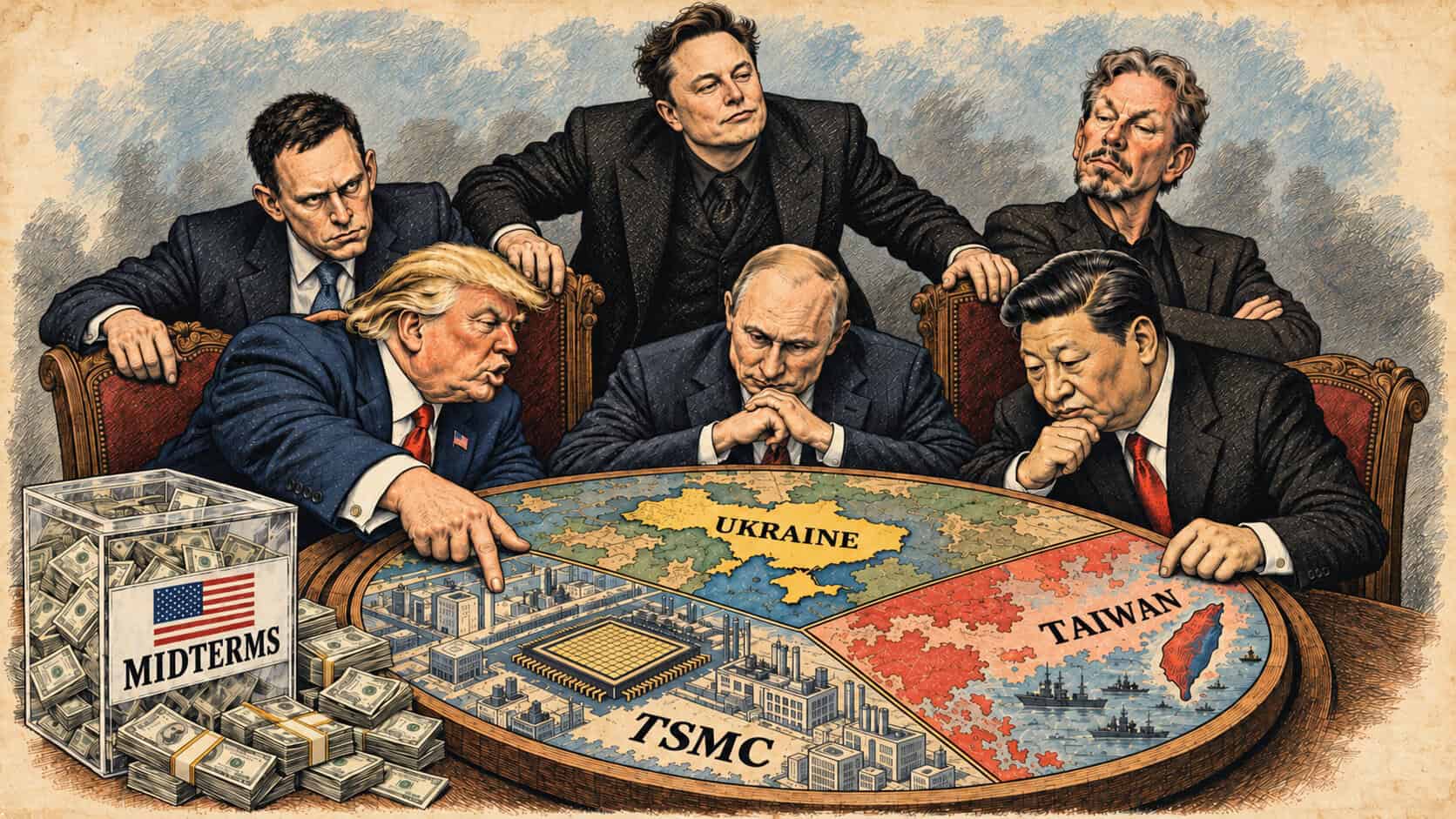
Big Tech Pushes the White House Toward Global De-escalation: The Stance of Tech Capital Shapes the Terms for a Deal Between Trump, Putin, and Xi Jinping
As of October 14, 2026, political advertising expenditures in the current U.S. election cycle, including reserved airtime, had exceeded $10 billion...

Japan Rapidly Builds Up Its Defense Capabilities: Personnel Shortages and Low-Cost Weapons Set the Pace of the Self-Defense Forces’ Modernization
On October 13, 2026, lawmakers from Japan’s ruling Liberal Democratic Party, led by former Defense Minister Itsunori Onodera, established a parliam...

Secretary of State Rubio’s Visit to Uzbekistan: U.S. Tech Capital Moves into Central Asia, Leaving Beijing No Zones of Exclusive Influence
On October 18, 2026, U.S. Secretary of State Marco Rubio arrived in Samarkand, Uzbekistan, where he attended a C5+1 meeting with the foreign minist...
