




Popular
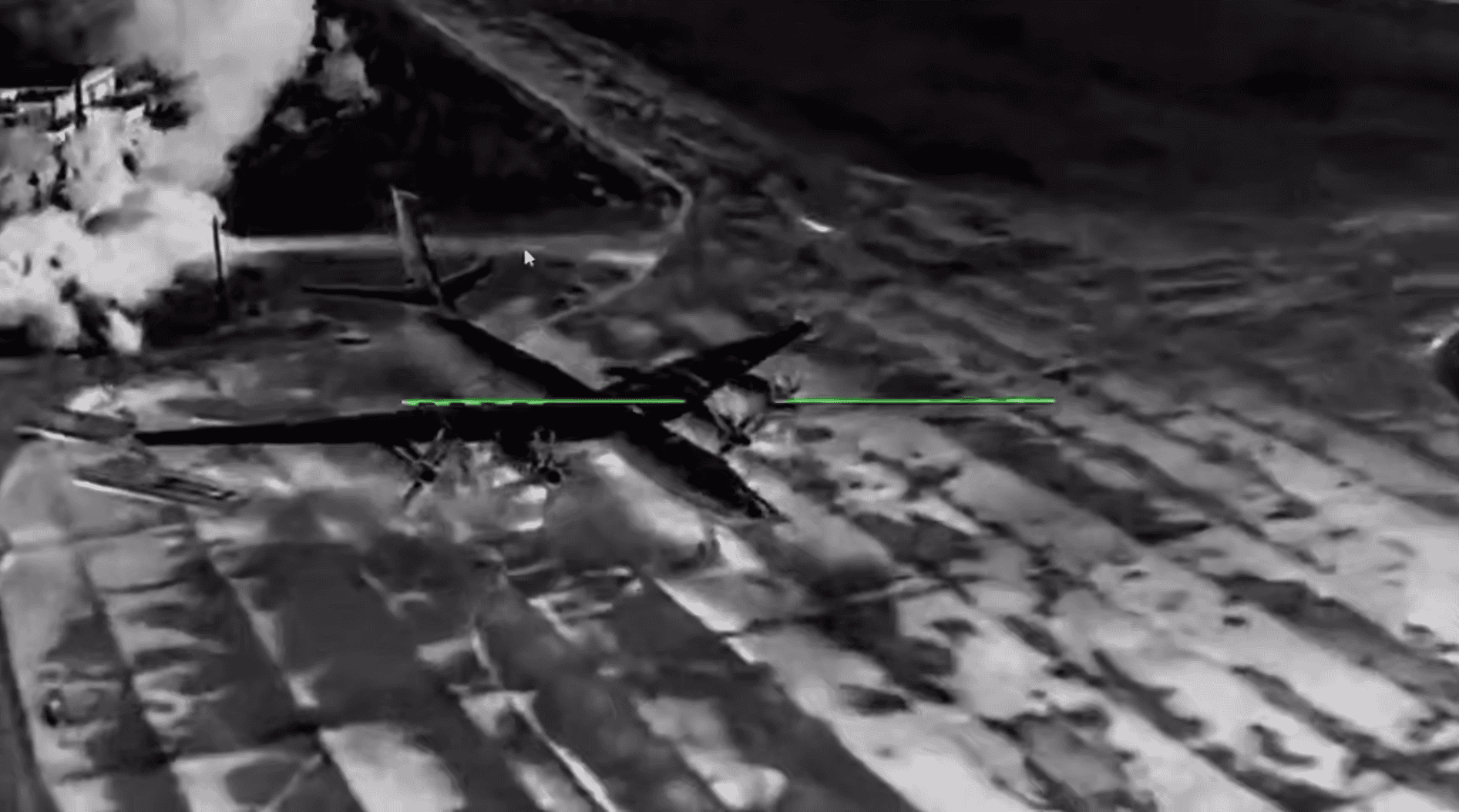
On the night of May 30, the Unmanned Systems Forces struck two Tu-142 anti-submarine aircraft at the military airfield in Taganrog.
This was reported by the commander of the USF, Robert Madyar Brovdi, on his social media pages. The strikes were carried out using long-range kamikaze drones.
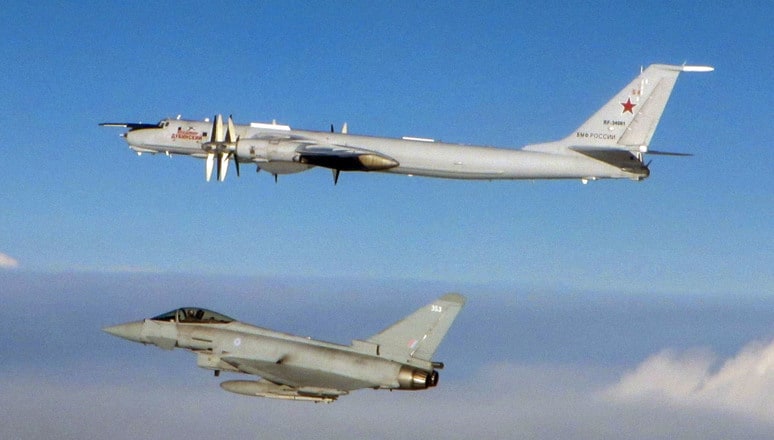
The long-range anti-submarine aircraft Tu-142 was developed in the late 1960s at the Tupolev Design Bureau in response to the emergence in the U.S. of nuclear submarines armed with long-range Polaris ballistic missiles.
The design was based on the Tu-95RC strategic reconnaissance bomber, but the configuration had to be significantly modified. The fuselage was lengthened to accommodate specialized search and targeting equipment and operators, and the wing was modernized to improve aerodynamic performance at various altitudes.
The prototype made its first flight on June 18, 1968. The aircraft was officially adopted into service in December 1972. Serial production was initially launched at the aircraft plant in Kuibyshev (modern-day Samara), but by 1975, assembly had been fully transferred to the Taganrog Machine-Building Plant.
In total, during the production run, which lasted until 1994, approximately one hundred units of this aircraft were produced in various modifications.
The aircraft’s powerplant consists of four NK-12MP or NK-12MV turboprop engines, each with a power output of 15,000 horsepower. It reaches a maximum speed of up to 855 km/h, and its cruising speed is approximately 710–720 km/h. The aircraft’s maximum takeoff weight reaches 185 tons, a significant portion of which is fuel. Its practical range without refueling exceeds 10,000 km, and its combat radius is approximately 5,200 km.
The landing gear design of the first production aircraft featured twelve-wheel bogies on the main landing gear, developed specifically to enable the aircraft to operate from unprepared or unpaved airfields. However, this configuration proved to be too heavy and difficult to maintain, and there was virtually no real need for unpaved runways for such aircraft. Therefore, in subsequent modifications, the landing gear was replaced with reinforced four-wheeled struts, standardized with the Tu-114 passenger airliner.
The aircraft’s crew typically consists of 10 people, including the commander, navigators, and operators of the onboard search and strike systems. The crew is capable of performing extended missions in the air lasting over 12 hours.
The aircraft’s search and targeting system has undergone several major upgrades, ranging from the basic Berkut-95 system to the advanced Zarechye system on the Tu-142MZ variant. The primary tool for detecting submerged submarines consists of hundreds of radio-hydroacoustic buoys of various types, which the aircraft drops into the water in the area where the target is believed to be located. In addition, the aircraft is equipped with powerful radar stations, magnetometers, and thermal sensors.

To destroy detected enemy submarines, the Tu-142 has two large internal compartments with a total combat load capacity exceeding 8,800 kg. The compartments house AT-1, AT-2, or UMGT-1 torpedoes, as well as high-speed anti-submarine missiles APR-2 and APR-3. For defensive purposes, the tail section of the aircraft retains a rear gun mount with two 23 mm GSh-23 automatic cannons (or AM-23 on early versions).
After the collapse of the Soviet Union, some of the Tu-142 aircraft remained in Ukraine and were based at the Kulbakine Air Base in Mykolaiv, as well as at an airfield near Kirovskoye in Crimea. In accordance with signed international agreements on disarmament and the elimination of strategic weapons, the Ukrainian Tu-142s were subsequently scrapped, and one of the Tu-142MZ variant aircraft is now preserved as an exhibit at the State Aviation Museum in Kyiv. Today, Russia remains the sole operator of this family of aircraft, using them in the Northern and Pacific Fleets.
Підтримати нас можна через:
Приват: 5169 3351 0164 7408 PayPal - [email protected] Стати нашим патроном за лінком ⬇
Subscribe to our newsletter
or on ours Telegram
Thank you!!
You are subscribed to our newsletter