




Popular

The US Army has abandoned plans to deploy nearly 10,000 IVAS augmented reality headsets—on which it spent approximately $1.8 billion—and is sending them to storage. The official decision was made after service members complained en masse about serious health issues during testing.
This is stated in a report by the US Government Accountability Office, as reported by Task & Purpose.
Auditors analyzed Pentagon defense programs that exceeded budgets and delivery schedules, wasting billions of dollars and decades of time. One of the most problematic projects was identified as Microsoft Integrated Visual Augmentation System (IVAS).
According to the auditors’ findings, the first two versions of the headsets failed to meet the military’s needs. The devices, manufactured in large quantities, will now be stored in warehouses, and some of them will, at best, be used for further testing.
Army spokeswoman Ellen Lovett confirmed that military leadership deemed the operational reliability of the first 10,000 systems unacceptable. However, she noted that this decision was made after the procurement phase had already been completed.
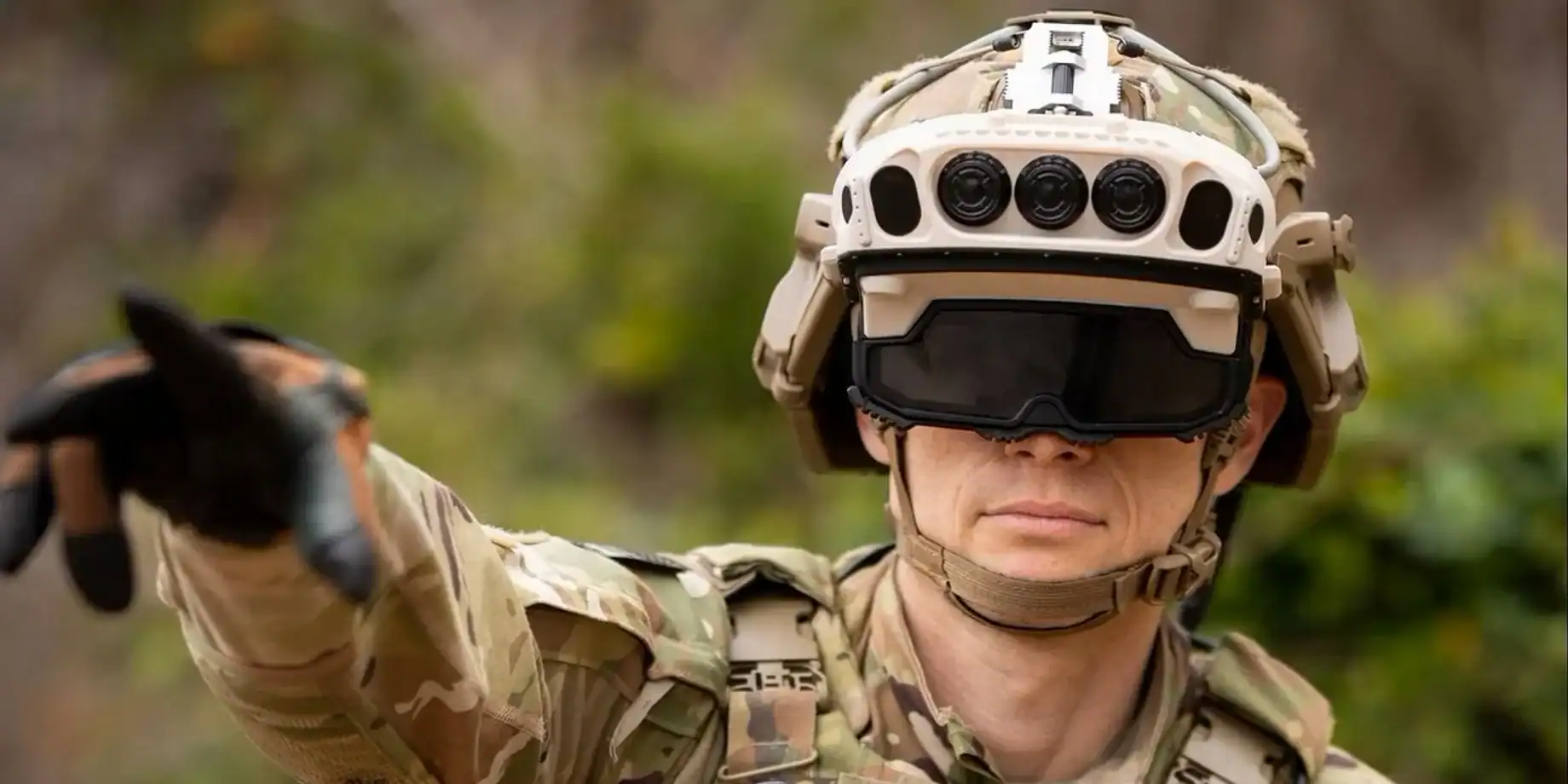
The military also developed over 400 improved prototypes of the IVAS 1.2 version, featuring updated low-light sensors. However, producing this modification proved too expensive for scaling and mass production.
During demonstration exercises, soldiers wearing the devices showed worse shooting results than with their standard equipment. Soldiers complained of disorientation, nausea, severe eye and neck strain, as well as constant headaches, due to the weight of the device on their helmets.
Carmen Malone, an assistant to the Pentagon’s inspector general, explained the reasons for the failure during a hearing in the House of Representatives. According to her, the Army’s rushed and overly ambitious requirements forced developers to use unproven technologies, leading to constant redesigns, delays, and cost overruns.
The main goal of the IVAS program, launched in 2018 as part of a 10-year, $22 billion contract, was to create a digital helmet. The system was intended to improve infantry situational awareness by displaying information on a screen in front of the wearer’s eyes.
The US Army has now decided to completely overhaul the concept and wind down the IVAS project. The military is moving to a new rapid prototyping program called Soldier Borne Mission Command (SBMC), which will be based on a different control architecture.

In September 2025, Anduril announced that it had been selected to develop a prototype for the new SBMC program. Meanwhile, existing IVAS 1.2 devices are currently being used only as temporary substitutes during patrols along the US–Mexico border.
Anduril is already demonstrating its own EagleEye helmet at military conferences, designed with criticism of the previous project in mind. To eliminate neck pain, the developers moved the heavy power battery from the soldier’s head to the ballistic chest plate of the body armor.
Підтримати нас можна через:
Приват: 5169 3351 0164 7408 PayPal - [email protected] Стати нашим патроном за лінком ⬇
Subscribe to our newsletter
or on ours Telegram
Thank you!!
You are subscribed to our newsletter