


Popular
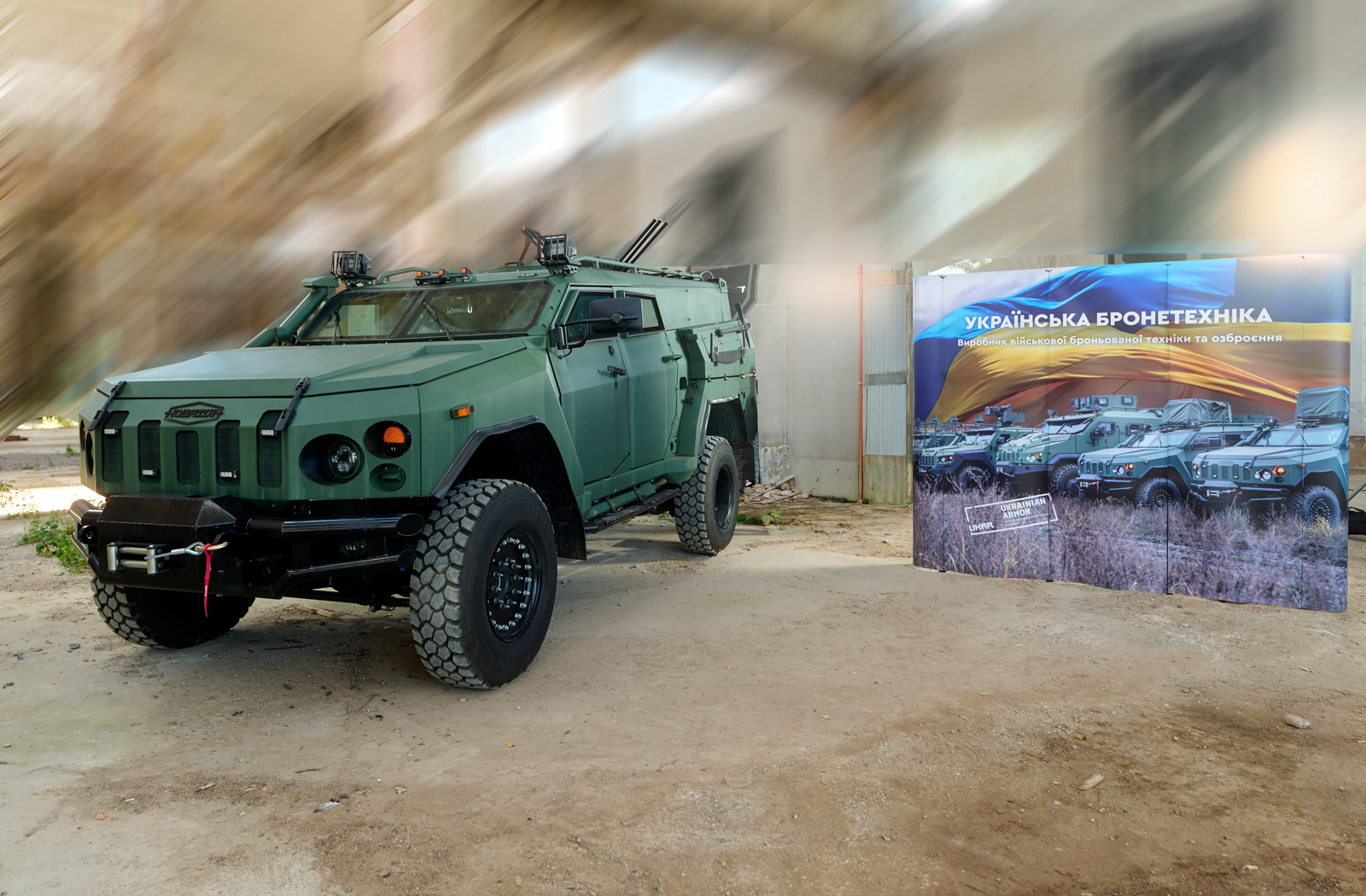
Ukrainian Armor LLC has unveiled the Novator 2S armored medical evacuation vehicle, developed on the basis of the Novator 2 armored vehicle.
The company told Militarnyi about the vehicle’s features.
The Novator 2S is equipped with a specially designed armored capsule adapted specifically for the evacuation of wounded personnel. Compared with the baseline Novator 2, the medical variant features a different interior layout, wider rear doors, and equipment intended for use by medical personnel. The vehicle can transport up to four wounded personnel in a lying position or up to six in a seated position.
According to a company representative, it is not possible to use the standard Novator 2 armored capsule for a fully-fledged medical vehicle without structural modifications.
“The Novator 2 can be used for evacuation, but it cannot perform the role of a dedicated medical evacuation vehicle. The capsule is specifically designed for the medical variant,” explained a representative of Ukrainian Armor.
The armored capsule of the Novator 2S meets the PZSA-4 protection level (Ed.: a Ukrainian ballistic protection class for specialized and armored vehicles). According to the company representative, it provides protection against 7.62 mm armor-piercing bullets.

The mine protection system is designed to withstand a blast from an explosive device containing up to 6 kg of explosive charge in TNT equivalent beneath the vehicle’s floor.
The developers paid particular attention to the vehicle’s running gear, as the evacuation vehicle is required to operate on damaged roads and off-road terrain.
The vehicle continues to use the Ford F-550 chassis as its base, which is further reinforced. The company strengthens the frame and axles, while some running-gear components – including control arms, links, bump stops, and bushings – are developed and manufactured in-house. The vehicle is also fitted with heavy-duty shock absorbers and stabilizer bars.
“All of this is our own development, including reinforced vehicle mounting components, so that it can withstand all the loads encountered during evacuation,” a company representative said.
These modifications are intended to improve the vehicle’s survivability when operating over difficult terrain and reduce the risk of running-gear failure under load.
Like the Novator 2, the Novator 2S is equipped with foreign-made RunFlat inserts. These allow the vehicle to continue moving after a tire is damaged, enabling the evacuation to be completed without stopping.
A separate mechanism with a winch has been developed for the spare wheel, making it easier to lower and raise it. According to the company representative, this solution was implemented specifically on the medical version.
The driver’s compartment is separated from the medical compartment by a partition, while a window has been retained between the two areas for access. The lower section of the partition is completely enclosed. This is intended to prevent blood, medical fluids, or other objects from entering the driver’s workspace while the vehicle is in motion.

The vehicle provides sufficient power for operating a basic set of medical equipment, while military personnel can connect additional autonomous power sources if required. Access to electrical power makes it possible to operate additional medical equipment, including refrigerators for storing blood, patient monitors, and other systems.
The medical compartment is also equipped with task lighting and blackout lighting. In particular, there is a mode using red LED lamps for nighttime operations, reducing the vehicle’s visual signature.
Such vehicles have an armored capsule, but their interiors do not provide dedicated berths for casualties requiring evacuation in a lying position, nor sufficient space for a medic to work while the vehicle is moving.
“This configuration is specifically designed for casualty evacuation. There are berths for patients to lie down, as well as organizers within easy reach that can be positioned in whatever arrangement is most convenient for the medic while working,” the servicemember noted.
He identified the large interior volume and wide rear doors as among the main advantages of the new version, as they simplify the loading of wounded personnel.
“In older armored vehicles, such as APCs or IFVs, the doors are very small – you can barely get in or out. Here, there is enough room for the medic, dedicated space for the wounded, and the ability to treat them inside the vehicle,” he explained.
Under the planned configuration, the crew can consist of a driver, a medic, and a medical assistant, with the remaining space used to accommodate casualties.
The berths intended for patients in a lying position can also be used, when necessary, to transport lightly wounded personnel in a seated position.
At the same time, the servicemember noted that it is difficult for a single medic to simultaneously treat several seriously wounded casualties. Therefore, the actual number of casualties carried will depend on their condition and the specific mission.
Thanks to its armor protection and off-road mobility, the Novator 2S is primarily intended for evacuating wounded personnel from the most dangerous areas, closer to the line of contact.
At this stage, the vehicle must provide protection for both the crew and casualties while retaining sufficient mobility over difficult terrain.
“The kill zone is quite wide at the moment, while the speed of evacuation by unmanned ground vehicles is low. The main problem is that an UGV cannot provide medical care to a wounded person. It is not a medical professional, and we all know about the ‘golden hour,’” said Vladyslav Belbas, CEO of Ukrainian Armor.
The servicemember also pointed out that during the CASEVAC stage, the vehicle will often have to operate on poor roads or off-road.
“If this is CASEVAC, there most likely won’t be a good road to the position. There may be fallen trees, dirt, sand, snow, or rain. The vehicle’s protection matters the most,” the servicemember said.
In the servicemember’s unit, standard Novator vehicles as well as Roshel armored vehicles are already used for such missions. However, their interior layouts are not specifically optimized for medical evacuation. In the Novator 2S, the interior space was designed from the outset to accommodate casualties and allow the medic to work.
The evacuation vehicle can then transport the casualty to a stabilization point or hand them over for the next stage of evacuation.
According to the servicemember, the requirements for the vehicle can vary at each stage depending on the operational direction, road conditions, evacuation distance, and the level of enemy UAV activity.
For operations during the initial evacuation stage, the servicemember considers equipment for immediate life-saving care and control of major hemorrhage to be the most essential.

First and foremost, this includes additional tourniquets, wound dressings, splints, and equipment for infusion therapy.
According to the servicemember, during transportation the medic can monitor the tourniquets that have already been applied and, when conditions permit, convert or reposition them.
“Essentially, everything included in a combat medic’s backpack should also be readily available in this vehicle,” the servicemember explained.
He also cited the air-conditioning system as an additional advantage of the Novator 2S, as it allows the required temperature to be maintained inside the armored capsule.
If the vehicle is additionally equipped with oxygen equipment and patient-monitoring systems, its capabilities could be expanded to support operations during subsequent stages of medical evacuation.
The final equipment package will depend on the specific unit, operational direction, length of the evacuation route, and the level of threat posed by Russian UAVs.
Підтримати нас можна через:
Приват: 5169 3351 0164 7408 PayPal - [email protected] Стати нашим патроном за лінком ⬇
Subscribe to our newsletter
or on ours Telegram
Thank you!!
You are subscribed to our newsletter