


Popular
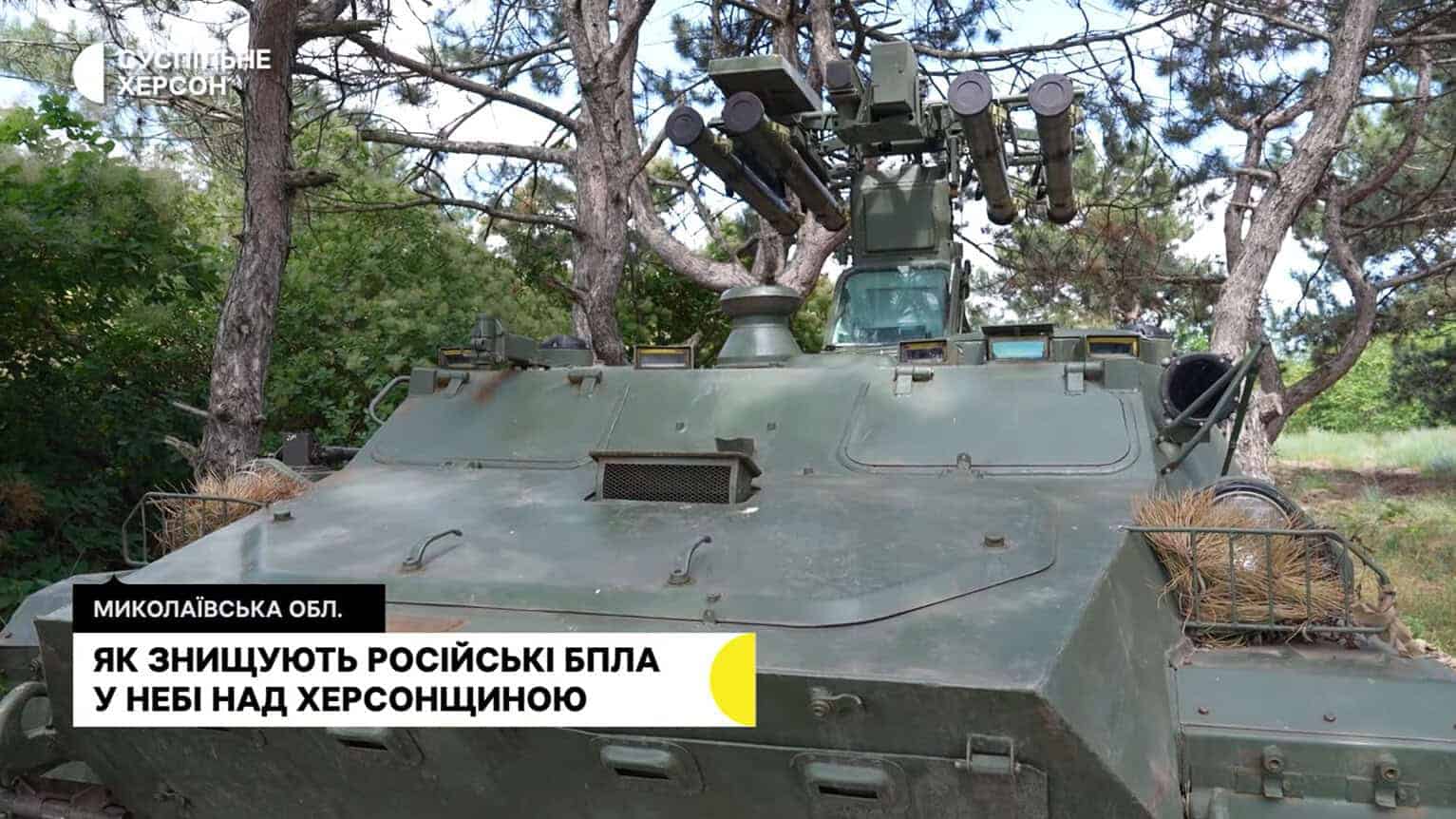
Small air defense missiles are expected to begin being used against Russian jet-powered drones in the second half of October.
Ukrainian President Volodymyr Zelensky announced this during a joint press conference with German Chancellor Friedrich Merz in Kyiv.
“There are several types of them. Obviously, we will see the result this month. At the end of the month, in the second half of this month, we expect to see the result. So, you asked about their use and how widespread it is. For now, there is no such use. It will only happen,” the President said in response to journalists’ questions.
At the same time, he noted that if these systems show strong interception results, production could be rapidly scaled up.

In February 2025, 19 Ukrainian companies joined the Brave1 grant program to develop missile weapons.
In August 2025, Brave1 announced four grant competitions to develop explosives, autonomous drones, tactical ballistic missiles, and air defense systems to counter UAVs. Developers could apply for grants ranging from UAH 100 million to UAH 150 million.
In January 2026, it became known that eight of the 18 companies that had submitted applications for the competition received grant funding from Brave1 to develop tactical ballistic missiles and low-cost air defense missiles. Brave1 CEO Andrii Hrytseniuk shared this at the time on Militarnyi’s “Do zbroi!” (To arms!) program.
All 18 companies submitted proposals for developing air defense systems to counter UAVs. Four of them also submitted their tactical ballistic missile projects for funding.
“How does it work? First, a military commission reviews all applications to determine the winners, and the teams pitch their projects. There is a second stage — independent experts also review them. There are several levels of decision-making. Then the Brave1 supervisory board makes a decision, analyzes the evaluation results and projects, and after that the winners are selected. The winners then receive funding,” Andrii Hrytseniuk said.
According to the Brave1 CEO, funding is usually provided in tranches, with developers receiving payments in stages as they reach certain development milestones.

In addition to funding assistance, Brave1 also conducts technical reviews of developments and, when necessary, can connect a company with a supplier of specific components or a research institution with the required laboratory equipment.
Since the beginning of Russia’s full-scale invasion, five new Ukrainian air defense systems have become publicly known.
These include the upgraded Koral air defense system for medium- to long-range use and the Shershen air defense system for short- to medium-range use.
The list also includes the Desna and Rif air defense systems with RK-2PZ missiles for short-range use, as well as the short-range DRAGON air defense system, which currently uses R-73 and AIM-9 air-to-air missiles and for which the ST-100 small air defense missile is being developed. Ukraine has also developed the new RK-19 missile for Soviet Osa-AKM systems.
Підтримати нас можна через:
Приват: 5169 3351 0164 7408 PayPal - [email protected] Стати нашим патроном за лінком ⬇
Subscribe to our newsletter
or on ours Telegram
Thank you!!
You are subscribed to our newsletter